
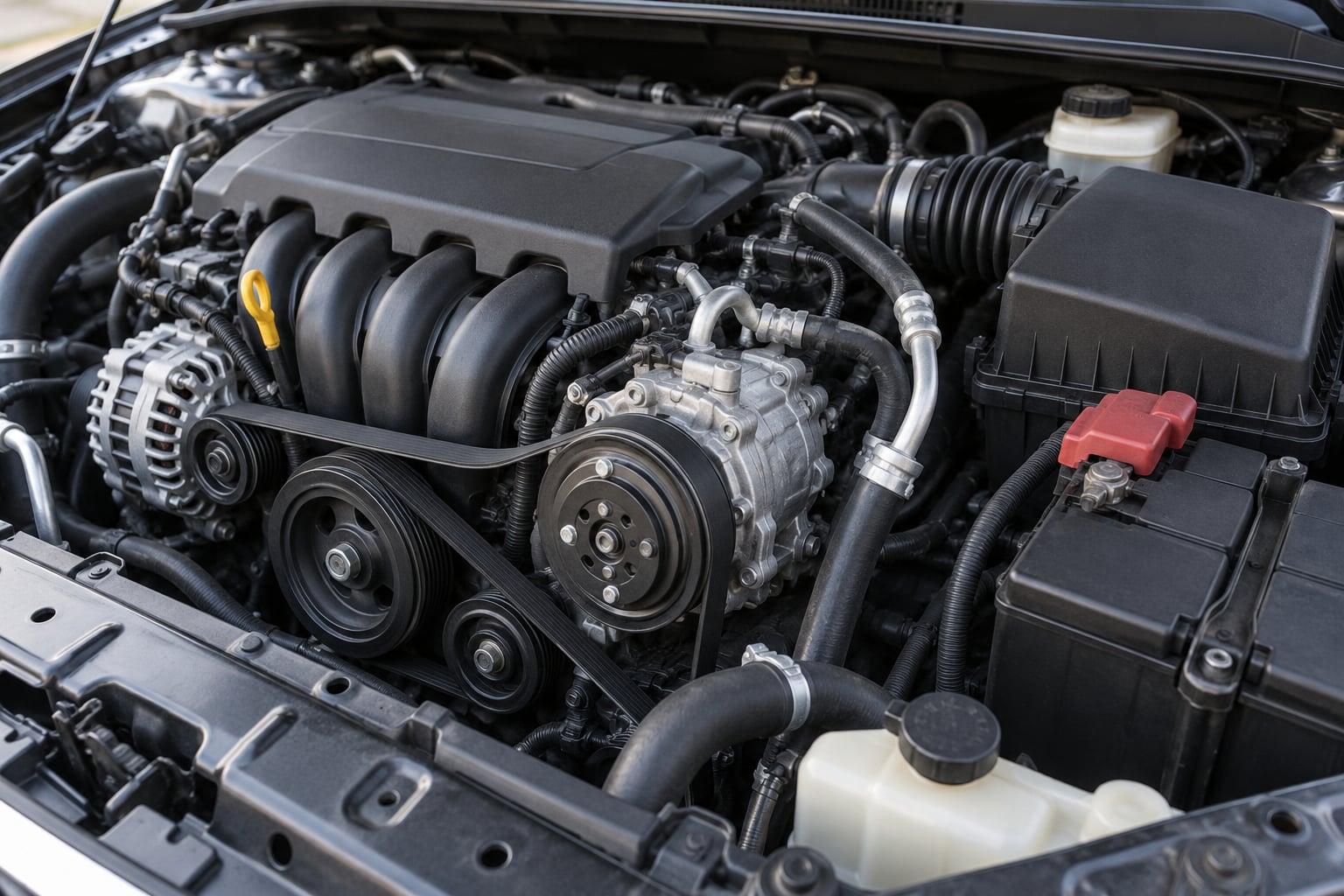
If your AC compressor is not engaging, the refrigerant pump never spins, and the only thing leaving the vents is warm cabin air. The failure falls into one of three families: no power reaching the clutch, a control or safety device refusing the command, or a mechanical problem in the clutch, pulley or belt. Most of it is diagnosable with a multimeter, a wiring diagram and about an hour.
This guide is framed for a car air conditioning system, where a magnetic clutch couples the compressor to the engine. That matters because the clutch is the switch you can see and hear, and it gives you a clean place to start testing.
Table of Contents
- AC Compressor Not Engaging: Quick Diagnostic Guide
- How the AC Compressor Is Supposed to Engage
- AC Compressor Not Engaging Causes: Electrical and Control Failures
- AC Compressor Not Engaging Causes: Belt, Clutch, and Mechanical Failures
- How to Test Whether the Compressor Is Receiving a Command
- Why the Compressor Runs but Does Not Make Cold Air
- Fixes and Repair Priorities
- Safety Before You Start Diagnosing the AC System
- Frequently Asked Questions
- What to Check First
AC Compressor Not Engaging: Quick Diagnostic Guide
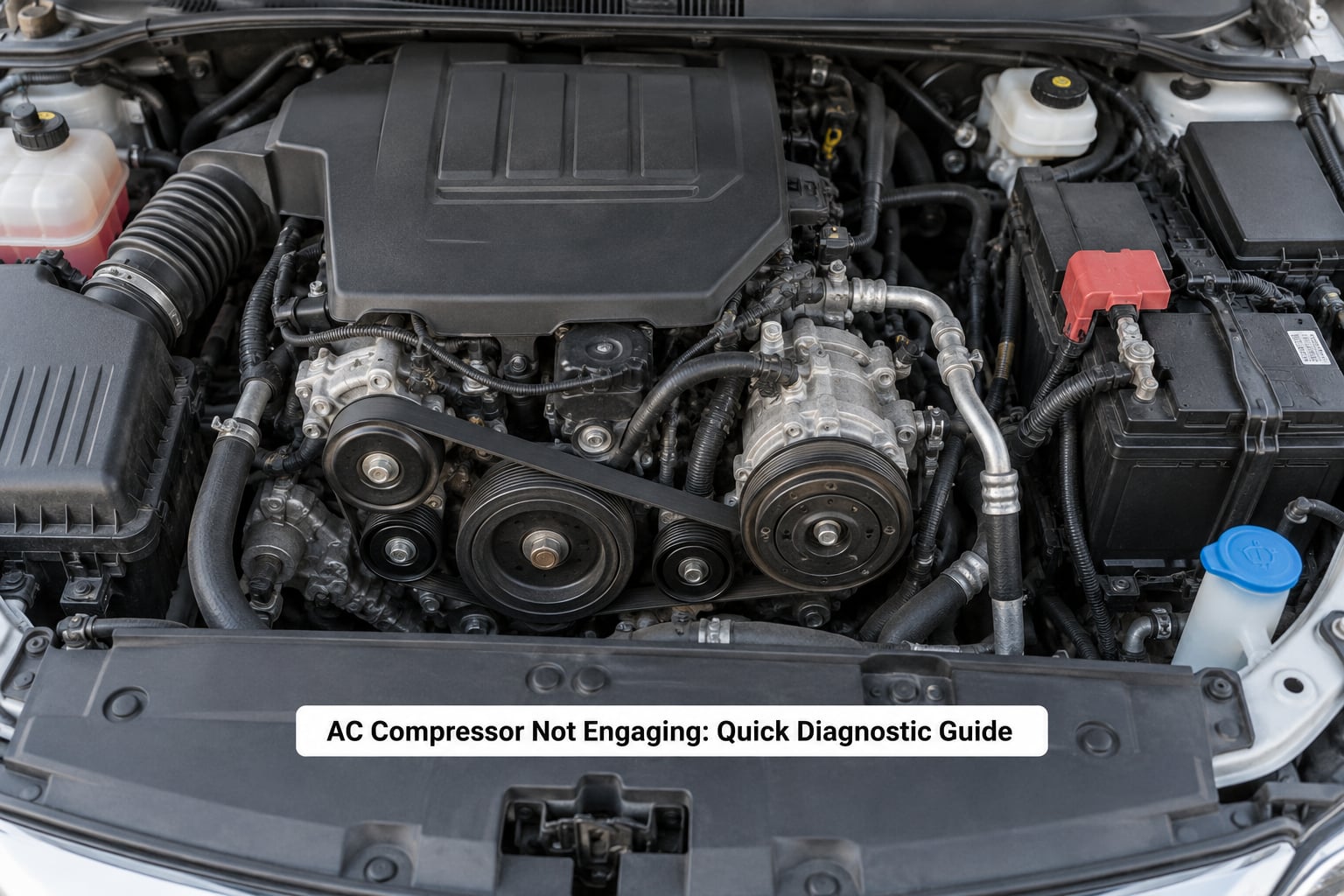
Three different behaviours get filed under the same complaint, and each one points somewhere different. Watch the clutch for a few seconds with the AC on MAX and the fan set to cold.
First, nothing happens at all. No hum from the clutch, no click, the pulley sits still while the belt is turning. That usually means the command never arrived or power is missing on the load side of the relay.
Second, the clutch hums and clicks back out within a second or two. This cycling behaviour usually means an intermittent ground, a corroded connector or a pressure switch that opens the moment the system moves.
Third, the clutch pulls in and stays in but the air is barely cool. That is a cooling fault, not an engagement fault, and it is covered further down.
| What you observe | Likely system | First sensible check |
|---|---|---|
| Blower runs, air stays warm, no hum at the clutch | Power or control circuit | Fuse, relay and voltage at the compressor plug with the AC commanded on |
| Clutch hums then clicks off after a second | Intermittent ground, connector or pressure switch | Stored codes, then wiggle-test the compressor connector and clutch lead |
| Relay clicks but no power at the clutch plug | Relay contacts, load-side wiring or open switch | Continuity and voltage on the load side against the wiring diagram |
| Clutch engages, belt squeals or slips | Serpentine belt tension or a seized bearing | Crack the belt for glazing, check tension and listen to the pulley |
| Clutch engages and the pulley spins, air still warm | Refrigerant charge, airflow or a compressor that cannot pump | Low-side and high-side gauge readings, condenser airflow |
| Engages only in defrost, not in MAX A/C | Control head, actuator or module input | Scan tool request data and stored clutch-circuit codes |
If the air only turns cold while you are moving, that is a different complaint with its own set of suspects, and it is worth reading why does my AC only blow cold when driving before you start pulling fuses.
How the AC Compressor Is Supposed to Engage
You select cold air on the control head. A temperature sensor reports the actual cabin temperature, the control module compares the two, and if a cooling request exists it sends an enable signal through the vehicle wiring network.
That signal wakes a relay or a solid-state driver. Power from the battery then flows through the relay contacts, along the harness at the rear of the compressor, and through the magnetic clutch coil. The clutch plate pulls toward the pulley and locks to it, and only then does the compressor start pumping.
The compressor also stays off during warm-up while the engine coolant temperature is high, and it shuts down again if high-side pressure climbs past its thermal overload limit. On many cars the clutch disengages above engine speed during wide-open-throttle runs to free up power. None of those states is a fault.
Understanding that chain matters because it tells you where to look. No sound at all usually sits at the front of the chain. A hum that stops immediately usually sits at the back of it, or in the safety devices in between.
AC Compressor Not Engaging Causes: Electrical and Control Failures
Low Voltage or a Charging-System Problem
A clutch coil is an electromagnet, and an electromagnet needs real voltage. When battery voltage sags under load, the coil pulls in weakly or not at all, and the system may log a supply fault and refuse to run.
Check battery terminal cleanliness and clamp tightness, then measure voltage at the battery with the engine off and again with the engine running. A reading at or near 12.6 volts with the engine off is healthy; anything in the low teens while cranking explains a lot. Charging-system diagnosis beyond that should follow the vehicle service procedure rather than guesswork.
Blown Fuse, Bad Relay, or Corroded Connector
The AC circuit is fed through a fuse, then through a relay, then to the clutch. Any break in that path leaves the compressor inert, and these tend to be the least expensive repairs on the list.
A relay that clicks when you command cold air tells you the control side is alive. It tells you nothing about the load side, because a relay can click with burnt contacts and pass no current at all. That is exactly the situation people get stuck in when the condenser fan runs but there is no power at the compressor plug.
Inspect only the circuits identified in the wiring diagram for your vehicle. Pull the fuse with the ignition off, look at the element rather than judging by the window, and check connector pins for green corrosion or water intrusion at the rear of the compressor.
Pressure Sensor, Control Module, or Wiring Fault
Modern systems refuse to run the compressor on bad data. An implausible pressure reading, a failed temperature input or a missing signal on the CAN bus all produce the same visible result: a perfectly healthy clutch that is never told to pull in.
A scan tool is the fastest way in here. Look for a clutch or AC circuit request, compare the commanded state to the actual state, and read stored codes before you disconnect anything. On older vehicles the compressor speed sensor at the rear of the compressor reports RPM to the module; a broken wire there means the computer sees no speed signal and holds the clutch out even for a moment. A 500Eboard thread documented exactly that failure, where the compressor was fine and the sensor wire was not.
Treat the module as the last thing you suspect, not the first. Confirming that the command is present on the wiring before condemning a control head or amplifier saves a lot of money.
AC Compressor Not Engaging Causes: Belt, Clutch, and Mechanical Failures
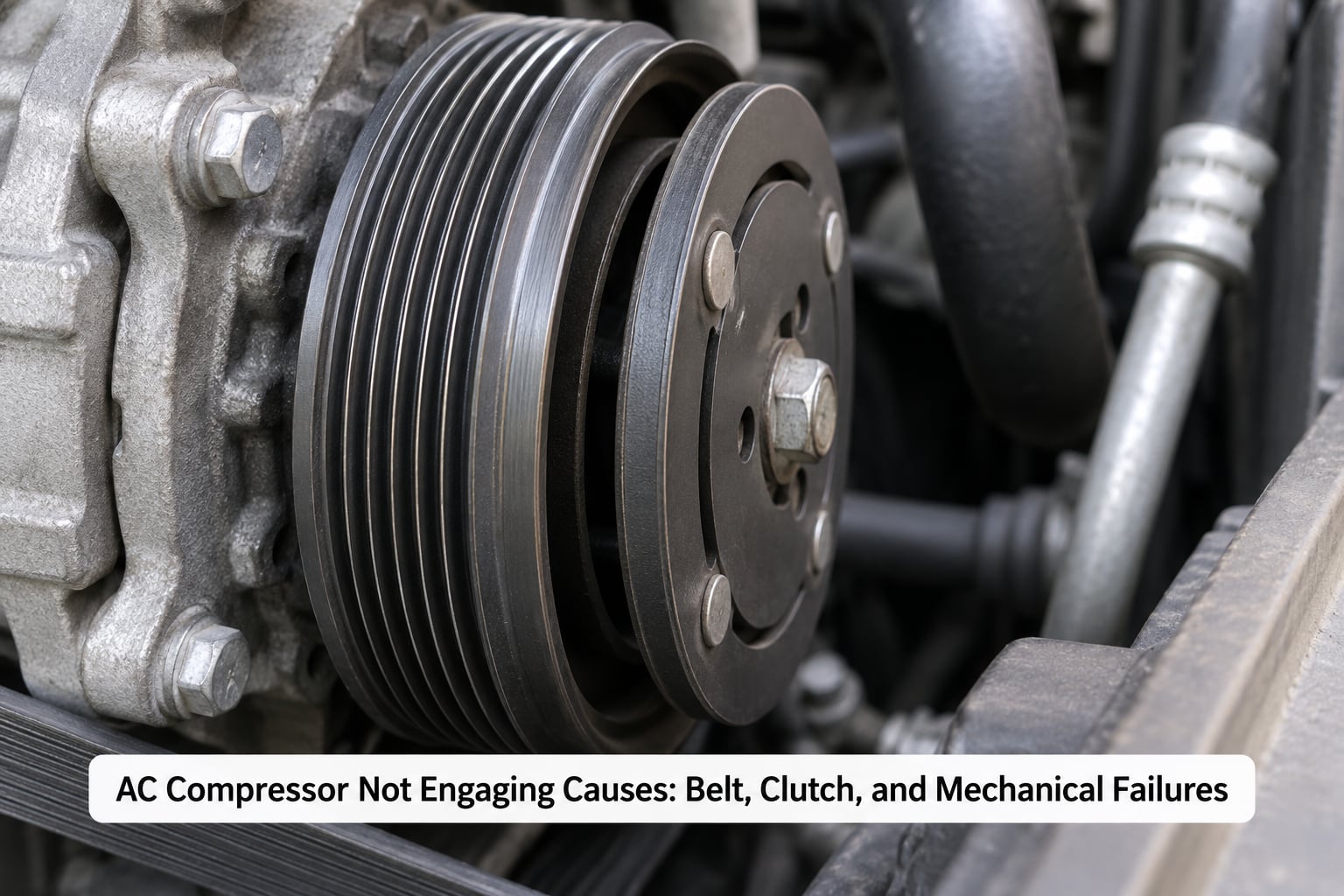
If nothing arrives at the clutch, no amount of electrical work will matter. These four failures sit downstream of the command.
- Broken or glazed serpentine belt. The compressor is belt-driven on most cars, so a snapped belt kills cooling and usually charging, water pump and steering assist at the same time. Look for a cracked, shiny or frayed edge.
- Slipping belt. If the pulley spins slower than the crank or the belt chirps on start-up, the compressor may engage physically but never reach the RPM the control module expects.
- Seized pulley or failing bearing. A rough growl or a hiss that rises with engine speed usually means the bearing, not the refrigerant.
- Damaged clutch coil or excessive air gap. A coil with an open winding draws nothing and hums for nothing. A worn air gap lets the plate sit too far from the pulley, so the clutch buzzes without ever locking up, a symptom described on Mechanics Stack Exchange for exactly this reason.
Each of these behaves differently on a key-on, engine-running command, which is why the order of your checks matters more than the parts you buy.
How to Test Whether the Compressor Is Receiving a Command
Work in order and stop when the answer stops. This sequence is the one experienced techs on the PeachParts and 500Eboard threads repeat most often: fuses, wires and grounds, then codes, then refrigerant pressure.
- Confirm the request. Set the control to MAX A/C, cold, fan on high, and recirculate. Confirm the AC button is not latched off and that no mode is forcing defrost.
- Read stored codes. Note any clutch circuit, pressure sensor or speed sensor codes before you unplug anything. Clearing them first destroys the clue.
- Verify the request on the scan tool. If the module shows no cooling request, the fault is at the control head, a temperature sensor or the module input.
- Check fuses and the relay. Confirm power on the relay input and on the load side while commanded. Input power with no output power means a bad relay.
- Test for power at the compressor plug. With the AC commanded and the engine idling, check voltage across the clutch coil using the wiring diagram pin assignments. Voltage present and the clutch engaged points to an air gap or coil-to-pulley mechanical problem. Voltage present and nothing happens means an open coil or a mechanical failure.
- No voltage at the plug. You now know the break is upstream. Follow the load side through the harness, the pressure switch and the module output until you find where the signal stops.
- Last, look at the mechanical side. With the clutch commanded, check belt tension and watch the pulley for a full second or two of steady rotation.
Tools are modest: a digital multimeter, a test light, a scan tool if you have access to one, and the correct wiring diagram. Keep clear of the fan and belt while the engine runs.
Why the Compressor Runs but Does Not Make Cold Air
Engagement and cooling are two separate problems, and owners often end up replacing an entire A/C system when only one half is faulty.
A low charge from a slow leak is the most common cause. When low-side pressure drops below the cut-out threshold, the low-pressure switch opens the circuit and the compressor stops, protecting it from a starved lubrication state. A blocked expansion device or a plugged receiver-drier restricts flow so the compressor runs but performance collapses. A dirty condenser core or a non-spinning condenser fan pushes high-side pressure into the thermal overload range and the clutch drops out under load.
If the clutch engages and stays engaged and the air is still warm, the compressor itself may not be pumping. On gauges, a low-side reading near 75 psi with a high side that barely climbs while the clutch is locked points at a compressor that is turning without building pressure. Reading gauges for a system that will not engage at all tells you a different story: equal pressure on both ports with a stationary clutch means the refrigerant is not moving, and the problem is upstream of the pump.
Recovering, evacuating and charging refrigerant is regulated work. Have it done to the manufacturer procedure, with the specified charge amount, by a shop that owns recovery equipment.
Fixes and Repair Priorities
Repair what your test proved, in the order the evidence came in. Starting with parts instead of measurements is how owners end up with a new compressor, condenser, drier, relay and fan and the same warm air.
- Battery or charging fault: clean and tighten terminals, replace a weak battery, service the alternator per the service procedure.
- Fuse or relay: replace the exact rated fuse, swap the relay. These are small parts, and forums are full of quotes built around them.
- Connector or ground: clean the pins, apply dielectric protection, repair damaged terminals and the harness section that failed.
- Pressure switch or sensor: verify open and closed with a continuity test, then replace. Never bridge it to force engagement.
- Module or control head: confirm all inputs and grounds are correct first. Programming and replacement should follow the vehicle service procedure.
- Belt: replace with the correct part number and tension it to specification.
- Clutch or compressor: service the clutch assembly or replace the compressor only after voltage, command and circuit checks come back clean. If the refrigerant system was opened, the receiver-drier and the correct charge are part of that job, not extras.
One note on repairs: if the clutch engaged for one second and dropped out, replace parts one at a time and re-test after each. Replacing the compressor, drier, condenser and lines in one shot on a car with an intermittent ground leaves the original fault in place.
Safety Before You Start Diagnosing the AC System
Read the owner manual and find the correct wiring information for your vehicle before touching anything. Several manufacturers route the clutch command through different modules from year to year, and the diagram is what tells you which pin to probe.
Disconnect the battery negative terminal when the service procedure calls for it, and never work around a belt or fan while the engine is turning. That habit kills more hands than any refrigerant line.
Do not jump or bridge the low-pressure safety switch as a diagnostic shortcut. PeachParts forum experts are blunt about this: bridging the switch proves nothing, because it removes the very condition you are trying to measure. Test for continuity across the terminals instead. The same goes for repeatedly resetting a breaker that keeps tripping; each reset hides a real fault.
Leave refrigerant recovery, charging and high-pressure work to a qualified technician. If your diagnosis has reached the gauges, you have probably also reached the end of what you can safely do in the driveway.
Two related reads while you are in the cabin: why does my defroster take so long shares a lot of the same control head and wiring, and what an airbag light means is worth knowing before you start disconnecting battery terminals.
Frequently Asked Questions
Can I test the AC compressor relay myself?
Yes, on most vehicles, with a multimeter and the wiring diagram. Command cold air with the engine idling and check for battery voltage on the relay input pin. Then check the load side. Voltage on the input and nothing on the output means the relay contacts are open and the relay is bad. No voltage anywhere on the input means the fault is upstream, so move to the fuse, the module output or the control head. Confirm the pin numbers in the diagram before probing, because layouts vary between models and years.
Does a variable-speed or smart compressor still use a clutch?
It depends on the vehicle. Traditional systems use a magnetic clutch you can watch and hear, which makes diagnosis straightforward. Many newer vehicles run an electric or variable-speed compressor controlled by a module over the vehicle network, with no clutch at all and no hum when it runs. On those cars engagement faults appear as stored codes and commanded versus actual speed data rather than as noise. Check whether your vehicle has a clutch before assuming a missing hum means a dead compressor.
Can the compressor fail to engage with a full refrigerant charge?
Yes, and it is one of the most common reasons a recharge does not fix the problem. A full charge only satisfies one condition in the request chain. An open low-pressure switch, a failed relay, a corroded connector or a missing compressor speed signal will all hold the clutch out with a perfectly full system. Forum threads show owners who vacuumed, charged by weight, and still had no engagement, with the real fault sitting in the wiring or a pressure switch. Diagnose the electrical side before charging again.
Why does my AC compressor engage for a second and then drop out?
That cycling pattern points at an intermittent fault rather than a dead compressor. The usual suspects are a marginal ground, a connector whose pins move when the harness flexes, a weak clutch coil that loses grip as it warms, or a pressure switch chattering as the system moves. Start by reading stored codes before clearing them, then wiggle-test the connector at the rear of the compressor while the AC is commanded. A clutch air gap that is too wide can produce the same brief engagement and needs checking too.
Should I force the AC compressor to engage to test it?
No. Forcing engagement means bridging the low-pressure safety switch or feeding the clutch coil directly, and both defeat the protection that keeps the compressor from being destroyed by a starved charge. It also tells you very little, because the system will engage whether or not the compressor can pump. A better test is to verify the command on the scan tool, then measure voltage at the clutch plug with the AC commanded. That isolates the fault without disabling anything the vehicle depends on.
What to Check First
Start with confirmation, not parts. Read the stored codes and look at the request on a scan tool, then check battery voltage and the fuse and relay feeding the clutch circuit. After that, command cold air and measure voltage at the compressor plug to decide whether the break is upstream in the control circuit or inside the clutch itself. Finish with the belt and the pulley.
Only once those come back clean should you look at sensors, wiring under the harness or mechanical failure, and only then move to refrigerant pressure and recovery work. Follow the exact service procedure for your vehicle, because the clutch circuit is wired differently from one model year to the next, and most of these ac compressor not engaging causes are cheap parts sitting behind an expensive symptom.