
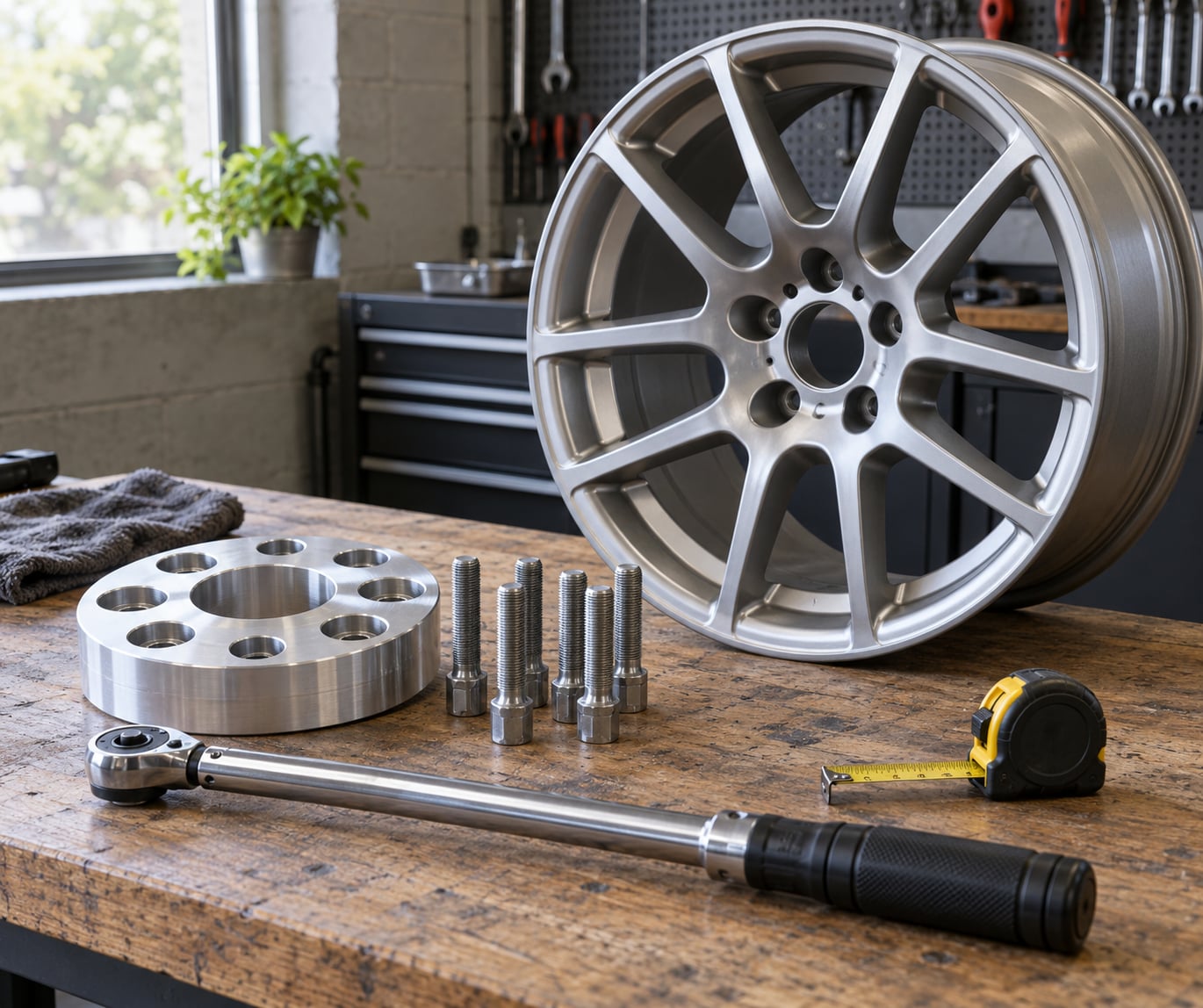
Wheel spacers push your wheels outward from the hub, correcting a wheel that tucks too far inside the fender. On a BMW they fix fitment problems cheaply, but they also add leverage to the wheel bearing and change how the car steers. Those are the wheel spacers pros and cons every owner needs to weigh before fitting one.
I have watched plenty of cars come into the shop with the same story: a new wheel and tire package that looked right on the listing and then rubbed the inner liner on the first corner. Sometimes the fix is a different wheel. More often it is a few millimeters of spacer doing a job nobody thought about when the tire was ordered.
This guide breaks the decision down for BMW owners specifically, because the platform makes offset choices tighter than most and because all-wheel drive adds its own set of questions. Last reviewed for 2026.
Table of Contents
- Wheel Spacers Pros and Cons at a Glance
- What Are Wheel Spacers and How Do They Work?
- What Are the Main Benefits of Wheel Spacers?
- What Are the Main Drawbacks and Risks?
- How Do Wheel Offset and Wheel Width Affect Fitment?
- Are Wheel Spacers Safe for BMWs?
- How Much Wheel Spacer Should You Use?
- Do Wheel Spacers Change Handling or Braking?
- How to Choose Wheel Spacers for a BMW
- How Are Wheel Spacers Installed and Checked?
- Wheel Spacers vs. Wider Wheels or Suspension Changes
- Frequently Asked Questions
- Conclusion: Should You Use Wheel Spacers?
Wheel Spacers Pros and Cons at a Glance
Here is the short version. Read the details underneath if you want the reasoning.
The pros:
- Fixes offset mistakes — pushes a too-tucked wheel out where it was meant to sit.
- Clears suspension parts — solves rubbing against control arms and steering links.
- Allows bigger tires — adds inner clearance for a taller sidewall or wider rubber.
- Fits aftermarket brakes — room for a larger rotor and caliper behind the wheel.
- Wider track width — a small stability gain in steady cornering.
- Flush stance — the wheel lines up with the fender instead of sitting inboard.
The cons:
- Extra bearing load — the bearing carries more leverage and wears sooner.
- More scrub radius — steering gets heavier and kickback increases.
- Suspension and CV stress — joints and bushings see loads they were not sized for.
- Interference risk — a wheel moved outboard can now hit the fender liner.
- Torque-dependent — cheap hardware can loosen and cause vibration.
- All four corners — two-corner spacing makes the car handle unpredictably.
Notice what is missing from both lists. Spacers do not make a car faster, and they do not fix a bent rim or a suspension problem you have not diagnosed yet.
What Are Wheel Spacers and How Do They Work?
A wheel spacer is a machined metal disc with a hole in the middle. It mounts between the brake rotor and the wheel, pushing the wheel outboard by the thickness of the disc. Ten millimeters of spacer moves the wheel ten millimeters.
What that does to the numbers is simple. Wheel offset, stamped as ET, describes the distance from the mounting surface to the centerline of the wheel. Adding a spacer makes the effective offset more negative, which widens the track from tire centerline to tire centerline. If you want the terminology laid out properly, what wheel offset is and why it matters covers the stamping and measurement side.
There are two construction styles. A slip-on spacer slides over the factory studs and uses the nuts you already have. A bolt-on spacer replaces the studs entirely and uses its own extended studs with open-end or shank-style nuts. Bolt-on spacers usually need the factory studs shortened or replaced, because the original studs do not have enough length to reach through both pieces.
A BMW is a hub-centric car. The wheel centers on a raised lip around the hub bore, and the lug nuts only clamp. That detail drives the single most important buying decision in this whole guide.
Hub-Centric vs Lug-Centric Spacers
A hub-centric spacer has a raised lip that pilots into the wheel center bore, just like the wheel does on its own. The hub locates the wheel and the lug nuts squeeze it down.
A lug-centric spacer has a plain hole. The wheel hangs on the studs, and the lug nuts become the locating surface. Most passenger cars, including the BMWs people actually put cheap spacers on, are hub-centric. A lug-centric spacer on a hub-centric car leaves the wheel held off-center by a fraction of a millimeter. That is enough to produce a vibration at highway speed that gets blamed on a bent wheel.
Never fit a lug-centric spacer to a BMW unless the manufacturer of the spacer explicitly designed it for that hub bore and you have measured and verified the concentricity yourself.
What Are the Main Benefits of Wheel Spacers?
- Correcting fitment on an aftermarket wheel — factory wheels on a BMW often carry a positive offset that leaves very little room outboard. A spacer fixes a wheel that sits too far in without forcing you to buy different wheels.
- Clearing suspension components — larger brake calipers, upgraded steering links and some lowered setups all eat inner clearance. A few millimeters solves a rubbing problem that no amount of alignment will.
- Room for larger tires — if you want a taller sidewall for ride quality or winter rubber, the extra gap stops the inner sidewall from kissing the control arm.
- Compatibility with bigger brake kits — several-inch rotors and six-piston calipers need clearance the stock setup does not have.
- A wider, more planted look — a flush fitment stops the wheel from looking sunken in the arch, which is usually the whole reason people chased the wheel in the first place.
- Cost and reversibility — compared with ordering a second set of wheels at a different offset, spacers are a small, removable part.
On stability, be honest about the scale. Moving the track out 10 to 20 millimeters on a road car produces a measurable but modest improvement in steady-state cornering. It is not a handling transformation, and anyone who tells you otherwise is selling something.
What Are the Main Drawbacks and Risks?
- Wheel bearing and hub wear — offsetting the wheel creates a lever arm on the bearing. Suspension engineers describe the outcome plainly: the bearing will not last the life of the car. Budget for replacement as maintenance, not as a surprise.
- CV joint and driveshaft angle — a wider track lengthens the effective axle and changes the angle at each joint. On an xDrive or xDrive M car, check that nothing is at or beyond its angle limit after the fitment.
- Scrub radius grows — the distance between where the tire meets the road and the steering axis increases. The steering wheel gets heavier at low speed and more likely to kick back over bumps.
- Suspension component load — control arm bushings, ball joints and tie rod ends take more force through every bump.
- Fender liner interference — moving the wheel outboard can put the tire where it was not before. Check the liner, not just the fender lip.
- Vibration from poor hardware — cast rather than machined aluminum, a loose hub fit, or unbranded hardware is the single most common cause of the shudder owners report.
- Mismatched corners — spacers belong on all four wheels. Spacing only one axle changes the car’s balance and can create a pull or a nervous feeling in a straight line.
That bearing point is the one the forums keep coming back to, and it deserves a straight answer rather than reassurance.
How Do Wheel Offset and Wheel Width Affect Fitment?
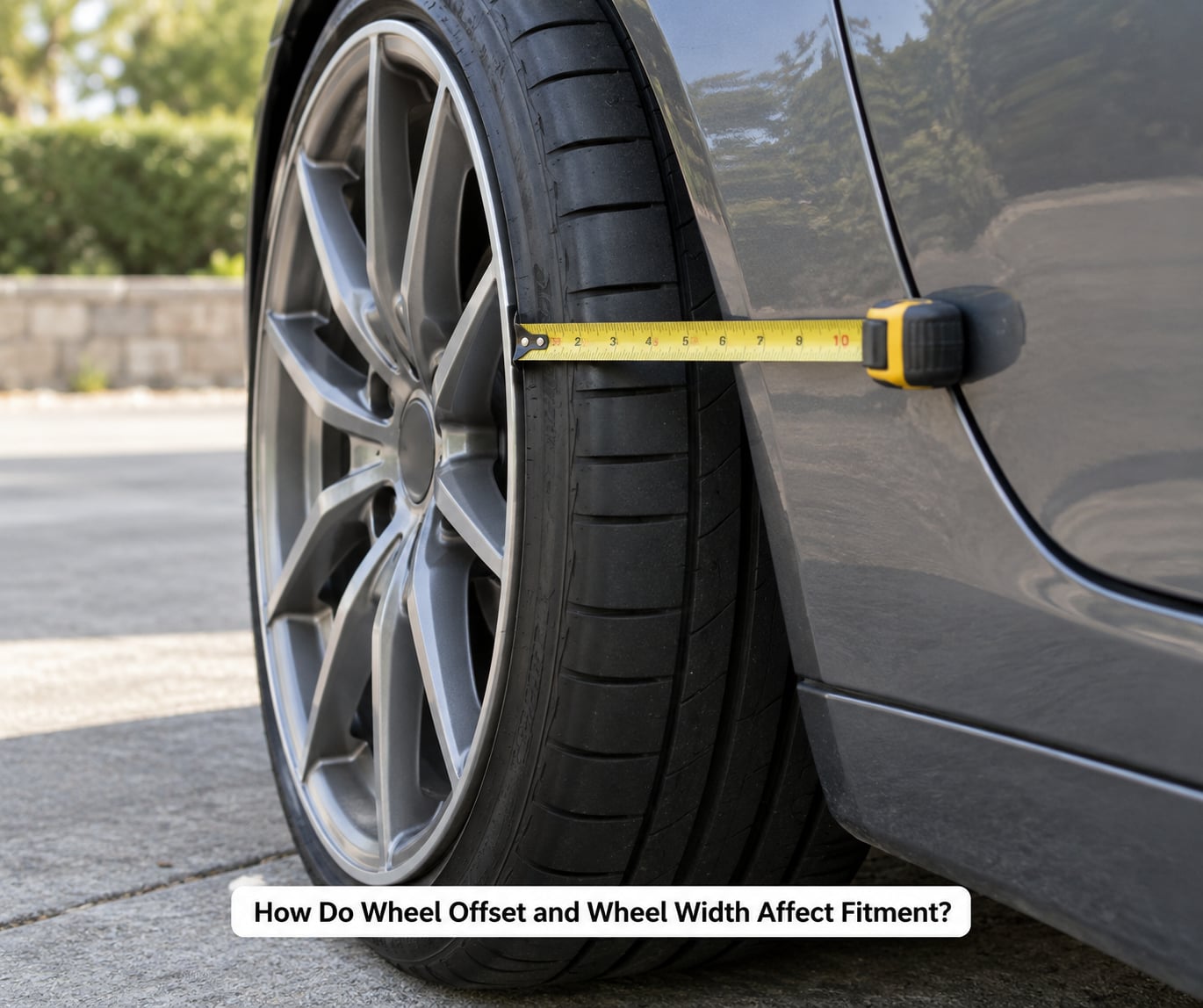
Fitment comes down to three numbers and one measurement. If you have ever measured these before, how to avoid wheel rubbing after a wheel upgrade covers the process in detail.
Wheel offset (ET) — a lower, more negative number pushes the wheel outboard. Adding a 10 millimeter spacer changes a stock ET35 to roughly ET25.
Wheel width — the front and rear track widths on most BMWs are wider than the old RWD cars, which means less room for a wide wheel on a stock setup. Width in millimeters and the resulting offset are a single package; you cannot change one without the other.
Rim diameter and tire profile — going up an inch in diameter while holding overall rolling diameter roughly constant preserves your speedometer reading and avoids a harsh ride. It also moves the sidewall closer to the arch.
Arch and liner clearance — this is the measurement people skip. With the suspension fully compressed (lock the steering and have someone bounce the corner, or use a ramp), measure from the tire sidewall to the fender lip and to the liner. Do it with the wheel turned both ways.
Wheel Spacers Pros and Cons for Offset Correction
The honest summary for offset correction: a spacer is the cheapest correct fix when the wheel you want is a sensible wheel that simply needs to sit a little further out. It is the wrong fix when the wheel is already too wide for the arch, or when the extra clearance you need belongs on the inboard side instead.
Before ordering any spacer, put the intended wheel and tire on the car with the brake package you actually have installed. Not the parts you plan to buy next month. Fitment changes when the caliper changes.
Are Wheel Spacers Safe for BMWs?
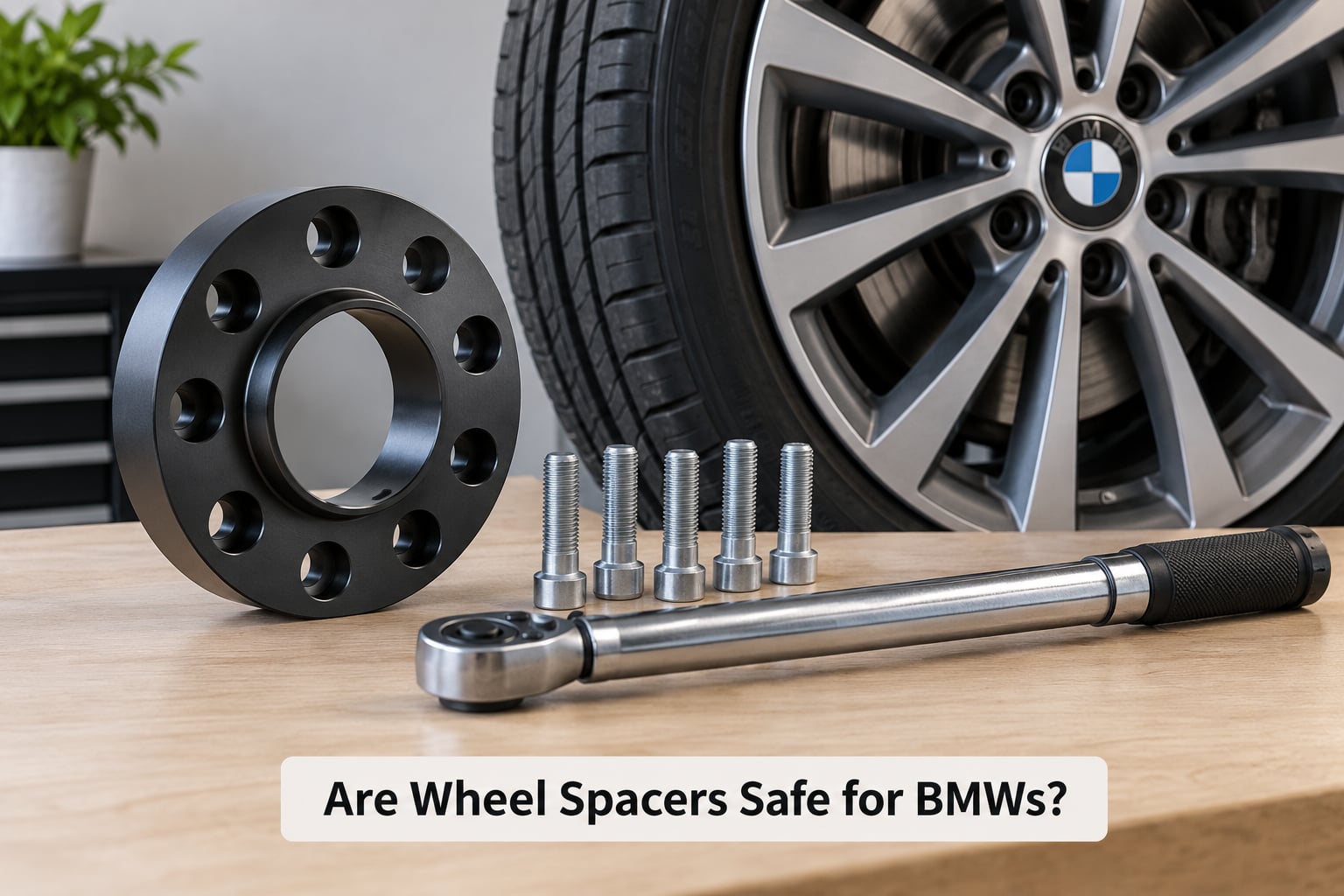
Yes, when the spacer is hub-centric, machined rather than cast, correctly sized for the load, installed on all four corners, and torqued with a calibrated wrench to the figure in your owner’s manual.
That is a short list, and each item matters. Here is what safe actually looks like on a BMW.
Where Spacers Are Low Risk
A 3 to 5 millimeter spacer used to clear a suspension component or bring a wheel out to flush is close to invisible. The added leverage is tiny, the load path stays essentially where the factory intended it, and most owners report no change in the car at all.
Where Spacers Carry More Risk
A thick spacer on a heavy xDrive or xDrive M car changes driveshaft and CV angles at the same time as it loads the bearings. Track cars brake hard enough to make bearing life a real question, and owners who live with a heavy daily driver with 20 inch wheels feel every bump through the steering more than they did before.
Stop and have a shop inspect before fitting if any of these are true: you have a tire rub you cannot explain, any drivetrain clunk in turns, a wheel that has already been repaired, or a bent rim history on that corner.
What Actually Makes a Spacer Fail
Almost never thickness alone. The failures come from hardware that was never precision machined, a hub bore with too much clearance, studs torqued with an impact wrench and never re-checked, or nuts reused after a second removal. Quality of manufacture and installation discipline decide the outcome more than the millimetres involved.
How Much Wheel Spacer Should You Use?
Use the least thickness that solves the problem. Thicker is not better, and it is not a solution to anything except a measurement you have not taken.
| Thickness | What it is for | Risk level |
|---|---|---|
| 3-5 mm (0.12-0.20 in) | Clearing a caliper or control arm, bringing a wheel slightly outboard | Low |
| 6-12 mm (0.25-0.50 in) | Correcting offset on a mild wheel change, tire clearance on a lowered car | Low to moderate |
| 20-25 mm (0.75-1 in) | Full size offset correction on a dedicated spacer set with matching studs | Moderate; check arch clearance under compression |
| 50-75 mm (2-3 in) | Body lift style stance on a truck or SUV | High on a unibody car; changes turning radius and leaf spring loads |
If you need 75 millimeters of spacer on a unibody BMW, the wheel or the fitment goal is wrong, not the spacer.
Do Wheel Spacers Change Handling or Braking?
A little, in ways you feel rather than measure.
Steering feel: the scrub radius grows, so the wheel takes more effort at parking speeds and more of your input arrives as kickback over expansion joints. Drivers describe the car as slightly more nervous.
Braking: the brake force at the pedal does not change. What changes is the load path — the rotor sits further from the hub centerline, so the caliper sees slightly more bending moment and the bearing behind it carries more. Braking force stays the same; bearing and caliper life become items to watch.
Turn-in and balance: a wider track resists roll slightly better in steady cornering. Corner-entry agility is usually unchanged or a touch slower. Nothing here changes the underlying balance of the car.
Turning radius: noticeably longer with a thick spacer on the outside wheel. This is the reason body-lift style builds cannot fit in a normal parking space without planning.
Will spacers improve handling? Marginally, in one narrow way, at the cost of heavier steering and more component wear. If you want real changes to how a car handles, they come from tires, alignment and dampers.
How to Choose Wheel Spacers for a BMW
- Hub-centric, always. A raised pilot lip matching your hub bore. Anything else on a BMW is a gamble with your steering wheel.
- Machined or billet, not cast. The finish on the pilot face is the finish that determines concentricity. This is the quality check that matters.
- Load rating above the corner weight. Read the tire’s load rating and the vehicle’s per-corner figure. A spacer rated below what your tires can carry is not a spacer.
- Correct thickness per axle. BMW front and rear fitment often needs different amounts. Buy a front and rear set rather than four identical discs.
- Hardware included or known. Bolt-on sets need studs and nuts rated for the extended length. Check whether your factory studs require shortening or replacement, and account for the wheel’s mounting depth.
- Clearance verified, not assumed. Measure at full compression with the wheel turned lock to lock.
- Torquable to spec. The spacer must allow the lug nut to reach its proper torque. An extended stud that bottoms out early is worse than a stock setup.
On brands: nobody in this space publishes wear data, so judge on construction and included hardware rather than the badge. Ask the seller directly whether the pilot lip is machined and whether they publish the material.
How Are Wheel Spacers Installed and Checked?
This is a job for a torque wrench, not an impact gun. Budget an hour per axle if you have done brakes before.
- Inspect first. Check the rotor face for rust pitting and the hub for scoring or cracks. A rusty rotor surface under the wheel is a good reason to have it machined or replaced before you go further.
- Clean the mating surfaces. Hub face, rotor hat, spacer both sides and the wheel mounting face. Paint and rust here are what cause the spacer to sit slightly proud and wobble.
- Confirm hardware. Verify the studs protrude through the spacer and wheel with enough thread engagement remaining for full torque. If they do not, stop and get the studs handled properly.
- Fit the spacer. Hand-tighten all studs first so the spacer seats squarely. Never torque one corner at a time.
- Torque in a star pattern. Work through the sequence in stages at the torque specified for your wheels in the owner’s manual, not a generic number.
- Refit the wheel and torque the lug nuts in the same star pattern to the correct lug torque. Seat the wheel on the pilot lip, not on the studs alone.
- Re-torque after 50 to 100 miles. This interval is not optional. It is also the moment to look for a rubbing mark on the liner.
- Get an alignment if toe or camber changed or if the car pulls. For spacers alone on an otherwise stock alignment, many shops skip it — ask your shop to check toe and camber with the car at ride height.
After installation, add hub and bearing inspection to your regular service checks and listen for a hum that changes with speed. That hum is the bearing telling you the added leverage caught up with it.
Wheel Spacers vs. Wider Wheels or Suspension Changes
Three ways to solve a fitment problem, in increasing order of invasiveness.
| Option | What it changes | Best when |
|---|---|---|
| Spacer | Moves the wheel outboard, adds leverage | The wheel is right and sits slightly too far in |
| Wheel with correct offset | Nothing extra; the wheel was built for the car | You are buying new wheels anyway, or the wheel is too wide |
| Suspension change | Changes geometry and ride height | A diagnosed problem, not a fitment complaint |
Buying a wheel at the offset the car wants is always the cleanest answer. It puts the load where the engineers designed it and removes the maintenance item entirely. If you want to think about mixing front and rear sizes, staggered wheel setup pros and cons covers that decision.
Order of preference: correct wheel, spacer, suspension work last. And if you are already planning new wheels for other reasons, ask a shop to measure what offset you actually need rather than guessing from a listing photo.
Frequently Asked Questions
Are wheel spacers safe for daily driving?
Spacers are safe for daily driving when they are hub-centric, machined rather than cast, sized for your corner load, and torqued with a calibrated wrench to your owner’s manual figure. Thin spacers of 3 to 12 millimeters used for fitment are low risk on a stock BMW. Re-torque after the first 50 to 100 miles and treat the wheel bearing as a known maintenance item.
What size wheel spacers are safe to use?
Use the least thickness that solves the problem. 3 to 5 millimeters clears most calipers and control arms. 6 to 12 millimeters suits offset correction on a mild wheel change. 20 to 25 millimeters needs matched studs and a full clearance check at full compression. Anything approaching 3 inches on a unibody car changes turning radius and loads suspension parts beyond what they were designed for.
Do wheel spacers wear out wheel bearings faster?
Yes, and no manufacturer will claim otherwise. Pushing the wheel outboard creates a lever arm on the hub bearing, so it carries more load through every joint of the suspension geometry. Many owners reach the bearing replacement earlier than the factory schedule suggests. Plan for it as scheduled maintenance rather than treating it as a defect.
Do wheel spacers affect handling and steering feel?
They change steering feel more than they change handling. The added offset grows the scrub radius, so the steering wheel feels heavier at low speed and gives more kickback over bumps. A wider track adds a small amount of steady-state cornering stability. Corner-entry response is usually unchanged or slightly slower. None of this changes the car’s underlying balance.
Do I need an alignment after installing wheel spacers?
Often not, if the car keeps its alignment settings. Spacers alone rarely shift toe or camber on a stock setup, though the extra load can affect how the suspension sits at ride height. Get an alignment if the car pulls, if the tires show uneven wear, if camber or toe was already adjustable, or if you also changed dampers or springs.
Are wheel spacers legal?
There is no single national answer in the United States, and rules vary widely by state. Many states regulate how far a fender or tire may extend past the body, and some set an outright limit on protruding hardware. If a spacer pushes your tire past the fender line you may be outside the limit. Check your own state’s motor vehicle code and your insurer’s requirements before fitting anything thick.
Conclusion: Should You Use Wheel Spacers?
Wheel spacers are a sensible fix when your wheel is the right wheel and it simply sits too far in. That is a real problem on a lot of BMW fitments, and a correct spacer solves it for a fraction of the cost of buying the set again.
Skip them if you are chasing a bigger tire on a car that was never meant for it, if your ride is already soft and heavily loaded, or if a 4xDrive model puts drivetrain angles in question. And skip them entirely if the answer to your fitment problem is a lug-centric disc from a big-box shelf.
Before you order anything: mount the wheel and tire you actually plan to run, measure at full compression, record the clearance you need, then buy the thinnest hub-centric spacer that closes that gap. If the number comes out larger than about 25 millimeters, stop and look for a different wheel.