
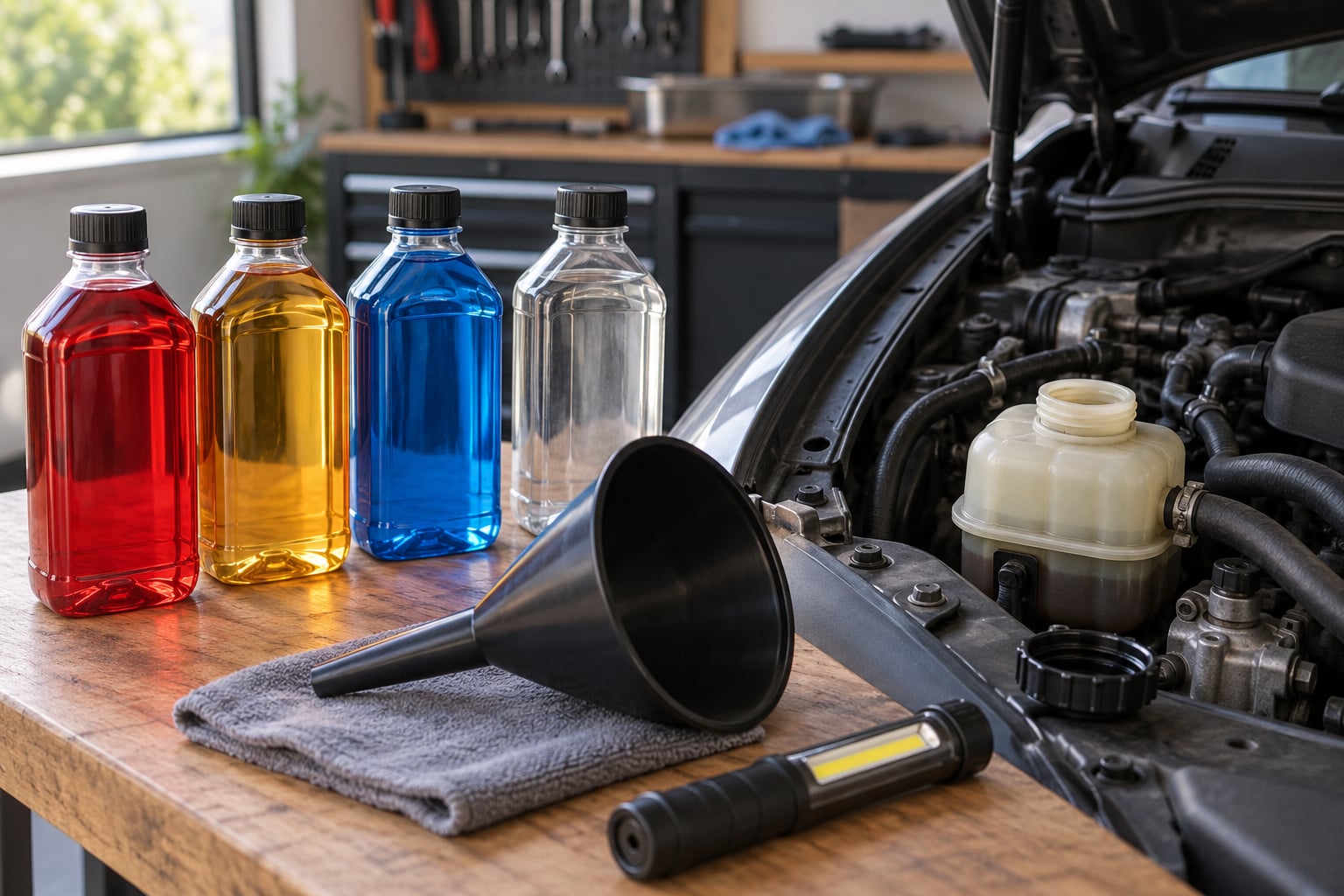
Most BMWs with hydraulic steering take automatic transmission fluid, and a few older models take a dedicated power steering fluid instead. The difference is not the color on the jug — it is the specification your owner’s manual lists, and that is the only thing that should decide what goes in the reservoir.
Get this wrong and the usual result is foaming, a groaning rack, or seals that start to weep. Get it right and the fluid change takes fifteen minutes and a turkey baster. This guide breaks the power steering fluid types you will actually run into, what BMW approvals mean, and how to identify the one your car wants.
Table of Contents
- What Is Power Steering Fluid and Why Does the Type Matter?
- Power Steering Fluid Types at a Glance
- Which Power Steering Fluid Types Are Common in BMWs?
- OEM, Specialty, and Universal Power Steering Fluids
- How to Identify the Correct Fluid for Your BMW
- Power Steering Fluid Colors and What They Actually Mean
- What Do BMW Fluid Approvals and Specifications Mean?
- Can You Mix Power Steering Fluid Types?
- How Fluid Condition Reveals a Steering Problem
- Safety and Service Reminders for BMW Owners
- Frequently Asked Questions
- Does the color of power steering fluid identify which type to use?
- Can I use regular automatic transmission fluid in my BMW power steering system?
- Is synthetic power steering fluid always better for a BMW?
- Does BMW require genuine power steering fluid, or are approved alternatives acceptable?
- Can I mix red and amber power steering fluid if both are labeled for my car?
- What should I do if my BMW has foaming, a grinding noise, or repeatedly low power steering fluid?
- Bottom Line: Choose by Specification, Not Color
What Is Power Steering Fluid and Why Does the Type Matter?
Power steering fluid is a hydraulic fluid. It is pumped through the hoses and steering rack to add force to your steering input, which is why the wheel stays light at low speed and in a parking lot.
The same fluid does three other jobs as it circulates: it lubricates the pump and rack, it carries heat away from them, and it keeps rubber seals conditioned. Those jobs are why a wrong fluid is not a minor mismatch.
Viscosity is the property readers feel most. A fluid that is too thin pumps noisily and lets pressure drop; one that is too thick makes the steering feel heavy and sluggish, especially when cold. Additives do the quieter work — anti-foam, anti-corrosion, and seal conditioners — and those are exactly what differ between fluid families.
BMW has used more than one fluid type over the decades. Early E30 and E32 cars, some E46 models, and a scattering of later chassis call for a dedicated hydraulic fluid with a heavier base oil, while the majority of modern BMWs specify an ATF that also serves the transmission.
Power Steering Fluid Types at a Glance
Here is the short version of the categories you will meet on a shelf or in a manual. Only the rows that match your car’s specification belong in your reservoir.
| Fluid type | Base oil | Typical use | Where it shows up in BMW specs | Watch out for |
|---|---|---|---|---|
| ATF (automatic transmission fluid) | Light mineral or synthetic base with friction modifiers | Shared fluid for transmission and steering | Most E46, E90, F30, G20 and newer models | A general ATF label means nothing unless it matches the listed specification |
| Dedicated PS / hydraulic fluid | Heavier mineral or synthetic hydraulic oil | Steering only, on cars without a shared system | Certain E32, E34, E36, E38 and E46 applications | Do not assume a heavier fluid is an upgrade |
| Synthetic | PAO or ester synthetic base | Wide temperature range, long service life | Approved synthetic specifications and modern specialty fluids | Synthetic is a chemistry, not an approval |
| Conventional / mineral | Petroleum mineral base | Older systems and older seals | Many legacy BMW specifications | Can thin out sooner in high heat |
| Universal / multi-vehicle | Varies by brand | Convenience claim across many makes | Only when the label names the exact BMW approval | Broad claims usually match nothing precisely |
| Genuine OEM fluid | As specified by BMW | Factory fill and correct replacement | The reference point every other fluid is compared against | Not the only acceptable choice if an approval is met |
Which Power Steering Fluid Types Are Common in BMWs?
ATF Power Steering Fluid
Most modern BMWs share one fluid between the transmission and the steering rack. That is a design decision, not a shortcut: the same fluid has to work as a torque converter fluid, a gear lubricant, and a hydraulic fluid, and its additive package is built to do all three.
What ATF brings to the steering side is a stable viscosity across a wide temperature range, strong anti-foam additives, and seal conditioners that keep the rack seals from hardening. That is genuinely well suited to hydraulic steering.
Here is the catch. “ATF” on a bottle is a category label, not a specification. Different automakers built incompatible ATF over the same decades, so an unspecified bottle bought on a general parts shelf has no way to tell you whether it is the fluid your car was engineered around. Your manual’s specification line is the only reliable guide. If a yellow steering warning has ever come on in one of these cars, our guide to what a yellow steering wheel light means is worth a look before you start adding fluids.
Synthetic and Conventional Power Steering Fluid Types
Synthetic and conventional describe the base oil, not the approval. A synthetic fluid is built from chemically engineered molecules that hold their viscosity better at both ends of the temperature range, resist oxidation longer, and lose less of their properties as they circulate through heat and shear.
Conventional fluid is refined from petroleum and does the job fine on systems that were designed around it. In a car that has never left a mild climate, you may never notice the difference between the two on a dipstick.
Where the two genuinely diverge is seal compatibility and lifetime. The old fear that synthetic attacks natural rubber seals is mostly outdated for current elastomers, but legacy BMWs with older elastomer formulations are exactly where a specialist check is worth it. The real risk is ignoring the approval on the label because the word “synthetic” sounded like an upgrade.
OEM, Specialty, and Universal Power Steering Fluids
Three labels get shuffled around in forums, so it helps to separate them cleanly.
Genuine OEM fluid is what the factory filled the car with, sold under the manufacturer’s own brand. It is the reference standard, not a legal requirement. If an aftermarket fluid carries the approval BMW lists, it is designed to the same standard.
Specialty fluid is the aftermarket version that names a specific approval or specification on its label, for example a ZF or Mercedes specification number. This is the category most BMW owners should be shopping in, because it is the only category where the label tells you something checkable.
Universal fluid is a marketing claim that it fits many vehicles. It can be fine if the container also lists the exact approval your manual requires. If the label only says “multi-vehicle” or “any hydraulic fluid,” assume it does not meet your specification, no matter how well the fluid itself might work in a generic test.
How to Identify the Correct Fluid for Your BMW
Work through this in order and stop at the first thing that gives you an answer.
- Open the owner’s manual for your model year and find the power steering fluid specification. The manual is the source of truth and it beats every forum post, including this one.
- Read the reservoir and cap markings. Many BMW reservoirs are embossed with a fluid type or an approval number, and a few caps carry a screwdriver slot warning that tells you the car uses a specific fluid.
- Note the approval or specification code exactly as printed, then match it against the fluid you intend to buy.
- Check for production-year exceptions. Mid-year changes, facelifts, and market differences are routine on older BMWs, and the same model name can take two different fluids depending on build date.
- Use the part number if the manual lists one. A genuine part number removes all ambiguity, especially on cars that have been converted or repaired.
- Verify the label before you open the bottle. Confirm the approval is printed on the current packaging, not just on an older bottle design in the same listing photo.
One warning before you pour anything: some people top up repeatedly without ever finding the leak. A reservoir that needs fluid every few hundred miles is a symptom, and the related fluid service is described in our BMW differential fluid change guide for the same reason — the drain and refill is the check, not the fix.
Power Steering Fluid Colors and What They Actually Mean
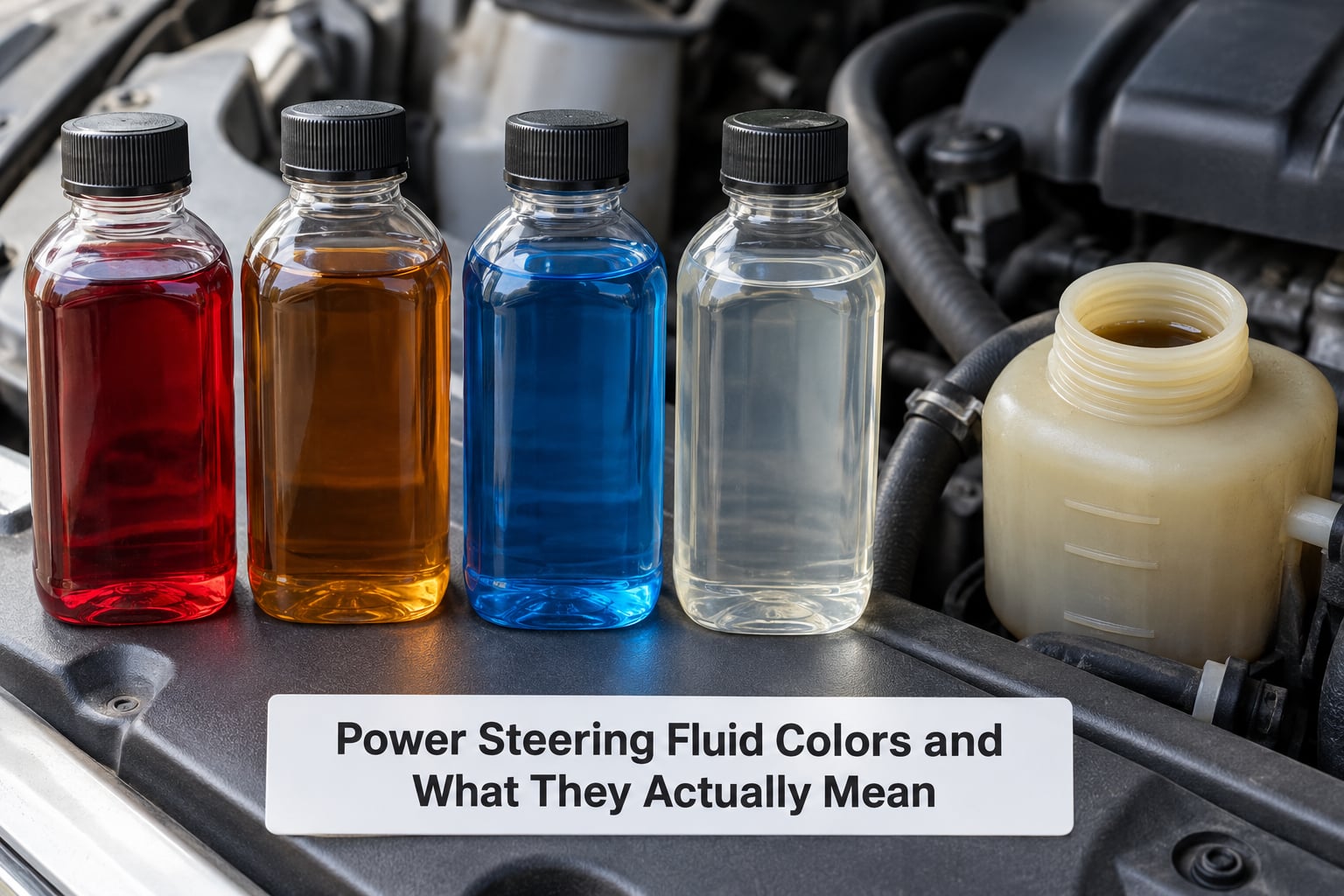
Short answer: color identifies a brand’s dye, not a fluid type. Red, amber, blue, clear, and pale straw all appear across products that are chemically unrelated, and one brand’s red ATF is not automatically compatible with another brand’s system.
Color becomes slightly more useful as a condition signal. Fresh fluid is usually clear and translucent. Dark brown or black suggests oxidation and age. A milky or cloudy look means either aeration or water contamination, and both are reasons to stop driving normally. Bright metallic flecks in the fluid point to rack wear debris.
What color cannot do is tell you the base oil, the additives, or whether the fluid carries your car’s approval. If someone tells you red means ATF and amber means dedicated power steering fluid, that person is describing a convention, not a rule, and it will cost you eventually.
What Do BMW Fluid Approvals and Specifications Mean?
BMW documentation uses several different kinds of reference, and mixing them up is where mistakes happen.
A factory fill part number identifies one specific product in one specific package size. It is the most precise reference there is and the easiest to buy against.
An approval is a performance standard a fluid manufacturer is licensed to meet. When your manual or a service bulletin names an approval, any fluid carrying that approval is a valid choice, which is exactly how an approved aftermarket bottle stays in the running alongside genuine fluid.
An OEM-style specification is a technical description of what the fluid must do — viscosity, additive package, seal compatibility — without licensing anyone to a brand. It describes the target rather than certifying a product.
A viscosity requirement is the narrowest of the four. It states a number and leaves out the additives, so meeting the viscosity alone does not make a fluid correct.
When a BMW manual gives a fluid in general terms, treat that as incomplete information and confirm the approval with a dealer or a reputable specialist before buying. Specific model-year cases vary enough that we keep the general rule rather than guessing at your car.
Can You Mix Power Steering Fluid Types?
Topping up with the exact same approved fluid that is already in the reservoir is fine. That is a routine top-off, and it is what you should do when the level is slightly low between services.
Mixing base oil types is a different matter. Conventional and synthetic fluids, or two different ATF specifications, can behave differently enough to produce foaming, aeration, or seal swelling over time. A single small top-off is rarely a crisis, but it is worth following up with a proper drain and refill if you are not certain what is already in there.
Two situations call for a full service rather than a top-off. The first is when you know a different specification went in, even recently. The second is when the fluid is foaming, discolored, or has debris in it, because in both cases the problem existed before the fluid arrived and a top-off will not touch it.
How Fluid Condition Reveals a Steering Problem
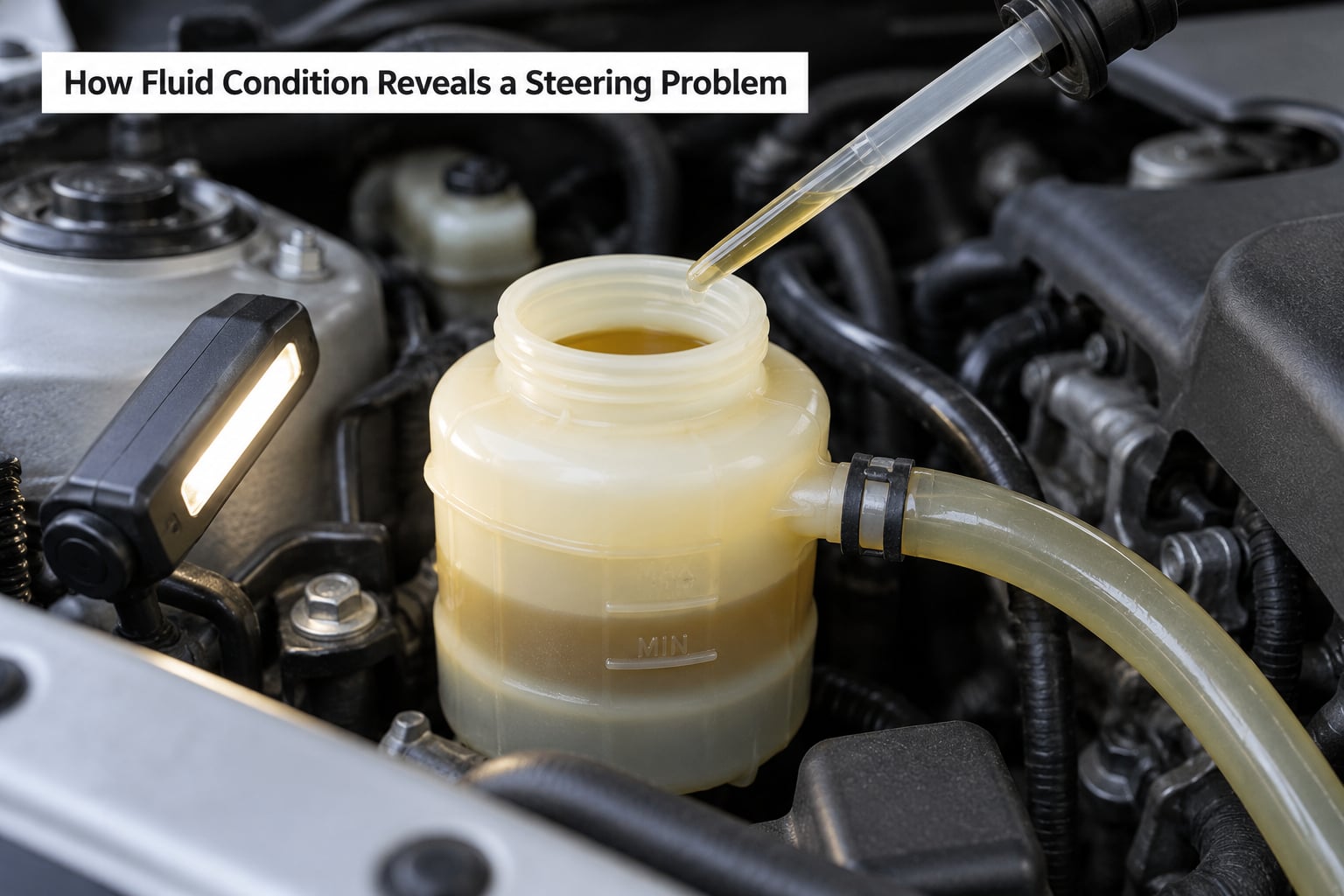
Fluid is cheap diagnostic information. Pull the dipstick, hold a sample up to the light, and you can learn a fair amount before anything has to come apart.
| What you see | What it usually points to | What to do |
|---|---|---|
| Level between MIN and MAX, fluid clear | Healthy system | No action; follow your service interval |
| Foamy or bubbly fluid, or a spongy wheel | Air in the system, low level, or a suction-side leak | Find the leak before the pump wears out |
| Dark brown to black, burnt smell | Oxidation or heat damage | Drain, flush, and refill with the specified fluid |
| Milky or cloudy | Water or coolant contamination | Stop driving and have it diagnosed |
| Metallic flecks or grit | Rack or pump wear | Plan a steering repair, not a fluid change |
| Level drops between services | Slow leak at a hose, rack seal, or pump | Locate the leak; repeated top-offs hide damage |
Two more clues are worth listening for. A whine that rises with engine speed and falls when you turn the wheel often points to aeration or a low reservoir. A groan or grinding sound that gets worse as you turn is a pump or rack telling you it is near the end.
Running a pump dry is genuinely destructive. It has no lubrication film left for its internal bearings, and the damage typically shows up as a failed pump within a short drive.
Safety and Service Reminders for BMW Owners
Use the specification from your owner’s manual for your model year, and confirm any approval with a dealer or specialist when the manual is vague. A clean, dedicated container is worth keeping for top-offs, because a single contaminated fill can undo a careful service.
Take care over which reservoir you open. On BMWs the coolant expansion tank sits right next to the power steering reservoir, and the caps look similar from above. Verify the marking, not the position you remember.
Check the level on a cold engine unless your manual specifies otherwise, and read the dipstick the way it is marked. If the fluid is foaming, you see a leak, the pump is grinding, the fluid is overheating, or the level keeps dropping, hand the car to a professional. Those are diagnosis calls, not top-off calls.
Frequently Asked Questions
Does the color of power steering fluid identify which type to use?
No. Color reflects a brand’s dye rather than the fluid’s chemistry, and red, amber, blue, and clear all appear on products with completely different base oils and additive packages. Use color only as a condition check: fresh fluid looks clear, while dark, milky, or foamy fluid points to a problem that needs attention.
Can I use regular automatic transmission fluid in my BMW power steering system?
Only if your manual specifies an ATF and the fluid you buy meets that exact specification. Most modern BMWs do run ATF in the steering system, but an unspecified bottle from a parts shelf carries no guarantee. On older models that call for a dedicated hydraulic fluid, ATF is the wrong viscosity and the wrong additive package.
Is synthetic power steering fluid always better for a BMW?
Not automatically. Synthetic base oil resists oxidation and holds viscosity across temperature better, which matters on modern cars, but it says nothing about seal compatibility or approval. On an older BMW with legacy elastomer seals, the base oil matters more. Match the specification your manual lists and let the chemistry follow.
Does BMW require genuine power steering fluid, or are approved alternatives acceptable?
Approved alternatives are acceptable. BMW specifies performance standards, and any aftermarket fluid carrying the listed approval meets the same requirement as the fluid in the factory package. Genuine fluid is the reference standard and removes guesswork, but it is not the only valid choice. Keep the container, since the approval is what proves the match.
Can I mix red and amber power steering fluid if both are labeled for my car?
If both containers list the identical approval your BMW manual requires, a top-up is fine. If the labels only look compatible, or you are guessing about what is already in the reservoir, the two fluids may use different base oils and additive packages. That can lead to foaming, aeration, or seal swelling, so drain and refill with one specified fluid instead.
What should I do if my BMW has foaming, a grinding noise, or repeatedly low power steering fluid?
Stop topping it up and get it diagnosed. Foaming and a groaning pump point to air, a low level, or a suction-side leak, and running the pump dry destroys it quickly. A level that keeps dropping means something is leaking at a hose, rack seal, or pump. A technician can find the cause before you replace parts that were never the problem.
Bottom Line: Choose by Specification, Not Color
Identify your BMW by model year, find the fluid specification or approval in the owner’s manual, match the chemistry and viscosity to that line, and pour it from a clean dedicated container. If the fluid is foaming, dark, milky, or gritty, or the level keeps dropping, treat that as a diagnosis job rather than another top-off.