
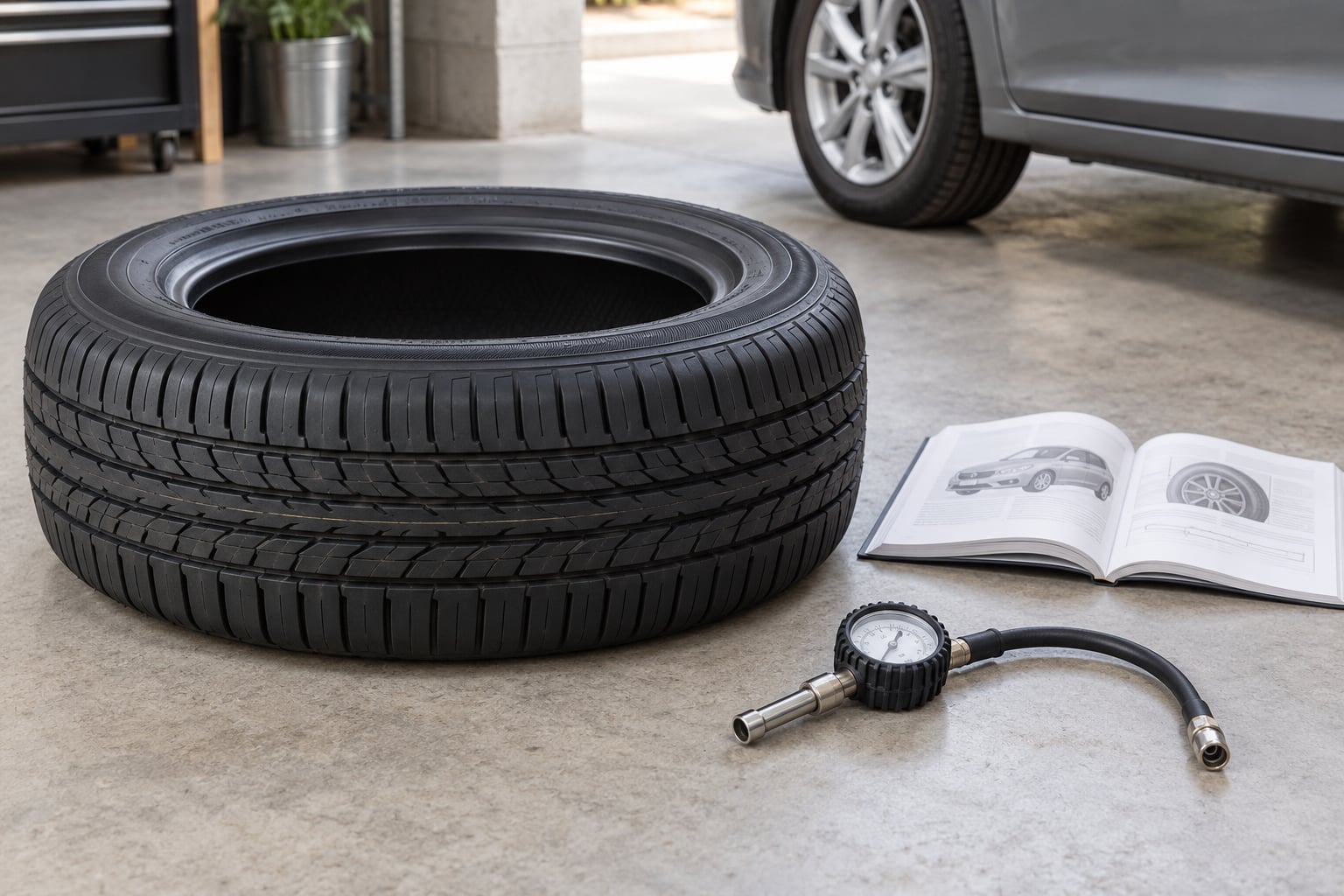
If you’re wondering what tire speed rating you need, the answer is the letter printed on the driver’s door jamb placard, and you should match it or go higher. Never fit a tire with a lower rating than your car was built for, and always take the load index and tire size from the same placard. Everything else on the sidewall is marketing detail; the letter after the size is a lab-certified sustained-speed limit, not a quality score.
That last point is where most drivers get it wrong. A V-rated tire is not a better tire than an H-rated one. It’s a tire built to hold together at a higher speed under load, which matters on a car that spends its life on the Autobahn and not much on a sedan that never leaves 60 mph. On the other hand, an S-rated tire on a car the placard says needs T is a genuine safety problem, no matter how little you drive.
Below is the whole thing laid out: what the letters mean, where to find your car’s requirement, what happens when you go up or down, and the handful of mistakes that put mismatched rubber on the road.
Table of Contents
- What Tire Speed Rating Do I Need?
- What Do the Numbers and Letters on a Tire Mean?
- How Do You Find the Required Rating for Your Car?
- What Tire Speed Rating Do I Need for Daily Driving?
- Can You Install a Higher or Lower Tire Speed Rating?
- Do Winter, Sport, and Track Tires Need Different Ratings?
- How Do Towing, Passengers, and Cargo Affect the Rating?
- What Rating Works Best for BMWs and Other Performance Cars?
- Common Tire Speed Rating Mistakes to Avoid
- Frequently Asked Questions
- Conclusion
What Tire Speed Rating Do I Need?
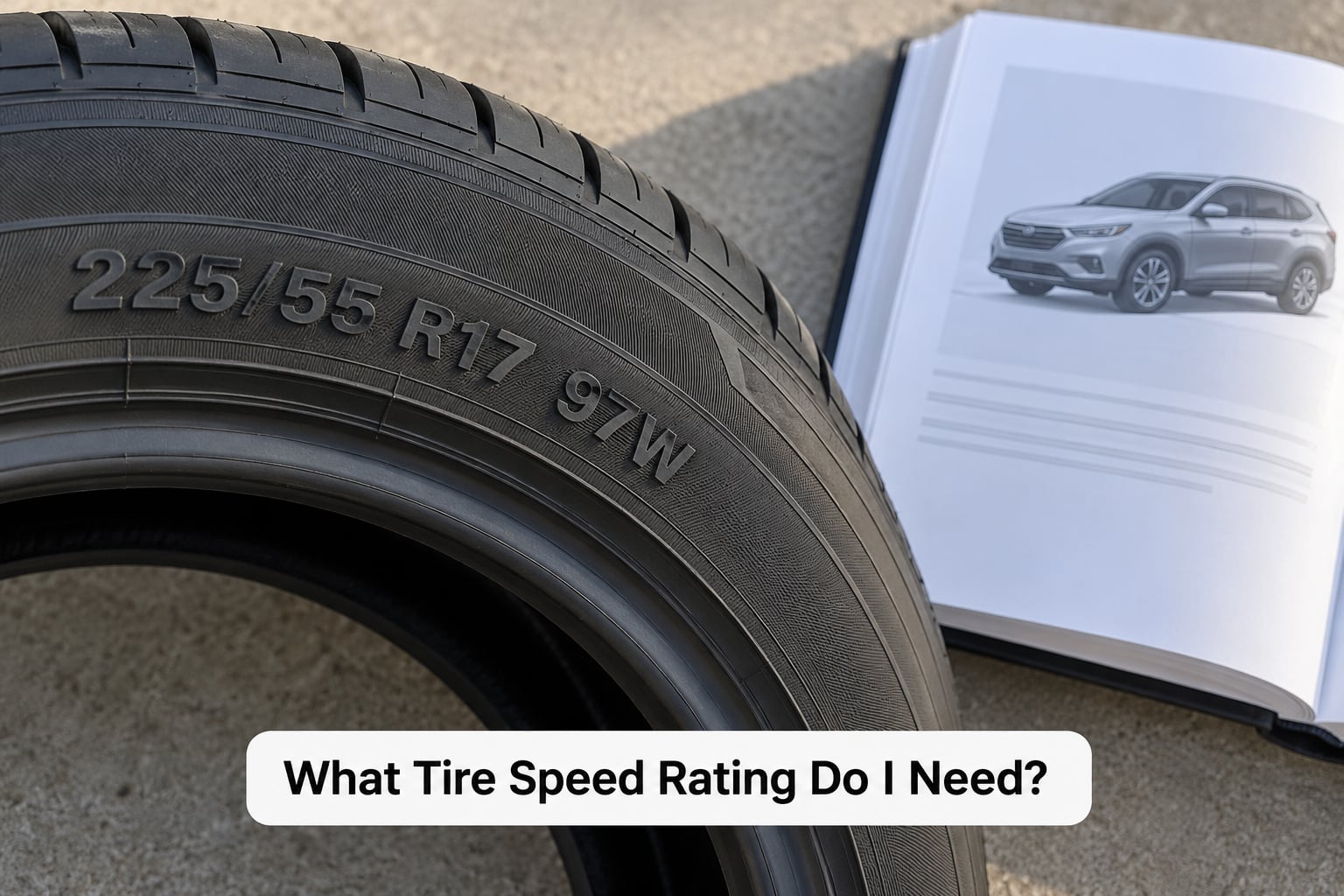
You need the speed rating your vehicle manufacturer specifies, which means the letter on the door jamb placard, matched or exceeded. If the placard calls for T and you fit T, you’re done. Fit V and you’re fine, assuming the load index and tire size are also correct.
Speed ratings exist because tires deform and generate heat at speed. Under sustained high speed with a heavy vehicle on top, a soft or under-built carcass can overheat, throw a belt, and come apart. The rating is the speed at which lab testing showed the tire still held together at its rated load, so it only means something alongside a load index. A speed symbol without the load number next to it is half a specification.
Common passenger-car speed symbols at a glance
| Symbol | Max speed (mph) | Max speed (km/h) | Where you see it |
|---|---|---|---|
| L | 75 | 120 | Classic and small older sedans |
| M | 81 | 130 | Temporary spare tires, older economy cars |
| N | 87 | 140 | Older sedans and light wagons |
| P | 93 | 150 | Light trucks, SUVs, some minivans |
| Q | 100 | 160 | Studded winter tires, some four-wheel-drive trucks |
| R | 106 | 170 | Mid-size sedans, light trucks |
| S | 112 | 180 | Family sedans, small crossovers |
| T | 118 | 190 | Sport sedans, crossovers, light trucks |
| U | 124 | 200 | Sport coupes, early performance sedans |
| H | 130 | 210 | Family sedans, minivans, many crossovers |
| V | 150 | 240 | Sport sedans, coupes, performance SUVs |
| W | 168 | 270 | High-performance and exotic cars |
| Y | 186 | 300 | Supercars, ultra-high-performance cars |
Two extras you will meet on some tires. ZR on a sidewall means the tire is rated above 150 mph, though the exact figure is confirmed on the tire itself or by the manufacturer. A dual rating looks like VW or VY, where the first letter is the sustained limit and the second is the peak limit the tire can handle briefly under specific conditions.
If you want the complete picture of every marking rather than just the letter, our guide to how to read a tire sidewall walks through the DOT code, treadwear grade and the rest.
What Do the Numbers and Letters on a Tire Mean?
A complete sidewall size looks something like P215/65R15 95H. Every character in that string does a job, and knowing the order turns a jumble into a specification you can shop with.
What does P mean?
P means P-metric, a passenger car tire measured in millimeters. LT means light truck, used on SUVs and pickups. The difference matters because LT tires are built to a lower number of plies but a stiffer casing and typically carry a higher load index at a smaller size.
What does 215 mean?
That is the section width in millimeters from sidewall to sidewall. It is not the tread width, and it is not a measurement of the tire’s width under load either. It is the nominal width the size is named for.
What does 65 mean?
The aspect ratio, meaning the sidewall height is 65 percent of the section width. A lower number is a shorter sidewall and a sharper steering response, which is why performance cars run 30s and 40s while family sedans sit in the 60s.
What does R mean?
R is radial construction, where the internal casing plies run at 90 degrees to the direction of travel. Nearly every modern tire is radial. D stands for diagonal, which is the old bias-ply construction you’ll find on some truck and trailer tires.
What does 15 mean?
That is the wheel or rim diameter in inches, measured across the bead seat. It has to match the rim on the car exactly. This is the number to compare when you shop, and it is where our guide on choosing the right tire size for your car helps.
What does 95H mean?
This is the part people actually ask about. 95 is the load index, a number that maps to a weight in pounds. H is the speed rating, certifying a maximum sustained speed of 130 mph under that load.
Load index 95 corresponds to 1,521 lb, roughly the weight of the tire, wheel, and everything above it. A higher letter with the same load index is a tire built to carry that weight at a higher speed, which is why the two numbers always travel together on the placard.
Further along the sidewall you will find the four-digit DOT date code, where the first two digits are the week and the last two the year, so 4021 means the 40th week of 2021. The three-number ratings after that are treadwear, traction and temperature grade. Treadwear is a comparative index rated against a reference tire; traction runs A through C; temperature also runs A through C, and A is the best.
How Do You Find the Required Rating for Your Car?
There are three sources, and only the first two are authoritative. Work down the list in order.
1. The driver door jamb placard. Open the driver’s door and look at the door frame or the pillar sticker on the body. It lists tire size, aspect ratio, a cold inflation pressure for front and rear, and a combined load rating with speed symbol. The combined number and letter, such as 95H, is your requirement for every tire on the car. This sticker is set by the manufacturer and it outranks everything else, including what is currently bolted to your car.
2. The owner’s manual. The manual repeats the specification and adds detail the sticker leaves off, such as separate front and rear pressures for a staggered setup, or a note that a different size is permitted on the rear axle. The manual is also where your car’s stability control expectations and any tire wear indicator settings are described.
3. The current tire sidewall. Useful as a sanity check, not as the source. Owners on car-specific forums like e90post.com and mdxers.org point this out constantly: a tire on the car right now may carry a lower rating than the placard because a previous owner bought the cheapest thing that fit, or because the set was replaced two tires at a time. Read it, then go back to the placard.
On a temporary spare, the compact spare in the trunk carries its own limits. A space-saver spare is often M rated, restricted to 40 mph, and meant to reach a shop rather than finish a trip. The owner’s manual spells out whether it can be used on all four wheels or only one, and whether a metal wheel is required.
What Tire Speed Rating Do I Need for Daily Driving?
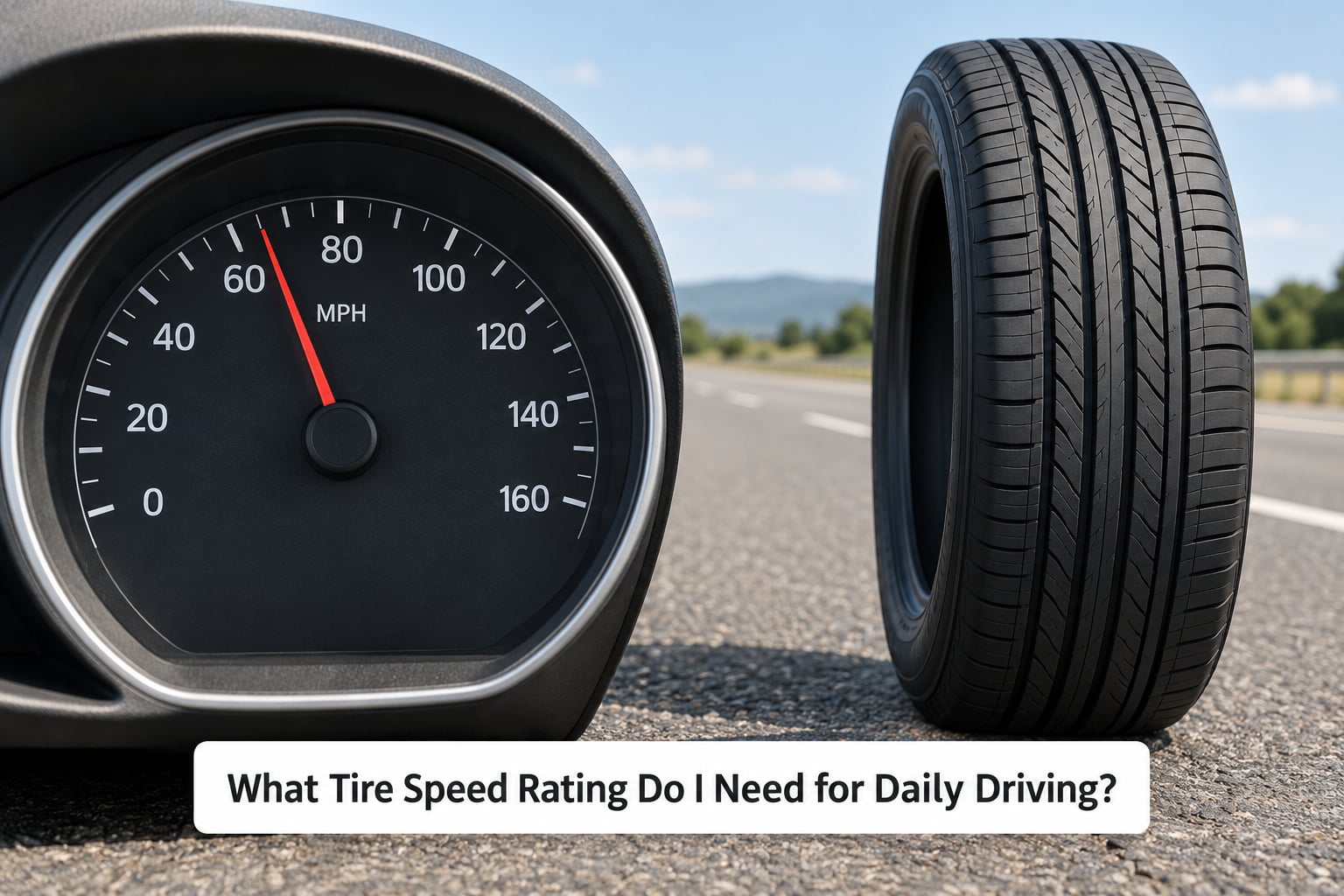
For daily driving, use the original-equipment rating on the placard. Mechanic consensus across r/MechanicAdvice is that going equal or higher is the rule, and for someone commuting at 65 mph in a 3,500 lb sedan, the factory rating is the sweet spot.
A higher rating is not free. Tires rated for sustained high speed use stiffer sidewalls and higher-quality compounds, which typically cost more, wear faster, and ride harder. On a thread over at community.cartalk.com, owners running S-rated tires on their daily cars make the same point: the rating is never reached, and what they care about is carcass construction, liability, and insurance rather than real-world capability.
An upgrade earns its keep in three cases. You tow regularly, you drive sustained highway miles in heat, or you drive a car that came with a low rating but a high rev limit and a performance package. Beyond that, more letter simply means more money out of pocket.
Vehicle weight and temperature are the two variables that quietly matter. A heavier car running H-rated tires at their rated load generates more heat than the same tire on a lighter car, and high ambient temperatures reduce the margin further. Heat is what destroys a tire, not the speedometer reading.
Can You Install a Higher or Lower Tire Speed Rating?
Going higher is acceptable. Going lower is not recommended. That one rule covers most cases, and the reason is heat and liability rather than a mysterious performance loss.
A higher rating raises the maximum sustained speed the tire is certified for while your car’s actual top speed stays the same. You also need the load index to be equal or higher, and the tire size to match the placard. If a shop quotes you a 105V where the placard says 95H, the size is almost certainly different too, and that difference will show up on your speedometer and in your ABS and stability control calibration. Our guide to checking tire pressure correctly covers the pressures that go with the size once you have it right.
A lower rating means the tire reaches its certified limit at a speed your car can exceed. At that point the carcass is running outside the conditions it was tested for. The failure mode is heat buildup, sidewall flex, and a belt or tread separation, usually at highway speed, usually with people in the car. There is also a paperwork problem: if the tire is below the manufacturer’s specification, an insurer or a court can use it to argue the driver contributed to a loss.
Two speed symbols never trade against each other. A tire with a higher speed letter and a lower load index is still not fit for the car. Load rating is not optional and cannot be compensated for, because the load is what the speed test was performed against.
Worked examples. Placard says 225/45R17 91V: a 225/45R17 91W tire is a clean upgrade. A 225/45R17 91T tire is below spec, even though T is faster than S. A 245/40R18 95Y is faster and loads more, but the diameter is bigger and the width is different, so it needs a clearance check and a speedometer recalibration. A 215/60R16 95H tire on that V-rated car is a downgrade in speed, a downgrade in load, and the wrong size too.
One exception worth knowing: when you replace two tires instead of four, shops generally match the tire being replaced, not the placard, so your new pair performs the same as the old pair. Check the date codes on the other two tires and replace the older pair to the same rating and construction.
Do Winter, Sport, and Track Tires Need Different Ratings?
Winter and track compounds do not raise or lower the letter requirement. The placard still applies. What changes is how the tire behaves and what it needs from you.
A winter tire is built from a compound that stays flexible below 45°F, and it usually carries a lower speed rating, often Q or S. Winter tire threads show plenty of owners happy with a lower rating precisely because cold weather means the car will never approach it. That reasoning holds, provided the tire is still the correct size and load index for the car.
Track use runs the other way. The limiting factor is no longer maximum speed, it’s grip and thermal control. A tire that has been sitting in a cold pit lane has no grip until it is up to temperature, and overheating a rear tire into its construction limit is how a sticky car becomes a wall. Follow the tire manufacturer’s warm-up, cold-pressure, and maximum-track-pressure guidance rather than guessing.
Electronic stability systems add a wrinkle. Cars with ABS, traction control, and drive-by-wire steering read wheel speed sensors. Tires with different diameters, constructions, or wear levels change how quickly those sensors report rotation, and the system responds by cutting torque or applying individual brake pressure. On BMWs and other performance cars, that is a real reason to stay with the specified size.
How Do Towing, Passengers, and Cargo Affect the Rating?
Load matters more to a tire than speed does, and the two ratings are printed together for that reason. The placard gives a combined load and speed specification, such as 95H, and that combination is certified as a set.
Check the gross vehicle weight rating and the gross axle ratings before loading up. Then add up what you are actually carrying: passengers, cargo, roof boxes, bike racks, and a tongue weight that sits on the rear axle. Every pound over the tire’s rated load at the tire’s rated pressure makes the tire run hotter, and heat is what ends tires.
A useful habit is to keep your loaded vehicle within about 85 percent of the tire’s load rating rather than at the limit. That margin is what absorbs a passenger you forgot about and a road wash that fills your tires with water, because water weight sits on the tire too. If you tow, the trailer’s tires carry their own ratings and their own limits, and the hitch load transfers into your rear tires on the hitch ball.
Choosing a tire by appearance alone is how people end up in trouble. A tire that looks big and aggressive may carry a lower load index than the one it replaced, and sidewall height is not load capacity. Read the two digits before the letter every time.
What Rating Works Best for BMWs and Other Performance Cars?
For a BMW, match the placard, and pay attention to whether the fitment is staggered. On many models the front and rear tires are different sizes with different speed symbols, and the placard lists both. A 225/40R19 93Y on the front and 255/35R19 101Y on the rear is a normal setup, not a mismatch, even though the letters differ.
Model-specific tire pressures and sizes matter here. BMW tables vary by wheel size, tire construction, and load, and all-season or summer compounds with a different internal construction can need different cold pressures than the placard lists for the stock tire. When you change size or construction, recheck pressures against the manual for that specific configuration rather than carrying over the old number.
Electronic stability systems on these cars are tuned to the factory rolling radius. A noticeably taller or shorter tire changes the diameter, which changes the speedometer reading and how the system reads wheel speed. Many owners on e90post.com report the car behaving differently, with stability interventions arriving earlier, after fitting an incorrect size.
And if the previous owner ran a different rating, that is not permission to repeat it. Match the placard for the replacement. The right tire for the job is a reputable one, correct size, correct load index, at or above the placard speed rating, in a compound suited to your climate.
Common Tire Speed Rating Mistakes to Avoid
Assuming a bigger tire has a higher rating. Diameter and speed rating are unrelated. Check the letter.
Matching only the letter and ignoring the load index. The two are certified together. A lower load index invalidates the speed rating.
Copying the markings off the tire already on the car. It may have been downgraded by a previous owner. The placard wins.
Treating the letter order as a quality ranking. Y is not a better tire than H. It is a tire certified to a higher speed, at a cost in price and tread life.
Going below spec because the tire was cheaper. It is a documented deviation from the manufacturer specification, and heat failure at highway speed is the price.
Ignoring a mismatched pair. When you replace two tires, match the pair being replaced and replace the older set first.
Assuming the shop’s default is your spec. Some owners on forums report a shop quietly installing a lower-rated tire. Read your sidewall against the placard every time you pick the car up.
Forgetting that the rating only holds at correct pressure. An underinflated tire runs hotter at the same speed. Check pressures cold, monthly, and before every long trip.
Using a spare outside its limits. A compact spare with an M rating and a 40 mph restriction is not a highway tire, however good the tread looks.
Frequently Asked Questions
Can I mix tire speed ratings on my car?
Mixing is not ideal, though the set’s capability is limited by the lowest-rated tire. Best practice is four tires of the same type, size, construction and wear level, which is why shops replace two at a time and match the older pair. If you must mix temporarily, keep the lower-rated tire on the rear for stability and stay within its speed limit.
Does changing tire size affect my speedometer?
Yes. The speedometer reads wheel rotation and assumes a rolling diameter. A tire about 3 percent larger in overall diameter makes the speedometer read roughly 3 percent low, so you travel faster than indicated. It also shifts ABS and stability control calibration. Stay within roughly 3 percent of the factory overall diameter and verify the reading against a GPS or another known source.
What tire speed rating is safe for highway driving?
Any tire whose rating meets or exceeds the letter on your door jamb placard is safe for highway driving, provided the load index and size also match and pressures are correct. An H-rated tire on an H-rated car is not unsafe on the highway just because the car’s top speed exceeds 130 mph. Ratings matter most in sustained heat, heavy loads and towing.
Does a higher tire speed rating mean better traction?
No. Speed rating certifies sustained speed under load, not grip. A higher-rated tire is built with stiffer construction and compounds that resist heat, which usually means a firmer ride, faster tread wear and a higher price. Wet and cold-weather traction come from the tread pattern and compound, so choose those for your climate rather than chasing a letter.
Can my spare tire have a different speed rating?
Yes, and temporary spares almost always do. A space-saver spare is commonly M rated and restricted to about 40 mph. It may be allowed only on the rear axle unless the manual says otherwise, and some require a metal wheel rather than the car’s alloy. Check your owner’s manual for the exact rules and tire size for the spare.
Does tire speed rating change the correct inflation pressure?
No. The speed rating itself does not set pressure, but tire size, construction and load do, and all three are listed on the placard with recommended cold pressures. A larger or heavier tire on the same car can need more pressure. Use the placard figure for the exact size and load you are running, and recheck when you change size or construction.
Conclusion
Start at the driver’s door jamb, not the internet and not the tire shop. Read the combined load index and speed symbol, match the approved tire size, and buy a reputable tire whose load index and speed rating meet or exceed both. Check your sidewalls against the placard when you collect the car, and keep pressures correct, because the rating only holds at the right pressure and load.
Updated for October 2026.