
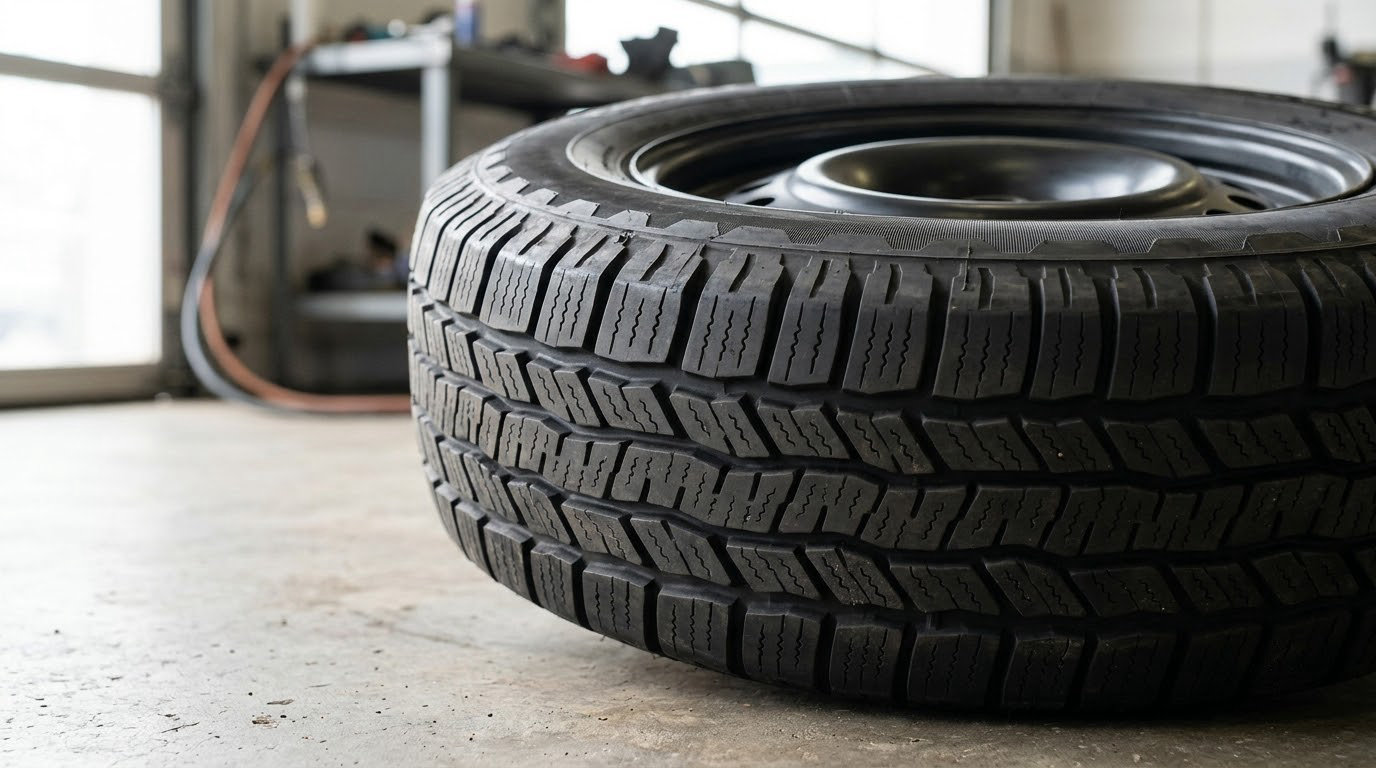
Short answer up front: tire siping is the practice of cutting thousands of tiny slits, called sipes, into the tread blocks of a tire without removing any rubber. The cuts let the rubber flex, conform to uneven surfaces, and push water and slush out of the contact patch. Yes, it helps in light snow, packed snow, and slush on a tire that still has usable tread. No, it cannot rescue a bald tire, a stiff summer compound, or black ice.
That second half of the question matters more than most of the arguments you will read online. Siping is a targeted winter-season tweak, not a substitute for the right tire. If you take one idea from this page, take that one.
Table of Contents
- What Is Tire Siping?
- How Does Tire Siping Improve Traction?
- What Situations Does Tire Siping Help With?
- Does Siping Work Differently on Snow and Ice Tires?
- Can You Do Tire Siping Yourself?
- Siping vs. Replacing a Worn Tire
- Safety Practices for Snow and Ice Driving
- Frequently Asked Questions
- Conclusion: What Should You Do First?
What Is Tire Siping?
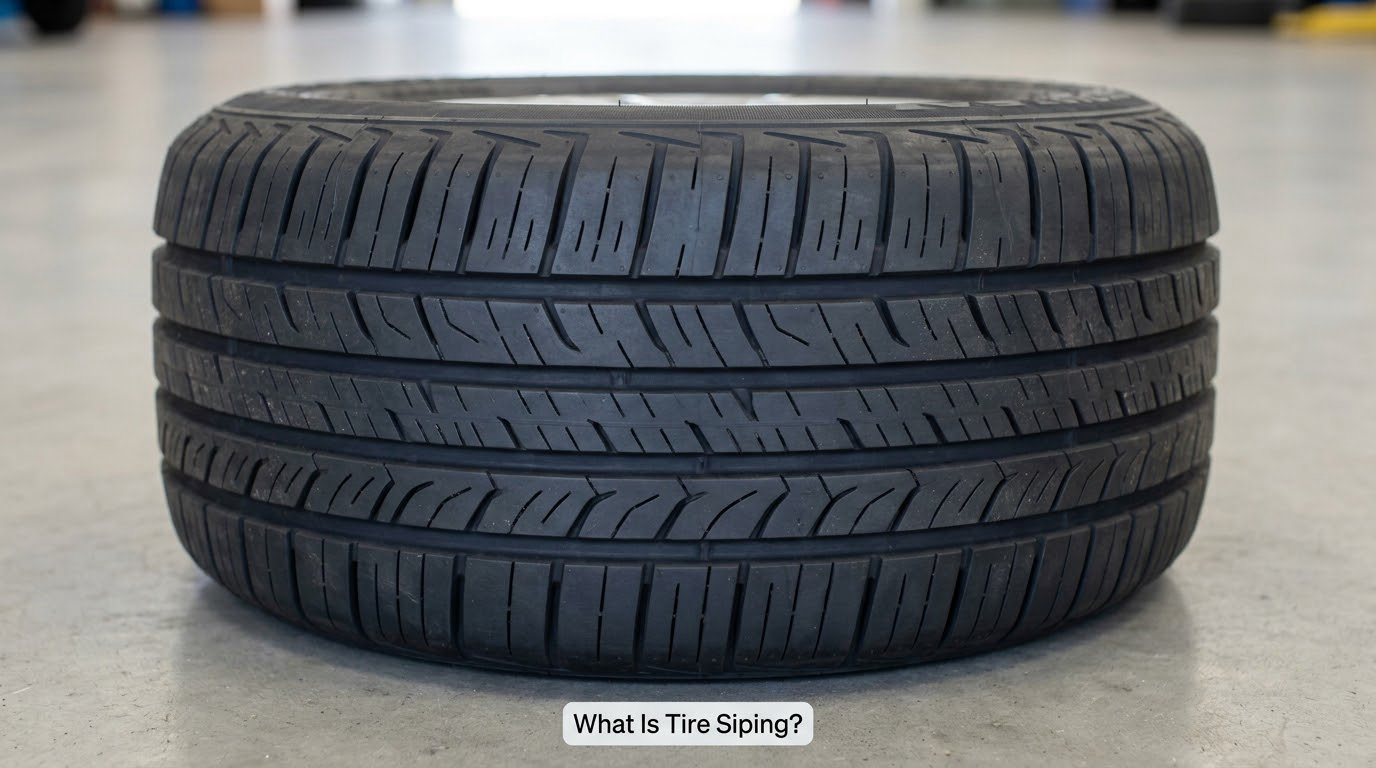
Tire siping is cutting narrow slits into the tread blocks of a tire so the rubber can flex independently. No rubber is removed; you are opening channels, not carving away material. A sipe typically runs a fraction of an inch deep, straight across the block or in a slight zigzag, and thousands of them can be added to a single tire.
The name comes from John Sipe, who cut parallel slits into the soles of boat deck shoes so wet decks would drain instead of staying slick underfoot. The idea migrated from footwear to tires, and trucking fleets adopted it early because drivers noticed their casings lasted longer and handled snow better.
What separates a sipe from a groove is simple. A groove is a gap molded into the tread by the manufacturer, running most of the way across the tire. A sipe is a short cut that stays within a single block and does not open into the next one. And if you pull a modern all-season or winter tire out of your trunk, you probably already own a siped tire: most factory sipes are thin slits in each block, invisible until you look closely or run a fingernail across the tread.
That last point surprises people. Siping is not an exotic modification. It is standard equipment on most road tires and completely absent on many mud-terrain and off-road tires, whose large solid lugs have nothing to flex.
How Does Tire Siping Improve Traction?
Three things happen when you cut a tread block, and the first one is the reason most people care.
Block flex. A solid rubber block behaves like a stiff brick: it bridges a rut, a rock, or a chunk of packed slush rather than dropping into it. Once you slit the block, the two halves can move independently, so more of the tread actually touches the irregular surface underneath.
Biting edges. Every sipe creates two small edges where the slit opens. On snow and ice, those edges catch and hold. A hard block skates across ice; a block full of edges has something to dig into.
Channeling. A slit in the contact patch acts like a squeegee blade, giving water and slush somewhere to go. That is why siped tires often feel more settled under braking in slushy conditions, where an unbroken block traps water and hydroplanes.
There is a fourth effect that runs the other way. Sipes let a block flex sideways, which is exactly the stiffness a tire needs when you corner hard on dry pavement. That is why modern winter tire designs use zigzag sipes: the zigzag lets neighboring sections interlock under cornering load, while a straight shop cut leaves them loose. Extra flex also means more heat generation and faster wear at the cut edges.
Here is the simple comparison. Picture a kitchen knife laid flat on an ice sheet: a smooth, continuous edge that meets the ice at one plane and slides. Now picture a serrated blade resting on the same ice. The teeth sit at slightly different angles and heights, so several of them catch at once. A siped tread block is the serrated version, and a monolithic block is the smooth one.
What Is Tire Siping and Does It Help in Practice?
It does, in a narrow band of conditions. A professionally siped tire with healthy tread depth adds usable edge grip in light snow, packed snow, wet slush and thin ice. Siping cannot overcome worn-out tread, a rubber compound that has gone hard in the cold, standing water deep enough to hydroplane, or black ice where the surface is smoother than the tread. It also does not replace winter tires, and anyone who tells you otherwise has not driven in a real storm.
What Situations Does Tire Siping Help With?
Conditions vary, so here is the same question asked six different ways. The honest answer differs for each.
Fresh, powdery snow
Good, sometimes noticeable. The slits give the block edges to catch with, and the flex helps the tire sink and roll rather than skip over the top of the snow. Cold rubber matters more here than cuts do.
Packed snow and icy ruts
Good. This is the classic siping use case and the one fleet operators care about. Flexing blocks drop into ruts and squared-off tracks where a solid block would ride up and over them.
Slush and wet snow
Good, for the same reason. The channeling effect is doing the work, moving slush away from the contact patch instead of letting it pack into one slick film.
Wet pavement
Mixed. Sipes help clear water out of the contact patch, which can help braking in a heavy rain. They also reduce lateral block stiffness, which can add to stopping distance on wet and dry roads, since the tread is giving up some of its cornering grip. A dedicated wet-weather pattern beats a set of hand cuts.
Black ice
Minimal. On genuinely smooth ice, sipes cannot manufacture grip the compound does not have. They help most when the surface has any texture at all, which is why the same siped tire can feel excellent on one snowy morning and useless on the next.
Dry pavement and track days
Negative. This is where siping actively hurts. The extra flex costs you dry cornering stiffness, adds wear, and can lengthen stopping distances. Never sipe a tire you use for track time or drag racing, and leave low-profile summer performance rubber alone.
Does Siping Work Differently on Snow and Ice Tires?
It does, and the difference comes down to how the tire was designed. Winter tires ship with dense zigzag sipes because the pattern, the compound and the sipe geometry were engineered together. A zigzag locks neighboring sections together under cornering load while still allowing the block to conform under straight-line traction. Straight cuts from a shop or a home tool do not interlock, which is why hand-siped tires trade some dry grip for winter bite.
Compound is the piece most pages skip. Sipes only help if the rubber can actually move in the cold. Summer and all-season compounds stiffen as temperatures drop, so their blocks resist the very flex the cuts were made to encourage. Winter compounds stay soft and pliant, and a winter tire with factory sipes is already doing everything a siped summer tire is being asked to do, only better. That is the honest technical case against spending on siping if you drive somewhere you could buy real winter tires.
Tread depth and pressure matter as much as the cuts. A sipe in a block that has worn down to a rounded edge has little left to open. Cold weather also drops tire pressure roughly a pound per ten degrees Fahrenheit, and an underinflated tire flexes its sidewall instead of its tread blocks, which dulls the very response you were hoping for. Inflate to the number on the driver’s door jamb, not the number molded into the sidewall, and recheck as the temperature drops.
Check your own tires before you pay anyone. All-seasons and winter tires almost always have factory sipes in the shoulder and center blocks. Mud-terrain and many all-terrain tires have monolithic lugs and no sipes at all, which makes off-road owners the group with the most to gain and the least to lose.
Can You Do Tire Siping Yourself?
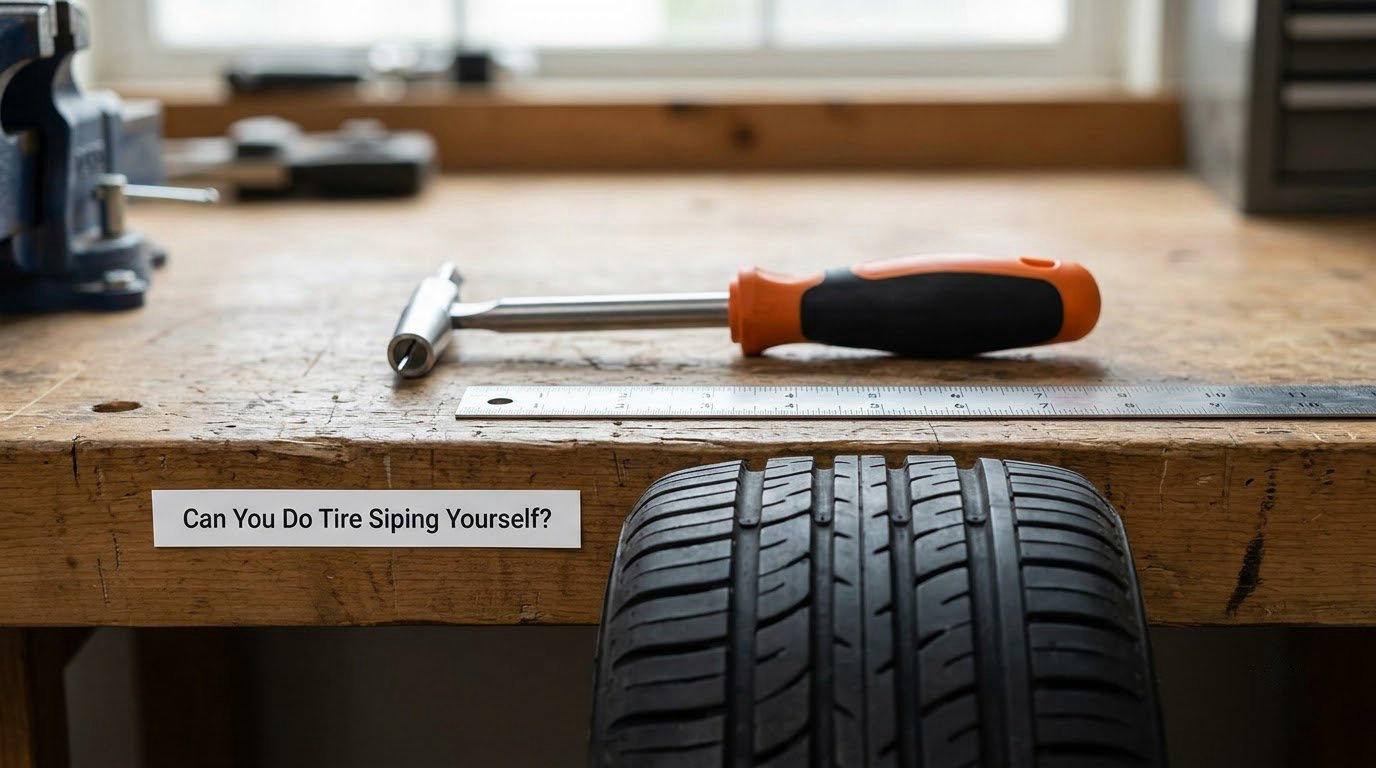
You can, and people have done it in driveways for decades, but the difference between a home job and a shop job is precision, not ambition. A shop mounts the tire on a machine, indexes the cut, and runs it in a controlled pass. A home tool on a loose tire is a blade and a steady hand, and the failure mode is a cut into a steel belt that you will not see until the tire is on the car.
The rules experienced DIY builders repeat:
- Never cut more than a quarter inch in a single pass.
- Stop when you are within an eighth inch of the base of the tread block.
- Index your start and stop points with tape on the sidewall or a wire stop so every cut is identical.
- Clean the tire and check pressure before you start, so the block does not move under the blade.
- Use a purpose-made siper with a guard. A utility knife or a chisel works and also works its way through belts.
On top of the physical risk, cut a tire often enough and you will see cracks radiating from the sipe ends, which is what tire tearing looks like when heat and flex do their work. Plenty of shops will decline to sipe a used tire at all, and a tire manufacturer is within its rights to treat a tire modified this way as modified rather than defective.
My take: if you have never done it, spend the money on a professional pass rather than learning on a tire you depend on. Home siping makes sense if you have a spare, the ability to work carefully, and a genuine reason to cut tires rather than an evening to fill.
Siping vs. Replacing a Worn Tire
Siping is a modification you apply to a tire you are keeping. It is not a repair, and it is definitely not a way to bring a bald tire back to life. Cut notches into worn rubber and you have made a slick tire with texture on it.
Work through the priorities in order:
- Measure the tread. Put a penny in the main grooves across several points and around the tire. The US legal minimum is two thirty-seconds of an inch on most passenger cars, and that is a floor, not a winter recommendation. Below four thirty-seconds, winter traction is a matter of luck.
- Inspect the condition. Look for cracking across the sidewall, bulges, exposed cords, or tread that has gone unevenly on one edge. Replace it. No cut fixes any of those.
- Check the ratings. Load index, speed rating and maximum cold inflation pressure are printed on the sidewall and in the door jamb. A tire below what your car needs is not a candidate for modification.
- Decide if the tire is right for the season. A quality all-season with four thirty-seconds and factory sipes may need nothing at all.
- Only then consider siping. A half-worn all-season with no factory sipes in the shoulder blocks, on a car that parks outside in winter, is the textbook candidate.
| Situation | Best move | Why |
|---|---|---|
| Tread under 4/32, no cracks | Replace | There is not enough rubber left for sipes to do anything |
| Tread 5/32 to 7/32, sound casing, no factory sipes | Consider professional siping | Half-worn tires gain the most from added edges |
| Tread 7/32 or more with factory sipes | Drive it | The manufacturer already cut in the traction you are paying for |
| Cracked sidewall, bulge, uneven wear | Replace immediately | Structural damage, not a traction problem |
| Dedicated winter driver in a cold climate | Buy winter tires | Compound matters more than any cut |
Safety Practices for Snow and Ice Driving
No tread treatment shortens a stop on ice. Assume it lengthens one, and drive like you have extra distance, because you do.
- Accelerate gently. A siped tire that lights up the rears has given away the traction advantage you paid for.
- Leave real stopping room. Ice is not a surface you can brake on at the limit. Double your usual following distance in snow, and more when it is actively falling.
- Steer smoothly. Small inputs. Sudden corrections are how winter crashes happen, and no sipe prevents a spin.
- Check pressure as the temperature falls. Cold air costs you roughly a pound per ten degrees.
- Know when to stay home. If conditions are beyond what a good winter tire can handle, no modification makes the drive safe. Postpone it.
Your vehicle owner’s manual and the tire manufacturer’s own guidance set the final limits, and a qualified tire professional is the right person to ask before anything gets cut.
Frequently Asked Questions
Does tire siping really work on snow and ice?
Yes, within limits. Sipes add edges that catch in snow and slush, and they let tread blocks flex into ruts and uneven surfaces. The effect is strongest in packed snow and slush on a half-worn all-season tire. It is minimal on smooth black ice, and it cannot fix worn tread or a rubber compound that has hardened in the cold.
Is it safe to cut notches in your own tires?
It can be done safely with a purpose-made siper, and DIY builders follow firm limits: never more than a quarter inch in one pass, and stop within an eighth inch of the base of the tread block. Cut deeper and you risk slicing a steel belt, which stays hidden until the tire fails. Index your cuts with tape, keep the tire clean and inflated, and use a blade guard.
Should winter tires be siped?
Usually not. Winter tires ship with dense zigzag sipes engineered alongside the tread pattern and compound, and the zigzag geometry interlocks the blocks under cornering load. Straight cuts from a shop or home tool leave the blocks looser, trading dry grip for winter bite you already have. Siping a good winter tire is usually spending money to make it worse.
How many inches of tread do tires need for snow?
For winter driving, four thirty-seconds of an inch is a reasonable minimum, and more is better, especially on an all-season tire that is not a true winter compound. The legal limit in much of the US is two thirty-seconds, which is a floor for wear rather than a traction target. Sipes cannot add tread depth, so a tire below four thirty-seconds is a replacement candidate.
Does tire siping help with hydroplaning?
Only a little, and it is not the fix most people assume. Sipes act as squeegee channels that move water out of the contact patch, which can help in a moderate rain. Deep water that causes hydroplaning is a speed, depth and tread problem, not a channel problem. A tire with an open, deep pattern and correct pressure matters far more than hand-cut slits.
Is a siped tire better than buying winter tires?
Buy the winter tires if your region and your budget allow it. A winter compound stays soft in the cold and a winter pattern works with it, which no amount of cutting can replicate. Siping makes the most sense when you are on a half-worn all-season with no factory sipes, cannot justify a second set of wheels, and want some extra edge grip for the season.
Conclusion: What Should You Do First?
Check the tire before you check the tool. Measure the tread, look at the sidewalls for cracks or bulges, confirm the load and speed ratings, and inflate to the door-jamb pressure. If the tire is sound, has real depth left and no factory sipes, and you face real snow, a professional siping pass is a reasonable way to buy yourself a season of extra edge grip.
If the tire is bald, cracked, or you drive somewhere winter tires are sold, spend the effort on tires instead of cuts. What is tire siping and does it help, in the end? It helps in exactly one place, which is light snow and slush on a tire that was already mostly fine. Everything else is about the compound, the tread depth and how gently you drive.