
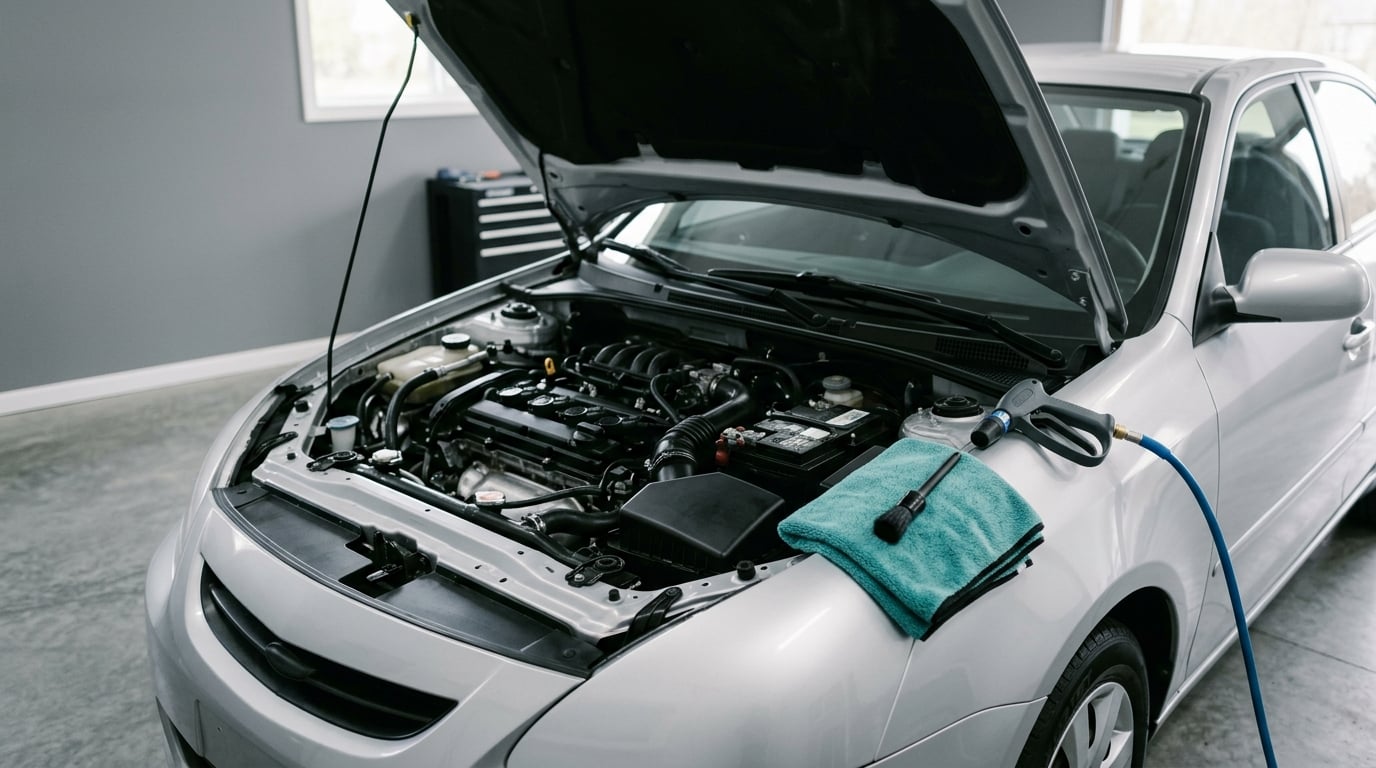
Is it safe to pressure wash an engine? Yes, but only on a cool engine, only with low pressure and a wide fan nozzle, and only if you have protected or disconnected the electrical parts first. High pressure forces water past connectors and gaskets that were never designed to hold it back, so the risk is real even though many owners have done it for years without trouble.
I have watched this debate go back and forth in the BMW and general mechanic forums for as long as I have been wrenching, and the confusion is mostly about what “pressure” means. A 2,000 PSI consumer washer held three feet away with a 40-degree fan is nothing like the same washer with a turbo nozzle at six inches.
Here is how to work it out component by component, plus a process that has a decent chance of ending with a car that starts cleanly.
Table of Contents
- Is It Safe to Pressure Wash an Engine?
- What Parts of the Engine Are Most at Risk?
- Should You Pressure Wash a Cold or Hot Engine?
- How to Pressure Wash an Engine Safely
- Is a Pressure Washer Better Than a Garden Hose?
- How to Dry an Engine Bay After Washing
- When to Avoid Washing the Engine at All
- Frequently Asked Questions
- Can a pressure washer damage an engine?
- Is a garden hose safer than a pressure washer for an engine bay?
- Can I run the engine while pressure washing the engine bay?
- Do I need to cover electrical connectors before washing a BMW engine bay?
- What happens if water gets into an engine electrical connector?
- Is it safe to use a pressure washer on a turbocharged BMW?
- Conclusion: What to Do First
Is It Safe to Pressure Wash an Engine?
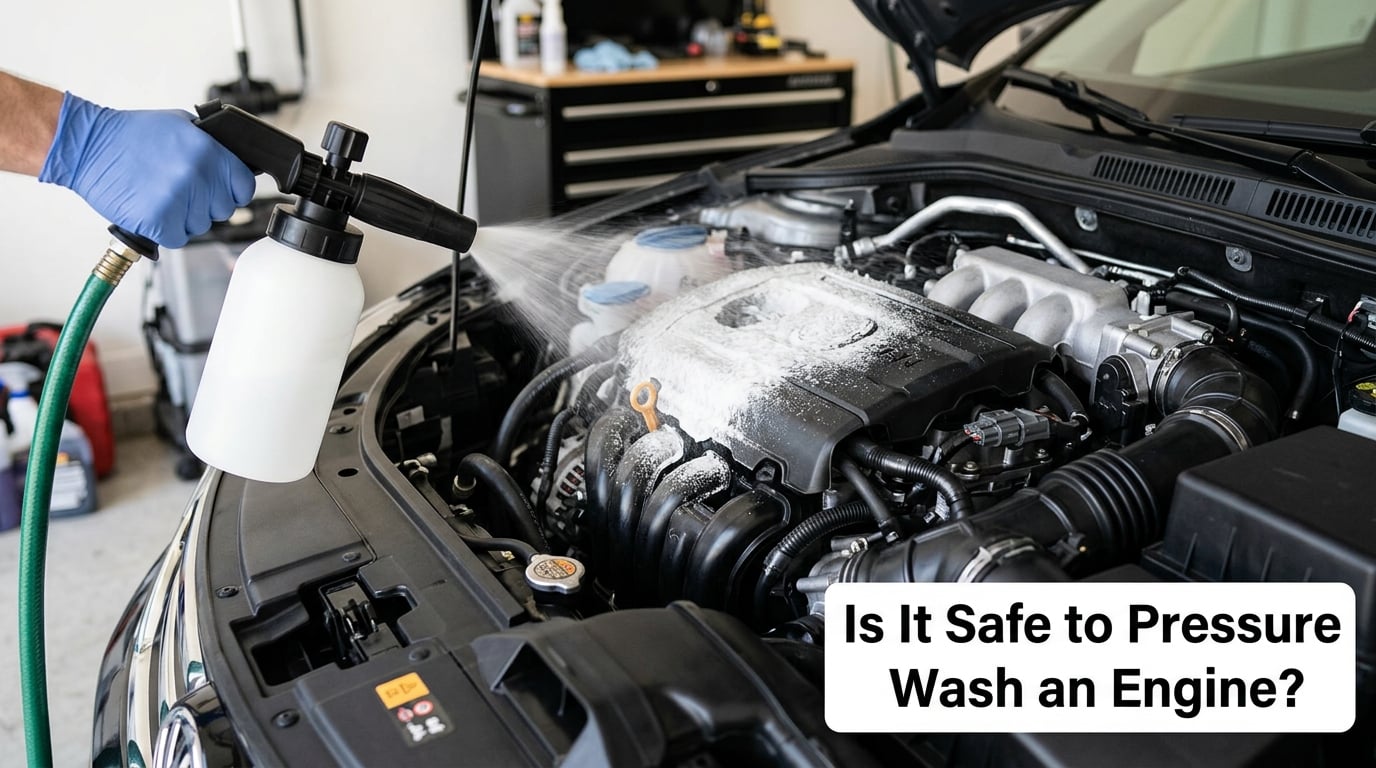
It is safe under narrow conditions, and the conditions are simple enough that a careful owner can meet them. A cool engine, a wide fan nozzle, more working distance than feels natural, and every opening that can take water either covered or avoided.
What makes it unsafe is a concentrated jet. That is the thing that peels paint off a fender, and it is the same thing that drives water into a sealed connector housing or past a twenty-year-old valve cover gasket.
These are the five rules I would not skip:
- Let the engine cool completely before any water touches it.
- Cover or disconnect the alternator, fuse box, ECU connectors, air intake and battery terminals.
- Keep pressure low, under roughly 1,600 PSI, and use a wide fan nozzle.
- Never point a concentrated stream at a connector, sensor, coil or alternator.
- Dry everything thoroughly, including the areas you covered, before you reconnect power.
Now the honest part, because you will hear both sides forever. Plenty of owners tell you they have pressure washed every vehicle they have owned for years with nothing but a hose, a nozzle and zero issues. Other mechanics will tell you tap pressure or a gentle fan is fine, high pressure is not, and the degreaser needs time to work before it comes off. Both sides are describing the same activity, and the difference is technique, not equipment.
Then there is the other kind of story. A bay washed without bagging anything and left to air-dry under the car, and a few weeks later an intermittent no-start that turned into a four-figure repair bill. That is what happens when water gets into something and nobody dried it out.
What Parts of the Engine Are Most at Risk?
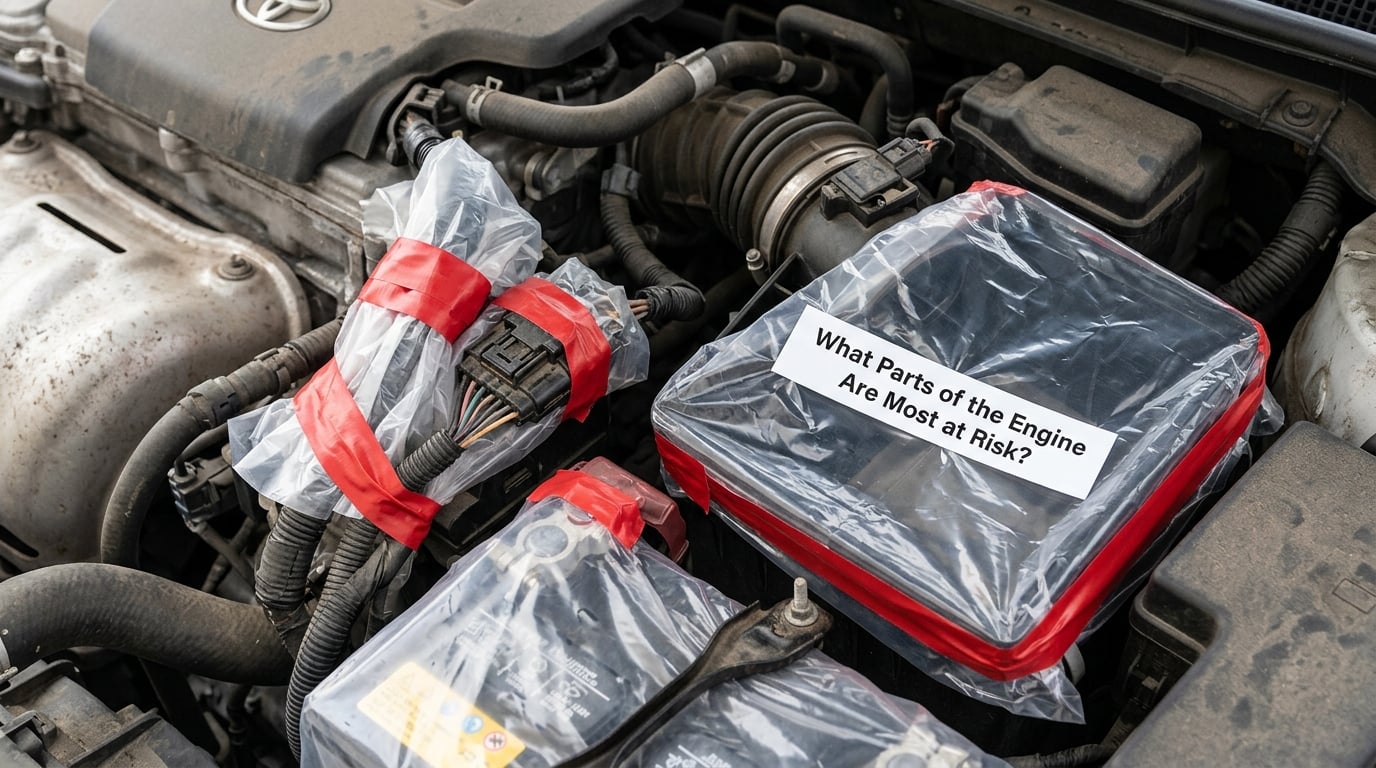
Modern engine bays are built to survive rain splash, not a directed jet. Most modules are potted and mounted where road spray hits them from below. That tolerance tells you exactly where the water is meant to come from.
- Electrical connectors and the wiring harness. Water forces its way past a seal and sits on the pins. Corrosion builds, resistance rises, and the symptom shows up later as an intermittent no-start, a flickering light or a sensor code that will not read on a cold morning.
- The alternator. Blowing coolant and water into a hot alternator is the fastest way to destroy one. Cover it.
- The battery and its terminals. Corrosive water around the posts kills the ground path, and a battery vent can be an opening you did not know you had.
- Ignition coils, coilover plugs and the spark plug wells. This is the one that strands drivers. Water collects down the plug well, sits in the combustion chamber, and the engine cranks but will not fire until it evaporates or you pull the plugs.
- The mass airflow sensor, throttle body and intake tract. A wet MAF reads lean and can leave you with rough idle and a trouble code that points at fuel.
- The cabin air filter housing. On many BMWs it sits under the hood, often downstream of the intake. Soak it and you are wetting a filter that only dries out if the fan runs at full blast for an hour.
- Gaskets and seals. A cold blast on a cooled manifold is a common way to get water past an aged valve cover gasket or the oil cap seal. That is a slow oil drip you discover weeks later.
- Fluid reservoirs. Brake fluid, power steering fluid and coolant are hygroscopic. They absorb moisture, and the contamination does not reverse by topping off the fluid.
- Belt lines, pulleys and the alternator pulley. Debris under a belt grinds it down instead of shedding off it.
Older cars add one more hazard the modern ones do not have: a distributor cap and plug wires, sitting open at the top with a seam that a jet will find immediately.
Should You Pressure Wash a Cold or Hot Engine?
Cold. A warm engine and cold water is thermal shock, and cast iron and exhaust manifolds do not like being cooled in a second when they are already at several hundred degrees. A manifold can check, then crack, and the heat has nowhere to go.
There is a real argument the other way, though, and it is worth knowing. Cooling a genuinely hot engine all the way down lets condensation form on metal surfaces as the air in the bay drops toward its dew point, so a totally cold bay may be damp before you even open the hose. That is normal and it dries, but it is another reason to wipe the bay down rather than flood it and walk away.
My read: warm to the touch is fine, hot to the touch is not, and if you just came off the highway, give it a couple of hours.
How to Pressure Wash an Engine Safely
The inspection comes first, and skipping it is the mistake that turns a routine clean into a repair. Water finds leaks you did not know about and carries contaminants into them.
Before anything gets wet:
- Look under the car and in the bay for oil, coolant or brake fluid weeping from a gasket or a hose clamp. Fresh stains mean stop.
- Check that the battery is secure and check the age and condition of the wiring harness.
- Note any aftermarket audio, lighting, ECU or intake work. That is an automatic skip.
- Pull any leaves, dirt or cottonwood out of the cowl and the radiator area.
Then the wash itself:
- Park level, engine off, key out, hood up on the prop. Let the bay cool until it is comfortable to put a hand on the engine.
- Disconnect the negative battery terminal. If you would rather not, cover the terminals and the whole battery with a plastic bag and tape it shut.
- Bag and tape the alternator, the fuse box and any ECU connectors, the air intake snorkel or throttle body opening, the cabin filter housing, the coil connectors and the battery vents. Bag from below so water cannot get under the tape.
- Sweep out debris and dry off loose dirt with a rag. You are about to move it all around.
- Apply an engine degreaser, working from the top down so you are not rinsing dirt into a clean area. Let it dwell three to five minutes. On bare aluminum, keep total contact time under ten minutes, which is the number most degreaser labels print on the can.
- Agitate with a non-metallic brush. A cheap detailing brush does more for a grimy bay than any amount of extra pressure.
- Rinse with a wide fan nozzle from three to five feet away, and add distance as the jet feels more aggressive. Never close in on a connector.
- Work from the outside in, rinse outward, and keep the wand angle such that water runs out of the bay rather than deep into it.
- Remove the bags folded inward so trapped water falls out instead of staying against the connector.
On a pressure washer, foam is your friend. A foam cannon is high volume and low pressure by design, and the foam holds the cleaner on the surface instead of driving it into a seam.
Is a Pressure Washer Better Than a Garden Hose?
For most people doing a routine clean, no. A hose with a gentle nozzle plus a good degreaser and a brush gets most of the result with none of the penetration risk, and the seasoned owners who never point a washer into the bay are not being precious about it.
| Method | Effective pressure | Control | Best use |
|---|---|---|---|
| Hand rag and brush with degreaser | None | Total | Light dust, show cars, recent repairs |
| Garden hose with adjustable nozzle | Low | High | Routine annual cleaning |
| Foam cannon on an electric washer | Low to medium | Good | Heavy grime, the safest washer option |
| Gas washer with wide fan | Medium | Moderate | Stubborn oil, careful operators only |
| Gas washer with turbo nozzle | Very high | Poor | Not for an engine bay |
Keep the turbo nozzle away from cars entirely, not just engines. A pressure washer is a tool for a driveway, and the engine bay is the one place in the car where the failure mode is an electrical module.
How to Dry an Engine Bay After Washing
Drying is the step that decides whether the wash was safe. Water that sits in a connector overnight does the damage that the wash started.
- Wipe down everything you can reach with a clean microfiber towel, including the battery, the coil tops and the tops of the ECUs.
- Use compressed air or a leaf blower on the lowest setting you can stand, and pay attention to the areas under the harnesses and around the coil connectors.
- Take the bags off before the bay is dry and let any covered area air out.
- Run the engine with the HVAC fan on high for 15 to 20 minutes to push moisture out of the intake tract and the cabin filter housing.
- Check for standing water in the spark plug wells, around the battery and in the cowl before you reconnect anything.
Did the engine crank but not fire? That is usually pooled water in a plug well, and it usually goes away on the second or third try. If it does not, pull the coil and plug wires off before cranking again, or you can flood them.
When to Avoid Washing the Engine at All
There is a short list where I would not do it at all:
- Aftermarket ECU, audio, alarm or lighting installs, because nobody knows where the installer ran the wires.
- Visible oil leaks, coolant weeps or a visibly aged harness.
- A turbocharged or supercharged car where the manufacturer restricts cleaning around the compressor or the wastegate.
- Hybrid or EV bays with orange high-voltage cabling, inverter coolant loops or any component marked high voltage. That is not a detailing job.
- Recent engine work, where a sealer or a gasket is still curing.
- Automatic car washes that offer engine bay cleaning on the menu. High pressure, unattended, and nobody bagging anything.
- Any vehicle whose owner’s manual says not to, which is the document that outranks every forum post on the internet.
On the chemicals, the short version: stay away from bleach and from vinegar on an engine bay. Both corrode, and the aluminum castings in a modern bay will dull quickly. Degreaser is the right tool. On the question of whether WD-40 cleans an engine, it is a lubricant and solvent, not a degreaser, and it will leave an oily film on the belt and the pulley where you do not want one.
Frequently Asked Questions
Can a pressure washer damage an engine?
Yes, and the damage is not gradual. A concentrated jet forces water past connector seals, into wiring harness cavities, and through aged gaskets and seals. The result shows up as corrosion, an intermittent no-start, a misfire, a soaked cabin air filter or a wet spark plug well. Keep pressure low with a wide fan nozzle and the same washer becomes a low-risk tool.
Is a garden hose safer than a pressure washer for an engine bay?
For routine cleaning, yes. A hose with an adjustable nozzle on its gentlest setting, plus an engine degreaser and a non-metallic brush, removes most road grime with no penetration risk at all. A pressure washer earns its place when grime is genuinely stubborn, and only when you keep the fan wide, stay three to five feet back and bag the electrical parts first.
Can I run the engine while pressure washing the engine bay?
No. Spraying water at a running engine sprays it at a hot alternator, hot exhaust and moving belts and pulleys, and a wide spray pattern is not a reliable guard against any of them. Shut the engine off, take the key out, and let the bay cool before you start. Most of the stories about ruined alternators trace back to exactly this.
Do I need to cover electrical connectors before washing a BMW engine bay?
On modern BMWs the ECU and the main fuse box sit in the open bay, where they are designed to take splash from below but not a directed jet. Bag and tape them, bag the alternator and the coil connectors, and disconnect the negative battery terminal if you are comfortable doing it. Wrapping a connector in a plastic bag is cheap insurance against a four-figure repair.
What happens if water gets into an engine electrical connector?
Nothing visible happens that day, which is the problem. The water sits on the pins, and corrosion starts. Weeks later you get an intermittent no-start, a flickering dash light, a sensor that reads wrong, or a code that will not clear. Disconnect power, dry the connector, and use contact cleaner on the pins rather than compressed air alone, which can drive moisture deeper.
Is it safe to use a pressure washer on a turbocharged BMW?
Only with care, and after you read what your model’s manual says. Turbochargers, the intake tract after the compressor and the wastegate area are easy to damage with a concentrated jet, and forced water past the compressor wheel causes real problems. Many enthusiasts clean the oil filter housing and intercooler piping by hand and keep the washer off the hot side entirely.
Conclusion: What to Do First
Open the owner’s manual and read what your model says about engine bay cleaning before you read anything else, because that document outranks every forum thread. Then use the lowest pressure that gets the job done, bag the openings and connectors, keep the fan wide and your distance long, and give the engine time to cool and to dry out fully before you reconnect power.
For a modified bay, an older car with distributor ignition, or anything you are unsure about, hand washing with a degreaser and a brush is the better call, and a professional detailer is the better call still.
Updated for September 2026.