
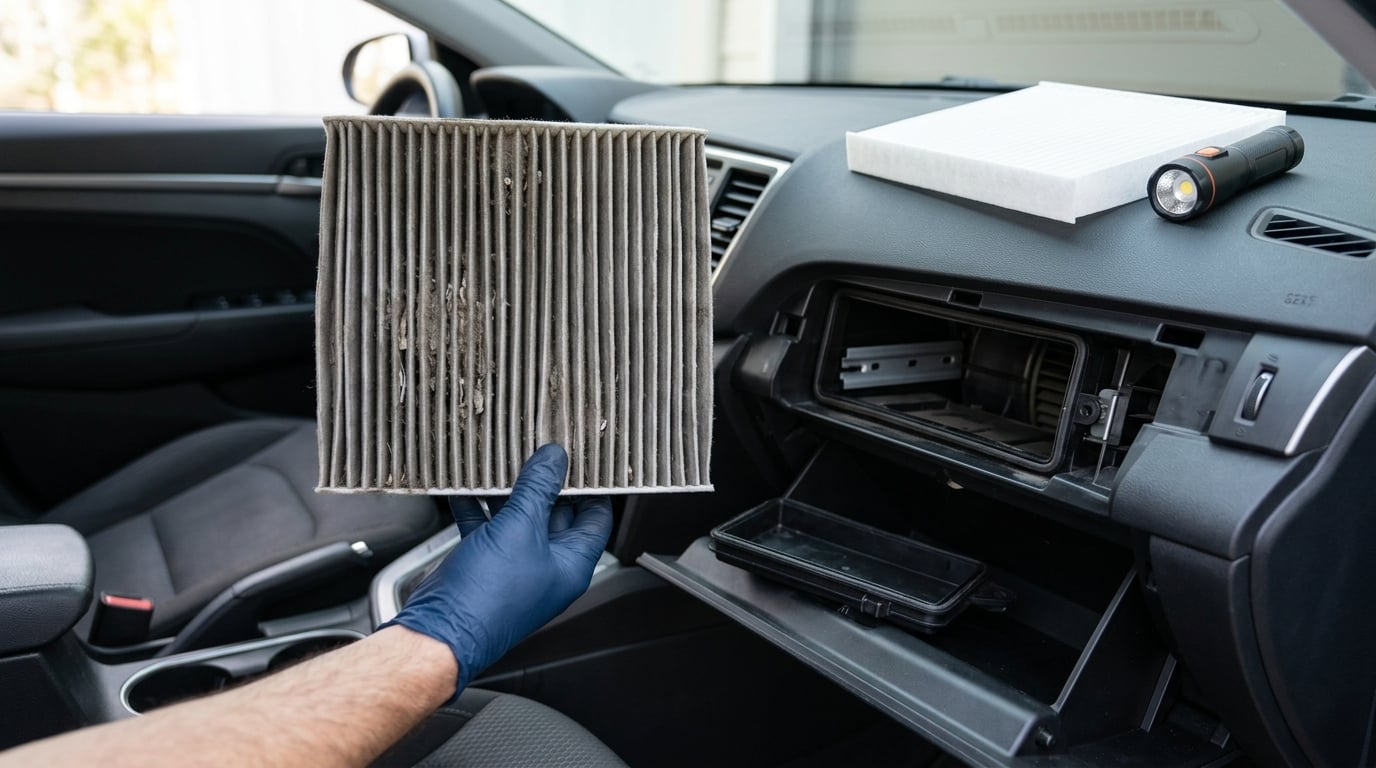
A cabin filter is due when the vents feel weak, a musty smell shows up on rainy days, dust settles on the dash faster than you wipe it, or the blower sounds strained. The honest test is physical: slide the filter out of its housing and look at it, which takes about a minute on most BMWs once you know where the housing sits.
That last part is the part dealer service pages skip. They give you an interval and a shrug. The rest of this guide walks through the five checks that actually answer the question, including the one no ranking page describes: holding the filter up to a light.
The whole job is a ten-minute DIY task with a trim tool and a flashlight, so there’s no good reason to guess.
Table of Contents
- What You Need
- Step-by-Step: How to Tell If a Cabin Filter Needs Changing
- Common Mistakes
- Frequently Asked Questions
- How often should I change my BMW cabin filter?
- What are the most common signs that a cabin filter is dirty?
- Can a dirty cabin filter cause a musty smell?
- Where is the cabin filter located in most BMWs?
- Why is my car still making noise after I changed the cabin filter?
- Does a cabin filter affect the car’s heating and air conditioning?
- Conclusion
What You Need
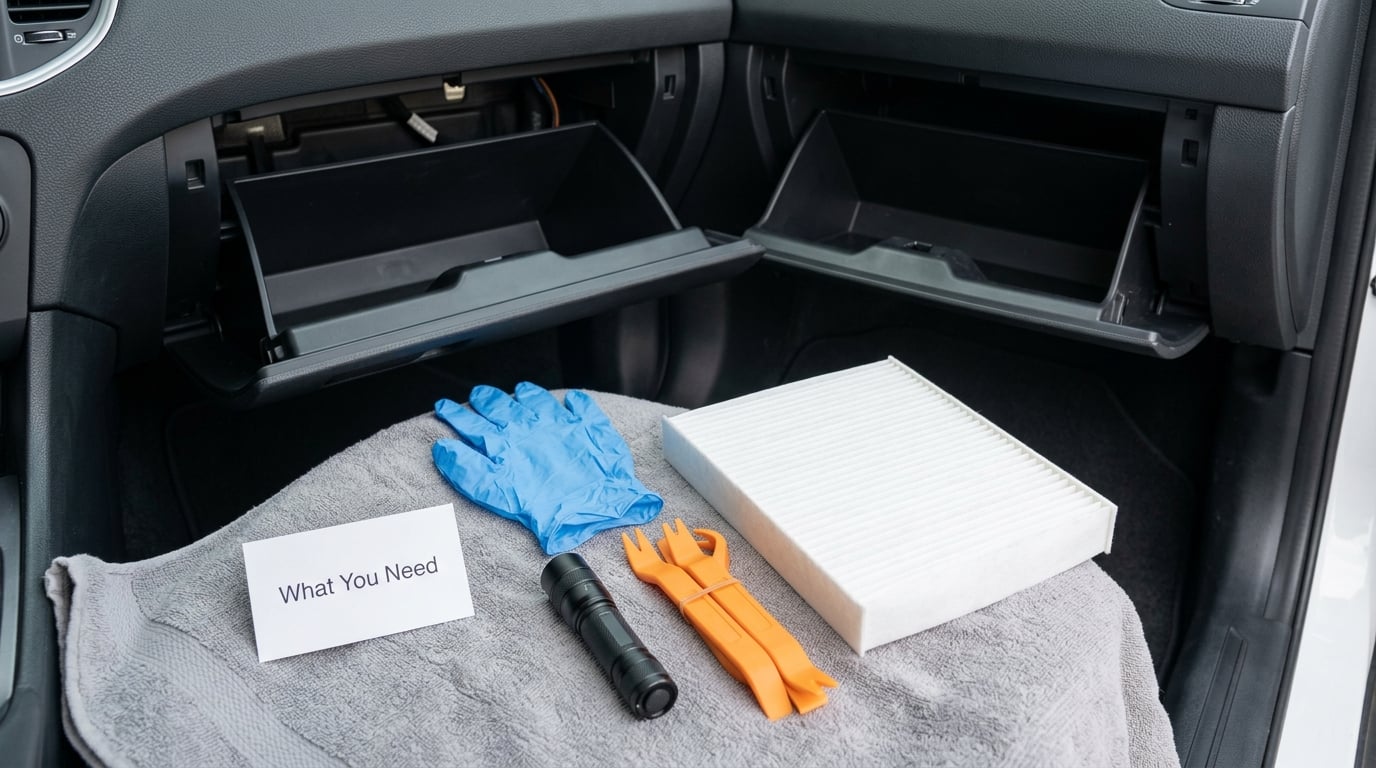
You need very little, and none of it is expensive. The list is short enough that you probably own all of it already.
- The owner’s manual for your specific model. This gives you the housing location, the service interval, and the correct part number. On a BMW the interval varies by model, engine, and model year, so the manual beats any general number.
- A flashlight. The cabin filter housing sits in a shadowed footwell or behind the glove box, and you cannot judge a filter in the dark.
- Nitrile gloves. The old filter is usually gray, damp, and coated in whatever you have been breathing for a year. Gloves keep that off your hands.
- A plastic trim tool or a pair of pliers. The glove box damper strap and the housing clips are easy to snap with bare fingers, and a broken clip means the glove box will not stay shut.
- The correct replacement filter. Match the part number in the manual, not just the shape. Filter media also comes in particulate, activated carbon, and HEPA versions, and the housing is shaped to only accept the right one.
Have the new filter and a clean rag ready before you start, because pulling the old one leaves a layer of loose dust in the housing that you will want to wipe out.
Step-by-Step: How to Tell If a Cabin Filter Needs Changing
1. Check the BMW maintenance schedule
Start with the interval, then treat it as a floor rather than a diagnosis. Most BMWs list a cabin filter service in the maintenance schedule, typically in the 15,000 to 30,000 mile range, but the number in your manual is the one that counts for your car.
If you have dealer stamps or a service record, look for the last cabin filter line. Plenty of cars roll past the interval without one, and that is exactly the situation where a physical check beats a calendar.
2. Test the airflow and cabin air conditioning
Run the blower on high with the recirculation button off so air pulls from outside, then on high again with recirculation on. If the second setting sounds noticeably weaker or the pitch drops, the filter is restricting flow.
Weak heat or weak cooling from both sides points the same way, because the evaporator sits downstream of the filter. A blower that rattles, squeals, or drops from high to low only on certain speeds is a different fault, usually a resistor pack or a failing motor bearing.
One symptom worth separating out: if the air is cold but the defroster takes forever to clear the windshield, that points at the evaporator core or the airflow through it, not necessarily at the filter.
3. Look for common warning signs
- Vents deliver noticeably weaker airflow than they used to
- A musty or damp smell appears on rainy or humid days
- Dust settles on the dashboard and vents in a day or two
- Pollen, exhaust, or road grit reaches the cabin in bursts
- Allergy or asthma symptoms get worse right after a drive
- Windows fog up faster on the inside than they used to
- The blower gets louder at the same fan setting
Odor deserves its own note. A filter traps the smell source; it does not create one. If the smell returns within weeks of a new filter, suspect a wet evaporator or a blocked condensate drain rather than another filter.
4. Inspect the filter when it is accessible
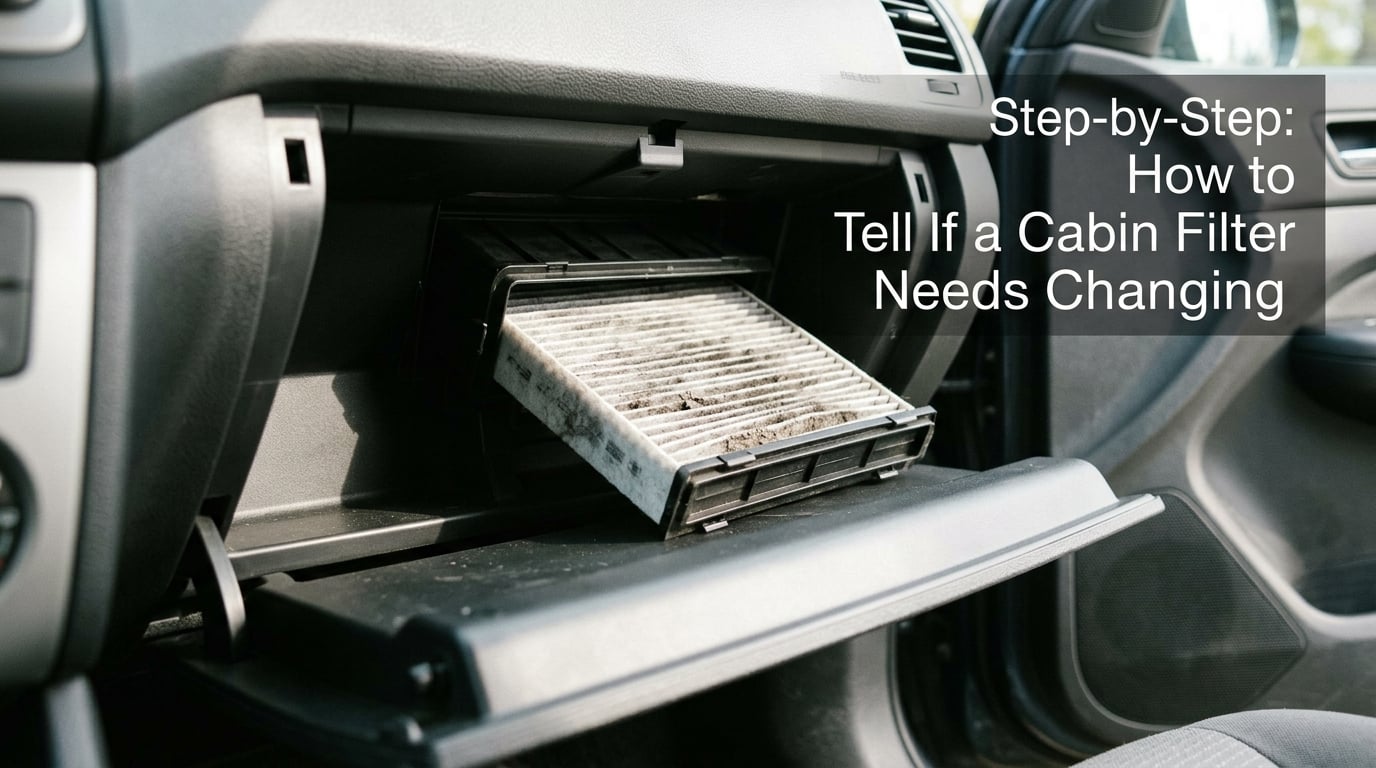
On most BMWs the filter sits in a housing behind the glove box. Empty it, release the side stops or the damper strap, and let the box drop down, then unclip the housing cover and slide the filter out along the frame.
On some older models the housing is under the hood on the passenger side, and a few put it behind a rear seat panel. Your manual will name the location for your year, which is why this step comes fourth instead of first.
Once it is in your hand, you are looking for four things. Look at the media: a clean filter is pale, often white or light gray. Look at the pleats: if they have collapsed, flattened, or fused together, air is already squeezing through the material rather than across it. Look at the frame: check for warping, cracks, or a broken seal. Look at the moisture: any dampness, dark spotting, or a green-gray film means mold has started, and a damp filter going back into the housing feeds the problem.
5. Decide whether the filter needs changing
The decision is straightforward once you have the filter in your hand. Replace it if the media is visibly gray or brown, if the pleats are deformed, if the frame is damaged or no longer seats flat, or if the element is wet or moldy.
Also replace it on schedule when airflow has dropped or the odor has shifted, even if the filter does not look terrible. Media can be packed with fine dust that is invisible in a dark footwell but obvious the moment you hold it up to a light.
If a brand-new filter does not restore airflow and the smell stays, stop replacing parts. At that point the problem is upstream or downstream: a clogged evaporator, a dirty blower, a weak vacuum motor with a leaking door seal, or a drain that has backed up.
Common Mistakes
Judging by smell alone. Smell tells you something is wrong, not what. A musty note can come from the filter, the evaporator, or a wet carpet under the passenger side.
Ignoring the interval because the car feels fine. Airflow drops gradually, and you adjust without noticing. The manual is a better baseline than your memory of how it felt last spring.
Installing the filter backwards. Pleated filters have an airflow arrow printed on the frame, and the housing door will not latch properly if the media faces the wrong way. It can go in with the door forced shut, and then it is doing almost nothing.
Forcing the glove box or the housing clips. These are thin plastic tabs. If something resists, stop and look for the stop, the strap, or a screw you have not removed yet rather than pulling harder.
Treating a rattle as a filter problem. A loose housing cover, a cabin blower resistor, or a worn motor bearing all sound worse with airflow demand. A filter does not rattle.
Dropping the new filter in without cleaning the housing. The dust that made the old filter unusable is still sitting in the box and duct, and a new filter installed over it starts the clock already partway through.
Two habits worth keeping. Check the filter in spring and in autumn, so you catch pollen season and cold-air season each year. And when the old one comes out, photograph it before you throw it away, because a photo of a badly clogged filter is the fastest way to convince yourself the next replacement is not optional.
Frequently Asked Questions
How often should I change my BMW cabin filter?
Most BMW maintenance schedules list cabin filter service between 15,000 and 30,000 miles, and many owners treat it as an annual job. Check the schedule in your own manual, because the interval shifts with model, engine, and model year. Shorten it if you drive gravel roads, commute past construction, park outdoors year-round, or drive through wildfire smoke, since those conditions load the media far faster than normal traffic.
What are the most common signs that a cabin filter is dirty?
Weak airflow from the vents at the same fan setting is the first and most reliable sign. After that come a musty or damp odor on humid days, dust that settles on the dashboard within a day or two, pollen blowing through the cabin, allergy symptoms that worsen during a drive, and a blower that sounds strained or noisy. A filter can look acceptable in a dark footwell, so physical inspection beats guessing.
Can a dirty cabin filter cause a musty smell?
A filter can hold odors, but it is rarely the whole story. The musty smell people describe usually comes from moisture sitting on the evaporator core after the air conditioning runs, and the filter lets that damp air through. If the odor returns within a few weeks of a new filter, the evaporator or the condensate drain needs attention, not another filter.
Where is the cabin filter located in most BMWs?
On most BMWs the cabin air filter lives in a housing behind the glove box, reached by emptying the compartment, releasing the side stops or damper strap, and dropping the box down to unclip the housing cover. Some older models place the housing under the hood on the passenger side, and a few use a panel behind a rear seat. Your owner manual names the location for your model year.
Why is my car still making noise after I changed the cabin filter?
A new filter should reduce strain, not add noise, so a rattle that continues points somewhere else. Common culprits are a loose housing cover, leaves or debris packed into the blower wheel, a failing cabin blower motor bearing, or a resistor pack that drops certain fan speeds. If the noise appears on every speed including low, suspect the motor or the housing rather than airflow restriction.
Does a cabin filter affect the car’s heating and air conditioning?
Yes, because the filter sits upstream of the evaporator on most layouts. A clogged filter restricts airflow, so the fan works harder and both the heater and the air conditioner deliver less air at the vents. It also raises the load on the evaporator and blower. A badly clogged filter can leave the defroster slow to clear the windshield, since less air reaches the glass.
Conclusion
Start with the free checks. Compare the airflow against what you remember, run through the warning signs, then pull the filter and look at the media, the pleats, the frame, and the moisture. If any of those say replace it, do it, and if a clean new filter does not fix the symptoms, stop buying parts and look at the evaporator, blower, or drain instead.