
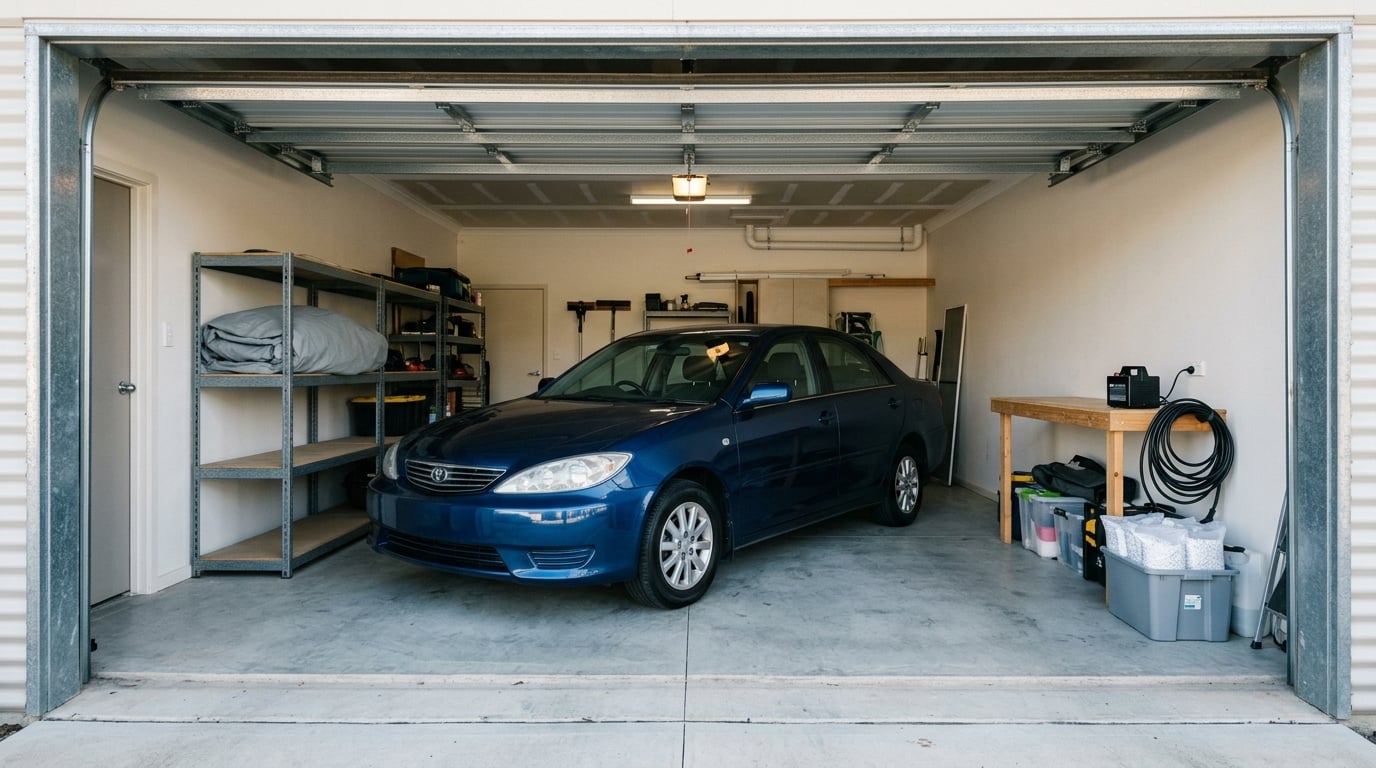
Yes, a car can sit for six months without harm, as long as you prepare it first. Most of the damage that people blame on long storage actually starts before the car ever goes dormant: a low battery, half a tank of gas, and tires that never moved. Get those three right and the rest is maintenance you do once a month.
Six months crosses the line into what people in the classic car world call long-term storage. Under three months is short-term, where a battery maintainer and a wash are plenty. Four months and up, oil, fuel, seals, brakes and moisture all start working against you, so the prep takes a proper weekend.
It matters because the failures are quiet. A dead 12V battery is an inconvenience; a sulfated battery, a set of ruined tires or a brake rotor with a pad fused to it is a bill. On enthusiast forums, the tire story comes up more than anything else, with owners describing new tires destroyed by six months of flat spotting.
Below is the plan I would follow, in order, for any car going away for half a year. I have broken it into the prep, the seven steps that matter, and the return to the road, because the return trip is where most people rush and regret it.
Table of Contents
What You Need
Gather everything before you start, so the job is not half-finished on a Saturday afternoon. Most items you can buy locally or borrow from a neighbor.
- A smart battery maintainer or, for a battery you will remove, a proper trickle charger for the bench.
- A breathable fitted or universal cover. Never a plastic tarp or a waterproof sheet, indoors or out.
- Tire cradles, or rated axle stands if the storage spot has solid concrete under the jacking points.
- Wheel chocks to replace the handbrake as the parking brake.
- Fuel stabilizer rated for a six-month lay-up, plus a fresh oil change and filter.
- Moisture absorbers or a small dehumidifier for an unheated garage or a humid climate.
- Steel wool and pest bait for the exhaust pipe and engine bay.
- Nitrile gloves and a socket set for the battery terminal and drain plugs.
- Paperwork time to call your insurer and your motor vehicle office, not just the shop.
On that last point: most owners forget the legal side entirely. In the US, a car sitting on your property still has to be legally registered, and the registration rules for a vehicle declared as stored vary by state. Continuous insurance is the safe route. In the UK, the equivalent is a Statutory Off Road Notification, and driving or working on a car without insurance is an offense there. Call, ask for the stored-vehicle provision, and keep the confirmation.
Step-by-Step: How to Store a Car for Six Months
Budget a full day for the prep if you have never done it, and three hours if you have the tools. Do the work in a garage if you can, in daylight, with the car cool.
1. Inspect and Clean the Car Before Storage
Wash the exterior, dry it completely, and give the interior a real clean rather than a vacuum. Pull out the rubber floor mats, lift the carpet in the passenger footwell to check for damp, and clean inside the spare wheel well, which is where water pools and where the worst mildew smell comes from later.
Then look for problems that will get worse while the car sits. A weeping coolant hose, a wet steering rack boot, an oil stain under the car, a tire with a sidewall bulge, or a brake light that is out. Fix what you can and photograph what you cannot. Dents and scratches matter more when the paint is dusty for six months, and a wax or sealant applied now gives the clear coat a fighting chance against UV and dust.
You know preparation worked when the body is dry to the touch, the cabin smells like nothing in particular, and there is no fresh fluid on the ground under the car after it has been parked overnight.
2. Protect the Battery
The 12V battery is the single most common failure in a six-month lay-up, and the cheapest to prevent. Lead-acid and AGM batteries both lose charge sitting unused, and cold weather accelerates the loss rather than the recovery. A maintainer keeps a battery at its storage voltage, which is exactly the point.
| Strategy | Best for | The catch |
|---|---|---|
| Smart maintainer attached in place | Most cars, most situations | Needs a sound outlet and a charger rated for unattended use |
| Disconnect the negative terminal | Garage with no power, or a battery you distrust | Alarm, clock, keyless entry and window presets usually reset |
| Remove the battery and store it indoors | Cold climates, long absences, high-end cars | You lose the alarm entirely; the car will not have power at all |
On modern cars, disconnecting the negative terminal is not a free action. On a current BMW, for example, the electronics lose their settings and a battery disconnect can trigger faults that need clearing with a dealer tool. A maintainer avoids the whole problem because the car never loses power, and it is why I would reach for one first on any vehicle built in the last twenty years.
If you do disconnect, the order matters: switch everything off, remove the negative terminal first, secure the cable away from the terminal, and reconnect positive before negative. A ring terminal on the negative cable that touches the post will drain the battery through a short circuit path and quietly undo the whole exercise.
Before storage, note the battery age and read the voltage. After six months, check it again before you turn the key, and treat a reading under about 12.4 volts on a rested battery as a sign it is not going to hold a charge and needs charging or replacing. A cheap multimeter will tell you more than guessing.
3. Handle Fuel, Oil, and Other Fluids
Change the oil and filter before the car sits. Old oil holds water and acid, and six months of that sitting in the sump is a poor trade for a filter change that costs a fraction of an engine rebuild.
For fuel, fill the tank to full and add stabilizer at the ratio on the label, then run the engine long enough to circulate the treated fuel through the system. A full tank reduces condensation inside it, which is the real enemy. For a diesel or a classic car, ethanol-free fuel is the better choice if you can get it, because ethanol absorbs moisture and separates from gasoline in storage. Treated fuel, kept cool and sealed, is good for a year or more; treated fuel sitting in a warm tank in a hot climate is where the problems start.
Check coolant level and strength, and top up brake fluid to the marker. Do not drain anything on a modern car unless a manufacturer procedure tells you to, and even then a shop should do it. If the car will sit somewhere that freezes, confirm the antifreeze is rated well below the lowest temperature you expect.
The temptation is to start the engine once a month for reassurance. ClubLexus regulars are blunt about why that backfires: a short idle does not get the engine to full operating temperature, so the water that normally burns off the oil and exhaust condenses anyway, and you have just added a wet layer to a car that was dry and sealed. Long-term car storage works better as a period of complete rest. If you want the exercise, drive the car properly, or use a maintainer and nothing else.
4. Support the Tires and Suspension
Flat spotting is what everyone fears, and it is real. Where a tire meets the road for six months, the rubber softens and takes a set. A car that never moves develops flat spots bad enough that the steering wheel shudders at speed and the tire has to be replaced. MustangSource owners planning a six to twelve month lay-up put their cars on stands for exactly this reason.
Inflate the tires to the pressure on the driver’s door jamb placard, not the number molded into the sidewall. The sidewall figure is a maximum, and setting tires to it is how people end up with a dry, brittle tire that loses shape in the heat of a closed garage. Add a few PSI above the placard figure if the car is going outdoors, so a slow leak does not leave a tire underinflated.
Standing the car on tire cradles is the best answer if the floor is level concrete and the cradles sit under the tires, not under the suspension. If you are lifting the car, use rated axle stands at the factory jacking points, take the weight off the suspension, and never rely on a jack alone. Also fill the fuel tank slightly more than half, because a full tank is what carries the load the rear tires were designed for.
Release the parking brake and use wheel chocks on a level floor instead. Six months of brake pads clamped against a cold rotor is how a rotor warps and pads fuse, and that damage does not go away when the car moves again.
5. Protect the Car from Weather and Pests
Where the car sleeps matters more than most people expect. Six months pushes firmly toward a dry, enclosed, ventilated space, and a home garage is ideal if it is dry. An unheated garage in a humid climate is workable with a dehumidifier or passive moisture absorbers, and a gravel or dirt floor is actually better than bare concrete at keeping humidity off the underside. A carport gives you rain protection and nothing else. Leaving a car in an open lot for half a year means UV damage, bird droppings, sap and standing water, and it is where rust and rodent damage become expensive.
Use a breathable cover. A good multi-layer car cover vents moisture instead of trapping it, and a fitted indoor cover is easier to put on and take off than a universal one. Never put a plastic tarp or waterproof sheet over a car, in either setting, because the trapped condensation does more damage than the rain you were blocking. Some people skip the cover entirely indoors, and inside a dry garage that is a defensible choice, as long as dust is not a problem for you.
Pests are the most underestimated item on this list. Rodents nest in the warm engine bay and chew through wiring looms, and a single nest can cost more than the entire storage rental. Plug the exhaust pipe with steel wool stuffed in from the outside, set the heater to recirculate and the fan off so warm air cannot flow into the cabin, close the internal vents, and lay bait where a pet or child cannot reach it. Check for nests every time you visit.
6. Check the Car During Storage
Once a month is enough, and thirty minutes is plenty. If the car is on a monthly facility plan with a staff member turning it, confirm what they actually do, because a facility running the engine for five minutes is not the same as the checks below.
| When | What to check |
|---|---|
| Week 2 | Confirm the maintainer is holding charge, no new damp or corrosion, nothing has settled under the car |
| Monthly | Charger light or voltage, tire pressure, new leaks, musty smell, rodent evidence, cover condition and tension |
| Month 3 | Full walk-around, tire pressure and tread edges, check the fuel level has not dropped unexpectedly, inspect under the cover for water pooling |
| Month 6 and before return | Full de-storage check below, plus an oil and coolant level read with the engine cold |
Run your hand along the cover, look under the car, and follow your owner’s manual for anything the vehicle-specific manual calls out. If a tire loses pressure steadily between visits, you have a leak, and that tire should not go back on the road without a look.
7. Bring the Car Back to the Road Safely
The first 24 hours decide whether the storage went well. Work through this before the car moves, not after it strands you.
- Take the cover off indoors if you can, and let the car air out. Opening a door into six months of trapped humidity puts that moisture straight into the cabin.
- Visually inspect under the car with a light. Look for rodent damage, new rust, fluid drips, and anything resting on the ground that was not there before.
- Check the battery and charge it fully if it is not a maintainer setup. Check the terminal for corrosion before reconnecting anything.
- Verify fluid levels cold, then again once the engine has run. Look at the oil, coolant, brake fluid, power steering fluid and washer fluid.
- Inflate tires to the placard pressure with the car still cold, and inspect tread and sidewalls for flat spotting, cracking or bulges.
- Do not assume the brakes work. With the car secured, pump the brake pedal until firm, then release the chocks and move the car a few feet at a time to reseat the pads and check the parking brake.
- Test every light, the horn, the wipers, the washer fluid, the heater and the air conditioning, and confirm the reverse gear engages.
- Check underneath with the engine running and then again parked, looking for anything dripping that was not there before.
Then take it easy. For the first 100 miles, keep an eye on the oil pressure and temperature, avoid highway speeds, and listen for anything new. Fresh fuel, a new oil filter and clean plugs do most of the work here, and a car with no warning lights and no new noises after a short drive is telling you the lay-up worked.
Get a professional inspection first if you stored it outdoors, if any fluid was found under the car, if the tires show visible flat spotting, if it is a car you have never stored before, or if anything at all looks different than you remember. A technician checking the brakes, the fuel system and the undercarriage is cheap next to a seized caliper.
Common Mistakes
Most storage disasters are one of these seven things, and every one of them has a straightforward fix.
| Mistake | Why it hurts | The correction |
|---|---|---|
| Starting the car for five minutes during storage | Creates condensation in the oil and exhaust with no drive to burn it off | Do not start it. Use a maintainer, or drive it fully and often |
| A plastic tarp or waterproof cover | Traps moisture against the paint, which is where blotching and mildew come from | Breathable multi-layer cover only, or no cover indoors in a dry garage |
| Inflating tires to the sidewall maximum | Over-inflation dries the rubber and makes the flat spot worse | Driver’s door placard pressure, plus a small margin if stored outdoors |
| Storing with a tired or partly discharged battery | It will not survive six months, and sulfation can end it permanently | Test before storage, then use a maintainer for the whole period |
| Leaving food, wet laundry or damp carpets in the cabin | Mould in the carpets, the seat foam and the spare wheel well | Empty everything, clean the cabin, dry the carpets fully |
| Ignoring rodents | Nests in the warm engine bay and chewed wiring that can strand the car | Plug the exhaust, close the vents, set the heater to recirculate, bait the bay |
| Skipping the return-to-road check | Flat-spotted tires, seized brakes and low fluid turn a good storage into a bad day | Walk the full de-storage list before the first drive |
One more worth naming: parking outside on the street or driveway for the full six months. A rodent, a storm and a tree branch will all find a car that has been standing still in the open. If indoor is not possible, a covered lot is a reasonable middle step.
Frequently Asked Questions
How to store a car for six months indoors vs outdoors?
Six months pushes firmly toward a dry, enclosed, ventilated space. A home garage is ideal when it stays dry, and an unheated one works well with a dehumidifier or passive moisture absorbers. A covered lot protects against rain but not UV, sap or rodents. An uncovered space means UV damage, standing water and nesting pests, and it is where rust and chewed wiring get expensive. Use a breathable cover in any case, and never a tarp.
Do I need a battery maintainer to store a car for six months?
A maintainer is the easiest and usually the cheapest insurance against the most common storage failure. A fully charged lead-acid or AGM battery still loses charge sitting unused, and cold weather speeds that up. If you cannot run a charger, disconnect the negative terminal instead, understanding that alarm, clock and window settings will reset on many modern vehicles, including current BMWs.
What is the best fuel stabilizer for long-term car storage?
Any stabilizer sold for long-term storage works, so follow the label ratio rather than the brand. Add it to a full tank so condensation inside the tank stays minimal, then run the engine long enough to move the treated fuel through the system. For a diesel or a classic car, ethanol-free fuel is better if you can find it, because ethanol pulls moisture into gasoline and separates from it while the car sits.
Should I start my car before storing it for 6 months?
Most owners would rather not, and the reason is worth knowing. A five-minute idle never reaches full operating temperature, so the water that normally burns off the oil and exhaust condenses anyway, adding a wet layer to a sealed engine. The alternative view comes from oil forum regulars, who call six months unremarkable as long as the battery is charged and fluid levels are checked. If you want to run it, drive it properly instead of idling it.
Do I need insurance and registration while my car is stored?
Yes in most places, and it is the most neglected part of storage planning. In the US, a car on your property generally still has to be legally registered, and states handle declared or stored vehicles differently. Keeping continuous coverage is the straightforward answer, though some carriers offer a reduced stored-vehicle rate. In the UK, a Statutory Off Road Notification is the equivalent, and working on a car without insurance is an offense there.
Conclusion
If you do nothing else, do these five things: wash and dry the car completely including the carpets, put it on a maintainer or properly disconnect the battery, set the tires to the door placard pressure and support them if you can, fill the tank with fresh fuel and stabilizer, and cover it with something breathable. Check on it once a month for twenty minutes.
Then spend an hour on the way back: inspect underneath, check the fluids cold, test the brakes and every light before you pull out of the driveway. That is the whole of how to store a car for six months, and a car prepared this way in 2026 will start without drama when you come back to it.