
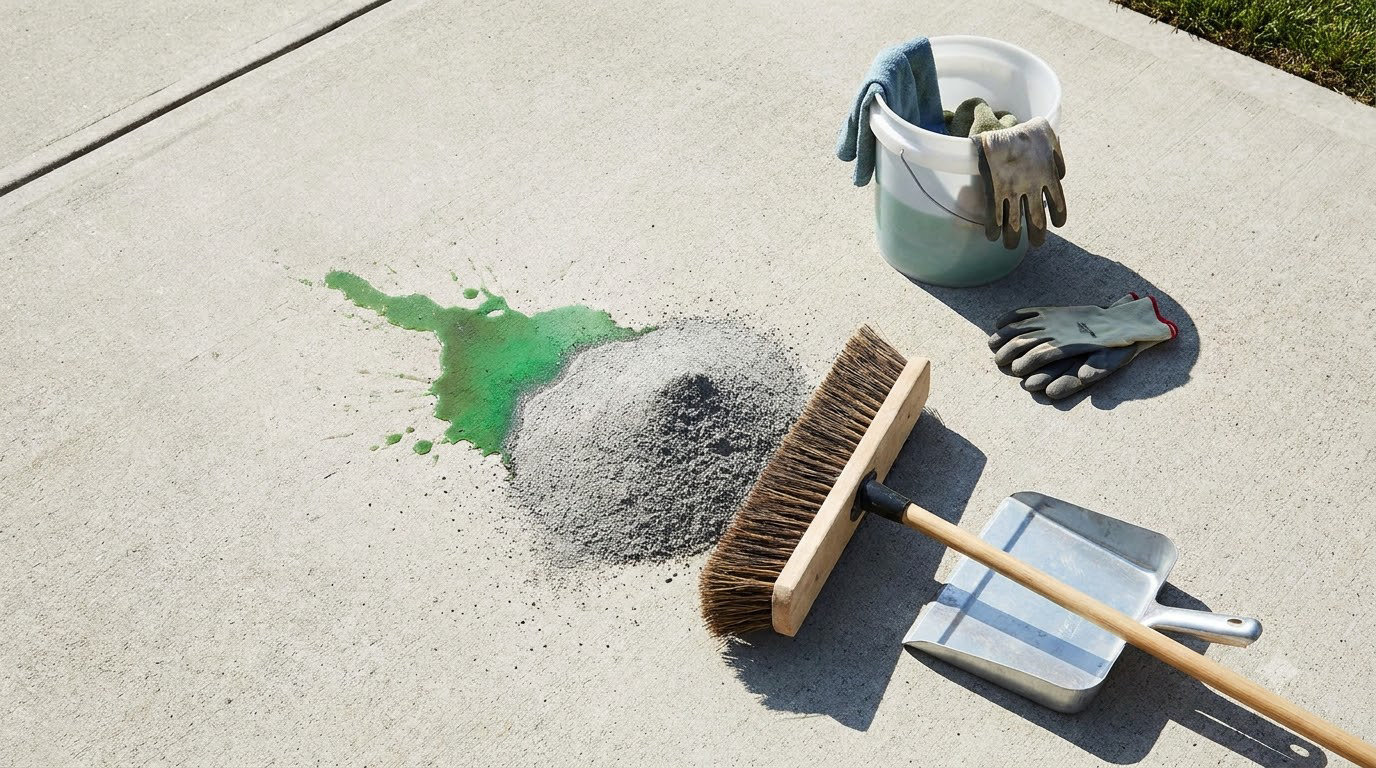
A puddle of engine coolant on a driveway comes out in four moves: contain it, absorb it, scrub it with dish soap and hot water, then rinse. Learning how to clean up a coolant spill in the driveway properly takes about 45 minutes, and doing it in the wrong order can drive the stain deeper or push glycol into a storm drain.
One thing outranks the stain itself. Ethylene glycol, the base of most coolants, is sweet-tasting and poisonous to dogs, cats and wildlife in small amounts, and it kills grass. Keep animals away from the area, and stop the leak before you scrub, or you will be cleaning the same spot twice.
Table of Contents
- What You Need
- Step-by-Step: How to Clean Up a Coolant Spill in the Driveway
- Common Mistakes
- Frequently Asked Questions
- Does coolant damage concrete permanently?
- Will dish soap remove a coolant stain from a driveway?
- How do I get a dried antifreeze stain out of concrete?
- Is the driveway safe to drive on after a coolant spill?
- What if the coolant reached grass or a storm drain?
- Does WD-40 remove a coolant stain from concrete?
- Conclusion
What You Need
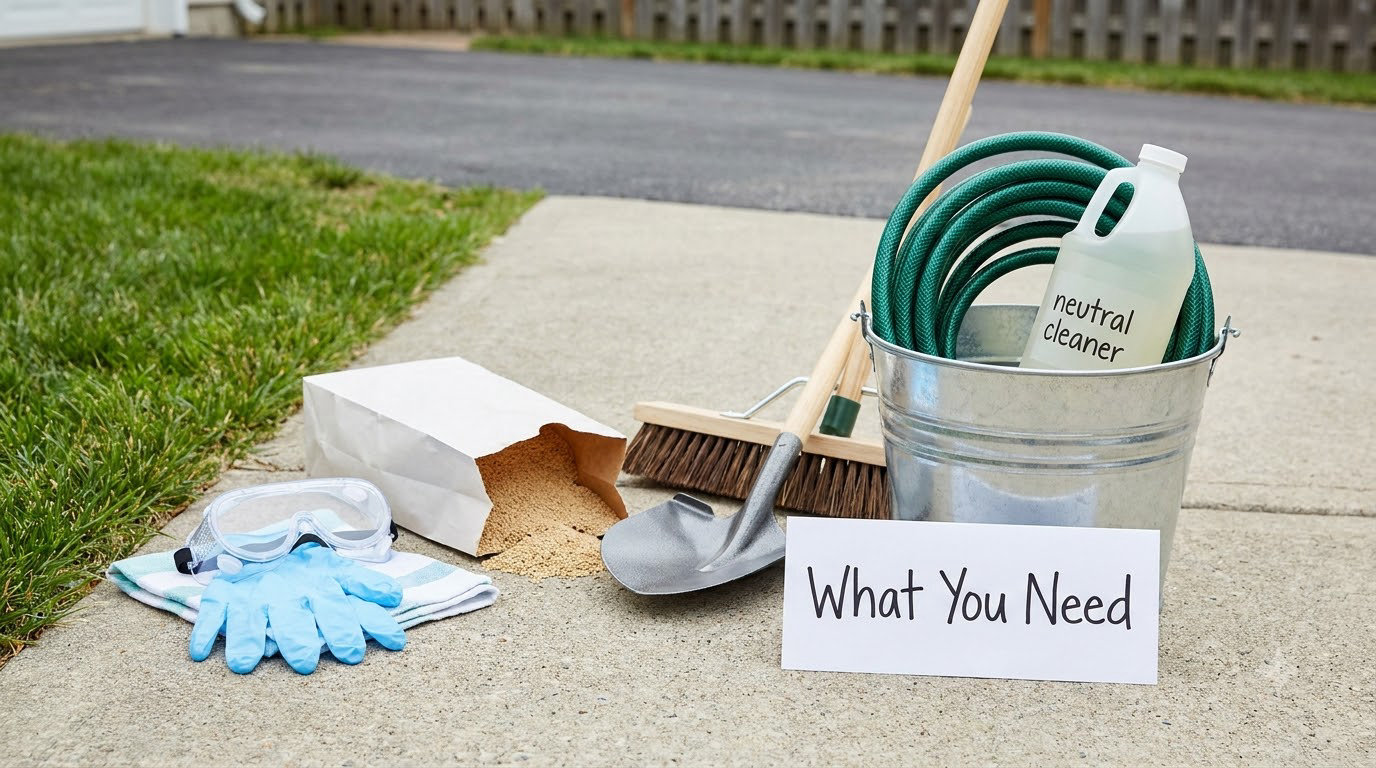
A coolant spill in the driveway needs a short list of supplies, and most of it is hardware-store cheap. If a couple of things are missing, buy them before you start rather than halfway through.
- Personal protection: disposable gloves, eye protection, and old clothes or a shop apron. Coolant residue is sticky and easy to transfer to your hands.
- Absorbent material: cat litter, sawdust, dry sand, or commercial oil-absorbent granules. Granules soak up the liquid and give you something solid to scoop.
- Collection gear: a plastic shovel or scoop, stiff broom, and a lidded bucket or sealed plastic container.
- Cleaning solution: dish detergent or an automotive degreaser, a bucket of hot water, and a stiff nylon brush. Metal wire brushes scratch concrete and pull the surface apart.
- Rinse gear: a garden hose with a gentle nozzle. A pressure washer is optional, and on old or cured concrete it can etch the surface instead of cleaning it.
- Disposal supplies: heavy-duty trash bags or a rigid lidded container for the saturated absorbent.
For a spill bigger than a couple of gallons, add a wet/dry shop vac and more absorbent than you think you need. Dry material can absorb roughly its own weight in liquid before it stops working, so the pile on your driveway should be deeper than the puddle, not the same size.
When the litter or granules look heavy, dark and wet all the way through rather than damp on top, they are full. Do not rake that material back across the driveway hoping to reuse it; you are just spreading the same contamination around.
Step-by-Step: How to Clean Up a Coolant Spill in the Driveway
1. Stop the leak and keep coolant out of drains
Trace the puddle back to its source before touching anything. With the engine cold, check the radiator cap, the hose connections at the radiator and engine, the petcock on the engine block, the freeze plugs, and the weep hole under the water pump pulley. A puddle that reappears after cleaning always points back to an unfound leak.
If the vehicle is still parked over the puddle and the engine is hot, do not open the radiator cap. Move the car a short distance onto a dry part of the driveway, or into the street, so it stops dripping while you work.
Then block runoff. Scoop soil, sand, or a wet towel over the nearest storm drain and pack absorbent around the downhill edge of the spill. Glycol in a drain flows to the nearest water body, and no amount of scrubbing undoes that.
2. Protect yourself and contain a coolant spill in the driveway before it spreads
Gloves on, sleeves pushed back, and a bucket of fresh water within arm’s reach. If the fluid contacts skin, wash with soap and water; if it hits your eyes, rinse with clean water for several minutes.
Move children, dogs, and cats indoors and shut the gate. Sweet-smelling liquid in a sun-warm driveway is an open invitation, and animals lick contaminated grass and puddles without any hesitation.
Work from the outside edge inward. Dry absorbent goes down in a ring around the puddle first, then straight into the middle. Let the material sit for five to ten minutes so it can pull liquid out of the surface before you disturb it.
3. Collect the absorbent material and contaminated debris
Scoop the saturated granules into a bucket with a plastic shovel, then dampen any remaining puddles with plain water and pick those up too. A stiff broom works well on the thin edges and in the expansion joints between slabs.
Put the collected material in a sealed container or heavy-duty bag. Check your local household hazardous-waste guidance before putting it in the bin, since many areas treat liquid-contaminated absorbent as a separate stream.
Anything that touched the spill, including the broom head and your shovel, stays out of the sink, the storm drain, and the grass bed at the edge of the drive.
4. Treat the remaining stain
Mix roughly one tablespoon of dish detergent per gallon of hot water in your bucket, or use an automotive degreaser straight from the bottle. Paint it over the whole damp area and let it sit for a ten-minute dwell so the surfactant has time to loosen what is left.
Why soap works: detergent is a surfactant, meaning it breaks the tension that holds coolant to the surface and lets water carry it away. Heat helps too, since warm water keeps the glycol fluid.
Scrub with a stiff nylon brush in small circles, working the edges of the stain inward. Moderate pressure, steady motion. Let the solution stay wet while you work so you are not just grinding pigment deeper into the pores.
Rinse, dry fully, and look again before you repeat the cycle. One well-done pass beats three aggressive ones.
5. Rinse carefully and let the driveway dry
Rinse with a low-pressure hose or a damp broom, keeping the water moving away from the storm drain you blocked earlier. Check local rules on runoff, since some municipalities restrict washing driveway contaminants into gutters.
Full sun and moving air dry concrete in a couple of hours. Some staining only becomes obvious once the slab is fully dry, so judge the result tomorrow rather than while it is still dark with water.
6. Inspect the area and repair the leak
Look for a sweet odor, tackiness under your shoes, a slippery patch, or a repeat puddle. Any of those means the cooling system is still losing fluid, and the cleanup is not finished.
Pressure-test the system or fill it to the cold mark and watch the level over a few days. If you cannot find the leak, a shop can pressure-test the system and find it in an afternoon, which is cheaper than re-cleaning the slab.
For an older, permanently stained area, a penetrating concrete sealer after the surface is fully dry will keep future spills from soaking in as deep. It will not remove what is already there.
Common Mistakes
Hosing the spill toward a drain
Running a hose over a large puddle just carries glycol into the storm drain, where it reaches local water. Absorb first, then rinse what is left.
Using a pressure washer too early
A high-pressure jet drives fluid into the pores and can etch cured or brushed concrete into zebra stripes. Start with a garden hose; a pressure washer with a surface cleaner comes later, and only on sound concrete.
Reaching for vinegar or bleach
Acid etches concrete and dulls the surface, and bleach does little against glycol. Hot water and dish detergent do the job without attacking the slab.
Pouring boiling water on the stain
Boiling water feels like it must be helping, but it sets some residues and risks cracking sealer or burning skin. Hot tap water is hot enough.
Ignoring oil in the spill
Coolant and oil behave differently. A greasy film needs a real degreaser and extra scrubbing, since soap alone will only spread the oil into a thinner film.
Leaving the absorbent to dry on the surface
Letting litter dry on concrete and then blowing or hosing it off sends fine particles down the storm drain. Scoop it while it is still damp.
Frequently Asked Questions
Does coolant damage concrete permanently?
Coolant is not acidic enough to eat concrete the way acid cleaners do, so it will not etch or pit the slab. The damage is cosmetic: dye and additives soak into the pores and leave a dark stain. Fresh spills absorb and lift fairly easily, while stains that have sat for weeks may fade to a shadow that never fully disappears.
Will dish soap remove a coolant stain from a driveway?
Yes, on most fresh spills. Mix about one tablespoon of dish detergent per gallon of hot water, apply it, give it a ten-minute dwell, then scrub with a stiff nylon brush and rinse. Mechanic forums consistently recommend detergent as the first-line treatment for coolant, and a dedicated concrete cleaner only earns its place on an old stain that soap will not touch.
How do I get a dried antifreeze stain out of concrete?
Soak the area with hot water first so the dried residue softens, then work in dish detergent or degreaser with a stiff brush and leave it to dwell. A second and third pass usually does more than a stronger product. For staining that will not lift, an oxygen-based concrete cleaner is the gentler next step before you consider anything acidic.
Is the driveway safe to drive on after a coolant spill?
Once the surface is dry and no odor or tackiness is left, the driveway is fine to drive on. Wet coolant is slippery, and wet granular absorbent is a traction hazard, so let everything dry before moving a vehicle across the area. If a stain remains, it will not damage your tires or the vehicle itself.
What if the coolant reached grass or a storm drain?
Rinse grass with plenty of plain water right away and keep pets and livestock off it until the soil has been diluted, and never let them graze the wetted area. If the liquid reached a storm drain, the only real remedy is to report it to your local stormwater or public works department. Once glycol reaches flowing water, no homeowner cleanup fixes it.
Does WD-40 remove a coolant stain from concrete?
No, not as a stain remover. WD-40 is a light oil, and it can leave its own greasy film on concrete that traps dirt and makes the patch stand out more than before. Use it to free a frozen radiator cap or a seized petcock, and use detergent or degreaser on the stain itself.
Conclusion
Get animals away from the driveway, find the leak, and pack absorbent around the puddle before anything touches it. Then treat what is left with hot water and dish detergent, give it a ten-minute dwell, scrub with a stiff nylon brush, and rinse gently away from any drain.
Seal saturated absorbent and check your local disposal rules rather than washing it off. And keep working on the leak, because a coolant spill in the driveway is not really cleaned up until the fluid stops finding its way onto the concrete.