
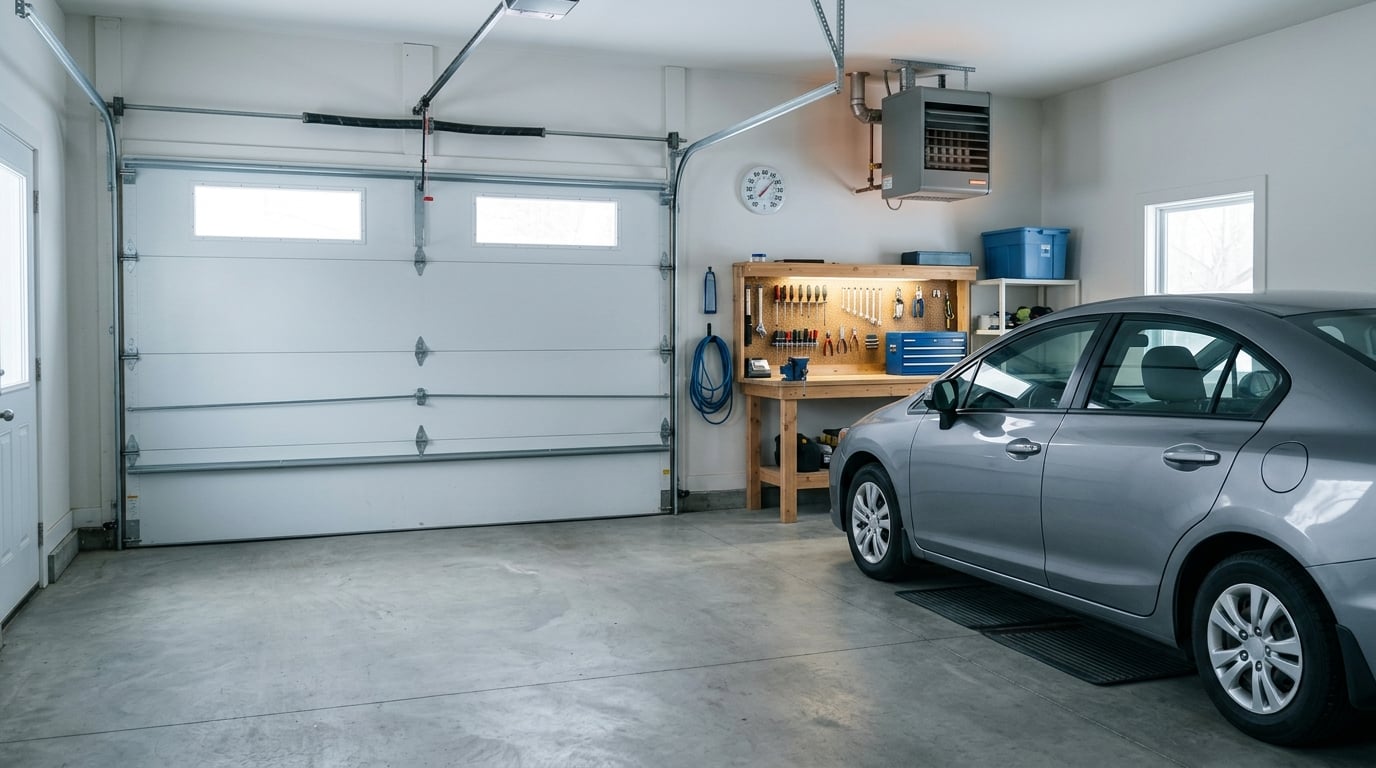
The best way to heat a detached garage for working on cars is a properly sized, vented unit heater paired with real insulation in the walls, ceiling, and overhead door. For most two-car detached garages that lands around 40,000 to 55,000 BTU of gas-fired heat, sized to the space rather than to the label on the box. Insulation comes first, because no heater outruns a bare fiberboard wall and a single-layer steel door.
There is a second decision that matters more than most people expect: whether you are trying to warm the car or warm yourself. Heating yourself is a spot problem. Heating the whole building is a load calculation. Once you separate those two, the right heater becomes obvious.
Table of Contents
- What You Need
- Step-by-Step: The Best Way to Heat a Detached Garage for Working on Cars
- Common Mistakes
- Frequently Asked Questions
- What is the safest way to heat a detached garage for car repairs?
- Can I use a portable electric space heater in a garage while working on a car?
- Should I heat a detached garage with propane or natural gas?
- How warm should a garage be for working on a car?
- Can a garage heater run with the garage door open?
- Do I need a carbon monoxide detector in a heated detached garage?
- The Short Version
What You Need
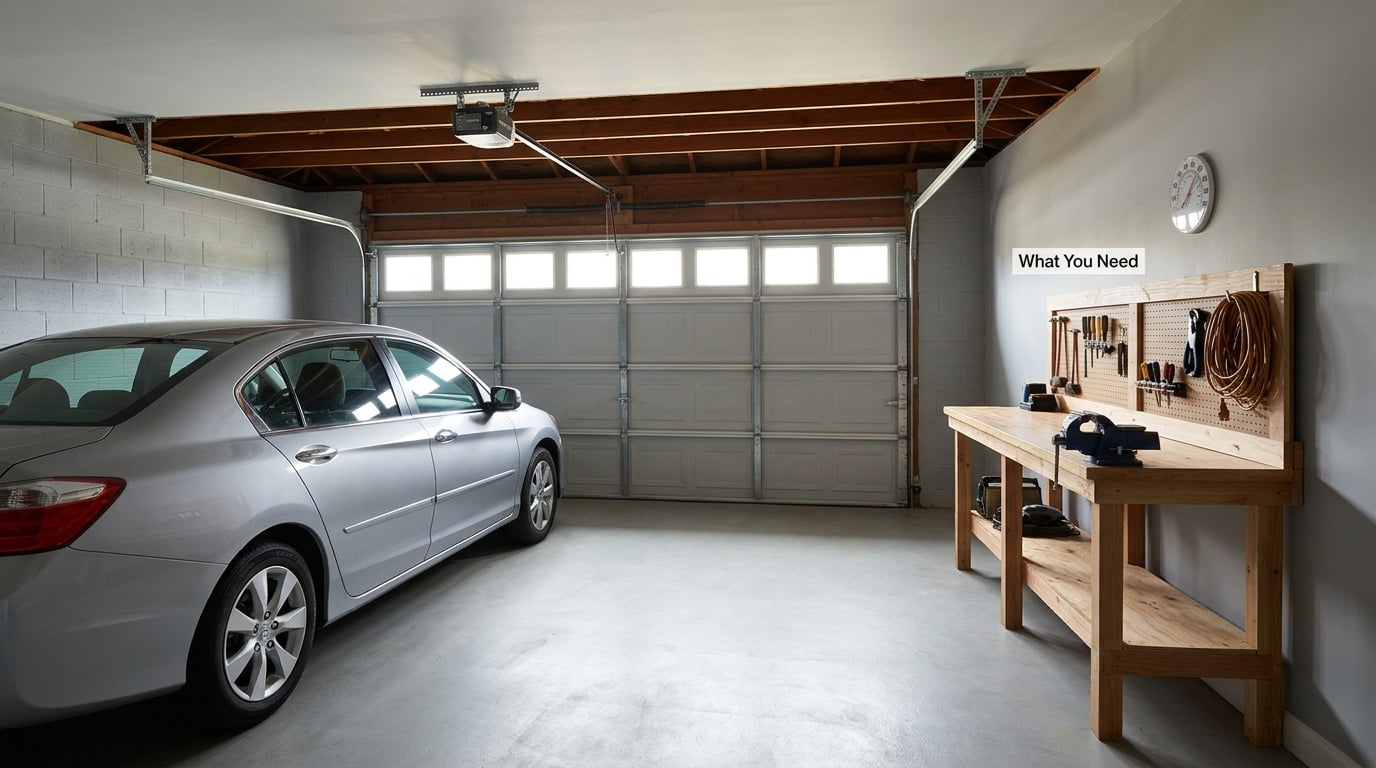
Before you shop, gather six facts. Each one eliminates options that would otherwise look appealing on a website.
- Garage construction. Poured concrete slab or dirt floor, stud walls with insulation or nothing, and the ceiling condition. Photograph the attic and check the door’s R-value sticker before you buy anything.
- Existing utilities. Natural gas service, a propane supply, or a 240V circuit with panel capacity. A gas unit heater on a detached building needs a permit, a gas line run, and a licensed plumber in most jurisdictions.
- Local climate. Your coldest few nights decide the design temperature. Ask the local weather service for your area’s record low, not your average high.
- How you use the space. One warm Saturday a month is a different problem from a shop that runs six days a week.
- Fuel preference and clearances. Anything burning gas needs ceiling clearance, and wood or pellet appliances raise fire and insurance questions that gas and electric do not.
- Safety equipment. A working carbon monoxide alarm rated for the space, a smoke detector, a fire extinguisher rated for the fuel, and a basic smoke/CO meter if you will ever run a portable heater unattended.
Step-by-Step: The Best Way to Heat a Detached Garage for Working on Cars
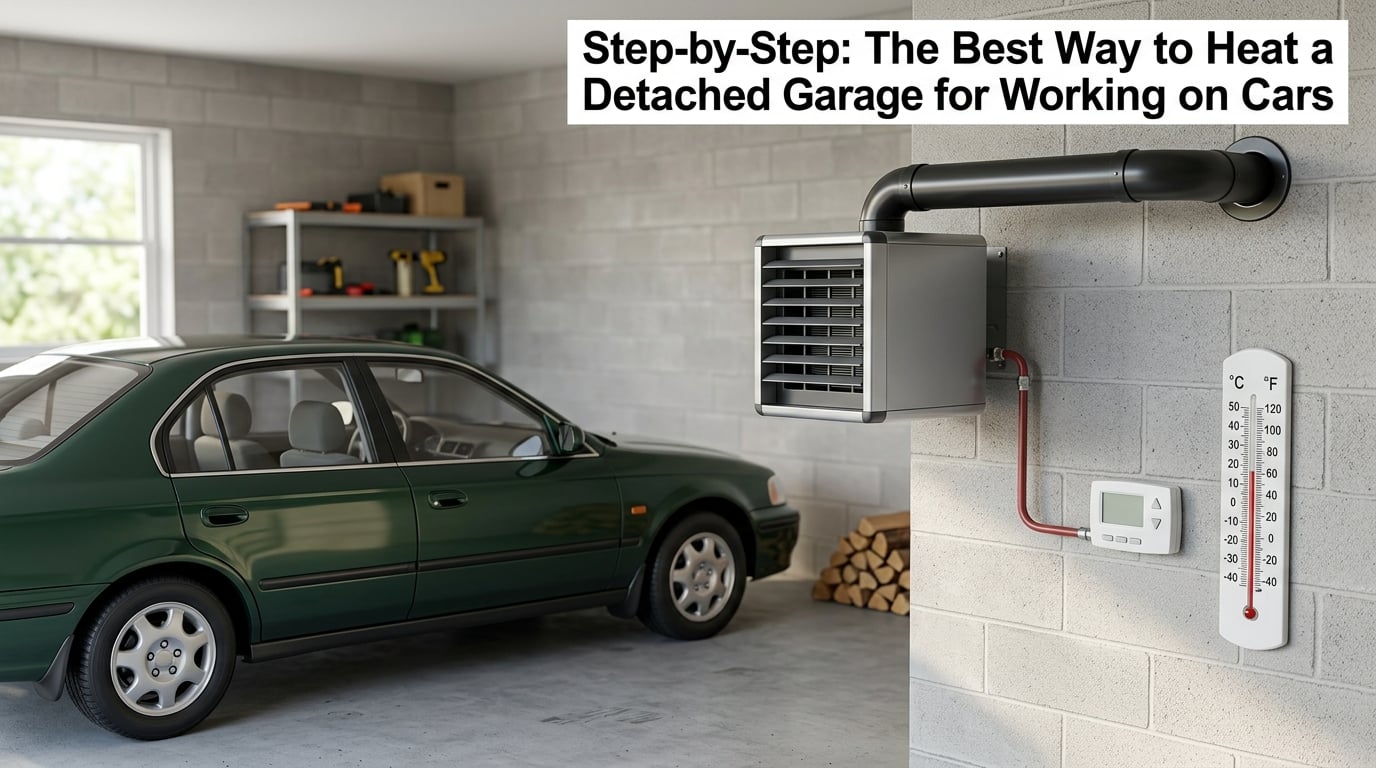
A detached building is genuinely easier to heat safely than an attached one, because combustion products vent to the outdoors rather than into living space. That advantage only holds if the venting is right and the door stays shut while the burner runs.
1. Assess the garage and the heating load
Measure the floor and multiply by ceiling height to get cubic feet. A 24-by-24-foot garage with 8-foot ceilings is 4,608 cubic feet. Multiply that by an air change factor for how leaky the building is, then by the temperature rise you need between your record low and your working temperature.
The air change factor is the honest part of the math. A tightly sealed, insulated shop sits near 0.133 air changes per hour. A drafty 2×4 shell with a thin steel door is closer to 0.25. On that 4,608 cubic foot example, a 45-degree temperature rise produces roughly 27,600 BTU for the sealed version and about 51,800 BTU for the drafty one.
That is why two owners with identical 24-by-24 garages report wildly different numbers. The sealed shop runs comfortably on a 36,000 BTU cold-climate heat pump. The drafty shell needs a 45,000 BTU ceiling-hung gas unit heater, and owners in Minnesota and Wisconsin report holding the space at 60-65 degrees through nights near minus 25 with a heater of that class running near continuously.
Add your own reality to the number. If you plan to work with the overhead door open on a regular basis, size for the work zone and the spot heater rather than trying to heat the whole building through the opening.
2. Compare electric, gas, and forced-air heating options
The best way to heat a detached garage for working on cars depends less on preference than on fuel availability and how fast you need heat. Here is how the main options actually behave in a garage.
- Vented gas unit heater. A power-vented or direct-vent propane or natural gas unit heater is the default for a workshop you heat regularly. It pulls in room air, heats it, and blows it across the space, so the whole room comes up fast rather than warming a three-foot circle around you. A 93 percent efficient propane unit heater in the 50,000 to 60,000 BTU class is what most owners land on. The cost is a permit, a gas line, and a licensed install.
- Infrared radiant heater. These heat objects and surfaces, not air, which is exactly what you want when you are under a car on a cold slab or working with the door cracked open. Woodworkers complain that fan-forced heaters blow sawdust into finishes, and radiant heat is the common answer to that. The tradeoff is that the air in the room stays cool even when the objects around you are warm.
- Portable electric space heater. Fine for a weekend, and widely used to hold a space just above freezing. Ceramic units are cheap and safe when you follow the manual, but a small heater cannot recover a cold building in a reasonable time. Forums are full of owners who ran one around the clock and still fought the cold.
- Installed electric fan-forced or unit heater. A permanently wired 240V unit on a dedicated circuit is the quiet, low-maintenance option and the only one with no combustion at all. It needs panel capacity and an electrician.
- Cold-climate heat pump or mini-split. Once the shop is sealed and insulated, this becomes the strongest all-around answer. One owner reports a 36,000 BTU unit heating a 700 square foot garage excellently once drafts were stopped. It also cools in summer, and many utilities offer rebates for added efficiency.
- Radiant floor heat. PEX tubing in or under the slab, fed by a water heater, keeps a concrete floor workable in deep cold. Shop owners running high-accuracy machine tools use this. It is expensive and slow to respond.
- Wood or pellet stove. Owners with firewood still tend to skip it for a heated shop because the response is slow and the fire and insurance requirements are strict. Several people on forums report that insurers push back on wood stoves in garages. Check with your carrier before planning around one.
The two-stage approach is the most common real-world setup and worth copying. A small electric unit runs on low to hold the space above freezing and protect batteries, fluids, and paint, then a wall-mount propane unit heater fires up when you start actual work. That avoids paying to run 50,000 BTU around the clock.
3. Prepare the garage for safe heat
Close the loop on drafts before you commission anything. Weatherstrip the overhead door and the entry door, add a door bottom seal, and seal the gaps around the ceiling joists and any wall penetrations. Insulate the walls and ceiling, and replace or wrap a thin single-layer door. Forum owners consistently call the overhead door the single biggest improvement, and many report that adding rigid foam around the outside perimeter helps the slab hold heat better afterward.
Then protect the things in the room. Move gasoline, propane cylinders, paint thinners, solvents, and aerosol cans to a listed storage cabinet or, better, off site. A combustion appliance in a garage holding open fuel is the risk that code keeps trying to close.
For mounting, hang combustion heaters near the ceiling with the clearances the manufacturer lists, away from ignition sources, with nothing stored above them. Check that the electrical circuit feeding an electric unit is a dedicated 240V branch circuit, and keep portable heaters plugged directly into a wall outlet rather than an extension cord.
4. Set up temperature and ventilation controls
Put the thermostat on an interior wall where the air moves, several feet off the floor and away from any draft, and set it to the temperature your work actually needs rather than the thermostat maximum. Most automotive work happens comfortably in the low 50s with warm clothes, which is a much easier load than trying to hold 70.
When the overhead door has to be open, stop trying to heat the building and switch to spot heating. An infrared unit aimed at the work area, or a portable heater positioned so intake air comes from the warmed part of the room, keeps you functional without running the burner indefinitely. Never leave a combustion heater running with the door wide open, since it can pull in combustion products instead of fresh air.
Mount a carbon monoxide alarm inside the heated space, on a wall or ceiling the alarm’s manual allows but not within a foot or so of the floor, and treat any alarm chirping or any smell of exhaust as a reason to shut the burner down and open the door immediately.
5. Test the system before cold weather
Run the system through one full cycle in the fall, before you need it. Check that ignition is reliable, that the burner reaches full flame, and that the thermostat cuts in and out cleanly. Listen for a rough or pulsing burner, which usually points to a gas pressure or venting issue worth a service call.
Watch the exhaust discharge outdoors. Condensation dripping from a power-vent unit is normal; soot or a soot-stained wall is not. Confirm the temperature holds steady over an hour rather than cycling endlessly, which almost always means the unit is undersized for the space.
Finally, note the maintenance schedule in the manual and put the service interval in your calendar. Combustion heaters want an annual check, and electric units want little more than a clean filter.
Common Mistakes
Every one of these shows up repeatedly in owner discussions and every one has a straightforward fix.
- Running an unapproved fuel-burning heater. A heater not rated for garage use, or a wood stove without the required clearances and fire protection, can void your insurance coverage. Use an appliance listed for garages and get written confirmation from your carrier.
- Blocking ventilation. Cardboard boxes stacked under a power-vent unit stop the exhaust from drawing properly. Keep the discharge path and the combustion air intake clear, and never run a combustion heater with the door open for hours.
- Overloading an extension cord. Portable electric heaters draw more current than most cords are rated for, and a warm connection is a fire waiting to happen. Plug them directly into a wall outlet.
- Heating the whole building with the overhead door open. This is the most common complaint in garage forums. Use radiant spot heat for the work zone and keep the door shut when running the main unit.
- Parking over or beside an exhaust outlet. Vented units discharge to the exterior at a specified clearance, and a car in that path can trap exhaust. Mount the unit so the discharge lands in open air.
- Setting the thermostat to maximum. Cranking the dial to the top produces long burner cycles, an overheated room, and no extra useful heat. Set the temperature you need and let the heater cycle.
- Undersizing the heater. A 20,000 BTU unit in a 24-by-24 drafty garage will run nonstop and never reach temperature. Use the cubic-footage method and accept that insulation moves the number more than brand does.
Frequently Asked Questions
What is the safest way to heat a detached garage for car repairs?
A vented propane or natural gas unit heater rated for garage use, mounted at the manufacturer’s clearances with its exhaust discharging outdoors, is the safest steady heat. A detached building already vents combustion products away from living space, which an attached garage cannot. Add a carbon monoxide alarm, keep fuel and solvents in a listed cabinet, and let a licensed plumber run the gas line.
Can I use a portable electric space heater in a garage while working on a car?
Yes, for short sessions and for holding a space just above freezing. Plug it directly into a wall outlet, never an extension cord, and keep it several feet from gasoline, solvents, rags, and spray cans. Understand its limits: a small ceramic unit cannot recover a cold building quickly, so it works best as a holdover heater paired with a bigger unit during actual work.
Should I heat a detached garage with propane or natural gas?
Natural gas is cheaper to run where a gas line already exists, and a piped system beats swapping tanks. Propane is the practical choice for a detached shop with no gas service, since a wall-mount unit runs off cylinders you refill yourself. Owners running high-output propane unit heaters report using several 20 pound tanks over a heating season, so size the cylinder or get a larger one.
How warm should a garage be for working on a car?
Most automotive work happens comfortably in the low 50s with warm layers on, and some people go higher. That matters because every degree costs fuel, and a target near 50 is far easier on a heater than a target near 70. Set the thermostat to the temperature your work actually needs rather than running the unit at its maximum setting.
Can a garage heater run with the garage door open?
Only briefly, and not for hours. An open overhead door lets cold air in faster than most heaters can replace it, and a combustion unit can draw exhaust back in through the opening. When the door needs to stay up, switch to radiant spot heat aimed at your work area, keep the main heater off, and close the door as soon as the job is done.
Do I need a carbon monoxide detector in a heated detached garage?
Yes, any time a fuel-burning heater runs in the space. A working alarm is cheap, and it catches the failure modes nobody sees, including a failed exhaust vent or a blocked flue. Mount it where the manual specifies, test it with the test button on the schedule the maker gives you, and treat any alarm as a shutdown signal until the appliance has been checked.
The Short Version
Start with the building, not the heater. Seal the overhead door and the gaps, insulate the walls and ceiling, and fix the electrical capacity. Then decide whether you are warming yourself or the whole room, size by cubic feet and air change factor rather than by brand, and put in the smallest setup that still meets your coldest night.
For a regular workshop in a drafty detached garage, that usually means a vented gas unit heater around 45,000 to 55,000 BTU, plus a small always-on electric heater to protect the car and the chemicals between sessions. In a sealed and insulated shop, a cold-climate heat pump beats everything on both comfort and running cost.