
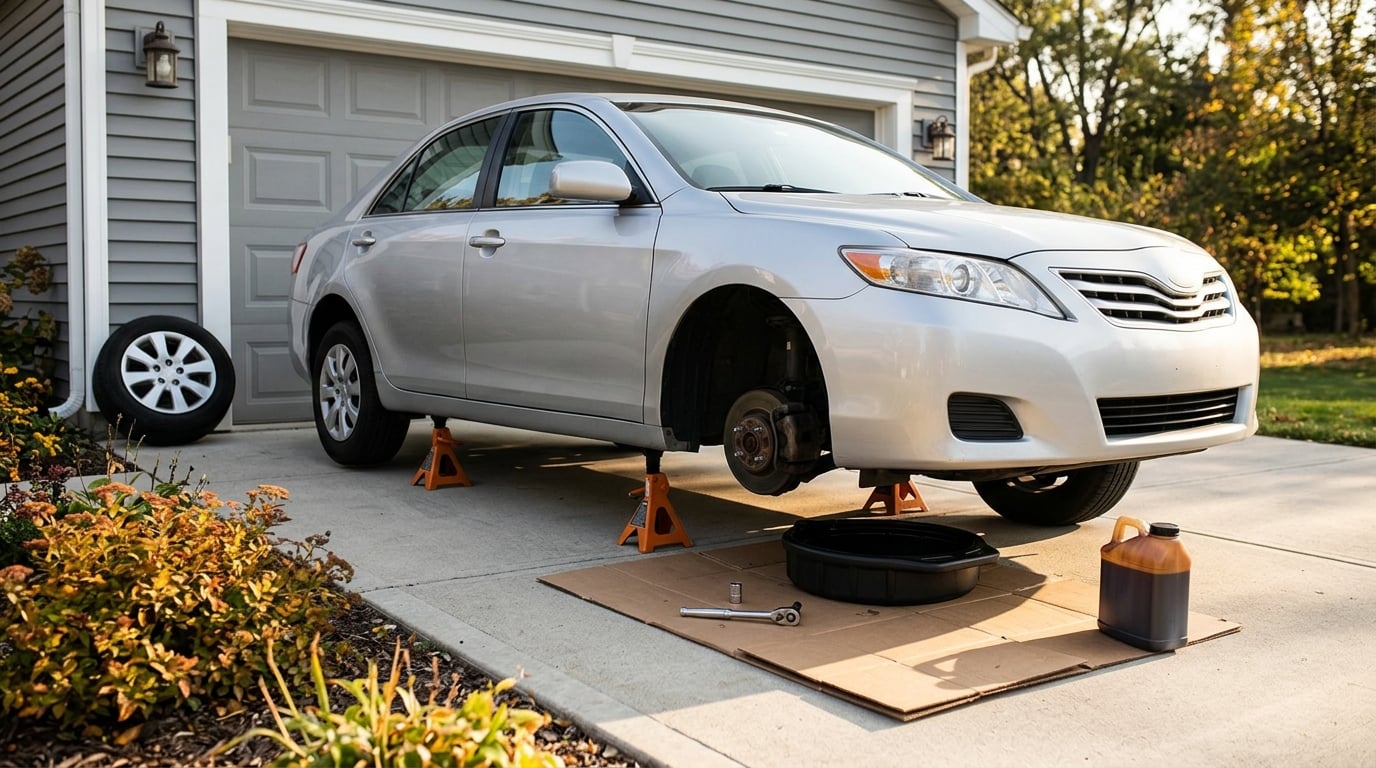
How to drain oil without making a mess comes down to one move: loosen the drain plug only until oil just begins to seep, hold it part way out of the hole to throttle the flow, and pull it free once most of the oil is already gone. Add a high-wall pan, cardboard under the car, and a bag around the filter, and the whole job stays on the drop cloth.
A home oil change takes about an hour and only a handful of tools, and the mess people dread comes from three separate places rather than one. It is oil blasting out of the plug faster than a pan can catch it, oil pooling in a subframe or skid-plate channel that drips hours later, and the roughly one quart sitting inside the filter that dumps the second you tip it.
Solve those three in order and this stops being the job that made you pay a shop. Here is the whole process, start to finish, in the order that keeps the floor clean.
Table of Contents
What You Need
Gather everything before the plug comes out, because the moment you break that seal the clock is running. A part-built job is how oil ends up on the driveway.
- The right socket. Drain plug heads are usually 14 mm, 15 mm, 16 mm or 17 mm hex, and some vehicles use a square drive. Check the service manual or the parts listing for your car before you buy anything, and never force a socket that only looks close.
- A ratchet and a short extension. A small three-eighths drive ratchet with a few inches of extension reaches most pan bolts without fighting frame members.
- A high-wall drain pan. Look for a pan with tall sides, a low front lip that slides under a skid plate, and a capacity of at least 15 quarts. The cheap shallow pans people complain about are the single biggest reason oil ends up on the floor.
- A low-profile funnel or a cut plastic jug. A half gallon iced-tea or bleach jug with the cap left on bends into tight spaces a rigid funnel will not reach.
- Cardboard or a drop cloth. Two flat boxes taped together catch the drips nobody planned for.
- An oil filter wrench or band clamp. The band style, where a strap goes around the canister and you wind it tight with a screwdriver handle, gives you control and does not crush the housing.
- A heavy trash bag or bread bag and a rubber band. This is the whole filter-drip fix.
- Nitrile gloves, paper towels, and a lidded waste oil container. Paper towels in the bottom of the catch bucket kill the splashing from the filter housing.
- Your new filter and a new drain plug washer. Most drain plug gaskets, also called crush washers, are single use. Fresh oil, fresh washer, every time.
Two optional upgrades come up constantly in owner forums. A Fumoto or Valvomax style magnetic drain valve replaces the factory plug with a ball valve you can open a crack at a time, and a drill-driven suction pump pulls oil out through the dipstick tube instead of the pan. Both help on awkward cars, and both have tradeoffs we get to below.
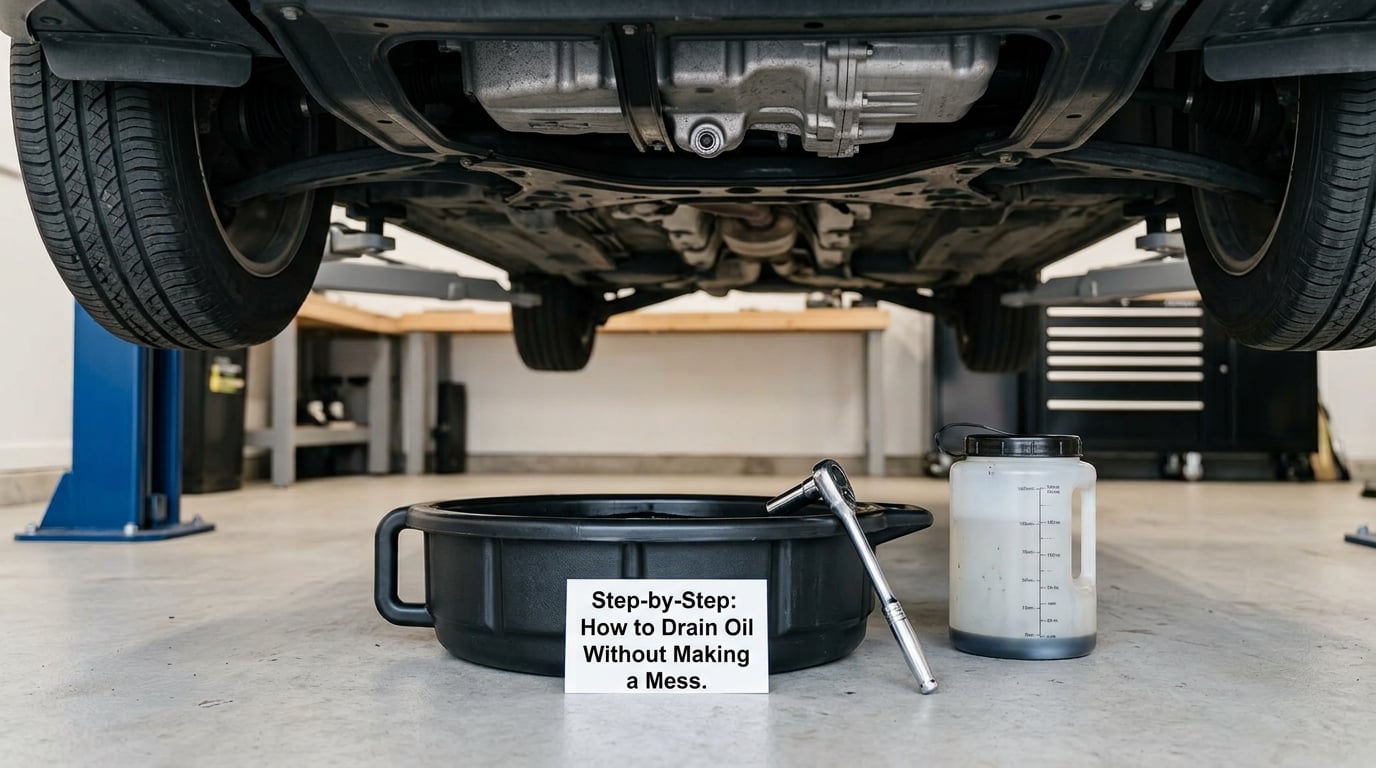
Step-by-Step: How to Drain Oil Without Making a Mess
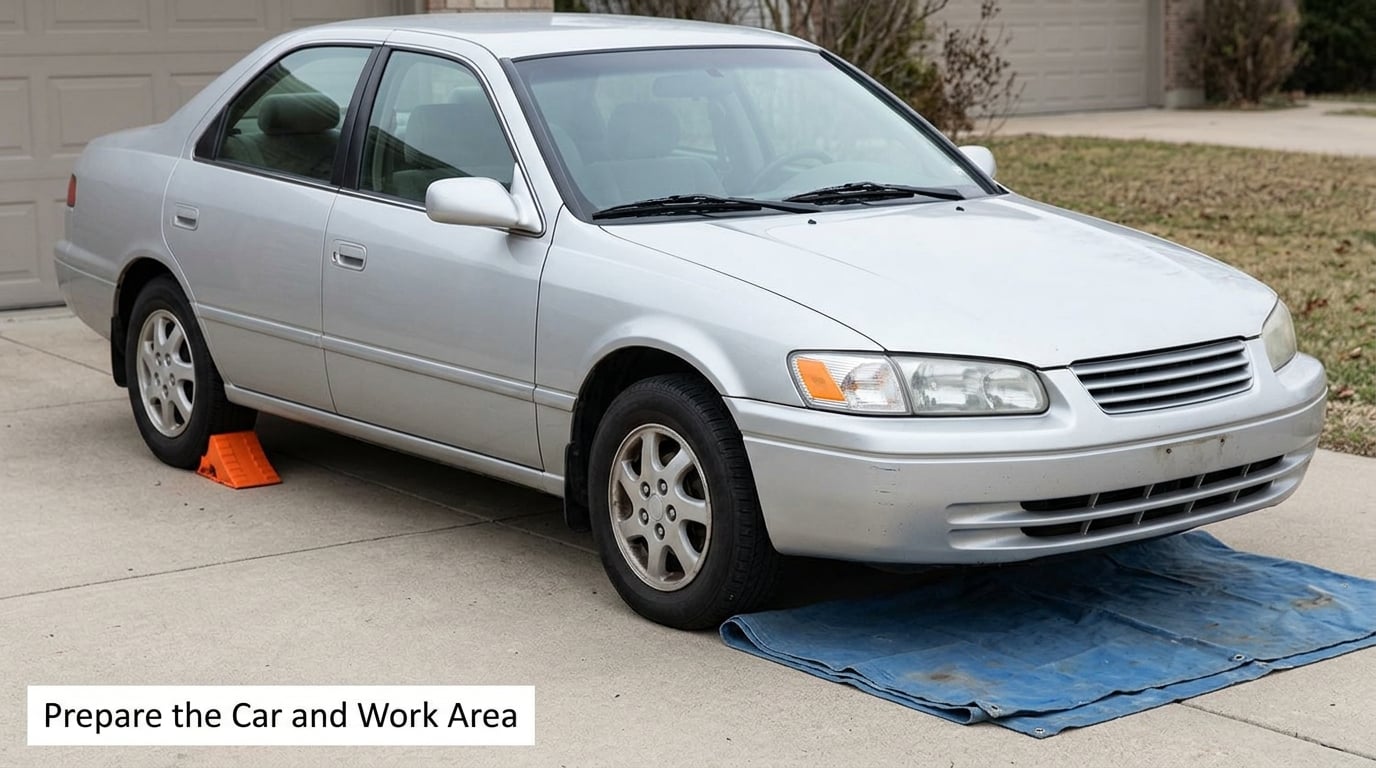
1. Prepare the Car and Work Area
Open the owner manual and find the drain procedure, the plug size, the tightening spec, and the oil capacity and viscosity. Every step below assumes you did that, because the manual is right and forum advice is a guess.
Park on level concrete or asphalt where the oil will not run toward a storm drain, engage the parking brake, and chock a rear wheel if the ground is anything but flat. Then lay cardboard down, slide the pan under the engine, and put the filter wrench, bag, and waste container within arm’s reach.
You are not loosening anything yet. The goal of this step is that when the plug moves, nothing needs moving with it.
2. Warm the Engine and Position the Drain Pan
Run the engine for five to ten minutes until the oil is warm enough to flow freely, then shut it off. Warm oil runs; cold oil sits in the pan corners and in the filter and comes out as a slow, cool dribble that is harder to control, not easier.
Do not drain it screaming hot. Fresh oil and hot exhaust are the two burn risks in this job, and a few minutes of warm-up gets you most of the flow benefit at a temperature you can work around.
Slide the pan in now and center it under the drain plug. If a crossbar, sway bar, or skid plate sits in the way, tuck a folded rag or a low funnel against the plug so the first oil hits the pan instead of the bracket. On trucks with a factory or aftermarket skid plate, some people wrap foil around the obstruction as a splash shield. It looks ridiculous and it works.
3. Remove the Drain Plug Carefully
Back the plug out until the threads clear, but keep pushing gently so the plug stays in your hand or against the pan. This is the moment a plug gets dropped into fresh-pouring oil, so slow down here.
Now the trick. Crack the plug a fraction of a turn and stop. You want a seep around the plug, not a stream. When oil appears, pull the plug part way out and hold it there, letting the seep do the draining for a minute or two.
That is the technique owners on the F-150 forum and the Mustang6G board describe over and over: the factory plug drains perfectly well, the trick is opening it slowly until oil just starts to come out. It costs you two minutes and it is the difference between a stream you chase and a trickle you aim.
If oil is already running hard, partially cover the hole with a gloved finger or a flat piece of cardboard to choke the flow. Do not try to catch a full-flowing jet with a pan.
4. Let the Oil Drain Completely
Once the flow reduces to a slow stream, pull the plug the rest of the way and set it in a rag so it does not roll under the car. Then swap the filter while the engine is still draining.
- Slip the trash or bread bag over the filter and hold it with a rubber band.
- Wipe the mounting surface and the housing face clean before the new filter goes on. A smear of old oil under the gasket is what makes a brand-new filter weep down the block.
- Back the filter out by hand, letting the bag catch the oil as it clears the housing.
- Drop the bagged filter into the catch pan or a bucket. A couple of paper towels in the bottom of that bucket absorbs the splash out of the filter housing.
- Fill the fresh filter with a few ounces of new oil if it is the spin-on type, and hand-tighten it until the gasket just contacts the face, then a quarter turn past that.
Leave the drain running for 10 to 20 minutes. You are waiting on two things: the oil trapped in the filter and in the crankcase baffles, and the oil sitting in a subframe or skid plate channel. Break the seal on that channel and it will drip out of the bolt hole all over your new pan of fresh oil, which is the annoying drip-after-service complaint you have probably heard about before.
There is a faster alternative, and it comes down to how much fuss you can tolerate.
| Method | Mess control | Time | Oil left in the pan | Extra gear |
|---|---|---|---|---|
| Factory drain plug, throttled open | Very good with a slow crack and a high-wall pan | 10 to 20 minutes of draining | Nearly all of it, minus a quart in the filter | None beyond a pan and socket |
| Fumoto or Valvomax drain valve | Excellent, you meter the flow with a ball valve | Same drain time | A cup or two, since the valve never fully empties the pan | One valve, installed once |
| Drill-driven pump through the dipstick tube | Best of the four, no open flow at the pan at all | About 10 minutes, no waiting | A couple of ounces | Pump, tube adapter, drill |
| Quick-lube shop | Varies, mostly not yours to control | 30 to 45 minutes plus the drive | Whatever they leave behind | None, other than the drive |
Owners on the Subaru Outback forum like the drain valves for control and fewer tools, and say plainly that they give up complete emptying. If leftover oil bothers you more than a slow drain does, pump it out through the dipstick tube instead. It is the cleanest method on this list and the one that leaves a trace behind.
5. Replace the Plug and Add the Correct Oil
Clean the drain plug threads, fit a new washer, and reinstall the plug by hand for the first few threads before you pick up the ratchet. Thread sealant is only for replacement drain valves that ship without a washer, never for a factory plug with a crush washer.
Tighten to the spec in the manual. Overtightening strips the plug or crushes the washer and gives you a drip you cannot remove without pulling the pan. Overtightening is the most common way a clean job turns into a greasy one the next morning.
Refilling is where the second half of the mess happens, and the fix is boring: a thread-in oil funnel that screws into the filler neck and gives you a large, deep bowl to pour into. Brands like AST and Lisle sell versions that fit most filler necks, and a cut jug neck does the same job in a pinch. Pour in half-quart increments and let each one settle before adding more.
Keep the filler cap off until you are done. A cap on early vents pressure and pushes oil back out the moment the level comes up.
6. Check the Level and Clean Up
With the engine off and level, check the dipstick the way your manual describes, then start the engine, let it circulate for a minute, shut it off and check again on many vehicles. Top up a quart at a time, never to the brim on the first pass.
Walk under the car with a light before you call it done. Look at the plug, the filter face, and the subframe channel. A weep at the washer or a drip down the block face is a five-minute fix now instead of a ruined driveway later.
To clear up, lift cardboard rather than shaking it out, bag the wipes and the bagged filter as trash, and wipe the pan rim before you lift it. Seal the waste oil in a lidded container and take it to an auto parts store or a household hazardous waste facility. Most auto parts stores take used oil at the counter, and recycling it is the only legal way to get rid of it.
Common Mistakes That Create Oil Spills
Almost every avoidable mess traces back to one of these. The fix column is the part to memorize.
| Source | What it looks like | The fix |
|---|---|---|
| Uncontrolled flow at the plug | Oil hits the side of the pan or shoots past it the second the plug comes out | Crack the plug only until it seeps, hold it part way out, then remove it fully |
| Oil trapped in a subframe or skid plate channel | A drip that starts ten minutes after the change and runs down the block | Tap the channel with a mallet and let it drain into a pan before you finish |
| The filter dumping on the way out | A puddle under the engine the moment the canister clears the housing | Bag the filter, hand-remove it, drop it straight into the catch pan |
- Using a shallow pan, or parking it off to the side. The complaint you see everywhere, especially on Reddit, is that store pans have wimpy walls and oil jumps the edge no matter how careful you are. Buy a tall pan with a low front lip, and center it under the plug before you turn a single inch of the plug.
- Pulling the plug all the way out at once. Full flow is the enemy of containment. The throttled crack is the whole technique.
- Draining cold. Cold oil barely moves and leaves a quart sitting in the pan and the filter, which then mixes with your fresh oil.
- Using the wrong socket. A socket that slips rounds the plug corners, and a rounded plug is a removal job with a much worse story. If it does not fit snugly, stop and check the size.
- Leaving the filler cap on while you drain. Some engines vent through the filler neck. If yours does, oil comes up the dipstick tube while the plug is out.
- No ground cover. Cardboard first, always. Oil on concrete is a permanent stain, and it is a slip hazard on a garage floor.
- Tipping the filter while removing it. Keep it upright as it clears the housing. Turning it sideways dumps a quart down the block in one move.
- Reusing the drain plug washer. These are single use. A reused or missing washer is the number one cause of a car that drips oil for days after a clean change.
- Overtightening the plug. Striped threads or a crushed washer both mean a drip. Torque to the manual spec and stop.
- Ignoring oil left in the filter housing. Let the new filter and housing drain over a pan, then wipe the mounting face before the new gasket goes on.
One more: do not reach the drain plug through a crossbar with a long extension and hope. If the plug is not visible and reachable, use a drain valve, pump the oil out through the dipstick tube, or take it to a shop. Owners who forced a ratchet into a crossmember have all three problems at once.
And if the car is under warranty, still burning oil, or the pan bolts are seized and rounded, a shop with a lift is the smart call. Paying someone else is not giving up, it is knowing when a two-hour job is the cheaper option.
Frequently Asked Questions
How can I siphon oil out of my car?
Push a suction pump hose down the dipstick tube, or use a pump made for the job if the tube is narrow, then run the pump and send the oil straight into your waste container. There is no open flow at the pan, so there is nothing to splash. Expect about two ounces of oil left sitting in the sump, which mixes with the fresh charge until the next change.
How long should you let your engine oil drain?
Give it 10 to 20 minutes after you fully remove the plug. That covers the oil in the filter, the baffles around the crankcase, and the channels in the subframe or skid plate. Ten minutes handles most of it. The last of it comes out over the next hour or so as drips, which is why people think they still have a leak after a clean change.
Is it better to drain oil or pump it out?
Pump it out if mess is your main concern, drain it if leftover oil is. Pumping through the dipstick tube sends oil directly into the container and finishes in about ten minutes, but leaves a couple of ounces in the pan. Draining takes longer to wait out and leaves a quart in the filter, and the filter is already full of old oil by then. Most people drain, then accept the filter oil.
How to pour engine oil without making a mess?
Screw a thread-in oil funnel into the filler neck so you have a deep, wide bowl to pour into, take the filler cap off first, and add oil in half-quart chunks, letting each one settle before the next. A plastic jug with a cut neck works the same way in a pinch. Pours in one long stream are what put oil down the side of the engine.
How to stop oil from splashing when draining?
Back the drain plug out only until oil starts to seep, then pull it part way out and hold it there. That converts a hard jet into a trickle you can aim into a shallow spot in a high-wall pan. If it still gushes, partially cover the hole with a gloved finger or a flat piece of cardboard. A taller pan with a low front lip is the other half of the answer.
What can I drain engine oil into?
A high-wall metal drain pan with a center drain plug is the best option, and a lidded waste oil container is the destination. Skip the shallow plastic funnels people buy for small engines, because fast flow jumps their walls. Most auto parts stores accept used oil at the counter, and household hazardous waste facilities take it too. Never pour it down a storm drain, onto the ground, or down a floor drain.
Conclusion
Four things do most of the work here. Read the manual for the plug size, the tightening spec, and the oil spec. Stage the pan, the cardboard, and the bag before you loosen anything. Give the engine a short warm-up. Then crack the plug only until oil seeps and hold it part way out.
Handle the oil hot but not burning, recycle every drop at the parts store, and you will wonder why this job ever had a reputation for being a mess.