
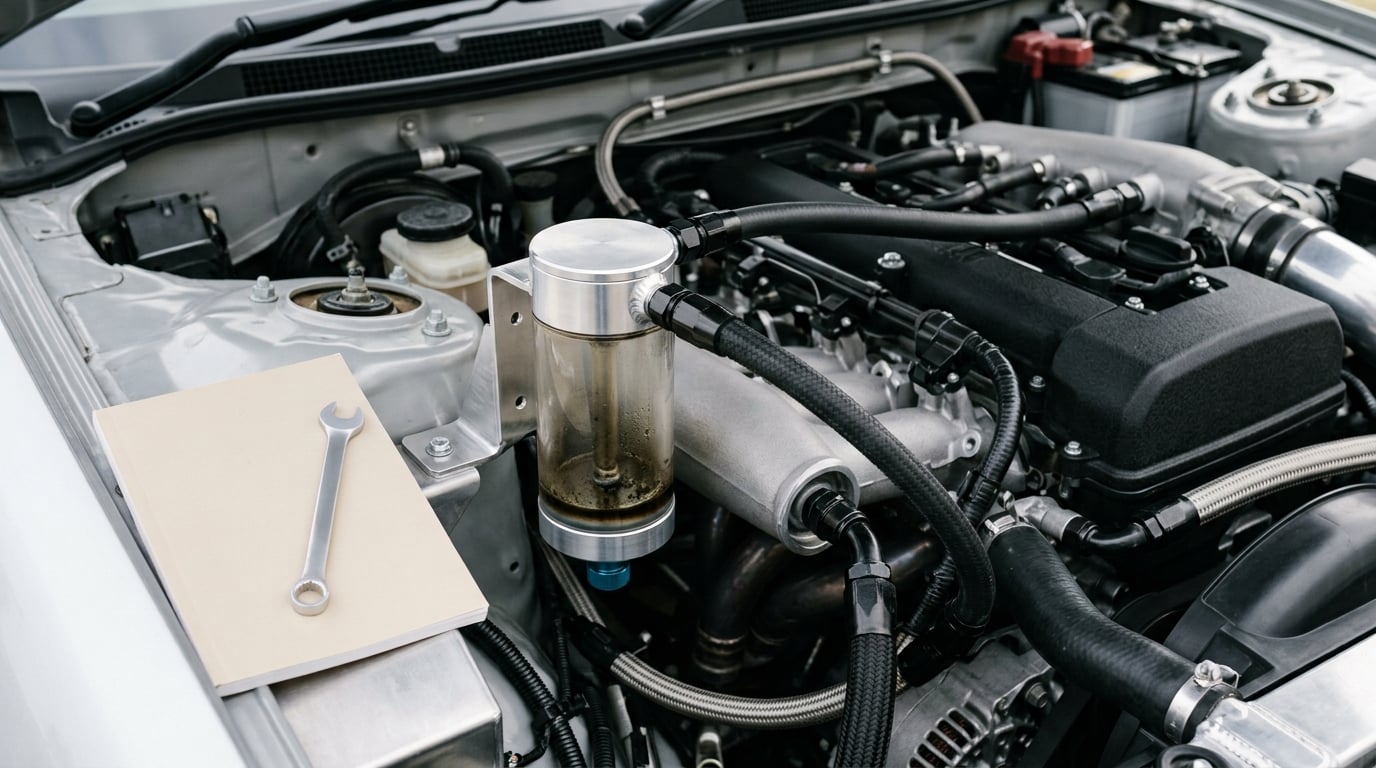
If you have seen a mechanic or forum regular push a catch can onto your car, you probably wondered whether it is essential or just a shiny add-on. An oil catch can is a small inline reservoir that sits in your crankcase ventilation hose. It intercepts the blow-by gases on their way back to the intake, cools them, and traps the oil mist before the air continues on. For most drivers, no, you do not need one. For direct-injection and turbocharged engines living a hard life, it is a cheap insurance policy against intake valve sludge. That is what is an oil catch can and do you need one comes down to: monitoring hardware, not a required part.
Table of Contents
- What Does an Oil Catch Can Do?
- How Does an Oil Catch Can Work?
- Why Would My Engine Need One?
- Is an Oil Catch Can the Same as a PCV Valve?
- Do You Need an Oil Catch Can?
- How Do You Choose and Install One?
- How Do You Inspect and Empty an Oil Catch Can?
- Frequently Asked Questions
- Does an oil catch can stop my engine from burning oil?
- How often should I check and empty an oil catch can?
- Can an oil catch can cause a check engine light?
- Is a catch can necessary on a modern BMW?
- Should I install a catch can before or after fixing a PCV valve?
- What kind of residue in an oil catch can is normal?
- The Bottom Line
What Does an Oil Catch Can Do?
An oil catch can is a transparent or metal reservoir spliced into the crankcase breather line, usually between the PCV valve and the intake manifold. Blow-by leaves the crankcase as a warm fog of air, oil droplets, water and unburnt fuel. The can gives that fog somewhere to slow down and cool, so the oil condenses onto baffles or filter media and settles to the bottom while the cleaned air gets drawn back into the engine.
That collected sludge is the point. Without a can, that oil travels into the intake manifold and onto the intake valves, where it bakes into hard carbon. A can diverts part of it into a container you can empty and throw away. What it does not do is repair rings, fix a leaky valve seal, or add power. The residue in the can is a symptom readout, not a diagnosis on its own.
How Does an Oil Catch Can Work?
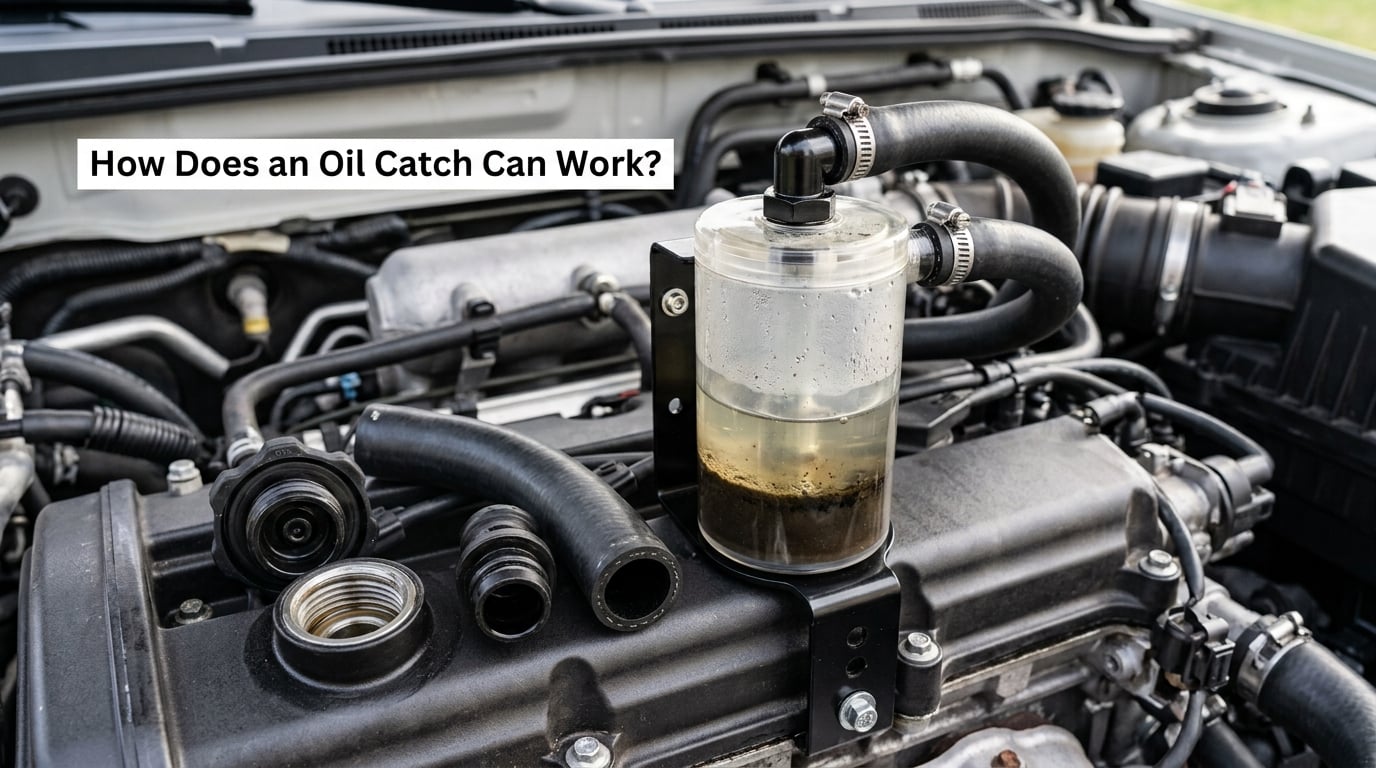
The flow path is short, and knowing it explains most of the confusion people have with these parts.
Combustion pressure pushes past the piston rings and pressurises the crankcase. The PCV system pulls that pressure out through the breather hose and routes it into the intake tract, where it joins the fresh charge and gets burned. Splice a catch can into that hose and the path becomes: crankcase vent, into the can, slows and changes direction, out of the can, back to the intake.
Inside the can, three things happen at once. The gas slows down, so oil droplets no longer stay suspended. It changes direction, so heavier droplets slam into baffles or mesh and coalesce into runs that fall down the wall. It cools, and warm oil vapour drops out as liquid. Gravity does the rest. The airflow exits the top and returns to the intake, ideally through the factory connection so the ECU sees the same vacuum signal it always did.
Why the factory system cannot do the same job
A factory PCV valve is a one-way restrictor with a small orifice inside. It controls flow, not cleanliness. Many manufacturers also add a cheap filter or oil separator near the manifold, which catches large chunks but not fine vapour, and which most owners never service. The factory design assumes the engine will make a little blow-by for its whole life and burn it. A catch can adds separation capacity on top of that assumption, and gives you a window to see what the engine is actually doing.
Why Would My Engine Need One?
Every engine makes blow-by. A healthy one keeps it to a trickle. Engines start pushing more when the piston rings lose their seal, when an oil leak near the intake adds fresh oil to the air the engine breathes, or simply when a lot of fuel is left unburnt after a cold start or a long overrun.
That last one catches people out. Short winter trips, heavy traffic, and lots of idle time produce the highest fuel dilution and the most water condensation. A naturally aspirated engine that never sees sustained high revs and never gets driven hard can go its whole life with barely a drop of oil in the can. A turbocharged engine under boost, or a direct-injection engine past 150,000 km, is a different story.
Track days, towing, sustained high RPM and repeated wide-open throttle all raise crankcase pressure and oil carryover. Engines with aftermarket intakes, aggressive camshafts or removed baffles push even more. And a leaky oil-cooler line or charge pipe introduces fresh oil into the very air the engine breathes.
Is an Oil Catch Can the Same as a PCV Valve?
No, and this is where a lot of owner arguments come from. The PCV valve is a factory part with a specific job: meter crankcase vapours into the intake at a controlled rate while blocking backflow during deceleration. The catch can is an aftermarket add-on that separates oil from that airflow. They are different components doing different things.
You also see factory oil separators and PCV filters, which sit closer to the real answer. They separate some oil, usually through a coarse media, and they are maintenance items rather than drainable monitors. If your car has one and it has been serviced on schedule, a catch can may be redundant. If it has never been changed and the car is past its service life, replacing it is a far better use of time and money than bolting on a can.
If the factory system is broken, fix that first. A failed or stuck-open PCV valve raises crankcase pressure, which pushes oil past the seals and creates the very blow-by you are trying to catch. Installing a can on a venting engine is treating the leak with a bucket. A new PCV valve, or the equivalent diaphragm or separator the manufacturer uses, costs a fraction of a shop visit and often solves the problem outright.
Do You Need an Oil Catch Can?
That question, what is an oil catch can and do you need one, has a shorter answer than most forums admit: work down this list and you will know in about a minute. Find your engine type, read the verdict, then read the reason.
| Engine or use case | Verdict | Why |
|---|---|---|
| Turbocharged daily driver | Yes, worth it | Boost pressure and charge pipe carryover load the intake with oil, and turbo cars run hotter in the oil mist |
| Direct injection with high mileage | Yes, worth it | Intake valves are no longer washed by fuel, so collected oil becomes valve carbon |
| Track days, towing, sustained high RPM | Yes, strongly | Hard use multiplies blow-by, and a full can you forget about becomes a restriction |
| Older port-injected naturally aspirated | Maybe | Useful as a monitor if you suspect worn rings, otherwise modest returns |
| Modern naturally aspirated, gentle driver | No, skip it | Factory PCV already handles the small amount of blow-by a healthy engine makes |
| Short winter commutes only | No, or check often | Water and fuel condensation collect faster than oil, so it needs frequent draining |
Now the claims you will run into online, because they spread fast and most of them are wrong.
| Myth | Fact |
|---|---|
| A catch can adds horsepower | It does not. A separated intake can look and run slightly cleaner, but no measurable power comes from catching oil |
| A catch can improves fuel economy | No. Any economy change people report is the cleaning effect on the intake over tens of thousands of km, not the can itself |
| Empty it every 500 miles | Absurd. Check it with your regular oil service and adjust from what you actually find |
| It removes carbon from the intake | It slows new deposits. It does not clean the ones already baked on |
| A full can is harmless | It is not. A restricted flow path can raise crankcase pressure and cause leaks, rough idle or a check engine light |
The real downsides are dull but genuine. Installation is the hard part, because a wrong hose or an unseated hose clamp creates a vacuum leak and a rough idle that looks like an engine fault. You have to drain the can, and if you forget, you have created a problem. You have added one more leak point and one more hose to age. And on some cars, altering emissions-related hardware can complicate a warranty claim or a state emissions test, so check your manual and your local rules first.
How Do You Choose and Install One?
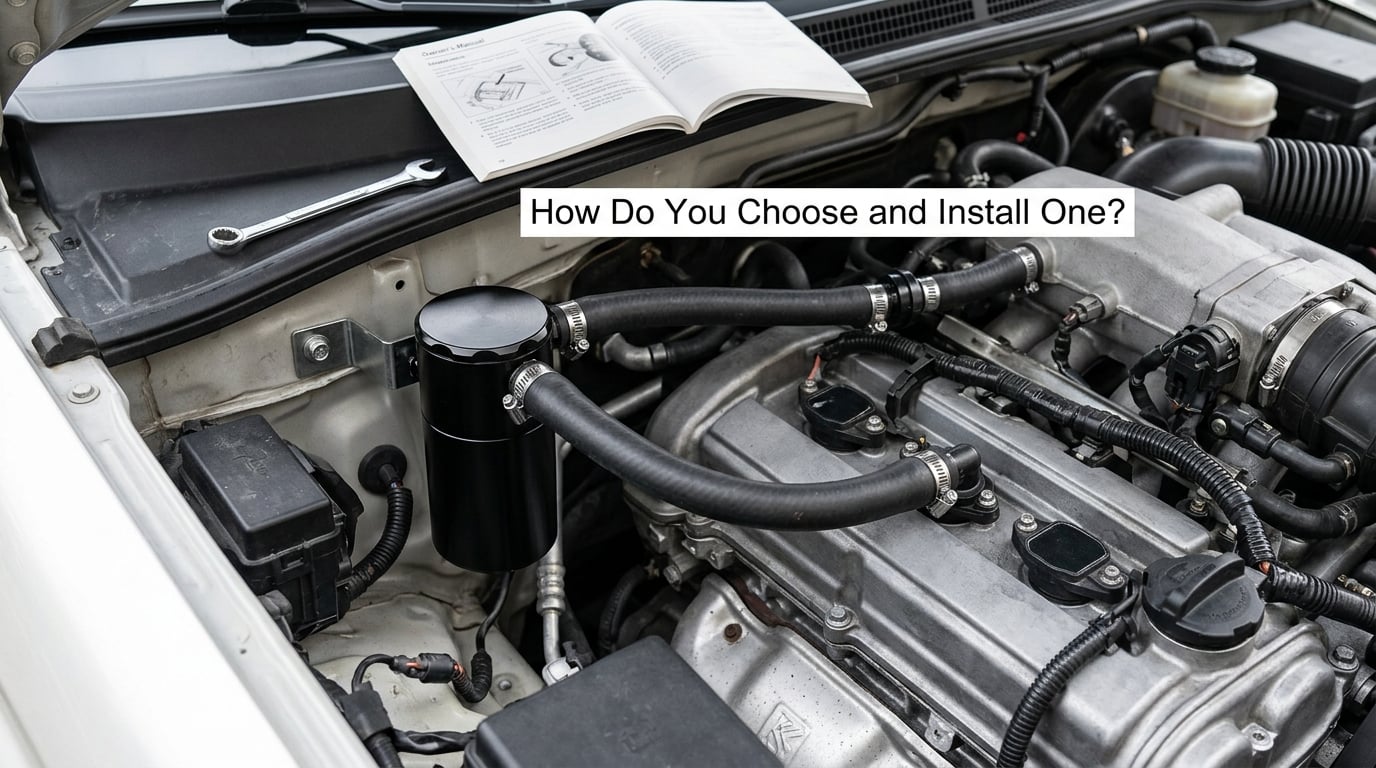
Pick a can with a drain plug or a petcock, a clear body so you can see the level, and internal baffles or filter media that break up the flow rather than a smooth empty shell. A bracket that fits your engine bay beats a universal mount every time. A can of about 500 ml to 1 litre is the usual range; more volume just means less frequent checks and a heavier thing hanging off the intake side.
Mount it where the air cools quickly, ideally on the cooler side of the bay, away from the exhaust manifold and turbo downpipe. Separation depends on condensing hot oil, so a cool, well-ventilated location does more work than a bigger can mounted next to a hot pipe.
The hose question deserves a clear answer, since it is the single most common install mistake. The can goes in the line carrying crankcase vapours into the intake. On most cars that is the hose coming off the valve cover or oil filler, passing through or past the PCV valve, and ending at the intake manifold or the charge pipe downstream of the intercooler on a turbo setup. It is not the hose feeding clean air into the airbox, and it is not the PCV hose from the intake manifold back to the valve cover on engines that use that reverse layout. Confirm it on your specific model before cutting anything, and follow the manufacturer diagram rather than a generic picture online.
The install itself is a weekend job for someone comfortable in an engine bay: run the hoses, secure the can, clamp everything properly, then start the engine and watch fuel trims and idle for a few minutes. A vacuum leak usually shows up as trims going lean or an unsteady idle, and a check engine light on a modern car is almost always a small vacuum leak code. A shop will charge hourly labour for this, and the labour is the bulk of the bill rather than the can. Before drilling a bracket, check your warranty terms and local emissions rules.
How Do You Inspect and Empty an Oil Catch Can?
Build the check into your oil service rather than treating it as a separate chore. Every few thousand kilometres, with the engine off and cold, look at the can through the clear body. Then read what is in it.
| What you see | What it usually means |
|---|---|
| Clear or near-clear liquid, small amount | Water condensation. Normal in cold weather and short trips |
| Milky, foamy liquid with a fuel smell | Unburnt fuel dilution or coolant. Worth a mechanic’s look, especially with a rising oil level |
| Thin brown liquid with a strong fuel smell | Normal running. More of it after cold starts and hard driving |
| Black thick sludge, more than a film | Heavy oil carryover. Check the PCV system, the charge pipe and for an oil leak near the intake |
| Can nearly full | Stop driving and drain it. A restricted path is now part of the problem |
Empty it over a container, wipe the sealing surfaces, and check the hoses while you are there. Replace the media if the can uses a cartridge, and keep the mounting tight so a full can cannot shake loose. If the can fills fast every week, the catch can is telling you something real about the engine. That is the moment to book an inspection for worn rings, a failed PCV valve or a leaking charge pipe, rather than reaching for a bigger can.
Frequently Asked Questions
Does an oil catch can stop my engine from burning oil?
No. A catch can captures oil mist that has already escaped past the piston rings and returns it to the intake, but it does not stop that escape. If your engine is using oil, the cause is worn rings, valve stem seals or a leaking PCV system. Fix the underlying fault first, then use a can to slow the intake fouling that follows.
How often should I check and empty an oil catch can?
Check it whenever you change your oil, and empty it well before it is three-quarters full. Short winter trips and hard driving fill it much faster than gentle cruising. A few millilitres of brown liquid is normal. A can that collects a thick black layer in a single month is telling you the engine needs an inspection, not a bigger can.
Can an oil catch can cause a check engine light?
Yes, indirectly. The most common cause is a vacuum leak from a hose clamp that was not seated properly, which shows up as a lean code, an unsteady idle or both. A can that fills up and goes unnoticed is the other cause, since the restricted path raises crankcase pressure. Correct hose routing, firm clamps and regular draining avoid both.
Is a catch can necessary on a modern BMW?
Not necessary, but reasonable. Many of these engines are turbocharged and recent generations are direct injection, which is the group that benefits most from intercepting blow-by before it reaches the intake valves. If the car is under warranty, check the terms before adding parts. If the factory PCV system is working and the engine is healthy, a can is optional rather than required.
Should I install a catch can before or after fixing a PCV valve?
After, always. A failing PCV valve is itself a source of oil in the intake, and catching that oil masks the fault rather than removing it. Replace the valve or the factory separator, confirm the crankcase pressure is normal, then add a catch can as a monitor for what happens next.
What kind of residue in an oil catch can is normal?
A thin layer of brownish liquid with a fuel smell is normal, especially after cold starts and hard driving. Water condensation is also normal in cold weather and leaves a clear layer. Thick black sludge, a milky foam, or anything filling the can in days all point to a real fault worth investigating rather than routine.
The Bottom Line
A catch can is monitoring equipment with a cleaning side effect, not a required maintenance part. Turbocharged and high-mileage direct-injection engines, and anything driven hard, get real benefit from one. A standard-spec naturally aspirated car with a healthy PCV system can skip it entirely.
Either way, the first step is the same: verify the factory PCV system and inspect the engine for leaks and worn rings before adding parts. A catch can then tells you what your engine is doing, which is the reason most enthusiasts fit one in the first place.