
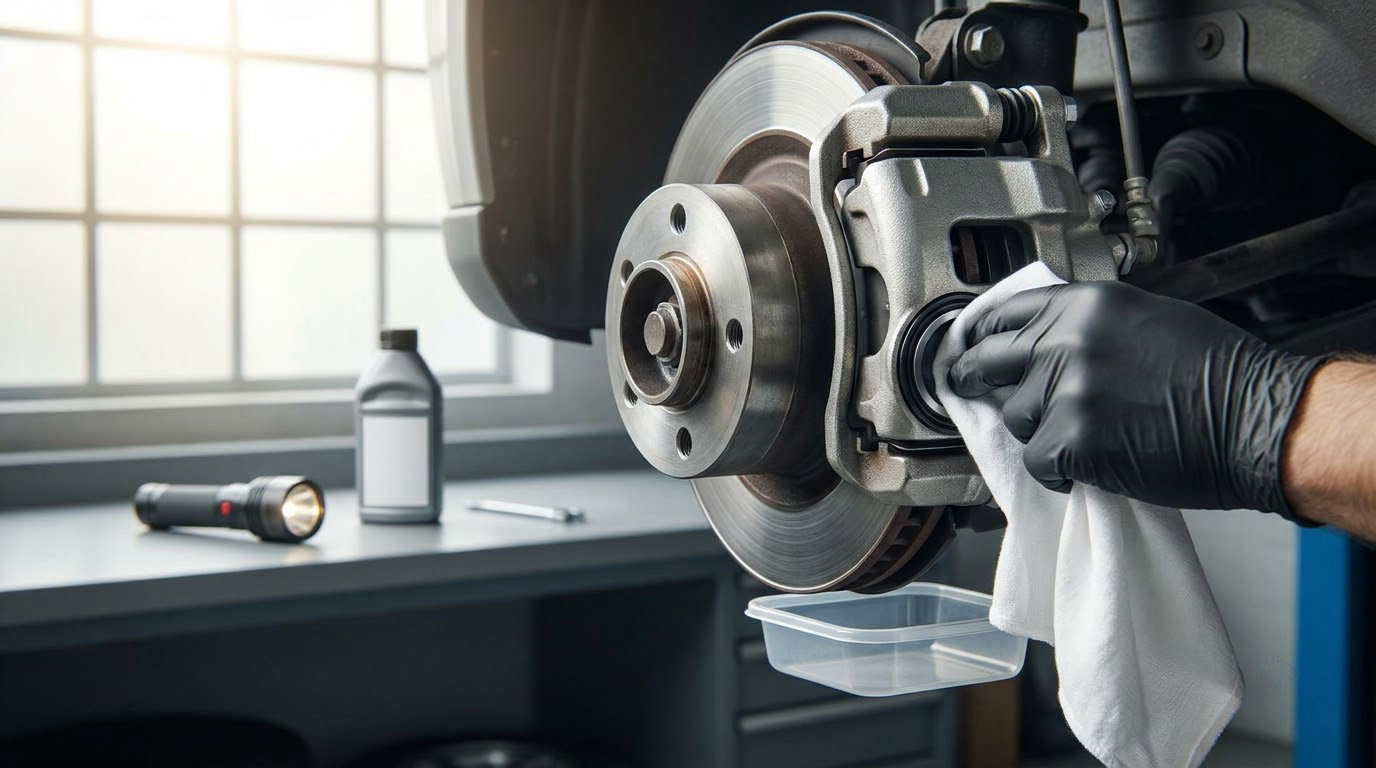
To check brake calipers for leaks, lift the car, take the wheel off, and look for wet fluid on the caliper body, the piston boot, the bleeder valve, and the brake hose connection, then confirm with a brake fluid level check and a pedal test. On most BMWs it takes 30 to 45 minutes per corner and needs nothing more than jack stands, a flashlight, and clean rags.
The confusing part is not finding fluid. It is telling brake fluid apart from the black brake dust that every wheel has, and knowing which part actually failed. A wet spot at the hose fitting is a five-minute fix; a bulge in the piston boot usually means the caliper is on its way out.
BMW calipers are worth checking carefully because many of them are fixed calipers with a piston seal per side, and the factory seal is the piece that ages out first. Owners also tend to run these cars long after pads and rotors are done, so the caliper keeps retracting past its usable travel and the seal gets worked harder than it was designed for.
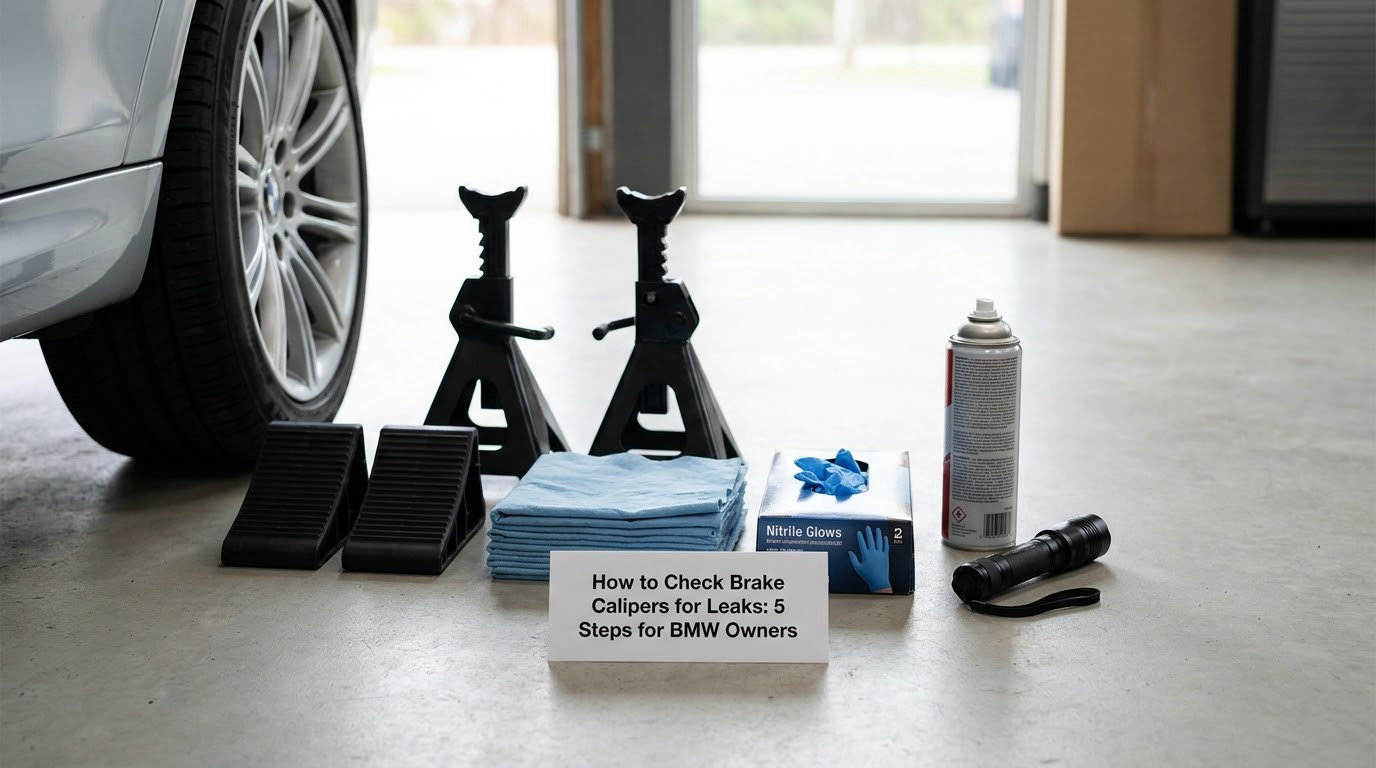
Table of Contents
What You Need
You need a floor jack, four properly rated jack stands, two wheel chocks, a flashlight or headlamp, clean shop rags, nitrile gloves, eye protection, a torque specification for your wheel fasteners, and a small amount of brake cleaner. A flat-blade screwdriver and a small inspection mirror help with the caliper slider and the inside of the wheel, but they are not mandatory.
Read the torque numbers for the wheel bolts in your owner’s manual or service information before you start. On many BMWs the wheel bolts are tightened in a star pattern and have a specific torque plus an angle spec, and a guess is how threads get rounded.
One rule matters more than the tool list: never work under a vehicle held up by a jack alone. Support the car on jack stands at the factory lift points, lower the jack, and take the weight off it. If a stand looks damaged or is missing its pin, do not use it.
Do the inspection on a dry car. Water in the wheel well turns brake dust into a dark smear that looks exactly like a leak, and that single detail causes more false alarms than anything else.
Step-by-Step: How to Check Brake Calipers for Leaks
This is a five-part inspection, moving from safe setup to a visual pass, then to a fluid level and pedal test, and finally to a decision. The exact procedure varies by BMW model, and the owner’s manual and manufacturer specifications always take priority over anything written here.
1. Prepare the Vehicle Safely
Park on level ground, engage the parking brake, switch the engine off, and place chocks opposite the wheel you are servicing. Loosen the wheel fasteners before lifting, because a seized bolt will not turn with the full weight of the car on it.
Support the vehicle with jack stands, remove the wheel, and let the brake components cool. A rotor that has been under braking can be hot enough to blister bare skin, so give it ten minutes or work the rest of the car first.
2. Inspect the Caliper, Pads, and Wheel for Fluid
Start at the caliper body and work outward: the piston boot where the piston enters the bore, the bleeder valve, the banjo bolt or hose fitting where the flexible line connects, the hard line running back to the master cylinder, and the guide pin boots. Then look at the dust shield behind the rotor, the rotor face, and the pad area.
Look for fresh wet fluid, an oily sheen, streaks running downward, a film at the inside of the rim, and dampness in the wheel well. Brake fluid is clear to amber and mixes with brake dust, so on a dusty wheel it often shows up as a dark wet patch rather than a clear drip.
Also pull the wheel off and check it. Fluid thrown by the wheel often lands on the inside barrel, where it is easy to miss from outside. To check brake calipers for leaks without removing the wheel, shine the light through the spokes at the caliper and hub and look for wetness on the dust shield.
3. Look for Signs of a Failed Seal or Damaged Hose
Several things point to a failing piston seal: a low brake fluid level between services, wet or unusually clean pad surfaces where fluid has washed dust away, fluid at the piston boot, and a film inside the rim. A bulging, folded, or split piston boot is the early warning that shows up well before fluid reaches the rotor, and it is worth treating as a leak even if everything is still dry.
A stiff or seized slider is a different failure with a similar look on the outside. One side of the pad stays worn while the other stays fresh, the wheel pulls under braking, or the rotor has hot and cold patches across its face. That is not a leak, and it is just as dangerous to drive on.
Do not squeeze the piston, pry it, or pull the caliper apart to see if more fluid comes out. A sealed hydraulic system should not leak when you disturb it, and opening it turns a small leak into a brake job with a bleed afterward.
4. Check the Fluid Level and Brake Pedal Response
Check the reservoir in the engine bay against the MIN and MAX marks in the owner’s manual, and note where the level sits with the car on level ground. A level that has dropped between services is the clearest single clue that fluid is leaving the system somewhere, whether you can see it or not.
With the engine off, press and hold the brake pedal firmly and keep holding it. Watch for pedal movement toward the floor, a soft or sinking feel, a level in the reservoir that drops while you hold, or a brake warning light. A fluid level that visibly falls under pedal pressure is a strong sign of fluid moving past a seal, or air compressing somewhere in the circuit.
Air, moisture, or a sticking caliper can produce the same pedal feel, so treat these as reasons to get a diagnosis, not as proof of where the fault is. If a second person is available, have them press and hold while you watch the caliper and the reservoir level, which raises pressure enough to make a slow seep show itself.
5. Clean, Retest, and Decide Whether Repair Is Needed
Once you have noted where the fluid is and how much, clean the area with brake cleaner and a rag, only when everything is cool enough to work on. Let it dry, then press the pedal again and look for fresh fluid. A dry-looking caliper that weeps the moment pressure returns tells you the seal has failed rather than the fitting simply being loose.
Reinstall the wheel to the manufacturer torque specification in the correct pattern, lower the vehicle properly, and test the brakes gently in a low-risk area. Get to a brake shop for a proper diagnosis if you find a confirmed leak, a low fluid level, uneven braking, pulling, grinding, or any change in pedal travel.
Do not try to fix a leak by tightening fittings repeatedly. A banjo bolt that has already reached its correct torque will not be improved by more turns, and over-torquing cracks the housing, which turns a repairable leak into a caliper replacement.
Common Mistakes
The most common mistake is trusting brake dust. Black dust that sits dry on a caliper and wipes away clean is normal. Fluid leaves an oily film that comes back, and it often streaks downward with gravity.
Second is cleaning before you look. If you wipe everything down at the start and never recheck, you may remove the only evidence. Note the location first, then clean, then retest.
Third is spraying things. Compressed air, soapy water, and spray lubricants can force fluid past a seal that is only barely leaking, or push water and lubricant into the bore where they do harm. Mark the location and let a technician work on it properly instead.
Fourth is assuming a seized caliper bolt means the caliper is bad. Rust-welded caliper fasteners are common on older BMWs and say nothing about whether fluid is leaking.
Fifth, and the most expensive, is replacing the visible seal and stopping. If the piston surface is scored or the bore is corroded, a new seal over a damaged bore leaks again within weeks. Check the piston, the bore, the hose, the guide pins, and the pad condition as a set.
And driving on with a low reservoir is not a shortcut. The level dropping means the system is losing pressure, and a soft pedal that reaches the floor has no warning left before it does.
Frequently Asked Questions
Can brake dust be mistaken for brake fluid on a caliper?
Yes, and it is the most common false alarm. Brake dust is dry, powdery, and wipes away clean, while brake fluid leaves a wet, oily film that returns after wiping. Fluid also streaks downward under gravity and often appears at the pad surfaces or the inside of the rim where dust alone would not collect. Check on a dry car, since water mixes with brake dust and makes it look wet.
Why can a caliper leak without an obvious puddle?
A small seal weep rarely reaches the ground. It wets the dust shield, films the inside of the wheel, and is drawn along the tire by road spray. The leak becomes visible only once fluid reaches heat and turns the pad material, which shows up as an unusually clean or glazed pad. A soft pedal and a reservoir level that keeps dropping are often the first real clues.
Is a small amount of residue safe to ignore?
Not if it is fluid. A single damp spot on the dust shield means the seal is already letting fluid past, and driving on it wears the pad and rotor and can let the caliper overheat enough to seize. Dry brake dust with no film, no low reservoir level, and no pedal change is normal and needs no work. The distinction between dusty and wet is the whole point of the inspection.
What causes leaks in BMW calipers?
Most often it is the piston seal hardening with age and heat cycles, and on many BMWs the caliper keeps retracting as pads wear until the piston travels further than new. A braided or rubber flex hose perishes from the inside out, banjo fittings and bleeder valves can seep under torque, and corrosion inside the bore will let a new seal fail again. A caliper with no visible fluid and a free piston is usually fine.
Can I drive after finding a caliper leak?
Only in limited cases, and only after you know what you are dealing with. A slow weep with firm pedal feel, no warning light, and fluid well above MIN can sometimes be driven gently to a shop. A pedal that sinks, fluid at or below MIN, a lit brake or ABS light, pulling, or a soaked pad means stop driving and have the car towed. Diagnosis takes minutes; the failure mode is total brake loss.
Conclusion
Start with the caliper and the wheel: on a dry car, look for wet fluid at the piston boot, the bleeder valve, the hose connection, the dust shield, and the inside of the rim, and check the reservoir level in the engine bay. Note where the fluid is before you clean anything, then press the pedal and see whether fresh fluid returns to the same spot.
A visual check can tell you that something is leaking and roughly where, but it cannot confirm the condition of a piston, a bore, or the rest of the hydraulic system. If you find a leak, a low level, or any change in pedal feel, get a qualified brake technician to diagnose it before normal driving.