
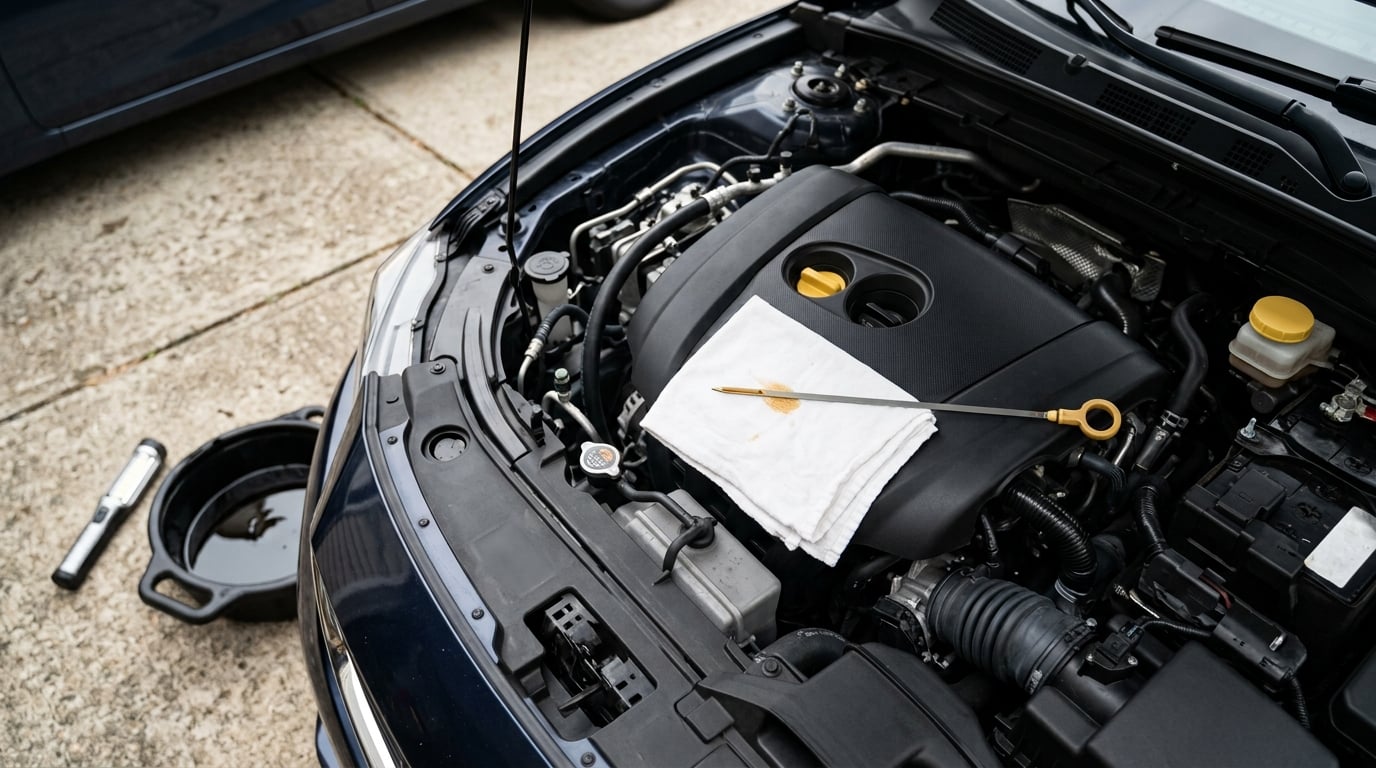
Engine oil sludge is a thick, gel-like buildup that forms when degraded oil mixes with dirt, moisture and unburned fuel until it turns to paste. To check for engine oil sludge in a BMW, pull the dipstick and read the film, look at the underside of the filler cap, and rub a drop of oil between your fingers. Ten minutes and a clean rag tells you most of what you need to know.
The part people get wrong is what a healthy engine looks like at high mileage. A black dipstick is usually just soot, not sludge, and the difference matters because one is normal and the other is a warning. This guide is written for the home owner working in a driveway, and it stays honest about where the DIY check stops and a shop has to take over.
Table of Contents
- What You Need
- Step-by-Step: How to Check for Engine Oil Sludge
- Frequently Asked Questions
- Is a small amount of sludge on a BMW dipstick normal?
- Can engine oil sludge be removed with a normal oil change?
- How much engine oil sludge is too much to ignore?
- What does engine oil sludge do to an engine?
- Should I keep driving if sludge is found in my BMW?
- Can oil sludge be caused by the wrong oil or too long an oil-change interval?
- What To Do First
What You Need
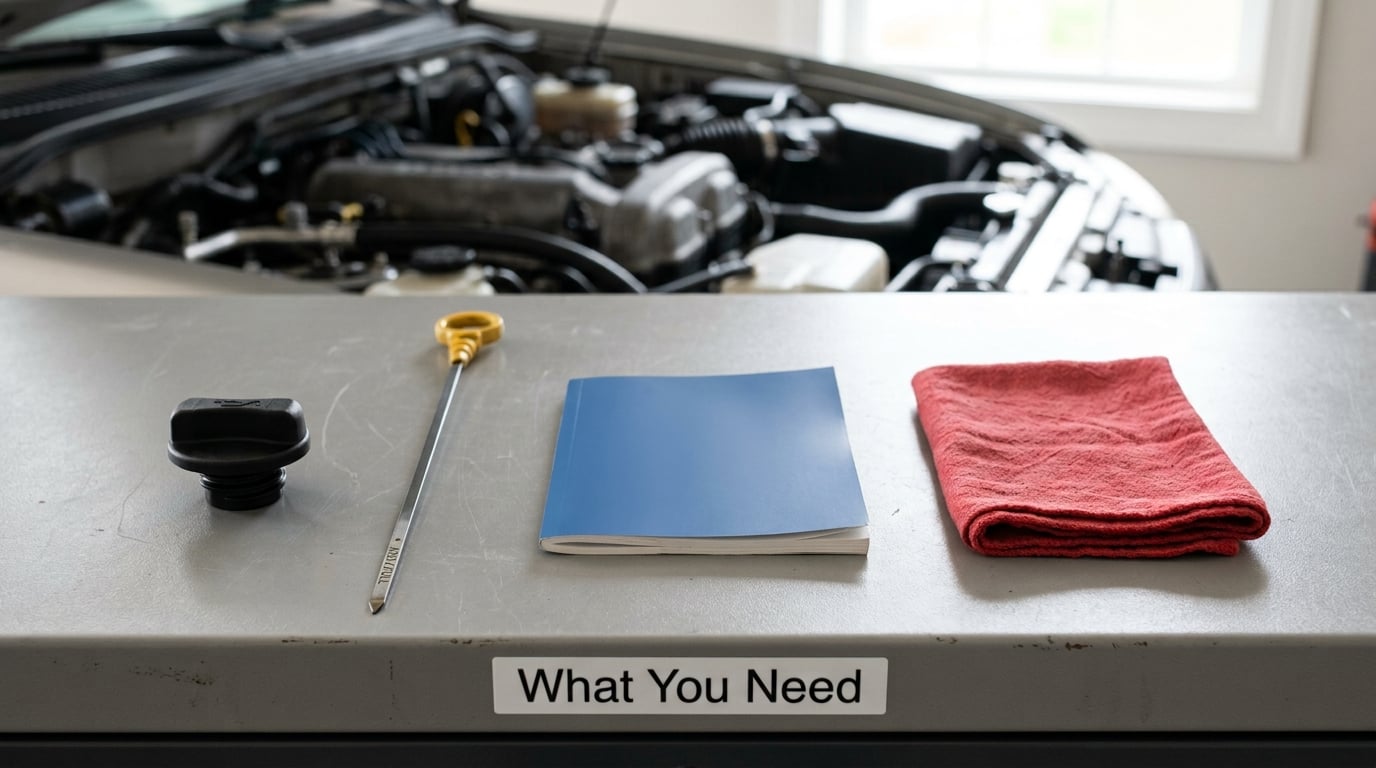
You need very little. A clean rag and ten minutes cover most of it, and you can do the whole job in the driveway with the engine off.
- The owner’s manual, or at least the page for the oil filler cap, the oil specification and the oil change interval. BMW uses long-life oil specs, and the one printed on your manual is the one the engine was designed around.
- A level parking surface. A driveway with a noticeable side slope gives you a false low reading.
- A clean rag or paper towels, plus nitrile gloves. You will touch used oil and it does not wash off your hands easily.
- A drain pan and a funnel if you plan to do the filter comparison or the volume test in Step 4.
- A flashlight and, if you want to look down the dipstick tube, a cheap borescope or the phone camera adapter that plugs into a probe hole.
One decision to make before you touch anything: should the engine be warm or cold? BMW does not use a single procedure for every engine, and the answer for your model is in the manual. Several models want the oil at operating temperature, others want the engine cold after a few minutes of shutdown. Check that page first, because a reading taken under the wrong condition is the single most common way owners scare themselves over nothing.
Step-by-Step: How to Check for Engine Oil Sludge
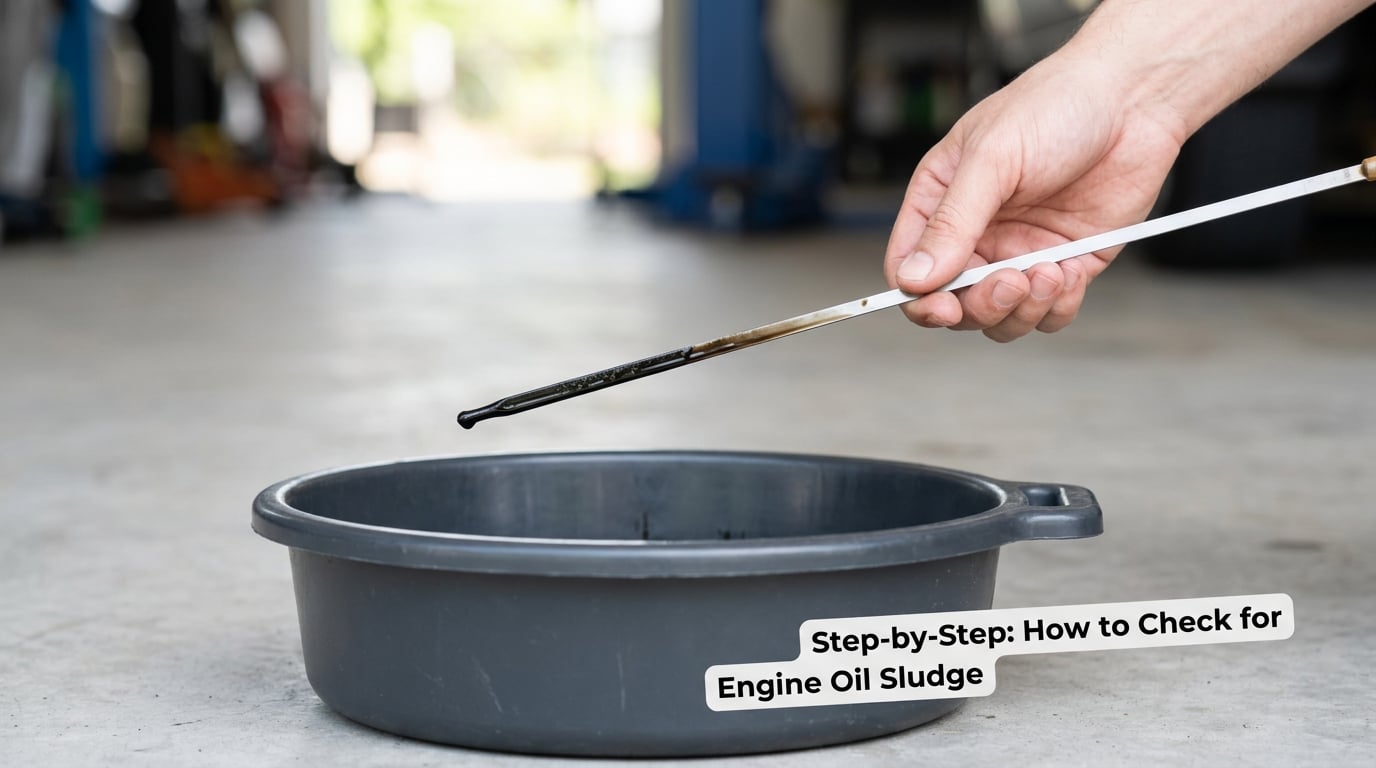
Work through the checks in order. Each one rules out a different failure, and together they take less time than a phone call to a shop.
| What you see | What it usually means | What to do |
|---|---|---|
| Clear amber, thin film, level between MIN and MAX | Normal oil | Nothing. Drive it. |
| Dark brown or black, still runs off the dipstick like water | Soot and oxidation, not sludge | Normal on a high-mileage engine. Change oil on schedule. |
| Dark, thick, slow to drain off the stick | Early sludge | Oil change with the correct spec, sooner than the interval |
| Gritty or sandy on your finger | Wear debris in the oil | Change the oil and have the engine assessed |
| Thick paste, lumps, mustard or mayonnaise texture | Hard sludge | Do not flush it. Get a diagnosis first. |
| Milky or light-coloured residue | Coolant in the oil | Stop driving and get it looked at |
Step 1: How to Check for Engine Oil Sludge on the Dipstick
Park on level ground, shut the engine off, and let it sit in the condition your manual specifies. Then pull the dipstick, wipe it completely with a clean part of the rag, push it back in all the way to its stop, and pull it a second time.
That second pull is the one that counts. A stick that was wiped but not reinserted properly gives you a smear instead of a reading, and half the false sludge reports on the forums start with that mistake.
Read the level between the two marks, then hold the stick up to the light and look at the film rather than the colour. Spread a drop between your thumb and forefinger and rub it. You are looking for one of these outcomes:
- Thin, even, slippery film. Normal. Even when it is dark, a thin film that runs back off the stick within a second is oil doing its job.
- Dark but fluid, no grit. This is soot, not sludge. High-mileage engines produce it, especially city driving with a rich mixture and a tired exhaust. It is the number one false alarm, and it is why judging by colour alone will eventually cost you money you did not need to spend.
- Thick, slow, resists running down. Early sludge. The oil has lost its solvent power and is holding onto combustion byproducts instead of suspending them.
- Gritty, sandy, almost sharp under the fingertip. That is particulate, and it is a different problem. Note the colour of the grit, because a yellow or bronze tint changes what a shop will do next.
- Thick paste or clumps that hold their shape. Hard sludge. This is the point at which a chemical flush becomes a bad idea.
- Light, milky, or cloudy like a latte. That is not sludge. Milky residue means coolant is getting into the oil, and that is a different, more urgent conversation.
Verdict: if the oil is dark but thin, you have soot and you are fine. If it holds a shape on your fingertip or feels gritty, you have sludge or debris and you have a decision to make.
Step 2: Inspect the Oil Filler Cap
Unscrew the filler cap and turn it over. On many BMWs the cap sits in the centre of the engine cover, down between the intake runners, so you will need a flashlight and steady hands.
Look at the underside of the cap and at the metal of the filler neck, then wipe both with a clean rag and look at the rag. A white or pale cloth makes this much easier to read than a dark one.
Here is the nuance that catches people: on the Bob Is The Oil Guy forums, which have been debating this for nearly twenty years, the regular consensus is that the filler cap is only a good indicator when the sludge is already bad. A cap with a little dark film and light varnish around the threads is normal on a high-mileage engine, especially after cold starts. A clean cap does not clear your engine, so do not treat a tidy cap as a pass.
What is not normal is a thick gel ring around the cap gasket, a mayonnaise-like smear that holds its shape on the rag, or grit embedded in the varnish. Metal flakes on the underside of the cap matter too, and they are worth describing to a shop exactly as you see them.
Verdict: a light dark film is expected. A thick gel ring on the cap, or flakes in it, means the condition is already at the serious end.
Step 3: Check the Oil’s Texture and Smell
Rub a drop of oil between two fingers and smell it. Normal oil feels slippery, spreads quickly and smells faintly of petroleum. Anything that feels or smells wrong is telling you about the engine, not about the oil bottle.
- Watery or milky liquid on the stick. Coolant, not sludge. This is a head gasket or oil cooler situation and it ends the driveway inspection.
- A sharp or sweet smell, or a distinctly fuel-like one. Unburned fuel is getting into the oil, which points to the fuel system, injection, or a gasket issue rather than simple maintenance neglect.
- Sticky, tar-like residue that stays in a blob. Varnish turning to sludge. This is the earliest readable sign of a neglected interval.
- Metallic grit you can feel. Wear particles. Change the oil and get the engine assessed while the oil is still fresh.
One more free observation while the stick is out. Look at the dipstick tube itself. If the tube is oily inside, or there is a ring of oil on the engine around the tube, you are seeing blow-by or an external leak, and both of those change the diagnosis. Blow-by is not sludge, but it tells you the engine is working harder than it should be.
Verdict: clear and slippery is normal. Milky, fuel-smelling, tarry or gritty is a problem worth a phone call.
Step 4: Confirm With a Used-Oil Sample or Mechanic
Some cases need more than a driveway. These are the checks that settle the argument.
The drain-and-count volume test. This is a measurable trick that Audi owners have used on the Audizine boards for years and almost no how-to article bothers to mention it. At your next oil change, measure exactly what goes in and measure exactly what comes out. If you put in five quarts and about four come out, the difference is sitting in the engine. The catch is obvious: you only get the answer once you have already committed to the drain, so run it when you were going to change the oil anyway and the result is free.
Old filter against new filter. Keep the old oil filter and cut it open with a filter cutter, then set it beside the new one. Sludge packed in the old element that is not present in the new one is a clear signal, and a metal debris finding in the old filter is a strong reason to stop driving and talk to a shop.
A used-oil sample. A lab analysis of the old oil reports viscosity, fuel dilution, coolant contamination and wear metals. It is the definitive answer, and it is the option most people skip because they assume the dipstick already told them something definite. It did not.
A borescope through the dipstick tube. It is not a substitute for taking the sump off, but it gives a real look at the top of the engine and the valve cover area, which is where forum owners say the worst of it hides.
Now set your thresholds. Stop topping off the oil between changes, because that dilutes the fresh oil and hides the level reading. Do not run a chemical engine flush on an engine with hard or chunky sludge, since the loosening chunks are exactly what blocks the oil pickup tube and turns a fixable problem into a teardown. Arrange service when the sludge is substantial, or when it comes with an oil pressure warning light, a check engine light, a leak you can see, knocking or ticking on start-up, or an engine running hotter than it used to.
Verdict: a drained-oil sample or a shop inspection is the answer whenever the dipstick and the cap disagree, or whenever you found anything thicker than a thin film.
Common Mistakes
- Reading on a slope. The oil pools downhill and you get a false low reading. Move the car to level ground and pull the stick again.
- Pulling the stick once and reading the smear. Wipe, reinsert to the stop, pull again. Every other conclusion depends on this step being right.
- Judging by colour alone. Black oil is often just soot on a high-mileage engine. Rub it between your fingers before you decide anything.
- Ignoring the manual’s oil specification and interval. Use the spec the engine was designed for, not the one in the trunk from whatever car you had before it.
- Treating a messy cap as a sentence. Forum consensus treats the filler cap as a late indicator only. Clean cap, no clearance.
- Confusing coolant or fuel for sludge. Milky or watery residue is a gasket or fuel problem, and it is more urgent than sludge. Different repair, different timeline.
- Assuming sludge is a normal part of a maintained engine. It is not. If you changed your oil on schedule with the right specification and it still sludges, that itself is a finding worth raising.
Frequently Asked Questions
Is a small amount of sludge on a BMW dipstick normal?
A thin, dark film is normal, and a little dark residue under the filler cap is normal too, especially at high mileage. True sludge is different in three ways: it is thick enough to hold its shape on your fingertip, it does not run back off the dipstick, and it collects around the cap gasket as a gel ring rather than a film. Forum consensus treats the cap as a late indicator only, so a clean cap does not mean a clean engine. Judge texture, not colour.
Can engine oil sludge be removed with a normal oil change?
It depends on how far along it is. Soft, early sludge that is dark and thick but still flows usually clears with one change using the correct oil specification, and sometimes with a second one on a shortened interval. Hard sludge with clumps or grit needs a proper diagnosis before anything goes into the engine, because a chemical flush can loosen chunks that block the oil pickup tube.
How much engine oil sludge is too much to ignore?
Treat it as serious when sludge is accompanied by other symptoms: an oil pressure or check engine light, knocking or ticking on start-up, visible leaks, an engine running hotter than normal, or metal in the old filter. Sludge on its own at an early stage is a maintenance problem. Sludge with those symptoms is a mechanical one, and the sensible move is a shop assessment before you drive the car again.
What does engine oil sludge do to an engine?
Sludge blocks the narrow oil passages and the pickup tube that feed the bearings and the top of the engine. Where oil stops flowing, metal rubs on metal, oil pressure drops, and heat rises. That is why sludge shows up as a low oil pressure light, a knocking noise, rising engine temperature and eventually a failed turbo or seized head. Early and soft, it is very fixable. Left until it is hard, it is not.
Should I keep driving if sludge is found in my BMW?
Light sludge on a healthy engine is not an emergency, and a short drive home is reasonable. Heavy sludge, any warning light, knocking, overheating or a burning smell is a stop. Pull over, switch the engine off and let it cool, then arrange a tow rather than a drive. Driving a starved engine to the next town is how a flushable oil change turns into an engine rebuild.
Can oil sludge be caused by the wrong oil or too long an oil-change interval?
Both. Overrunning the change interval lets oil break down until it can no longer burn off moisture and unburned fuel, and that residue thickens into sludge. Driving mostly short trips makes it much worse, because the engine rarely reaches full temperature. A specification that does not match what the engine was designed for finishes the job by failing to hold its additives in suspension. Fix the interval and the spec first, then re-check.
What To Do First
So the pull, the cap and the rub between your fingers will have told you one of three things.
If the oil is dark but thin and there is no grit, your engine is fine. Change the oil on the interval your manual gives you with the specification it specifies, and stop worrying about the colour.
If the oil is thick and slow, put a note in your calendar and change it earlier with the correct oil. Save the old filter, cut it open, and compare it with the new one so you have a real answer next time.
If the oil is chunky, gritty or milky, do not add a flush product and do not top the car off. Get a shop assessment first, and get the diagnosis separated in writing from whatever larger job they go on to quote you. This is still current advice for 2026, and the manual in your glovebox settles most of the arguments you will have about which oil and how warm.