
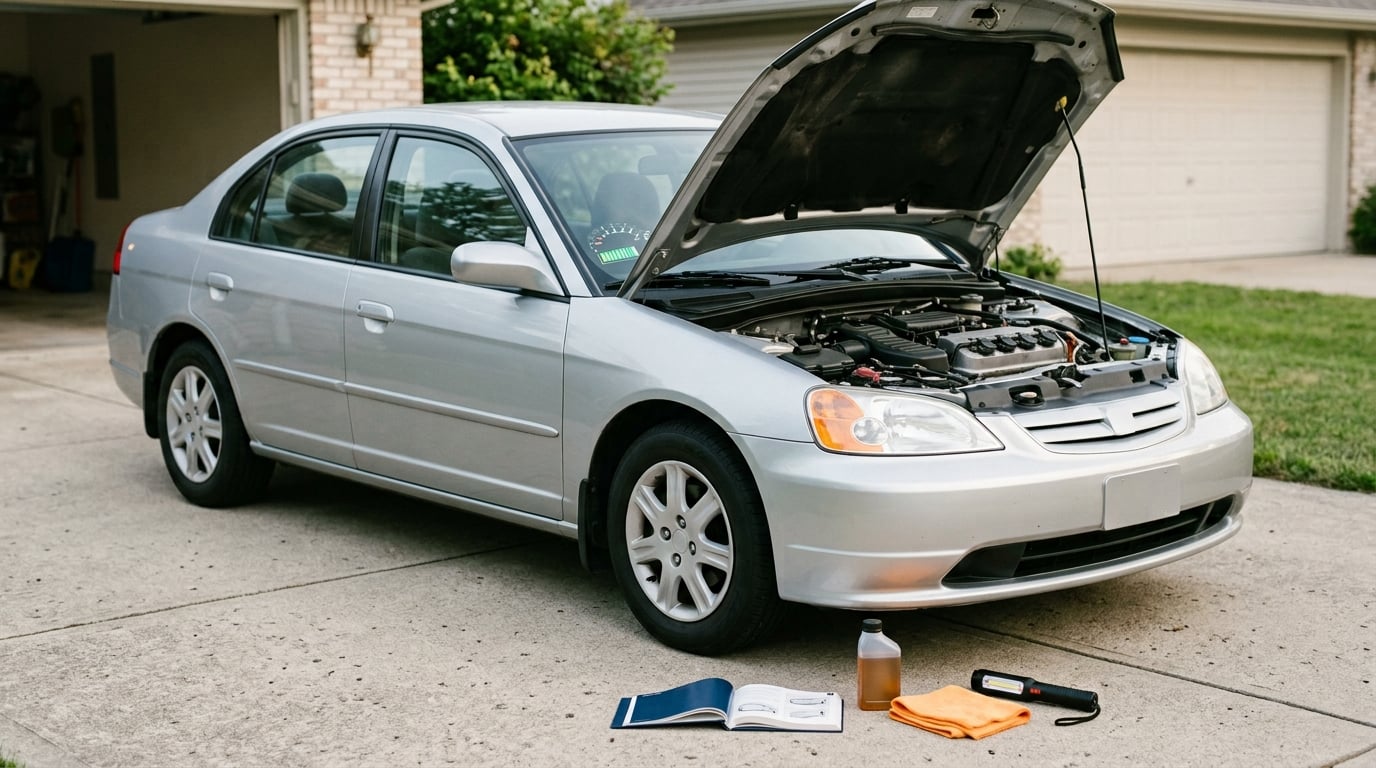
If your car has no dipstick, the oil level is read electronically by an oil level sensor in the pan, and you check it on the instrument cluster or infotainment screen. Here is how to check oil on a car with no dipstick: warm the engine to operating temperature on level ground, leave it running where your manual says to, open the service or car menu, and read the digital dipstick bar between MIN and MAX. It takes about five minutes and needs no tools.
The one thing that trips people up is that an electronic check is the opposite of the dipstick ritual they already know. A dipstick check happens cold, with the engine off. An electronic check usually happens hot, with the engine running or the ignition on. Get those two conditions right and the reading is reliable; get them wrong and the gauge will happily lie to you.
Table of Contents
What You Need
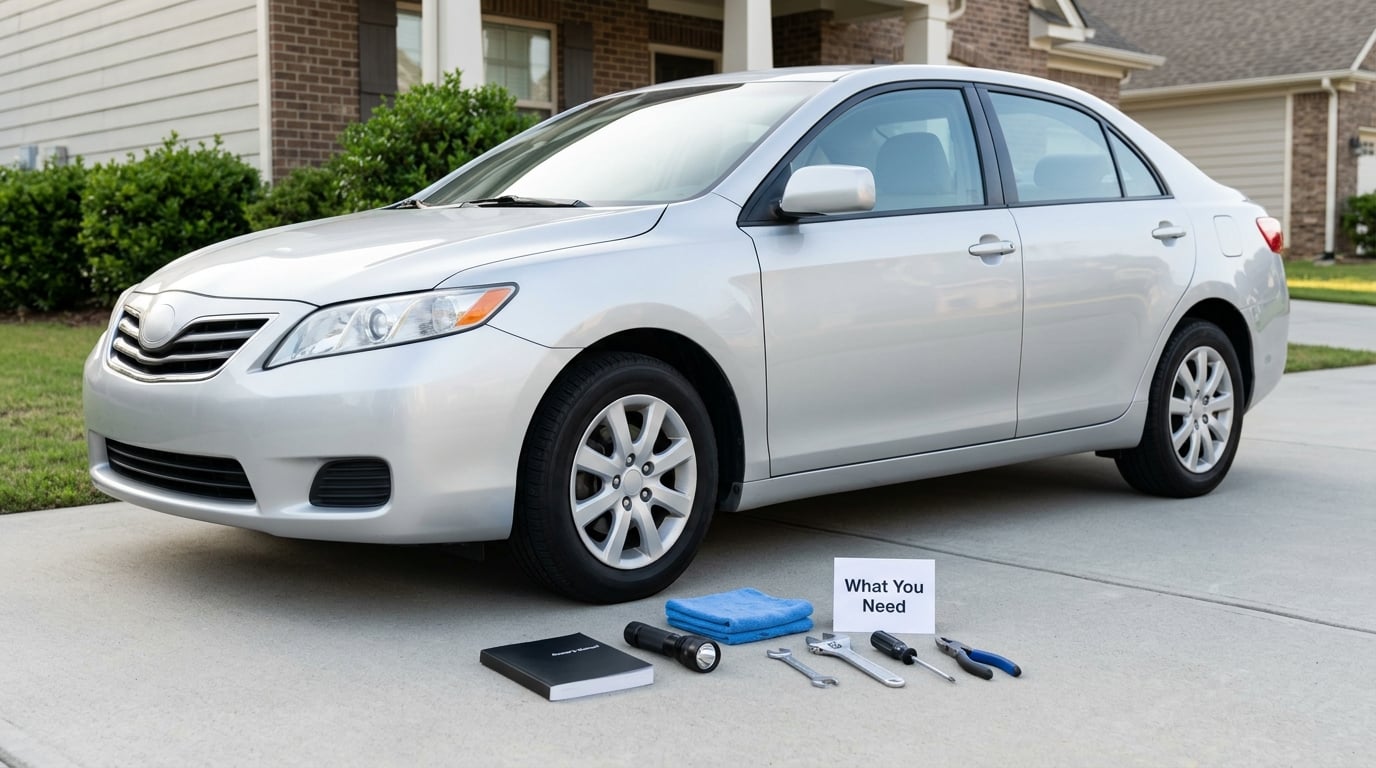
Very little. The owner’s manual is the important item, because the procedure is model-specific and the menu path changes between model years on the same badge. Everything else is a comfort.
- The owner’s manual or the manufacturer’s app, to confirm the procedure and the required engine state.
- A phone, since most menu paths are navigated by touchscreen or steering-wheel controls.
- A flashlight for checking an oil level plug or inspection point underneath the car.
- A clean rag and a level surface you trust. A sloped driveway will skew the reading.
- The correct oil specification and a small amount of it, for topping up if the gauge asks.
One thing worth knowing before you start: a car with no visible dipstick does not always have no dipstick. Some engines hide a secondary dipstick under a cover in the engine bay, and the manual will say so.
How to Check Oil on a Car With No Dipstick: Step by Step
- Confirm the system. Read the oil section of the manual and find out whether your car uses an oil level sensor, a hidden dipstick, or an oil level plug. Do not skip this.
- Park on level ground. Nose up on a hill or angled across a driveway and the sensor sees a different volume than you think it does.
- Warm the engine to operating temperature. Drive for 10 to 15 minutes or let it idle until the temperature gauge reaches its normal range. Cold oil sits pooled in the pan and the sensor under-reports.
- Set the engine state the manual specifies. Most cars want the engine running. Some, notably BMW, allow an ignition-on static check with the engine off.
- Open the menu and read the bar. Find the car or service menu, choose Levels, then Oil Level, and read the digital dipstick graphic between the MIN and MAX markers.
- Write it down. Note the date and the reading. Next time you check, a trend is worth more than a single number.
How to Check Oil on a Car With No Dipstick Using the Dashboard
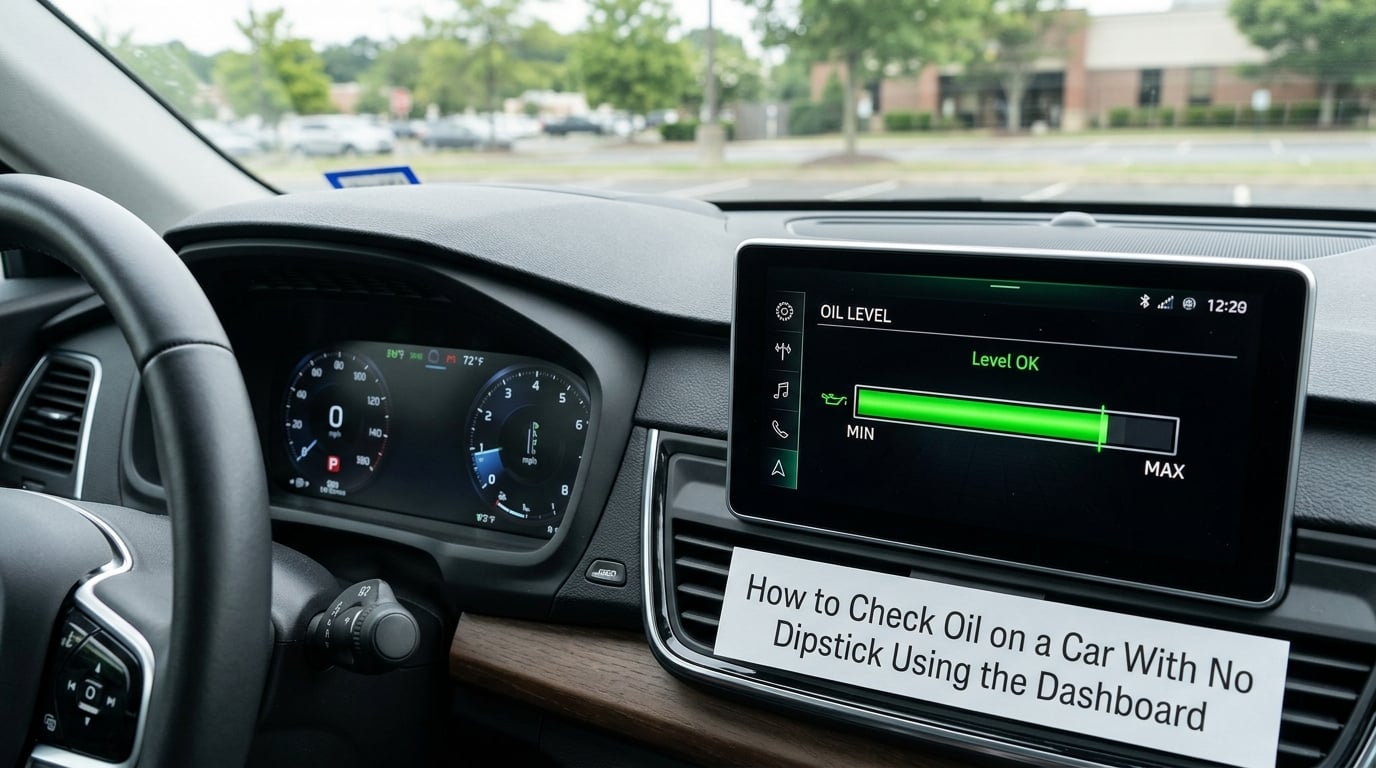
The dashboard check is the whole job on most modern cars. Turn the ignition on without starting, or start the engine and leave it idling, depending on your manual, then navigate to the oil level screen. On most vehicles the reading appears automatically a few seconds after startup, along with a message.
These are the strings you will actually see:
| What the screen says | What it means |
|---|---|
| Oil level OK | Between MIN and MAX. Nothing to do. |
| Add 1 qt | Near or below MIN. Add the stated amount, then re-read. |
| Max level exceeded | Overfilled. Too much oil is its own problem. |
| Red bar at one end | Low or overfilled. The bar between the markers is the safe range. |
| No reading, or a dash | The sensor is not reporting. See the fallback below. |
Owners on Ram and BMW forums describe the hatched band between the red zones on the cluster gauge as the equivalent of the dipstick range, and treat the sensor as slightly approximate but usable. That matches most people’s experience: read the bar, do not agonise over a hair’s width of difference.
Do not confuse this with the oil pressure warning light. Pressure and level are different measurements. A pressure light can come on with a full crankcase if a pump, a filter or an oil galley has failed, and a low level can show on the gauge with no pressure light at all. If the pressure light is on, stop driving regardless of what the level bar says.
Here is where each brand keeps the screen:
| Make | System | How to reach the oil level screen | Engine state |
|---|---|---|---|
| BMW | iDrive | Car menu, then Service or Car status, then Oil level. A reading also flashes on the cluster at every start. | Running, or ignition on with the engine off for a static check |
| Mercedes-Benz | MBUX | Service menu, then Vehicle status, then Engine oil level, using the steering-wheel touchpad or the screen. | Running at operating temperature |
| Audi | MMI | Service or Vehicle menu, then Oil level, scrolled to the digital dipstick graphic. | Running |
| Ford | SYNC | Home or Applications, then Vehicle Health or Service, then Oil Level. | Running, sometimes at idle in park |
| Ram | Uconnect | Vehicle Info or Service menu, then Oil Level, shown as a bar with a hatched safe band. | Running |
| Chevrolet and GMC | Driver Information Center | Centre-stack Energy or Vehicle Information page, then Oil Life or Oil Level, depending on model year. | Running |
Treat this table as a starting point, not gospel. Infotainment menus get reshuffled between model years far more often than people expect, and an older screen and a newer screen on the same model can use different wording.
How to Check Oil on a Car With No Dipstick Manually
Not every dipstick-free car is read from a screen. Depending on the engine, you may have one of these instead.
- A secondary dipstick tucked under a cover elsewhere in the bay. On many BMW B-series engines the main one moved to the left side of the engine.
- An oil level plug on the side of the pan. You unscrew it and look at the oil against a mark on the plug or the hole. Only remove it if your manual authorises it.
- A sight glass on some older diesels, where you look through the glass at a level mark.
- An ignition-on static check, used on BMW. Ignition on, engine off, the car sits level and the sensor settles into the pan before reporting. BMW owners report it as a usable second reading alongside the running check.
Here is the fallback when the screen shows nothing useful. Add oil in known small increments, a quart at a time, and re-read after each addition. The gauge will move as the level rises, which also tells you whether the sensor is alive at all. MechanicAdvice consensus on these cars is roughly a two-minute wait at operating temperature rather than a cold check, which matches the step list above.
Two cautions. Never remove a plug the manual does not name as a measurement point, because you will lose the oil that is in the pan. And never assume a generic dipstick location or a generic oil spec will fit your engine.
Common Mistakes
- Reading on a slope. The sensor measures a column of fluid, not an absolute volume. Level ground or the reading is fiction.
- Checking cold. Cold oil clings to the walls and pools deep. You will get a low reading and be tempted to overfill.
- Shutting the engine off mid-check on a car that wants it running, then wondering why the bar dropped.
- Opening the wrong cap. The coolant cap and the oil filler cap are often close together, and they look almost identical in a dark bay.
- Adding oil before confirming the reading. A low-ish bar plus a full-ish look is how crankcases get overfilled. Add, re-read, stop.
- Using the wrong oil. Low-SAPS and the viscosity grade are both specified. The sensor will not tell you whether you used the right one.
- Ignoring a light that keeps coming back. An orange oil light showing for around 30 seconds at every start is a failed oil level sensor more often than it is low oil. A persistent red pressure light means stop.
One more loss to know about. Without a dipstick you cannot see oil colour, texture or contamination, and no screen replaces that. Milky oil, frothy oil, metal flakes or a fuel smell all used to be obvious at a glance. If your engine is burning oil or running rough, ask a technician to pull a sample rather than trying to read it off a bar.
When to Check the Oil Instead
With no dipstick, checking becomes a habit you have to schedule rather than something you do while looking under the hood. Most owners settle on a monthly check or every 1,000 miles or so, which is more often than the oil change interval and catches consumption early.
Check specifically before a long trip, after every oil change, whenever an oil pressure or oil level warning appears, and any time you notice something the engine is telling you: a knocking or ticking noise at start-up, a burning smell, smoke from the exhaust, an oil spot under the car after it has sat overnight, or dark exhaust smoke.
Consumption is the number to track. Losing roughly a quart per 1,000 miles is not normal on a healthy engine and deserves a diagnosis. If the gauge asks for a top-up every few hundred miles, log the mileage between additions and take that log to a technician.
Frequently Asked Questions
Is it okay to drive a car with no dipstick?
Yes. Cars without a dipstick measure the level with an oil level sensor and report it on the dash, so the car is not missing a safety check. What you lose is the ability to see oil colour and contamination, which no electronic gauge replaces. Check the level on the schedule your manual gives, and treat a red oil pressure light as a stop sign regardless of the level bar.
Can I drive if my oil level is low?
A low reading with no pressure warning usually means topping up before you drive, not avoiding the drive. Add the quantity the screen asks, let the engine settle for a couple of minutes, then re-read to confirm. If the oil pressure light comes on, if you hear knocking, or if the gauge still reads low after topping up, stop driving and have the car looked at.
Should I check the oil when the engine is hot or cold?
Hot, for most dipstick-free cars. Warm the engine to normal operating temperature, keep it running where the manual says to, then read the digital bar. A cold check under-reports because the oil is pooled and clinging to the pan walls. BMW owners also use an ignition-on static check with the engine off, which works because the sensor settles before it reports.
Can you just add oil if the reading is low?
Yes, but in small known increments rather than by guesswork. Add one quart of the specified oil, wait a couple of minutes, and re-read the gauge. If the bar moves, the sensor is working and you were genuinely low. If it does not move, you have a sensor or wiring problem, and a blind top-up risks overfilling the crankcase and foaming the oil.
How do I know if my oil level sensor is faulty?
Two signs stand out. An orange oil light that appears for around 30 seconds at every start, or a gauge that shows a dash or never reports a level, usually means the sensor rather than low oil. Readings that swing wildly between two identical checks point the same way. Occasionally condensation in the oil skews the reading until the engine reaches full temperature.
What if my car has no dipstick and no oil level reading at all?
Check whether your engine has a secondary dipstick or an oil level plug that the manual describes, since some dipstick-free engines still offer a physical check. If it does not, add oil one quart at a time and watch the gauge after each addition. No movement at all means the sensor or its wiring has failed, which is a repair, not a topping-up job.
Final Check and Next Action
Open your owner’s manual to the engine oil section tonight and find the exact procedure for your model year, so you know the menu path and the required engine state before the gauge ever matters. That one page of reading is the whole job.
Then do it once properly: level ground, engine at operating temperature, engine running where required, read the bar between MIN and MAX, and write the date on the manual cover. Most cars with no dipstick will tell you the level is fine, which is a good thirty seconds of your month.
If a warning stays on, the reading swings between identical checks, you find a leak, or the engine is consuming oil faster than a quart per 1,000 miles, hand it to a qualified technician. A stuck or failed oil level sensor is a small, replaceable part, and guessing at the level until something fails is the expensive path.