
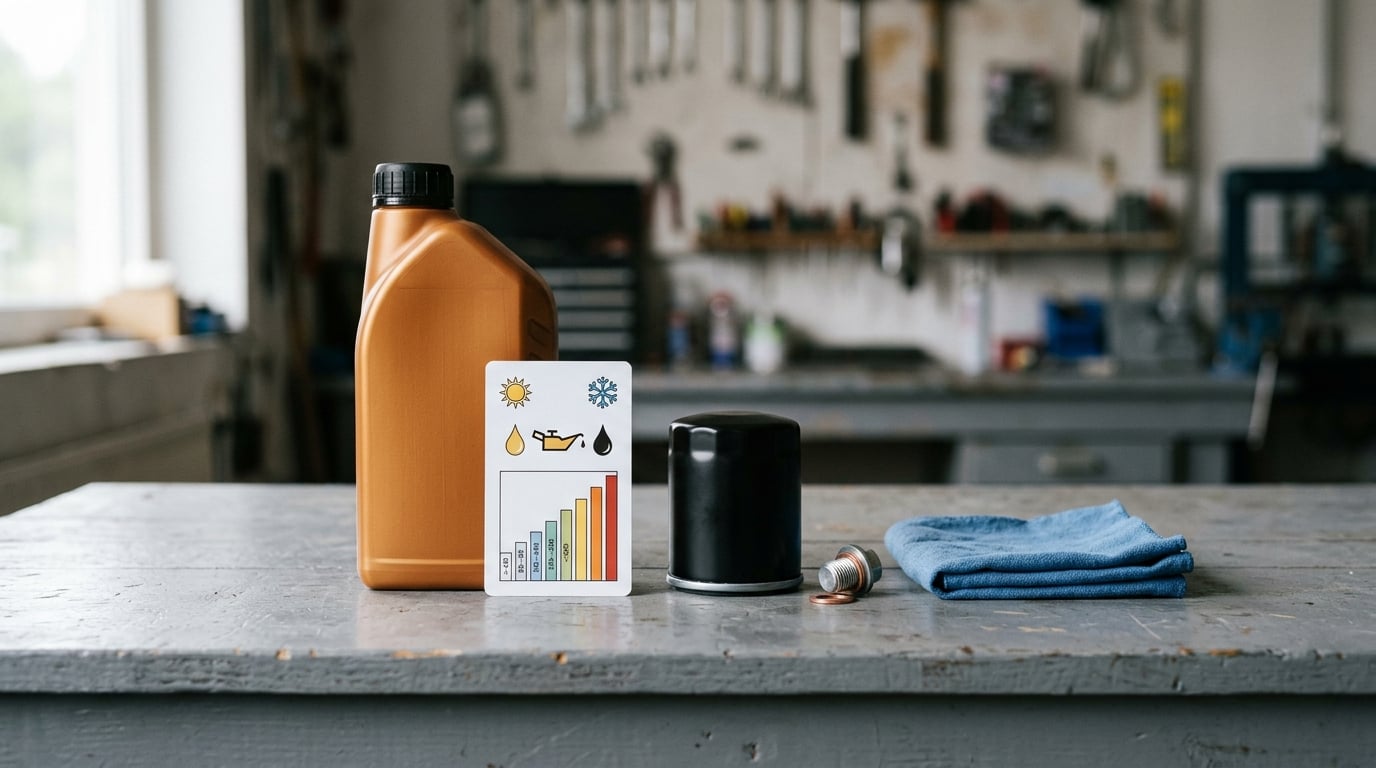
Does high mileage oil work? Partly, and only for a narrow set of problems. It is an oil formulated for older engines, loaded with additives that soften aging rubber seals and add extra detergents. That can slow a weeping gasket or cut the oil an engine burns between changes. It cannot replace a worn part.
That distinction is the whole answer. Forums like r/MechanicAdvice and Bob Is The Oil Guy, the two pages ranking highest for this question, land in the same place: high-mileage oil is not a repair product. One forum regular put it plainly, saying high mileage “does not restore or repair anything, it just makes your seals bloat a bit to keep everything a bit more sealed up.”
So the useful question is not whether high mileage oil works. It is which of your engine’s complaints it can plausibly soften, and what it will cost you to find out. Below is the mechanism, the honest list of fixes and non-fixes, and how to check whether it actually helped your car.
Table of Contents
- What Is High Mileage Oil?
- How Is High Mileage Oil Different From Regular Oil?
- Does High Mileage Oil Actually Work?
- What Do High Mileage Oil Additives Do?
- How Do Viscosity and SAE Ratings Affect a High-Mileage Engine?
- Is High Mileage Oil Proven to Extend Engine Life?
- Can You Use High Mileage Oil in Any BMW or Other Car?
- When Should You Avoid High Mileage Oil?
- How Do You Know Which High-Mileage Oil to Use?
- Frequently Asked Questions
- What to Do First
What Is High Mileage Oil?
High mileage oil is a higher-mileage engine oil: a fully formulated lubricant sold for engines that have covered a lot of ground, with an additive package tuned for age-related problems. It still has to meet the same performance standards as any other modern oil, and it still comes in conventional, synthetic blend and full synthetic versions.
Two things are worth saying plainly. First, it is a maintenance fluid, not a treatment. Nothing you pour into a fresh filter rebuilds a cylinder wall, restores compression, or reseats a piston ring. Second, your owner’s manual and the oil specification printed on the door jamb always outrank the bottle. If the manual says 5W-30 meeting a given specification, that is the decision, whatever the label says.
You will see 75,000 miles quoted constantly, sometimes 100,000. Neither is an engineering threshold. It is a marketing convention, chosen because it sits close to the end of most new-vehicle warranties and captures buyers early. A trailer hauled 150,000 hard miles has harder-sealed components than a commuter car with 90,000 gentle ones. If your car is at 60,000 miles and weeps oil, the mileage number is not what makes you a candidate for this oil. The symptom is.
How Is High Mileage Oil Different From Regular Oil?
Four things usually separate the two, and not every product carries all four.
Viscosity is the biggest and least glamorous. High-mileage grades are often one step thicker than the same viscosity in a low-mileage oil, which narrows the clearances around worn piston rings and guides. Seal conditioners and swelling agents are the headline additive, chemicals that make aged elastomer slightly swell and regain some elasticity so it grips its seat more tightly. Oxidation resistance tends to be boosted, because an older engine runs hotter under load and burns oil. And the detergent package is usually higher, which helps hold contaminants in suspension instead of letting them drop out as sludge.
Read the label, not the shelf. Some brands put every one of those additives in their standard oil anyway.
What Is High Mileage Oil, Exactly?
Technically it is an oil carrying the same API service category as the standard version, plus one or more of a small group of additives, usually within a slightly wider viscosity range.
It is worth separating four labels that shoppers treat as interchangeable. Low-mileage oil is the ordinary oil for a healthy engine. Premium oil is a marketing tier meaning better base stocks and additives, with no mileage claim at all. Synthetic describes how the base oil was made, not who it is for, and a synthetic high-mileage oil exists. High-mileage is the one label describing who the additive package was built for. You can buy a synthetic blend high-mileage oil and a conventional high-mileage oil, and the additive list will be the real difference between them, not the base stock.
Does High Mileage Oil Actually Work?
For seepage and oil consumption, often yes. For anything structural, no. That is the honest split, and it is the same split the highest-ranking sources on this topic draw.
| Where high-mileage oil helps | Where it cannot help |
|---|---|
| Slows external seepage from aging valve cover gaskets, rear main seals and the oil pan gasket | Worn piston rings or scored cylinder walls causing heavy smoke |
| Reduces the oil burned past the valve guide seals in a high-mileage head | A blown head gasket or a cracked block, where the fluid is leaving the engine for coolant |
| Improves high-load deposit control in an engine that was run hard or short-tripped | Sludge and varnish built up over years of ignored change intervals |
| Reduces noise and rattle in a tired valvetrain, because the oil film is steadier | Low compression from a worn engine, which no fluid can restore |
| Cuts the top-off you would otherwise add between changes | Timing chain stretch or a lifter worn off its cam lobe |
The one thing nobody should expect is a leak that stops permanently. Owners repeatedly report the same pattern on forums: the weeping stops for two or three changes and then comes back, because the sweller in the oil has worn out with the oil. Read that as a maintenance interval, not a repair.
What Do High Mileage Oil Additives Do?
Every additive in the bottle has a job, a plausible benefit and a hard limit. Knowing which is which is most of what separates an informed owner from a marketing victim.
| Additive | What it is for | Plausible benefit | Limit |
|---|---|---|---|
| Seal conditioner / swelling agent | Recondition aged elastomer | Visibly slower weeping from a hardened gasket or seal | Cannot rebuild a torn seal or a separated head gasket layer |
| Viscosity modifier | Hold the grade across temperature | A one-step-thicker film that slows seepage past worn rings | Thicker oil costs fuel and slows a healthy engine |
| Detergent boost | Keep soot and oxidation products in suspension | Less sludge in a neglected engine during the first change | Heavy built-up sludge needs a service, not a drain |
| Anti-wear agent | Protect metal under boundary lubrication | Extra protection on cold start and under load | Reduces future wear; it does not reverse past wear |
| Antioxidant | Slow breakdown of the oil at temperature | Longer life in a hot, older engine | Does not let you skip the change interval |
One r/MechanicAdvice thread made the point about the detergent boost in a neglected motor full of dirt and sludge, saying the added detergents might clean it up a little better. A little better is the honest ceiling on that claim.
How Do Viscosity and SAE Ratings Affect a High-Mileage Engine?
Of everything on this page, the viscosity is the part that actually decides whether the oil is correct. The SAE grade is a cold-start number and a hot-flow number, and the second one is where a tired engine is helped.
| SAE grade | Behaviour | Typical thinking on an older engine |
|---|---|---|
| 0W-20, 0W-30 | Very thin, quick flow at cold | Fine on a healthy engine, may be too thin to slow seepage in a very worn one |
| 5W-30 | The common modern default | The usual starting point for most mid-life engines |
| 5W-40, 10W-40 | Thicker hot film | Often the bigger lever for consumption, sometimes a better buy than a high-mileage label |
| 10W-60 and above | Very thick, draggy | Short-term diagnostic and protection tool for worn bearings, not a permanent choice |
Mechanics on the forums keep coming back to this, and they are right to. Thickening the oil one grade within the manufacturer’s permitted range often does more for an oil-burning engine than the high-mileage label does. Outside that range it is a different story. Running a grade your engine was not designed for starves it at cold start, and a starved engine is how timing chains stretch and bearings go. Check the manual for the permitted range and stay inside it, including the W and the number after the hyphen.
Is High Mileage Oil Proven to Extend Engine Life?
No controlled evidence says the label extends engine life, and anyone who promises you that is selling. What the additive package can do is slow a leak and reduce the oil an engine burns, and both of those keep the engine cleaner and less starved between changes. That is a real benefit over many tens of thousands of miles. It is not the same claim.
Two other things matter more than the bottle. Maintenance history does: an engine changed on time every 5,000 to 7,500 miles for 200,000 miles is in better shape than a neglected one on premium high-mileage oil. And knowing your numbers does: track oil added between changes, and get a used oil analysis if consumption is climbing. The analysis reports fuel, coolant, metals and wear debris, and it tells you whether the engine is washing rings, eating bearings, or simply an old seal weeping.
Owners running plain full synthetic to 180,000 miles without trouble are common enough on these forums that any claim the high-mileage bottle is mandatory would not survive the comments. It is one approved option, not an upgrade.
Can You Use High Mileage Oil in Any BMW or Other Car?
You can use it in most cars, and you should check before you do. Four checks, in order.
Start with the manual and the oil specification on the door jamb or under the hood. Many European manuals, BMW included, call for long-life approvals rather than a bare viscosity. Then confirm the viscosity sits inside the permitted range. Then confirm the oil carries the approval the manufacturer requires, not just a viscosity. And if the engine is diesel, check the specification again, because diesel approvals such as low-SAPS requirements are not interchangeable with petrol ones.
Older BMW petrol engines, especially the straight-six and the older V8s, are the classic audience for this oil: high mileage, wide bearing clearances, and the kind of seepage the additives are aimed at. Their long-life specifications were written for exactly those engines, which is a good reason to match the approval rather than pick by viscosity alone. Turbocharged engines are not a special case for the oil. What matters there is the oil staying in its viscosity range under heat, so the oxidation resistance in a high-mileage grade is a genuine plus.
Keep the interval honest, though. Mechanic consensus is consistent on this: stretching changes to 10,000 miles in an older engine is tied to oil burning and timing chain stretch, and high-mileage oil is not permission to do it.
When Should You Avoid High Mileage Oil?
There are four cases where it is the wrong choice, and three of them are mechanical problems wearing a maintenance solution’s clothing.
If the engine is burning oil fast enough to need a top-off every few hundred miles, the rings or guides are worn and the oil is following them into the exhaust. You will get a smoky tailpipe and a rising oil bill, and a fix requires a service, not a change of brand. If there is an active leak, pooling oil under the pan or blowing the dipstick, high-mileage oil is a reasonable short-term measure but not a repair. If the engine was just rebuilt, you want break-in oil, the manufacturer specification, and short intervals, not a high-mileage additive package. And if your specification does not approve the product, no convenience on the shelf overrides it.
One more caution: going backwards. Dropping from a full synthetic to a conventional high-mileage oil is a downgrade in base stock and a change the engine was not tuned for. It is legal, it will not wreck anything, but there is no reason to do it.
How Do You Know Which High-Mileage Oil to Use?

Work down this list and the choice takes about five minutes.
Read the oil specification from the manual and the door sticker, and treat that as the filter for everything below. Match the viscosity to the permitted range. Decide on base stock: synthetic or synthetic blend flows better cold, which matters for a long-life engine, and conventional costs less. Keep the same oil change interval the manual states rather than the more generous number on the bottle. Spend as much attention on the filter as the oil, because a bypassed or wrong filter undoes the whole exercise. Buy the correct quantity, plus a litre, because running low is what turns a small seepage into a big one.
Then verify. Mark the odometer and the oil level at the change, and record the miles and the oil added before the next one. Do that across three changes. A drop in top-off volume is your answer, and if you want more than a rough sense, a used oil analysis at one of the changes turns the guesswork into fuel, coolant and metal numbers. Signs the oil does not suit the engine are simple: a rattle that was not there before, rising consumption, a pressure light, or a fresh stain on the driveway that grows faster than it used to.
Frequently Asked Questions
Does high mileage oil stop oil leaks?
It reduces minor external leaks, usually, and it does not stop a real one. Seal conditioners in the additive package make aged rubber swell slightly and grip its seat, which slows seepage from a hardened valve cover gasket, rear main or pan gasket. A torn seal, a cracked casting or a blown head gasket will weep exactly as much in this oil as in any other.
Is high mileage oil better than full synthetic oil?
Better at one specific thing, worse at another, and never a straight upgrade. High-mileage oil is better at holding an aged seal and controlling deposits in an engine with high mileage. Full synthetic is better at cold flow and long high-temperature stability in a healthy engine. Full synthetic high-mileage formulations exist and get you the seal additives, though at higher oil consumption once worn rings are already in the picture.
How often should high mileage oil be changed?
On the interval your manual states, not the softer one on the bottle. For most passenger cars that lands between 5,000 and 10,000 miles depending on base stock, with synthetic at the longer end and conventional at the shorter end, and severe service, towing and short trips pulling it down. Extended intervals are the one thing owners should not do, because thin, oxidized oil is linked to oil burning and timing chain stretch on older engines.
Can high mileage oil be used in a turbocharged engine?
Yes, as long as it carries the specification your manual asks for. Turbo engines run hot oil, which is exactly where the extra oxidation resistance in a high-mileage grade earns its keep. What matters is staying in viscosity range and never dropping below the manufacturer minimum. Keep the interval honest, since a turbo contributes to heat soak and the same extended-interval problems that show up in naturally aspirated engines.
Does high mileage oil burn less fuel?
Not on purpose, and usually not at all. A thicker hot film increases drag, so in a healthy engine a one-step-thicker grade can cost you a small amount of fuel economy. Where consumption drops noticeably, it is because less oil is being burned, not because the oil is slicker. Engines with worn rings burn oil no matter what you pour in, which is why a burning exhaust is a mechanical repair, not an oil choice.
Is high mileage oil safe for older BMW models?
It is one of the safer choices for an older BMW, provided it meets the long-life approval the manufacturer specifies rather than only the viscosity printed on your manual. Many BMW petrol engines, from the earlier straight-sixes to the V8s, are the exact use case the additive package was built for. Do not guess the approval, do not thicken beyond the permitted range, and do not extend the change interval to compensate.
What to Do First
Open the manual and the door-jamb sticker, and write down the oil specification and the permitted viscosity range before you shop. Then decide whether you actually have a symptom high mileage oil addresses: fresh oil spots, top-offs between changes, or a rising consumption number.
If you have one, buy the oil that meets that specification in the viscosity your engine wants, keep a good filter, and change it on the manual interval. Then track consumption across three changes. If the top-off volume does not drop, the problem is a worn part, and no bottle of high mileage oil is going to tell you a different story.