
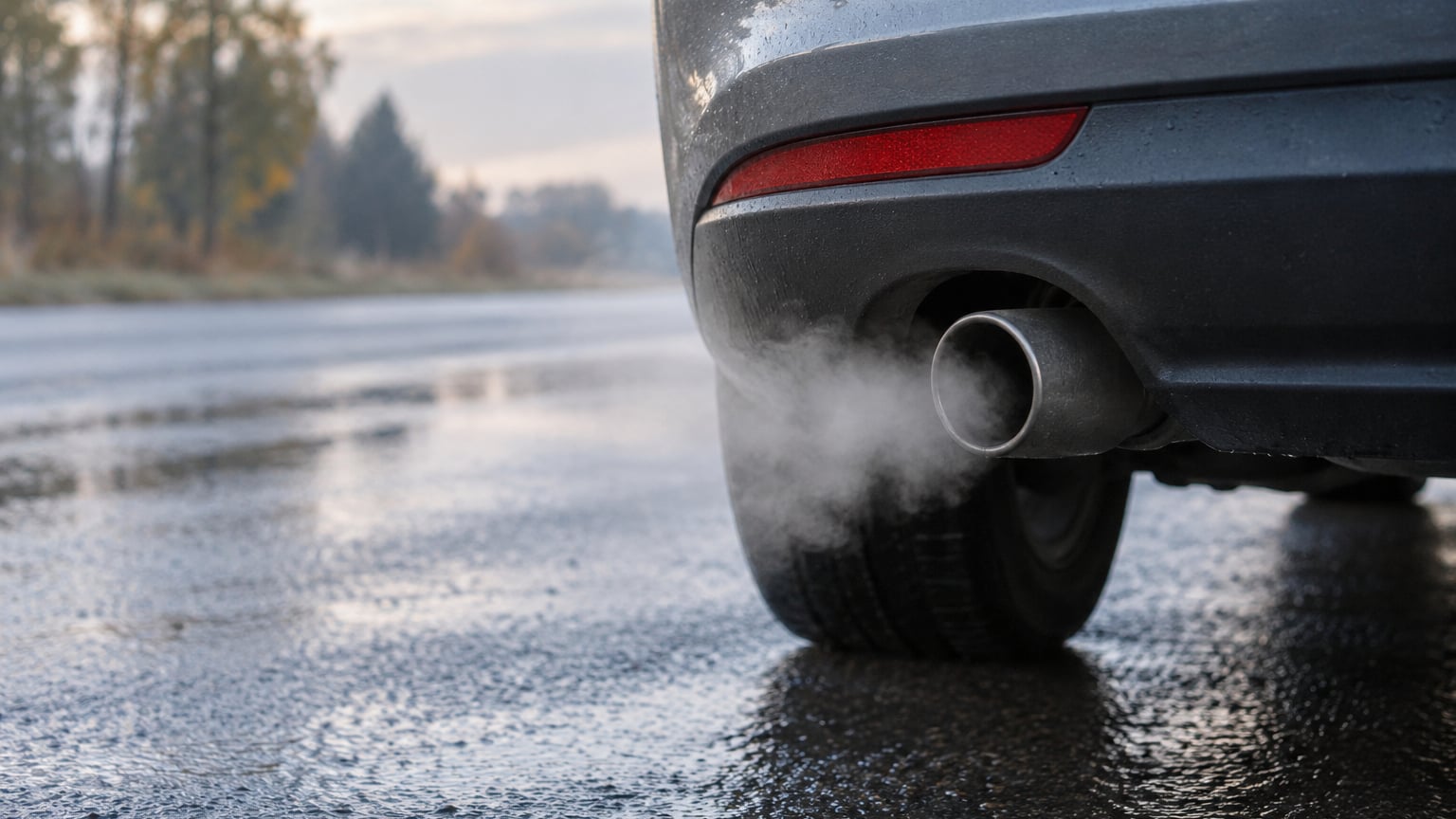
A short plume of white vapor right after a cold start is almost always condensation. Thick white smoke that stays after the engine is warm, smells sweet, or shows up with a falling coolant level means coolant is reaching the combustion chamber and burning, usually through a failed head gasket, a cracked cylinder head, or a cracked engine block.
On a BMW, and on most other cars, the difference between those two cases is easy to miss on a driveway. Here is how to tell them apart before you spend anything.
Table of Contents
- What Causes White Smoke From the Exhaust?
- White Exhaust Smoke: Quick Diagnosis Guide
- Is White Smoke From a Cold Start Normal?
- What Causes Persistent White Smoke?
- How to Tell White Smoke From Coolant, Oil, or Fuel
- What to Check When White Smoke Continues
- White Smoke on BMWs: Common Owner Questions
- Frequently Asked Questions
- Conclusion
What Causes White Smoke From the Exhaust?
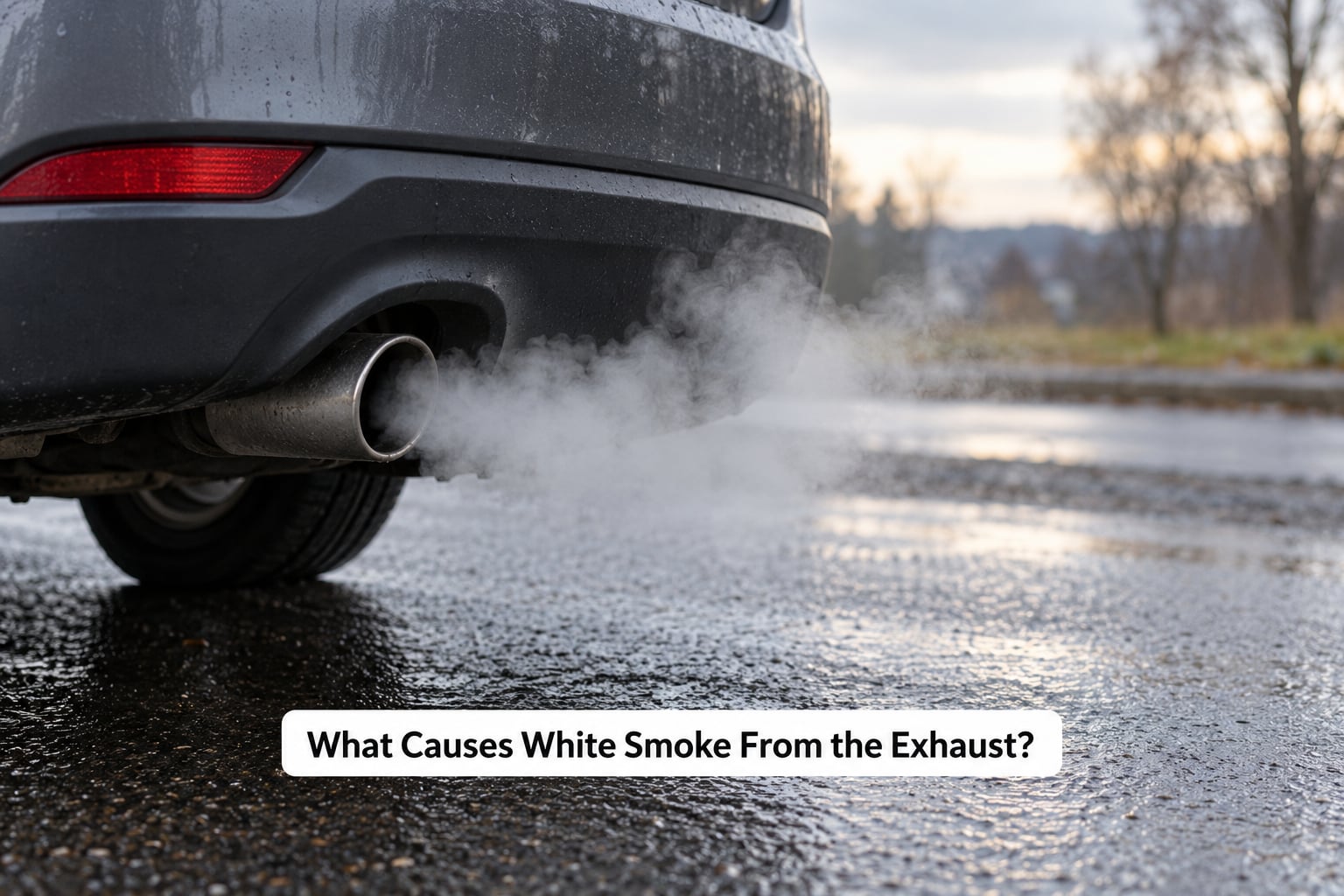
What causes white smoke from the exhaust depends almost entirely on when you see it and how long it lasts. A thin wisp that appears on a cold morning and fades within a few minutes is water condensing inside the exhaust system. A dense cloud that persists at operating temperature is something else, and it is the something you need to act on.
The common causes of white exhaust smoke, roughly in order of how often they turn out to be harmless:
- Condensation: water collected in the exhaust overnight, evaporating as the pipe heats up. Cold weather, short trips, and a new exhaust gasket make it worse.
- Failed head gasket: coolant pressurizes against the head and block, and the leak usually appears right where combustion is hottest, at the fire ring. The number one real cause.
- Cracked cylinder head or engine block: a thermal crack that opens under heat, often around a coolant passage or a spark plug hole. Sometimes the only external sign is white smoke with no puddle anywhere.
- Coolant entering through a cylinder: a low compression cylinder, a warped head, or a stuck valve lets coolant get pulled past the rings and burned off as steam.
- Overfilled engine oil: oil pushed past the piston rings and vaporizing, which also comes out white. Owners on r/MechanicAdvice have traced heavy white plumes to an oil change where too much went in.
- Fuel related faults: a leaking or dripping diesel fuel injector, or a rich running engine, sends unburned fuel out the tailpipe.
What to check before you call anyone:
- Does it clear within five to ten minutes of driving, or is it still there once the gauge reads normal temperature?
- Is the coolant reservoir still at the cold line, or has it dropped between fills?
- Does the dipstick show milky, frothy residue instead of clean amber oil?
- Any sweet, syrupy smell, or a warning light for temperature or misfire?
White Exhaust Smoke: Quick Diagnosis Guide
Match what you see and smell against what you find under the hood. The table below covers the four cases that account for almost every white exhaust smoke complaint.
| What you see | When it shows up | Smell | Also check | Likely cause |
|---|---|---|---|---|
| Thin, wispy vapor | Cold start only, gone in 5 to 10 minutes | Faint, clean steam | Coolant at the line, oil clean, no warning lights | Normal condensation |
| Thick, dense plume | Stays thick when the engine is fully warm | Sweet, syrupy antifreeze | Dropping coolant level, milky oil cap residue, temperature warning | Head gasket, cracked head or block, coolant in a cylinder |
| Thick white or grey-blue haze | On acceleration or after a long idle, worse under load | Burning oil | Low oil level, oil consumption between changes, fouled plugs | Worn piston rings, valve seals, stuck PCV valve, overfilled oil |
| White smoke on a diesel, brief | During a regen cycle, then clears | Hot metallic or sharp | DPF light off after the cycle, no coolant loss, no overheating | Normal diesel particulate filter regeneration |
Read the timing column first. Almost every misdiagnosis comes down to treating a cold-start plume as a fault, or ignoring a hot one.
Is White Smoke From a Cold Start Normal?
Yes, usually. Water vapor from the combustion process condenses inside the muffler, catalytic converter, and tailpipe while the car sits, and cold metal holds it there. The moment you start the engine and the exhaust heats past the dew point, that water flashes off as a thin white plume.
The useful threshold is time: a normal cold-start plume clears within about five to ten minutes of driving, and the pipe goes from cool to warm in roughly the first half mile. If the smoke is still visible when the coolant gauge has settled in the middle of its range, condensation is not the whole story.
Cold weather makes condensation heavier because there is more water in the air and less of it evaporates on the drive. Short trips make it worse too, because the exhaust never gets hot enough to dry out. A car that never gets above fifteen minutes of driving can plume every single morning for years with nothing wrong.
A new or recently replaced exhaust gasket often triggers a few days of heavier vapor as the gasket settles, and the same goes for a car that has been sitting since a wash or a rainstorm.
What Causes Persistent White Smoke?
Persistent white smoke means something is reaching the combustion chamber and getting burned. Coolant is a mix of water and ethylene glycol, and inside a cylinder it meets combustion temperatures of roughly 1,500 degrees, so it flashes to steam instantly and comes out the tailpipe as dense white vapor.
A failed head gasket is the usual culprit. The gasket seals coolant passages, oil passages, and the combustion chambers between the block and the head, and it takes a punishing amount of heat cycling. It can fail around the coolant ports, where the metal is thinnest, or around the fire ring, where the pressure is highest. Overheating, even once, is enough to warp the head or weaken the gasket and start a leak that often gets worse in weeks rather than months.
A cracked cylinder head or a cracked engine block looks identical from the tailpipe. The crack may sit in a coolant passage and stay sealed cold, opening only once the engine is hot and pressurized. This is why white smoke with no visible puddle and no coolant loss is such a common and confusing symptom.
Coolant pulled into a cylinder through a low compression ring, a warped head, or a valve that will not seat is the same problem seen from a different angle. Some cars never lose coolant at all; a tiny amount enters a cylinder, flashes off, and returns to the same closed loop. The signs are misfires, a slight loss of power, and sometimes a cool reservoir that gains a bubble of pressure when the engine is warmed up.
Whether this is urgent depends on two things: heat and time. If the temperature needle climbs and the car is losing coolant, stop driving. Coolant loss plus overheating means the head gasket is letting combustion gases into the cooling system, and every extra mile risks warping the head itself. One owner on r/AskMechanics got a quote just under four thousand dollars after a failed pressure test on the same fault, and that is the number most people are quoted once a head has already started to go.
How to Tell White Smoke From Coolant, Oil, or Fuel
Odor does most of the work. Burnt coolant is sweet and syrupy, like warm antifreeze, and you will notice it through the cabin vents before you smell anything at the tailpipe. Burning oil smells sharper and more acrid, and a rich fuel mixture smells like raw gasoline.
Then use the dipstick. Coolant in the oil shows up as a milky, frothy residue on the dipstick or the underside of the oil filler cap, and a slight rise in the oil level between changes. If you see that, the source is coolant, not oil.
Color helps too, but less than people expect. Coolant smoke tends to look clean and bright white. Oil smoke usually has a blue or grey tint even when it reads white in daylight, and it typically thickens under acceleration or after a long idle, when crankcase pressure spikes. If you are seeing that pattern, it is worth reading what causes blue smoke from the exhaust before you start pricing head gaskets.
Two more signals narrow it down. A pressure spike in a closed cooling system shows up as a reservoir that is hard, rock solid, or full of bubbles when the engine is warm. And a misfire that gets worse as the engine warms is a classic internal coolant signature, because the hot head expands and the leak opens further.
What to Check When White Smoke Continues
Pull over somewhere safe before you start. With the engine off and cooled for at least an hour, run through this sequence.
- Check the coolant reservoir cold. The level should sit between the cold marks. Below the lower mark means a leak somewhere; above the mark is its own problem and can cause its own overheating.
- Look for visible leaks. Check under the car for coolant-colored drips, along radiator hoses, the water pump weep hole, the radiator cap seal area, and around the oil filler cap. A pressurized system hides a slow leak until the pressure gets high.
- Pull the dipstick. Clean it, reinsert it, and pull it again. Milky residue means coolant is in the oil. That combination is not a drive-home situation.
- Watch the temperature gauge on the next start. Note whether the needle climbs past its normal midpoint and whether the radiator fan runs continuously.
- Read the check engine light with a scanner. Codes for misfire on specific cylinders, a bad oxygen sensor, or a cooling system fault all narrow the search. Milky engine oil deserves its own write-up because the causes range from a cheap hose clamp to a head replacement.
- Do not open a hot cooling system. Pressurized scalding coolant comes out of a warm radiator cap hard enough to scald.
What a shop does next is where the answer gets confirmed rather than guessed. A cooling system pressure test pressurizes the system and holds it to see whether it drops. A combustion leak test pushes pressurized air into the cooling system and looks for bubbles at the fire rings, which finds a head gasket failure even when nothing has leaked out yet. A compression test shows which cylinder has lost pressure from coolant getting in. A combustion chamber inspection with a borescope shows the actual damage, which is what tells you whether the head is a gasket job or a cracked head.
White Smoke on BMWs: Common Owner Questions
Diesels are a different case. A BMW diesel with a diesel particulate filter will often put out a burst of white or grey smoke during a regen cycle, especially on short trips where the filter never gets hot enough to drive itself. It clears in a minute or two and the warning light goes out on its own. Persistent white smoke on a diesel, with the DPF light staying on and coolant dropping, is a different story and needs a scan.
Gasoline engines have no regen excuse. If you own a petrol six or eight cylinder and the exhaust steams after warm-up, something is leaking into a cylinder.
E39 and E60 owners see this more than most. These are twenty-year-old cars with well over 200,000 miles, and the common culprits on both are the plastic intake manifold cracking and the plastic coolant expansion tank going brittle. Both are cheap parts and both are common on those chassis. On an E46, a failed PCV valve has produced white smoke on acceleration with power loss, and some owners fixed a smoking E46 for the price of a hose rather than an engine.
Smoke from the cabin vents is a separate question. White mist coming out of the defroster or dash vents usually means evaporation of coolant residue on the evaporator core from a cabin air filter that stayed wet after a wash, or a heater core that is sweating. It is not the same fault as tailpipe smoke, and it is worth a separate look. Owners who also track what causes engine oil consumption on these cars are usually already watching the right signs.
A visible plume after startup is acceptable for the first few minutes on a cold morning. What is not acceptable is thick white smoke that returns every drive, thickens on hills, or appears at highway speed.
Frequently Asked Questions
Will low oil cause white smoke?
Low oil by itself does not make white smoke. Overfilled oil does, because the excess gets pushed past the piston rings and vaporizes into a thick white or grey plume, especially on acceleration. An E46 owner on r/MechanicAdvice traced heavy white smoke to an oil change where too much went in, and it stopped as soon as the oil was drained back to the correct level. Pull the dipstick and check the level against the mark before blaming the head gasket.
How much exhaust smoke is normal?
A thin wisp of white vapor for the first five to ten minutes of a cold start is normal on most cars. The exhaust collects water vapor while it sits, and that water flashes off once the pipe heats up. Cold weather, short trips, and a recent exhaust gasket replacement all increase it. Smoke that is still visible once the temperature gauge has settled in the middle of its range is not condensation and needs a diagnosis.
Can a blown head gasket cause white smoke?
Yes, and it is the most common real cause. A failed head gasket lets coolant into the combustion chamber, where it meets temperatures near 1,500 degrees and flashes to steam. The confirming signs are thick white smoke that persists warm, a sweet syrupy smell, a dropping coolant level, and sometimes milky residue on the oil cap. A cooling system pressure test and a combustion leak test confirm it.
Why is my exhaust blowing white smoke but not losing coolant?
It happens more often than the forums suggest, and it is usually one of three things. A small crack in the head or block can open only when the metal is hot and close again as it cools, so nothing shows on the cold car. A tiny amount of coolant can also be pulled into a cylinder and returned to the same loop without ever leaving the system. An overfilled oil level or a failing turbo intercooler can mimic the same white smoke.
Does white smoke mean a blown turbo?
Not by itself. A failed turbocharger on a BMW usually shows up as blue or grey oil smoke, power loss, a whistling or droning sound that rises with engine speed, and an oil or coolant leak at the turbo. A cracked intercooler or charge pipe can produce white smoke, but so can condensation, so the turbo is only a suspect when the smell is of burning oil and the car is down on power.
Can I keep driving my car with white smoke?
If the plume is thin and clears within ten minutes of a cold start, and the temperature gauge stays steady, driving home is fine. If the smoke is thick when warm, the temperature climbs, or the coolant level drops, stop driving. Coolant loss with overheating means combustion gases are entering the cooling system, and continuing can warp the cylinder head and turn a gasket job into a cracked head. Tow it and let a shop pressure test the system.
Conclusion
A short white plume that appears on a cold start and fades within five to ten minutes is condensation, and you can drive it. Thick white smoke that persists once the engine is warm, carries a sweet smell, comes with a falling coolant level or a milky dipstick, or shows up with a temperature warning means coolant is burning in your cylinders, and that gets diagnosed, not driven.
Start with the cold checks: coolant level in the expansion tank, oil on the dipstick, and the temperature gauge on the next start. If anything on that list is off, stop the car and have the cooling system pressure tested before you put more miles on it.