
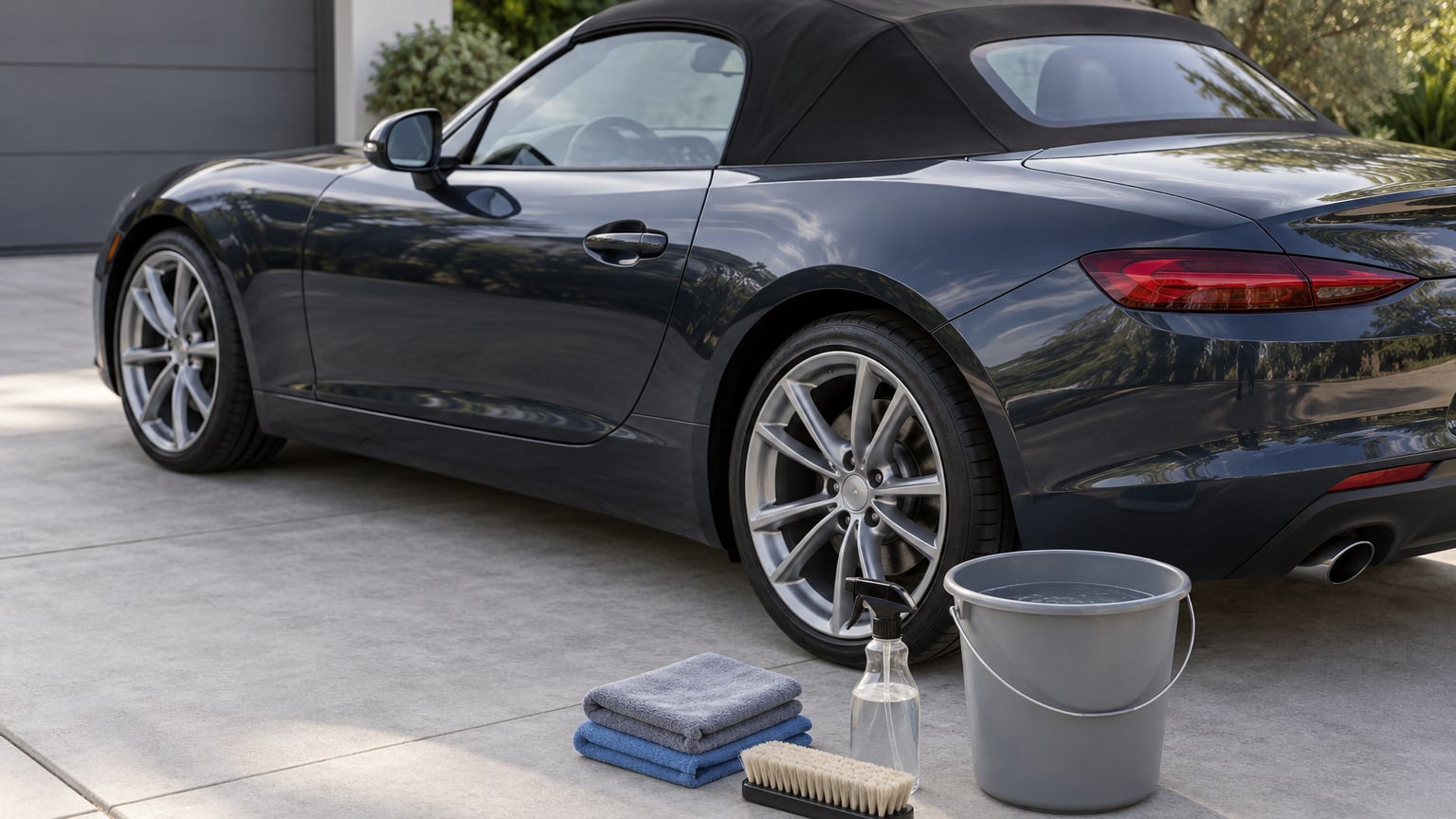
The short version of how to clean a convertible top: vacuum off the loose grit, work in small sections with a pH-neutral cleaner and a soft synthetic brush, rinse with low-pressure water, then let it dry fully in shade before any protectant goes on. Most damage comes from soaking, stiff brushes and cleaners that were never meant for the material.
Two rules answer the questions that come up most. Skip the automatic car wash, because the rollers and brushes alone can chew seams and window trim. Skip the pressure washer too, or keep it under low pressure and never aim water into the roof joints, the rear window or the drain tubes.
Budget about an hour of hands-on time and another two to four hours of drying. It’s an easy job once the car is parked in the right spot with the right bottle in your hand.
Table of Contents
- What You Need
- Step-by-Step: How to Clean a Convertible Top
- Common Mistakes That Can Damage a Convertible Top
- Frequently Asked Questions
- What is the best thing to clean a convertible top with?
- Can you take a cloth top convertible through a car wash?
- How do I get mildew and mould off a convertible top?
- How can I clean the plastic rear window on a convertible top?
- Can a faded black convertible top be made black again?
- How long does a convertible top take to dry after washing?
- Conclusion
What You Need
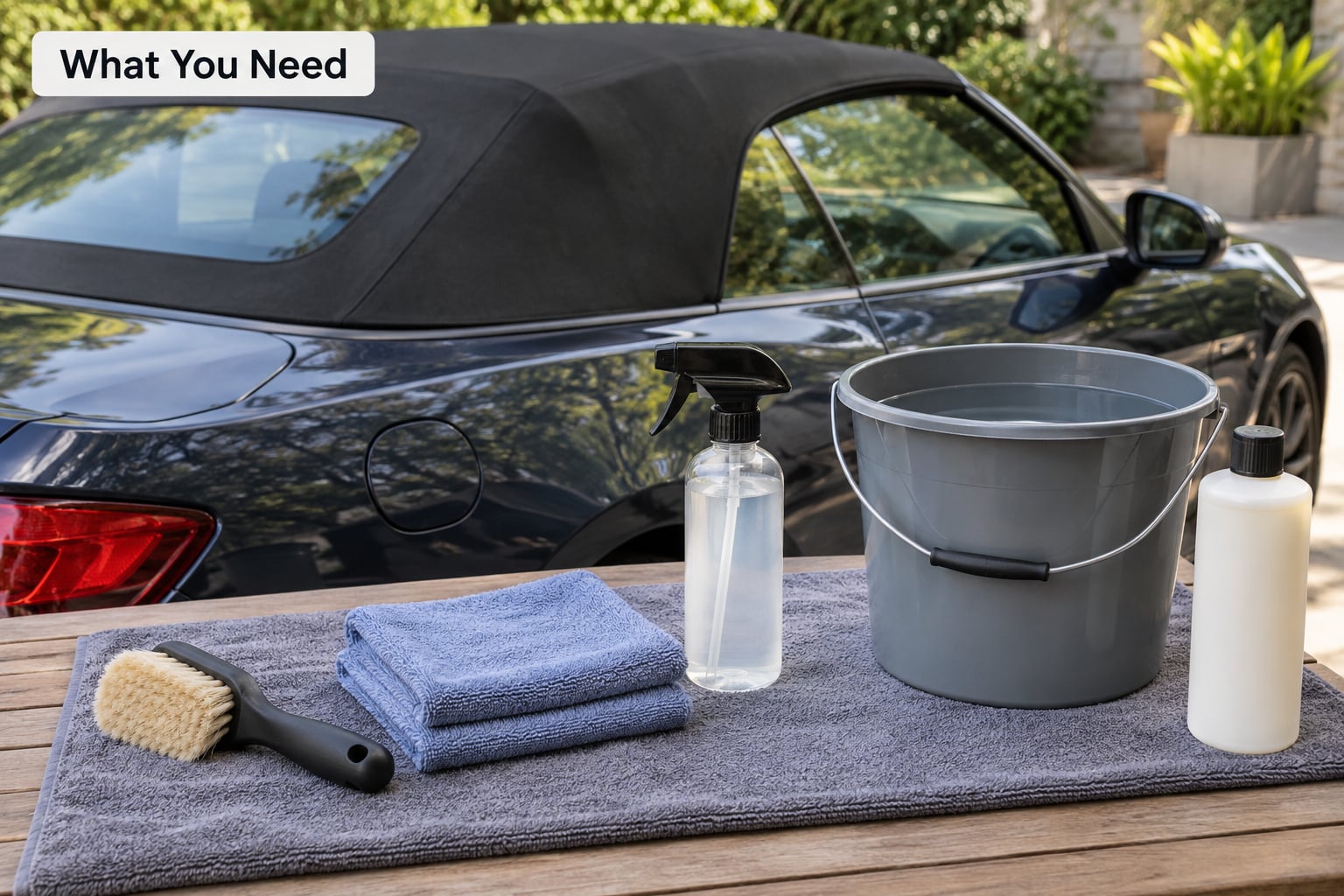
Start with the owner’s manual. Roof materials differ between model years on the same car, and the manufacturer lists which cleaners it approves for its own material.
For any top, you want a soft-bristle synthetic brush, two or three clean microfiber cloths, a spray bottle, a bucket, and a vacuum with a brush head or crevice attachment. A garden hose with a gentle nozzle or a pressure washer fitted with a wide, low-pressure attachment is optional.
Then match the cleaner to the roof. Fabric and canvas tops need a pH-neutral, non-detergent cleaner labelled for convertible tops. Vinyl tops need a vinyl-safe cleaner, and a vinyl conditioner afterwards.
Useful extras if you’re already partway there: a mildew remover with enzymes for stubborn green growth, and a plastic-safe glass cleaner for the rear window. Skip anything with solvents, bleach or heavy alkaline content unless the top manufacturer explicitly approves it.
Step-by-Step: How to Clean a Convertible Top
1. Identify the Convertible Top Material
Check the owner’s manual first, then look for a material label sewn or glued into a seam, usually along the lower edge of the roof or behind the rear header. Many American convertibles use a Haartz-manufactured material, and the maker’s documentation will name an approved cleaner.
Fabric looks woven and matte, shows stitching from the inside, and drinks water. Vinyl has a smoother, more uniform surface, often with a printed grain pattern. A drop of water is a quick check: it beads on vinyl and soaks into fabric.
This matters because fabric can be cleaned more aggressively than vinyl, and vinyl is far less forgiving of solvents and stiff brushing.
2. Park the Car and Prepare the Roof
Work outdoors or in a well-ventilated space on a level surface. Close and latch the top fully, then confirm the rear window is seated and the seams are clear.
Vacuum the roof while it is dry. Loose dust and grit turned into a wet paste will grind into the weave, and most of it settles in the seams anyway. Use the crevice attachment along the fold lines and the drainage channels.
Lay clean towels or a tarp over the paint, glass and trim below the roof. Protectant overspray and dirty rinse water mark paint and glass faster than anything else in this job. If the wheels are due for work too, do that on a separate pass and follow our guide to cleaning wheels without damaging the finish rather than mixing two jobs into one bucket of water.
3. Choose and Test the Cleaner
Pick a cleaner labelled for your roof material and dilute it exactly as the label says. Over-concentrated cleaner is the most common cause of a stained or stiff top, and it is not reversible.
Test a small hidden area first, ideally the section just above the rear window or behind a seat back where you cannot see it. Let it sit for the stated dwell time, then look for colour change, stiffness, colour bleeding onto your finger, or a tacky residue.
If anything changes, stop and try a different product. That’s the whole reason for the test patch.
4. Apply the Cleaner Without Soaking the Top
Work in sections about the size of your forearm. Mist or foam the diluted cleaner onto one section, let it sit for the recommended dwell time, then agitate with the soft brush using light, even strokes in the direction of the weave.
Keep water out of the roof joints and off the interior. A saturated top can take days to dry inside the layers, and that trapped moisture is where mildew starts.
Pay attention to seams, but do not scrub them hard. Any brand label, plastic window, or piping strip gets a light touch and never a stiff brush.
5. Rinse Loose Dirt and Cleaner Away
Rinse with clean lukewarm water at low pressure, working from the top of the roof downward so dirty water runs off rather than back across clean fabric. Keep a controlled stream and never direct pressure into seams, the rear window, or the drain tubes.
Leftover cleaner leaves a sticky film that traps dirt and turns the protectant patchy. Rinse each section twice if you can, and check for the tell-tale squeaky feel that means product is still in the fabric.
6. Treat Remaining Stains Conservatively
Blot what is left with a damp microfiber cloth rather than rubbing. For bird droppings, dampen the cloth first and let it sit briefly to soften the deposit before lifting it. For tree sap, a cloth dampened with warm water works on fresh sap; cured sap usually needs a fabric-safe spot remover and patience.
Mildew and mould respond to an enzyme-based mildew remover used according to its label, applied in shade so it does not dry on the surface. Water spots on vinyl usually come off with the vinyl cleaner and a soft cloth; on fabric they are a symptom of uneven drying rather than dirt.
Oily road film and scuffs often need a second treatment rather than a stronger one. Avoid household bleach, oven cleaners, paint thinner and degreasers unless the roof manufacturer approves them, because bleach residue leaves a white cast on beige and grey tops that no amount of washing will shift.
7. Dry and Restore the Top
Blot the roof dry with clean microfiber towels, then let it air-dry completely in shade with good airflow. Plenty of owners have driven with a damp roof and found water inside the cabin the next morning, which means the top went down over wet fabric. If a musty smell follows rain, check the car AC evaporator drain for the same trapped-moisture problem before blaming the roof.
Give it two to four hours in warm, dry weather, longer if it is cool or humid. If the top has a nap or brushed finish, a soft clean towel brushed in one direction restores the lay once it is nearly dry.
Only then apply a fabric guard or water repellent to fabric, or a vinyl conditioner to vinyl. Protectant sprayed onto a damp top cures unevenly and streaks, and cold weather will stop it bonding at all.
Common Mistakes That Can Damage a Convertible Top
A stiff brush is the fastest way to scratch vinyl and fray stitching. The bristle that feels satisfying on a dirty roof is the one pulling threads apart, so use a soft synthetic brush and light pressure.
Applying cleaner without testing is how tops end up with stiff patches or colour bleeding. Test a hidden section every time you switch products, and dilute exactly as the label instructs.
Soaking the roof floods the interior layers and the cabin. Keep sections damp, not dripping, and keep water away from the windows and openings. If your roof has drain tubes and weeper holes, clear them with a soft flexible wire before and after washing, since blocked drains are how water ends up pooled inside the car.
Using bleach, solvents or generic degreaser does real damage. Those products are meant for hard surfaces, and residue on coloured fabric shows up as permanent white spotting.
Cleaning with the top open is a gamble. Debris falls into the frame and header, water reaches areas you cannot dry, and the latching hardware takes the load. Close and latch it before you start.
Leaving it wet, or covering it wet, is the mistake that costs the most. Never lower the roof or put a car cover on while the fabric is damp, and never apply protectant to a damp surface. If you are dealing with salt and road grime underneath the car as well, our guide to cleaning road salt off the undercarriage covers that side of the job.
Frequently Asked Questions
What is the best thing to clean a convertible top with?
For fabric and canvas, a pH-neutral non-detergent cleaner labelled for convertible tops, used with a soft synthetic brush. For vinyl, a vinyl-safe cleaner followed later by a vinyl conditioner. Avoid anything with bleach, solvents or heavy alkaline content, and dilute exactly as the label directs.
Can you take a cloth top convertible through a car wash?
No, not through an automatic or brush-type car wash. The brushes snag stitching and trim, the detergent is usually too alkaline for convertible fabric, and the high-pressure rinse can force water past seals into the cabin. Hand washing in sections protects the top and the paint around it.
How do I get mildew and mould off a convertible top?
Use an enzyme-based mildew remover made for convertible tops, sprayed in shade so it does not dry on the surface, then gently agitated with a soft brush and rinsed low. Work section by section and dry the roof fully. If mould returns quickly, moisture is sitting inside the top, often in blocked drain tubes or under a car cover put on wet.
How can I clean the plastic rear window on a convertible top?
Use a plastic-safe glass cleaner on a soft microfiber cloth and wipe rather than scrub. Never use a solvent-based glass cleaner, a stiff brush or a scouring pad, because all three scratch the plastic permanently and haze it. Never aim a pressure washer at the window, and never fold the top while the window is damp.
Can a faded black convertible top be made black again?
Cleaning removes grime and restores water beading, but it does not put pigment back into faded fabric. A colour restorer or overdye can darken the surface, though it is a coating rather than a repair, it wears unevenly and it can be hard to reverse. If the top is what you want it to look like, having it replaced is the more predictable option.
How long does a convertible top take to dry after washing?
Two to four hours in warm, dry, breezy weather, longer in cool or humid conditions. The fabric and its backing both need to be fully dry before you lower the roof, put a cover on, or apply protectant. Protectant applied to a damp top will not bond properly and will streak as it dries.
Conclusion
Identify the material first, then use a cleaner approved for that material and test it on a hidden patch. Clean in small sections with a soft brush, rinse at low pressure, and give the top two to four hours to dry completely before protectant, a car cover, or a lowered roof.
If you cannot identify the material, or the staining is deeper than a wash will shift, a qualified convertible-roof specialist is a better call than another experiment. It is the cheapest part of the car to look after and one of the most expensive to replace when it goes wrong.