
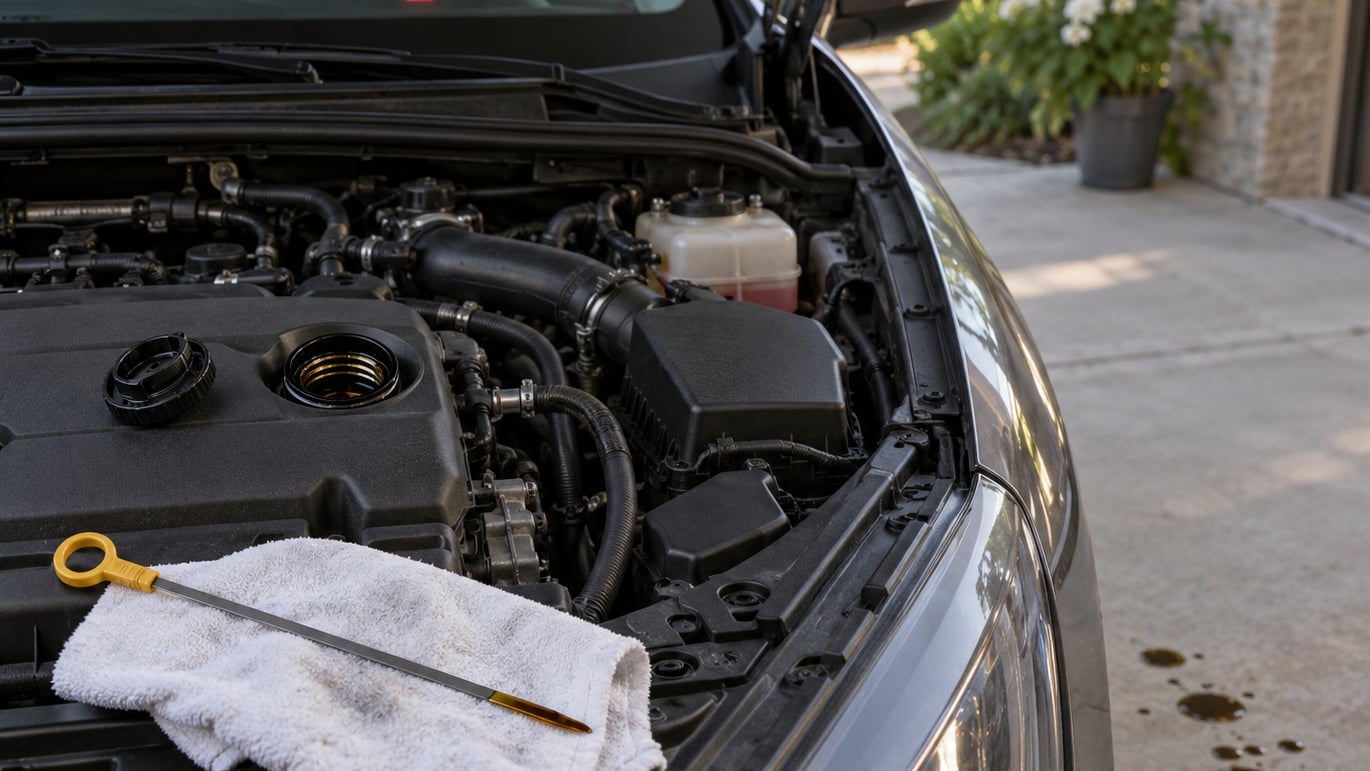
If the oil pressure light is on but the oil is full on the dipstick, the level is not the problem. Oil level tells you how much oil is in the sump, while oil pressure tells you how hard the pump is pushing that oil through the engine, and a full sump does not mean either one is being reported correctly.
In most cases a red oil-can light with a full dipstick points at the oil pressure sensor or its wiring. Sometimes it is real low pressure from a worn pump or a clogged pickup screen, and that version ends with a seized engine within minutes. The seven checks below take about an hour and sort the two apart.
Table of Contents
- What You Need
- Oil Pressure Light On but Oil Is Full: Step-by-Step
- 1. Shut Off the Engine Safely
- 2. Confirm the Oil Level Correctly
- 3. Look for an Oil Leak or a Recently Completed Service
- 4. Check for Electrical Problems That Mimic Low Pressure
- 5. Read Scan Data and Warning History
- 6. Verify Actual Oil Pressure When Necessary
- 7. Repair the Cause Before Clearing the Warning
- Common Mistakes
- Frequently Asked Questions
- Can I drive if the oil pressure light is on but the oil is full?
- Why does my BMW oil pressure light come on with no visible leak?
- Is an oil-pressure warning light an emergency even when the engine sounds normal?
- Why would the oil-pressure light appear immediately after an oil change?
- Do I need to reset the oil service light after fixing the warning?
- What to Do First
What You Need
Gather these before you start. Having the manual open on the oil specification page saves a wasted trip to the parts store.
- Your owner’s manual, open to the engine oil specification and oil level pages
- The correct dipstick for your engine, wiped clean
- Level ground, a clean rag or paper towel, and a flashlight
- Wheel chocks and basic hand tools
- A vehicle scan tool that reads stored fault codes
Do not start pulling anything apart on a hot engine or a car parked on a slope. Let the engine cool, set the parking brake, and chock a wheel before you go underneath.
Oil Pressure Light On but Oil Is Full: Step-by-Step
1. Shut Off the Engine Safely
A steady red oil pressure warning is a stop-driving instruction, unless your manufacturer publishes a specific procedure that says otherwise. Pull over somewhere safe, put the transmission in park or neutral, switch off the engine, and set the parking brake.
Turn the key to the on position without starting the engine and leave it there while you work. Most oil pressure gauges and many fault codes are only readable with the ignition on and the engine off.
Listen before you look. A light ticking that speeds up with engine speed is usually a bearing or valvetrain noise, while a heavy knock from a hot engine points at serious internal damage.
2. Confirm the Oil Level Correctly
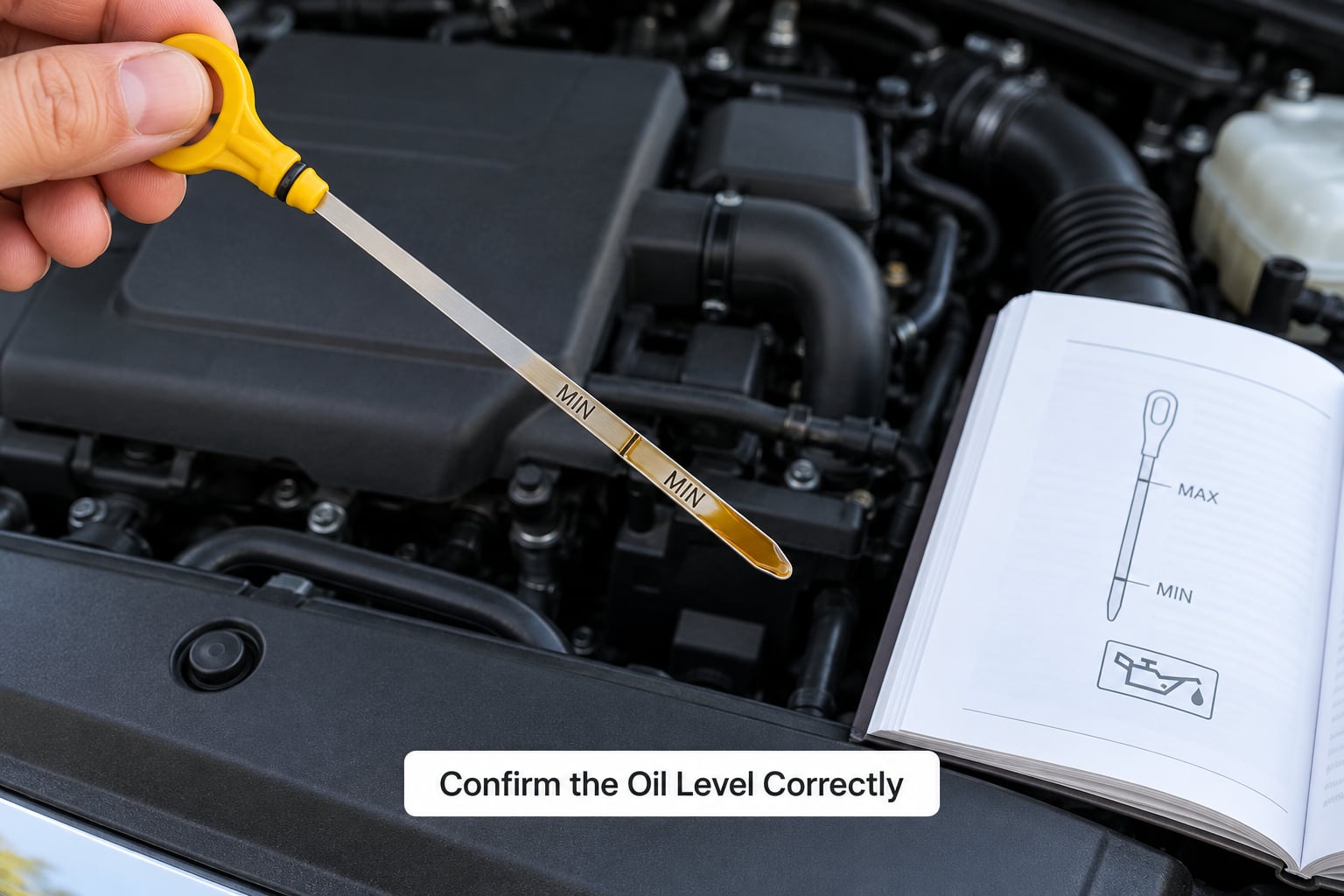
Most confident oil-level readings are wrong because the car was parked on a slope, or the dipstick was pulled and checked while the engine was still running. Park on level ground, pull the dipstick, wipe it clean, reinsert it fully, then withdraw it again and read it.
Compare the reading with the range marked on the dipstick and against your manual. Some engines want the level at the maximum mark when cold, so a reading that sits comfortably between the two marks can still be below what the engine needs.
Check the oil cap and the dipstick tube for milky residue. A frothy, pale emulsion points at coolant mixing into the oil, which is a different problem and needs its own diagnosis.
3. Look for an Oil Leak or a Recently Completed Service
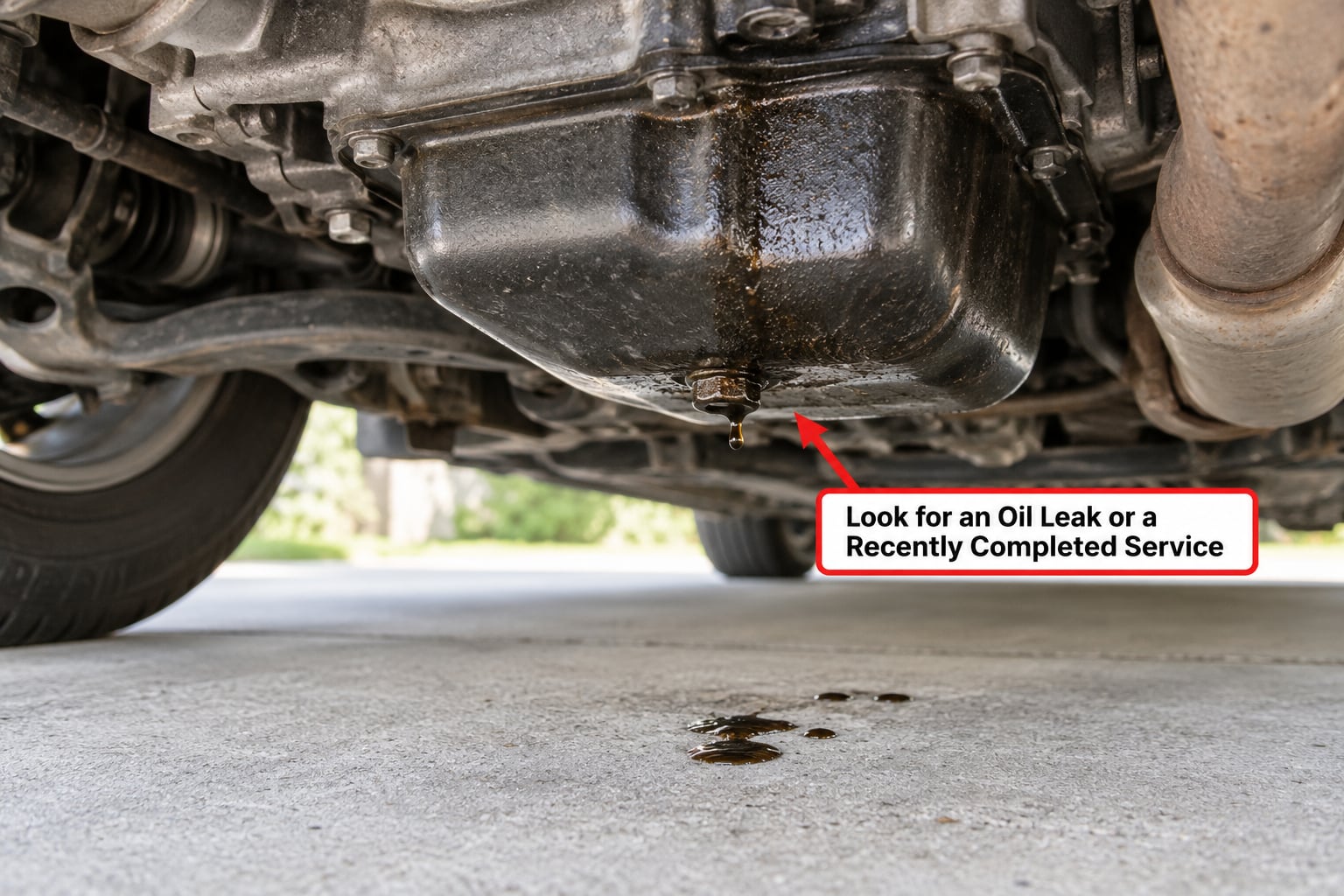
Work from the top of the engine downward with a flashlight. Start at the oil cap and its seal, then the valve cover gasket area, then the front of the engine around the crank seal, then the oil pan gasket and the filter housing, and finish by looking at the ground under the car.
Fresh oil looks wet and glossy. Older seepage leaves a dark, dusty film with beads at the edge, and that distinction alone tells you whether the leak is active.
Now ask whether the light appeared right after an oil change. Overfilled oil throws the level past the mark and can aerate the oil, and a filter that was installed without oil in it or with a stuck bypass valve starves the pump on a cold start. A drain plug torqued past spec can crush the sealing washer, and on some engines an incorrect plug can trigger an immediate pressure warning.
4. Check for Electrical Problems That Mimic Low Pressure
The sending unit is a variable resistor screwed into the engine. Its resistance falls as real pressure rises, the control module watches that signal, and the light comes on whenever the reading looks too low. When the internal seal or the wiring fails, the signal collapses while actual pressure stays normal.
With the ignition on and the engine off, locate the sensor connector on the harness and look at it closely. Oil inside the connector means the unit has been leaking internally, and it needs replacing rather than cleaning. Owners of an older Volvo S40 traced an intermittent light to exactly that.
Follow the wiring back from the connector and look for chafed insulation where the harness passes over a bracket or a heat shield. A connector that sits in water, a corroded terminal, or a poor ground all produce the same symptom. If the check engine light is on at the same time, read what a yellow steering wheel light means and the other warning icons on your specific model.
Stay at inspection level here. Do not probe wiring with a test light, do not bypass a warning circuit, and never open a connector while the engine is running.
5. Read Scan Data and Warning History
Plug in the scan tool and read stored codes before you touch anything else. P0520 covers the oil pressure sensor circuit, P0521 through P0523 cover sensor range and performance problems, and P0524 means the module saw pressure below the threshold it expects.
Note whether each code is a current fault or a history entry. A history code that no longer sets does not have to match what you are feeling right now, and a current code does not tell you whether the sensor or the pump is at fault.
Write down when the light actually appears. A warning that shows only at idle or only in stop-and-go traffic is a well-known sensor or pickup screen pattern, because that is where engine speed and therefore pump output are lowest. One Mustang owner with 280,000 miles tracked two lights to heavy traffic and noted the engine drove normally both times.
6. Verify Actual Oil Pressure When Necessary
A full dipstick rules out one cause and nothing else. If the light is steady, if codes keep coming back after a sensor replacement, or if the engine makes any knocking noise, the only way to settle it is to measure real pressure with a mechanical gauge.
A technician screws the gauge into the sending unit port, warms the engine fully, holds a steady idle, and reads the needle. That hot idle figure gets compared against the pressure the manufacturer specifies for your engine, because the numbers vary widely between engines and there is no single universal value that applies to any car with a red light.
A gauge that climbs steadily with engine speed is reassuring. One that stays low, flickers, or falls away at idle while the engine knocks means stop and tow it. Anything in that range is a pump, pickup screen or internal wear problem, and it is not a weekend-lube job.
7. Repair the Cause Before Clearing the Warning
Once you know which side of the line you are on, the repair paths narrow fast. A wrong level gets corrected to the specified mark. A leaking gasket, a loose plug or a crushed sealing washer gets resealed or replaced. Damaged wiring gets repaired and the connector cleaned or replaced. A verified faulty sensor gets replaced, and on many cars the sealing washer or O-ring at the sensor should go with it.
A clogged pickup screen or a failing pump means the oil pan comes off, and that is where a shop earns its keep.
Clearing a code does not restore a single drop of pressure. If the light comes back after the reset, the fault is still there, and a red warning that persists after the repair needs professional diagnosis rather than another reset.
Common Mistakes
Topping off the engine every time the light comes on. If the level is already correct, adding oil changes nothing and hides the real cause. A car that needs repeated top-offs has a leak or heavy consumption that needs finding.
Treating a full dipstick as proof there is no danger. Level and pressure are different measurements. One owner with a 2014 Lancer at 225,000 km had a correct level, no visible leaks and a quiet engine, and still ended up replacing the sensor.
Driving on with a solid red light. A momentary flicker at idle is often benign. A steady red light with knock or clatter is how an engine announces it is about to let go of its bearings.
Swapping the sensor without checking codes or wiring. Plenty of replaced sensors changed nothing because the fault was chafed insulation or a connector full of oil. Read the codes first.
Clearing the warning before the repair. Disconnecting the battery or clearing codes wipes the evidence and gives you a light that lies to you. There is more on that in how to clear a check engine light without a scanner.
For BMW owners in particular, read the manual for your specific engine before buying a part. Pressure senders, oil level sensors and the warning logic differ between four-cylinder, six-cylinder and diesel variants, and an oil level sensor is a separate component from the pressure sender on many of these cars.
Frequently Asked Questions
Can I drive if the oil pressure light is on but the oil is full?
A steady red oil pressure light means stop, regardless of what the dipstick says. A brief flicker that appears only at idle and clears at highway speed is often a sensor fault, but you cannot confirm that from the driver’s seat. Tow the vehicle if the light stays lit, if the engine knocks, or if it returns every time you start it.
Why does my BMW oil pressure light come on with no visible leak?
Many BMW engines run an electrical pressure sender whose internal seal can leak, filling the connector with oil and collapsing the signal even though pressure is normal. The wiring can also chafe against brackets or the engine itself. On some models a separate oil level sensor reports level separately from pressure. A scan tool and a connector inspection narrow it quickly.
Is an oil-pressure warning light an emergency even when the engine sounds normal?
Treat it as one. A quiet engine does not rule out real low pressure, because bearings and the oil pump can fail before anything audible changes, and the window between the warning and seizure is short. Sound matters in the other direction too: ticking that speeds up with engine speed or a heavy knock means you have less time, not more.
Why would the oil-pressure light appear immediately after an oil change?
Several things can cause it. Overfilling pushes the level past the mark and aerates the oil, a dry filter or a stuck bypass valve starves the pump on a cold start, a mismatched viscosity behaves differently under load, and a drain plug tightened too far can crush its sealing washer. Check the level first, then let a scan tool read any stored codes before blaming the shop.
Do I need to reset the oil service light after fixing the warning?
Reset the light, but only after the fault is fixed and you have driven the vehicle long enough to confirm it stays off. Clearing first destroys the freeze frame and stored codes that show whether the light was set cold, hot, at idle or under load, and that history is often the fastest part of the diagnosis.
What to Do First
Do not keep driving a steady red oil pressure light. Pull over, shut the engine down, let it cool, and check the level the right way on level ground with the dipstick wiped and reinserted.
Then look underneath for fresh oil and ask whether the warning followed an oil change or a recent repair. If the level is correct, there is no leak and the light still comes back, a scan tool for stored codes and a mechanical pressure test by a technician are the next two moves.
A full sump rules out low level and nothing else. It does not rule out a failed pump, a clogged pickup screen or a dying sensor, and those three look identical from the driver’s seat.