
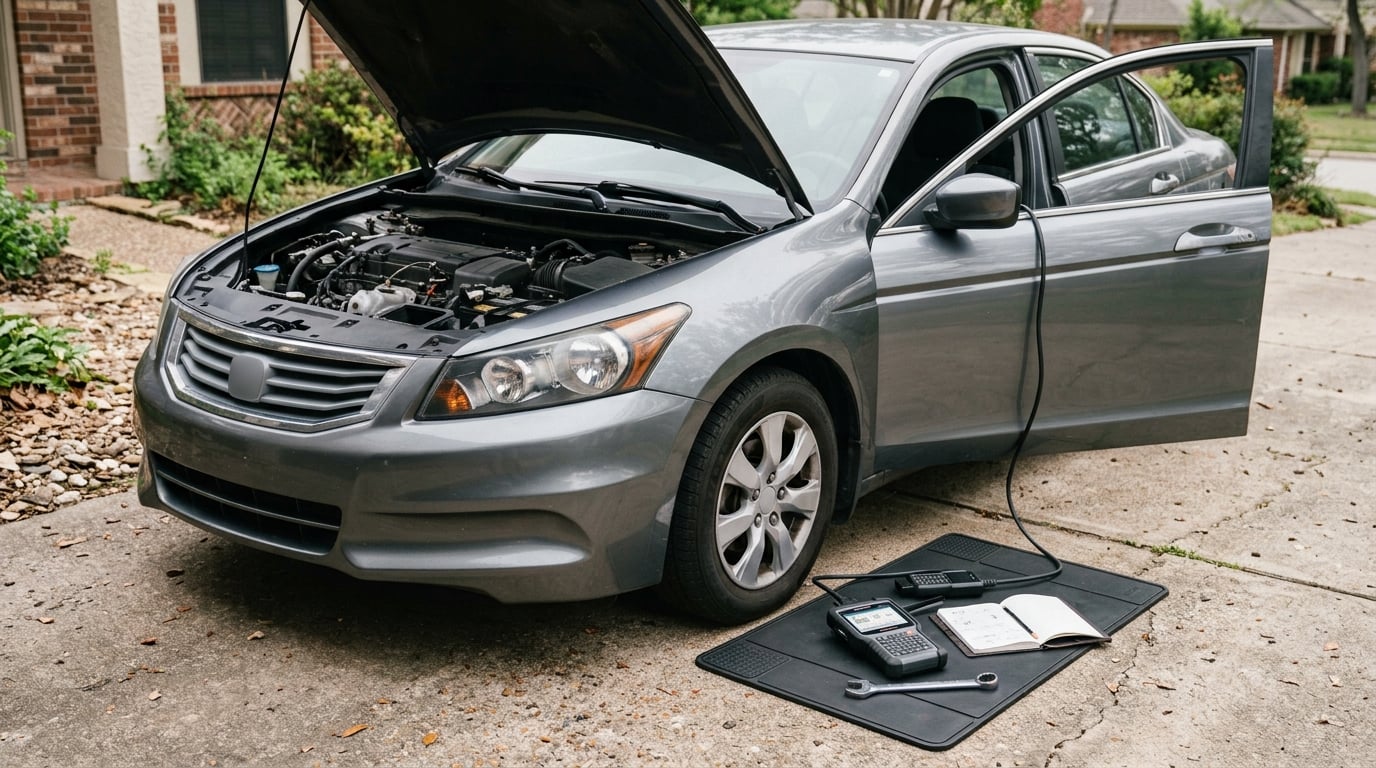
Yes, you can clear a check engine light without a scanner. Disconnect the negative battery terminal for 10 to 15 minutes and the stored code is wiped, and two other methods work too: cycling the ignition key five times or pulling the ECU fuse for about 10 minutes. None of them fix anything. The light goes off because the code is gone, and it comes straight back if the fault is still there.
That distinction is the whole reason this guide exists. Clearing a code is a diagnostic move, not a repair. It tells you whether the light was a one-time event or a fault the car will keep re-reporting, and it wipes the freeze frame data a mechanic would otherwise use. Everything below is framed for 2026-model vehicles, and your owner’s manual always outranks it.
Budget about 20 minutes for the battery method plus a drive, and none of this needs a shop.
Table of Contents
- What You Need
- Four Ways to Clear the Light Without a Scanner
- Step-by-Step: How to Clear a Check Engine Light Without a Scanner
- Common Mistakes
- Frequently Asked Questions
- Can I clear a check engine light without an OBD2 scanner?
- Does disconnecting the battery clear the check engine light permanently?
- How long do I drive after clearing the check engine light?
- Why did my check engine light come back after I reset it?
- Is it safe to drive with the check engine light on?
- Should I replace parts before checking the trouble code?
- Conclusion
What You Need
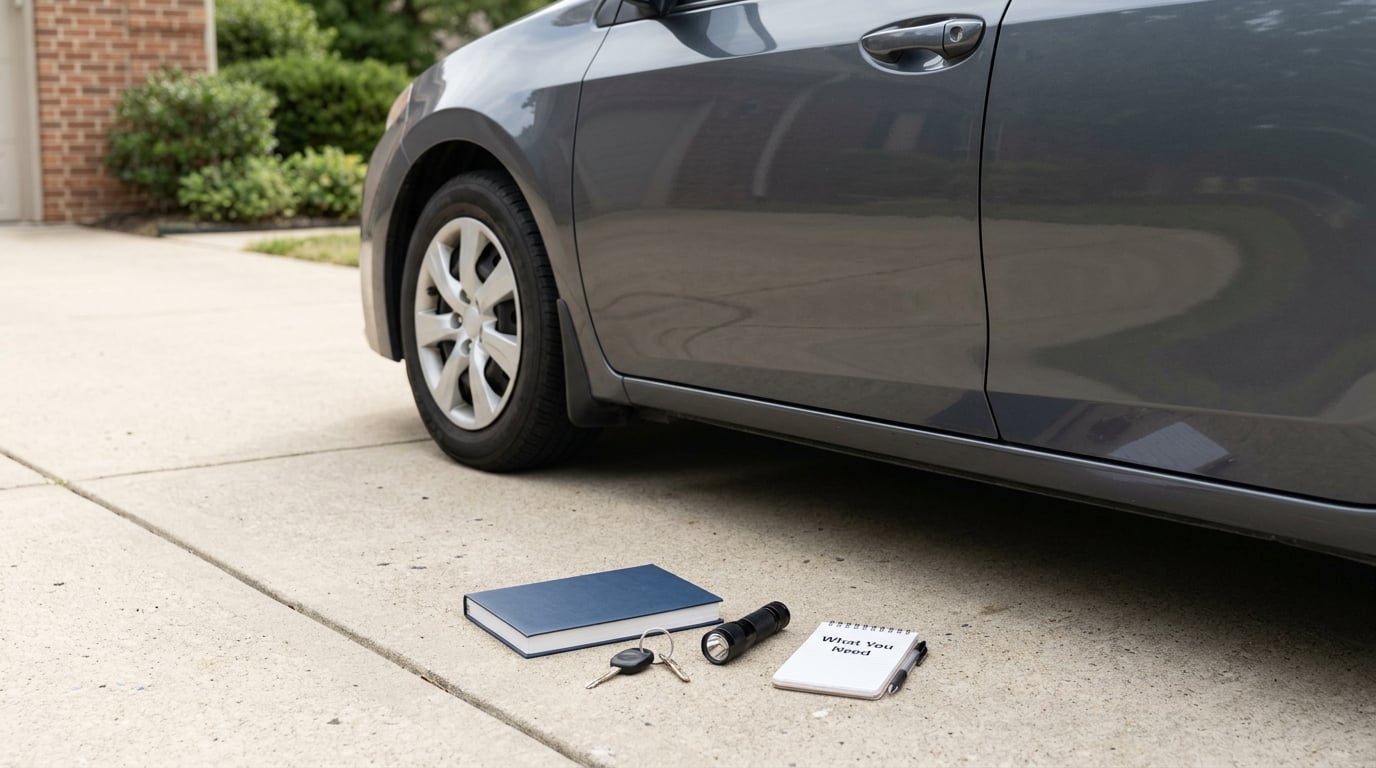
You need less than most people expect. Grab these first so the reset does not stall halfway through.
- The owner’s manual or the glove box door panel. The reset procedure is printed in the warning lights section of almost every manual made in the last 30 years.
- Your ignition key, plus a spare if you have one. Key cycling is the only method here that needs nothing else at all.
- A 10mm wrench or a ratchet. Most battery terminal clamps use a 10mm nut. A few use 12mm or 13mm, so check before you start.
- A flashlight and a small notebook. Write down whether the light is steady or flashing, and write down the date. Both matter later.
- A rag or gloves. Battery terminals carry corrosion and the clamp can pinch.
Before you pull a single cable, know what a disconnect erases: radio presets, the clock, one-touch window and liftgate settings, seat and mirror memory positions, and the adaptive throttle and fuel trim values the engine computer learned. Owners on r/CrownVictoria describe the drive that follows in plain terms: the idle hunts, the transmission shifts oddly, and the car needs 15 to 20 minutes of driving up to operating temperature before it settles. That relearn window is normal, not a new fault.
On some vehicles you also lose battery registration data, and on others the idle relearn has to be done with a scan tool. Check the manual for your specific car.
Four Ways to Clear the Light Without a Scanner
These are the four methods the manufacturers and the owner forums actually use. Start with the first one and work down only if it does not take.
| Method | Tools needed | Time | What it wipes |
|---|---|---|---|
| Negative battery terminal | 10mm wrench | 10 to 15 minutes disconnected | Codes, radio presets, clock, learned throttle and fuel trim, window and seat memory |
| Ignition key cycling | None | About 2 minutes, 5 cycles | Only the codes, on some models |
| ECU or ECM fuse pull | Small fuse puller or pliers | About 10 minutes | Codes only, no settings lost |
| Gas cap reseat | None | 30 to 60 seconds, then a drive | Nothing. It only works if the cap was the cause |
Members on gtrlife.com put it plainly: without a scan tool, disconnecting the battery for 10 minutes and reconnecting is the easiest way to clear a stored code, and it also erases stored fuel trim. The ramforum.com crowd treats 30 minutes as the upper limit and calls it the wait-and-see method. Longer does not hurt anything beyond your afternoon.
Step-by-Step: How to Clear a Check Engine Light Without a Scanner
1. Confirm the Warning and Check for Immediate Hazards
Look at the cluster and identify exactly which lamp is lit. A steady check engine light is a malfunction indicator lamp, a stored code the computer has not cleared. A flashing one means the engine is misfiring and dumping unburned fuel into the catalytic converter, and that is a stop-and-tow situation.
Check every other warning light at the same time. An oil pressure light, a coolant temperature gauge in the red, a brake system light, or a low fuel warning all outrank the check engine light.
Stop the car and do not drive if you see any of these: white or blue smoke from the exhaust, a sweet or burnt smell, a loud knocking or grinding noise, a temperature needle climbing, a strong fuel smell, or a serious loss of power. Pull over safely, shut the engine off, and arrange a tow. A flashing light counts as one of these.
2. Look for Simple Visible Causes
With the engine off and the key out, look at the fuel filler area first. Unscrew the gas cap, listen for a vacuum hiss as it breaks the seal, then tighten it back until it clicks or ratchets. A cap that is loose, cross-threaded, or missing its spring-loaded seal is one of the most common causes of a stored EVAP code, and on Toyota 4Runner and Tundra forums it is routinely the fix after a fuel stop. A missing gas cap absolutely can turn the check engine light on.
Open the hood and look without touching. Check that the gas cap on the engine is present and tight. Look under and around the car for a puddle of fluid, coolant, or a dark oily stain. Look for anything resting on a belt, hose, or connector that a shop visit removed and never put back. Look at the battery terminals for green or white crust.
That is where you stop. Do not pull an air intake hose, do not unbolt an injector cover, do not probe wiring with a test light. The owner’s manual always takes priority over anything in this article, and if a check requires removing a part you do not understand, that is a mechanic’s job.
3. Check the Owner’s Manual for the Vehicle-Specific Reset
Open the owner’s manual to the warning light section and read the check engine light page before you touch anything. Most manuals describe the key cycling reset in one short paragraph, and the exact wording matters.
For most gasoline vehicles, the procedure is: turn the key to the ignition or start position without starting the engine, wait about five seconds, return the key to off, and wait five seconds. Repeat that sequence three more times for five cycles total, then start the engine normally. On many Honda, Nissan, and Toyota models of the last two decades, that alone clears a stored code.
Diesels are different. Many light-duty diesels will not accept a key cycle at all, and the manual for a truck like this usually points to a scan tool or a dealer procedure instead. Some 1990s and 2000s cars need the accelerator pedal held in a specific position for a reset. Do not improvise an electrical procedure, and do not bridge battery terminals with jumper cables to force a reset; you are gambling on the module and the alternator diode.
If the manual lists an ECU or ECM fuse reset, that is your best option when you want to keep your radio presets. The engine bay fuse box carries a fuse labelled ENGINE, ECM, ECU, PCM, or MAIN that feeds the control module. Remove it with the fuse puller from the box cover, set it somewhere safe, wait 10 minutes, then reinstall it. Never remove more than one fuse at a time, and confirm the replacement fuse matches the amperage printed on the box lid.
The battery method is the fallback when the key cycle does not take. Turn the ignition off, open the hood, loosen the negative terminal clamp, and lift the cable off the post. Wait 10 to 15 minutes. Some cars will run codes back up within a minute of reconnecting if you were too quick, which is exactly what a PriusChat owner found while chasing an EVAP code with a 10-second removal. Reconnect the negative clamp, tighten it, and start the engine.
4. Let the Engine Run Through the Required Cycle
Do not assume the light is meant to stay off right away. The car has to complete a drive cycle so the computer can confirm the fault is really gone and so the emissions readiness monitors can run.
A typical cycle is 15 to 20 minutes of mixed driving: start the car, let it idle until the temperature gauge moves off cold, drive around town with stops and gentle acceleration, then get on a highway for 10 to 15 minutes at steady speed. Ten minutes of slow neighborhood driving does not count. A trip of mostly highway driving with no city stops may not count either. A drive cycle varies by manufacturer, so treat the manual as the authority.
During the relearn window the idle will be higher and rougher than you are used to, and the transmission may hunt on light throttle. That is the ECU re-learning fuel trims, and it settles once the engine is at operating temperature. If the light is still on after the drive, the code came back, and the car is telling you the fault is real.
On emissions, one thing to know before you clear anything: readiness monitors reset to not ready when you wipe codes. If you have a state inspection or emissions test scheduled in the next week, do not clear the codes first, because the car will fail on monitors that have not run yet.
5. Verify Whether the Check Engine Light Stays Off
Give it three to five days of normal driving before you call it fixed. That is how long it usually takes for a real fault to re-assert itself and set the light again. Experienced mechanics put it as buying a few weeks of peace, and that is roughly accurate.
Understand what you are looking at. A pending code is a fault seen once, stored but not yet confirmed, and it will not light the lamp on its own. A stored code is confirmed and does light the lamp. A permanent code belongs to a specific module and is the one that trips the CEL and the MIL indicator; on many cars a battery disconnect clears the light for that code but does not erase it, so the lamp returns. The car running perfectly does not change any of that.
So a light that stays off for a week tells you two things: the fault is intermittent, or you got lucky with a reset after the underlying issue was already resolved, which happens after a battery replacement, a loose connector, or a part swap. It does not tell you the emissions system is healthy.
6. Decide Whether the Car Needs Diagnosis
Book a diagnostic scan if any of these are true.
- The light came back within a few days of clearing it.
- It flashes at any point, even briefly.
- It stayed on right after the vehicle-specific reset finished.
- It came on alongside a misfire, rough idle, power loss, overheating, or a fuel smell.
- You plan to sell the vehicle or pass an emissions test.
Before you pay anyone, get the code read at no charge. AutoZone, O’Reilly, Advance Auto Parts, and NAPA all scan cars free of charge from the parking lot, and most will read the code before they will clear it. A dealer will usually loan you a scan tool too. Five minutes in a parts store parking lot saves you from buying a catalytic converter you did not need, which is a mistake owner forums describe repeating more than once.
Do not replace parts before you know the code. A code tells you which circuit to test, and parts stores will cross-reference it. Guessing is how people end up with a new oxygen sensor, a new mass airflow sensor, and a light that is still on.
Common Mistakes
Ignoring the light because the car seems fine. A steady light means a confirmed fault exists. Driving indefinitely wears out the catalytic converter, which is the most expensive part you will likely end up replacing.
Disconnecting the battery over and over. Every cycle erases stored freeze frame data and learned values, which is the data that points at the fault. One clean disconnect answers your question; the second one destroys the evidence.
Replacing parts on a guess. Reset the light, watch what happens, and read the code before spending anything. The code narrows it to a circuit or a sensor; guessing does not.
Driving hard with an overheating or fuel warning light on. Those are stop conditions, not drive-home conditions.
Resetting without ever reading the code. This is the core mistake. Clearing tells you the light is gone and nothing about why it was there.
Treating a light that stayed off as proof the job is done. Watch it for a week of driving. If it does not come back, you may have a real intermittent fault, and intermittent faults are harder to find, not easier.
One habit worth building: read the free scan at a parts store before you try any reset at all. Ten minutes of reading beats a week of driving with the evidence deleted. The code narrows a fault down to one system, and a parts counter can cross-reference the exact code for you in seconds.
Frequently Asked Questions
Can I clear a check engine light without an OBD2 scanner?
Yes. The four scanner-free methods are disconnecting the negative battery terminal for 10 to 15 minutes, cycling the ignition key five times with a five-second pause between cycles, pulling the ECU or ECM fuse for about 10 minutes, and reseating the gas cap. Key cycling and the fuse pull are the least disruptive. The battery disconnect works on nearly every car but erases radio presets, the clock, and learned throttle and fuel trim values.
Does disconnecting the battery clear the check engine light permanently?
No. It clears the lamp and the stored code, but permanent codes tied to a specific module often re-assert as soon as the fault reoccurs, sometimes within a few drive cycles. A 30-minute disconnect is the upper bound owner forums use, and the longer wait does not make the reset any more permanent. If the light returns, the fault is still there.
How long do I drive after clearing the check engine light?
Plan on 15 to 20 minutes of mixed driving: idle to operating temperature, some city driving with stops and gentle acceleration, then 10 to 15 minutes at steady highway speed. That relearn is normal and the idle will be higher and rougher while it happens. Give it three to five days of ordinary driving before you decide the light is truly gone, because that is usually how long a real fault takes to set the lamp again.
Why did my check engine light come back after I reset it?
Because the code was reporting a real fault, and clearing it never repairs anything. The computer only re-lights the lamp after it sees the same problem again during normal driving. If the light came back within a day or two, the cause is active and repeated. Get the code read free at AutoZone, O’Reilly, Advance, or NAPA before replacing anything, because the code tells you which circuit to test.
Is it safe to drive with the check engine light on?
A steady light with no other symptoms is usually safe to drive gently to a shop. A flashing light is not: it means the engine is misfiring and sending unburned fuel into the catalytic converter, which can destroy it in a matter of minutes. Stop and tow if the light flashes, or if you see smoke, a fuel smell, overheating, a knocking noise, or severe power loss.
Should I replace parts before checking the trouble code?
No. Owner forums are full of people who bought an oxygen sensor or a mass airflow sensor on a hunch and ended up with the same light and a lighter wallet. Read the code first, even if it costs nothing at a parts store, then test the circuit it points to. A code narrows thousands of possible causes down to one system, and a parts counter can cross-reference the exact code for you.
Conclusion
Start by identifying the warning and checking the gas cap, the visible leaks, and the battery terminals. If nothing obvious shows up, use the vehicle-specific reset from your owner’s manual, then give the car a proper 15 to 20 minute drive and a few days of watching. If the light flashes, comes back, or shows up with smoke, smells, noise, or overheating, stop driving and get the code read. Clearing the light is cheap. Knowing why it was on is the part that saves money.