
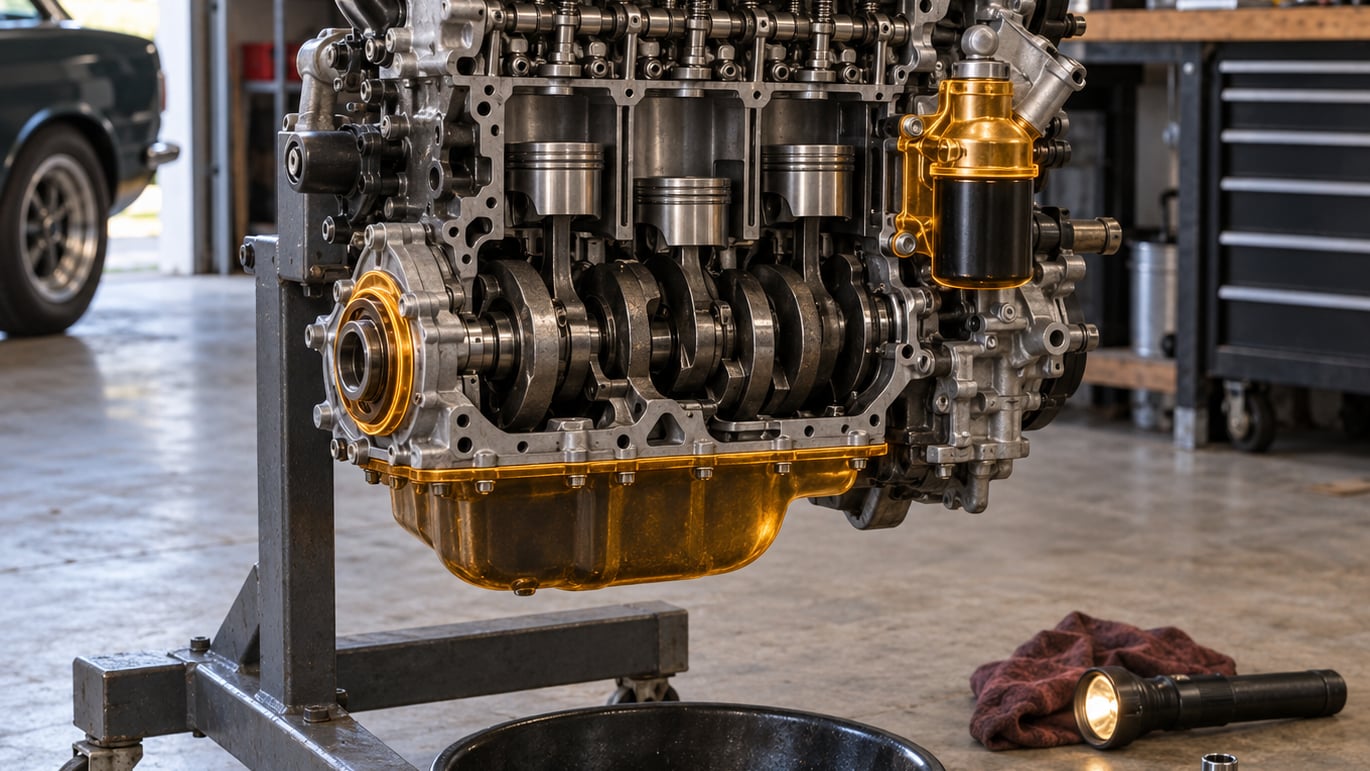
If you need to know how much does it cost to fix an oil leak, the honest answer is a wide range: a drain plug or filter reseal can be under 200 dollars, a valve cover gasket job usually lands between 200 and 1,000, and a rear main seal or cam carrier reseal on some engines runs well past 3,000. Location and access decide almost everything else.
I have talked through a lot of these quotes with owners, and the pattern is consistent. The expensive jobs are never the gasket itself. They are the labor hours needed to get to it, plus the disassembly that comes back together whether the gasket failed or not.
All figures below are US dollars and reflect typical ranges. They vary by region and change over time, so treat them as a budgeting range rather than a quote.
Table of Contents
How Much Does It Cost to Fix an Oil Leak by Type?
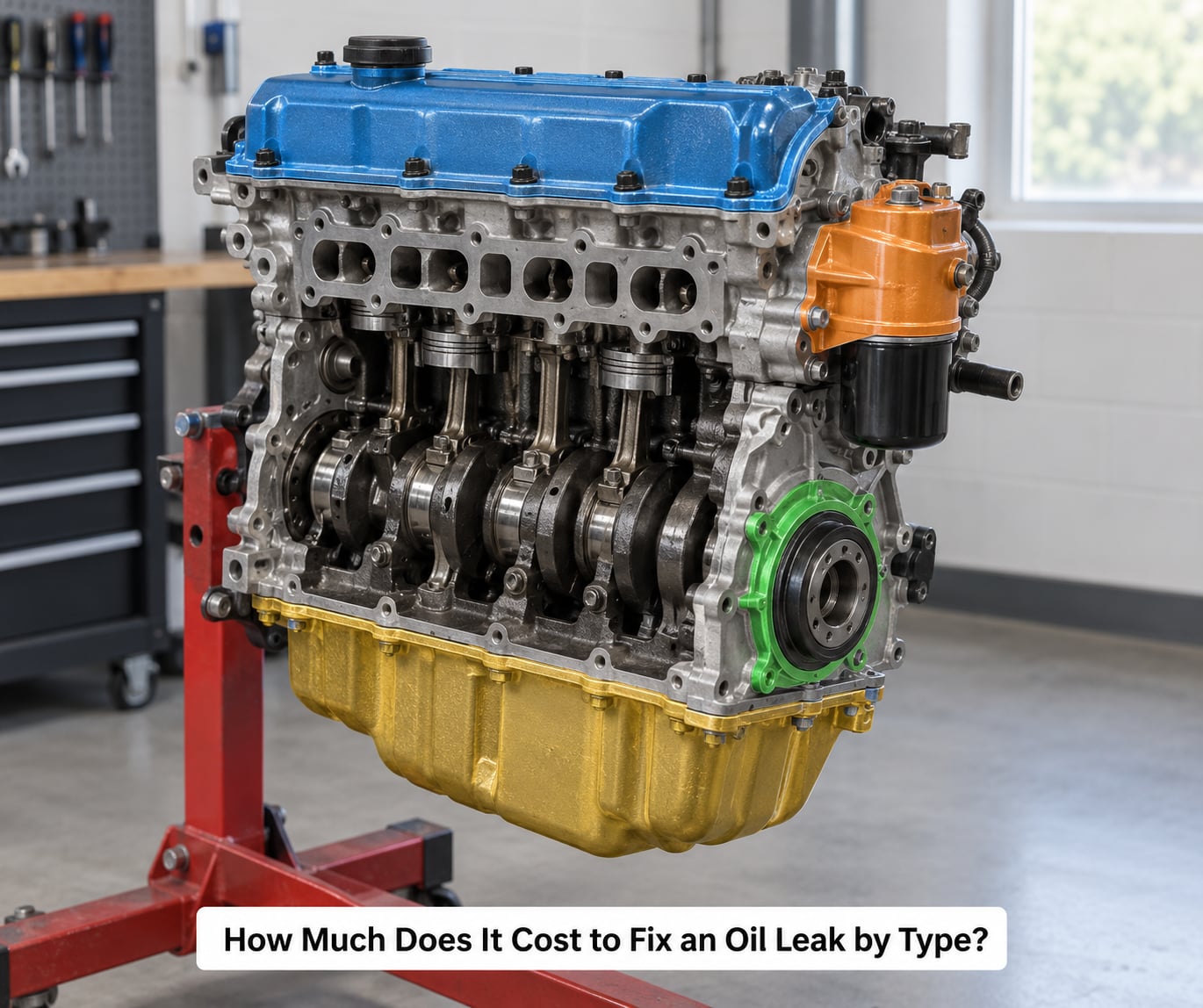
Most conventional leaks fall somewhere between 200 and 2,500 dollars to repair. Simple work you can do at home with basic tools can come in under 200, while major engine-seal work on a European or transverse-engine car can exceed 3,000 once transmission or subframe removal enters the quote.
| Repair | Parts (USD) | Labor (USD) | Typical total (USD) | Shop time |
|---|---|---|---|---|
| Drain plug or crush washer reseal | 5 to 30 | 0 to 150 | 10 to 180 | Under 1 hour |
| Oil filter housing gasket or cap seal | 20 to 120 | 250 to 600 | 270 to 720 | 1 to 2 hours |
| Oil pan gasket | 60 to 300 | 500 to 1,100 | 560 to 1,400 | 3 to 5 hours |
| Valve cover gasket | 60 to 300 | 300 to 700 | 360 to 1,000 | 2 to 4 hours |
| Timing cover gasket | 80 to 400 | 600 to 1,400 | 680 to 1,800 | 4 to 8 hours |
| Front crankshaft seal | 80 to 300 | 700 to 1,600 | 780 to 1,900 | 5 to 8 hours |
| Rear main seal (transverse engine) | 150 to 600 | 1,400 to 3,200 | 1,550 to 3,800 | 8 to 12 hours |
| Rear main seal (longitudinal engine) | 150 to 600 | 900 to 2,000 | 1,050 to 2,600 | 6 to 10 hours |
| Cam carrier or cam phaser reseal | 600 to 2,500 | 2,500 to 6,000 | 3,100 to 8,500 | 12 to 20 hours |
| Oil leak diagnosis / inspection fee | 0 to 40 | 100 to 200 | 100 to 200 | 1 to 2 hours |
| Oil and filter service added to a leak repair | 40 to 180 | 30 to 80 | 70 to 260 | Under 1 hour |
Diagnosis fees cluster tightly. An engine leak inspection typically runs 122 to 179 dollars, and plenty of shops will credit that fee toward the repair if you approve their diagnosis. Ask, because the answer is usually yes and it moves money from a sunk cost into the final bill.
Labor rates explain the spread between quotes for identical work. Independent shops commonly bill 60 to 100 an hour, while franchise dealers run 120 to 180 an hour in most markets. A ten-hour rear main seal job is a 600 dollar difference or a 1,800 dollar difference between those two brackets, with nothing else changing.
One more thing drives urgency. When oil pressure gets low, the fix stops being a gasket job and turns into a bearing, rod or scored-cylinder job. That is why a pressure warning light moves you to the front of the shop’s list even though the leak itself may look small.
How Much Does It Cost to Fix an Oil Leak on a BMW?
BMW pricing is where the gap between the cheapest quote and the highest one gets widest. The engines are tight, the access is awkward, and the seals are not always sold individually.
Oil filter housing gasket (N54, N55, B-series). This is the best-known BMW leak, and oil filter housing gasket leak symptoms are worth knowing before you pay anyone to guess. The housing sits at the front of the engine, so the labor is usually 1 to 3 hours and the parts are 40 to 250 dollars. Independent shops often quote 400 to 800 total; dealers quote 700 to 1,200 for the same work. On older N52 and N54 cars, the housing itself is plastic and often replaces with the gasket.
Valve cover gasket. Owners report real quotes on these engines. A 2007 X3 was quoted at 864 dollars for the valve cover and 1,105 dollars for the oil pan gasket with an oil change, which is typical dealer territory. The same jobs at an independent shop commonly come in 30 to 40 percent lower, largely because the labor rate is lower.
Oil pan gasket. A pan replacement on a BMW generally runs 700 to 1,400 with 3 to 5 hours of labor, and it can climb when the subframe or steering components need to move out of the way.
Rear main seal. This is the expensive one. A transverse BMW rear seal means pulling the transmission or subframe, and those engines can reach 2,500 to 4,500 dollars at an independent shop. Service bulletins and parts availability differ by model year, and some engines do not allow the transmission to be separated cleanly, which moves the job into unbolt-everything territory.
Four things swing a BMW quote hardest: the model year, the engine code, access difficulty, and whether special fasteners or a one-time-use hardware kit are involved. Get the engine code from a door jamb or service record before you shop for parts.
What to Do Before Paying for an Oil Leak Repair
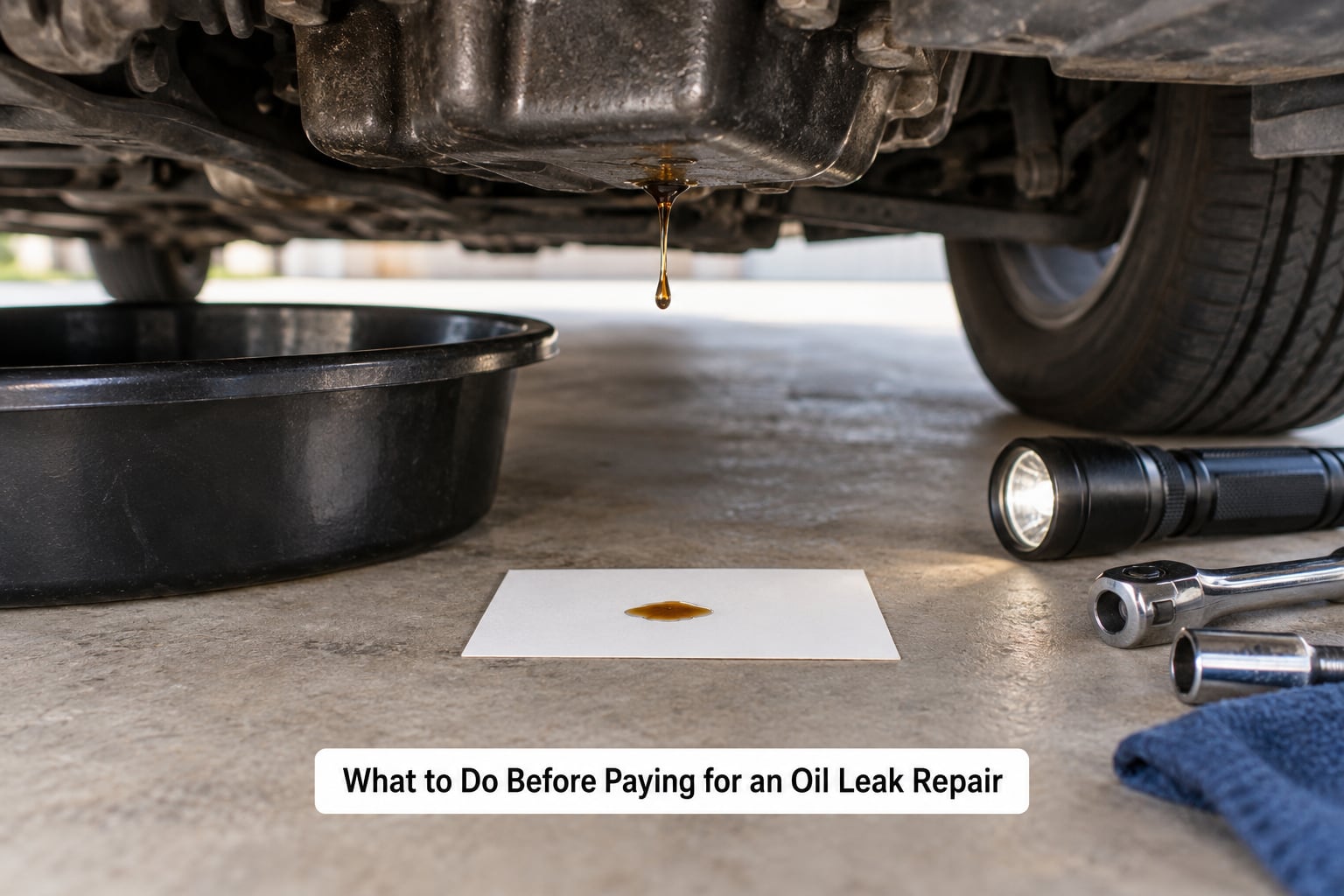
Before any money changes hands, confirm three things: that the fluid really is engine oil, where it is coming from, and how much oil the engine has lost.
Confirm the fluid. Transmission fluid is thinner and usually reddish or amber, while coolant is sweet-smelling and often green. Clean the area, run the engine briefly, and look again rather than guessing from an old stain.
Find the source. Park on clean cardboard or a white inspection sheet, then check it every few minutes over an hour or two. Old seepage leaves a wide glossy film; fresh oil makes a distinct trail and a new spot. That simple routine often identifies the area without a lift.
Read the dipstick. Follow your owner’s manual for the procedure, which on many cars means a cold engine, level ground, and pulling the stick to reinsert it before reading. Record the level and the date. A level that drops between services is a consumption problem the manual tells you how to handle.
A clean engine bay, an absorbent card and the owner’s manual will resolve a surprising number of suspected leaks on their own. What needs a professional is anything internal or hidden: a pressure test for suspected internal leaks, UV dye tracing to follow oil through a maze of hoses, or an inspection under the car.
Stop driving and tow if the oil pressure light comes on, if you see oil streaming rather than seeping, if the engine is knocking or rumbling, or if oil is on the exhaust. Follow the owner’s manual for any warning light, and have a qualified mechanic inspect severe, recurring or internal leaks.
DIY Repair vs. Independent Shop vs. Dealer
| Option | Realistic cost (USD) | Time | Best for |
|---|---|---|---|
| DIY | 15 to 300 | 1 to 10 hours | Drain plug, plug gasket, filter housing reseal, PCV service |
| Independent shop | 60 to 100 per hour | Same day to several days | Valve cover, oil pan, timing cover, most seals |
| Franchise dealer | 120 to 180 per hour | Several days, parts ordered | Warranty work, service bulletins, complex European engines |
DIY savings are real but narrow. On a drain plug reseal, one owner reported about 60 dollars of parts against a 1,050 dollar dealer quote for the same basic job. That gap exists because labor is most of the bill, so removing labor is where the money is.
The conditions are not negotiable, though. The leak has to be accessible, the vehicle has to be free of damage, you need the correct manual and tools, and you have to be able to refill and recheck oil safely. Lifting a car incorrectly is dangerous and jacks alone are not safe for work under a vehicle. Use rated stands or ramps on level ground.
An independent mechanic is the sensible default for most mid-range jobs, and they handle warranty paperwork on the parts they sell. A dealer earns its premium when the work is covered by a warranty or service bulletin, when the failure is a known design issue on that model, or when the engine layout defeats a generalist shop.
What Affects the Price
Where the leak is. A visible valve cover seep is at the top of the engine with nothing in the way. An oil pan or rear main seal sits at the bottom behind shields, brackets, and sometimes the transmission. Same gasket, wildly different hours.
Engine layout. Transverse engines put the rear seal right next to the transmission tunnel, which means a teardown to reach it. Longitudinal engines give more room, and the same repair can be several hours cheaper.
Access and disassembly. Subframes, steering racks, intake manifolds, harmonic balancers and heat shields all add removal and reassembly time. On some BMW and Subaru engines, plastic components are single-use and have to be replaced rather than refitted.
Vehicle age and part availability. A discontinued gasket can cost more than the labor to install it. OEM parts cost more than aftermarket but sometimes avoid a second teardown. Age also changes what a reasonable bill looks like overall, which is covered in how much you should budget for used car repairs.
Oil quantity and type. Some engines take 7 quarts, some take more, and a few require a specific weight or specification. That changes the service cost attached to any leak repair.
Damage discovered during disassembly. Cracked plastic housings, thread damage, a warped pan rail or oil-contaminated crankcase surfaces add parts and hours mid-job. This is why written estimates exist.
Stop-leak additives. Mechanic consensus is that they mask a weepage temporarily and do nothing for a seal that has actually failed. They can also gum up a fresh rebuild. Fix the cause.
And check the crankcase ventilation system, including the PCV valve, before you authorize a gasket. A blocked vent pressurizes the crankcase and pushes oil past seals that are perfectly good, which is why repeat-failure bills happen. Owners on Subaru and BMW forums raise this repeatedly as the step that prevents a second repair.
Ways to Save
None of these skip the repair. They just stop you paying for it twice.
- Get a written, itemized diagnosis. Parts and labor broken out separately, not one lump total. Include the specific leak source, the labor hours, and whether the diagnostic fee is credited.
- Get two or three quotes. Independent shops in the same area are the meaningful comparison. A dealer quote and one independent quote tells you little.
- Ask for evidence. Dye trace, photos, or the car on a lift with you present. Owners report independent mechanics finding no leak at all where a dealership had quoted over 8,000 dollars, based on a theory rather than a trace.
- Bundle the oil change. If oil is being drained for a pan or filter housing job, ask for the service to be included. One owner was quoted 1,105 dollars for an oil pan gasket that already included an oil change.
- Use the exact specified part. The right gasket, seal and hardware for your engine code, not a premium substitute that costs more.
- Fix minor leaks early. A slow valve cover weep that gets ignored can end up on the exhaust.
- Do the accessible work yourself. Drain plug, plug gasket, filter cap seal and PCV service are well within a careful owner’s ability. Dispose of used oil properly and check local disposal rules.
One last check before you sign anything: ask whether the shop offers a written workmanship guarantee. Twelve months and 12,000 miles is typical, and some independent shops go to 24 months. You want that in writing, not as a handshake.
Frequently Asked Questions
Can an engine oil leak be fixed without replacing the engine?
Almost always, yes. Nearly every oil leak comes from a gasket, seal, O-ring, drain plug or plastic housing that can be replaced on its own, which is why most repairs land between 200 and 2,500 dollars. The exception is damage caused by running the engine low on oil, where bearings or cylinder walls are scored and the repair stops being a seal job. Follow your owner’s manual and have a qualified mechanic assess the engine before authorizing work.
Is it safe to drive with a small oil leak?
A small weepage with the oil level holding steady between services is usually not an emergency, but it is not something to ignore or leave for months. Check the level using the procedure in your owner’s manual, watch the dipstick between changes, and fix it before it reaches the exhaust. Stop driving immediately if the oil pressure light comes on, if you see oil streaming, or if the engine starts knocking.
Why does a BMW oil leak cost more at a dealer?
Two things drive it: labor rate and access. Franchise dealers commonly bill 120 to 180 an hour against 60 to 100 at an independent shop, and BMW engines leave less room to reach a gasket than most. Tight packaging means subframe, intake or transmission removal, which adds hours whether the gasket failed or not. Compare both on the same itemized estimate before deciding.
Does replacing the oil filter housing stop the leak?
It stops that leak if the filter housing gasket or its O-rings were the source, which is common on several BMW engines. It does nothing if the oil is coming from a valve cover gasket, a pan rail or a rear main seal, and misdiagnosis here is a frequent reason bills climb. A dye trace or inspection under the vehicle should identify the source before parts are ordered.
Can I keep driving by adding oil between services?
Topping off between services is normal maintenance your owner’s manual describes, and it is different from running a leaking engine. The problem is that adding oil hides consumption, and oil lost through a leak means worn rings, valve seals or a failing gasket that keeps going. Track the level, note the mileage at each top-up, and get a diagnosis rather than treating the top-up as the repair. Stop driving if the pressure light comes on.
What to Do First
Four steps, in this order. Stop driving if oil pressure is low, if oil is streaming, or if the engine is knocking. Check the oil level using the exact procedure in your owner’s manual and write down what you find. Identify the likely source by cleaning the area and watching fresh oil on a clean card. Then request an itemized written diagnosis with parts and labor separated before you authorize anything beyond inspection.
Prompt diagnosis is the fastest way to keep an oil leak repair from turning into an engine-damage bill. Owners who track the level and get a proper trace before ordering parts almost always end up with a repair at the low end of the ranges above.