
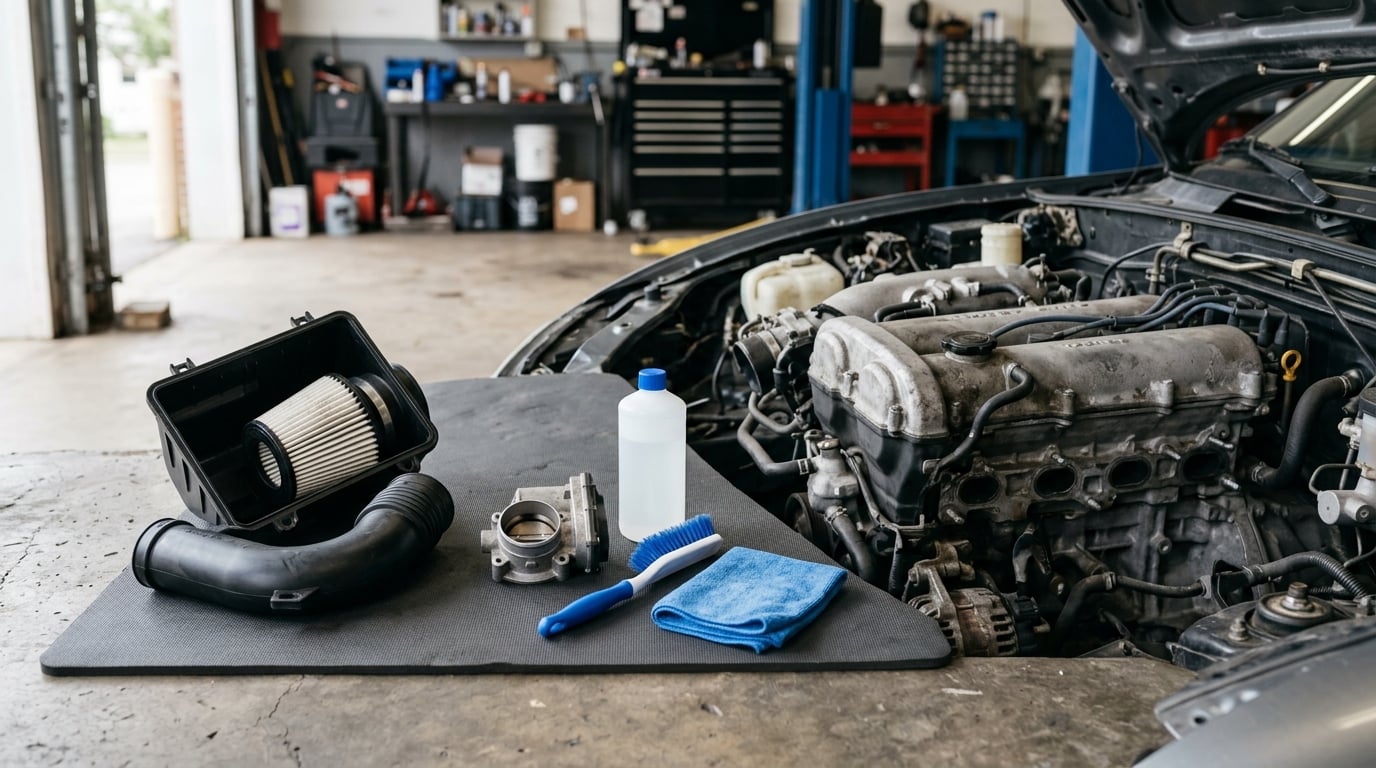
A dirty engine air intake is the whole air path from the air filter housing down to the intake valves, coated in a film of carbon, oil residue and road dust that restricts airflow and throws off the air-fuel mixture your engine computer calculates. Most of it is a garage job, not a shop job. Below is how to clean a dirty engine air intake on a BMW, in the order that works, including the two techniques BMW forums argue about and the one place where a home clean genuinely cannot reach.
On most four-cylinder and six-cylinder BMWs the job takes two to three hours if you have a socket set and a scan tool. Plan on a Saturday the first time, because the access is the hard part, not the cleaning.
Table of Contents
- What You Need
- Step-by-Step: How to Clean a Dirty Engine Air Intake
- Common Mistakes
- Frequently Asked Questions
- Can I clean a throttle body without removing it?
- What can I use to clean an air intake?
- Does SeaFoam really clean intake valves?
- Do I need an idle relearn after cleaning the throttle body?
- Why is my idle still rough after cleaning the throttle body?
- Can I pressure wash the engine bay to clean the intake?
- The First Hour: Where to Start
What You Need
You need very little that is specialised. The list below is the whole job, and every item on it has a purpose you will actually use. If you only have a rag, a nylon brush and a can of throttle body cleaner, you can still get most of the benefit.
- Throttle body cleaner or brake-safe carburetor cleaner in a spray can with a short straw. This is the only solvent that goes near the throttle plate.
- Soft nylon bristle brush and an old toothbrush for the small passages. Never use a wire brush or anything metal on the throttle bore.
- Microfiber cloths or lint-free shop towels, plus cotton swabs for the idle air control passages.
- Torx and hex socket set plus a plastic trim tool. BMW intake ducting is almost always held with plastic clips and screws that crack if you pry them with a screwdriver.
- Intake hose clamp pliers for spring and worm-drive clamps, if your BMW has them.
- Torque wrench if you are removing the throttle body or the intake manifold. Air leaks show up as rough idle long after the clean is finished, and a wrench is cheaper than chasing one.
- Scan tool that reads live data and clears codes. Even a basic bidirectional scanner lets you watch idle air control and throttle position while you work.
- Nitrile gloves and eye protection, and a ventilated outdoor workspace. The vapour is the whole reason for both.
- Your vehicle information: the owner manual and, ideally, the BMW repair manual for your specific chassis code. Intake routing, MAF placement and the PCV hose connection differ between N20, N52, N54, N55 and the B-series engines, and the manual shows the routing in one diagram instead of you guessing.
| Use this | For | Never use this, and why |
|---|---|---|
| Throttle body cleaner | Throttle plate, bore, idle air control passages, plenum interior | Brake cleaner on bore coatings. Some anodised or PTFE bore coatings etch under strong chlorinated solvents, and a scarred bore leaks at idle forever. |
| Brake-safe carburetor cleaner | Ducting, air filter housing, intake boot if the label says brake safe | Straight carb cleaner containing methylene chloride or toluene on sensor housings, coil-on-plug connectors, or anywhere near the MAF element. |
| Nylon brush and fingertip scrubbing | Breaking carbon loose | Anything metal, a razor blade, or a drill-mounted wire wheel. All four gouge the plate and put metal into the bore. |
| Low-pressure air with a filter on the intake end | Drying after cleaning | Unfiltered shop air, which pushes dirt and moisture straight into the clean bore and the MAF. |
| Dielectric grease on sealing plugs only | Preventing future seepage | WD-40, silicone spray or any oil on the bore, the plate, the MAF element, or the throttle position sensor surface. |
| Warm water and a drop of dish soap | Air filter element cleaning on unfiltered cold air intakes | Water into the intake tract. There is no safe way to rinse a connected intake, which is why the element is cleaned off the car. |
One more thing before you start: check whether the car has an aftermarket intake. A cold air intake with an unfiltered element pulls in far more road dust than the factory system, which is exactly why those cars show the dirtiest throttle bodies.
Step-by-Step: How to Clean a Dirty Engine Air Intake
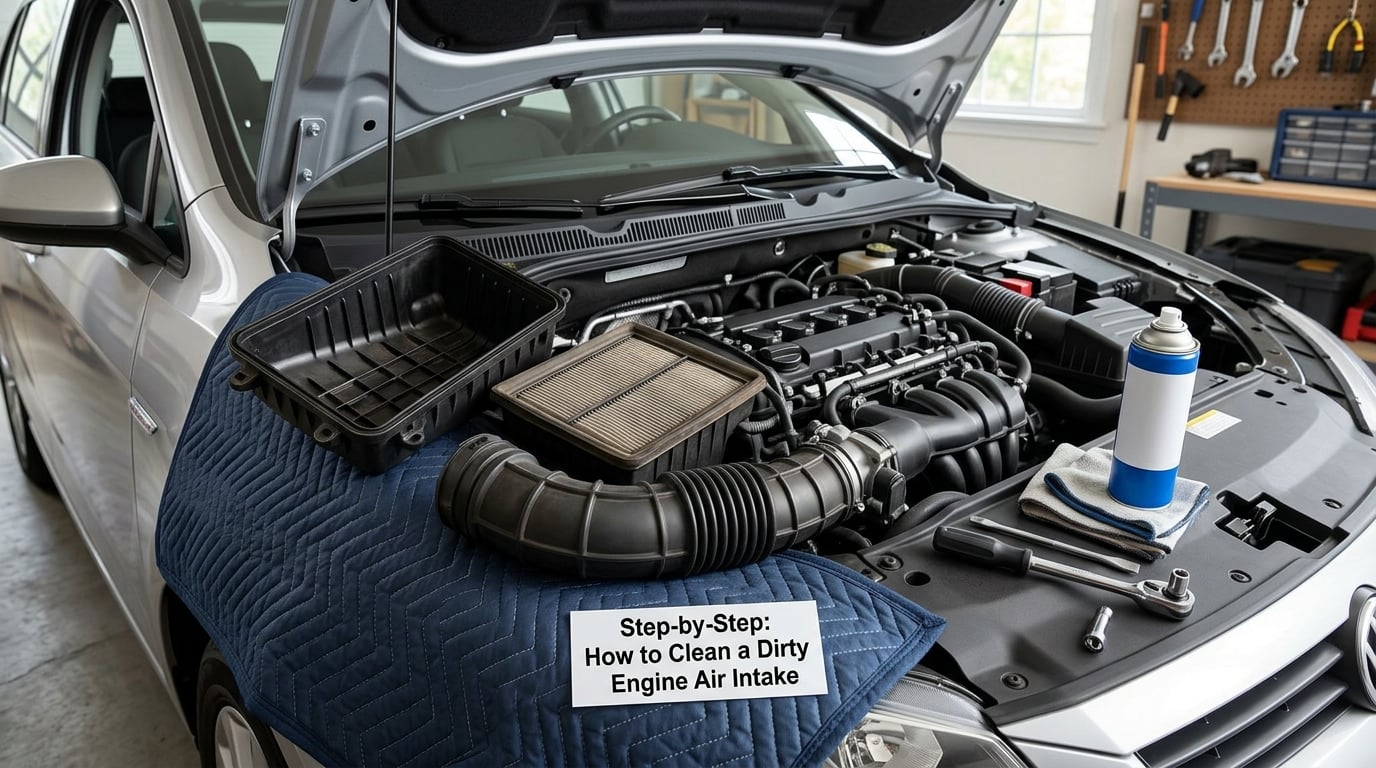
Work in this order and you will not have to take anything apart twice. The engine stays cold for every step except the one optional running-engine technique, which sits at step 7 with its own warning. How to clean a dirty engine air intake comes down to four things: correct diagnosis, correct access, solvent applied to a rag rather than sprayed into a bore, and a dry reassembly.
- Confirm the symptom and read the codes first. Note the conditions where the problem shows up: cold start only, at idle, above a certain speed, or when the throttle is pressed. Scan for stored and pending codes and record the freeze-frame data before you clear anything. A vacuum leak, a failing MAF or a weak ignition coil produces symptoms that look almost identical to a dirty intake, and cleaning a throttle body that was never the problem is a wasted weekend. How it worked: the codes tell you whether you are even in the right chapter.
- Let the engine cool completely. Cold metal means no burn risk and no vapour flash when you spray. Work on a level surface outdoors or in a well-ventilated garage with the door open.
- Disconnect the negative battery cable. On most BMWs the battery is in the trunk under a floor panel, so check before you start unclipping anything. This stops any accidental current to the throttle motor, sensors and fuel pump prime circuit while your hands are around the intake.
- Photograph the routing before you remove a single clip. Take one wide shot of the engine bay and close-ups of every connector, hose and clamp position. Mark anything ambiguous with masking tape. How it worked: reassembly takes a quarter of the time and you stop guessing which clip goes where.
- Remove the air filter, then open the housing. Take the element out first, then release the intake duct from the airbox and from the throttle body. Squeeze the spring clamp or back off the worm screw and slide the duct off rather than pulling hard, because the duct usually locates on a lip that can crack. Inspect the element against a light. How it worked: you can see whether dust has turned to a greasy tar, which changes the approach completely.
- Clean the MAF housing and element now, while the housing is open. Unbolt the MAF, note the orientation, and lift the element out gently by its edge. Wipe the hot wire or film with a lint-free cloth barely dampened with throttle body cleaner, and never touch the sensing element with a finger. Clean the housing interior and the duct walls with a damp cloth. Let everything air dry fully, then reinstall. How it worked: the mass airflow reading returns to a plausible number at idle, and codes like a MAF circuit or MAF range fault stay away.
- Clean the throttle body in place, with the plate at its closed stop. The trick everyone uses is to get the plate closed so you can see behind it. With the battery reconnected, the ignition on and the engine off, watch the throttle blade movement on your scan tool and command it closed, then disconnect the battery again before putting hands near it. Alternatively, a short crank with the key while you hold the pedal does the same thing. Now spray cleaner onto a folded rag rather than into the bore, wipe the blade and the bore wall, and follow up with a nylon brush in small arcs to lift the carbon. Owners on the BMW and enthusiast forums describe this rag-and-brush method as the single most effective step, and the difference between spraying into the bore and wiping it is night and day. How it worked: metal visible on the blade, a bright bore wall behind it, and no black residue on the rag after a final pass.
- Clean the idle air control passages if the engine has them. On older BMWs the idle air control valve sits in its own housing off the intake boot, and its tiny passages are the ones that make an idle hunt even after the throttle body is spotless. Remove the housing, soak it in throttle body cleaner for a few minutes, run a cleaning wire or a fine nylon brush through each port, and dry it fully. New O-rings and a light film of dielectric grease on the sealing surfaces are worth fitting at the same time. How it worked: idle speed holds steady with the throttle plate closed.
- Dry everything before it goes back together. Allow the throttle body, MAF housing and ducting to air dry for at least an hour, or blow them down with low-pressure shop air with a clean filter fitted on the intake end. Any moisture that reaches a sensor or a moving plate causes an intermittent fault that shows up days later and gets blamed on the clean.
- Inspect the seals and the clamps, then reassemble in reverse order. This is the step that decides whether the job holds. Look at every intake boot seal, O-ring and hose clamp with a flashlight. A clamp that no longer closes fully, a seal with a flat spot or a nicked lip, or an O-ring that has gone stiff and shiny is replaced now, not next month. Seat each duct fully until the spring clamp snaps, and hand-tighten screw clamps in the orientation you photographed. Torque fasteners to the manual figure if you removed them.
- Reconnect the battery, clear the codes and perform the idle or throttle position relearn. Follow the manufacturer procedure for your engine, which on most BMWs is a specific key sequence or a scan tool routine with the throttle closed and the engine at a steady idle. Then run the verification drive below. How it worked: idle sits at the spec speed without hunting, fuel trims settle close to zero, and no new codes store.
If the carbon is thick enough that a toothbrush will not shift it, do not fight it in place. Remove the throttle body, take it to a bench, soak the casting in cleaner, and work the passages with a nylon brush and a pipe cleaner sized to them. Clean the idle air control housing at the same time while everything is apart, fit a fresh gasket, and torque the body to the manual figure. That is a longer job with a much better result, and it is the correct call for a car that has been sitting for years.
How to Tell Whether the Intake Needs Cleaning or Replacement
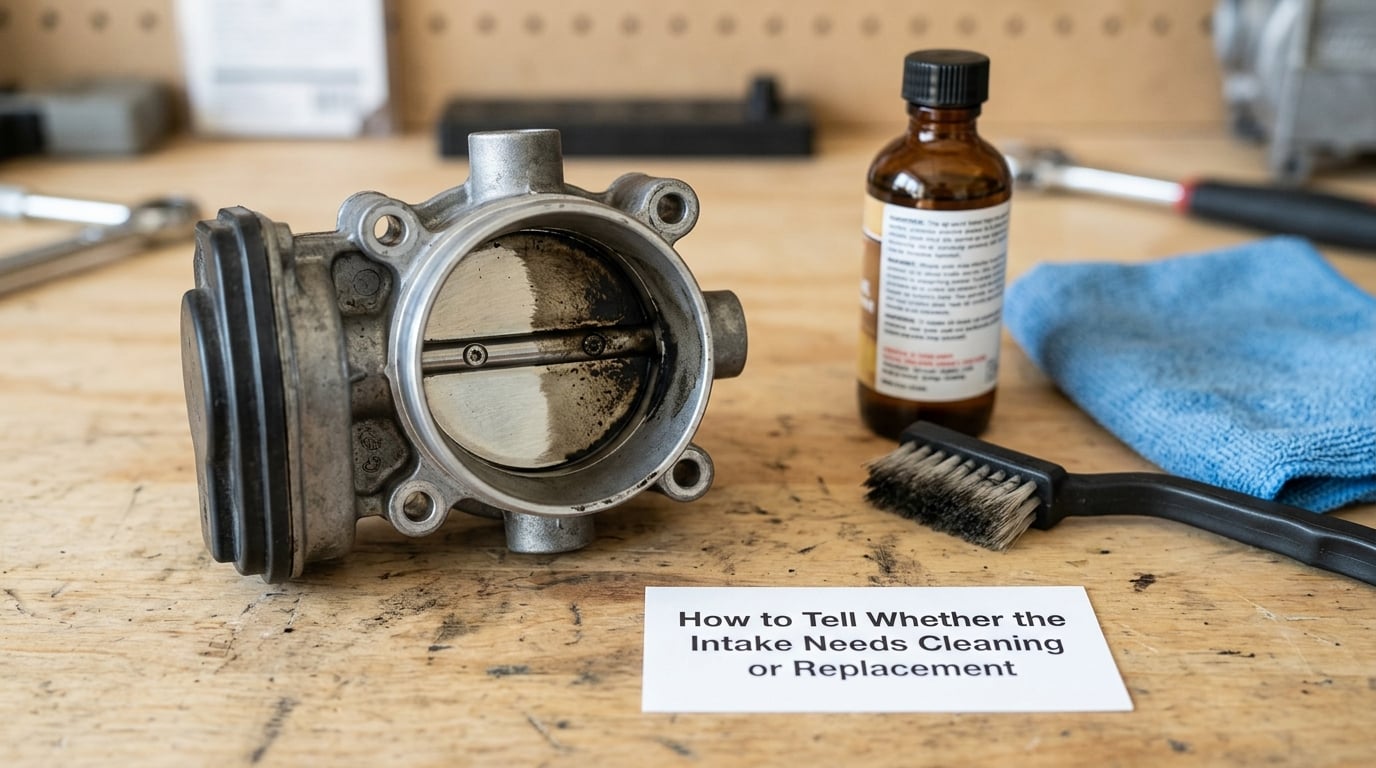
Not every dirty intake can be cleaned, and knowing which one you have saves you the whole job. If the throttle plate moves freely, the bore is not scratched, the duct seals are still flexible and the element is a paper or foam type you can replace, clean it. If the plate is seized part way, the bore wall is visibly scored, the ducting is hardened and cracked, or the element is a fine mesh oil filter, replace instead. A stuck plate with carbon behind its pivot is not a cleaning problem, it is a throttle body replacement.
The bigger question is where the carbon actually is, and that depends entirely on how your engine feeds its intake valves. A port injection engine sprays fuel at the back of the intake valve, which keeps the valve washed and the valve side of the tract relatively clean, so carbon concentrates on the throttle plate and the first part of the plenum. A direct injection engine sprays into the combustion chamber, so nothing washes the back of the intake valve and the valve collects hard carbon that is on the far side of the sealed head, where no amount of throttle body work will touch it.
| Port injection | Direct injection | |
|---|---|---|
| Where carbon builds | Throttle plate, bore, first runners, plenum | Back of the intake valves, plus the same upper tract |
| Does a throttle body clean help? | Yes, for the upper tract and idle quality | Only for the upper tract. Valve carbon needs intake valve service |
| DIY or shop | Comfortable DIY on the upper tract | DIY above the head, professional service for the valves |
| Other common causes of the same symptoms | Vacuum leak, failing MAF, ignition coil | Same, plus a failed direct injector or turbo leak |
Signs that point at the intake rather than something else are an idle that hunts or surges at a standstill, a stumble or hesitation when you first open the throttle, a pedal that feels vague or slow to respond, an automatic that shifts oddly at part throttle, and a check engine light with no vacuum leak found. Signs that point somewhere else are a hissing or whistling noise that changes with engine speed, a fuel smell, or a misfire code that names an individual cylinder. Whistling that rises and falls with rpm is a leak until proven otherwise, and no amount of carbon removal will chase it down.
One warning about additives, because this comes up constantly in the comments. A fuel additive or a throttle body cleaner poured into the oil and run through the engine before an oil change is a mild solvent flush of the oil, the pistons and the top of the cylinder walls. It will not clean intake valves that have no fuel reaching them, and it will not remove hard coked carbon. On a direct injection engine with heavy valve carbon, the honest answer is that the valves need mechanical service.
Common Mistakes
Almost every intake cleaning that goes wrong goes wrong in one of these ways. Each has a simple fix, and reading this list before you start is cheaper than reading it after.
Pressure washing the intake. Water that enters a cylinder while the engine is running can cause hydrostatic lock and bend an engine, and water trapped in a sensor connector or behind a balance tube causes corrosion and fault codes months later. The fix: no water anywhere near the intake. If you want a clean engine bay, wash the exterior with the intake sealed and let it dry for a day before you start.
Spraying solvent straight into the bore instead of onto a rag. Overspray goes down the intake and coats sensors, connectors and, on some coils, the plug boots. The fix: spray onto a folded rag and wipe, and keep the can upright and low.
Using the wrong solvent. Brake cleaner and non-brake-safe carb cleaner will etch a coated throttle bore, and aggressive solvents swell or craze plastic ducting and IAC housings until they leak. The fix: read the label. If it does not say it is safe for throttle bodies, sensors and coated bores, do not put it in the intake.
Letting connectors and the MAF element get soaked. A drowned connector is an intermittent no-start weeks later. The fix: keep solvent off the electrical side entirely, and never touch the MAF hot wire or film with a finger, a gloved finger or a metal tool.
Forcing the throttle plate. If the blade does not move freely by hand with the actuator disconnected, carbon is behind the pivot barrel and pushing harder only risks snapping the plate. The fix: soak it, work it with a nylon brush, or replace the throttle body.
Using unfiltered compressed air. It drives debris and moisture straight into the clean bore and onto the MAF element. The fix: filtered low-pressure air, or simply let everything air dry for an hour.
Reassembling with a clamp that no longer closes. A loose duct sounds like nothing and leaks air, which shows up as an unstable idle and a lean code. The fix: replace worm-drive and spring clamps rather than stretching them, and replace any seal lip that has gone hard.
Skipping the relearn. Most engines recalibrate the throttle position after the work, and a car that idles badly right after a clean usually just needs the procedure run. The fix: complete the manufacturer idle or throttle relearn before judging the result.
Expecting a throttle body clean to fix valve carbon on a direct injection engine. The valves sit behind a sealed head with no fuel spray to clean them. The fix: go straight to intake valve service, ideally before the misfire and check engine light stage.
Cleaning an unfiltered cold air intake element with it still connected. Water and washing residue go straight into the engine. The fix: take the element off the car, clean it warm with a drop of dish soap, let it dry fully, and re-oil it with the correct filter oil before refitting. Follow the element maker’s oiling interval, and never run a dry element.
A few habits that keep the problem from coming back: change the element on the interval your manual states rather than when it looks dirty, keep an eye on fuel trims and idle quality between services, and treat a rising positive fuel trim as an early warning that the intake is loading up again. If the PCV system is faulty, blow-by will re-soak a clean intake within a few thousand miles.
Frequently Asked Questions
Can I clean a throttle body without removing it?
Yes, and for most BMWs that is the right way to do it. Disconnect the battery, remove the air filter and intake duct, hold the throttle plate closed on a scan tool or with a short crank, then spray throttle body cleaner onto a folded rag and wipe the blade and bore, finishing with a nylon brush. You will not reach the far side of the bore or the idle air control passages as well, but for an engine that is not severely coked the result is the same.
What can I use to clean an air intake?
A throttle body cleaner, or a carburetor cleaner whose label says it is safe for throttle bodies, sensors and coated bores. Apply it to a rag rather than spraying it into the intake, and use a nylon brush and cotton swabs for the small passages. Do not use brake cleaner on a coated bore, and keep every solvent away from wiring connectors, the MAF element and the throttle position sensor.
Does SeaFoam really clean intake valves?
On a port injection engine it can loosen light valve carbon over a few tankfuls, because fuel flows past the valves and carries some of it away. On a direct injection engine there is no fuel near the intake valves, so an oil flush does almost nothing to hard coked valves. If you are chasing a check engine light, a rough idle or a stumble on a direct injection BMW, additive treatment is not a substitute for intake valve service.
Do I need an idle relearn after cleaning the throttle body?
Usually yes. Most engines store a throttle position calibration that shifts when the plate is disturbed, and a car that hunts or stalls immediately after a clean often recovers once the manufacturer idle or throttle relearn is run with the engine at idle and the plate closed. Use the procedure in your owner manual or a scan tool, clear the codes first, and give it a short drive at steady speed before you judge the result.
Why is my idle still rough after cleaning the throttle body?
Work through the usual suspects in order. A vacuum leak is the most common: a hissing noise that changes with engine speed, a raw O-ring, a cracked intake boot or a loose clamp. Then the idle air control passages, the MAF reading, the throttle position sensor connector, and the ignition coils. If the MAF was sprayed or touched, clean it and recheck live data, and remember that a leak introduced during reassembly looks exactly like a bad clean.
Can I pressure wash the engine bay to clean the intake?
No. Water driven into an open intake can reach a cylinder and cause hydrostatic lock, and water trapped in connectors, in a balance tube or behind the MAF causes corrosion and fault codes that appear weeks later. Wash the outside of the bay with the intake sealed, let it dry completely for a day, and clean the intake tract dry with solvent and brushes instead. This is the mistake that costs engine repairs, not money.
The First Hour: Where to Start
Scan for codes and listen to the engine cold before you remove a single clip. If it runs with a clear throttle body and a clean element, spend your weekend on the intake manifold and runners instead, and expect a much better result from the same hour of work.
Last reviewed and updated for 2026. Follow the procedure and torque figures in the manual for your specific chassis code, and if the engine will not run cleanly with a verified-clean, verified-dry intake, book a diagnostic session rather than repeating the clean.