
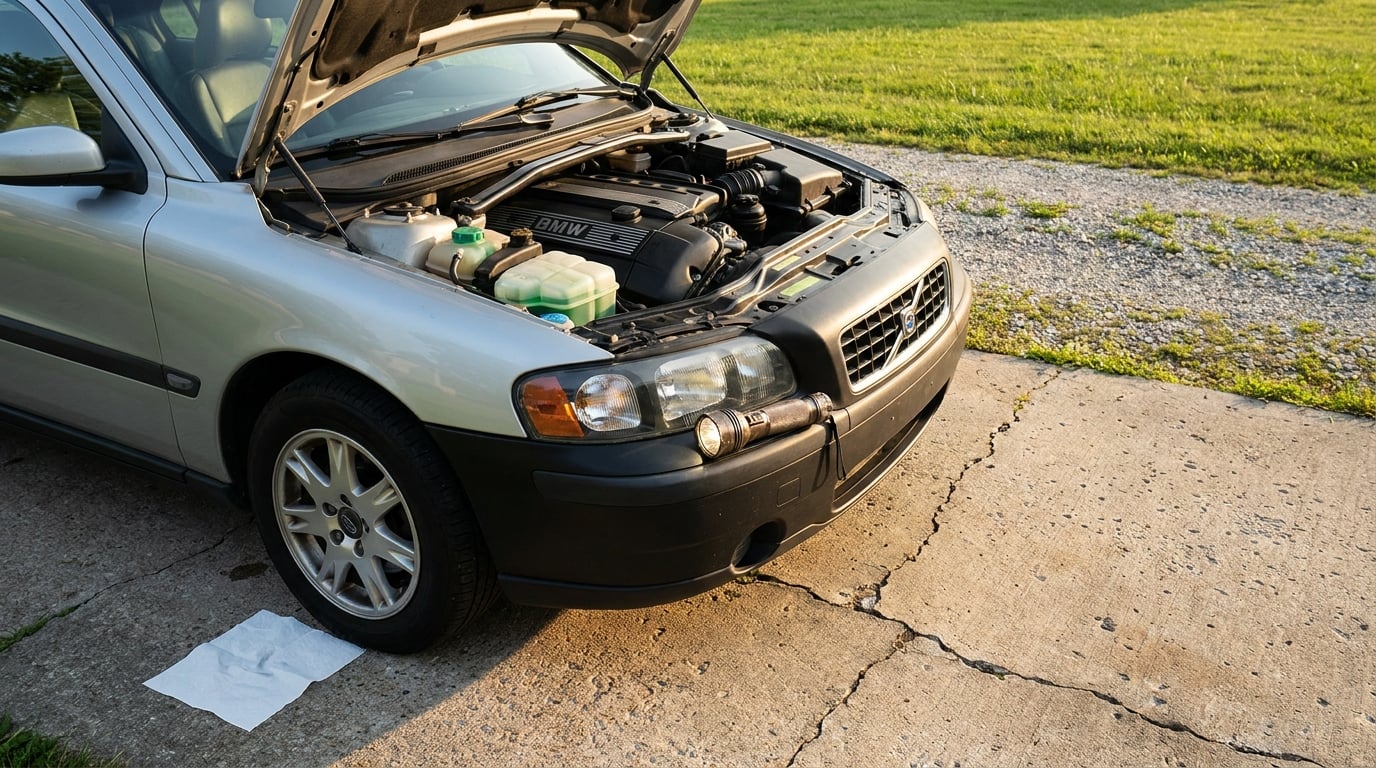
A sweet smell in a car almost always means a fluid is escaping where it should not be. The usual suspect is engine coolant, which is deliberately scented sweet so leaks are easy to notice, but gasoline, refrigerant, brake fluid and a sugary spill in the cabin can all produce the same kind of odor. Where the smell shows up tells you almost as much as what it smells like.
That location check is the part most guides skip. I would rather you spend ten minutes in the driveway reading this than guess, because the difference between a weeping hose clamp and coolant burning inside the engine is the difference between an afternoon and a very bad month.
Table of Contents
- What Does a Sweet Smell in the Car Mean?
- Common Causes of a Sweet Smell in the Car
- Is the Smell Coming From the Engine Bay or Inside the Cabin?
- How to Find the Source Before Driving Further
- Sweet Smell but No Overheating and No Visible Leak: What Now?
- When Is a Sweet Smell in the Car Dangerous?
- Frequently Asked Questions
- Why does my car smell sweet but not overheating?
- How can I test if my heater core is leaking?
- Is it safe to drive with a sweet smell in the car?
- How do I get the sweet smell out of my car after the leak is fixed?
- Does a blown head gasket smell sweet?
- Can an air freshener or a spilled drink cause a sweet smell?
- What Should You Do First?
What Does a Sweet Smell in the Car Mean?
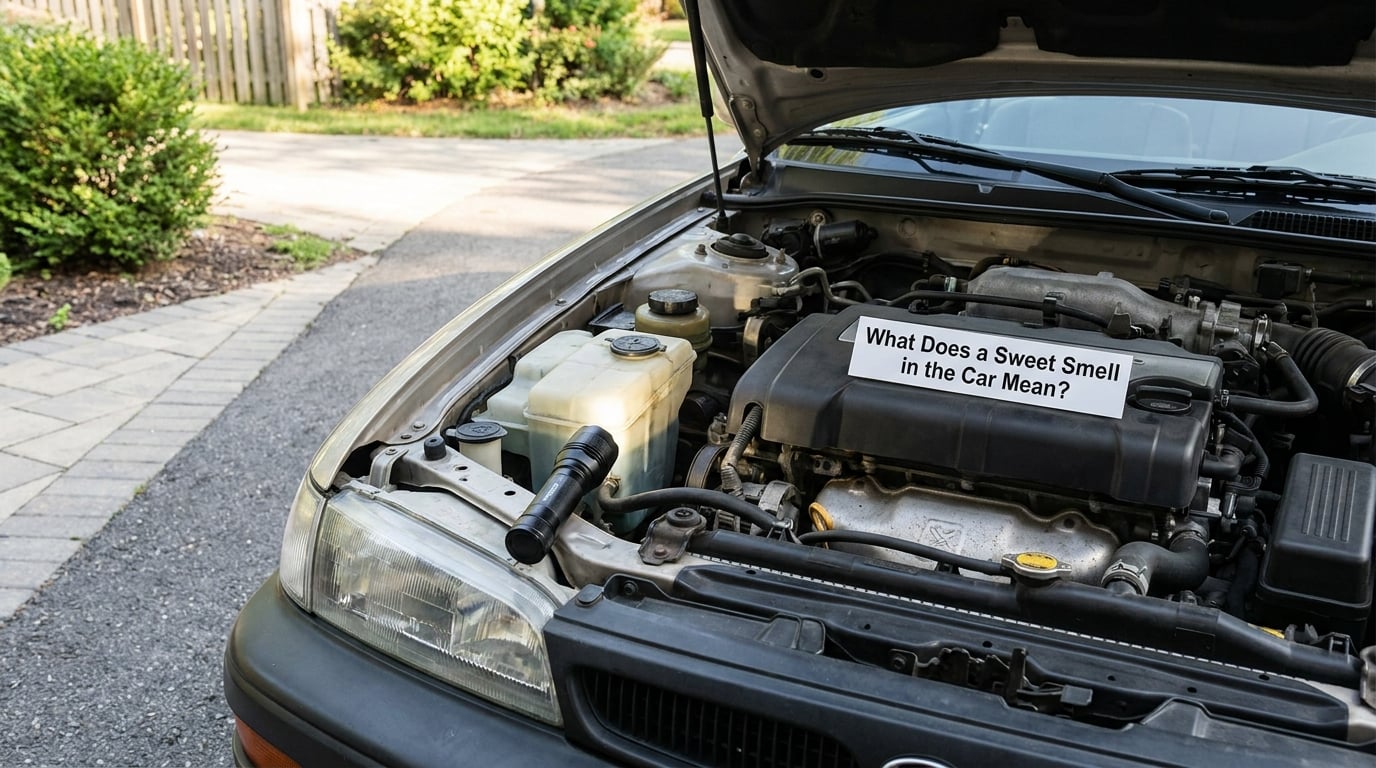
Yes, a sweet smell in the car is almost always a fluid leak, and coolant is the first thing to check. Sweet is the reason coolant works as a warning: a driver notices it long before the level drops far enough to overheat. The odor itself tells you a fluid escaped, while the location of the odor tells you which one.
The common sources, roughly in the order I would look for them:
- Coolant leaking near the cabin or engine bay, most often the heater core behind the dashboard, a hose, a cap, or a radiator or water pump fitting.
- Coolant reaching the exhaust, where it burns and produces a sweet smell outside the car with a white puff of smoke.
- Fuel or fuel-system vapor, usually sharp but described as sweet in ethanol-blended fuel, often strongest right after filling up.
- Brake fluid or automatic transmission fluid, both of which smell sweet or fruity when they leak or when fluid is on a hot exhaust part.
- Refrigerant or a cabin spill, plus aftermarket air fresheners, damp carpet, and a hot electrical component adding a burnt-plastic note some people read as sweet.
One warning before you go looking. Do not spray any cleaner, sealant, or lubricant near the odor, do not run the engine in a closed garage, and do not open a radiator or coolant cap while the system is hot. Vapor burns, and pressurized hot coolant sprays.
Common Causes of a Sweet Smell in the Car
| Source | Where the odor shows up | What you may also notice | Urgency |
|---|---|---|---|
| Coolant leak at a hose, clamp, radiator cap, radiator, or water pump | Engine bay, front of the car, or under the car once parked | Puddle or colored residue, dropping reservoir level, sweet smell in the parking lot after a drive | Moderate to high. Fix before the reservoir empties. |
| Heater core seep behind the dashboard | Cabin, usually only when the fan or heater runs; can wet the passenger-side carpet | Greasy film or fogging on the inside of the windshield, no heat from the vents, damp carpet | Moderate. Many owners drive for months, but the level still drops. |
| Coolant burning in the combustion chamber, often a head gasket failure | Exhaust, strongest behind the car after driving | White exhaust smoke, sweet exhaust odor, rising temperature, bubble-free reservoir, overheating warnings | High. Stop driving and have it inspected. |
| Refrigerant leak | Cabin, near the dashboard and center vents | A/C stops cooling, oily film on lines that grabs dust, some leak additives smell sweet | Low to moderate. Not an overheating risk. |
| Fuel leak or vapor | Throughout the cabin, often right after fueling | Sharp odor, visible stain near the fuel door or filler neck, running rough | High. No smoking, no sparks, no long drives. |
| Brake fluid or transmission fluid leak | Near a wheel, under the car, or at the transmission pan | Wetness on a wheel or under the car, soft pedal, slipping gears | High for brake fluid. Do not keep driving. |
| Cabin sources: spilled juice, damp carpet, wet headliner, a soaked cabin filter | Inside the car, not near the engine | Musty or sweet damp odor, water staining, window fogging that will not clear | Low, but it can smell like a coolant leak and send you chasing the wrong thing. |
| Air freshener, hanging scent card, or a recently cleaned interior | Cabin, uniform across the whole car | Vanilla, cinnamon, or candy scent, strongest near a vent or a hanging plug | None. The classic false alarm. |
Two habits make this table much easier to use. Park on level ground in daylight and look before you start the engine, and then smell the car again cold the next morning. A coolant smell that is obvious in the cabin while driving can be nearly undetectable in a cold parking lot, and a cabin spill will be far more obvious when the heater fan pushes air through.
Is the Smell Coming From the Engine Bay or Inside the Cabin?
Stand still with the engine off and give it a minute. Then work outward from the cabin, because the order tells you something. Open the hood and smell the engine bay on its own. If the odor is obvious there and faint inside, you are looking at an external leak: a hose, cap, radiator, water pump, or reservoir fitting.
Next, sit in the driver’s seat and turn the fan to medium with the temperature control cold. If the sweet smell arrives with the airflow, the heater core is the leading suspect, since that small radiator sits inside the ductwork behind the dashboard. Then switch to the A/C. If the smell disappears with the air conditioning running, that points the same direction, because the evaporator sits in the airflow path and can mask the core odor.
That single test, fan on versus A/C on, resolves a surprising number of cases. Then check the places a cabin leak would leave evidence: the glove box, the seam of the center console, and the carpet on the passenger side. Reach under the passenger seat and feel for dampness. Pull the door sill plate and look for pink, green, or orange crust. A damp carpet with no odor is a slow interior leak, and a wet carpet with a sweet smell is worth a hose inspection.
Outside the car, crouch behind the bumper and smell the exhaust pipe, then smell the air under the car. Sweet at the tailpipe after a drive is a different problem from sweet under the front of the car. A sweet smell under the car with no puddle and no dampness usually means an intermittent drip that dries between drives, which is normal for a small weep and hard to see with the car parked.
While you are diagnosing, keep the car outside and the engine off during inspection. Never smoke-test a vehicle, never spray starting fluid or any aerosol near an odor, and never work on fuel lines with the engine running. If you need to run the engine to listen for a specific sound, open the door and keep the garage door wide, then step away.
What Does a Sweet Smell Mean When the Car Is Hot?
A sweet smell that only appears once the engine warms up points at heat, and heat expands what the smell is made of. A small coolant seep that is invisible when cold turns into vapor as the system heats, and vapor carries odor further than liquid. The same thing happens to a slow drip on a hot exhaust part: it flashes to vapor and you smell it after you park instead of while you drive.
Heat also points to the two problems you cannot wait on. A coolant level low enough to show a sweet smell while hot is one step from overheating, and coolant entering the combustion chamber is usually worse when the engine is hot and under load. Watch for a temperature needle climbing past its normal mid mark, a hot warning light, steam from under the hood, a rumbling or knocking sound, or a reservoir that empties between drives.
If any of those show up while driving, pull over somewhere safe, shut the engine off, and let it cool before you look at anything. Do not pour cold water into a hot cooling system. If the car will not hold coolant or the needle keeps moving, stop driving it and get it towed rather than driven.
How to Find the Source Before Driving Further
Here is the sequence I would use, in order, before spending money or miles. None of it requires removing panels, and most of it takes under twenty minutes.
1. Check the coolant level cold, before you start the engine
Park level, engine off, and ideally before the car has been driven that day. Open the hood and look at the coolant reservoir or overflow tank against its MIN and MAX marks. A level between the lines is fine. A level at or below MIN means something has already gone, and that is a different conversation from a smell alone. Never open the cap on a hot system.
2. Look for residue with a light
Crusty pink, green, blue, or orange staining around the radiator cap, the radiator neck, hose clamps, and the water pump weep hole is a leak that has already been found by someone else, usually the previous owner. Follow the crust. It leads to the fitting that dried last, which is very often the one that is now slow-dripping.
3. Do a paper towel check on the soft spots
Fold a paper towel and wedge it around the radiator cap and the hose connections. Start the car, let it reach operating temperature, then check the towel. A wet or colored towel pinpoints the fitting. Technicians say the same thing you will read on forums: a small seep can be enough to smell without leaving a puddle.
4. Watch the reservoir for bubbles
With the engine cold and the radiator cap off, start the engine and watch the reservoir. Continuous bubbles, or a level that rises and falls instead of settling, means combustion gases are entering the cooling system. That is a head gasket or cracked block signal, and it is the one finding in this list that ends the drive.
5. Ask for a dye test and a pressure test
Technicians add a colored dye to the coolant and run the heater, because dye vapor traveling out the vents or up to the reservoir pinpoints the heater core. If the dye test comes back clean and the smell stays, request a pressure test of the cooling system and a separate check of the cabin heater hoses and fittings. A clean pressure test does not always clear a heater core seep, and it is fair to ask the shop how they ruled it out.
Two more checks that cost nothing. With the fan on high and the A/C off, look for a foggy or greasy film on the inside of the windshield, which is coolant vapor condensing on the glass. And count your coolant: note the level, drive a few hundred miles, and look again. A level that drops with no visible puddle anywhere is a strong hint that the fluid is leaving through the heater core or evaporating slowly out of a small external leak.
Sweet Smell but No Overheating and No Visible Leak: What Now?
This is the most common version of the question, and the reassuring answer is that a small heater core seep often produces an odor long before it produces heat problems. The temperature gauge is not a leak detector. A car can lose coolant steadily and still hold a normal needle, because the gauge tracks temperature, not volume.
So do this. Top off the reservoir to the MAX line with the correct coolant for your vehicle, then recheck it after a few hundred miles of normal driving. If the level holds, you have a slow seep: you can keep driving carefully, keep the reservoir topped up, and book a proper inspection rather than an emergency. If the level drops again, the leak is active enough to matter and it needs a diagnosis, not a top-up schedule.
A few owners report living with a minor core seep for years with no coolant loss at all. That happens when the fluid is escaping as vapor rather than liquid, which means you smell it without losing it. The trade is that you never know when it changes, so keep an eye on the level and the temperature needle instead of trusting the smell to stay mild.
When Is a Sweet Smell in the Car Dangerous?
Stop driving and arrange a tow or roadside assistance if you notice any of the following. A strong gasoline odor, especially near the fuel door or filler neck, because a fuel leak can turn a static spark into a fire.
Fluid pooling under the car that is not clear water, and any sweet smell that comes with visible steam or white exhaust smoke, because that means coolant is reaching hot surfaces or the combustion chamber. A temperature gauge climbing past its normal range, a hot temperature light, or a car that overheats and then returns to normal, which can still be a head gasket problem.
Bubbles in the reservoir, a coolant level that drops between short drives, a sweet smell at the exhaust that is stronger every week, or a knock or rumble from the engine. A smell that turns into smoke, or smoke of any kind from under the hood, means you should get everyone out, stand away from the vehicle, and call for emergency services rather than opening the hood to look.
Then there is the part that has nothing to do with driving. Coolant is attractive to animals and toxic to pets, children, and wildlife. If you find a puddle, keep animals away from it, and take used coolant to an auto parts store or a service station that accepts it, or to your local household hazardous waste facility. Do not pour it on the ground, into a storm drain, or into a trash can, and never pour water into it to dilute it.
Also worth separating: refrigerant and a cabin spill are annoying, not dangerous to the engine. A sweet smell with a normal temperature gauge, no visible fluid, and no fuel odor belongs in the “book an appointment” pile rather than the “tow it now” pile.
Frequently Asked Questions
Why does my car smell sweet but not overheating?
Because the temperature gauge tracks heat, not fluid volume. A small coolant leak from the heater core or a fitting can release enough vapor to create a sweet odor long before the level drops enough to cause overheating. Check the reservoir cold against the MIN and MAX marks, top it up, and recheck after a few hundred miles. If the level holds, you have a slow seep to monitor. If it drops, the leak is active and needs a proper inspection.
How can I test if my heater core is leaking?
Turn the fan to medium with the temperature set cold and see whether the sweet smell arrives with the airflow, then switch to the A/C and see whether it disappears. Look for a greasy film or fogging on the inside of the windshield and damp carpet on the passenger side. A shop can add dye to the coolant and check whether colored vapor comes out the vents. A small seep can be smelled without ever leaving a puddle, so do not wait for a stain to appear.
Is it safe to drive with a sweet smell in the car?
A faint smell with a normal temperature gauge, no visible fluid, and no fuel odor is usually a slow coolant seep you can drive while you arrange an inspection. A strong gasoline odor, pooling fluid, white exhaust smoke, a rising temperature needle, a hot warning light, or bubbles in the reservoir are all reasons to stop, park outside, shut the engine off, and tow the car rather than drive it to a shop.
How do I get the sweet smell out of my car after the leak is fixed?
The odor lingers because coolant vapor and syrupy residue stay in the ducts, the carpet, and the cabin filter. Once the leak is repaired and the system is flushed and refilled, run the heater on high with the fan at maximum and the A/C on for twenty to thirty minutes to burn off trapped vapor, then replace the cabin filter. If the smell is still there after a few drives, a professional ozone or steam treatment on the ductwork clears the residue.
Does a blown head gasket smell sweet?
It can, and that is the serious version of this odor. When the head gasket fails, coolant enters the combustion chamber or exhaust and burns, producing a sweet smell at the tailpipe, white exhaust smoke, and often bubbles in the radiator reservoir. A normal temperature gauge does not rule it out. If the sweet smell is strongest behind the car after driving, treat it as urgent and get the cooling system pressure tested and inspected before you drive further.
Can an air freshener or a spilled drink cause a sweet smell?
Yes, and it is the most common false alarm. Vanilla, cinnamon, and candy air fresheners, and a sugary spill soaked into the carpet or seat foam, both smell sweet in a car. A spill usually smells musty or syrupy, is strongest in one area rather than everywhere, and is often accompanied by dampness or window fogging that will not clear. Before you buy parts, remove any scent cards, check for a spill, and smell the car again with the A/C off.
What Should You Do First?
Park outside, engine off, and let the car cool. Check the coolant reservoir cold against its marks, and look under the car and around the radiator cap for fresh residue or crusty stains. Then decide where the odor lives: cabin with the fan running, engine bay, exhaust, or under the car.
If the smell is strong, comes with pooling fluid, white smoke, bubbles in the reservoir, or a temperature needle that will not settle, stop driving and tow it. If it is faint, the gauge is normal, and nothing is visible, top the reservoir up, watch the level over the next few hundred miles, and book a cooling system inspection that includes a dye test and a pressure test.
Whatever you find, clean up any coolant you come across safely and keep it away from pets and kids. And if it turns out to be an air freshener, you have just saved yourself an afternoon of worrying for nothing.