
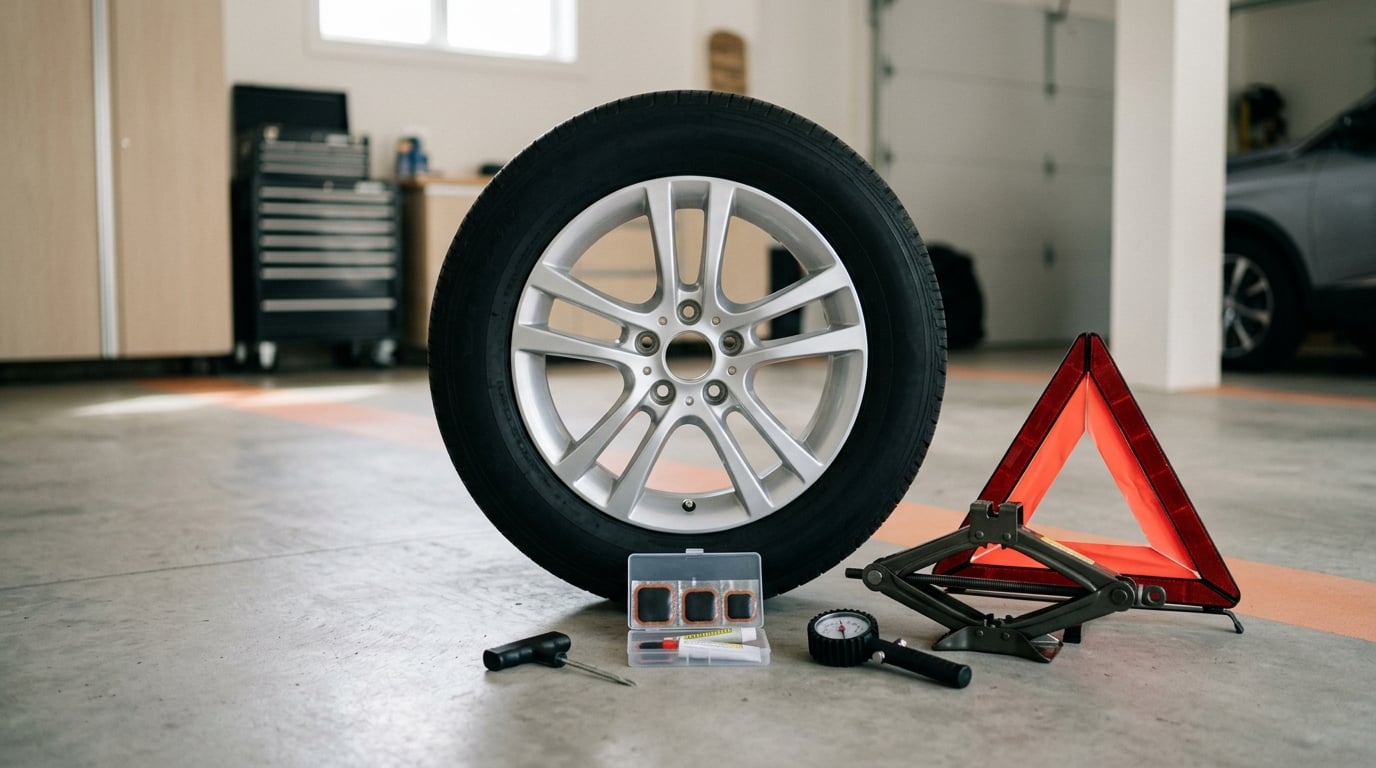
A tire plug is a fast external fix that fills the hole from the outside, while a tire patch bonds to the inner liner from inside the casing and seals it for good. That is the short answer to how to plug vs patch a tire: a plug buys you a drive to a shop, and a plug-patch combo is the repair that actually lasts.
Both take 15 minutes or less with a trunk tool kit. The difference shows up two months later, when that puncture channel is still open to water and rust.
Table of Contents
What You Need
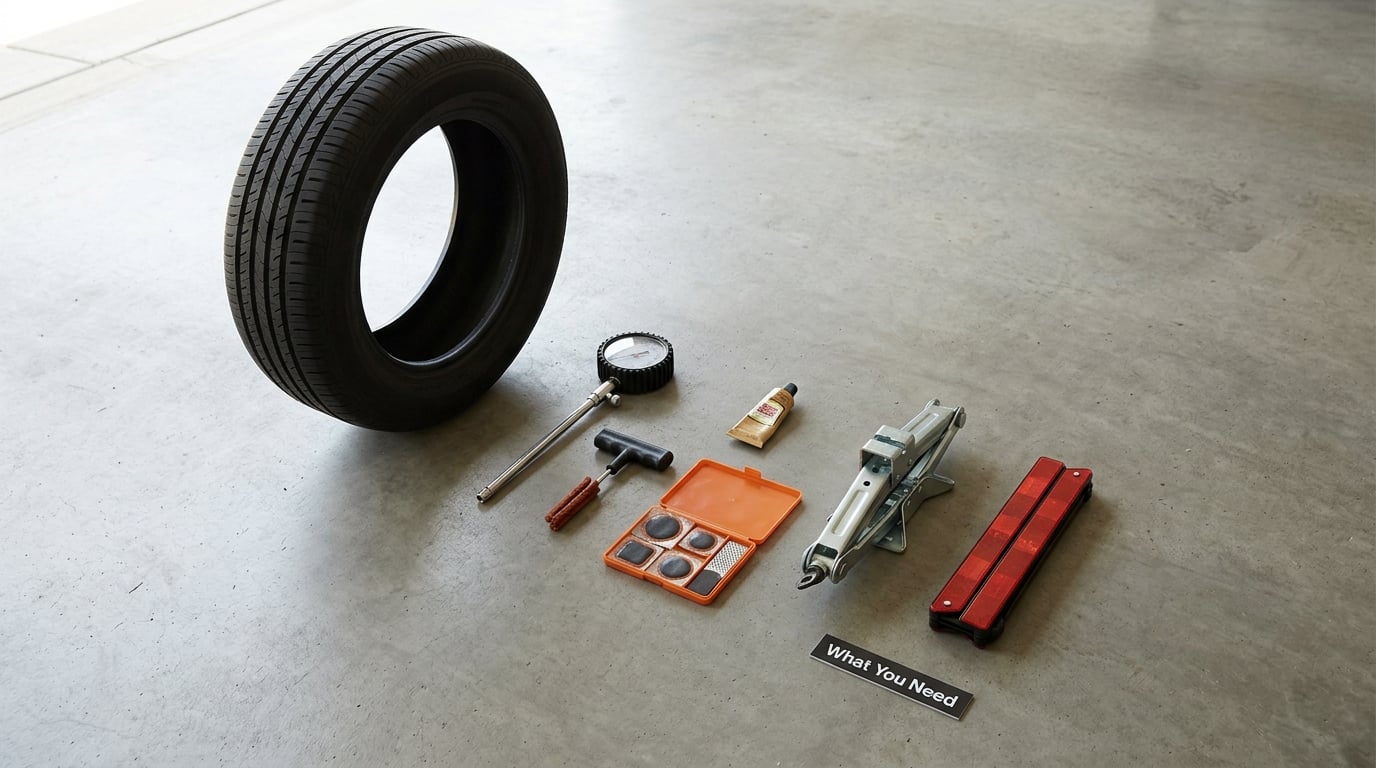
Most roadside kits cover the plug half of the job, and the patch half needs a couple of extras. Here is the honest list.
- Tire plug kit with a reamer, an insertion probe that has an eyelet on the end, and spare plug cords
- Soapy water in a spray bottle for finding the leak and re-testing after the repair
- Tire pressure gauge, the pencil type is fine
- Jack, lug wrench and socket, plus the vehicle jack points
- Compact inflator or air compressor
- Side cutters or pliers for trimming plug tag ends
- Marker or tire chalk so you can circle the injury and find it again from the inside
- Warning triangle and a flashlight, because half of these jobs happen in the dark on a shoulder
The reamer, probe and cords only matter for a plug. The patch side of the job also wants a rasp, vulcanizing cement, and patch units in the correct size for the injury, which is why a lot of trunk kits run out of the wrong patch size when you need it.
For the inside repair you also need a spare, dismount bars, and ideally a tire machine to break the bead and reseat the tire on the rim. Without a jack, a spare and a working gauge, roadside assistance costs less than a bent rim and an afternoon you will not get back.
How to Plug vs Patch a Tire: Choose the Right Repair
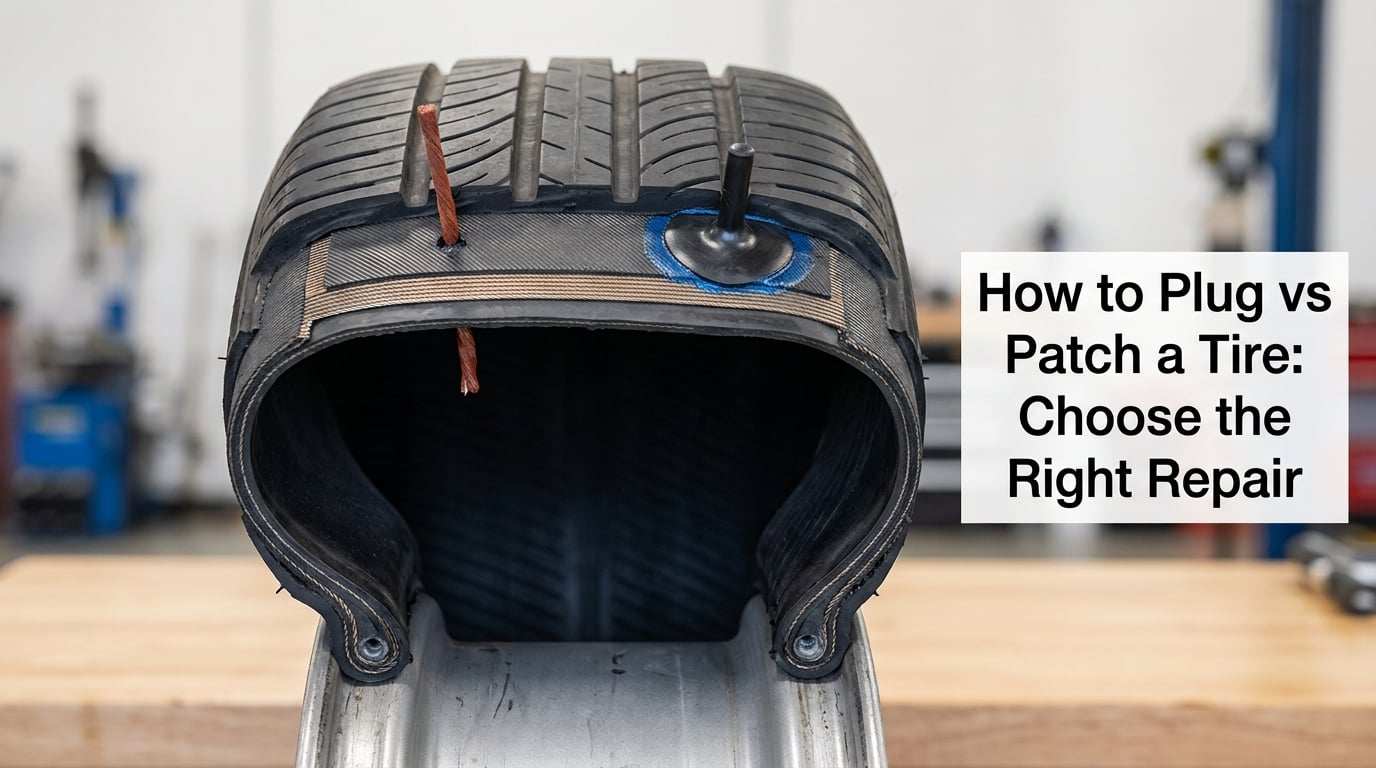
Plug vs patch a tire at a glance
| Criterion | Tire plug | Tire patch | Plug-patch combo |
|---|---|---|---|
| Applied from | Outside, through the tread | Inside, on the inner liner | Inside, patch and plug together |
| Tire off the rim | No | Yes | Yes |
| Seals the inner liner | No | Yes | Yes |
| How long it lasts | Temporary | Permanent | Permanent |
| Time on the car | 5 to 10 minutes | 30 to 60 minutes | 40 to 70 minutes |
| Cord damage risk | Some, from reaming | None | Minimal |
| Best use | Roadside drive to a shop | A sound tire with one clean tread injury | Most tread punctures, long term |
| Wrong for | Sidewall, shoulder, big holes | Anything you cannot inspect | Tires worn near the wear bars |
The first three rows are the whole argument. A plug stops air at the surface and does nothing to the inner liner, a patch seals the inner liner but only works if you can see it, and the combo does both in one repair.
What a tire plug is and when it works
A plug is a strip of tacky natural rubber, usually a coiled cord, pushed into the injury from the outside with a probe that leaves an eyelet behind so the tool does not back out the cord. You ream the hole first to clean it and give the rubber something to grip.
Best use: a nail or screw in the central tread, found on a highway shoulder, when the goal is a safe drive of 20 miles to a shop. Pros are speed and no dismounting. The con is that the channel inside the casing is never closed, and most tire makers void a warranty on a plug-only repair.
What a tire patch is and why it holds
A patch is a rounded rubber unit with a thin backing and vulcanizing cement, bonded to the inside of the inner liner over the injury. The tire has to come off the rim so you can locate the puncture from inside, where the real damage is always easier to judge.
Best use: a single clean injury in a tire that still has solid tread. Pros are a full seal and a repair manufacturers recognise. The con is the labor, plus the fact that a patch on its own can still let grit into the channel, which is exactly why the combo exists.
The plug-patch combo is the real answer
A combination repair, sold as a mushroom patch, bonds a patch to the inner liner and then drives a plug through the center of it so the channel is filled too. The Tire Industry Association treats that as the approved repair, with the tire dismounted, inspected, and both methods used together.
That consensus is not subtle among the mechanics on r/autorepair, where the recurring answer to a plug or replace question is blunt: “No, not just a plug. Those are temporary. Do a patch plug.” Another thread there puts it as the expectation rather than the upgrade: “A professional tire shop will plug AND patch.”
Why a plug fails over time
A plug fills the hole from the outside and leaves the inner channel open, so water and road salt walk straight in and rust the inner liner from a spot you cannot see. The plug itself also works its way out as the casing flexes, which is the failure mode RV and over-the-road forum users describe first.
One RV forum post puts the cord problem plainly: “Plugging hurts the cords in the tire when you ream the hole out.” That is a fair warning, because the reamer has to clear a straight path for the cord and the cords are what hold the tire together.
So a plug-only tire can look perfect for six weeks and then start losing air again, slowly, on a highway, far from a phone signal. A pressure check on a repaired tire every few hundred miles for the first month catches that early.
Step-by-Step: How to Plug a Tire Safely
- Find the leak, do not guess. Inflate to the door placard pressure, spray soapy water on the tread, and mark the bubble. Pressure drops on its own usually mean a slow leak somewhere other than a single nail, so re-check before driving. Our walkthrough on how to fix a slow leak in a tire covers that other case in more depth.
- Pull the object out. Pliers or a nail puller, straight out along the angle it went in, then mark the hole again. Leaving the screw in and plugging over it is how a fresh injury gets sealed twice and never spotted.
- Ream the hole. The tapered reamer goes in and out two or three times, straight, with steady pressure. It cleans the channel and shapes it so the cord seats. Do not twist hard, that is where cord damage starts.
- Insert the plug. Load the cord into the probe, coat it in soapy water or the kit lubricant, push the probe into the eyelet, and feed the cord in until about half an inch sticks out past the probe tip. Withdraw the probe, leaving the cord.
- Trim the tag ends flush. Side cutters, no snagging, no long tails. A long tag end acts as a handle and eventually gets pulled out of the tire by road debris.
- Inflate and re-test. Back to placard pressure, spray soapy water over the repair and the whole tread, and check the gauge after a few minutes.
Before you drive, look at the tire from every angle. A nail in the tread with a plug is a drive to the shop. A screw in the sidewall, a hole near the shoulder, or a tire visibly low on tread means call for a tow rather than a plug.
There is no safe distance on a plug-only repair, so treat it as the short trip it is. Slow down, avoid highway speeds, and stop if the gauge drops again on the way.
Step-by-Step: How to Patch a Tire From the Inside
Do this on a flat, well lit floor with the car supported properly, and only if the tire still has usable tread. The full job is dismount, seal, remount.
- Mark the injury from outside. Note the angle and position, and match it to a spot on the sidewall so you can find it again from the inside.
- Remove the wheel. Jack, lug wrench, wheel off, tire on the ground or on a tire machine.
- Dismount the tire. Deflate fully, break both beads with dismount bars and protect the rim with a shield. A bead that will not come off is a sign to stop and take it to a shop.
- Locate the injury from inside. Look for the puncture, and more importantly for what caused it, plus any run-low, belt separation or cord damage near it. This is the step a plug-only repair never gives you.
- Ream from the inside. The reamer goes through the inner liner and out the tread, straight and steady, clearing the channel for the plug. It also gives the patch a surface to bond to.
- Scuff the inner liner. Use the rasp in the kit to roughen the rubber in an area a bit larger than the patch, so the cement has something to grab.
- Apply vulcanizing cement. A thin coat, let it dry until it turns tacky rather than wet. Any patch applied over wet cement will peel away in a few months.
- Bond the patch. Center it over the injury, press from the center outward, and roll it down firmly. Dull the shiny backing surface first if the instructions say to.
- Plug through the patch. Coat a spare cord in cement, push it through the plug hole from the inside, and trim both ends flush from each side. Now the channel is filled and the liner is sealed.
- Remount and inflate. Seat the bead carefully, inflate in stages to the pressure on the door placard, and confirm both beads are seated with no gap along the rim.
- Verify. Soapy water on the outside, gauge check, and a close look at the tire for bulges or uneven wear. Balance the wheel while the tire is off if you are driving highway speeds.
If the tire has a tire pressure monitoring sensor, check that it seated properly and clear any metal valve-core debris before you refit the wheel. A sensor that lost its seal gives you a warning light and a slow leak of its own.
Uneven wear across the tread after the repair usually means the tire was already wearing oddly, not that the repair failed. Our guide to what tire feathering is and what causes it sorts out whether the fix is alignment, pressure or a tire change.
What Repairs Are Safe? Puncture Size and Location
The quarter-inch injury limit has not moved in decades. If the hole in the casing is larger than 1/4 inch, no repair method is approved.
- Central tread, quarter inch or smaller, sound casing: repairable, and a combo repair is the right call.
- Shoulder damage, right where the tread curves down: do not plug or patch. The cords bend there and a repair hides a weakening area.
- Sidewall: never repairable. Replace the tire.
- Bead area, near where the tire meets the rim: not repairable, and a plug there is a blowout waiting for highway speed.
- Two or more punctures in the same tire, or a hole plus a run-low: replace it. Damage you have not found is worse than damage you can see.
- Tread worn down to the wear bars, or close to them: replace it. A patched tire with 1/16 inch of tread left is a patch with an expiration date.
- Run-flat tires: a nail hole in the tread can be plugged and patched, but only if the tire has not been run flat long enough to damage the plies, and the repair is specified for run-flat construction. Ask a shop, not the internet.
- Motorcycle, RV, trailer and commercial tires: different standards apply, and several of these should never be plugged at all. Take those to a shop that works on them.
Tire damage from ice, gritting and cold weather is a different problem entirely, and it tends to show up as a slow pressure loss rather than a single hole. What tire siping is and whether it helps explains how cutting the tread blocks changes grip in a freeze.
If you are ever unsure, the cheapest test is the dismount. A professional takes the tire off, looks at the inside, and tells you plainly whether the damage is inside the serviceable area.
Common Mistakes
Plugging a sidewall or shoulder hole. That repair cannot be made safe, and the plug simply holds until it does not. The fix is replacement, and it is not negotiable.
Using a plug alone for a big injury or highway driving. Anything over 1/4 inch, or any trip longer than the drive to the shop, deserves a dismounted combo repair.
Skipping the ream. Pushing a plug into a dirty hole seals grit and moisture in with it. Ream until it comes out clean.
Leaving tag ends long. Trim flush. A long tail is a pull tab for every piece of road debris that passes.
Not checking for a second puncture. Re-test the whole tread with soapy water, and check pressure again after a few miles. A tire that loses air after a repair has a second problem.
Overinflating after reinflating. Some plugs need a short pressure bump to seat, and plenty of drivers overdo it. Use the door placard pressure, not the max on the sidewall, and let the repair set for a few minutes.
Driving with no spare and no way to check pressure. That is how a ten-minute fix turns into a roadside overnight.
Calling a plug a patch. Many shops use the words loosely. Ask directly: is this a plug only, or a patch and plug combo from the inside?
Frequently Asked Questions
Can I drive on a tire with a plug in it?
Yes, for the short trip to a tire shop, at reduced speed. There is no safe measurable distance on a plug-only repair, because the inner channel is still open. If the injury is over 1/4 inch, in the shoulder or sidewall, or the tire is low on tread, do not drive it at all and call a tow.
Is a patch and plug combo repair permanent?
It is the industry-standard permanent repair: a patch bonded to the inner liner plus a plug filling the channel, installed with the tire dismounted so the interior can be inspected. Tire manufacturers and the Tire Industry Association treat it as the approved repair, provided the injury is in the serviceable tread area and within 1/4 inch.
Do you twist the tool when plugging a tire?
You ream with steady straight pressure, in and out a few times, rather than twisting hard. The reamer only needs to clear the channel and shape the hole. Forcing a twist is what breaks cords, and cord damage is one of the reasons experienced tire people dislike plug-only repairs.
How long should I let a tire plug dry before driving?
There is no curing time for the cord itself, so you can drive as soon as the tag ends are trimmed, the tire is back to door placard pressure, and the soapy water test shows no bubbles. Give it a few minutes at rest after inflating, and re-check pressure on the way, since a fresh plug can seep a little while it seats.
Can you plug a nail hole in a run-flat tire?
Sometimes, but only if the tire was not run flat long enough to damage the plies and the repair is approved for that run-flat construction. Run-flats are built differently from standard tires, so have a shop that works on them check it, and discard the tire if the sidewall shows any scuffing or heat damage.
Does plugging a tire void the warranty?
Most tire makers void the warranty on a plug-only repair, because the interior was never inspected and the inner liner was never sealed. A patch and plug combo done from the inside on a tire that was still in its serviceable life is the repair that keeps the tire in warranty, which is one of the better arguments for spending the extra time on it.
What to Do Right Now
Find the leak with soapy water, pull the object out, and look at where it hit. Central tread under a quarter inch means you have a choice: plug it to drive to a shop and have the combo repair done properly, or pull the wheel and do the full patch yourself. Sidewall, shoulder, or a tire that already needs replacing means a tow, not a toolkit.
Whichever route you take to how to plug vs patch a tire, ask the shop one question: patch and plug from the inside, or plug only. The answer tells you what kind of tire you will be driving on in October.