
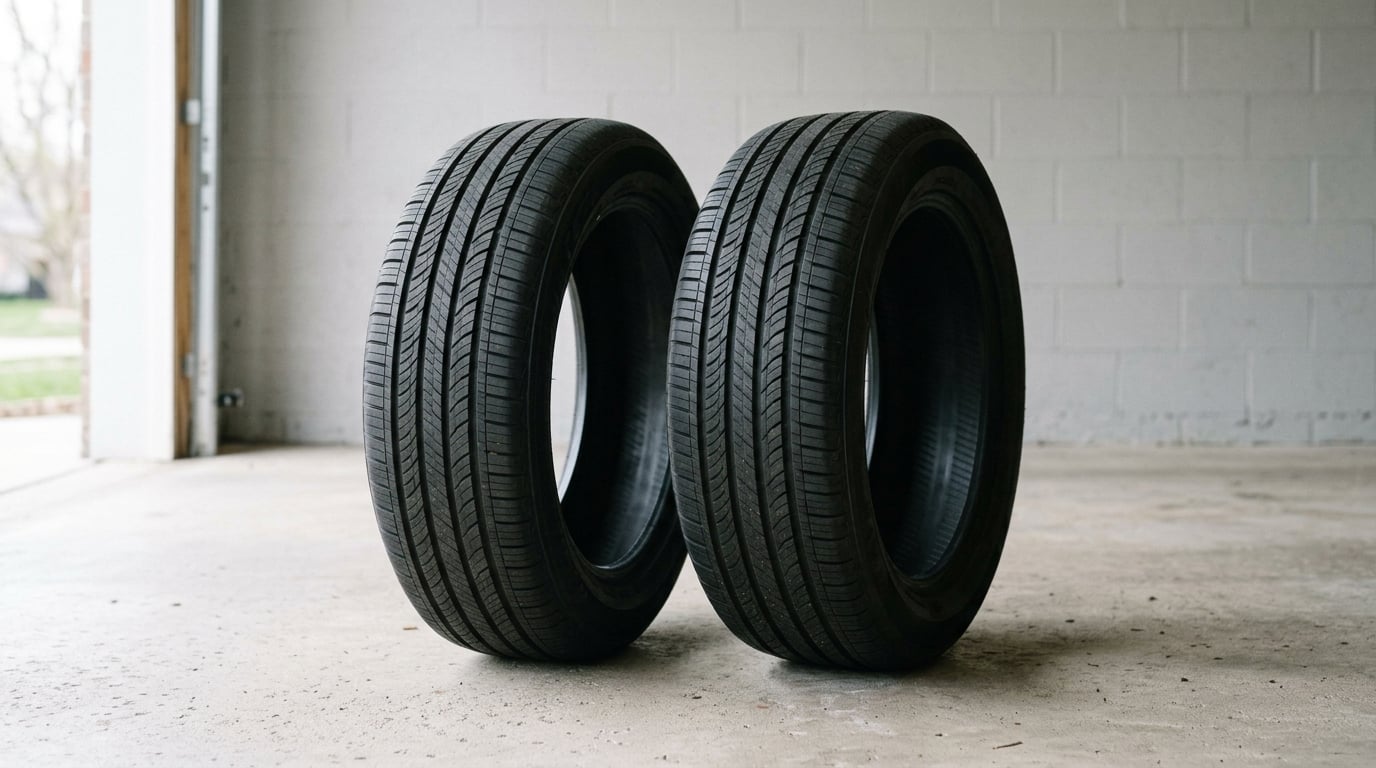
Run flat tires pros and cons come down to one tradeoff: you get a tire that can carry the car a short distance after losing air, and you give up ride comfort, cheap repairs, and easy availability. If you drive a BMW, that decision was already made for you by whoever specified the original equipment, so the useful question is whether your specific model and your specific driving make the tradeoff worth living with.
Most run-flats are built with a reinforced, self-supporting sidewall that holds the wheel up when air pressure drops. Many are rated to keep driving roughly 50 miles at up to 50 mph, but that number is a guideline attached to a specific tire on a specific car, not a promise from the tire rack. I’ll walk through what you gain, what you give up, and how to check the actual limits for the car in your driveway.
Table of Contents
- What Are Run Flat Tires?
- Run Flat Tires Pros and Cons at a Glance
- The Main Advantages of Run Flat Tires
- The Main Disadvantages and Safety Limits
- Can You Drive on Run Flat Tires After a Puncture?
- How Far and How Fast Can You Drive on a Run Flat?
- Run Flat Tires vs. Regular Tires: Which Is Better?
- Are Run Flat Tires Good for BMWs?
- How to Choose Run Flat Tires Without Reducing Safety
- Frequently Asked Questions
- Are run flat tires safe to drive on after a puncture?
- How long can you drive on a run flat tire?
- Can run flat tires be repaired or patched?
- Do run flat tires wear out faster than regular tires?
- Does BMW allow run flat tires on every model?
- Should I ignore the tire pressure warning light while using run flats?
- What to Do First If a Run Flat Loses Air
What Are Run Flat Tires?
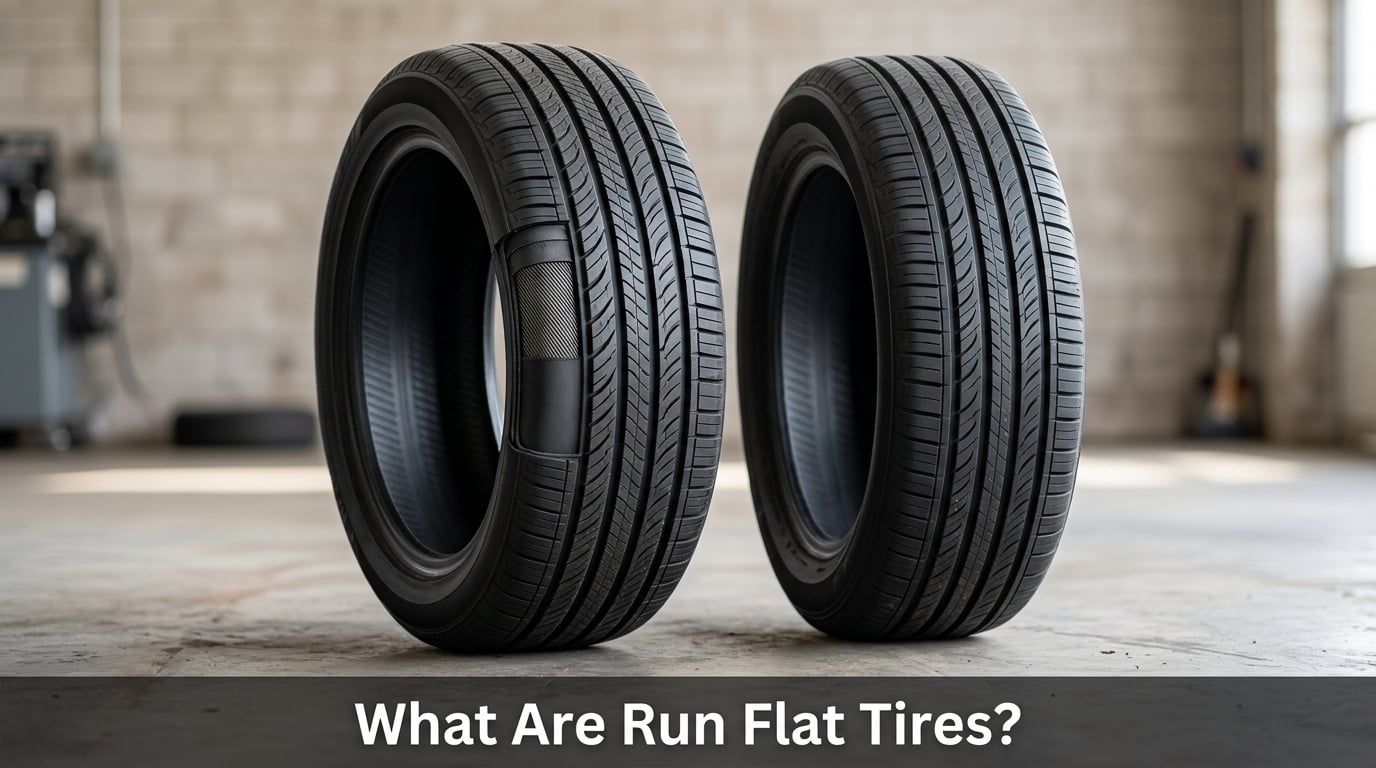
A run-flat tire is a low-pressure tire with reinforced sidewalls or an internal support structure that lets it support vehicle weight after it loses air. A conventional tire collapses into a rim under low pressure, which is why you cannot drive on it. A run-flat keeps its shape, so the car stays drivable at reduced speed for a limited distance.
There are two main constructions. Self-supporting run-flats use a heavily reinforced sidewall alone. Support-assisting run-flats add an insert inside the tire and lean on the vehicle’s suspension to stay upright. Some modern run-flats also seal small tread punctures from the inside, which is a bonus rather than the main feature.
That support changes how the tire behaves while deflated. It rides on the reinforced rubber instead of air, and the contact patch shifts. The steering response, braking feel, and grip are all different from a normally inflated tire, which is why speed limits matter so much.
How to tell if your BMW has run-flats
Check the tire sidewall for a run-flat or self-supporting marking, or a snail-like symbol. The driver’s door placard lists the factory tire size and pressure, and the owner’s manual lists the same size under the tire section. If the placard or manual shows a spare tire in the trunk, your car does not use run-flats as standard.
Why run-flats depend on the tire pressure monitoring system
A damaged run-flat may not look flat at all. The sidewall holds the shape, so from the driver’s seat the car can look normal while a tire has almost no air in it. That is the whole reason the tire pressure monitoring system matters on these cars: without a working TPMS, you have no reliable warning. A TPMS warning light should be treated as a loss-of-pressure event, not a vague dashboard message to clear later.
Run Flat Tires Pros and Cons at a Glance
This table covers the criteria BMW drivers ask about most, and where run-flats win or lose.
| Factor | Run-Flat Tires | Conventional Tires |
|---|---|---|
| After a puncture | Limited mobility, usually about 50 miles at reduced speed where the manufacturer allows it | No mobility; the car stops or must be limped at walking pace only |
| Roadside tire change | Usually avoided | Routinely required |
| Ride comfort | Firm, especially over expansion joints, potholes and rough pavement | Quieter and more compliant |
| Road noise | Noticeably louder on many fitments | Generally quieter |
| Tread life | Often shorter on sporty compounds | Typically longer |
| Repairability | Sidewall damage usually means replacement, not a patch | Tread punctures are often patchable |
| Availability | Specific OE sizes are harder to find locally and may need ordering | Widely available in common sizes |
| Purchase and replacement cost | Higher per tire, and one damaged tire often forces a set | Lower per tire, easy to replace individually |
| Spare tire | Usually none, which frees cargo space and trims weight | Often a spare or a repair kit |
| Load | Keep passengers and cargo light while driving on a deflated tire | Not applicable |
The Main Advantages of Run Flat Tires
You avoid changing a tire on a shoulder
This is the reason the technology exists. A roadside wheel change on a highway shoulder, in the dark, in rain, or in a parking structure is one of the more dangerous routine maintenance tasks there is. A run-flat moves that job to daylight, at a tire shop, on your schedule.
You can reach a shop instead of calling for help
Roadside assistance is not instant, and in a rural area, heavy storm, or late at night the wait can be long. A deflated run-flat at a crawl across a parking lot is a very different situation from sitting on a shoulder waiting. The distance rating exists for this trip, not for cruising.
They handle a tread blowout better than a conventional tire
A conventional low-profile tire that loses pressure quickly can shred its sidewall, and the debris that comes off is a hazard to everyone behind you. A reinforced sidewall resists that kind of blowout. It does not make damage impossible, and a sidewall cut or an impact will still destroy the tire, but it gives you warning and control in cases where a standard tire would not.
No spare tire means no spare tire
That means the trunk floor stays flat, the fuel tank can be shaped properly, and the car carries less weight. On a vehicle where every kilogram matters for efficiency, that is a real design argument rather than a minor one.
One less thing to plan around
There is no compressor in the trunk, no scissor jack, no lug key to lose, and no risk of a jack failing in the rain. For a driver who does a lot of highway commuting, that predictability has genuine value.
The Main Disadvantages and Safety Limits
Yes, there are downsides to running run-flats, and they are not small. The stiff construction carries over to every mile you drive, not just the mile you are driving on a flat.
Ride comfort is the big one
On a BMW with a tuned suspension, the harshness is easy to feel. Expansion joints, concrete patches, and uneven city pavement come through as thumps that a conventional tire would have absorbed. Owners posting on the r/LexusNX thread described their run-flats as too loud and stiff over rough roads, saying the car stopped feeling like a luxury vehicle. That is the most common complaint in the forums, and it is consistent across makes.
Road noise goes up
Run-flats run hotter and softer than conventional tires, and softer compounds are louder. Members on ClubLexus threads put it plainly, describing run-flats as hard rubber where the ride really suffers. Audi enthusiasts on Audizine reported tread life that was abominable on the same fitments, which is usually the other side of the same soft-compound choice.
Tread life is often shorter
Because these tires have to absorb the work that air pressure would normally do, many run-flats use compounds that wear faster. Expect a shorter replacement interval than you would on the same car with conventional tires. Check the tire’s own treadwear rating, and plan the replacement interval around that number rather than around how the previous set felt. Mileage and tire age both count, so How Long Do Tires Last in Years? Mileage & Age Guide is worth a read before you work out your own interval. If you want a refresher on the depth numbers printed on a new tire, How Much Tread Do New Tires Have? A Driver’s Guide covers that.
Heat builds up fast
Rolling on a deflated run-flat generates heat with nowhere to go. That heat is what damages the tire internally, and it is why the distance and speed limits exist. The tire can look fine and still be finished, which is exactly the problem for anyone tempted to keep limping along.
Sidewall damage usually cannot be patched
If the reinforced sidewall is cut, there is nothing to patch. A plug from the inside would not restore the structure that carried the car’s weight. This is also why so many shops replace all four when one run-flat is damaged, since the other three have been running with different wear and the car has been driving on a tire of a different effective size.
Handling changes the moment air is gone
Do not assume the car still behaves like it did a minute ago. Steering response, braking distances, and grip on wet pavement all change. Owners on the Corvette forum raised a fair point about the same trade-off showing up on an already stiff sports setup, where the run-flat adds to a suspension that was never soft to begin with.
Can You Drive on Run Flat Tires After a Puncture?
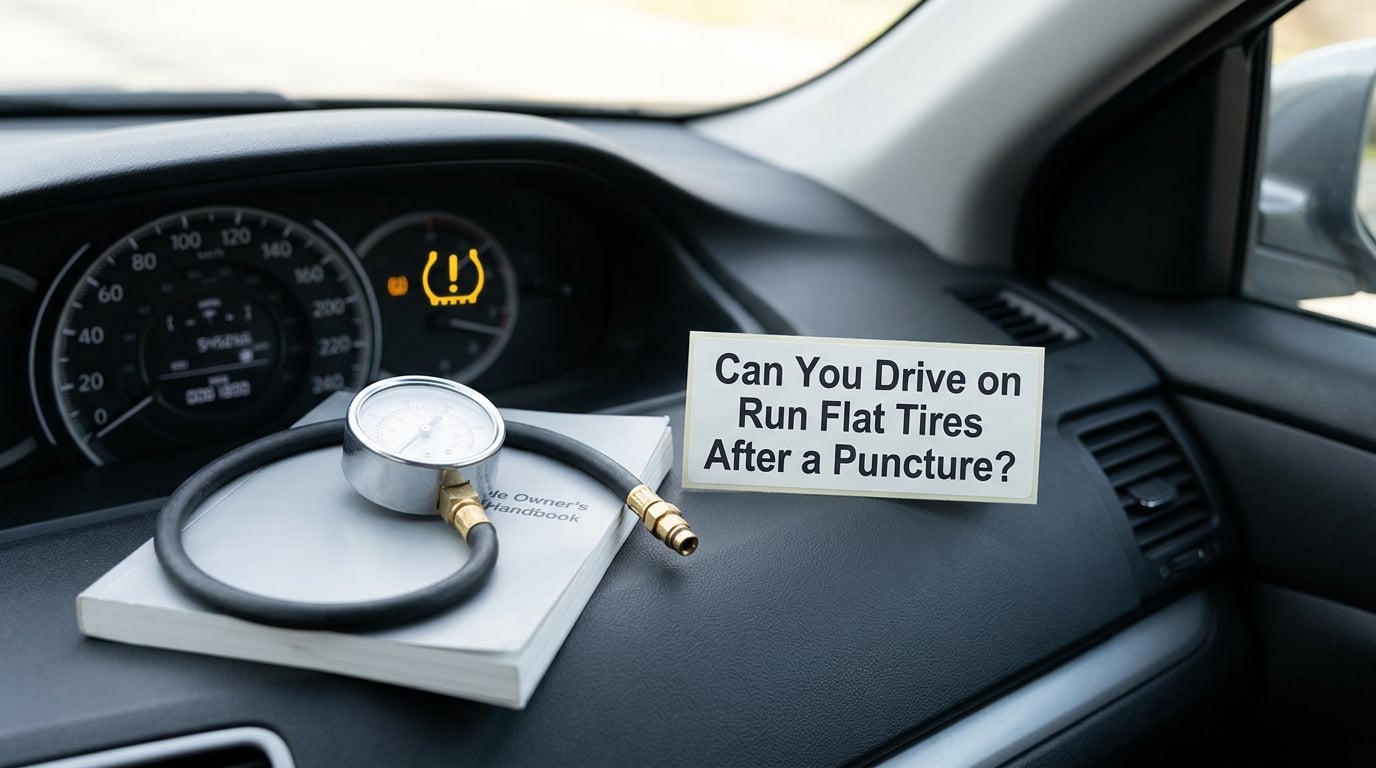
Sometimes, yes, but only under the conditions the tire and vehicle manufacturer allows. A gradual nail or screw in the tread is the classic case. A sudden blowout, a sidewall impact from a pothole, a cut from road debris, or a wheel damage is not the same situation, and those are exactly the cases where run-flats fail to save you.
Before you drive on a deflated run-flat, check the tire for obvious sidewall damage and confirm the wheel is not bent or scraped. Look at what the warning is telling you. A slow pressure loss with the TPMS light is a different problem from a tire that has already collapsed or a wheel that took a hit, and the slower problem is the one that was designed to be driven a short distance.
Whatever the warning says, the owner’s manual takes priority. BMW’s manuals, and the manuals for other manufacturers, spell out permitted speed, distance, and load. Those limits are not a suggestion, and a driver who exceeds them can destroy the tire, the wheel, and the suspension components behind it in a few miles.
How Far and How Fast Can You Drive on a Run Flat?
There is no single answer, and that is the honest version of the popular 50 miles at 50 mph line. That figure reflects a commonly used industry test and guidance, not a promise that applies to every run-flat on every car.
Here is where the real number lives, in this order:
- Tire sidewall markings. The manufacturer prints a speed rating, load rating, and often a recommended maximum travel distance for reduced-pressure driving.
- Vehicle placard and manual. Your car’s approved tire size and any stated distance limit come first, because the limits were set for that car with that suspension.
- Onboard tire pressure information. Many BMWs report specific wheel pressures and tell you which corner has lost air, which helps you confirm the car is still behaving as the system expects.
- Reason for the pressure loss. A slow tread leak is the good case. A sidewall or impact failure is the case where you stop and call for help.
Speed matters as much as distance, because heat builds with speed and with load. A fully loaded car on a highway loses air and heat faster than an empty one on a back road. If you have passengers or luggage aboard when the warning appears, lighten the load before you set off.
Run Flat Tires vs. Regular Tires: Which Is Better?
Run-flats win on the day you get a puncture and the car is somewhere inconvenient. Conventional tires win on every other day. The comparison comes down to which kind of day you have more of.
Comfort is the clearest divide. A conventional tire on a normal wheel is quieter, absorbs expansion joints better, and lets a suspension do its job. If your driving is city and stop-and-go traffic on imperfect pavement, you will feel the run-flat difference every single day.
Maintenance tells the same story. A tread puncture in a conventional tire is often repairable for a small outlay, and you can replace one tire without replacing the others. A damaged run-flat typically means replacement, and often a full set, plus a tire size that may take time to source in a given fitment.
Pothole protection is where run-flats earn part of their keep. A reinforced sidewall is less likely to be destroyed by a bad pothole or a stretch of broken pavement, which matters if you drive roads that are past due for repair.
Convenience runs both ways. Run-flats remove the roadside change but add a tire you can only replace as original equipment. Conventional tires need a spare or a repair kit, but that kit is cheap and fits in a compartment most cars already have.
My read: if you commute long highway distances, travel alone, or live where help is slow to arrive, run-flats earn their place. If you mostly drive short local trips and care how the car feels over bad pavement, conventional tires are the better buy, if your car allows them.
Are Run Flat Tires Good for BMWs?
Fitment is decided at the model, trim, wheel size, and load level, not by the badge on the trunk. Some BMWs were engineered around run-flats, with no spare and a suspension tuned to tolerate them. Others were never approved for run-flats, and fitting them can void the approval for the rest of the set. The placard and the manual for your specific build year settle it.
Why BMW is moving away from run-flat tires
BMW has been shifting newer models toward conventional tires with a spare or a repair kit, and the reasoning is worth understanding. Run-flats are a compromise that trades everyday comfort for emergency mobility, and for a brand built around suspension feel and quietness, that compromise has become harder to defend. Ride complaints from owners are the most visible part of it, but the manufacturer also has to consider wheel availability, replacement logistics, and the cost of supporting a limited tire channel across global markets.
There is a practical reason too. A car designed around run-flats has to keep a specific, often large-diameter low-profile tire in production for the life of the model, and those sizes are expensive and not always easy to obtain. Moving to a conventional tire simplifies the parts and the service channel, and the safety argument that justified run-flats decades ago is less urgent now that roadside assistance and warning systems have improved.
So yes, run-flats remain perfectly capable tires. The shift is a manufacturer decision about how to build and support a car, not a verdict on the technology.
How to Choose Run Flat Tires Without Reducing Safety
If your BMW is approved for run-flats, or you are buying a car that comes with them, work through this list before ordering anything.
- Check approval first. Confirm the tire size and specification listed in your manual and on the door placard. If the size is not listed, do not fit it.
- Match size, load index, and speed rating. All four tires need to match, and mixing run-flats and conventional tires on the same car is a bad idea unless the manufacturer explicitly allows it.
- Check wheel compatibility. Run-flats are often larger in diameter than the standard tire, so the wheel and tire need to clear the brakes and the suspension. Use the size the manufacturer specifies rather than a cross-reference table.
- Verify your TPMS works. Replace the sensors with the tires if they are due, and make sure the system reads each wheel. This is the only warning you will get.
- Ask about the repair policy in writing. A reputable shop will tell you over the phone what happens after sidewall damage: replacement, and whether all four go.
- Plan for seasonal availability. Some OE run-flat sizes are not in the warehouse when you need them. Know the exact specification, including the sidewall marking, so you can order the right tire rather than guessing at the counter.
- Budget for a set, not a tire. If one is damaged, the practical replacement is often four. Price the full set and compare it against what a set of conventional tires would cost, including the spare or kit you would need.
- Keep a gauge in the car anyway. Checking cold pressures monthly catches slow leaks long before the TPMS complains, which is cheap insurance regardless of tire type. Cold means cold, so What PSI Should Car Tires Be in Winter? Tire Guide has the seasonal adjustments that trip people up.
If your car is not approved for run-flats, the checklist ends at step one, and the answer is conventional tires in the size the manufacturer specifies.
Frequently Asked Questions
Are run flat tires safe to drive on after a puncture?
They are safe to drive on within the limits the tire and vehicle manufacturer sets, typically a reduced speed for a short distance, and the most common case is a slow tread leak. They are not a safe answer to sidewall damage, a pothole impact, a cut, or a bent wheel. Check the tire and wheel before driving, follow the owner’s manual, and treat the TPMS warning as a pressure-loss event.
How long can you drive on a run flat tire?
Commonly cited guidance is about 50 miles at speeds up to 50 mph, but that is not a universal limit. The number that applies to your car is on the tire sidewall and in the owner’s manual, and heat, load, and speed all shorten the range. Stay under the stated speed, travel light, and head straight to a tire shop rather than extending the trip.
Can run flat tires be repaired or patched?
Rarely. A tread puncture in some run-flats can be sealed from the inside, and a shop may repair it if the damage is small and away from the sidewall. Damage to the reinforced sidewall cannot be patched, because the structure that supported the car is gone. In that case the tire is replaced, and most shops replace all four to keep the sizes and wear consistent.
Do run flat tires wear out faster than regular tires?
Often, yes. Run-flats must absorb work that air pressure normally does, so many use softer compounds that wear faster and run hotter. Owners on enthusiast forums report noticeably shorter tread life on the same vehicles. Read the treadwear rating on the tire, check your cold pressures regularly, rotate as the manufacturer directs, and set your replacement interval from the mileage, not from how the tread looks.
Does BMW allow run flat tires on every model?
No. Approval depends on the model, build year, trim, wheel size, and load rating, and it is listed on your door placard and in the owner’s manual. Some BMWs were designed around run-flats with no spare, while newer models have moved to conventional tires with a spare or repair kit. Fitting an unapproved size can affect handling and may affect your coverage, so verify before you buy.
Should I ignore the tire pressure warning light while using run flats?
Never ignore it. A deflated run-flat can look normal from the driver’s seat, so the TPMS light is your main warning that something has changed. Slow down smoothly, check for visible damage if it is safe to do so, stay within the distance and speed limits for your vehicle, and get the tire inspected. Clearing the light without fixing the pressure loss leaves you driving on a tire you have no warning system for.
What to Do First If a Run Flat Loses Air
Take the pressure loss seriously and work in this order. Ease off the accelerator and let the car slow smoothly rather than braking hard, stay out of the other lanes while you do it, and avoid sudden steering inputs.
Then, only if you are somewhere safe, check the tire and wheel for cuts, bulges, or visible impact damage. A slow leak in the tread and a shredded sidewall are different problems, and the second one means stop.
Read the owner’s manual for the permitted speed and distance for your specific tire, keep the load light, and drive to a tire shop. That is the short version of run flat tires pros and cons in practice: the run-flat gets you there, and nothing more. Do not exceed those limits, and do not treat a run-flat as a permanent replacement once you get the car parked. Replacing the damaged tire properly, and replacing all four if the manufacturer requires it, is what keeps the next set of tires working the way they were designed to.