
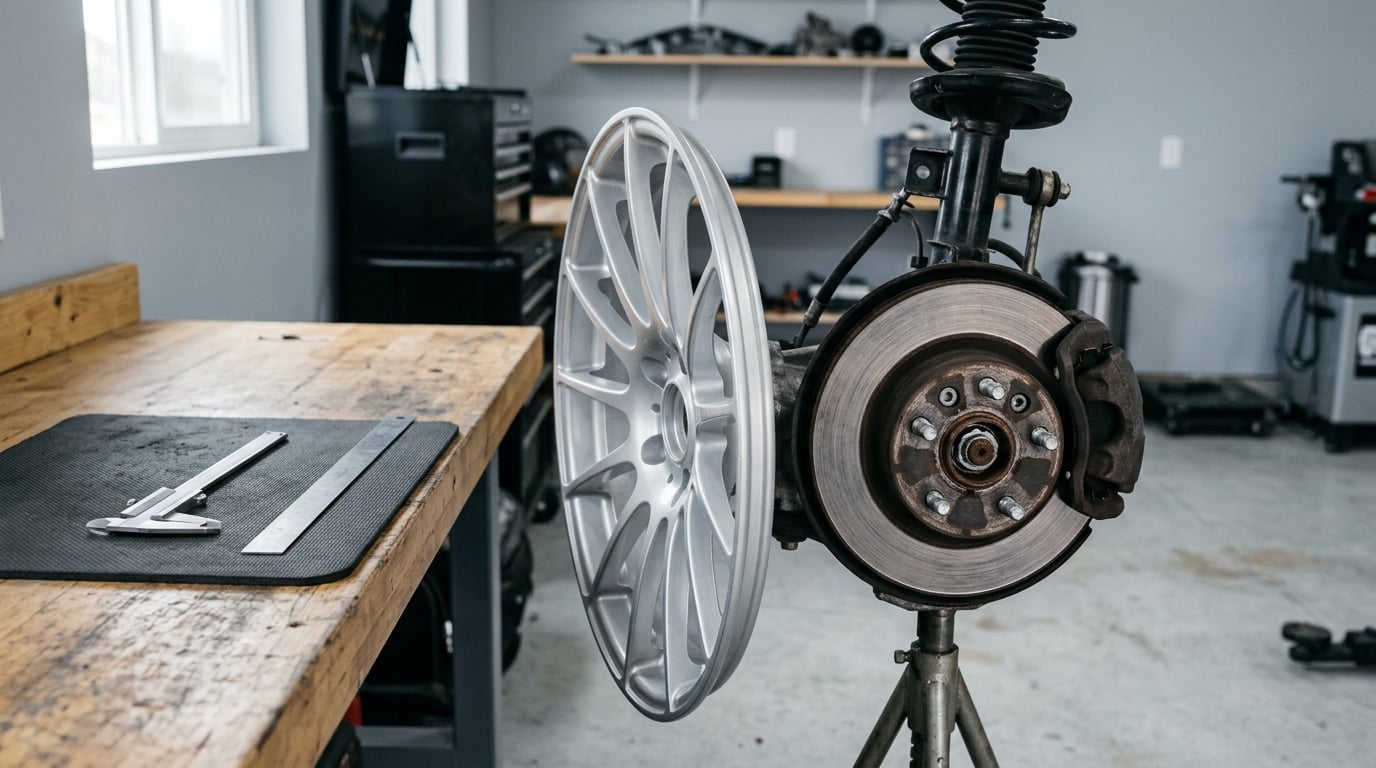
Wheel offset is the distance in millimeters between the wheel’s mounting surface, the flat pad that bolts to your hub, and the wheel’s true centerline. It decides how far the wheel sits inward toward your suspension or outward toward the fender lip, and getting it wrong is how tires end up rubbing on the first drive.
Plenty of people buy a set of wheels that bolt on perfectly and then find out the tire touches the fender liner when the suspension compresses. That is almost always an offset or width problem, not a bolt pattern problem, and it is entirely avoidable if you check the numbers before the tires go on.
Table of Contents
- What Is Wheel Offset?
- What Is Wheel Offset and Why Does It Matter?
- How Is Wheel Offset Measured?
- How Offset Affects Fitment and Clearance
- Does Wheel Offset Change Handling?
- How to Find the Correct Offset for Your BMW
- Why Is My Wheel Rubbing?
- Positive, Zero, and Negative Offset: Key Takeaways
- Frequently Asked Questions
- Conclusion
What Is Wheel Offset?
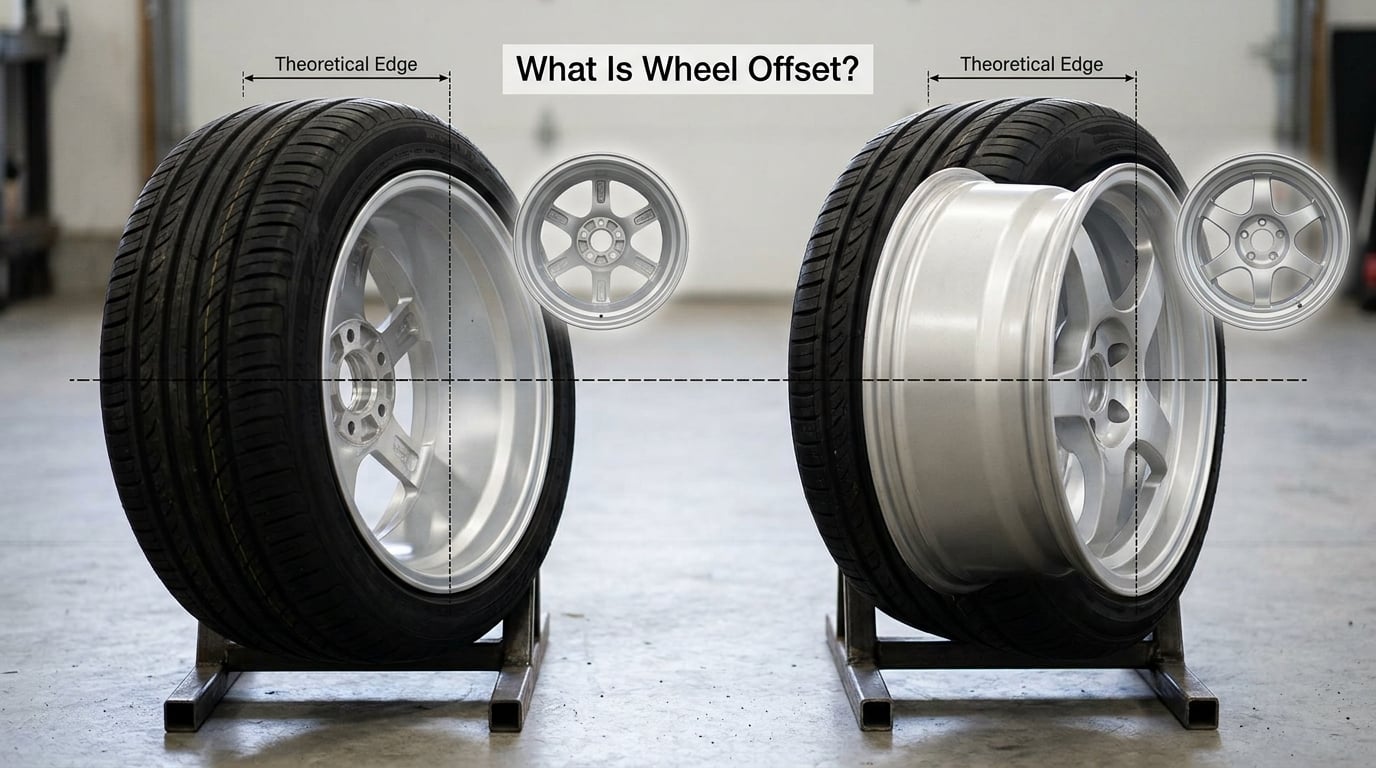
Wheel offset is the distance in millimeters between the wheel’s mounting surface and its true centerline. Positive means the mounting pad sits outward of center, zero means it sits dead center, and negative means it sits inboard of center. It is stamped on the wheel as an ET number, so ET45 means 45 mm of positive offset.
The centerline is an imaginary line running through the middle of the wheel, halfway between the outer lip and the inner lip. The mounting surface, sometimes called the hub pad or bolting plane, is the flat spot the hub face presses against. Offset is simply the gap between those two things.
Here are the three types, and the direction rule that goes with them. A lower or more negative number pushes the wheel outward toward the fender. A higher or more positive number pulls the wheel inward toward the suspension.
- Zero offset (ET0): The mounting face is exactly on the wheel centerline, so half the wheel sits inboard of the pad and half outboard. Common on older and ex-fleet vehicles.
- Positive offset (for example ET35, ET45): The mounting face sits outboard of the centerline, which tucks the wheel under the fender. Most BMWs, and nearly every modern sedan, run positive offset.
- Negative offset (for example ET-10, ET-30): The mounting face sits inboard of the centerline, which pushes the wheel out toward the fender lip. You see it on classic trucks and on deep-dish style builds.
Offset is not width. Two wheels can both be 18 by 8 inches and still have completely different offsets, and that difference is what changes how they look on the car. If you want to understand why a tire is feathering or pulling to one side, start with what tire feathering is and what causes it.
What Is Wheel Offset and Why Does It Matter?
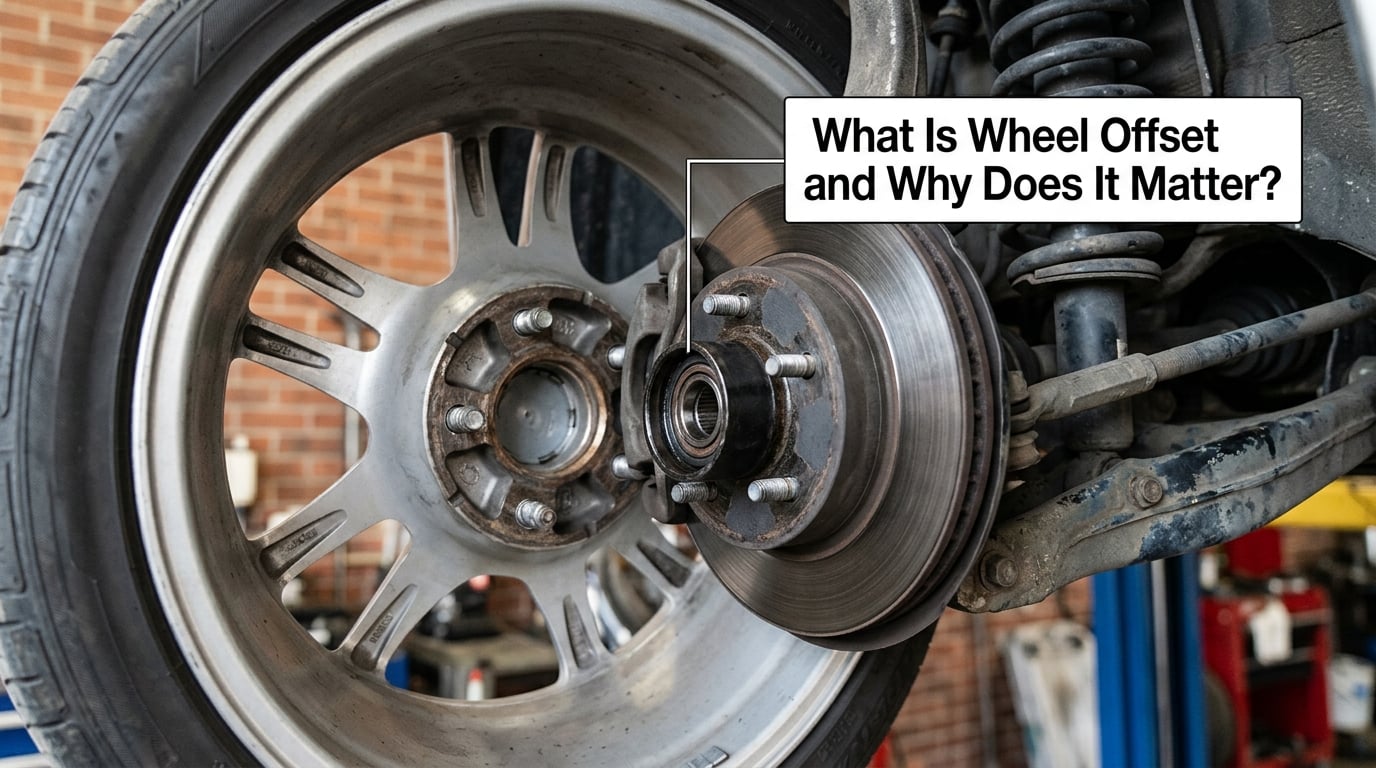
What is wheel offset and why does it matter? Because the hub mounting face is bolted to one fixed spot on your car, the offset number alone decides where the rest of the wheel lands: clearance at the brake caliper, clearance at the fender lip, clearance against the suspension arm, and how much of the wheel sticks out past the bodywork.
How wheel offset decides where the wheel sits
Think of the hub as a fixed wall and the wheel as a slide that can only move along one axis. Positive offset moves the wheel inboard, so you gain room at the fender and lose room at the caliper and the strut. Negative offset does the reverse. Changing the wheel width does the same thing too, which is why offset and width have to be considered together rather than one at a time.
BMW owners run into this constantly because staggered factory setups put a wide wheel with a low-profile tire on the rear axle. A set of 8.0-inch rear wheels with a 285 tire fits and looks right, and the same wheels on the front axle will hit the fender lip. Nothing is wrong with the wheels. The front arch just has less room.
Offset also shifts the effective track width, which is the distance between the centerline of the tire on one side and the centerline on the other. Move the wheel outward and the track gets wider. That changes how the car handles, how much leverage the wheel puts on the wheel bearing and the ball joint, and how hard the steering feels over bumps.
The short version: offset is a fitment decision first and a styling decision second. Get it wrong and the car rubs, clunks, or wears parts unevenly.
How Is Wheel Offset Measured?
Wheel offset is measured in millimeters from the mounting surface to the centerline, and it is usually stamped in the casting on the inside of the rim as ET followed by a number. Some Japanese and Korean wheels use a slightly different code for the same measurement, and US castings sometimes hide it behind a sticker, so knowing what to look for saves an argument at a tire shop.
To measure it by hand, clamp the mounting face of the wheel against a flat surface or a straight edge, then measure from that flat surface to the true centerline. If you want a starting reference, measure the width bead seat to bead seat, not across the outer lip, and split it in half. That gives you the centerline location, and the difference between it and the mounting face is your offset.
Converting backspacing to offset takes one subtraction. Wheel width for this purpose is the bead seat to bead seat measurement, and backspacing is the distance from the mounting surface to the inner edge of the wheel.
Offset (inches) = (Wheel width / 2) - Backspacing
Multiply the result by 25.4 to get millimeters. Some seller charts add a 0.5 inch adjustment to account for the outer lip, which is why their numbers occasionally disagree with the ET stamped on the rim. The stamped number is the one that matters.
Here are three worked examples, so you can see the pattern rather than memorize it.
- An 18-inch wheel that is 8 inches wide with 5.5 inches of backspacing gives 4 minus 5.5, which is negative 1.5 inches, or roughly negative 38 mm offset.
- A 17-inch wheel that is 7.5 inches wide with 4.5 inches of backspacing gives 3.75 minus 4.5, which is negative 0.75 inches, or roughly negative 19 mm.
- To go the other way, an 18 by 8 wheel with ET20 has an offset of about 0.79 inches, so its backspacing is 4 minus 0.79, or about 3.2 inches.
Spacers fit into the same math. A spacer pushes the mounting face outboard, so it subtracts from the offset number. A 1 inch spacer makes an ET35 wheel behave like an ET10 wheel, and a 1.25 inch spacer takes off about 32 mm. That surprises people more than any other part of offset, because the wheel looks like it moved in but the number got more negative.
On the inside of a typical casting you will find a cluster of codes. ET or OFFSET gives the number, PCD or the bolt pattern gives the number of studs and their circle, J is the hub bore in millimeters, and a letter from H through Y is the load rating index. Read the load rating letter against the chart for your car before you commit to a set of used wheels.
How Offset Affects Fitment and Clearance
Fitment is a fight between the wheel, the tire, and everything the wheel has to pass on the way in and out. Offset controls where the wheel sits in that fight, so the same three offset types produce three very different clearance outcomes.
| Offset type | Mounting face position | Inner clearance (caliper, strut, arm) | Fender and arch clearance | Track width |
|---|---|---|---|---|
| Positive (ET20, ET35, ET45) | Outboard of centerline | Tighter. Risk of caliper or strut contact with big brakes or tall suspension. | More room at the lip. The wheel tucks under. | Narrower track for the same tire width |
| Zero (ET0) | On the centerline | Balanced. Half the wheel each way. | Balanced. Best starting point for wider tire fitments. | Neutral reference point |
| Negative (ET-10, ET-30) | Inboard of centerline | More room. Easier on large brake kits. | Less room. The wheel pokes past the fender lip. | Wider track for the same tire width |
Two rules decide whether a setup actually clears. First, static clearance means nothing on its own. The wheel has to clear at full suspension compression, when the body drops onto its bump stops, and at full steering lock, when the front wheels are turned hard into the fender.
Second, tire size moves the outside edge of the wheel even when the offset number never changes. Mounting a 10 mm wider tire pushes the sidewall out roughly 5 mm per side, which eats fender room without touching the offset at all. If your tire rubs, changing the offset and changing the tire width are two different ways to fix the same symptom.
Does Wheel Offset Change Handling?
Yes, but the effect is smaller than most people expect when the offset is close to factory. The main geometric change is scrub radius, the distance between where the tire touches the road and where the steering axis meets the ground. Push the wheel outboard and you shorten scrub radius, which sharpens turn-in and makes the car feel more eager entering a corner.
Push the wheel further out and steering kick-back over bumps gets worse, because the tire has a longer lever on the suspension geometry. The steering also tends to feel heavier over rough pavement and through tight turns, which is a common complaint on builds that went too far outboard on stock suspension.
Moving the wheel inboard does the opposite. It lengthens scrub radius, softens turn-in, and quietly loads the outer edge of the tire. That shows up as faster outer shoulder wear, which is worth checking if you are running a significantly more positive offset than factory.
The load side is the part that gets overlooked. A wheel sitting further out than designed puts more leverage on the wheel bearing and the ball joint, and both are wear items you pay real money to replace. Small deviations are unremarkable. Large ones accumulate.
Two things get blamed on offset that are not offset at all. An alignment that was never touched after a suspension change will make any wheel feel vague, and a tire pressure that drifted over a few months will change the car’s personality more than a few millimeters of ET ever will. If you want a reference for the pressure side, what PSI car tires should be in winter covers the range most people run.
How to Find the Correct Offset for Your BMW
The correct offset is the one your factory designers picked for your suspension, brakes, and arches, so the first move is to go find that number rather than pick a number that looks good. There are three reliable ways, in order of how much I trust them.
- Read the driver-side door placard. Every BMW has a tire and loading information placard on the door frame or on the body pillar. It lists the factory tire size and the permissible wheel size with the matching offset. The tire size listed there with its stock offset is your reference point.
- Read the stamp on your current wheel. Take one factory wheel off, or feel inside the spoke with a flashlight, and find the ET number in the casting. This tells you what the car came with, which is not always what the placard allows.
- Ask a dealer with your VIN. A dealer can look up the original equipment wheel specification for your exact car. This is worth it if you have modified suspension or a previous owner changed the wheels and nobody wrote anything down.
Once you have the factory number, compare the full specification, not just the offset. Diameter, width, bolt pattern, center bore, and load rating all have to line up. Then add the tire size to the equation, because a 10 mm wider tire is roughly 5 mm of extra sidewall on each side of the same wheel.
For most BMWs, staying within about 5 mm of factory offset is a reasonable working window when you also keep tire width sensible. Going more positive is the safe direction for fender clearance and the risky direction for brake and suspension clearance. Going more negative buys you caliper room and costs you arch room.
Suspension height changes that window. Lowered cars generally need more positive offset, or a narrower tire, to keep the fender clear. Lifted trucks deliberately run more negative offset to clear shocks and springs and to widen the stance. If your ride height is not stock, factor that in before you treat any deviation as normal.
Before you commit, confirm physical clearance. Mount the wheel and tire and turn the wheel to full lock in both directions, then bounce the car hard enough to compress the suspension fully and look again. If you have a basic set of tools, this is a five-minute job. If the tire touches anything, do not drive it that way to the alignment shop.
Why Is My Wheel Rubbing?
A rubbing tire is a fitment symptom, and offset is only one of the causes. Start by figuring out when the rub happens, because that immediately narrows the list.
- Only at full steering lock: the fender arch is too tight for the tire at the front. The usual fix is more positive offset or a narrower tire, and the fix is not to keep driving with the wheel turned hard.
- Only under braking and compression: the suspension travel is letting the body come down onto a tire that was already close. More positive offset or a smaller diameter wheel usually solves it.
- Straight away, all the time, on one corner only: suspect a bent rim, a damaged inner lip, or a tire mounted backwards on a directional tread.
- Straight away on all four corners: the wheel width or offset is simply wrong for the car, or the tire size is wider than the placard allows.
Tire width is the most common culprit and the easiest to overlook. A tire 20 mm wider than the factory size pushes the sidewall out about 10 mm on each side, and no amount of offset planning survives that if nobody accounted for it.
Alignment comes next. A wheel installed outside its intended position changes scrub radius, and a car left with an alignment set up for the old wheel position will pull or wear oddly no matter how correct the offset is. Realign after any fitment change.
Then check the simple things. Look for a cut or bulge in the sidewall, confirm all four wheels are the same offset and diameter, and confirm the tire load rating meets or exceeds what the car requires. A tire that is too light for the car flexes more than it should, and that changes everything above it.
If a wheel has been sitting with a tire mounted for years, mounted wrong, or hit during a pothole, have a qualified wheel and tire professional inspect the rim for bends and cracks before you put more rubber on it. A cracked rim is not a fitment problem, and it is not worth diagnosing with a tape measure.
Positive, Zero, and Negative Offset: Key Takeaways
Positive offset tucks the wheel in, negative offset pushes it out, and zero offset sits in the middle. There is no best direction in the abstract, because the right answer is the one that clears your brakes, your suspension, and your fenders at the same time.
Two ideas are worth keeping. First, offset and wheel width move the wheel in opposite directions, so a wider wheel partly cancels a more positive offset. That is why ET20 wheels on a 9-inch barrel can end up sitting further out than ET35 wheels on an 8-inch barrel.
Second, matching your factory offset and adjusting tire width is almost always the lower-risk move than moving the wheel position. It keeps scrub radius, bearing load, and ball joint load close to what the chassis was designed for.
The lowest number is not automatically wider-looking and the highest number is not automatically better handling. Both are just numbers describing where the mounting face sits relative to the middle of the wheel.
Frequently Asked Questions
What does ET mean on a wheel?
ET is simply the factory code for wheel offset. A wheel stamped ET45 has its mounting surface sitting 45 mm outboard of the true centerline of the wheel, which tucks it under the fender. A wheel stamped ET-10 has the mounting surface 10 mm inboard of center, pushing the wheel outward. Positive numbers mean the mounting face is toward the street side, negative numbers mean it is toward the suspension side. Any wheel shop can read the stamp on the inside of the spoke.
Is wheel offset the same as backspacing?
No. They measure from the same reference point, the wheel’s mounting surface, but they report different things. Offset is the distance to the wheel’s true centerline and is expressed in millimeters. Backspacing is the distance to the inner edge of the wheel and is expressed in inches. To convert, take half the wheel width, measured bead seat to bead seat, and subtract the backspacing. The ET number on the casting is the more precise of the two.
Is a lower offset always better for handling?
No. A lower or more negative offset moves the wheel outboard, which shortens scrub radius and can sharpen turn-in. It also widens the track, loads the wheel bearing and ball joint more heavily, and makes steering kick-back over bumps worse. The small changes that come from staying near factory offset are hard to feel. The handling differences people notice usually come from a different tire size, alignment, or ride height rather than the offset number itself.
Can a higher offset cause my tires to rub?
A more positive offset tucks the wheel inward, so it usually creates more room at the fender lip rather than less. A rubbing tire at full steering lock is more often tire width than offset. A more positive offset can cause a different problem, though: contact between the inner lip and the brake caliper or suspension strut, which shows up as a rattle or a scrape under braking. If the rub is at full lock and the tire is wide, go more positive or narrower, not more negative.
Can I change wheel offset without changing tire size?
Yes, and it is a common way to solve a clearance problem without buying new rubber. Keep the wheel width and tire the same and move to a slightly more positive offset to gain fender room, or a slightly more negative offset to gain brake and suspension room. Anything more than about 5 mm from factory changes the scrub radius and the load on the wheel bearing and ball joint, so have the car realigned afterward and check clearance at full lock and full suspension compression.
Conclusion
Start with the number that came from the factory. Read the door placard, read the stamp inside your current wheel, or have a dealer pull the original specification with your VIN, and treat that as the baseline for everything you buy after.
Then compare the full specification, not just the ET value, and add the tire size to the equation before the money is spent. Check clearance with the wheels turned to full lock and with the suspension fully compressed, because a wheel that looks clear at rest is not necessarily clear at all. That one check prevents nearly every rubbing tire I have seen come out of a fitment mistake.