
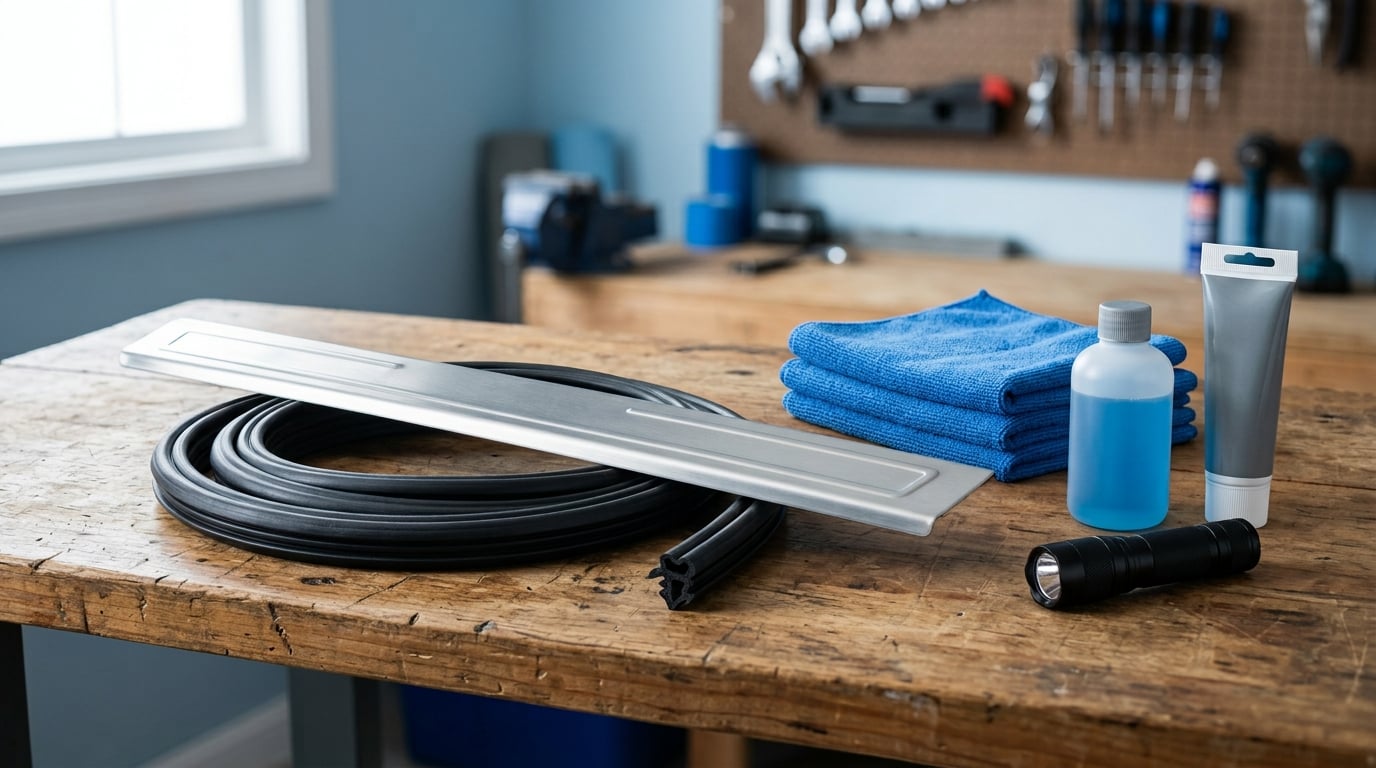
A frozen car door is almost always the same problem: a thin film of water trapped between the rubber weather seal and the painted door frame, turning to ice overnight and bonding the two together. Knowing how to prevent doors freezing shut comes down to three habits: treat the seals with a silicone rubber protectant, keep the latch and lock cylinder lubricated with something that will not freeze, and get water out of the door before you park. Most of it takes about ten minutes per door and costs a few dollars in supplies.
BMW owners get asked this more than most, and the honest reason is that these cars get driven, washed and parked outside through the whole season. Seals dry out, drains clog with road grime, and a car that sits overnight at 15 degrees below zero gives ice time to do its work.
The key thing to know upfront is that a frozen door is not one problem but two. If the door will not open, you have an ice bond at the seal. If the door will not shut or latch, you have a frozen latch, striker or lock mechanism, and seal care alone will not fix it. Owners on Reddit r/Cartalk describe the second problem far more often than the first.
Table of Contents
What You Need
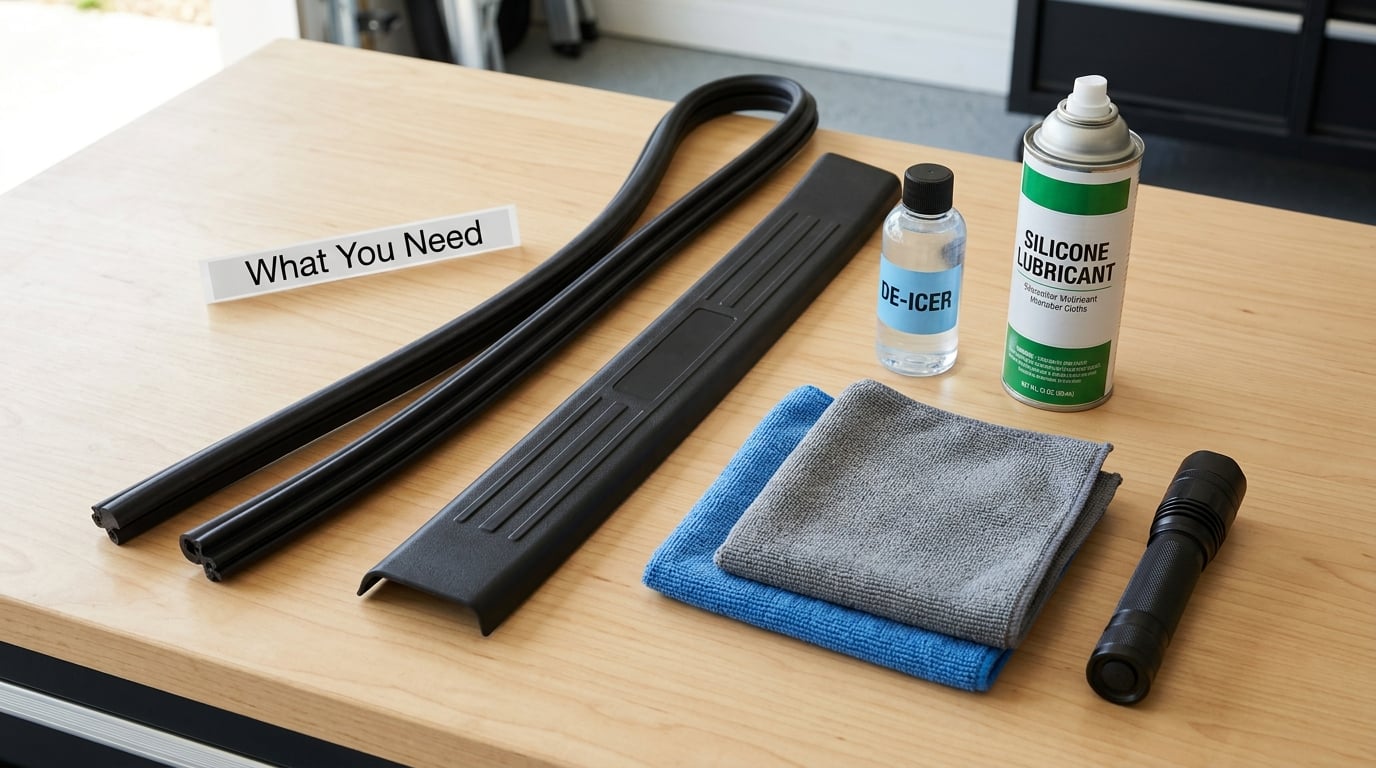
None of this is specialty equipment. The whole kit fits in a glove box once you have it together.
- An approved automotive de-icer or a bottle of 70% isopropyl alcohol. Alcohol has a much lower freezing point than water and evaporates without leaving a film.
- Silicone-based rubber protectant or lubricant. This is the one item that does the real preventive work, and it is safe on EPDM and rubber weatherstripping.
- Clean microfiber cloths, at least two. Road salt and grit under a seal is half of what makes it stick.
- A plastic de-icer tool or a plastic scraper for breaking up ice without putting a steel edge on your paint.
- Basic hand tools — a flat screwdriver, a small flashlight and, for some cars, a trim pick. You want light to see into the lower corner of the door and behind the weatherstripping.
- Graphite lock lubricant for the key cylinder. Do not use grease in a lock.
If your car lives outdoors all winter, a car cover is worth adding to the list. It does not stop a hard freeze on its own, but it keeps the seals from cycling wet and frozen night after night.
Step-by-Step: How to Prevent Doors Freezing Shut
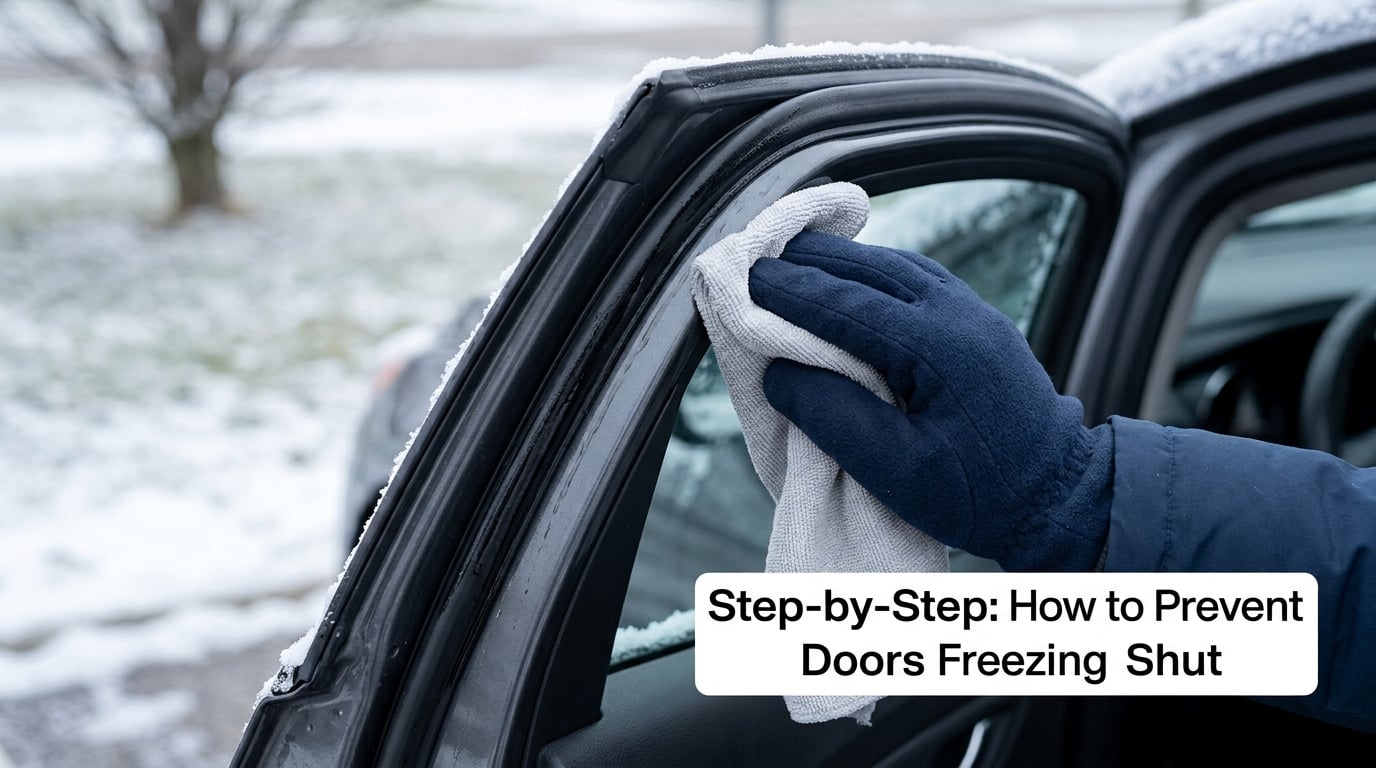
Work through these in order. The early steps deal with ice that is already there, and the later steps are what keep next winter boring.
Step 1: Remove Existing Ice Safely
Clear ice out of the door gap, along the bottom edge of the door, and around the latch and striker before you try anything else. Working a plastic de-icer tool or a credit-card-sized scraper along the gap breaks the bond without touching the paint.
Run a cloth along the bottom of the door and into the corners of the door jamb where ice likes to hide. Do not pry the door open with a screwdriver or a pry bar to make a gap — that is how weatherstripping gets torn and how a bent striker turns a fifty-dollar problem into a body panel.
How do you know the latch is free? Press the handle in first, then pull. If the handle moves inward and the latch clicks free of the striker, the mechanism is no longer frozen and the door will open normally. If the handle moves but the latch still catches, you have ice or a mechanical bind at the latch, not at the seal.
Step 2: Warm the Vehicle and De-Ice the Door Area
Start the car, turn the heat to maximum, and set the fan to high so the defroster pushes warm air along the base of the windshield and up against the door glass. Ten minutes of warm air softens the ice film enough to work with.
Use warm or hot tap water on the door gap and the latch area. Never boiling water, and never a hairdryer or heat gun parked against the glass. Boiling water poured on a frozen door cracks tempered glass, and concentrated heat on a window can warp the frame. You want warm, flowing water, not steam.
Spray the latch and striker with isopropyl alcohol and let it dwell for a minute. Work the handle a few times, gently. If the latch still will not catch, stop pushing and move to lubrication rather than force it.
Step 3: Use an Approved De-Icer or Door-Seal Protectant
Once the door is open and the ice is gone, this is where the prevention actually happens. A silicone-based rubber protectant leaves a water-repellent film on the weatherstripping, so overnight condensation beads and runs off instead of freezing against the frame.
Follow the label. Most of these want a clean, dry seal, a light even coat, and a few minutes of dwell before you wipe off the excess. Overcoating is a mistake — a heavy wet film traps dirt and eventually squeezes the seal.
Test the door before you trust the product. Open and close it twice, then run a finger along the inside face of the seal. It should feel slick and dry, not greasy, and the seal should spring back to the frame on its own with a light pull. That is the whole test, and it takes ten seconds.
Step 4: Lubricate and Inspect the Rubber Weather Seals
Clean the seal with a damp microfiber cloth, dry it properly, then apply a silicone-based lubricant or an approved automotive rubber conditioner along the full length of the rubber. Work it in with your fingers, top and bottom of every door.
While you are there, inspect it. Run a fingernail along the seal and look for hardening, a glossy surface, flat spots, tears, or a section that has pulled away from the door frame. Hard rubber that cracks when you flex it will not keep a water film off no matter what you spray on it.
Also check that the window is fully up. A half-open window drops water straight down the inside of the door, and on frameless-window coupes that water freezes into a solid block at the sill. The same goes for clogged drain holes at the bottom of each door — clear them with a flexible wire so meltwater runs out instead of pooling in the corner.
Step 5: Prevent Future Freezing
Where you park matters more than most people expect. A spot that collects snow and road salt keeps the bottom of the door wet and gritty, and that combination freezes faster than a dry parking space does.
If the car sits outside for days at a time, put a cover on it. If you have a garage, use it — our guide on keeping a garage from freezing in winter covers the temperature side of that, though keeping the space above freezing is a bonus rather than a requirement for your door seals.
Wipe the door frames and seals dry after every car wash, and shake the snow off the door edges rather than letting it melt and run into the gap. Owners on AudiWorld and Rennlist forums report the same pattern: dry the gasket, protect it with silicone, and the problem largely disappears for the season.
Finally, treat the seals on a schedule, not once a year. Every car wash through the winter is a good reminder, and a wipe-down of the door jambs with a towel over the top edge of the door is a cheap overnight trick for cars parked outside. For cars sitting for a full season in storage, our piece on preventing flat spots on tires during storage covers the rest of the long-parking checklist.
Common Mistakes
Most of the damage comes from a handful of repeat mistakes. Each one has a simple correction.
- Pouring boiling water on the door. It thaws faster and it can crack tempered glass or warp a window frame. Use warm tap water and spray, which does the same job in about a minute.
- Yanking the handle or forcing the door open. Handles break at the pivot and seals tear at the pinch weld. Press the handle in first, then pull, and warm the gap before you try.
- Putting a screwdriver or pry bar in the door gap to gain leverage. You will bend the striker or mark the paint. If you cannot get a tool in there, the ice is not clear enough yet.
- Coating the rubber seals with WD-40. It works briefly, then it dries out and leaves the rubber less supple. Owners on F150forum report a familiar cycle of fixing the problem in January and seeing it return by March.
- Using petroleum jelly or heavy grease on the seals. Petroleum products stiffen rubber over time and hold grit against it. A silicone product is the right chemistry.
- Greasing the latch and striker. Grease holds road salt and freezes. Use a dry lubricant or a light silicone film on the latch and a graphite stick in the key cylinder.
- Parking in the slush pile. Moving the car a few spots so the bottom of the door stays dry solves a surprising share of these problems.
One more worth naming: heating a transponder key with a flame or a lighter to get it into the lock. It damages the chip in the key, and the replacement cost is far higher than a bottle of de-icer.
Frequently Asked Questions
How do I get my car door open if it is frozen shut?
Press the handle in first, then pull gently. If it will not budge, start the car, run the heat and defroster on high for about ten minutes, then pour warm tap water — never boiling — over the door gap and the latch area to soften the bond. A plastic scraper or de-icer tool can break up ice in the gap without touching the paint. If the door opens but the latch will not catch, spray the latch and striker with isopropyl alcohol and work the handle slowly.
Should I put WD-40 in my car door lock?
A small amount in the key cylinder is an acceptable emergency measure, and it works. It is not a good habit, though. WD-40 is a light oil that flashes off with use and returns to a thinner residue, so the problem comes back within a few weeks. It also attacks some rubber over long contact, which is why it does not belong on a weather seal. For the lock, graphite or a dry Teflon-based lubricant lasts far longer. For the seals, use a silicone rubber protectant.
What can I use to lubricate a car door lock?
Three options work well. Graphite lock lubricant is the standard choice because graphite is a dry lubricant that will not freeze or attract moisture, and it is sold as a small twist stick. A dry Teflon-based lock lubricant sprays into the cylinder and lasts a season. A silicone-based lubricant works on the door latch and striker to keep them moving, though it is not the first choice inside a key cylinder.
Why does my BMW door freeze shut more than the others?
A few reasons stack up. After a couple of winters, rubber weatherstripping hardens and loses the flexibility that pushes water back out. Low drain holes at the bottom of the door collect salt and grit, which act as a rough surface for ice to grip. The locking pins inside a modern BMW latch are precision machined and can hold onto a thin ice film. If the door has sagged on its hinges, the latch and striker stop lining up cleanly and the door needs to pull itself shut with more force. A door that only ever sticks on one side is usually sag or a misaligned striker rather than a general freeze problem.
When does a frozen car door mean a seal or latch problem?
Treat it as a mechanical problem when the door sticks consistently in mild weather, when the rubber feels hard, glossy or cracked rather than supple, or when the power locks are sluggish after rain. Any of those point to worn weatherstripping, a clogged drain or a misaligned striker. If only one door sticks and it is the same door every time, alignment is the likely culprit. A seal that has torn away from the frame or a latch that does not engage cleanly needs parts and adjustment, not lubricant.
Will hot water unfreeze a frozen car door?
Warm water works, and it is the safest option. Boiling water does the same job faster but can crack tempered glass, and a hairdryer or heat gun held against a window can warp the frame or the door skin. Use water at tap temperature, pour it along the gap and the latch area, and give it a minute. Isopropyl alcohol is even better on the latch itself because it depresses the freezing point well below zero and evaporates without residue.
Conclusion
If a door is frozen right now, start the car and get warm air moving, then work warm tap water and a plastic tool into the gap. Press the handle before you pull, and never pry, yank or pour boiling water on it.
For every freeze after that, the fix is the same routine: dry the seals, treat them with a silicone rubber protectant, keep the latch and key cylinder lubricated with a dry or silicone product, and clear the drain holes. If a seal is visibly torn or hardened flat, get it replaced before the next deep freeze turns a ten-minute job into a repair.