
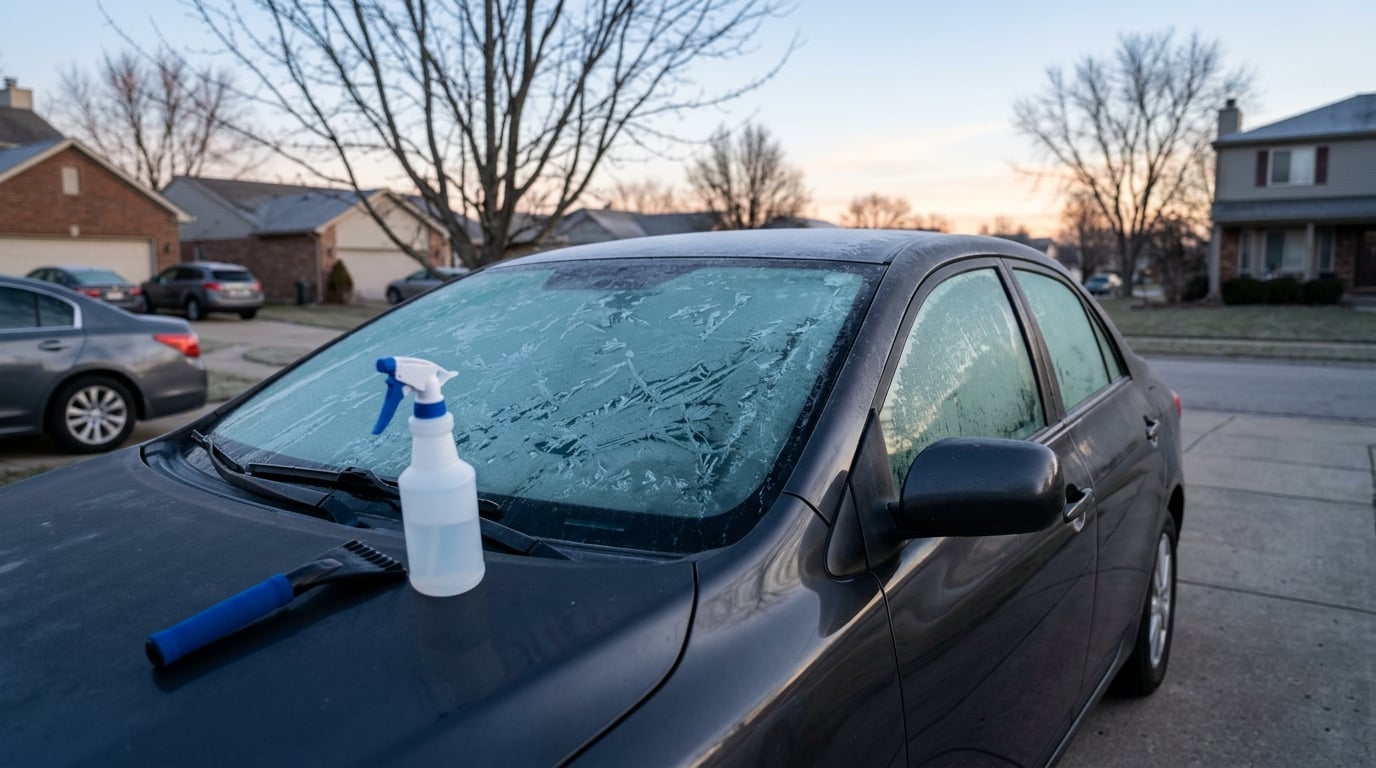
Turn the front defroster on, set the fan to high, push the temperature up, and leave the A/C running while recirculation stays off. Add a plastic scraper and a spray bottle of two parts rubbing alcohol to one part water, and that combination clears a light frost in roughly five minutes, while a quarter-inch of ice takes closer to twenty. Most of the waiting people complain about comes from the wrong buttons, not from the cold.
One thing to separate right away: frost on the outside and fog on the inside are two different problems with two different fixes. Outside ice is a scraping and melting job. Inside condensation is a ventilation job, and heat alone makes it worse. Our method below handles the outside, then the last step handles the inside.
Table of Contents
- How to Defrost a Windshield Quickly: What You Need
- How to Defrost a Windshield Quickly: Step-by-Step
- Step 1: Brush off the loose snow first
- Step 2: Run the front defroster, fan high, A/C on, recirculation off
- Step 3: Spray the 2:1 rubbing alcohol and water mix on the frost
- Step 4: Scrape from the edges toward the middle
- Step 5: Clear the last glass and deal with interior fog
- How to Defrost a Windshield Quickly When You Only Have Five Minutes
- Common Mistakes When Defrosting a Windshield
- Frequently Asked Questions
- Can I use hot water to defrost my windshield quickly?
- Should I turn on the defroster before scraping frost?
- How do I defrost frozen windshield wipers and door locks?
- What is the fastest safe way to clear an icy windshield?
- Can I use a hair dryer to remove windshield frost?
- How can I keep the windshield from frosting again overnight?
How to Defrost a Windshield Quickly: What You Need
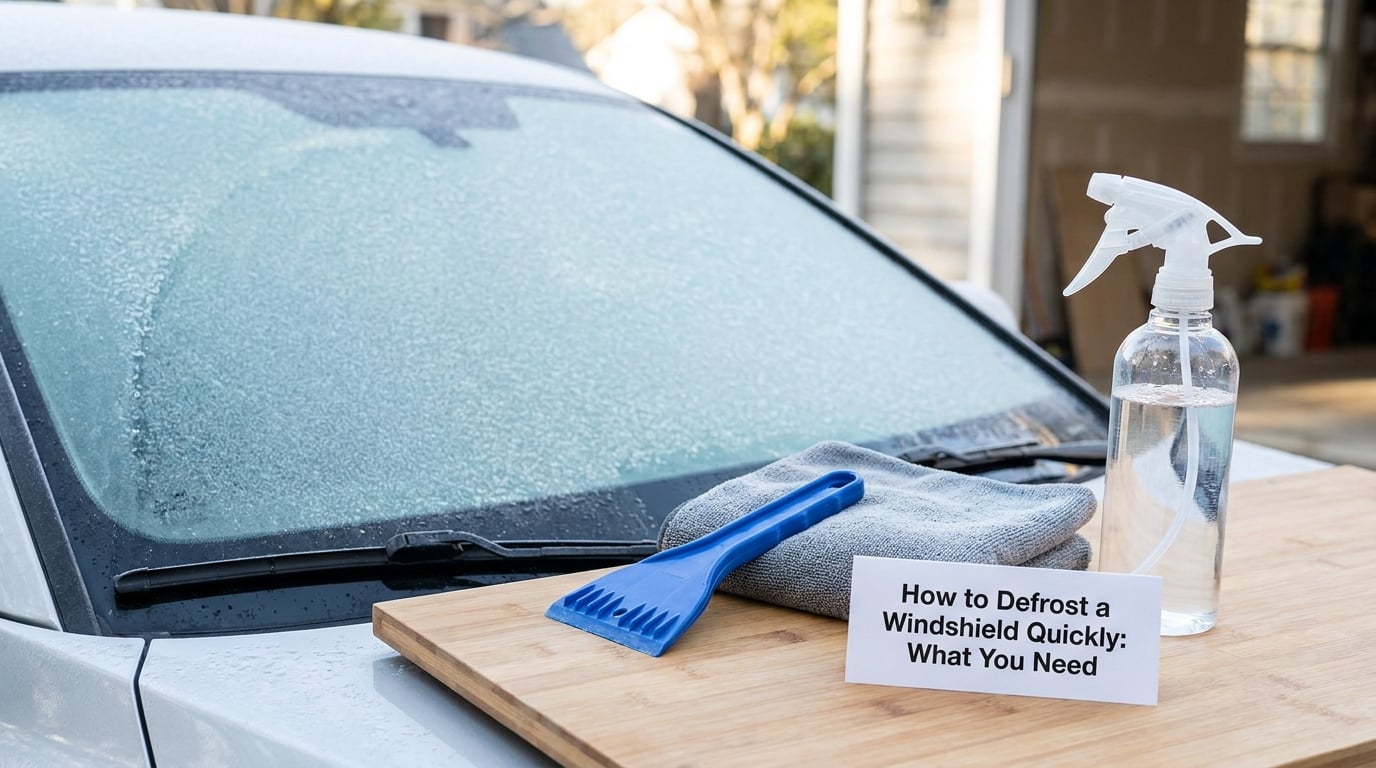
The list is short, and most of it fits in a glove box. Grab these before you start:
- A plastic ice scraper with a foam or rubber edge. This is the only thing that should ever touch glass.
- A spray bottle with a 2:1 rubbing alcohol to water mix. Alcohol drops the freezing point of the water so it keeps melting frost instead of refreezing.
- A microfiber cloth for the final wipe, since de-icer spray leaves a film that smears at speed.
- A card or plastic ID sleeve as a backup scraper. It works on a thin dusting and costs nothing.
- A small blanket or fitted cover if the car sleeps outdoors, to stop the frost from forming in the first place.
No spray bottle yet? A credit card and a plastic tote lid will get a thin frost off. No scraper and no card? A folded plastic grocery bag held flat against the glass peels frost up surprisingly well, and it will not scratch the way a metal blade does.
You can leave the car running unattended only outdoors. Never idle a vehicle in a closed or barely open garage, and remember the car needs a clear path for exhaust if it sits in a driveway facing a wall. If the engine is off, the defroster moves air at cabin temperature and defrosts almost nothing.
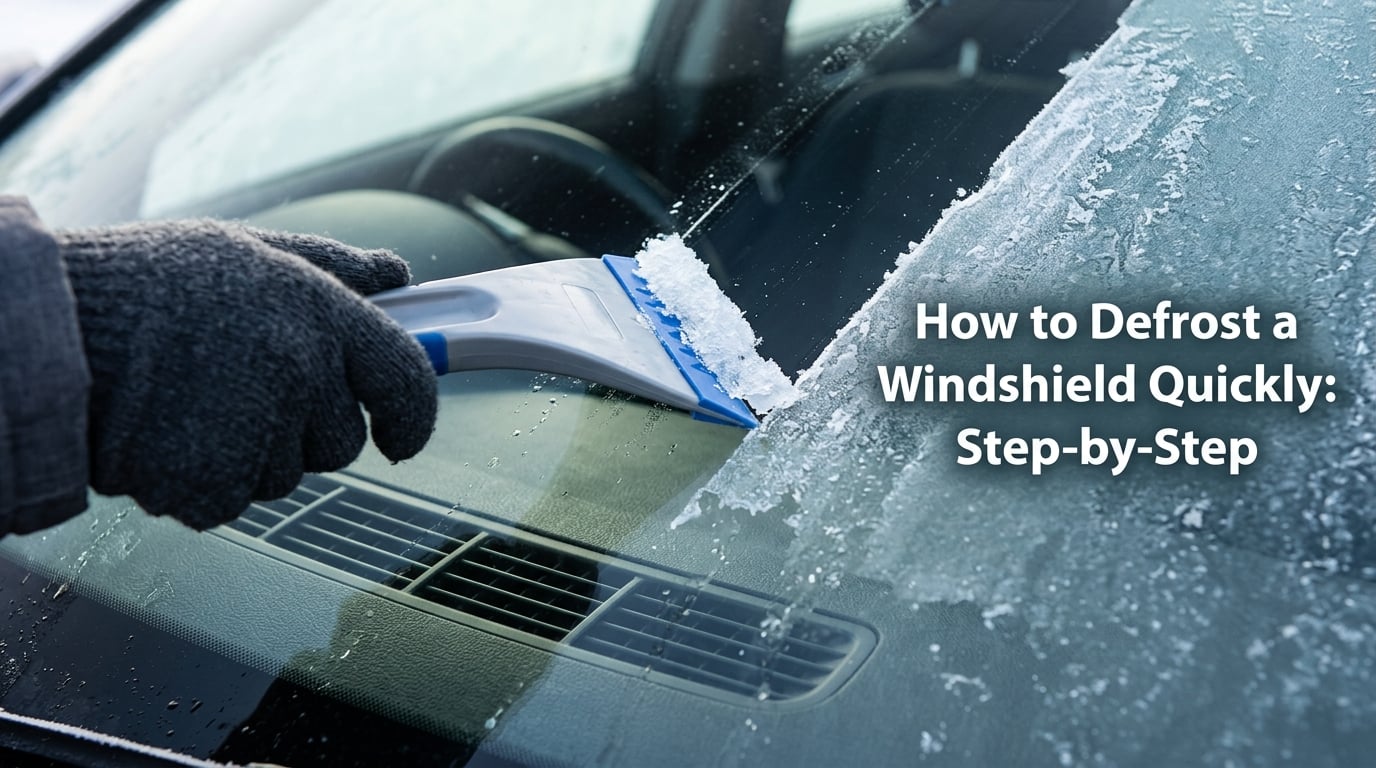
How to Defrost a Windshield Quickly: Step-by-Step
Step 1: Brush off the loose snow first
Sweep any powdery snow off the glass with a brush or your gloved hand before turning on heat. Snow on top of frost insulates the glass, so the defroster works twice as hard for no gain. Do this even if you plan to run the defroster, because it takes fifteen seconds and it is the difference between a clear windshield in five minutes and a clear one in twelve.
Step 2: Run the front defroster, fan high, A/C on, recirculation off
Hit the front defroster button, set the fan to its highest speed and the temperature to maximum. Then switch the A/C on and put the vent in fresh-air mode, not recirculate.
That last part surprises people. Recirculate re-blows the damp cabin air across the glass, and the A/C has to strip the moisture out of it before it can do anything. Fresh air mode gives the compressor dry outside air, and a dry air stream melts frost and clears interior fog at the same time. Heat alone only melts; heat with the A/C removes the water vapour that keeps fogging the inside.
You will hear it working. If you hear nothing from the vents, the fan setting is wrong, not the defrost setting.
Step 3: Spray the 2:1 rubbing alcohol and water mix on the frost
Mix two parts rubbing alcohol with one part room-temperature water in the spray bottle, then mist the windshield evenly from the bottom up. Do not soak it. The alcohol keeps working after it soaks in and leaves less residue than straight de-icer, and the water is there so the mix spreads instead of evaporating too fast on cold glass.
The frost should visibly slacken within about a minute. That is your signal to scrape. If nothing changes, the mix is too cold or too old, and you are better off skipping it and going straight to mechanical removal.
Step 4: Scrape from the edges toward the middle
Work the plastic scraper in long strokes, starting at the bottom edge and the side pillars and moving toward the centre of the glass. Each stroke should overlap the last, and keep the blade flat rather than digging the edge into the ice. That direction matters: the middle is the most fragile part of a windshield, and pushing loose ice inward piles it all against it.
Push the frost off the edge, do not drag it back across clear glass. If the scraper starts juddering, stop and spray again. A blade moving over bonded ice grinds a haze into the coating that sunlight will show you all week.
Step 5: Clear the last glass and deal with interior fog
Wipe the glass dry with a microfiber cloth, then move on to everything else: rear window, roof, side mirrors, backup camera lens, and the corner of the roof where side-view cameras live. A clean windshield with a frozen roof above it is not a clear view, and the backup camera stays useless until its housing is clear too.
For the inside, keep the fan high with the A/C running and the vents aimed at the windshield, and open one door for a minute if you can. Cracking a window vents the moisture that fog keeps feeding on. Soggy paper towel on the dash overnight helps too, since it absorbs what collects in the cabin.
How to Defrost a Windshield Quickly When You Only Have Five Minutes
Run the defroster first, then spray the alcohol mix, then scrape from the edges in. Those three in that order give you usable visibility in a light frost faster than any single method. Do not wait for the glass to fully clear before scraping. A half-clear windshield is still a hazard, and the last patch of frost hides in exactly the spot where the driver’s line of sight crosses oncoming headlights.
Realistic timings, so you can tell whether you are on track or wasting time:
- Thin frost, powdery: 5 to 10 minutes on the defroster alone, 2 to 4 minutes if you spray and scrape as well.
- Heavy frost, solid white: 12 to 20 minutes on the defroster alone, 5 to 10 minutes with spray and a plastic scraper.
- Thin ice, under a sixteenth inch: 20 to 35 minutes on the defroster alone, 8 to 15 minutes with spray and scraping.
- Ice a quarter-inch thick or more: the defroster alone can take over 40 minutes or fail completely, while spray and gentle scraping still get there in 20 to 30 minutes.
Thick ice is the one case where patience beats force. If you can see solid water rather than white frost, keep the defroster running, spray every few minutes, and let it soften. Forcing a thick slab is how windshields crack.
Common Mistakes When Defrosting a Windshield
Most cracked windshields I have seen were not caused by a stone. They were caused by a well-meant bucket of hot water. Here is what goes wrong, and what to do instead.
- Pouring hot or boiling water on the glass. The glass is near freezing on the inside of the layer and the water is not, and that temperature difference shatters laminated windshield in a line across your view. Use room-temperature water or the alcohol mix. If you only have hot water in the kettle, let it sit until it stops steaming.
- Using the wiper blades to clear ice. The rubber lip grabs the ice edge and tears it off the blade, and a bare metal arm drags across the glass. Blades are the last thing to move and the first thing you should check after a frozen morning.
- Switching on the wipers with the defroster running. A dry blade on frosted glass can chatter and streak. Wait until the spray has softened the frost.
- Scraping with anything metal, or digging the scraper tip in. A metal blade, a key, or a screwdriver edge will scratch the glass permanently. A plastic card is the improvised option, and it flexes instead of cutting.
- Pouring hot water on frozen locks or the wiper arm. Locks are usually plastic and the arm is a thin stamped part. Both deform before the ice gives up. Use a de-icer with a freeze-thaw action and cover the key slot with a hand.
- Leaving recirculation on. The defroster runs, air blows, and fog gets worse. Fresh-air mode is the setting that works.
- Forgetting the roof, the rear window, and the mirrors. Side mirrors especially. Drivers who clear the windshield perfectly and leave an iced mirror behind get cited for it in plenty of states, and the legal duty to clear all glass generally sits with the driver.
- Leaving de-icer residue. Store-bought sprays are strong on ice and sticky on glass. A dry microfiber pass afterward stops the smearing and the follow-on wiper chatter.
- Using rock salt or grit. It works fast and it sandblasts the glass and the rubber trim on the way down the windshield. Vinegar and the alcohol mix do the same job without the abrasive.
Stopping it from happening beats clearing it at seven in the morning. Spray a light mist of white vinegar or the alcohol mix on the glass the night before, which leaves a surface that resists frosting. A fitted cover or an old sheet tucked under the wipers does more than any spray, and if the car lives in a garage the problem largely solves itself. A hydrophobic glass coating applied in fair weather keeps overnight moisture off the glass in the first place, and heated wipers on vehicles that have them make the morning scrape a formality.
One habit from r/MechanicAdvice worth adopting: keep a filled spray bottle by the front door, not in the car. A bottle that sits in a freezing vehicle is a solid block of ice on the morning you need it.
Frequently Asked Questions
Can I use hot water to defrost my windshield quickly?
No. Water hot enough to help is well above the temperature of the frozen glass, and the gap between the two surfaces creates thermal shock, which can crack a laminated windshield across your line of sight. Use room-temperature water or a two-parts-rubbing-alcohol to one-part-water mix instead. If you have only hot water available, let it cool until it stops steaming before it goes anywhere near the car.
Should I turn on the defroster before scraping frost?
Yes, start the defroster first, then spray, then scrape. The heat and airflow soften the frost from underneath while the alcohol mix works on it from the surface, so each stroke lifts more than a cold scraper would. A fully hot windshield can overheat the glass in direct sun, so a few minutes of airflow is the sweet spot rather than leaving it to run the whole time.
How do I defrost frozen windshield wipers and door locks?
For the wipers, spray the blade and the arm with de-icer or the alcohol mix, then wait a few minutes and move the blades gently by hand. Never force a stuck blade, since the rubber lip tears off easily. For locks, use a lock de-icer rather than hot water, cover the key slot with your hand while spraying, and warm the key itself between your palms. A plastic bag of warm water laid over the lock also thaws the cylinder without touching it.
What is the fastest safe way to clear an icy windshield?
Front defroster on, fan high, temperature maximum, A/C running, recirculation off, then spray the 2:1 alcohol mix and scrape from the edges inward with a plastic blade. Thin frost clears in two to four minutes that way. If you are looking at solid ice rather than white frost, no method is quick, so start the defroster, spray repeatedly, and scrape gently once it slacksens.
Can I use a hair dryer to remove windshield frost?
Technically it works and practically you should not. The concentrated heat can crack tempered side glass and rear window, and the cord is a trip hazard in slush at five in the morning. It also takes longer than simply spraying the glass, because you are moving the dryer along every inch rather than treating the whole surface at once. A spray bottle and a plastic scraper do the same job in a fraction of the time.
How can I keep the windshield from frosting again overnight?
Park under a cover, an old sheet, or in a garage if you can. Otherwise mist the glass lightly with a mix of white vinegar and water, or the alcohol solution, before you go to bed. Parking in the morning sun helps because the residual heat melts light frost on its own. A hydrophobic coating applied in good weather keeps moisture from bonding to the glass in the first place.
So the first thing to do is not the spray bottle. It is the button row: front defroster, fan on high, temperature up, A/C on, recirculation off. Let that run while you mist the glass with the 2:1 alcohol mix, scrape from the edges toward the centre with a plastic blade, and then take the extra three minutes to clear the roof, the mirrors, and the camera. Do that before bed tonight and you may not need any of it tomorrow morning.