
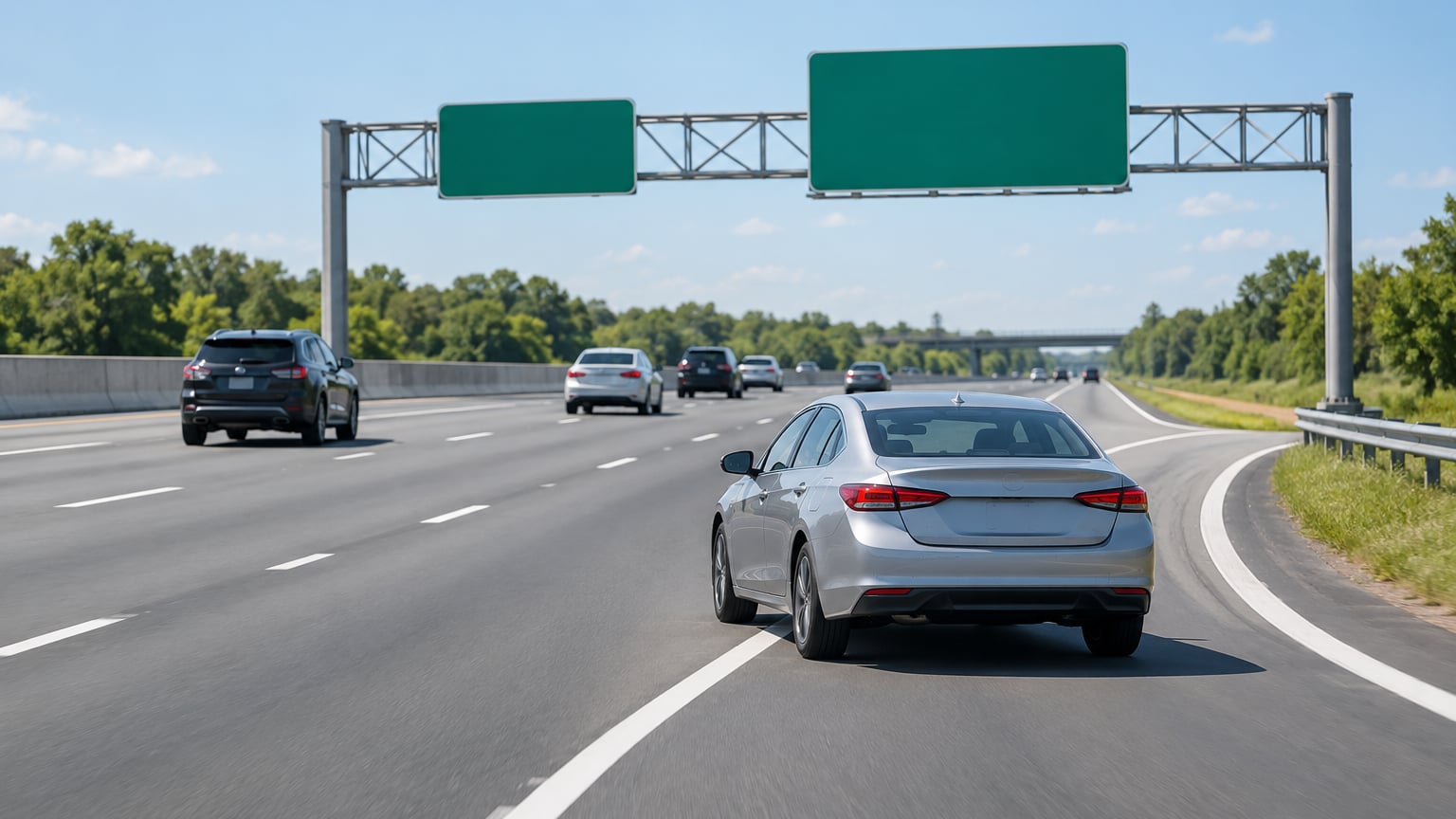
Learning how to drive on the highway for the first time comes down to four things: match the speed of traffic before you merge, hold a steady gap in front, stay in a predictable lane, and signal early. Miss any one of those and a routine motorway drive turns into a braking-and-swerving mess that drivers behind you never forget.
The freeway is not harder than city driving. It is just faster and less forgiving of hesitation, which is why the same driver who fumbles a busy four-way stop can cruise an interstate at a steady 65.
What follows is the exact sequence we would walk a new driver through, in the order it happens: what to check before you turn the key, how to read the lanes, how to merge, how to hold a gap, how to pass, and how to get off at your exit.
Table of Contents
- What You Need
- Step-by-Step
- Frequently Asked Questions
- How fast should I drive when entering the highway?
- How do I merge onto the highway the first time without panicking?
- What lane should a beginner drive in on the highway?
- How far behind the car in front should I stay at highway speed?
- Should I stay in the left lane or pass slower traffic?
- What should I do if I miss my highway exit?
- Conclusion
What You Need
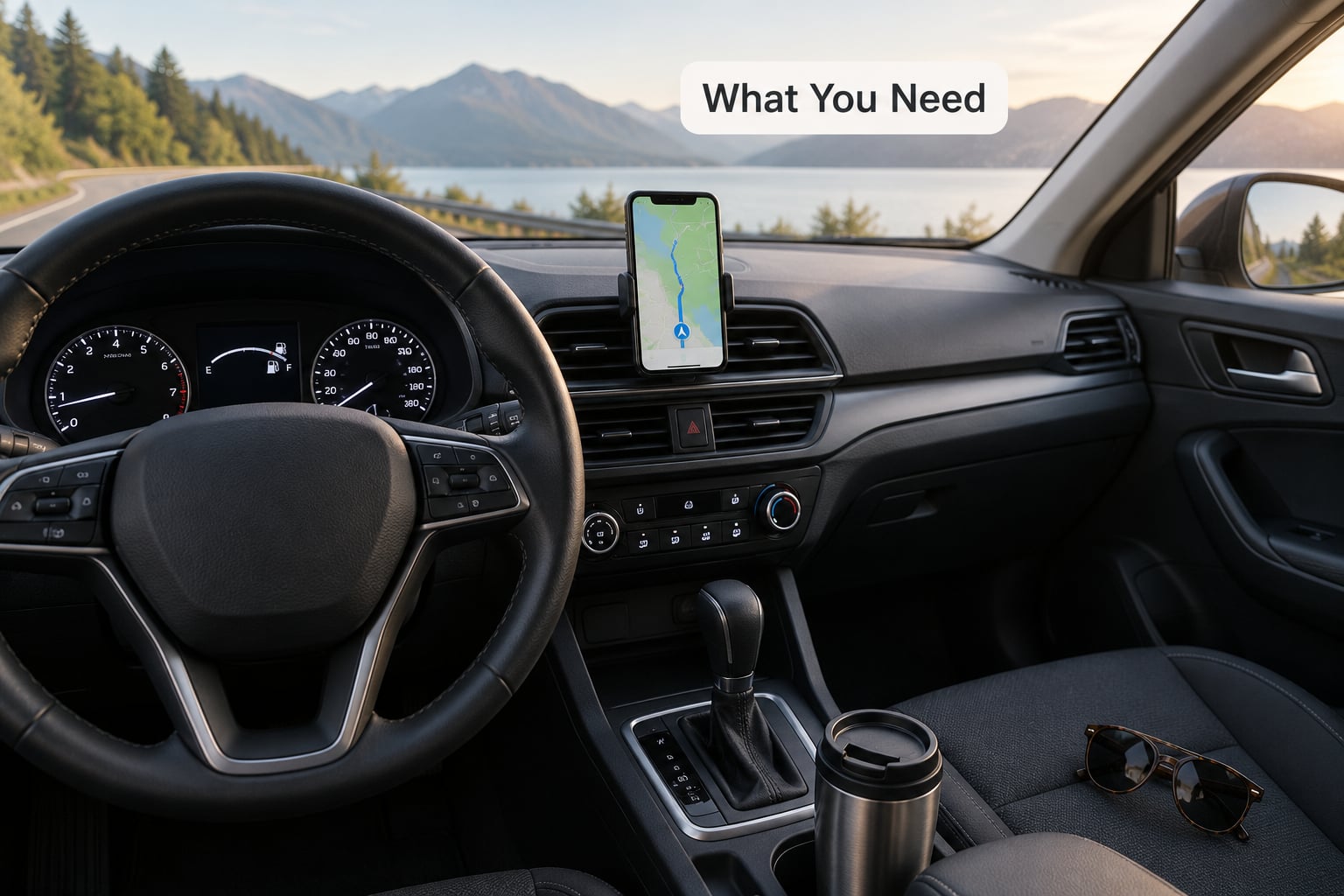
You need a valid licence that covers freeway driving, a car that is registered, insured and roadworthy, and a route you have already looked at on a map. Everything else is comfort.
Check the car before you leave, not on the ramp. A tire that looked fine at 30 mph loses its margin at 70, and a warning light that seems decorative at low speed is the one thing on a motorway you cannot fix yourself.
- Licence and documents. Your licence must be valid and, where your state requires it, you need an accompanying licensed driver for your early trips. Registration and insurance should be in the car or on your phone.
- Tire pressure and tread. Cold tire pressures are on the placard inside the driver’s door jamb, not the sidewall maximum. Check all four plus the spare, and look for tread worn flat across the middle or cracking on the sidewalls.
- Fuel and fluids. A quarter tank or more, and enough that you never need to think about it. Note anything the dashboard warns about before you start, not at 65 mph.
- Lights and glass. Both brake lights, all turn signals, headlights, and a windscreen you can see through. Clean smears off now rather than squinting later.
- Your route. Know the exit number or name, and at least one backup exit. Set navigation before you pull out, mounted and audible, not in your hand.
- A rested you. Dusk, heavy rain, a storm or a long day of work are all good reasons to push the first drive to a quieter moment.
For a longer haul after you are comfortable, our guide to planning a long road trip drive covers the route and fuel planning side in more depth.
Step-by-Step
Step 1: Prepare Before You Leave
Walk around the car once. Tires inflated and free of bulges, nothing hanging off a tire, no fluid under the car, lights working, mirrors adjusted so you can just see the edge of your car in each one.
Set your seat, mirrors and belt before you start the engine, not after. Know your route, fill the tank, and leave with a time cushion so you are never rushing to catch an exit.
Step 2: Understand Highway Signs and Lanes
On a typical interstate the lanes have jobs. The far right lane is the right lane for slower traffic and continuing straight; the middle lanes are the main travel lanes; the far left lane is the passing lane or, on many roads, the carpool lane that may only be used outside posted hours.
Two things trip up new drivers every time. The shoulder is not a lane, and the painted area between an exit ramp and the through lanes, the gore area, is not a place to slow down or stop. Cross it at a steady speed or do not enter it at all.
Read the signs before the ramp, not on it. Overhead signs tell you which lanes continue and which exit, and the speed limit sign is the maximum, not a target.
Step 3: Enter the Highway Smoothly
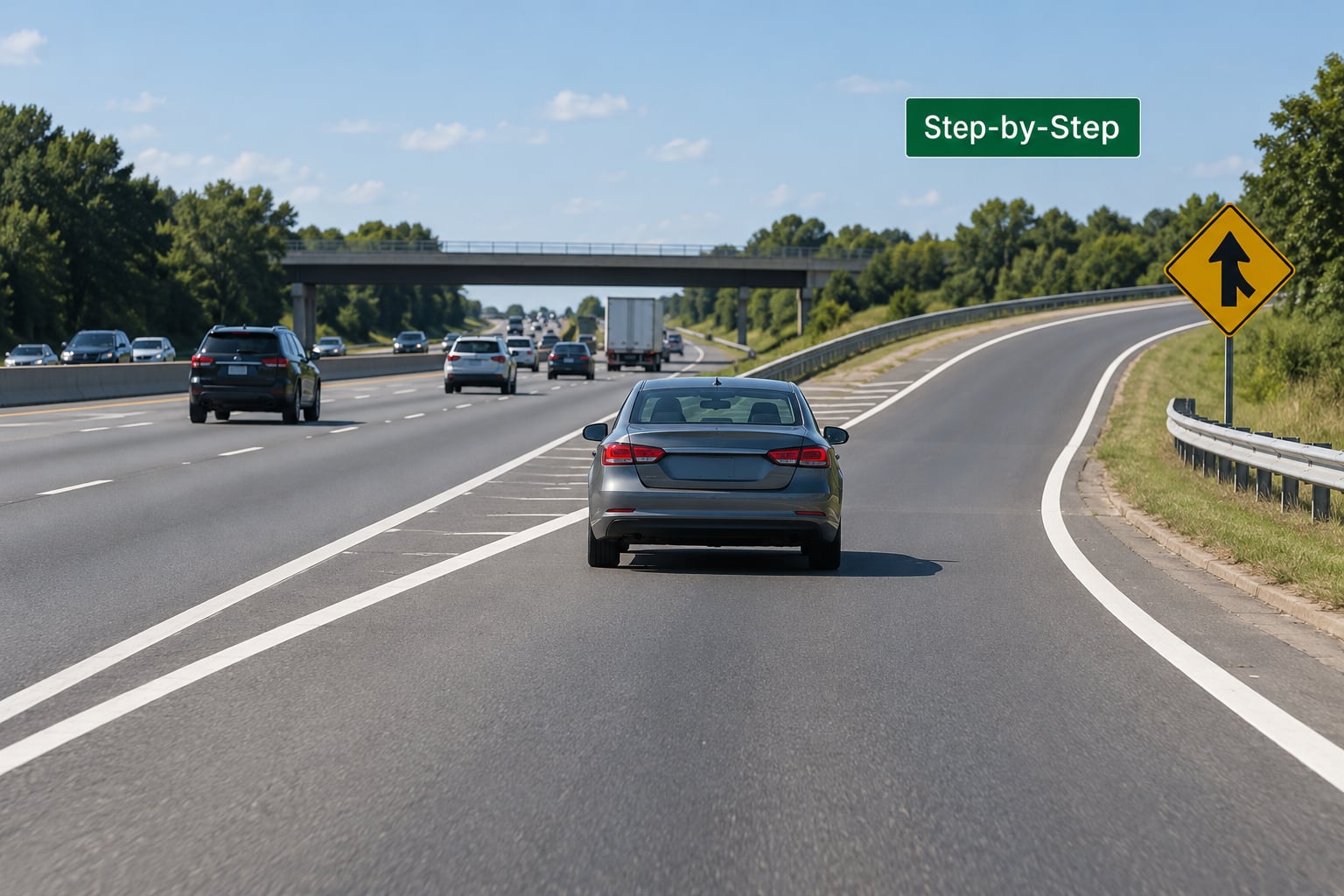
Signal your turn early so traffic behind knows why you are leaving the surface street, then keep right on the ramp and accelerate steadily. The ramp exists so you have enough distance to reach the speed of traffic before you enter the highway.
As you approach the merge point, check your mirrors, then do a shoulder check over your left shoulder for anything in your blind spot. Never change lanes while driving parallel to another vehicle. Find a real gap several car lengths long, maintain your speed, and go when it opens.
If you approach too slowly, you force the lane behind you to brake, and that speed differential is the leading cause of rear-end collisions at merges. On some busy ramps the pavement says accelerate and merge without a stop, and you should follow it.
If no gap appears, keep your speed up, stay out of blind spots and keep looking. The gap will come.
Step 4: Match Traffic and Hold a Safe Following Distance
Pick the right lane or a middle lane, settle at a speed near the flow of traffic, and stay there. Holding one lane at one speed is what makes you easy for other drivers to read.
Leave several seconds of space in front. Pick a fixed point ahead, and when the vehicle in front passes it, count the seconds until you reach the same point. In rain, fog or darkness, double or triple that gap and slow down to match what you can actually see.
Do not sit in a truck’s blind spot for long stretches, and remember that a loaded semi needs far more room to stop than a car, so the gap in front of one should be wider.
Step 5: Change Lanes and Pass Safely
A proper lane change has an order: mirror, signal, shoulder check, move, signal again. Mirrors tell you what is around you, but the shoulder check is the only thing that confirms the blind spot, so do it every single time even if the mirror was clear.
Pass slower traffic on the left only, get a full car length past before you return, and return to the right lane when there is room. If the left lane is empty, stay out of it. Sitting in the passing lane at a slower speed is the single most common complaint experienced drivers have about new ones.
Never brake hard to squeeze into a gap, and avoid changing lanes near ramps, curves, tunnels and construction zones where sight lines shorten and merging is happening at the same time.
Step 6: Handle Common Highway Hazards
Slow or stopped vehicles are the biggest hazard. Watch far down the lane, not just the car in front, and scan the shoulder. If a car ahead is stopped with hazards on, move a lane away or slow early and steady, never sharply.
Trucks and RVs have blind spots beside the cab and directly behind, so stay out of that band, especially on curves. Construction zones have narrower lanes and abrupt lane shifts, so slow down and read the signs rather than matching highway speed through them.
Strong crosswinds push the car toward the shoulder in a big vehicle, so ease off the accelerator, keep both hands on the wheel and aim slightly into the wind. In heavy rain or standing water, drop your speed well below the limit and add distance; our guide to driving safely in heavy rain covers it step by step. For open highway where the wind is the main event, see how to drive in high winds safely.
If something breaks down, get the car off the roadway if you can, hazards on, seat belt on, and stay in the vehicle on the shoulder rather than standing in traffic. Call for help and follow the instructions given to you.
Step 7: Exit Without Missing the Ramp
Signs for an exit appear well before the ramp, typically around a mile out. Read it, decide on your lane, and make the move early rather than late.
Move to the right lane, signal, and do a shoulder check. Once you are in the exit lane, stay there and set your speed for the ramp rather than the freeway. You can continue slightly above the ramp speed if traffic is entering ahead of you, but the deceleration belongs on the ramp, not in a live freeway lane.
If you miss the exit, keep going. Do not reverse, stop, or make a turn against traffic. Take the next exit, turn around at a safe place, and come back. Every driver has done it, and nobody behind you is watching your exit number.
Common Mistakes
- Entering too slowly. Merge at a speed close to the lane’s traffic, generally within 5 to 10 mph, rather than trickling on and forcing someone to brake.
- Riding the acceleration lane. That lane is for reaching speed, not for waiting. If the merge does not work, keep moving, stay out of blind spots and look for the next opening.
- Skipping the shoulder check. Mirrors miss the blind spot. Turn your head every time you change lanes.
- Tailgating at highway speed. At freeway speed you need several seconds of clear road, and more in poor conditions.
- Using the shoulder as an extra lane. Pulling out to pass turns a near miss into a head-on crash.
- Racing down the exit lane. Slowing in a live lane is dangerous. Slow down on the ramp.
- Stopping on the freeway. Even a fumble with a turn signal does not need a stop. Keep going until you are off.
- Weaving between lanes. Pick a lane, hold it, and let faster traffic go around.
If your nerves spike, the fix is repetition, not more theory. A common routine among new drivers is to run the same stretch of highway in a quiet period and get on and off successive ramps over and over until the merge stops being an event. Most people find the third drive unremarkable.
Frequently Asked Questions
How fast should I drive when entering the highway?
Match the speed of the traffic in the lane you are merging into, generally within 5 to 10 mph, before you leave the acceleration lane. If you merge much slower, the driver behind must brake hard to avoid you, and that speed difference is what causes most merge collisions. Stay near the posted limit and hold a steady, line.
How do I merge onto the highway the first time without panicking?
Signal early, keep right on the ramp, and accelerate steadily until you are near highway speed. Check mirrors, then look over your shoulder, find a gap several car lengths long, and merge while holding that speed. Do not stop or hesitate at the end of the ramp, and do not drive parallel to another car waiting for a gap.
What lane should a beginner drive in on the highway?
Start in the right lane or a middle lane and keep it. The far left lane is for passing, or may be a carpool lane with its own posted hours, and sitting there at highway speed holds up everyone behind you. Move left only to pass slower traffic, then return right as soon as there is room.
How far behind the car in front should I stay at highway speed?
Leave several seconds of space. Pick a fixed point ahead, and when the vehicle in front passes it, count the seconds until you reach the same point. At freeway speed you need a clear view of the road and the vehicle’s brake lights, so add more room in rain, fog or darkness, and much more behind a loaded truck.
Should I stay in the left lane or pass slower traffic?
Pass on the left, then return to the right lane as soon as you are past and there is space. If a vehicle ahead is holding a steady slower speed in the right lane, following it at a safe gap is often safer than passing, particularly in rain or heavy traffic. The left lane is for passing, not for sitting.
What should I do if I miss my highway exit?
Keep going. Never reverse, stop, or make a U-turn on the freeway. Move to the right, take the next exit, and turn around at a traffic light or parking lot where it is safe, then return to the highway. Missing an exit happens to experienced drivers in unfamiliar cities, and it is a far smaller problem than reversing into live traffic.
Conclusion
Start on a quiet stretch of highway, in daylight and dry conditions, and run the sequence on a short trip: merge at matched speed, hold a few seconds of space, stay out of the left lane, signal early and leave at your exit.
What actually builds confidence is repetition, not more rules. After two or three drives the merge stops feeling like a test, and the whole thing settles into what freeway driving really is, which is a long, steady, predictable job.