
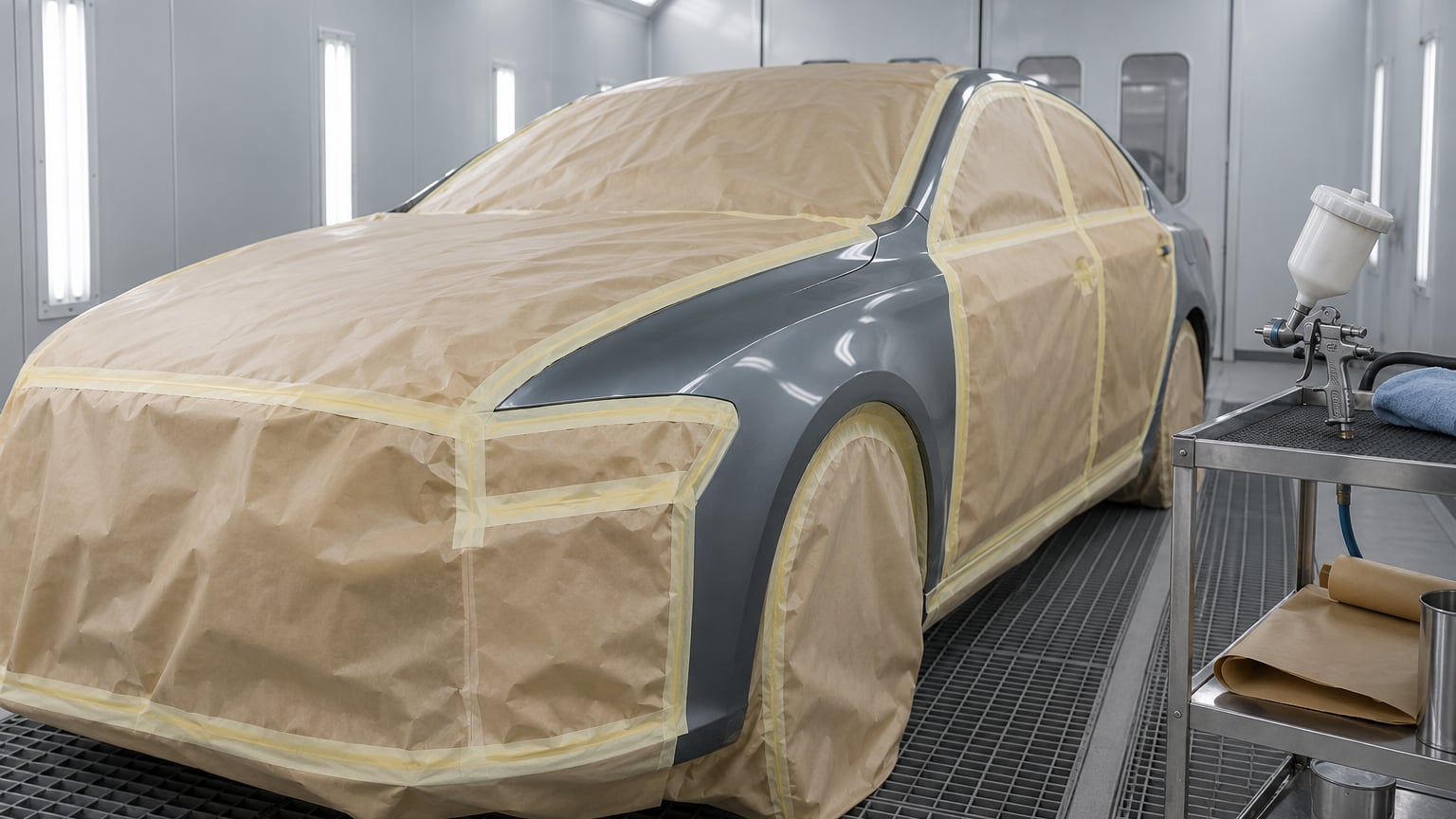
A basic full repaint of a sedan runs about $1,000 to $1,500, a mid-tier quality respray lands somewhere between $2,000 and $5,000, and premium or custom work runs $5,000 to well past $10,000. Most drivers who repaint a whole car spend in the $3,000 to $5,000 range, and the number you see advertised is rarely the number you pay.
That gap between the advertised price and the invoice is the reason this question generates so much anxiety in body shop parking lots. A flyer advertising a $299 special covers paint. It does not cover scuffing the old finish, priming bare metal, laying the base coat, spraying clear, or blending the new paint into the panels next to it, and those missing steps are where most of the money actually goes.
The figures below come from shop quotes and owner-reported costs across US body shops and enthusiast forums, so treat them as typical ranges. Prices vary by region, shop and vehicle, and they move over time. Updated for 2026.
Table of Contents
How Much Does It Cost to Paint a Car at a Glance
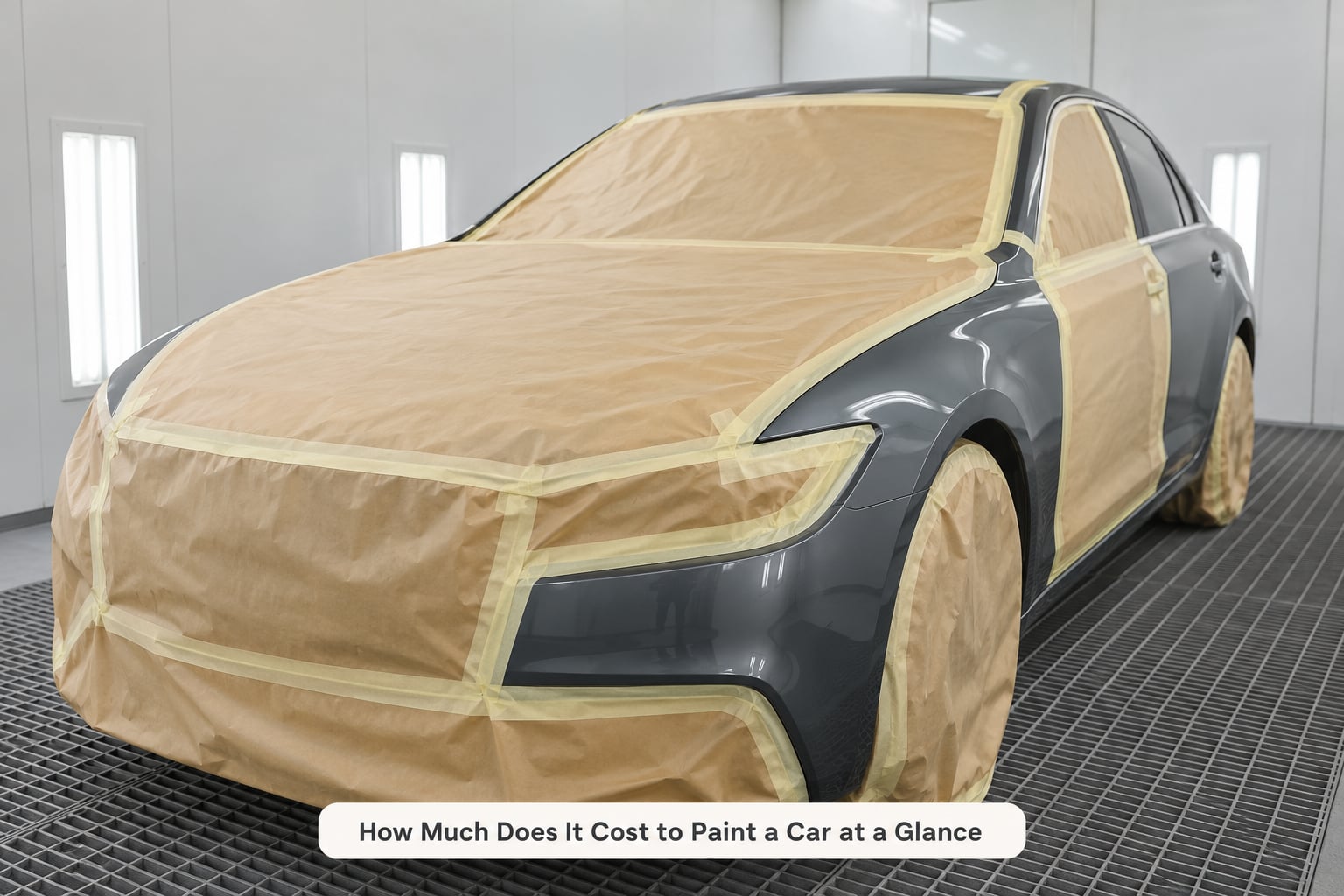
Here is the shortest useful version of the answer. A basic one-stage respray in a flat color is the cheapest full job, a mid-tier multistage system with clearcoat is the realistic middle, and anything with color changes, candy, pearl or matte finishes sits at the top of the range.
| Job type | Low | Typical | High |
|---|---|---|---|
| Touch-up or spot paint (one chip or stone nick) | $75 | $150 | $350 |
| Single panel repaint (door, hood, fender) | $300 | $500 | $900 |
| Small panel (bumper, quarter panel, roof) | $350 | $600 | $1,100 |
| Clear coat only (re-clear over existing paint) | $400 | $800 | $1,500 |
| Partial repaint (three to five panels, blended) | $1,200 | $2,000 | $3,500 |
| Full repaint, basic single-stage | $900 | $1,300 | $2,000 |
| Full repaint, mid-tier multistage with clearcoat | $2,500 | $4,000 | $6,000 |
| Full repaint, premium or show quality | $5,000 | $8,000 | $12,000+ |
| Color change (full strip and jamb repaint) | $4,000 | $7,000 | $15,000+ |
| Custom work (candy, pearl, matte, graphics) | $6,000 | $12,000 | $20,000+ |
Vehicle size moves the mid-tier number more than anything else. A full-size pickup has nearly twice the paintable surface of a compact car, and the bed, the two front fenders and the tailgate are all separate labor operations.
| Vehicle class | Mid-tier full repaint |
|---|---|
| Compact or subcompact car | $2,000 to $3,200 |
| Midsize sedan or coupe | $3,000 to $4,500 |
| Two-row SUV or minivan | $3,500 to $5,500 |
| Full-size pickup | $4,000 to $6,500 |
| Full-size SUV or three-row | $5,000 to $7,500 |
Real owner numbers land inside these bands, which is a decent sanity check. One 1969 Plymouth Fury owner on r/projectcar was quoted $10,000 to $15,000 for a full repaint and stopped to ask whether that was normal. A CRX owner on r/crx paid $6,400 for what the shop called show car quality, including a complete color change with the door jambs painted, and still walked away unsatisfied.
What Affects the Price?
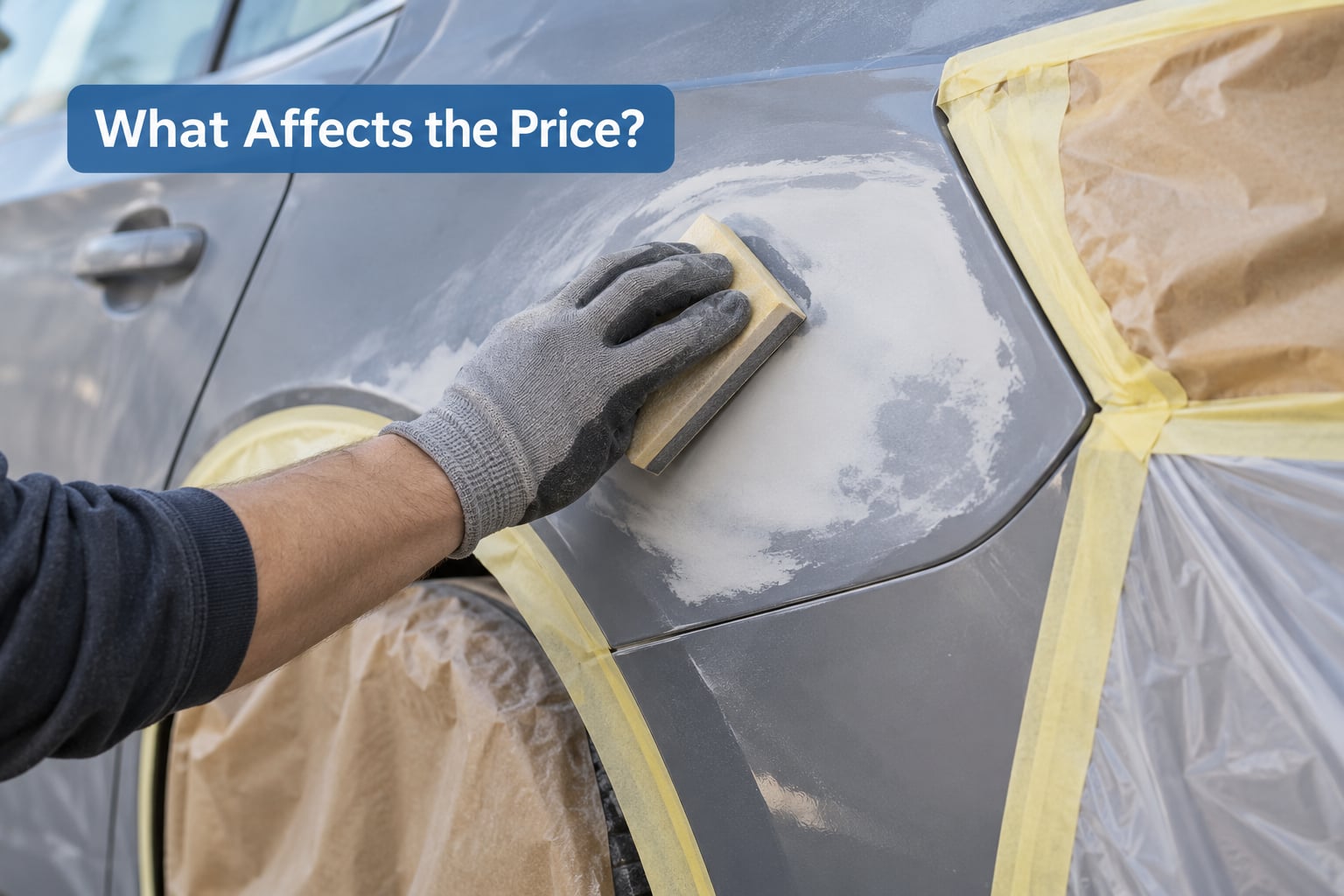
Two quotes for the same car can differ by thousands of dollars, and the difference almost always traces back to a handful of specific line items. Here is what moves the number.
Vehicle size and panel count
The single most useful unit cost on this topic comes from a grassrootsmotorsports forum thread: roughly $300 per panel to scuff, prep and paint, and every additional panel multiplies from there. A four-door sedan touches roughly a dozen paintable panels counting hood, roof, deck lid, two front fenders, two doors per side, two quarter panels and two bumpers. Do that math and you can rebuild almost any quote from scratch.
A single door should not run the full per-panel figure, because labor setup is partly shared. Small parts like a bumper or a quarter panel often cost less than a hood because there is less flat surface to lay out. Full-size trucks add a bed, tailgate and often a two-tone or bedliner option on top of the sedan panel count.
Prep work and hidden damage
Paint will not bond to rust, silicone, wax or a chalky oxidized surface, so every panel gets scuffed and cleaned before color goes on. Bare metal gets primed. This prep is where a $299 special stops covering the bill, because sanding and priming are billable hours even when nothing else is wrong.
Teeth and filler from a previous repair are a related trap. Shops quote the paint work, open a panel and find filler absorbing moisture or a seam rusting through from the inside, and the estimate grows. That is why reputable shops include a hidden damage allowance on written quotes, and why a quote with no allowance at all is worth questioning.
Paint type and color complexity
Single-stage synthetic enamel puts color and gloss in one coat. It is cheap, quick and the usual choice for a budget whole-car respray, and it fades and chalks faster under sun than modern systems do.
Multistage urethane sprays a pigmented base coat, often with metallic flake or pearl, then a separate clearcoat over the top for depth and UV protection. That is the standard in quality refinishing today, and the reason for the price gap between a basic and a mid-tier job. Solid black and solid white sit at the cheap end because they hide imperfections well. Silver, gold, pearl and anything with large flake take more coats and more masking.
Candy, pearl and matte finishes sit above all of that. A matte finish in particular cannot be touched up later without leaving a visible patch, so shops charge for full panel replacement rather than blending.
Labor rates and shop location
Body shops bill by the hour, and collision work commonly runs $100 to $175 per hour depending on the market. Forum owners shopping for quality paint report the same labor band across independent shops, and regional variation follows local collision-shop economics rather than any published table. A coastal metro with high overhead and a busy dealer body shop network simply costs more per hour than a rural independent.
Ask for the shop’s hourly rate in writing alongside the quote. It tells you more than the total, because it tells you how much room there is to argue about hours.
What an advertised special actually covers
Here is the part that catches people. A $199 or $299 special is a marketing price for the paint materials and a limited number of panels in a limited set of colors, with a coupon attached and a decision made in the front office in about five minutes. It is not a repaint.
Expect the final number to land between $1,000 and $2,000 once sanding, prep, primer, blending, clearcoat and reassembly appear as separate lines on the invoice. That gap is not theft. It is the price of work the coupon did not include.
How to Compare a Body-Shop Estimate
Nobody publishes a baseline, so the way to know whether a quote is fair is to read it the way you’d read a mechanic’s estimate. Ask every shop for the same thing in the same form, then compare line by line.
A fair quote itemizes these eight things:
- Number and name of panels. Every panel listed individually, with blending noted where new paint meets old.
- Prep hours. Scuffing, cleaning, sanding and blocking, listed as labor time per panel.
- Primer. Named explicitly, with areas that need it identified.
- Paint system. Single-stage or multistage, and the brand of paint, primer and clear being used.
- Materials cost. Sometimes bundled into labor, sometimes separate. Both are normal.
- Labor rate. The shop’s hourly figure stated plainly.
- Hidden damage allowance. A line covering what gets found when panels come apart.
- Completion time and warranty. Days in the shop, and whether the paint warranty transfers to the next owner.
Signs of a padded or careless quote read differently. A single lump sum with no line items, a shop that hands you an estimate in five minutes without walking the car, a color listed as flat when your car is metallic, or an estimate that lands far below the material cost floor.
That floor is worth knowing. Quality paint runs $300 to $500 a gallon, and once you add primer and clear you are already at roughly $1,500 to $2,000 in materials alone for a full car, per the consensus on the camaros.net forum, before a single labor hour is billed. A quote for a whole-car multistage repaint that comes in under about $2,000 is not a bargain. It is a shop that plans to skip steps.
Five questions will tell you more than the total will:
- Is this quote for the same scope as the others I am collecting?
- Which paint brand and system are you using, single-stage or multistage with clear?
- What is your hourly labor rate?
- What happens if you find rust or filler once the panel is apart?
- How long will the car be in the shop, and is there a warranty?
Get three written quotes using the same description of the work. If one comes in at half the others, the question is not which shop is generous. It is what the cheap one is leaving out.
Ways to Save on Car Painting
None of these produce a worse finish. They just stop you paying for work you do not need.
Paint only the damaged panels
A blended partial repaint is often 40 to 60 percent of a full respray. The catch is color matching: panels sprayed years apart from the same batch can fade differently, so blend the repair into the adjacent panels rather than stopping at a hard seam. If you want to handle minor nicks yourself in the meantime, our touch up paint chips on a car guide covers matching a factory color with a blend.
Fix chips before rust starts
A chip is a hole in your corrosion protection. Blistering around a chip means rust has already started under the paint, and rust remediation plus panel replacement costs far more than a touch-up did. Sand and seal chips early, or spray them.
Collect three written quotes
Identical scope, identical format. This is the least effortful saving on the list and often the largest. Bay Area and Los Angeles owners report hunting hard for affordable paint because local rates run high, and the quotes they gathered were frequently 30 to 40 percent apart.
Ask what a partial job would cost
Before agreeing to a full car, ask what three panels cost. If the fade on the hood and roof is mild, a blended front clip plus a re-clear on the faded sections can hit the same visual goal for a fraction of the number.
Check the value break-even before signing
There is a rule of thumb floating around that a paint job should not exceed roughly 25 to 50 percent of the car’s value, which puts a hard ceiling around $3,000 to $4,500 on a $12,000 car. The owner of an r/944 thread put it more plainly than any shop would: they did not want to spend more on paint than the car was worth, but they did not want a job that would fall off in two years. Paint helps curb appeal and it protects bare metal. It does not add dollar for dollar to resale value, and a $5,000 job does not add $5,000.
Maintain the finish you already paid for
Garage storage, a ceramic or sealant coating, and washing without dragging grit across the clear all cost a fraction of a repaint. Our guide on how to wash a car without scratching the paint is worth reading even if you never repaint anything.
Walk away from upsells you did not ask for
Jamb painting, engine bay refinishing, new moldings and sealant work are legitimate when a panel comes apart. They are upsells when a simple door job suddenly includes the entire interior. Ask for each addition as its own line with its own price, and be free to decline.
DIY vs Professional Car Painting
Touch-up work and a full repaint are completely different activities, and most people who say they will paint their car really mean a bottle of factory-matching paint and a brush.
A DIY touch-up kit runs $20 to $60 and handles chips, stone nicks and light scratches. Aerosol touch-up spray handles a slightly larger scuff. Neither will color-match a faded panel, and neither blends. If you have never sprayed, practice on a scrap panel of the same color and the same clear first.
A garage full respray is where the money and the skill gap sit:
| Item | Typical cost |
|---|---|
| HVLP or LVLP spray gun | $150 to $500 |
| Compressor with adequate airflow | $400 to $1,500 |
| Paint booth or converted garage with filtration | $500 to several thousand |
| Infrared drying lamp or booth | $200 to $800 |
| Paint, primer, clear, hardener, solvents for one car | $800 to $1,800 |
| Sanding, blocking, masking and prep supplies | $200 to $500 |
Materials for a quality single-stage enamel job can start lower, and a camaros.net forum consensus puts quality paint alone at $300 to $500 a gallon. Add primer and clearcoat and you are at roughly $1,500 to $2,000 in materials for one car before any equipment purchase.
The equipment is the smaller problem. Overspray is nearly impossible to control in a residential garage without a booth, and a dust speck that lands in wet clear coat becomes an orange peel defect you cannot sand out without flattening the finish. Solvent and isocyanate hardener fumes are genuinely hazardous in a closed space, and both the fuel and the ventilation requirements are real. Paint outside, or not at all.
Where DIY makes sense: one panel on an old beater, a non-visible car, or learning the craft on a project car you are not in a hurry to finish. Where it does not: a car you drive daily, a color change, anything requiring jambs and blending, or any vehicle where you want the result to hold for more than a couple of years.
If the panel you are fixing is dented but the paint is sound, paintless dent repair runs $75 to $400 per dent depending on size and location, and there is a version of that worth asking about before anyone starts sanding.
Frequently Asked Questions
How much does it cost to repaint a car in a basic job?
A basic single-stage full repaint of a compact car or sedan typically runs $900 to $2,000, with most drivers paying around $1,300. That price covers scuffing, priming, one color coat and reassembly, but usually not a separate clearcoat. Because paint materials alone run $300 to $500 a gallon, any whole-car quote well under $1,000 is leaving steps out somewhere.
Is a cheap paint job worth it?
Sometimes, and the deciding factor is scope. A low-cost respray makes sense on an older daily driver you plan to keep a few more years. It is a poor value on a newer or collectible car, or on anything where the finish needs to survive sun and weather for a decade. The classic failure shows up later as peeling clearcoat, overspray contamination and fading within two to three years.
How much does it cost to change the color of a car?
A full color change runs $4,000 to $15,000 or more, well above a same-color repaint. The extra cost comes from having to strip the original finish, paint inside the door jambs and rear jambs so no old color shows through the gaps, and often repainting adjacent panels so the new color matches across the car. Pearlescent and candy color changes add the most.
Does rust add much to a paint job cost?
Considerably, and it should be treated as a separate line item. Surface rust needs media blasting and conversion before paint will adhere. Structural rust means cutting out and welding a patch, which can add $800 to several thousand dollars per area. Any shop opening a panel should tell you what they find, and your written quote should include a hidden damage allowance covering it.
Will insurance cover a full paint job after a collision?
Collision coverage pays for the refinishing needed to restore the vehicle to its pre-accident condition, so a repaint that repairs collision damage is generally covered, usually as part of the overall repair settlement rather than as a separate check. Comprehensive coverage does not cover paint. Cosmetic-only damage and wear-and-tear repaints are your responsibility, and the insurer often chooses the shop unless you choose a different one yourself.
How long does a full paint job take in the shop?
A basic single-stage respray takes about two to three days. A mid-tier multistage job with clear runs three to five days, and premium or show-quality work takes one to two weeks. Anything finished in under two days is a red flag that prep is being skipped. Remember the daily cost too: a week without the car can cost more in rental and lost use than the difference between two quotes.
Conclusion
How much does it cost to paint a car depends almost entirely on scope. A spot repair runs a couple hundred dollars, a single panel runs $300 to $600, a full mid-tier repaint of a sedan lands near $3,000 to $4,500, and premium or custom work starts at $5,000 and climbs from there. All of it is typical US pricing that shifts by region and over time.
Start with three things: photograph every damaged panel so the shop and you are arguing about the same list, check for rust and peeling around every chip, and collect three itemized written quotes for identical scope. Comparing a spot repair against a full repaint tells you nothing. Comparing three quotes for the same job tells you almost everything.