
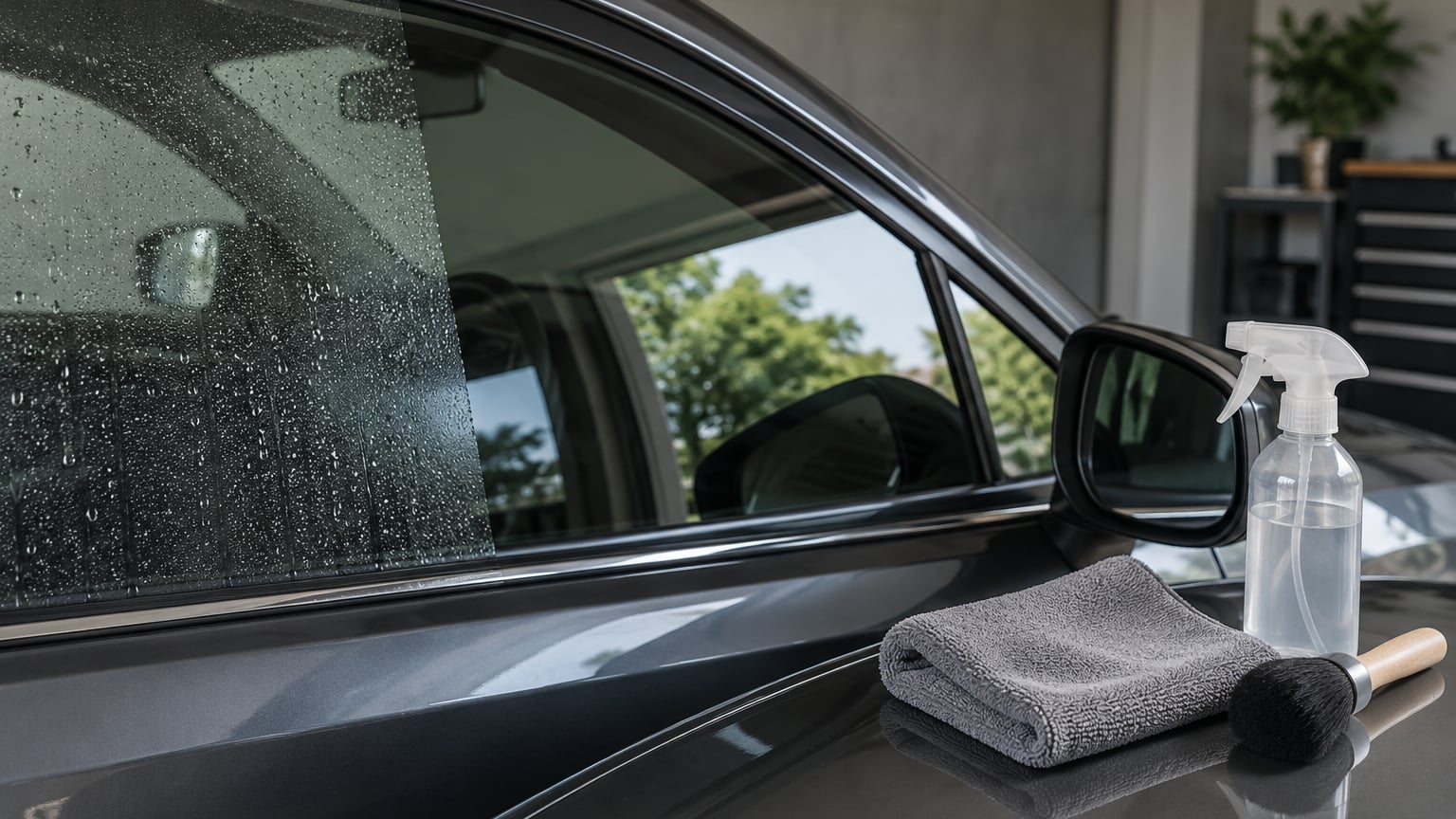
To clean car windows streak free, park in the shade on a cool day, spray an ammonia-free glass cleaner onto a clean microfiber towel rather than the glass, then wipe with the damp towel and immediately buff with a second, dry waffle-weave towel. Two towels and cool glass do most of the work. The whole job takes about 30 minutes and needs no special tools.
Streaks are not a product problem. They come from three things: solution drying faster than you can wipe it off, minerals in tap water drying into the glass, and a cloth that already carries wax, wax residue or grit from the garage shelf. Fix those three and nearly any ammonia-free cleaner works.
Table of Contents
What You Need
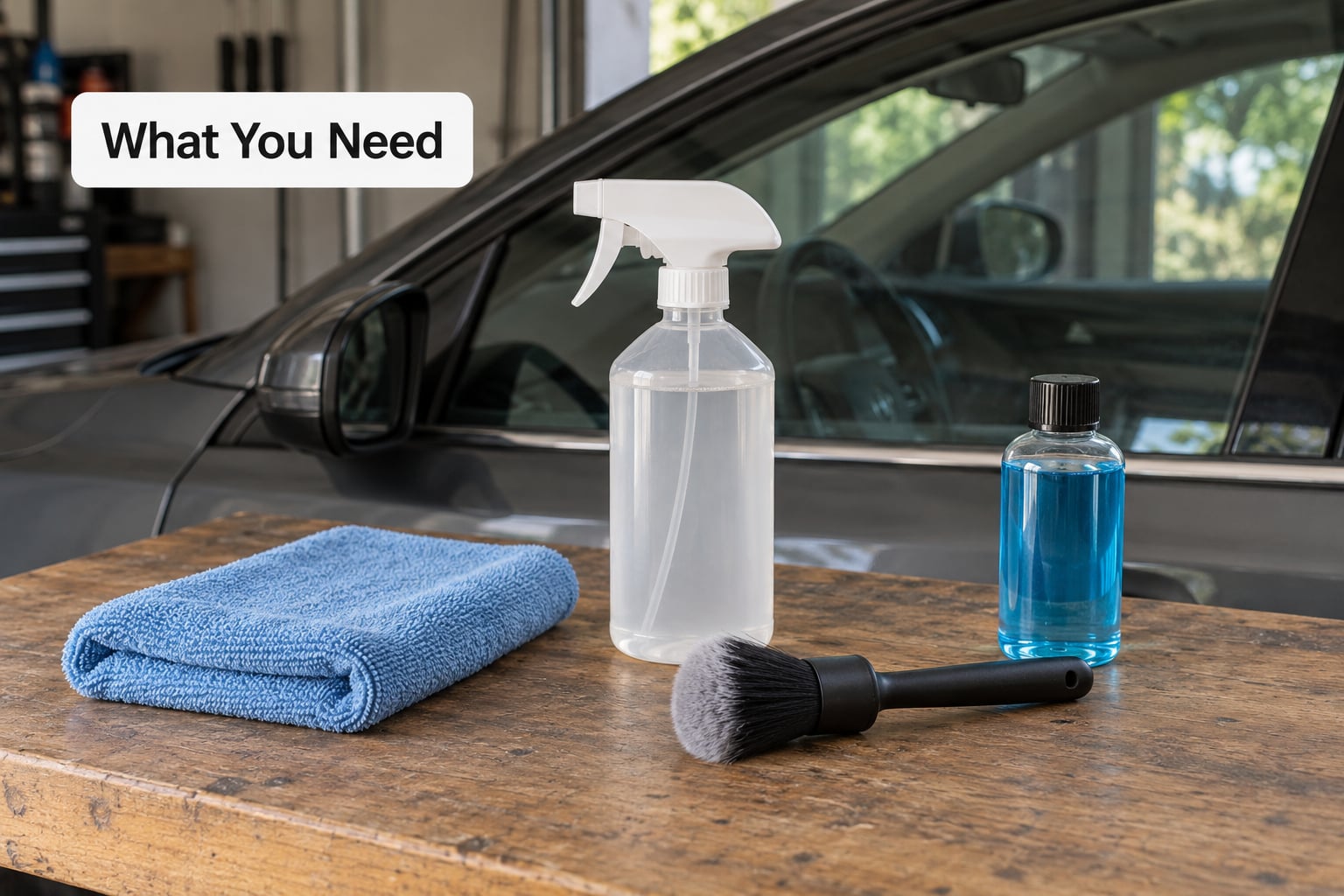
- Two or three microfiber towels, roughly 300 to 400 GSM. One waffle-weave towel for the final buff, one plain microfiber for the wet wipe, and a third if the glass is filthy.
- Ammonia-free automotive glass cleaner. Avoid household ammonia and ammonia-based window cleaners, especially on tinted glass and on screens behind the glass.
- Distilled water for a final plain-water pass on hard water areas. Calcium and magnesium are what leave the spots that never come off.
- A soft detailing brush or bug pick plus a household squeegee for the outside.
- A vacuum and a couple of microfiber cloths reserved for interior glass only.
- Nitrile gloves and, for heavy interior haze, a small amount of isopropyl alcohol or a 1:10 white vinegar to distilled water mix.
- Optional: clay bar or glass polish for etching and hard water spots that a normal clean will not shift.
What not to use matters as much. Paper towels shred and leave lint, newspaper prints ink onto the glass, and a towel you have used to buff wax is the single most common reason a windshield still streaks after a careful clean.
Step-by-Step: How to Clean Car Windows Streak Free
Clean the Inside of the Windows First
- Vacuum first. Run the vacuum with a brush head along the glass, the window channel and the seam at the bottom of the windshield. Dust turned into a wet smear is the reason interior glass looks worse after cleaning than before.
- Fold the towel. Fold a clean microfiber into a flat square and spray the cleaner onto it. You want damp, not dripping. Wringing a saturated towel leaves a bead of water that dries into a hard spot in the middle of the pane.
- Wipe, then change hands. Work in small overlapping strokes from the top of the glass down, keeping the towel flat against the surface rather than pivoting it on one corner, which spreads residue back over clean glass.
- Buff immediately. Take the second, dry waffle-weave towel and follow right behind the wet one. This is the whole trick. Moisture has to leave the glass as a wiped film, not as an evaporation pattern.
- Reach the corners from the passenger seat. For the lower corners of the windshield, slide across to the passenger seat and fold the towel into a narrow strip so your hand can reach the far edge without dragging your wrist across the glass. This is the part almost every guide skips and the part that streaks most often.
If you cannot park in the shade, clean the interior anyway. Interior glass is shaded by the roof, so it is the safe half to start on while the sun is high.
Persistent interior haze is usually off-gassing from vinyl, dashboard plastics or a driver who vapes in the car. No cleaner removes that permanently. If the haze has a plastic smell and returns within days, our guide to fixing foggy windows inside the car covers the source rather than the symptom.
Wash the Outside Windows
- Pre-rinse before you touch the glass. Hose the window down or rinse it with clean water. Wiping dry dust with a towel grinds it into the surface and produces a haze that looks exactly like a failed clean.
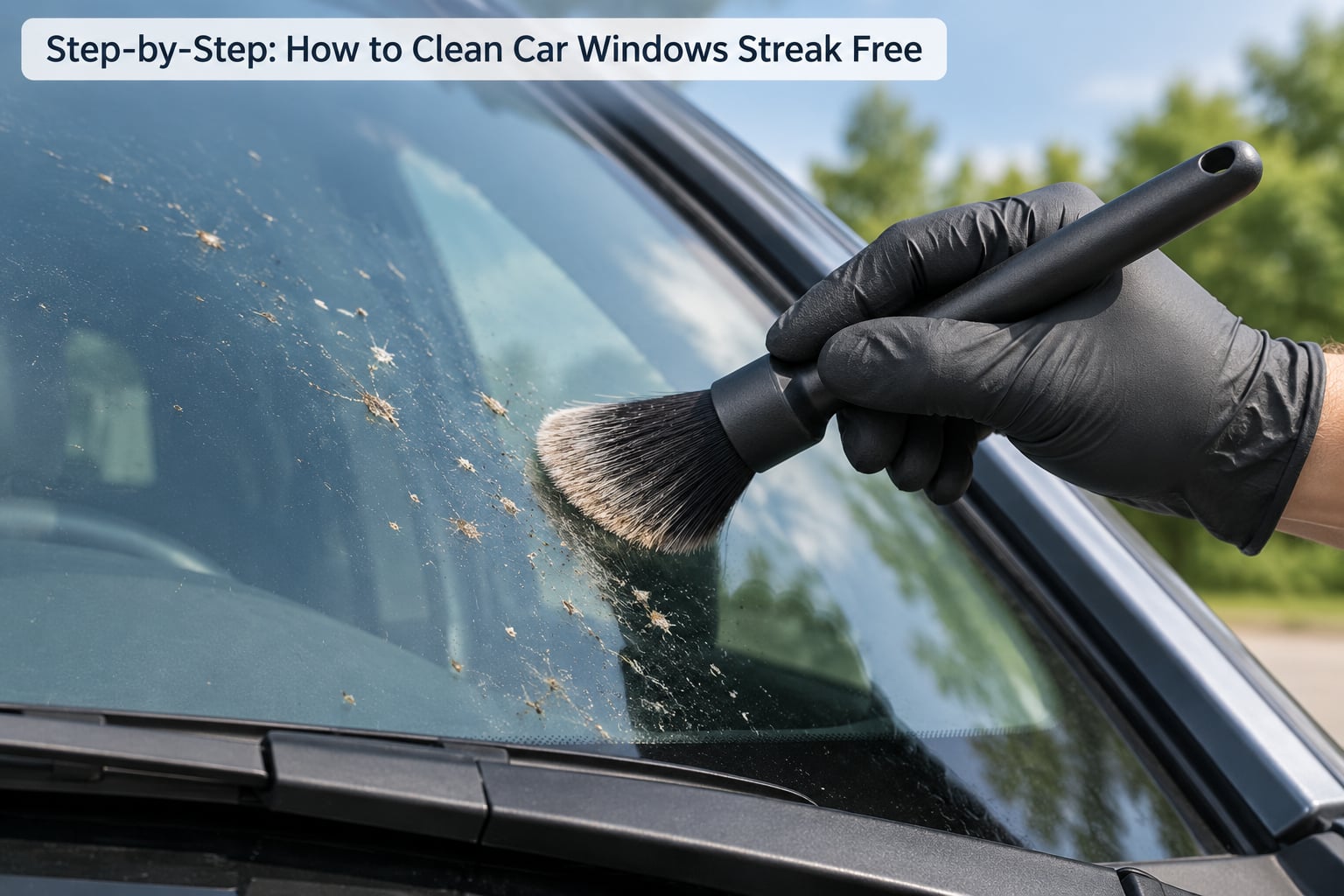
- Dry-brush the bugs. Use the soft detailing brush across the glass while it is still damp. A bug pick or a clean plastic card handles the stubborn ones stuck to the lower half of the windshield. If the bugs have hardened into a film, let a bug remover sit for a few minutes first, then brush.
- Wet the glass properly. With the dirt gone, dry the surface with a clean towel so the cleaner is diluted rather than fighting baked-on residue.
- Apply product to the towel. Spray the ammonia-free cleaner onto the wet towel, not the glass. Over-spraying leaves edges where the concentrate dries first and turns white and hazy.
- Squeegee or towel in overlapping strokes. Pull the squeegee from the far side toward you with steady pressure, overlapping each pass by about a third. No freehand swirls. If you are using a towel instead, use straight strokes and change hands halfway so both sides of the towel get used evenly.
- Clear the edges. The rubber weatherstrip around the window and the top of the doors collect the most grime and are where hazy edges come from. Lift the rubber with a pick and wipe under it.
- Wipe the wiper blades. A blade dragging across a dirty windshield smears that dirt into fine streaks every time you drive. A quick wipe with a damp towel fixes most of what people blame on their glass.
Hard water spots are mineral etching, not dirt, so they survive a normal clean. For a small patch, a clay bar on a wet section of glass or a dedicated glass polish will level it. Keep any acid-based cleaner off tinted and coated glass, and stay away from 0000 steel wool unless you know the glass is uncoated and you are prepared to polish out the swirls it leaves.
Working outside means you will be near the wheels and lower bodywork anyway. If that is the job too, do it in that order: how to clean wheels without damaging the finish keeps the grit you knock loose off the tyre away from your clean glass.
Dry and Inspect for Streaks
Let the glass dry fully before you judge it. Any remaining moisture exaggerates haze, so giving it ten minutes in the shade tells you more than leaning over it with a flashlight.
Inspect from more than one angle, and use the cross-hatch trick: look at the reflection of a straight vertical line, such as a light pole or garage door edge. Then step to the side and look at the reflection of a horizontal edge, such as the roofline of the car behind you. Vertical reflections show up streaks inside the glass, horizontal ones show up streaks outside. Most people buff only the side that fails the first look.
Redo any patch that still looks hazy with a fresh section of the dry towel and a light touch. If the haze stays after three clean passes on cool glass, it is usually etched mineral deposit rather than residue, and it needs polish rather than more elbow grease.
One caution on drying: if you park with the glass wet in direct sun, the water can bake in and leave spots that feel permanently embedded. Shade first, then leave the windows to dry. Let tinted and aftermarket glass dry fully before rolling the windows up so the film cures without bonding to a wet edge, and never use a household ammonia cleaner near either.
Common Mistakes
Reusing a towel that has seen wax. Wax and sealant do not rinse fully out of microfiber. Keep a separate towel for glass only, and if the streaks come back on clean glass, the towel is the first suspect.
Washing microfiber with fabric softener. Softener coats the fibres and destroys the absorbency you are paying for. Wash glass towels on their own, hot, with detergent and nothing else, and dry them on air rather than in a dryer.
Paper towels and newspaper. Both shed fibres and ink. Use paper for nothing on glass except wiping a dirty cloth before you fold it.
Ammonia household glass cleaner. It streaks more often than automotive glass cleaners and it can attack window tint and anti-glare coatings. If the bottle says ammonia, put it back in the cupboard.
Cleaning hot glass in direct sun. This is the big one. The solution flashes off in seconds and the surfactant it leaves behind is a tacky film that grabs dust and catches light. Wait until the glass is cool to the back of your hand, or clean the interior in the afternoon and the exterior before nine in the morning.
Too much product. A fat mist of cleaner is the second-biggest cause. You need a fine spray and a damp towel, not a soaked one. If you can squeeze a drop from the towel, it is too wet.
Wiping dry dust before rinsing. That is grinding, not cleaning. Rinse first, always.
Beyond the clean itself, keep the glass honest. Cleaning the upper windshield edge where the glass meets the roof seal removes a buildup most people never touch, and it is what turns a windshield white along the top in summer. Interior haze that seems to return within a couple of days is usually a plastic off-gassing problem, and if it also happens to fog up in cold weather, how to stop windows fogging in winter covers the vents, seals and defogger side of it.
Frequently Asked Questions
What is the best way to clean car windows without streaks?
Park in the shade on cool glass, spray an ammonia-free cleaner onto a microfiber towel rather than the glass, wipe in straight overlapping strokes, then buff immediately with a second, dry waffle-weave towel. Rinse or pre-wet the outside first so you never drag grit across it. A third quick pass with a fresh dry towel removes the haze that the first pass leaves.
Can I use household glass cleaner on car windows?
Not on the inside, and not on tinted glass. Ammonia-based household cleaners streak more readily, and ammonia can damage window film and anti-glare coatings. For the interior, a 1:10 mix of white vinegar and distilled water works well on ordinary haze. For tinted or aftermarket glass, stay with an ammonia-free automotive cleaner and test any product on a corner of glass first.
Is ammonia safe for tinted car windows?
No. Ammonia can lift or discolor window tint and haze the film, and it is not compatible with some aftermarket films that use metallic layers. It can also attack anti-glare and heat-reflective interior coatings. Use an ammonia-free automotive glass cleaner instead. If you already used an ammonia product on tinted glass, wash it off with plenty of water right away and check how the tint looks in daylight.
How do I remove dried bugs from car windows?
Wet the glass first, then dry-brush it with a soft detailing brush so the bugs loosen instead of smearing. For stuck ones, use a bug pick or a clean plastic card held flat at a shallow angle. If they have hardened into a film, spray a bug remover, let it sit for a few minutes, then brush and rinse. Never start scrubbing dry bugs, because that grinds the glass.
Why do my car windows look cloudy after cleaning?
Four causes cover almost every case: the glass was hot or in direct sun and the solution dried too fast, you used tap water and left minerals behind, the towel carried wax or detergent residue, or the haze is off-gassing from dashboard and window plastics rather than dirt. Test it by spraying distilled water on the glass and buffing dry. If the haze stays, it is either a contaminated towel or permanent plastic off-gassing.
How often should I clean car windows?
Wash the outside every few weeks in normal conditions, and more often in winter when road salt and grit build up. Give the inside a wipe every month or two, since haze mostly comes from dust and plastic off-gassing rather than weather. Always clean the exterior before an overnight or low-sun drive, when streaks and haze show up most and visibility matters most.
Start Here
Start on the inside: vacuum, spray the towel, wipe, buff dry. Do that half on a cool day and you will know whether your towel is the problem before you ever touch the outside. Then rinse the exterior, brush off the bugs, and keep a dedicated glass towel in the glovebox. Learning how to clean car windows streak free really comes down to that order, plus a glass-only towel you never use on wax.