
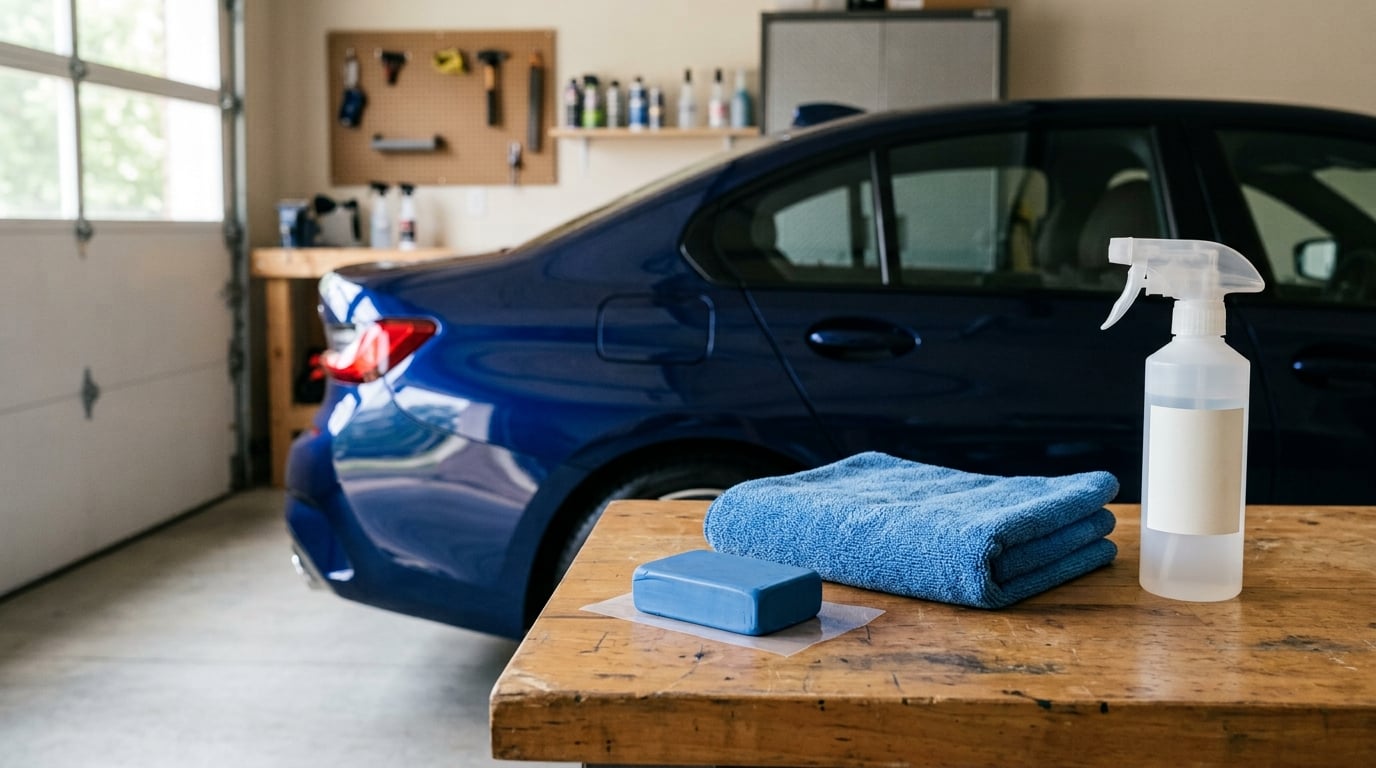
Clay bar treatment is a mechanical decontamination step for car paint. A soft block of engineered clay, lubricated and wiped across a clean panel, lifts the grime that washing cannot shift — industrial fallout, rail dust, brake dust, tree sap and paint overspray. The surface is left feeling glass-smooth, ready for wax, sealant or a ceramic coating.
It is a fifteen-minute-per-panel job on a reasonably clean car, and a full Saturday on one that has been parked outside for two years. This guide covers what the clay actually removes, how it works, when it can scratch a panel, and how often to repeat it. Updated for 2026.
Table of Contents
- What Is Clay Bar Treatment for Cars?
- What Does Clay Treatment Remove From Car Paint?
- How Does a Clay Bar Work on Car Paint?
- Is Clay Bar Treatment Safe for Cars?
- Should You Clay Bar Your Car Before Waxing or Coating?
- How Do You Use a Clay Bar on a Car?
- How Often Should You Clay Bar Your Car?
- Clay Bar vs. Polishing Compound: What’s the Difference?
- What Are the Common Clay Bar Mistakes?
- Frequently Asked Questions
- The Bottom Line
What Is Clay Bar Treatment for Cars?
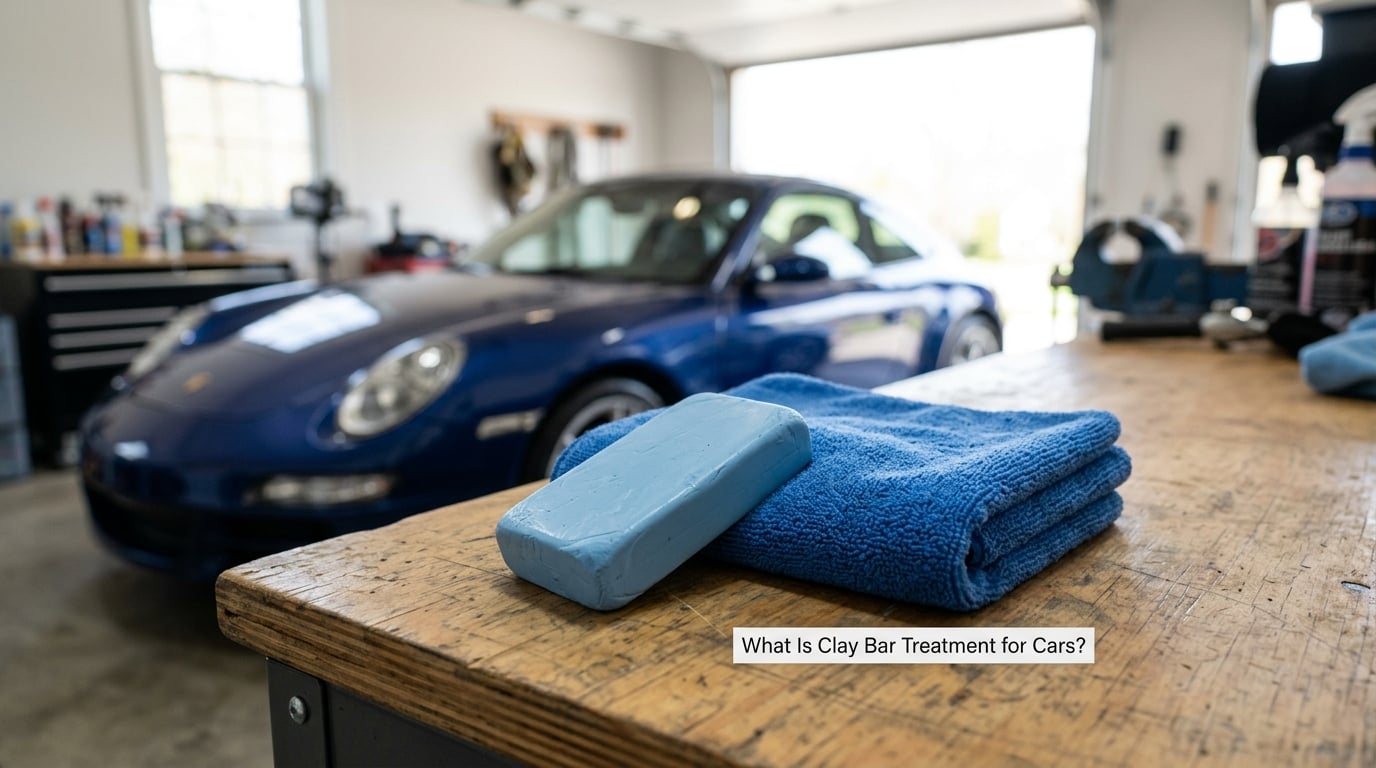
Here is the short version. Claying is to paint what exfoliating is to skin. Soap and water lift the loose dirt sitting on top of the clear coat, the same way a shower does, and they leave the bonded layer underneath untouched.
Detailing clay is a malleable resin compound. It is softer than the paint and harder than the dirt, so when you glide it across a lubricated panel the contaminants catch in it and come away with it. Detailing guides usually split decontamination into two stages: chemical decontamination with an iron remover or tar remover dissolves the chemical bond, and mechanical decontamination with clay pulls the remaining physical particles off the surface.
Clay is not the only format. A clay bar is the traditional block and the cheapest way to start. A clay mitt wraps clay or a synthetic equivalent inside a microfibre mitt face, which makes it faster and rinsable if you drop it. A clay towel is the same idea as a large flat sheet. A clay pad is a rigid block for flatter, larger panels. Beginners on r/AutoDetailing and r/Detailing tend to land on the mitt for exactly that drop reason, and I agree with them more often than not.
What Does Clay Treatment Remove From Car Paint?
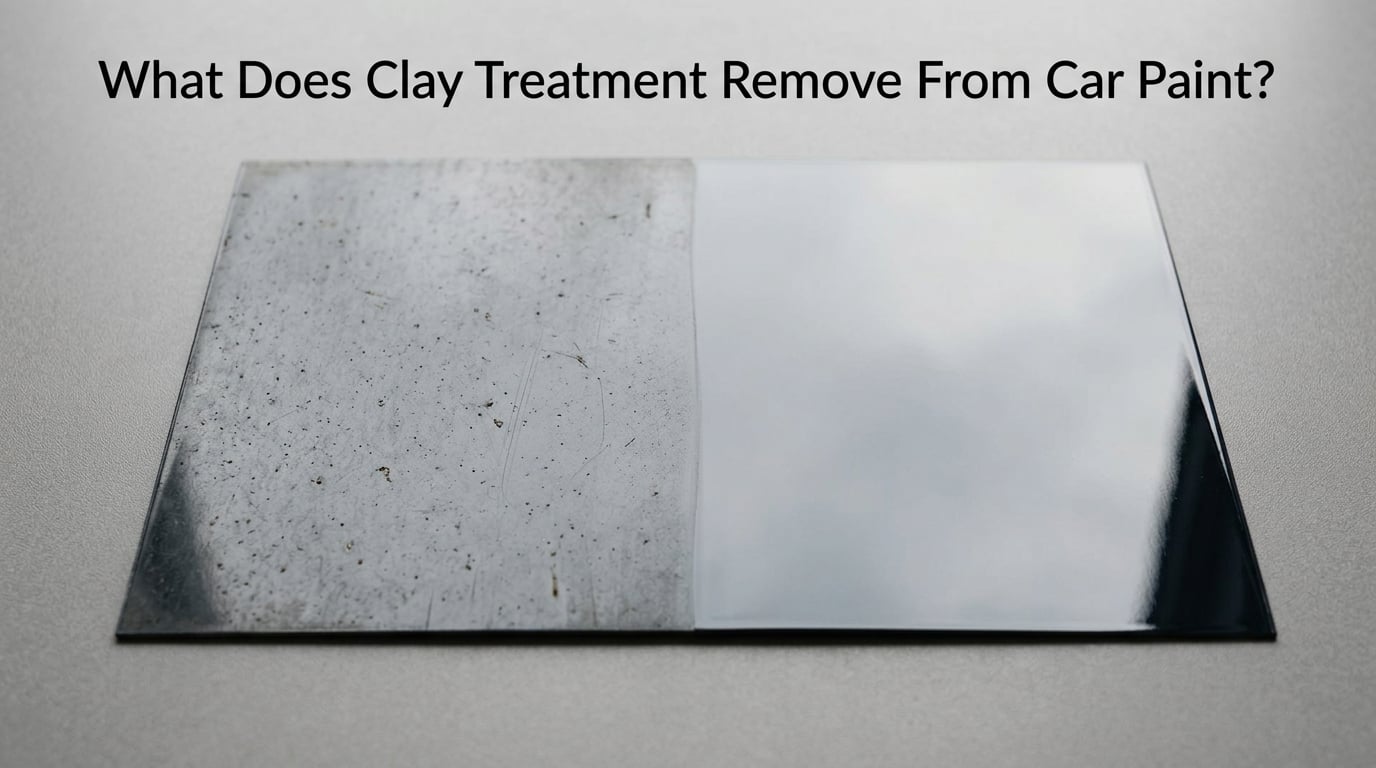
Clay removes the bonded contaminants that make paint feel rough under your fingers.
- Industrial fallout — iron-rich particles that settle out of the air near plants and industry and embed themselves in the clear coat.
- Rail dust — heavy, sharp particles from railway lines, common on commuter cars parked near tracks.
- Brake dust — grey metallic film thrown onto lower panels and wheel arches from your own brakes.
- Tree sap and bird droppings — sticky organic residue that grabs dust and then holds it.
- Paint overspray — fine mist from a nearby paint job that has already hardened onto the panel.
- Road tar, pollen and light oxidation — soft or semi-soft films that dull the finish and catch light unevenly.
What clay cannot fix is just as important. It will not remove a deep scratch, a key scratch down to bare metal, surface rust, peeling or failing clear coat, or a dent. It will not correct swirl marks or improve the clarity of an oxidized panel; those need machine polishing, which cuts a measurable layer of clear coat instead. If a defect disappears after claying, it was a contaminant sitting on top, not a defect in the paint.
How Does a Clay Bar Work on Car Paint?
Clay works by shearing, not by scrubbing. You flatten the block against the panel, spray a dedicated clay lubricant over the section, and glide the clay in straight lines with light pressure. The tacky surface of the clay grips each particle above it, and moving forward rolls the particle up into the clay while the clear coat underneath stays put.
As the clay loads up with contamination, the surface roughens and starts to drag. That is the signal to fold the bar over and expose a clean face. Most people fold every panel or two, and drop it entirely once the folded face looks grey and gritty.
Why lubrication is essential
Lubricant is not optional. It forms a film between the clay and the clear coat so the two surfaces slide instead of gripping, which is what lets a contaminant stick to the clay rather than to your paint. Run the bar dry across a panel and the clay stops lifting dirt — it starts grinding it across the finish, and that is how you earn swirl marks you did not have before.
Dedicated clay lubricant is formulated for this: heavy enough to stay in place on warm paint, slippery enough for a long glide. Plain soapy water works in an emergency and several people on r/Detailing use it, but it dries fast and leaves no lasting film, so you end up re-spraying constantly. I have done it, and I would not plan a whole car around it.
Clay also does nothing that wax, sealant, polish or a coating does. Wax and sealants add a sacrificial layer of gloss and protection. Polishes abrade a thin layer of clear coat to correct defects. Coatings bond chemically to prepared clear coat. Clay only removes what was sitting on the surface so that those products can do their job properly.
Is Clay Bar Treatment Safe for Cars?
Clay bar treatment is safe on sound automotive clear coat when you work correctly, and the risk is manageable because the conditions that cause damage are all avoidable.
The genuine risk cases are specific:
- Dropped clay. A bar that hits the ground picks up grit and sand, and the first pass back on the paint gouges it. This is the single most common way beginners scratch a panel.
- Dry or under-lubricated paint. Friction goes up, marring goes up with it.
- Hot paint in direct sun. Lubricant flashes off in seconds, so the clay grabs instead of gliding.
- A dirty car. Loose grit dragged across the finish is the classic beginner scratch.
- Heavy-duty grade on soft or thin paint. Dark colours and older single-stage finishes are more prone to showing marring. Forum consensus is that most daily drivers need a fine or medium grade, and that aggressive bars belong to professionals.
- Repainted or wrapped panels. Fresh aftermarket paint can be softer than factory clear coat, so work it gently and follow the paint supplier’s care instructions.
Before anything else, read what the paint manufacturer or the dealer service guide says about care, and test a small spot under a door handle or near the fuel filler. Run the bag test described below on that same spot so you can compare before and after. If the paint has matte or satin wrap, satin black, or a specialty finish, skip aggressive claying entirely.
Should You Clay Bar Your Car Before Waxing or Coating?
Yes, if you are applying wax, sealant or a coating, because clay removes the barrier that stops those products from reaching bare clear coat. The order is fixed: wash, dry, chemically decontaminate, clay, polish if needed, protect.
On an uncontaminated panel a wax can bond fine, which is why claying looks optional on a garage-kept car. On a panel with fallout and road film, the wax sits on a gritty layer, spreads unevenly, and wears off in patches within weeks. Forum users on r/Detailing put it plainly: the claying is not what makes the protection last, it is what makes it start evenly.
Two things claying will not do. It does not replace washing — you still need to strip the loose dirt or you will grind it in. And it does not replace paint correction; if the panel needs swirl marks removed, polish after the clay, not before, because polishing contaminated paint drags the grit across the finish. Get the basic tool set right first with our guide to basic car maintenance tools.
How Do You Use a Clay Bar on a Car?
Work in the shade, on a cool panel, with the car washed and dried the same day. Budget two to four hours for a full sedan the first time.
- Wash the car properly. A two-bucket wash with grit guards, or at minimum a careful rinse before drying. Use a clean microfibre towel and dry to a proper finish, not a blot.
- Run a chemical decontamination step. An iron remover for rust-colored fallout and brake dust, a tar remover for road film. Chemical first, mechanical second — it takes work off the clay that would otherwise have to do it.
- Inspect the paint. Look for deep scratches, chips and failing clear coat, and note where they are so you can tell later whether anything changed. Run the plastic bag test to gauge how much contamination you are dealing with.
- Work in small panels. Half a door, one mirror cap, one bumper section. Small panels keep the clay clean and let you re-lubricate before the film dries.
- Knead and flatten the clay. Warm it in your hands for a minute so it is pliable, then press it flat against the panel.
- Lubricate generously, then glide. Several sprays per panel is normal. Use straight lines with light pressure, not circles — circles concentrate your effort into small areas and are harder to read for defects.
- Fold and wipe. When the clay drags, fold to a clean face. Wipe the panel with a damp microfibre towel to see what actually came off, and dry it to check for marring.
- Protect afterwards. Once the whole car is clayed and inspected, apply wax, sealant or coating straight away, ideally within a few days.
How Often Should You Clay Bar Your Car?
Frequency follows contamination exposure, not the calendar. A car that lives under a cover in a dry climate may need it rarely, while a car parked on a street with winter salt and spring pollen benefits from it more than once a year.
| How the car is used | Typical interval | Why |
|---|---|---|
| Garage-kept, low mileage, short trips | Once a year or less | Little airborne contamination settles on the paint |
| Daily driver parked outdoors | Once or twice a year | Road film, pollen and fallout build steadily |
| Coastal, industrial or near-rail parking | Two to four times a year | Constant particle loading, salt in the air |
| Winter road salt exposure | Every spring, without fail | Salt residue and grit are the worst case for clear coat |
| Ceramic coated car | Once a year with a very fine grade | Coating owners on r/Detailing mostly avoid claying or keep it to a single gentle pass |
Between clays, most people maintain with an iron remover wash every few washes. That handles the chemical side cheaply and means each clay session is shorter. If your car sits outside more than it drives, that is also worth checking seasonally — tire care has its own version of the same conversation in our piece on what tire siping does and whether it helps.
Two quick tests tell you whether a clay session is due. The touch test: run your fingertips across a washed, dried panel, ideally in the shade. Rough, gritty, sandy texture means bonded contamination. The plastic bag test: stretch a clean plastic bag over your hand and rub it across the paint. If the bag picks up a fine grey dust and the panel still feels rough, the clay has work to do. If the bag comes away nearly clean and the surface is smooth, skip it.
Clay Bar vs. Polishing Compound: What’s the Difference?
Clay removes what is on the paint. Polishing compound removes part of the paint. That single distinction explains every practical difference between the two.
| Clay bar | Polishing compound | |
|---|---|---|
| Purpose | Decontaminate the surface | Correct defects and improve gloss |
| Paint removed | None, with correct use | A thin layer of clear coat |
| Removes fallout, tar, sap | Yes | Partially, incidentally |
| Removes swirls and scratches | No | Yes, shallow ones |
| Typical result | Smooth, clean, ready to protect | Glossier, defect-free clear coat |
| Skill and risk | Low with lubrication and light pressure | Higher; burns clear coat if you work it hot or long |
| Best when | Before waxing, sealing or coating | You want defects removed, and you accept the paint that comes off |
They stack in one direction. Decontaminate first, polish second, protect third. Polishing contaminated paint is how scratches get created, which is why claying before a correction matters more than it looks.
What Are the Common Clay Bar Mistakes?
Almost every scratched panel from claying traces back to one of a handful of mistakes, and all of them have simple fixes.
- Claying a dirty or wet car. Loose grit dragged across clear coat is a scratch. Fix: wash and fully dry first, and if the car is truly filthy, a chemical decontamination wash before you touch clay.
- Skipping or rationing lubricant. Dry clay grinds. Fix: more spray than feels necessary, and re-spray before every second pass.
- Pressing too hard. Pressure does not improve results, it only increases friction. Fix: let the clay’s weight do the work, and use straight lines.
- Dropping the clay. Ground-in sand is instantly destructive. Fix: use a mitt or towel if you drop things, or simply buy a second bar and keep one as the clean reserve.
- Working in direct heat. Warm paint flashes the lubricant and turns a glide into a grab. Fix: shade, cool panels, early morning or evening.
- Using the clay past its load. A grimy clay face is an abrasive. Fix: fold to a clean face often, replace the bar when the whole bar is dark.
- Expecting clay to fix defects. It will not touch scratches, swirls or oxidation. Fix: polish those separately, after decontamination.
- Leaving the car unprotected afterwards. Clayed clear coat is bare clear coat until something goes on it. Fix: wax, seal or coat within a few days.
Frequently Asked Questions
Does claying a car scratch the paint?
Not if you work correctly. Clay is far softer than clear coat, so properly lubricated and used with light pressure it lifts contaminants off the surface rather than abrading it. Scratches come from dry clay, a dirty panel, a dropped bar picking up grit, or heavy pressure. Fold to a clean face often and use a fine grade on dark cars.
Does a clay bar remove wax or ceramic coating?
A traditional clay bar removes wax and sealant, because they are sacrificial surface layers. That is expected and fine, since claying is normally done before protection goes on. On a ceramic-coated car, claying is safe but unnecessary most of the time; if you do it, use a very fine grade once a year at most, or a clay mitt with a dedicated lubricant.
Is clay bar treatment safe for matte paint?
Be careful there. Matte and satin finishes have a textured surface that claying can polish into a shiny spot, and that patch will not blend back in. Wrapped satin black and matte vinyl are the same story. If your car has one of these finishes, stick to hand washing, a decontamination mitt used gently, and chemical decontamination only.
How do I know when the clay bar is too dirty to use?
Watch how it feels. Fresh clay glides smoothly; a loaded bar starts to drag and stutter, and you can usually see a grey film building on it. Fold to a clean face at that point. When every face of the bar is dark and gritty, retire it and start a new one, because a contaminated bar behaves like sandpaper.
Can you use soapy water instead of clay lubricant?
It will work in a pinch, and plenty of people do it, but it is not ideal. Soapy water dries quickly and leaves no lubricating film, so you re-spray constantly and run more risk of the clay grabbing on warm panels. A dedicated clay lubricant is inexpensive and makes the job faster and safer. Use soap water only if that is all you have.
How long does a clay bar treatment last?
A decontaminated panel stays smooth for months, not days, because the contaminants have to redeposit from the air. For a daily driver parked outdoors that usually means six to twelve months, and spring after winter salt is the most reliable deadline. Garage-kept cars can go a year or more, and an iron remover wash every few washes keeps a clayed car smooth far longer.
The Bottom Line
Clay bar treatment is a decontamination step, not a repair or a polish. It pulls the bonded contaminants out of the clear coat so the surface feels smooth, looks better, and takes wax, sealant or coating evenly and for longer. Start with a properly washed and dried car, use a clean bar with plenty of dedicated lubricant, work small panels in the shade with light straight-line pressure, and fold the clay before it drags.
Run the plastic bag test first. If the bag stays clean and the panel feels smooth, your car does not need it. If it comes away grey, pick a mild day, watch a walkthrough once, and do one door before you commit to the whole car.