
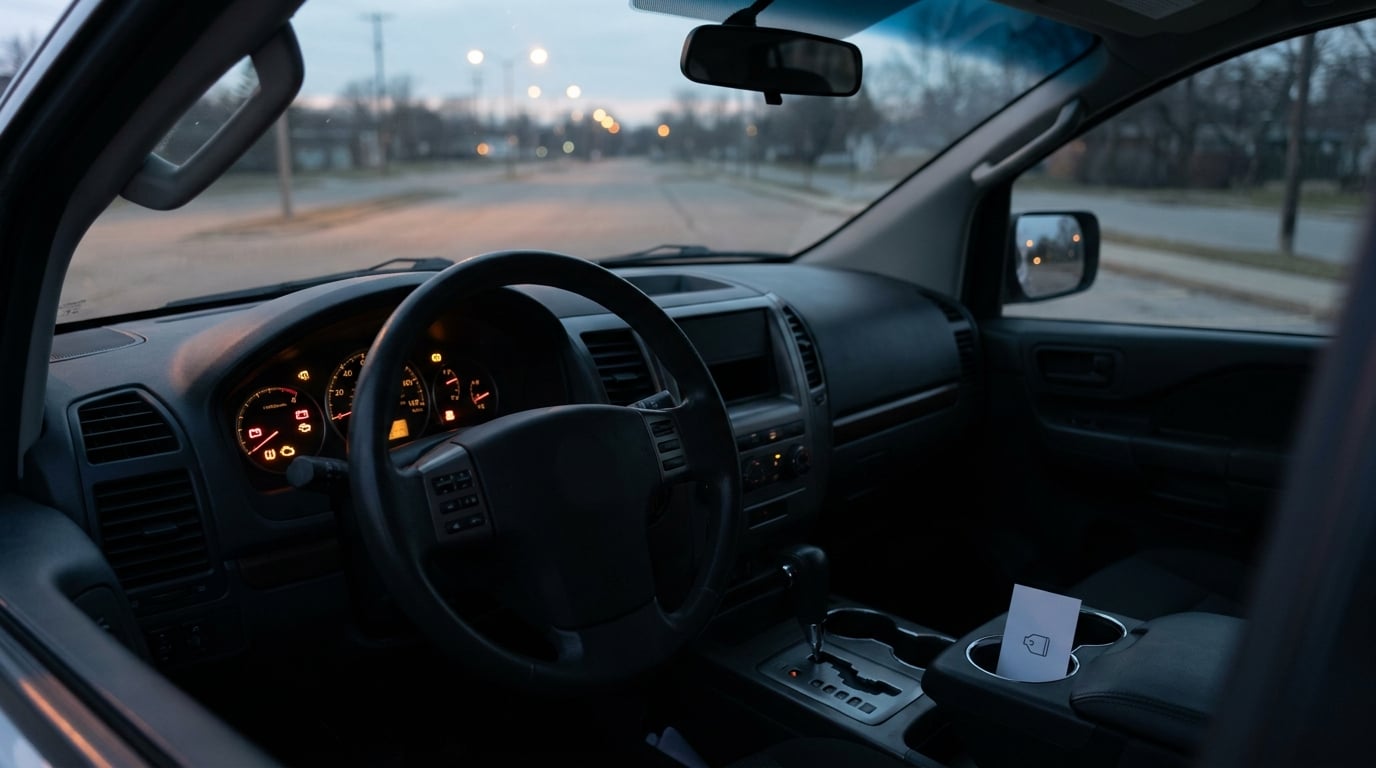
If your brakes fail while driving, take your foot off the gas, keep the engine running, and pump the brake pedal firmly and repeatedly to try to rebuild hydraulic pressure. Steer smoothly toward the nearest low-traffic spot, signal with your hazards, and use a lower gear to slow the car with the engine if the pedal will not do it. You will not fix anything roadside, and the only job is to bring the car to a controlled stop without hitting something.
I have spent enough time around other people’s cars to know that the panic is the real danger, not the failure. A driver who reacts fast but sharply usually loses the car; a driver who reacts slowly and smoothly keeps control. So the sequence below is written for the worst version of your day, not the average one.
A few things worth knowing before you ever need them. Modern cars use a dual circuit braking system, meaning the front and rear brakes run on separate hydraulic circuits, so total loss of braking is unusual. More common is a partial loss where the pedal feels soft, sinks toward the floor, or goes hard and unresponsive. Also worth saying plainly: brake problems on most cars announce themselves days or weeks ahead, usually with a pedal that feels softer than it used to. If that happens, get it checked before it becomes an emergency.
Table of Contents
What You Need
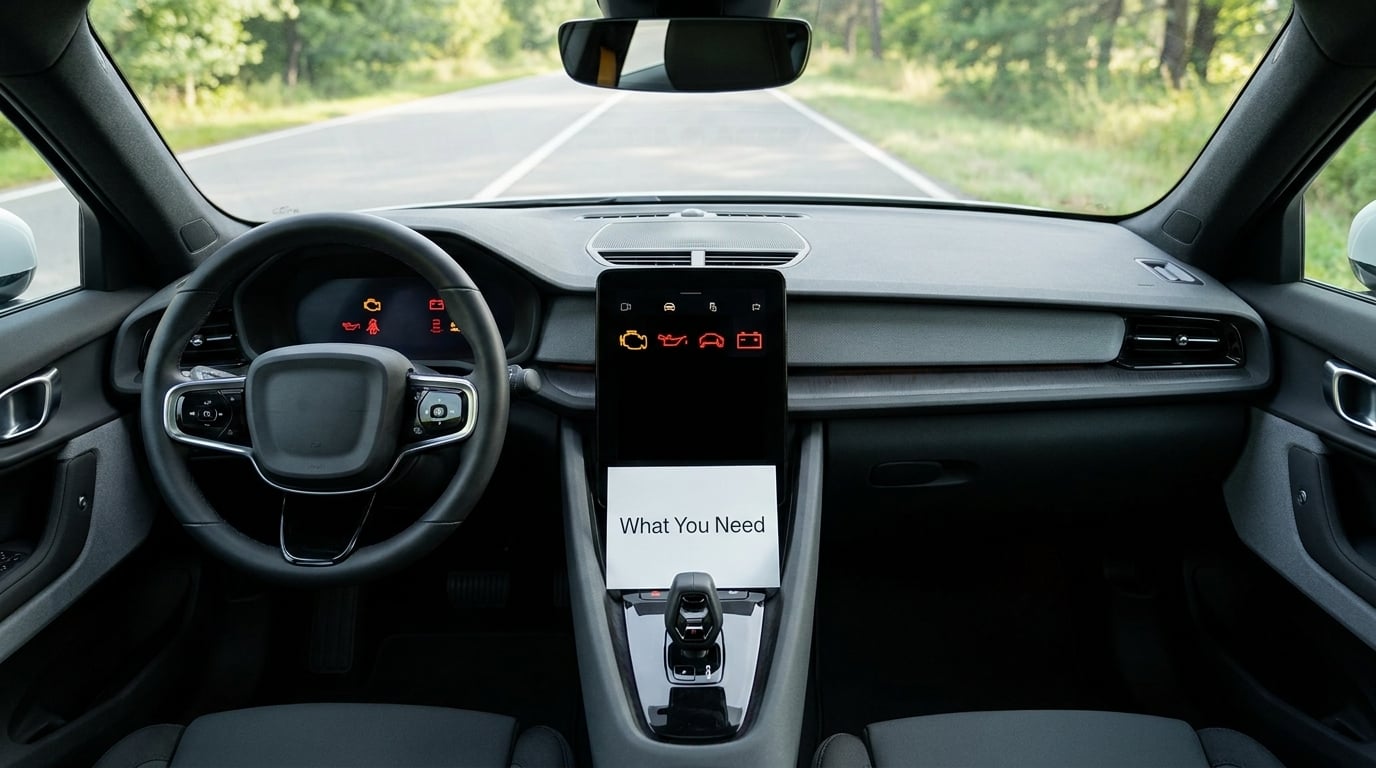
Good news: you do not need a single tool to start the emergency response. The steps that matter in the first ten seconds are all things you already know how to do. What you do need is familiarity with three things in your own car.
- Your brake pedal, shifter and hazard switch. Find the hazard button with the vehicle parked, not while you are gripping the wheel at highway speed. Most people know where the lights are and have never located the hazards.
- Your owner’s manual emergency procedure. Some manufacturers print specific instructions for brake fade or electronic parking brake overrides. The manual is in the glovebox and takes ten minutes to read the one page that matters.
- Your roadside assistance number and a safe place to stop. Know the number before the day you need it, and know where the nearest wide shoulder, off-ramp, empty car park or side street is along your regular routes.
One more piece of preparation costs nothing: a driver who has never touched the brake pedal hard at a standstill does not know how its travel feels when it is healthy. Learn that now, in a parked car or an empty drive, so your hands already know what normal pressure feels like.
Step-by-Step: What to Do If Your Brakes Fail While Driving
Follow these in order. The order matters, because several of these actions will feel urgent and only some of them are safe to do while the car is still moving quickly.
1. Stay Calm and Keep the Vehicle Under Control
Keep both hands on the wheel and your foot off the gas. Do not make sharp steering inputs, do not slam on anything, and let the car keep rolling at a controlled speed rather than reacting to the failed pedal with panic.
Scan ahead. Your real goal in the first few seconds is to buy thinking time, not to stop immediately. You are looking for the nearest place you can come to rest without being in a traffic lane: a wide shoulder, a turn-off, an empty car park, a side street.
2. Try a Controlled Brake Application
Apply steady, moderate pressure to the pedal. The instinct is to stamp on it, and with a partial hydraulic failure that is exactly the wrong thing, because hard pedal travel pushes fluid past worn seals and past a failing master cylinder seal without ever reaching the calipers.
What you may feel is a partial response: the pedal travels further than usual, the car slows a little, then fades. If you have no ABS, quick firm pumps can sometimes build enough pressure to push an air bubble past a valve and get a usable stop on one circuit. If your car has ABS, hold steady pressure instead, because pumping defeats the system that is already trying to help you.
Check your car for an ABS light before you ever need this. Any car built in the last few decades almost certainly has it.
3. Shift Into Neutral and Use Engine Braking
With an automatic transmission, move the selector gently into neutral while keeping the other hand steady on the wheel. In neutral the engine is no longer driving the wheels, and the vehicle slows through engine compression instead of through the failed brakes. With the engine still running you also keep power steering assist, so the wheel stays light and easy to turn.
With a manual transmission, select a lower gear smoothly and keep your foot off the clutch except for the initial engagement. Do not dump the clutch in one violent motion at speed; a sudden low gear can unsettle the car and, on a wet or icy road, spin the rear tyres.
Many automatics also have a manual mode or steering-wheel paddles. Those are for holding a gear on a normal downhill, and in a genuine failure they are more controllable than a selector you are fumbling with. Engine braking, which is simply using the engine’s compression to slow the car rather than the brakes, is an emergency aid and never a substitute for repair.
On an electric vehicle there is no engine compression to borrow, and this changes the picture. Regenerative braking is your main decel source when lifting off, and one-pedal driving can be used to add retardation, but once you are coasting with no brake response the friction brakes are all you have left. Plan for a longer, more gradual stop and get off the road sooner than feels necessary.
4. Steer Toward the Safest Place to Stop
Aim for a straight, level shoulder or an empty parking area rather than a scenic overlook with a drop. Avoid intersections, driveways, and anywhere oncoming traffic has to react to you. Signal early so the car behind you understands what you are doing, and make small corrections rather than weaving.
If you are boxed in by traffic in a queue with no shoulder at all, staying in your lane is almost always safer than cutting across. Sound the horn, keep your hazards on, and accept a slower stop over a swerve into someone else.
Guardrails and mountain-pass run-off areas are a genuine last resort on a long descent, not a technique. Used deliberately, a barrier will slow and steer a car that nothing else is slowing. Used accidentally, at 90 km/h on a bend, it ends in a rollover.
5. Turn On Hazards and Communicate
Hazard lights belong on the moment you commit to stopping, because at that point you are effectively a stationary obstacle in a lane. They are not a tool for driving, so switch them off once you are properly parked and about to exit the vehicle.
Call emergency services where there is danger to other people, or your roadside assistance provider otherwise. Have ready where you are, the direction you are facing, your speed, what is around you, and whether traffic is still moving past. Stay in the vehicle with the seat belt on unless the spot itself is unsafe, such as a narrow shoulder with traffic still close by.
6. Bring the Vehicle to a Controlled Stop
Once you are very nearly stopped, select Park on an automatic or neutral on a manual, then set the parking brake on level ground. If you are on a slope, hold the wheel turned toward the curb and use the parking brake gently, because a hard yank on a car with the rear wheels already sliding can lock them and pull the car sideways.
Where the service brakes are partly alive, expect the stop to be longer and softer than normal, and keep steering gently as the last of the speed goes. If the car will not hold on the hill, the parking brake is the mechanical backstop, so set it before the engine is at idle and expect a firm pedal.
7. Do Not Drive the Car Until It Is Inspected
Getting stopped is the emergency ending, not the repair. A brake system that lost pressure once can lose it again, and the second time may be at higher speed.
Arrange a tow rather than driving to a shop. A qualified mechanic needs to look at brake fluid level and condition, the lines and hoses for leaks, the master cylinder, the brake booster, the calipers and pads, and the ABS module for stored codes. A pedal that slowly dips to the floor usually means a failing master cylinder, a leak, or both. A pedal that goes hard and unresponsive points to a seized caliper or a brake problem rather than a fluid one.
If a warning light for low brake fluid came on earlier, that matters more than it looks. Our guide to what causes a low brake fluid warning light covers the common causes and what to check on the reservoir.
Common Mistakes
These are the responses that turn a survivable slowdown into a collision, and most of them feel completely reasonable in the moment.
- Turning off the engine or cutting the ignition. This is the single most repeated warning in brake failure advice, and it is right. With the engine off you usually lose power steering assist, and the wheel can go heavy or lock, plus you lose vacuum assist to the brake booster. Leave the engine running and in gear or neutral until the car is fully stopped.
- Stomping the pedal repeatedly on an ABS car. Pumping switches off the anti-lock logic and lets the wheels lock. On a car without ABS, firm pumps can help. The correct answer depends on your car, which is exactly why drivers argue about this online.
- Yanking the parking brake at speed. The parking brake acts on the rear wheels. Pull it hard and you lock the rear, which on a slippery or uneven surface spins the car. Ease it on progressively as your speed falls.
- Downshifting abruptly. A violent drop into a low gear can unsettle the car or spin the rear wheels, especially on a damp road. Select smoothly and let the engine do the slowing.
- Ignoring grinding, squealing or a hot pedal. A grinding noise often means the pads are down to the metal, and glazed pads can stop biting properly. We explain the difference in what brake pad glazing is and how it gets fixed.
- Driving the car to a mechanic with compromised brakes. A pedal that has already sunk to the floor twice is telling you the hydraulic system cannot be trusted. Tow it.
Prevention is the part most people skip and most drivers regret. Keep brake fluid fresh and at the right level, have the fluid and hoses inspected on the manufacturer’s schedule, and give pads and rotors a look when they start making noise. Vehicles that sit for months and then get driven regularly are the worst case, and the fix is a short service before the first long drive, not after it.
For cars that live on the driveway more than they live on the road, our piece on maintaining brakes on a car you rarely drive is worth a few minutes.
Frequently Asked Questions
Can I use engine braking if my brakes stop working?
Yes, and on a long descent it may be the only slowing method that works reliably. With an automatic, move the selector smoothly into neutral; with a manual, select a lower gear without dumping the clutch. Keep both hands on the wheel, expect the steering to stay light while the engine is running, and remember engine braking is an emergency aid, not a repair.
Why is my brake pedal going to the floor?
A pedal that sinks toward the floor or sits at your feet usually means hydraulic pressure is leaking out somewhere. Common culprits are a worn master cylinder seal, a failed brake booster, a leaking brake hose or hard line, or air in the lines after a fluid change. Drive the car to a shop only if the pedal feels normal; if it sinks, tow it.
Should I turn on hazard lights if my brakes fail?
Yes, as soon as you start trying to stop and before you reach a standstill. At that point you are a stationary obstacle in a lane, and hazards tell the car behind you something is wrong. Keep your hands free for steering and use the horn in dense traffic. Switch the hazards off once you are properly parked and ready to leave the vehicle.
Can I drive a short distance after the brakes stop working?
Only if the failure was minor, such as a single circuit, a hot pedal after repeated stops, or a brake warning light with normal pedal feel. If your pedal went soft, sank to the floor, or became hard, do not drive it at all, even a mile. Two miles of soft pedal is how a car ends up in the back of a truck. Ask for a tow.
Is it safe to use the parking brake during a brake failure?
It is safe and often necessary, because the parking brake is mechanical and does not depend on hydraulic pressure. The risk is applying it hard at speed, which locks the rear wheels and can swing the car around. Hold the lever or button and ease it on progressively as your speed falls, then set it fully once the car is nearly stopped on level ground.
What causes brake failure while driving?
Usually one of five things: a leak of brake fluid from a hose, hard line, caliper or wheel cylinder, a failing master cylinder or brake booster, air in the lines after a repair or fluid change, or pads and rotors overheated through repeated heavy braking, known as brake fade. A caliper seizing, usually after corrosion, is common on older vehicles. Any of these can be gradual or sudden.
Stop the Failure Before It Happens
What to do if your brakes fail while driving comes down to four things: foot off the gas, engine left running, steady pedal pressure, and a smooth route off the road. Every one of those is calm behaviour, which is the whole point.
What to do if your brakes fail while driving is the last step of a much longer process that starts with maintenance you can do this weekend. Most brake failures are not random. A soft pedal that slowly returned to normal, a grind, a hot pedal after a slow traffic queue, a fluid level that has crept down, or a wheel that no longer washes clean, are the quiet week-old warnings. Catch any of those and the emergency version of this article never applies to you.