
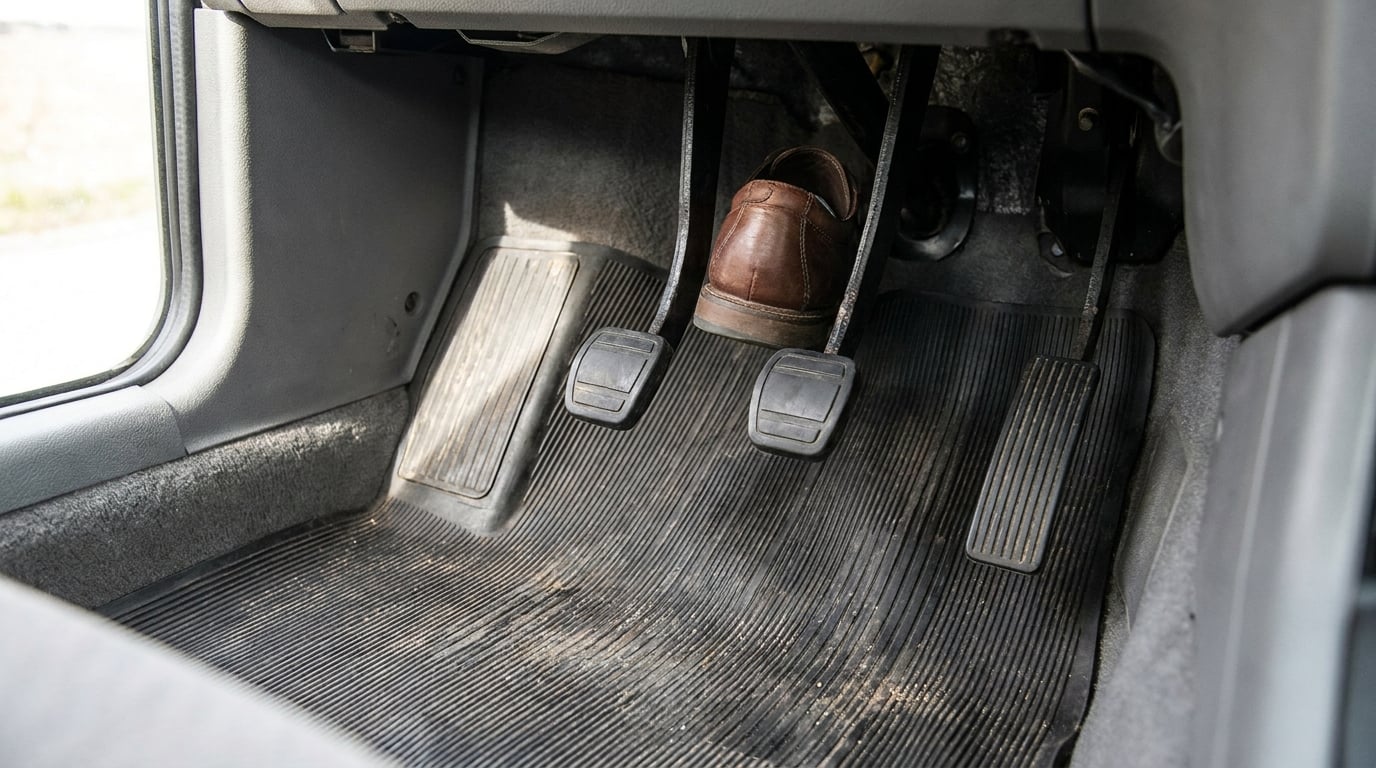
Left foot braking explained for beginners, in one line: you press the brake pedal with your left foot while your right foot stays on the accelerator, so you can brake and accelerate together without moving one foot across the pedal box. It is a real motorsport technique, and a poor everyday habit.
Most drivers first hear about it as something racers do, then wonder whether it is faster, whether it is against the rules, and whether a new driver should learn it at all. Those are sensible questions, and the honest answers are that the technique buys you tenths of a second, it is not illegal in itself, and beginners should probably keep both feet on the right until the basics are second nature.
This guide covers what left foot braking actually is, how it feels from the driver seat, the mistakes almost everyone makes on the first few attempts, and a graded way to practice it without adding risk to your own driving.
Table of Contents
- What Is Left Foot Braking?
- How Is Left Foot Braking Different From Normal Braking?
- Why Do Some Drivers Use Their Left Foot on the Brake?
- Is Left Foot Braking Safe for Beginners?
- How Do You Use the Left Foot on the Brake Gradually?
- How to Learn Left Foot Braking as a Beginner
- What Common Mistakes Should Beginners Avoid?
- When Is It Better to Use Both Feet?
- What Cars Are Best Suited to Left Foot Braking?
- How Can a Driver Practice Without Creating New Risks?
- Frequently Asked Questions
- Is left foot braking faster than using the right foot?
- Can beginners use their left foot for the brake in an automatic car?
- Does left foot braking damage the clutch or brake pedal?
- Should I rest my left foot on the brake while driving normally?
- How do I safely stop if I get confused while learning left foot braking?
- What to Do First
What Is Left Foot Braking?
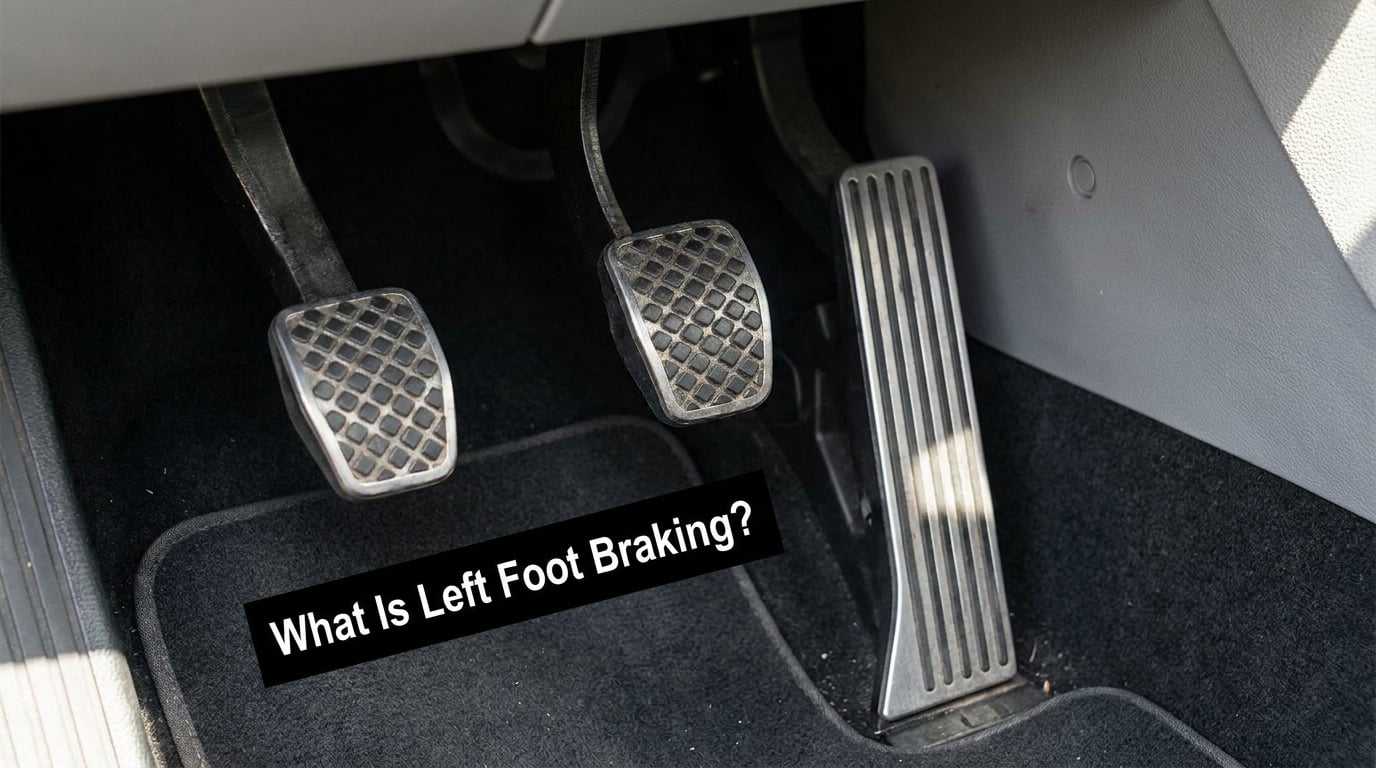
Left foot braking is a driving technique where the brake pedal is operated with the left foot while the right foot remains on the accelerator. Because each foot controls one pedal, the driver can apply throttle and brake at the same time, or switch between them without pivoting a single foot across the floor.
In everyday language: right foot on the gas, left foot on the brake. Nothing about the car changes. The pedals work exactly the same way, and the brake in your car is no more sensitive because a different foot is pressing it.
That last point matters, because the technique has a reputation built in motorsport that does not travel to traffic. A driver who has trained this way on a circuit is usually working at the limit, where a few hundredths of a second and precise control of pitch decide the result. A learner doing 30 in a residential street has neither of those problems to solve.
The left-footed driver, as the term is used by instructors, is simply a driver who has trained one foot per pedal. Some pick it up from karting or a rally car, some from sim racing, and some drift it into the habit without ever deciding to.
How Is Left Foot Braking Different From Normal Braking?
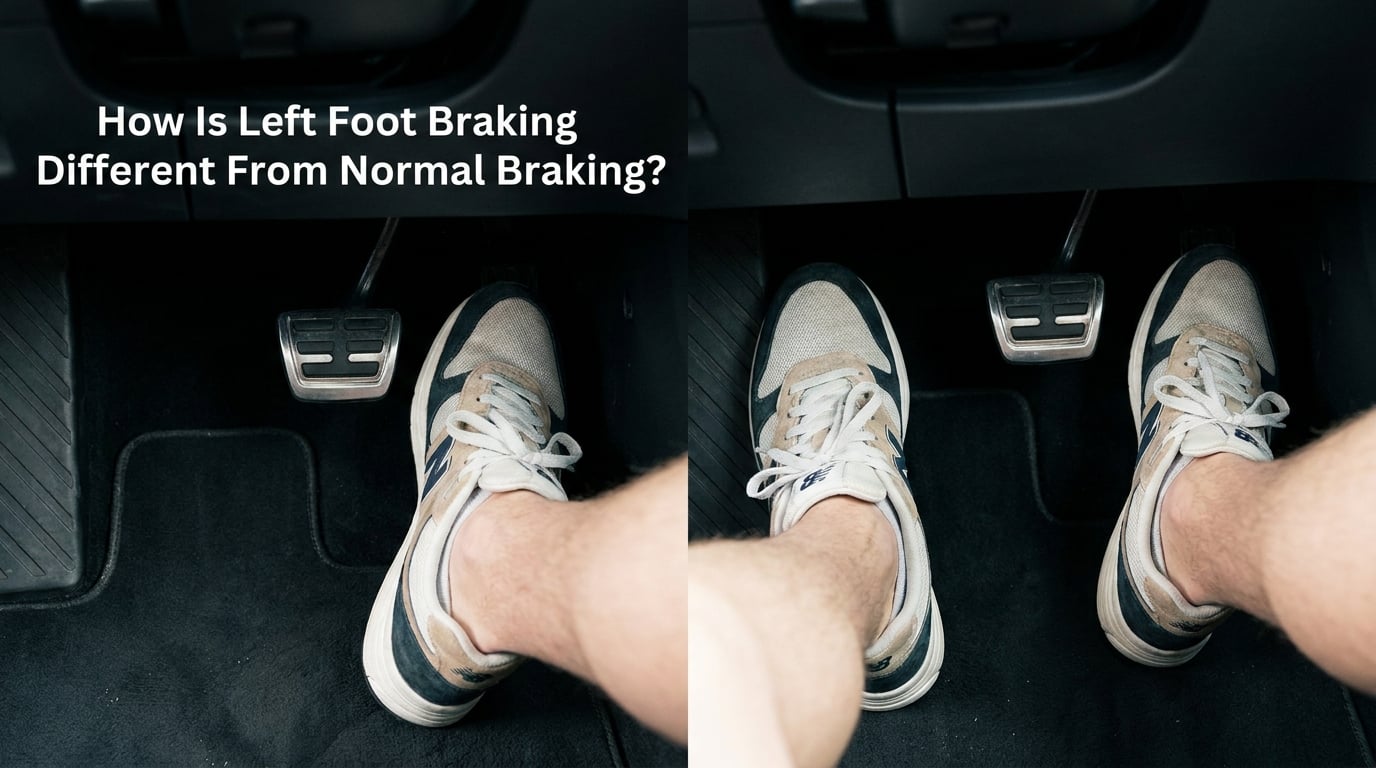
Normal braking puts one foot on two pedals, with the ball of the foot over the accelerator and the heel or the side of the shoe sliding across to the brake. Left foot braking splits the job, and some racers go further and overlap the two pedals deliberately.
| What changes | Right-foot braking | Left-foot braking | Left foot plus overlap |
|---|---|---|---|
| Foot movement between pedals | One foot pivots across | No movement, one foot per pedal | No movement, both pedals pressed |
| Throttle and brake at once | Not possible on most cars | Possible | Standard |
| Effect on the front tires | Normal braking load transfer | Same transfer, applied earlier | Transfer plus extra rotation control |
| Everyday road use | The standard convention | Adds a resting foot and overlap risk | Not appropriate for street driving |
| Where it belongs | Everything, all of the time | Training, then competition | Rally and circuit racing |
Read the first row carefully, because that is the whole argument in favor. On a circuit, the gap between lifting off the throttle and getting the brake on is measured in hundredths, and left foot braking removes it. On a road, that gap is invisible.
The overlap column is where the risks live. Pressing brake and accelerator together on a modern car can trigger a power cut or limp mode, as one automotive trade publication noted when covering the technique. The brake is a hydraulic or electric device; it does not care which foot is on it.
Why Do Some Drivers Use Their Left Foot on the Brake?
The main reason is weight transfer. When a car brakes, load moves onto the front tires, and loaded tires grip better. Doing that shift earlier gives the driver front-end grip and quicker turn-in, which is exactly what rally instructor Wyatt Knox of Team O’Neil Rally School teaches, and he reports running a stage about a second quicker with the technique.
The second reason is pitch control. Bendix racing driver Nick Percat uses left foot braking on wet corners and high-speed aerodynamic sections to control how much the car pitches, and he says it helps him place the front splitter where he wants it.
The third reason is simply not moving a foot. A driver on the r/Touge forum puts it plainly: pivoting the right foot from accelerator to brake takes a moment, and the left foot is already there.
It is worth separating the real benefits from the marketing. The technique does not shorten braking distance, and it does not make a road car grip more. Percat himself is blunt about street use, saying there is probably no real benefit to the technique on the road and that he does it out of habit.
Is Left Foot Braking Safe for Beginners?
No, not as a daily habit. The safety case against it for a learner is short: a left foot hovering near the brake can catch the floor mat, drag lightly, and apply brake pressure you did not ask for, and a foot crossing between pedals increases the chance of throttle and brake overlap you never intended.
Beginners are also still building the coordination that makes any technique safe. Until you can stop smoothly in traffic with your right foot without thinking about it, adding a second foot only splits your attention.
As for legality, left foot braking is generally not illegal in itself. What drivers are taught, and what many jurisdictions expect for public roads, is right-foot-only pedal use so the right foot is always ready to cover the brake quickly. Misuse can still breach general safe-driving and vehicle-control rules, and specific rules vary by country and state, so check the handbook for where you drive.
None of this makes the technique bad. It makes it a competition and training skill that is easy to misuse on a road.
How Do You Use the Left Foot on the Brake Gradually?
If you are going to learn it, learn it in the order that adds risk last. This progression is the safest route I know of.
- Start in a simulator. Zero risk, instant feedback, and you can make mistakes forty times without moving a real car. If you do not race, a driving game with a brake-throttle setup is enough to get used to one foot per pedal.
- Then use an empty parking lot or a quiet private drive. Low speed, no traffic, plenty of room to stop. Your only job here is to move the left foot onto the brake and the right foot onto the accelerator without looking down.
- Progress to a closed course or an instructor-led session. A driving instructor can give you feedback on pedal pressure and let you practice emergency stops somewhere with a run-off area.
- Only then consider the road, and only at low speed. Short, straight, empty stretches first. Never introduce it in heavy traffic, in the rain, or at speed.
If at any point your foot position feels uncertain, go back a stage. Reverting to the conventional technique costs you nothing except a few minutes.
How to Learn Left Foot Braking as a Beginner
Left foot braking explained for beginners really comes down to three things: where the foot rests, how lightly you press, and when you press. Get those right and the rest is repetition.
Foot position. Place the left foot on the brake pedal face, not hovering above it and not on the floor. Heel on the floor, ball of the foot on the brake pad, the same way a right foot rests on the accelerator. The right foot stays on the accelerator the whole time.
Pressure. Learn the pedal with feather-light pressure first. Most beginners press far too hard because they are used to a single decisive push. The brake does most of its work early; after that you are just adding heat and discomfort.
Application points. Pick visual braking points on a straight road, something fixed and easy to judge, and aim to be light on the brake as you reach it. Smooth, repeatable pressure matters far more than stopping in a specific place.
Do not lean. Resting a small, constant pressure on the brake while accelerating is the classic beginner error, and it is the reason some instructors simply refuse to teach the technique to learners.
Know your bail-out. Decide before you start that if coordination slips, you bring the car to a controlled stop and go back to two feet on the right. Losing a minute to reset beats a scraped curb.
Forum discussion on the topic is full of drivers describing the first attempts as jerky and unnatural, and most of them say it takes a session or two before the awkwardness fades.
What Common Mistakes Should Beginners Avoid?
Mashing the clutch. In a manual car, a beginner pushing the left foot forward can hit the clutch pedal instead of, or as well as, the brake. Wyatt Knox warns about exactly this, and it will not help your clutch. On an automatic there is no clutch, which is one reason it is the easier place to start.
Pressing both pedals on purpose. Overlap is a rally and circuit tool. On a street car it can cut power or trigger a limp mode, and a car that suddenly goes into reduced power while you are holding the brake is a genuinely unpleasant surprise.
Leaning on the brake while driving. Light constant pressure builds heat and slows the car without your intending to slow it.
Moving the left foot between pedals. A foot that travels from brake to floor to brake is a foot that will eventually land on the clutch.
Leaning on the drivers-ed rule and overcorrecting. The rule is not that left foot braking is forbidden. It is that one foot should stay ready on the brake on public roads.
Practicing in the wrong conditions. Wet roads, traffic, high speed and a crowded parking lot are all places to learn a different skill first.
When Is It Better to Use Both Feet?
Most of the time, it is better to use both feet on the right. The convention exists so the right foot is already on the brake the instant you need it, and so there is no chance of a foot landing on the wrong pedal when something unexpected happens.
Conventional braking wins in heavy traffic, in poor weather, in a car you do not own, and any time you are tired or distracted. It also wins if you are driving a manual and have not fully separated clutch and brake in your head yet.
Left foot braking earns its place when the driver already knows the technique, is on a closed course or track, and wants independent control of the two pedals. Some autocross and rally-school students pick it up for exactly that reason.
What Cars Are Best Suited to Left Foot Braking?
Automatics are the easier starting point, since there is no clutch pedal in the way. You will still want to check how the pedal box is laid out, because reach and spacing differ a lot between vehicles.
Anything with brake blending deserves extra thought. If you are curious about how newer cars mix friction and electric braking, our Regenerative Braking Explained for Beginners guide covers how pressure reaches the wheels in hybrids and EVs, and it changes what light brake pressure actually does.
Manual cars add the clutch, which is the single biggest source of beginner error. Seat adjustment matters more than most people expect: your left leg should reach the brake comfortably without your hip sliding forward, and your right leg should stay relaxed on the accelerator.
Whatever the car, read the owner manual. Pedal feel, assisted braking and any stated recommendations are specific to the vehicle, and no technique transfers perfectly from one car to the next.
How Can a Driver Practice Without Creating New Risks?
A short checklist covers most of it. Choose a quiet road or a closed area, ideally at a time with low traffic. Wear thin, flat shoes with a firm sole, because a loose flip-flop or a boot sole will not give you useful feedback.
Set the seat and mirrors before you start moving, and check the car over, including tire pressure and brake condition. Our High Mileage Oil Explained Does It Work piece is about the engine, but the general habit of checking fluids and wear before a long drive is worth keeping.
Put the phone away. Not in a holder, away. Practicing an unfamiliar pedal pattern while partly attending to anything else is asking for a mistake.
Keep sessions short, ten to fifteen minutes at low speed, and stop while you are still enjoying it. A quiet instructor or a proper training course is the cheapest way to avoid picking up bad habits that take months to unlearn.
Frequently Asked Questions
Is left foot braking faster than using the right foot?
Marginally, and only in situations where fractions of a second matter. Because the left foot is already on the brake, there is no pivot delay when you lift off the accelerator. On a circuit or rally stage that can be worth tenths of a second. In ordinary road driving the gap is far too small to detect, and it does not shorten your stopping distance at all.
Can beginners use their left foot for the brake in an automatic car?
You can try it, but most driving schools would not recommend it while you are still learning. An automatic removes the clutch risk, so it is the safer place to experiment. Even so, a resting left foot near the mat can drag and apply unwanted pressure. Learn conventional braking first, then practice the technique at low speed on a quiet private road.
Does left foot braking damage the clutch or brake pedal?
The brake pedal takes no more wear from a left foot than from a right one. The clutch is the real problem, and only in a manual car: a beginner reaching forward can catch the clutch pedal, which wears the friction material and can make the pedal shudder. Position your left foot so that catching the clutch is physically difficult before you try moving between pedals.
Should I rest my left foot on the brake while driving normally?
No. A left foot that rests on the brake, even lightly, can apply pressure as you press the accelerator, generating heat you did not intend and slowing the car. A left foot resting on the floor mat can also catch the mat and drag toward the brake. Keep the left foot clear of both the mat and the pedal until you are practicing the technique deliberately.
How do I safely stop if I get confused while learning left foot braking?
Signal, then move both feet back to the right side and use the technique you already know well. Slow progressively rather than stamping on anything, and pull over somewhere safe when the road allows it. Confusion is normal in the first attempts, so decide on this fallback before you start. Practicing somewhere with no traffic means a reset is never an emergency.
What to Do First
Start by getting conventional braking genuinely automatic, because that is the skill you will rely on every day of your driving life. If you are curious about the technique, a simulator costs you nothing and lets you make every beginner mistake safely.
Only move to a real car once you can place your left foot cleanly on the brake, keep light, steady pressure, and stop the car without looking down. Until then, two feet on the right is the correct answer.