
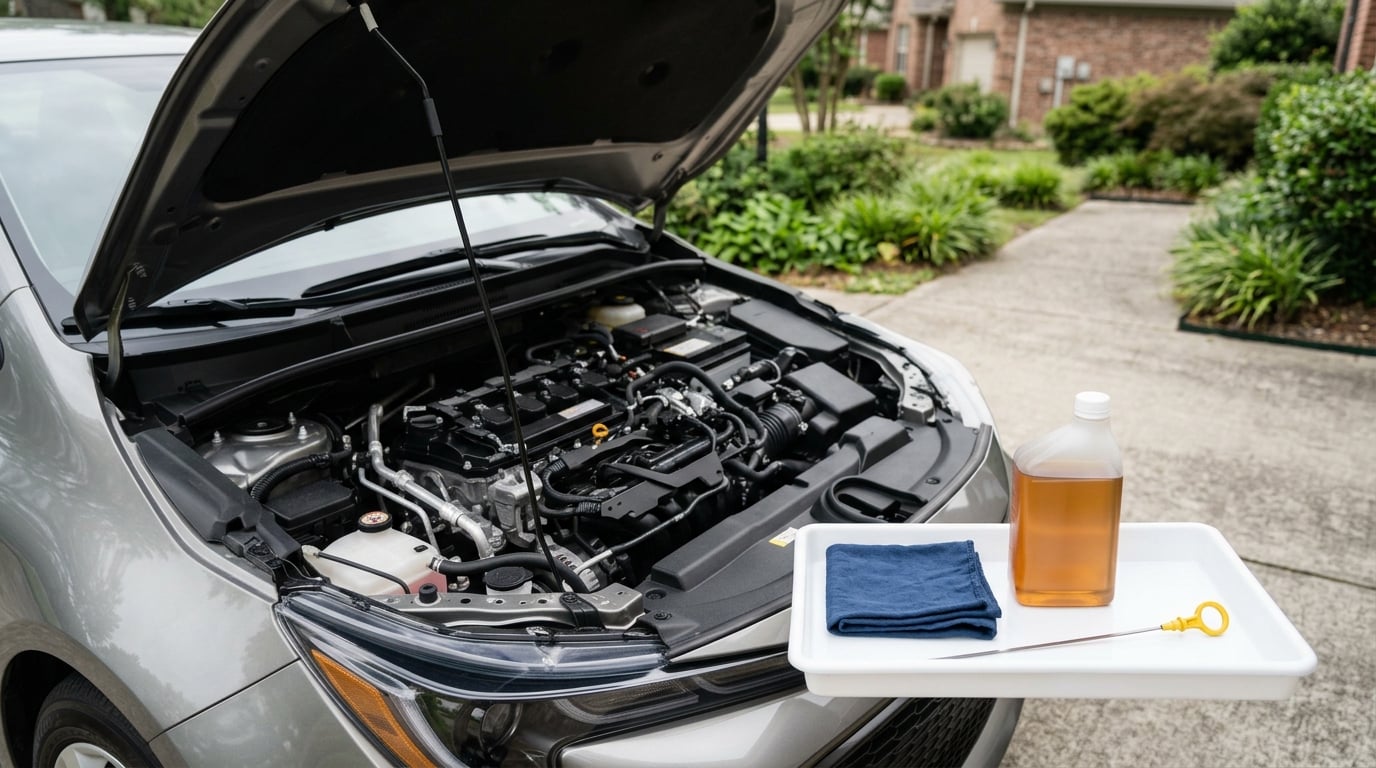
To check engine oil level correctly, park the car on level ground, set the engine to the condition your BMW manual specifies, let the oil drain back into the pan, then pull the dipstick, wipe it clean, push it fully back in, pull it again, and read the oil between the MIN and MAX marks. On models with an electronic oil level sensor, the reading comes from the dashboard instead of a stick.
The whole job takes about five minutes once you know which kind of car you have. Most of the trouble people run into comes from doing it on a sloped driveway, not seating the dipstick properly, or reading a cold engine against marks that were set for hot oil.
BMW is a good example of why model-specific guidance matters. Some engines hide a yellow loop handle behind a cover, some build the dipstick into the oil filler cap, and plenty of newer models dropped the dipstick completely in favour of a sensor in the oil pan. Reading the wrong dipstick, or assuming your car works like your neighbour’s, is how people end up topping up a full engine.
Everything below follows the owner’s manual for the car in front of you. If your manual says something different from what you read here, the manual wins.
Table of Contents
What You Need
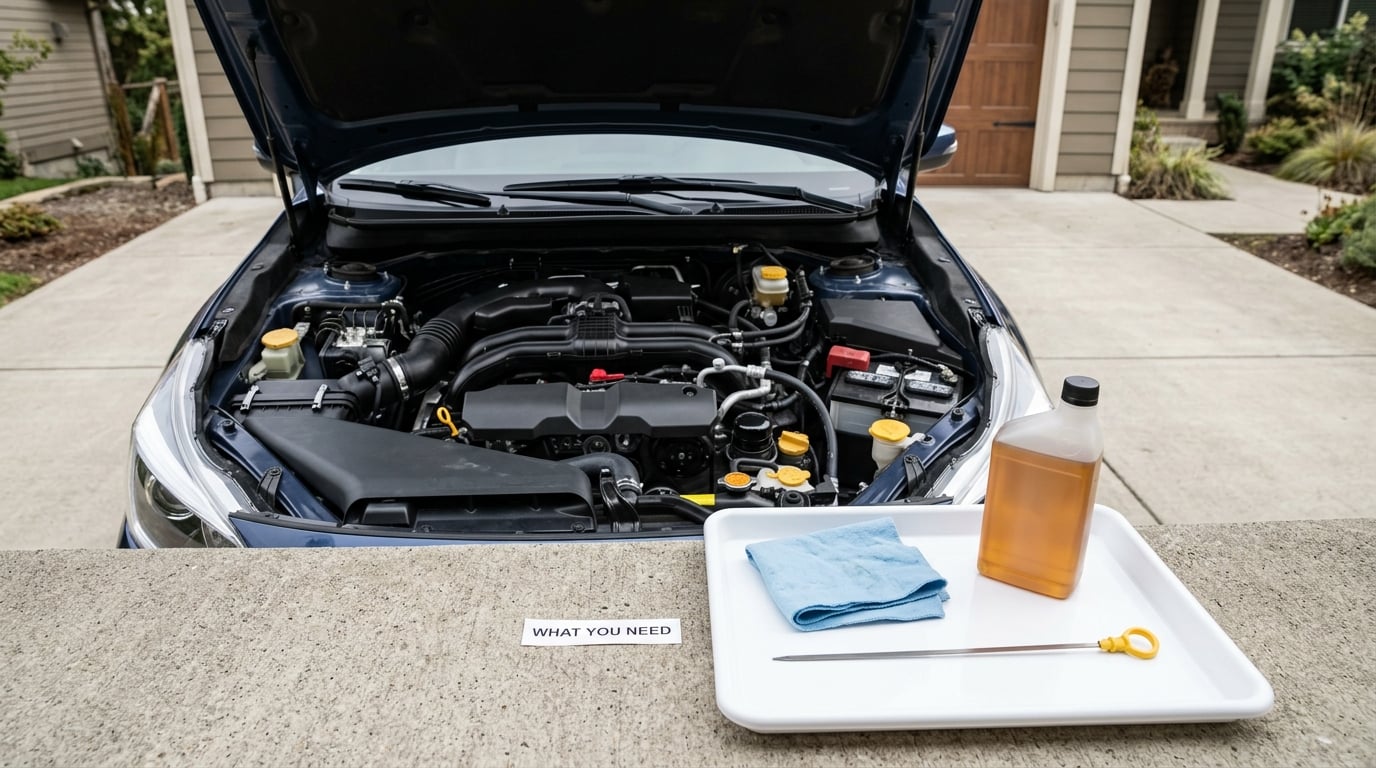
Almost nothing. You need a rag or a few paper towels, flat ground, and the engine oil your BMW manual approves. That manual is the most important item on the list, because it settles three arguments in one place: which oil specification to use, whether to check the engine cold or warm, and what a full level looks like on your specific engine.
BMW manuals usually point to a Long-Life specification with an LL code and a viscosity figure rather than naming a brand. If your engine was built before roughly 2010 it may be on an older specification, so match the code in the manual, not the code on the bottle in your garage.
Next, work out how your car measures oil. A yellow, orange or red loop handle near the engine block is almost always the engine oil dipstick. On some BMW engines the dipstick is integrated into the oil filler cap, so pull that cap out and look for a measuring blade in it. If there is no loop handle anywhere, your car almost certainly uses an electronic oil level sensor.
One trap worth naming: many BMWs also have a transmission dipstick, and it lives somewhere completely different, often down a tube near the transmission. It is thinner, sits deeper, and is usually marked or coloured differently. Grabbing the wrong one is the single most expensive mistake in this whole process.
Step-by-Step
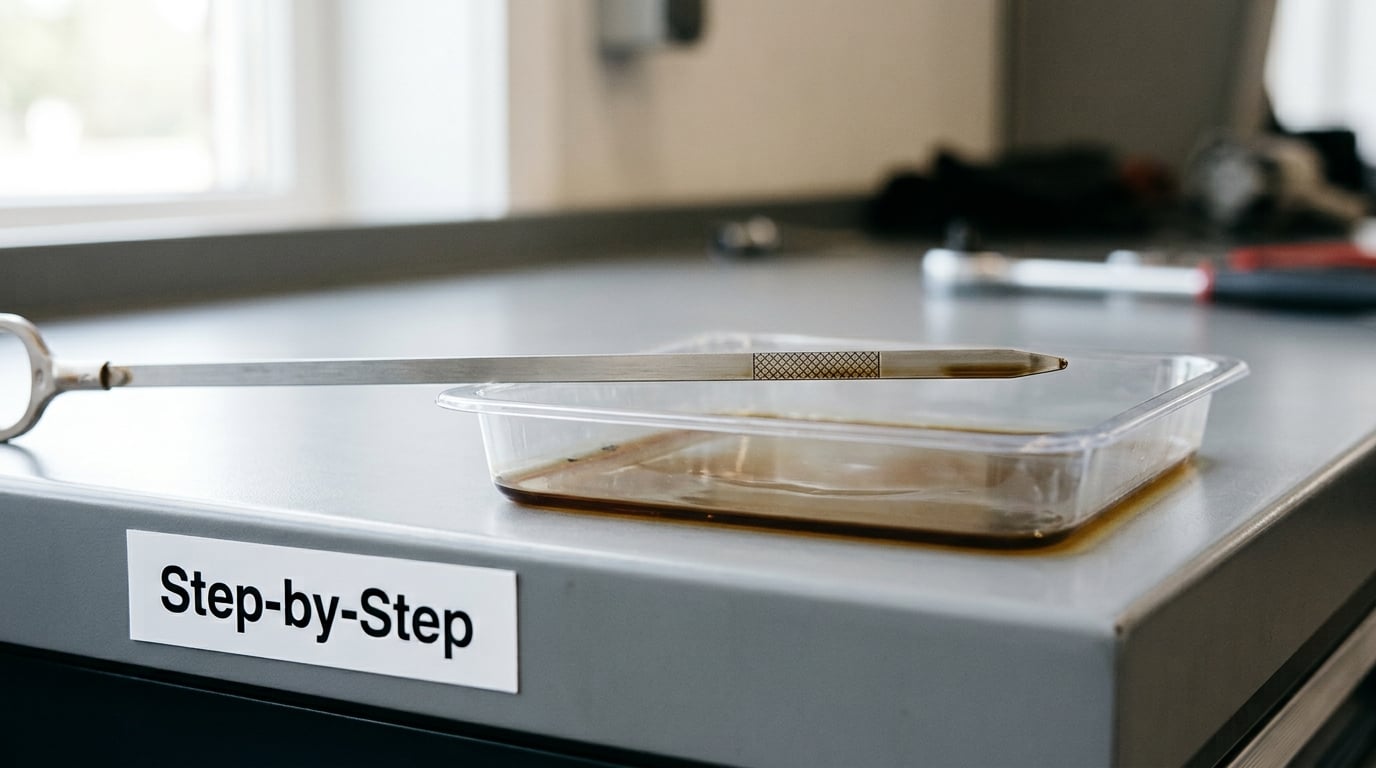
Work through these in order. Each step only works if the one before it was done properly, which is why the same reading can differ by a surprising amount between two attempts on the same car.
- Park on level ground. Use a flat driveway, not a slope or a road with a crown. You want the oil sitting flat in the pan. It is done correctly when a coin on the sill rolls neither direction.
- Set the engine to the condition your manual asks for. Most BMW manuals want a warm engine that has been shut off. Some electronic-sensor checks want the engine idling instead. Check the manual before you start the car.
- Let the oil drain back into the pan. Wait five to fifteen minutes with the engine off. This is the step people skip, and it is why the dipstick sometimes reads high right after driving.
- Pull the dipstick and wipe it clean. Take it out, wipe both sides with the rag, and hold it where you can still see it.
- Reinsert it fully. Push or screw it all the way home and twist until it locks if it is a bolt-in type. Do not leave it resting a few centimetres up.
- Pull it again and read it straight away. Hold the stick vertical with the tip pointing down so oil does not wick back along the blade and exaggerate the film.
- Compare the film against the marks. Look for the two marks near the tip: MIN, sometimes written as two small lines or a small circle, and MAX. A cross-hatched or ribbed band between them is the target zone.
- Top up in small amounts if it is low, then re-read. Add oil a little at a time, let it settle, and check again. Never pour in a full jug and hope for the best.
How to Check Engine Oil Level Correctly on a BMW With a Dipstick
Start with the engine in the state the manual specifies, then open the hood fully. A hood that is only propped part way can move the dipstick or keep it out of reach, which throws the reading off.
Locate the loop handle and pull the stick straight out. Note that pulling it the first time is not a measurement, because the stick drags a column of oil out of the tube with it. Wipe it thoroughly, both faces, down to the metal.
Reinsert it and seat it properly. On a push-in handle that means pressing it down until it stops. On a twist-lock or bolt-in handle that means pushing and turning until it clicks, or screwing it in fully. A dipstick left partly in place lets oil splash up the tube and register as a falsely high level.
Withdraw it a second time and read it in good light. Turn the blade so the oil film runs along the flat face, hold it upright, and compare where the oil sits with the two marks. If the film looks thin and streaky rather than an even band, rotate the stick slightly and look again; a second angle often gives a cleaner picture.
Take a photo of the stick next to a ruler. Ten seconds of that now gives you a reference next time, and it settles most arguments about whether the level changed.
How to Check Engine Oil Level Correctly Without a Dipstick
Plenty of newer BMWs measure oil level electronically. A sensor in the oil pan or sump reports the level to the vehicle electronics, which then shows it in the instrument cluster or iDrive. There is no oil in the dipstick tube to misread, so most of the classic mistakes simply do not apply.
The condition matters more here. With this kind of sensor, the car usually wants the engine at idle and at operating temperature, with the oil circulating, because the sensor reads a fluid that is moving. Start the car, let it settle into a steady idle, then open the vehicle status or check-control messages in iDrive and select the oil level display.
The readout shows a bar or a position between MIN and MAX rather than a line on a blade. Read it the way you would read a dipstick: anything sitting clearly under the minimum means you add oil, and anything pinned at the top of the range means you go no further. If the display offers a message instead of a level, treat that message as the reading and follow it.
For the wider picture on cars that have no dipstick at all, our guide to how to check oil on a car with no dipstick walks through the menu paths used across different manufacturers.
Common Mistakes
Almost every wrong reading traces back to one of these. Mechanics on r/MechanicAdvice keep repeating the same short sequence for a reason: engine off, wipe, push down, pull up, look.
Checking on a slope. A driveway that tilts toward the front or back pools the oil at one end of the pan and gives you a reading that can be a full range out. Move the car and check again before you add anything.
Not seating the dipstick. This is the most common error by a distance. If the stick is not fully home, oil can climb the tube wall and the level reads high, or a dipstick that hangs too low reads low. Push it in until it stops, or screw and turn it until it locks.
Checking a cold engine when the manual wants a warm one. Oil that is spread across cold engine surfaces clings to metal instead of draining to the pan, so the level reads low. Check with the engine warm and shut off, unless your manual says otherwise.
Reading the transmission dipstick. It lives in a different tube, usually near the transmission, and it is not calibrated to the same range. If you cannot find a bright loop handle, check the filler cap and the layout in the manual before pulling anything.
Checking with the engine running. A dipstick read while the engine idles or revs shows oil thrown around the crankcase rather than the level in the pan. For a dipstick car, engine off. For an electronic-sensor car, the opposite is required.
Adding a large amount at once. Pouring in a full container makes it easy to overshoot, and a sloshing pan does not settle instantly. Add small amounts, let the oil fall into the pan, and read again.
Judging a fresh reading right after a change. A new filter holds oil, and oil spread through the engine after the first drive takes time to come back. A level that looks high immediately after a service can drop a little once things settle, which is expected rather than a fault.
What the Oil Level Means
The gap between the two marks is the designed working range, and staying inside it is the whole job. Here is how to read what you are seeing.
| What you see | What it means | What to do |
|---|---|---|
| Below the MIN mark | The pan is not holding enough oil to cover the parts that need lubrication. | Add the approved oil in small amounts, let it settle, and re-read until it sits inside the range. |
| Between MIN and MAX | Normal working range for a warm engine. | Nothing. Note the odometer and recheck later to watch for change. |
| Close to the MAX mark | A full engine, particularly soon after a fill. | Stop adding. It is normal for the level to drop slightly after the oil circulates. |
| Above the MAX mark | Overfilled, and often overfilled by more than people think. | Stop driving hard and arrange to remove some oil. Do not keep topping up. |
Two odd readings deserve a closer look. A level that climbs between checks without any oil being added usually means fuel is diluting the oil, or the wrong oil specification went in, and both need attention quickly. A level that keeps dropping between services is a consumption problem worth measuring rather than repeatedly covering up.
To measure it, record the odometer each time you top up and how much you added. If the car uses more than roughly a litre per 1,000 km, that is worth a conversation with a workshop, because it is a measurable number rather than a feeling. Our guide to how to check for engine oil sludge in your BMW covers what happens when old oil thickens and darkens.
The oil itself carries information too. Fresh oil looks amber and translucent. Oil that is very dark and gritty, or that has a milky, milkshake-like texture, points at a different problem entirely, and we explain what milky engine oil means in more detail here.
Tips for Checking It Safely and Consistently
Consistency is what turns a guess into a measurement. Use the same parking spot, the same engine state, and the same wait time every time, and the number on the dipstick becomes comparable to last month’s number instead of noise.
Take a photo of the dipstick every single check, next to something of known size. Comparing photos is far more reliable than memory, and it makes a slow downward drift obvious long before the car ends up at MIN.
Write down the odometer reading and the amount you added. Those two numbers turn the check into the consumption measurement described above, and they are the first thing a technician will ask for.
Watch your hands. Even a warm engine bay has parts that are hotter than they look, and fans can start without warning after the engine has been shut off. Keep the oil cap off for as short a time as possible and keep rags away from anything still moving.
Finally, do not overthink it. A dipstick is a rough measuring tool, not a laboratory instrument, and small differences between two readings on the same engine are normal. What you are looking for is a level that stays inside the range over time, not a perfect film every single morning.
Frequently Asked Questions
Should I check engine oil when the engine is cold or hot?
Check a warm engine that has been shut off, unless your manual says otherwise. Warm oil has spread through the engine, so when it drains back to the pan the level on the dipstick matches what the marks were calibrated for. A cold reading often looks low because oil clings to cold internal surfaces instead of running down. Allow five to fifteen minutes after switching off before you pull the stick.
Why does my BMW have no engine oil dipstick?
Newer BMW engines measure oil level electronically instead. A sensor in the oil pan reports the level to the vehicle electronics, which display it in the instrument cluster or iDrive with a bar running between MIN and MAX. On many of these cars the correct condition is engine running at idle and at operating temperature, which is the opposite of the dipstick procedure. Your manual lists the exact menu path for your model.
Can I add engine oil before the engine is warm?
Yes, topping up before the engine is warm is fine, and it is often the more convenient time. The engine does not need to be running to accept oil through the filler neck. Warm the car up afterwards if you want a final reading that matches the calibrated marks, then wait a few minutes and check the level again so the fresh oil has settled into the pan.
What does the oil dipstick MAX mark mean?
The MAX mark is the top of the designed working range. Reaching it means the pan holds the maximum amount the engine should carry, and going above it is overfilling. Because the marks are calibrated for warm oil, a level that looks close to or above MAX on a cold engine is normal and will drop as the engine warms and the oil spreads. Add oil up to MAX and then stop.
How often should I check the engine oil level?
Check it roughly once a month, and always before a long trip. Add a check shortly after an oil change, then again after a few hundred kilometres of driving, because the level often settles lower once the new oil has circulated and the filter has filled. Older engines, vehicles that tow, and anything that idles a lot benefit from more frequent checks than a newer car on normal service intervals.
Conclusion
Start with the owner’s manual for your model, because it decides whether you are looking for a yellow loop handle, a dipstick built into the filler cap, or a menu in iDrive. Park on level ground, set the engine to the condition the manual asks for, give the oil five to fifteen minutes to drain back, then take one clean reading: wipe, seat the dipstick fully, pull it again, and compare the film with the MIN and MAX marks.
One good reading tells you whether you need to add oil, how much, and whether the level is drifting. If it climbs or drops between checks, note the odometer and the amount you added, because that is where a real diagnosis starts rather than another top-up.