
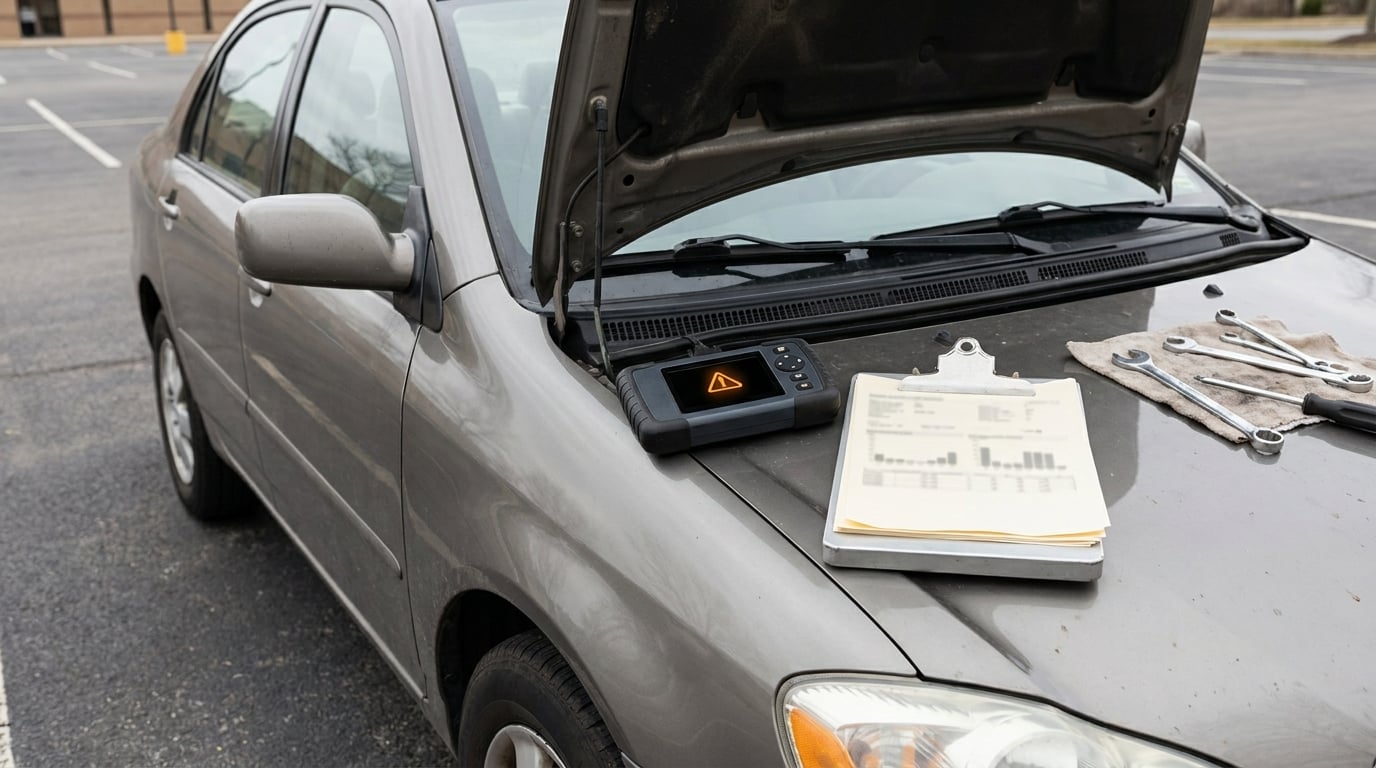
A vehicle history report is a database query of events somebody chose to report. A pre-purchase inspection is a physical snapshot of the car standing in front of you, right now, with the engine cold. Neither replaces the other, and when buyers ask carfax vs actual inspection what it misses, the honest answer is that a clean report tells you almost nothing about whether this particular car is safe to drive home today.
Last checked in 2026. Everything below applies to private-party and dealer purchases in the US; rules for reports and inspections vary by state and change over time.
Table of Contents
- Carfax vs Actual Inspection: What It Misses at a Glance
- What Vehicle History Can Carfax Reveal?
- What Does an Actual Vehicle Inspection Check?
- What Does Carfax Miss That an Inspection Can Find?
- What Does an Inspection Miss That Carfax May Show?
- How Do Reports, Inspections, and a Test Drive Work Together?
- Which Should You Choose?
- Frequently Asked Questions
- Is a Carfax report enough to buy a used car?
- What can a vehicle inspection detect that Carfax cannot?
- Can an inspector verify that a car was in a major accident?
- Should I get an inspection before making a deposit?
- What should I do if the Carfax mileage does not match the seller?
- How long does a used-car inspection take?
- Conclusion: Inspect the Car, Not Just Its History
Carfax vs Actual Inspection: What It Misses at a Glance
A report documents paperwork. An inspection documents condition. The gap between those two facts is where most expensive mistakes happen, because a car can be structurally repaired, repainted, re-geared and re-registered without a single line ever reaching the report.
| What you want to know | Carfax-type report | Independent inspection |
|---|---|---|
| Reported accident history | Claims filed with participating insurers | Body work, panel repair, overspray and evidence on the car itself |
| Title status | Salvage, rebuilt, flood and certificate-of-destruction brands | Nothing on its own; it can flag paperwork that looks wrong |
| Odometer integrity | Odometer readings and reported rollbacks | Wear on the pedals and steering wheel against the stated mileage |
| Ownership history | Owner count, states, fleet and rental use | Nothing; the prior owners are gone by the time you look |
| Paint and body condition | Nothing | Paint depth readings, panel gaps, overspray on trim |
| Structural members | Only if a claim was reported | Pillars, sills, frame rails, strut towers for signs of straightening |
| Fault codes | Nothing | OBD2 scan, including stored codes a seller cleared the morning of |
| VIN integrity | Records tied to the VIN | Door jamb tag, stamped VIN and engine or chassis number compared by eye |
| Interior and cosmetic wear | Nothing | Seat bolster wear, steering rim shine, trim condition, sun or flood damage |
| Tires and glass | Nothing | Remaining tread, DOT date codes, mismatched glass, curb rash |
| Mechanical state | Service entries only, if any were reported | Brake pads and rotors, tires, suspension, cooling, leaks, exhaust |
| Open recalls | Yes, but cross-check the federal database | Yes, the inspector reads current VIN recall status |
What Vehicle History Can Carfax Reveal?
Carfax aggregates records from a large number of contributing sources: insurance companies, state DMVs, dealers, auction houses, police departments and a minority of body shops. Carfax states it draws from well over a hundred thousand sources. Every one of those sources decides what to send.
What you get when the data is there:
- Ownership count and type including how many states the car has moved through, and whether it was a rental, fleet or lease vehicle.
- Title brands such as salvage, rebuilt or flood, along with the date the brand was applied.
- Odometer readings captured at inspections, repairs, service visits and title transfers, plotted as a timeline.
- Reported damage from insurance claims, with a severity scale attached.
- Auction history from Copart, IAAI and Manheim, sometimes including the grade and the sale price.
- Theft records and police reports, where an insurer or police department reported them.
- Service records submitted by participating dealers and shops.
- Open recalls and sometimes warranty claims.
When that data is complete, a report is genuinely impressive. A documented rollback or a salvage brand is worth more than any inspection finding, because no inspector can reconstruct a paper trail from the DMV. But notice how many rows above are about records rather than condition. A report is a search result, not a diagnosis.
AutoCheck is the other big name, and it draws from a somewhat different mix of auction, lender and DMV data. Run both when the car is worth the extra few dollars, and treat any disagreement as a reason to investigate rather than a reason to pick the friendlier report.
What Does an Actual Vehicle Inspection Check?
A good pre-purchase inspection starts cold. The inspector looks at the car before it is warmed up, because a warm engine hides leaks, rattles and cold-start problems.
From there the work is roughly in this order:
- Cold start and idle listening for hard starts, misfires, hesitation and unusual noises.
- Warning lights and an OBD2 scan across all modules, not just the engine, reading stored, pending and permanent codes.
- Fluids for level, colour and texture, plus a look at the underside for fresh leaks.
- Brakes pedal travel and feel, pad and rotor thickness, and whether the pedal returns normally.
- Tires tread depth across all four, DOT date codes, wear pattern that hints at an alignment or suspension problem.
- Suspension and steering for play, knocks and looseness over bumps.
- Body and paint panel gaps measured against each other, paint depth readings on each panel, overspray on trim and badges.
- Structure pillars, rocker sills, frame rails and strut towers checked for grinding, welding and mismatched coating.
- VIN verification the door jamb tag, the stamped plate and any engine or chassis number compared against the paperwork.
- Interior and cargo areas for wear patterns, musty smell, damp carpet and sediment in trunk recesses.
- Test drive cold, then at operating temperature, watching for noises, vibration, pulling and shifting behaviour.
A written itemised report with photographs is worth far more than a pass or fail stamp. Ask for one in writing before the inspection happens, not after.
What Does Carfax Miss That an Inspection Can Find?
This is the list buyers most often search for, and it is long. These are the findings that come up on a clean report and a car that is not what the seller implied.
- Repairs that were never reported. Industry estimates suggest roughly 60 percent of property-damage accidents produce an insurance claim, which leaves a large share unreported. Repairs under the collision deductible, cash paid to a body shop, or a private settlement between two drivers never create a record.
- Repainted panels and swapped parts. A bumper cover or a quarter panel replaced out of pocket leaves nothing in the file. The inspector finds it in the paint thickness and in a gap that is two millimetres wider than the one beside it.
- Straightened structural members. A pillar or rocker that has been cut and welded can look straight, loads correctly, and never appear in any report. Fibre and paint tell a different story to an eye that knows what to look for.
- Cleared or stored fault codes. A code cleared the night before the sale is invisible on the report and invisible on a quick drive. It is sitting in the scan tool waiting.
- A VIN that does not quite match. When the door jamb tag, the stamped plate and the engine or chassis number disagree, you are looking at a cloning problem or a transplanted body. No report resolves this, because a report is filed against a number, not a car.
- Cosmetic and interior wear that does not match the mileage. Shiny bolsters and a polished steering rim on a low-mileage car is information the odometer entry cannot give you.
- Tires and glass. Four matching, fresh tires cost real money, and same-week DOT codes on a car supposedly driven hard for years is a story worth asking about. Cracked or tinted-by-age glass is the same clue.
- Undisclosed flood exposure and corrosion. A car that sat in water can carry a musty smell, silt in the trunk corners, damp carpet and corroded electrical connectors, with no flood title if no insurer ever saw it.
- Current mechanical condition. Worn brake pads and thin rotors, a tired alternator, a slipping transmission, a weeping cooling system. The report says nothing about the state of the parts on the car today, and the answer changes every month you drive it.
One F-150 buyer found paper receipts in the glove box describing thousands of dollars of damage to every panel on one side of a truck they had already bought with a clean report. Nobody had lied on the report. The repair had simply never been filed.
What Does an Inspection Miss That Carfax May Show?
The reverse is just as important, and buyers rarely think about it. An inspector arrives with the car and a scan tool. They arrive with no records, no title history and no way to know who touched the car before them.
- Prior owners and how many there were. A car sold four times in a year and a car sold once are the same car under a clean report.
- Commercial and rental use. Fleet and rental history is routine on a report and essentially undetectable from a seat bolster, though unusually even wear can be a hint.
- Title events. A rebuilt or flood brand in a state where it was properly recorded is a permanent record. The inspector can only notice paperwork that looks wrong.
- Odometer rollback. Report timelines catch reported rollbacks. An inspector can only compare pedal wear to the stated mileage, which is a much coarser tool.
- Theft and police reports. Stolen-and-recovered cars leave a trail in the data that no physical check reaches.
- Auction history. A car that went through a salvage auction and came back with a clean title is disclosed on paper. In person it just looks like a car.
- Records that exist but have not landed yet. A claim filed last month may take weeks or months to appear in the database, and a recently repaired car can look spotless for a quarter.
Always run your own report on the VIN stamped on the door jamb rather than accepting a printout from the seller. Sellers share old, cropped or partial reports, and they are not all doing it deliberately, but the effect is the same. A shop manager on community.cartalk described the other side of it plainly: his shop does not report to the industry databases, so its service history simply never shows up. Missing dealer service records are not evidence of neglect.
How Do Reports, Inspections, and a Test Drive Work Together?
The order matters. Doing these in the wrong sequence wastes money and weakens your negotiating position.
1. Run your own report first
Read the door jamb VIN, run Carfax and AutoCheck on it yourself, and cross-check the free authoritative sources: the NHTSA recall database for open recalls, a theft check, and an NMVTIS-approved provider for title records. Free checks catch what a paid report summarises.
2. Ask about red flags before you go
Entries like damage to the front with no severity, an auction record, an ownership jump across several states, or a mileage reading that dips then climbs. A report that shows a properly repaired accident is a different conversation from one showing an unreported claim history.
3. Get an independent inspection
Someone with no financial stake in the sale, and a written report with itemized defects and photographs. A seller who refuses an inspection has told you something useful about the car, and a used-car guide or return period only exists if you stay inside it.
4. Test drive it yourself
Cold and warm. The inspection catches what a scan and a lift can reach; you are listening for how it drives, which is a different kind of information entirely. Pay attention to steering feel and any pull, since uneven tire wear and a worn strut on one corner feel like something you only really notice from the seat.
5. Negotiate with the findings in front of you
This is the step buyers skip. An itemized list of defects is not a complaint, it is a repair bill the seller can answer. Paint correction on two panels, a wheel and tire set, a suspension refresh, brake pads and rotors, a cooling system flush. Hand over the list and a total, and let the seller reduce the price instead of arguing about the car’s value. A buyer who arrives with photos and measurements gets a better number than a buyer who arrives with an adjective.
When you cannot get a professional inspection
A twenty-minute walkaround with no tools still catches a lot. Check paint for mismatched shade or orange peel under daylight, compare panel gaps, read the tire DOT codes, open the driver’s door and look for a shine on the steering rim that the mileage does not justify, and get underneath for a look at the exhaust and suspension. It is not a substitute, and I would not call it one, but it beats buying on a report alone.
Which Should You Choose?
If you only do one thing, do the inspection. Buyers set out to answer one question: is this specific car worth what they are asking? Only a report can hand you a second, separate piece of information, which is whether anything about this vehicle’s paperwork should stop you.
Skipping the report makes sense in narrow cases, such as a late-model car bought sight unseen from an out-of-state seller with a factory warranty still attached, or a car where a dealer has already run and attached the full report to the paperwork. Outside those, the report is the cheapest insurance in the whole process.
Now the counter-narrative, because it matters. A documented accident is not automatically a dealbreaker. Plenty of properly repaired cars sell lower than comparable clean-history cars, and an inspection can confirm the frame rails and suspension are sound rather than you guessing. Forum buyers regularly describe a car with a modest damage entry turning out to be the better purchase once an independent mechanic verified the repair. Treat a dirty report as a reason to inspect more carefully and pay accordingly, not as a reason to walk.
The real red flags are different. Unverifiable VIN stamping, structural rail work with no documentation, active flood corrosion, and a seller who resists inspection. Those are the four I walk away from.
Frequently Asked Questions
Is a Carfax report enough to buy a used car?
No. A report tells you what was reported, and a large share of accidents and every bit of mechanical wear are never reported at all. It is the fastest filter for title problems, odometer rollbacks and stolen vehicles, but it cannot tell you whether the brakes, transmission or structure on the car in front of you are sound. Use it as the first step, not the only one.
What can a vehicle inspection detect that Carfax cannot?
Anything about current physical condition. Paint depth and panel gaps reveal repaints and body work, structural members show signs of straightening, an OBD2 scan returns stored and pending fault codes, and the car itself reveals leaks, worn brake pads, thin rotors, uneven tire wear, corrosion and interior wear that does not match the stated mileage. None of that lives in a database.
Can an inspector verify that a car was in a major accident?
An inspector cannot prove the history, but they can find the evidence. Look-alike paint, uneven panel gaps, overspray on trim, welding and ground-down bolt holes around pillars, sills and frame rails, and mismatched undercoating all point to structural work. A documented claim plus physical evidence together make a strong case, which is why the report and the inspection are complementary rather than competing.
Should I get an inspection before making a deposit?
Do not put money down before the car is inspected and every discrepancy is explained. Deposits are hard to recover, and they remove your leverage at the exact moment you need it. Many guides and dealer return periods only cover a purchase made inside a specific window with an inspection performed, so find out what applies where you are before you sign anything.
What should I do if the Carfax mileage does not match the seller?
Ask for the service records behind the lower reading and compare them against the timeline for gaps that do not make sense. Then look at wear: a polished steering rim, worn pedal rubber and drivers seat bolsters that are shiny all suggest higher mileage than the report’s lowest number. If the numbers still do not reconcile, walk away, and check an NMVTIS-approved source for an official title record.
How long does a used-car inspection take?
An hour to ninety minutes is typical for a standard pre-purchase inspection, longer if the car is lifted for undercarriage work or the inspector is running an extended diagnostic. A mobile inspection at the seller’s location often takes a little longer because of setup. Book it with time to spare, and insist the report is written and photographed before you discuss money.
Conclusion: Inspect the Car, Not Just Its History
A clean vehicle history report is a good start and a poor ending. It confirms that the paperwork looks right; it says nothing about the paint depth on the left quarter panel, the code someone cleared last week, the pads that are nearly gone, or whether the VIN on the door jamb matches the car it is bolted to.
So run the report yourself on the door jamb VIN, cross-check recalls and title records, and pay for an independent inspection by someone with no stake in the sale. Then take the written findings into the negotiation as a repair list, and resolve every discrepancy between the report, the inspection and the seller’s story before any money changes hands. When you weigh carfax vs actual inspection what it misses, the report answers whether the past was reported and the inspection answers whether the car is sound. You need both answers.