
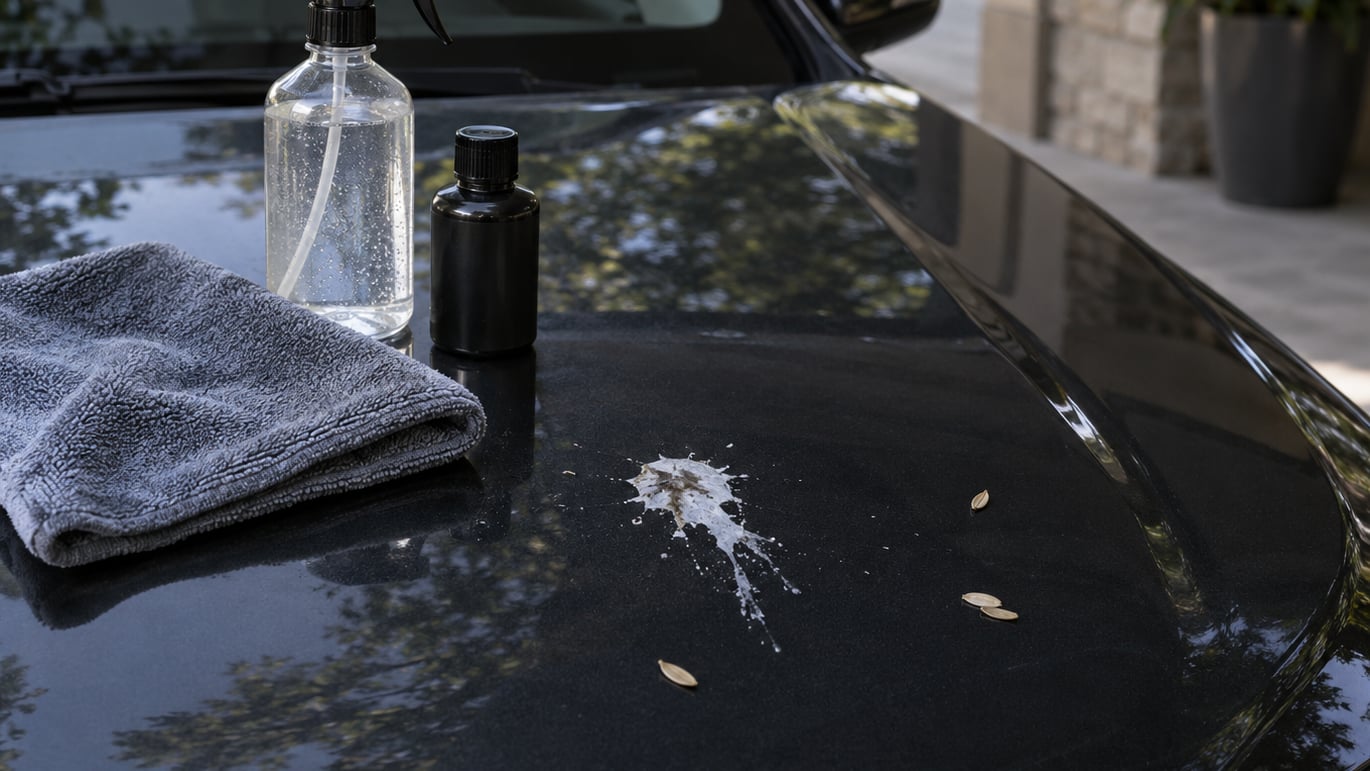
The fastest way to remove bird droppings from car paint without etching it is to keep the waste wet, give it a few minutes to soften, then lift it away with a damp microfiber cloth and almost no pressure. Never wipe a dry dropping. The grit and seeds inside it act like sandpaper, and any rubbing turns a mess into a scratch you have to polish out.
Timing matters more than product choice. A dropping that comes off within an hour or two rarely leaves a mark, even on a black car in direct sun. Leave one for a few days on a hot hood and the uric acid has been eating into the clear coat the whole time, which is why so many people end up with a dull ghost outline that no cleaner will remove.
What follows is the method I use, the stuff that will ruin the panel if you reach for it by mistake, and how to tell whether the mark you are left with is just residue or actual etching. It takes about ten minutes and costs nothing beyond what is already in your garage.
Table of Contents
What You Need
Most of this list you already own. The two things worth adding are a dedicated bug and tar remover and a second microfiber towel kept only for dirty work.
- Cool or lukewarm water from a hose or a spray bottle, for rehydrating dried waste.
- A pH-neutral car shampoo, the kind you already use for washing.
- Clean microfiber towels, at least two, so you are not moving grit from one spot to another.
- A soft detail brush or wash mitt for textured surfaces like wheel wells and door shuts.
- A spray bottle for controlled, gentle wetting instead of blasting the panel.
- Nitrile gloves, because bird waste can carry bacteria and you will be touching it with bare hands otherwise.
- Bug and tar remover or a citrus all-purpose cleaner, optional, for waste that has already hardened into a crust.
- A small amount of isopropyl alcohol, optional, for residue that clings after a wash.
My habit is to keep a 32-ounce spray bottle of plain water and a small quick detailer in the trunk year round. If you wash by the bucket method, our guide to how to wash a car without scratching the paint covers the rest of the setup.
How to Remove Bird Droppings from Car Paint
Rinse the dropping with cool water so it softens, soak any residue with a pH-neutral shampoo or bug remover for a few minutes, then lift it away with a clean damp microfiber cloth using light pressure. Rinse and dry the panel, then check the finish in daylight for a dull etching outline that needs a mild polish.
1. Rinse the Area Immediately
Start by soaking the dropping with cool water and letting it sit. Do not scrub, and do not aim a pressure washer at a dry dropping, because you will drive grit into the finish instead of moving it.
Work in the shade if you can. A panel that is hot to the touch softens the panel itself as well as the waste, and a warm surface plus a fast-moving towel is where swirl marks start. If you only have a hose, use a gentle spray and stay a good foot or two off the paint.
2. Soak the Remaining Residue
What dissolves dried bird poop is patience and moisture first. Mix a small amount of pH-neutral car shampoo in your spray bottle, or use a bug and tar remover straight from the bottle, and wet the spot again.
Give it a dwell time of a few minutes. I use three to five. If the crust is thick or has clearly hardened, lay a damp microfiber towel over it and leave that in place, then re-wet it every couple of minutes. The whole point is to avoid friction, so longer soaking beats more scrubbing.
3. Lift It Gently With a Microfiber Cloth
Press a clean, damp microfiber towel down and lift straight up. Do not drag it across the panel. Work from the outside of the dropping inward so you are not pushing residue across clean paint.
You know it is ready when the towel picks up the waste with barely any pressure. If you have to lean on it, put the towel down, add more water, and wait another few minutes. Use the soft detail brush only on textured plastic, wheel wells and door shuts where a flat towel cannot reach.
4. Treat Stubborn Marks and Old Bird Poop Stains Carefully
Once the waste is gone, a dull spot sometimes remains. That outline is etching, which means the clear coat itself was damaged, and no amount of further cleaning will bring it back. Friction at this stage makes it worse.
Put a few drops of isopropyl alcohol or a paint-safe detailing product on a damp cloth, not on the panel, and dab the mark. Test an inconspicuous area like the lower door edge first and wait a few minutes to see whether the finish dulls or changes. Never leave alcohol sitting on the finish, and never use a household cleaner, degreaser or kitchen product.
If the mark is still there after a proper wash, the answer is mechanical, not chemical. A mild polish or scratch remover on a microfiber pad with light hand pressure will smooth light etching. Hot water poured over the panel can also lift very faint outlines, since the warmed clear coat expands slightly and reflows, and it is worth trying before you reach for a compound.
5. Rinse, Dry, and Inspect the Finish
Rinse the panel clean, then dry it with a clean microfiber towel. Blower drying leaves mineral spots that look surprisingly like etching in sunlight, so pat it dry instead of spraying water on a dusty panel.
Look at the hood in daylight, ideally at an angle where the light rakes across the surface. A temporary haze wipes out with a polish. Etching has a hard edge that stays put even when you rub it with a clean fingertip, and if the outline is deeply pitted or feels rough, that is clear coat failure rather than a surface mark. Once the clear coat is breached, no DIY product restores it, and no cleaner in the garage touches it. That is the point to stop cleaning and get a body shop quote, especially since most shops respray a whole panel rather than spot repair one.
Glass, Chrome and Trim
Glass takes the same method and forgives more, since there is no clear coat to etch. A sunroof or panoramic roof needs a glass-safe cleaner only, because most household glass cleaners leave a haze on coated glass that will not buff off easily.
Chrome trim and exhaust tips can be wiped with soapy water and a microfiber cloth, but the same grit warning applies. Dried waste on a bumper or textured bumper guard comes off with the soft detail brush rather than a towel. If you find a mark afterward on plastic trim, read our guide to touching up paint chips on a car to see how it compares to what bird waste does.
Common Mistakes
Almost every permanent mark I see comes from one of these, and every one has a simple correction.
- Scrubbing a dry dropping. The waste carries grit and seed husks that grind into the clear coat. Soak first, always.
- Scrapers, putty knives or credit cards. They gouge clear coat and leave a deep scratch that compounds may not fix. Soak instead.
- Paper towels and shop towels. They shred and leave fibers and lint on the finish. Use microfiber only.
- Dish soap. It strips wax and sealant and dries out plastic trim. Use a pH-neutral car shampoo.
- Window cleaner on paint. Glass ammonia cleaners and household sprays can haze or discolor a finish. Keep them on glass.
- WD-40. It will dissolve the waste, and it leaves an oily film that traps dust, can soften plastic trim and can haze paint that is already oxidized. It is not a paint-safe cleaner.
- T-cut. It is a metal abrasive disc for deep scratches. Bird poop damage is a shallow chemical etch, and a T-cut will cut straight through the clear coat into the base coat. Use a mild polish instead.
- Automatic car wash brushes. The rotating bristles hold grit from every other car and grind it into your finish with a warm panel. Hand wash this one, or touchless if you must.
- Clay bar on an etch mark. A clay bar removes bonded contaminants, not damaged clear coat. Detailers on detailing forums correct this one constantly. If the residue is gone and the mark remains, the mark is in the paint.
Tree sap and bird droppings behave similarly in that both need a solvent to soften first, so the same order of operations works. We cover that separately in removing tree sap from a car.
Frequently Asked Questions
Will bird poop take off car paint?
Rarely. The waste itself wipes off, but the uric acid can etch the clear coat underneath, and etching is not a surface stain. If the dropping sat for hours in the sun, expect a dull outline that stays after cleaning. Paint correction removes light etching, and deep etching that has breached the clear coat needs a body shop. Removing it within a few hours usually leaves no mark at all.
How long until bird poop ruins car paint?
On a cool, shaded panel you usually have days. On a black car in direct sun above 100 degrees, etching can begin within a few hours and penetrate within three or four days. Rule of thumb: under an hour is essentially risk-free, overnight in the heat is a coin flip, and anything older than a week on a hot surface should be assumed damaged. Removal takes minutes, so timing beats technique here.
What is the best bird poop remover for cars?
For fresh droppings, cool water and a microfiber cloth are all you need. For dried ones, a pH-neutral car shampoo, a rinseless wash or a citrus all-purpose cleaner applied with a few minutes of dwell time. For hardened crusts, a dedicated bug and tar remover works best. Keep a quick detailer spray in the car for emergencies, and never reach for dish soap, window cleaner or WD-40 on paint.
Does WD-40 remove bird droppings from cars?
It dissolves the waste, yes, and that is the problem. WD-40 leaves an oily film that traps dust, can haze oxidized paint and can soften unpainted plastic trim. If you have already used it, wash the panel with pH-neutral shampoo and a mitt to remove the film, then dry it properly. On glass and chrome it is harmless, but it is not a paint-safe product.
Will a T-cut remove bird poop damage?
No. A T-cut is a metal abrasive disc designed for deep scratches in the base coat, and bird poop etching is a shallow chemical burn in the clear coat. Using one cuts straight through the clear layer into the color and turns a correctable mark into a respray. Start with a mild polish or scratch remover on a microfiber pad, and if that does not move the mark, stop and get a paint correction quote.
How do I get old bird poop stains off a car after washing?
First confirm the residue is actually still there. Wipe the area with a damp microfiber cloth: if nothing lifts, the mark is etching and more cleaning will not help. If there is a greasy film, a second wash with pH-neutral shampoo and a clean mitt, followed by a bug and tar remover applied with a short dwell, will usually take it. Once the surface is completely clean and the outline remains, the next step is a mild polish.
Conclusion
Start with water and a pH-neutral shampoo, keep the waste wet, and let it soak before you touch a cloth to it. Ten minutes of soaking beats ten minutes of scrubbing every single time.
Then look at the panel in daylight. No outline means you are done. A soft hazy mark means a mild polish or a coat of wax will blend it away. A hard-edged, pitted outline means the clear coat is gone, and that is a body shop conversation, not a detailing one.