
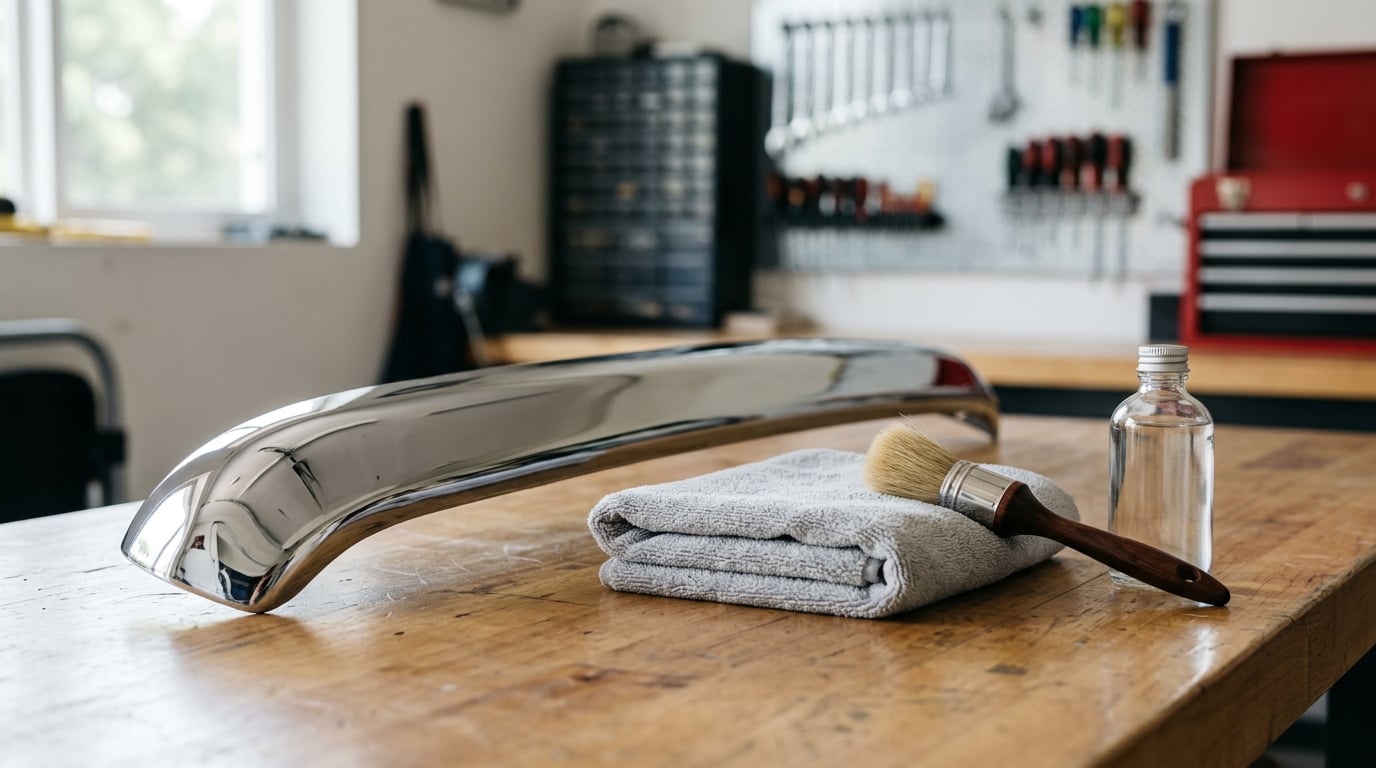
Knowing how to protect chrome trim in winter comes down to three things: clean the plating, dry it completely, then seal it before the first freeze. Do those three properly and a thin layer of wax, spray sealant or ceramic coating keeps road salt and moisture off the metal for weeks at a time. The whole job takes an afternoon the weekend before winter, and the hardest part is genuinely just the drying.
The reason it matters is that chrome plating is a very thin nickel-chrome layer. Once salt and moisture sit against it long enough, the metal pits, and pitting does not buff out. If you are wondering where to park and what to check on your own car, our guide to keeping a garage from freezing covers the storage side, and winter tire pressure guidance handles the other half of cold-weather prep.
Table of Contents
What You Need
Gather everything before you start, because interrupting the job halfway means you leave protection on half a car and a wet towel on the other half.
- A pH-neutral, metal-safe cleaner or a quality car shampoo. Skip anything with ammonia, acid or harsh degreasers in it.
- Two clean microfiber towels plus a soft detailing brush with nylon bristles for the tight gaps around badges and grille surrounds.
- A forced-air blower or a good supply of dry, cool air. This is the step people skip, and it is the one that decides whether the sealant bonds.
- Your protection product: a paste wax, a synthetic spray sealant, a ceramic spray, or an oil-based corrosion inhibitor if the car lives in a salted climate.
- Fresh microfiber applicator pads if you are applying a wax by hand rather than a spray you can buff straight off.
Check your vehicle manufacturer care instructions first. Some trims are solid chrome plating, some are chrome-plated plastic, and a handful are painted or black chrome. The plastic-backed pieces peel rather than pit, and they need very different treatment. Your owner manual will tell you which is which on a specific car.
How to Protect Chrome Trim in Winter: Step by Step
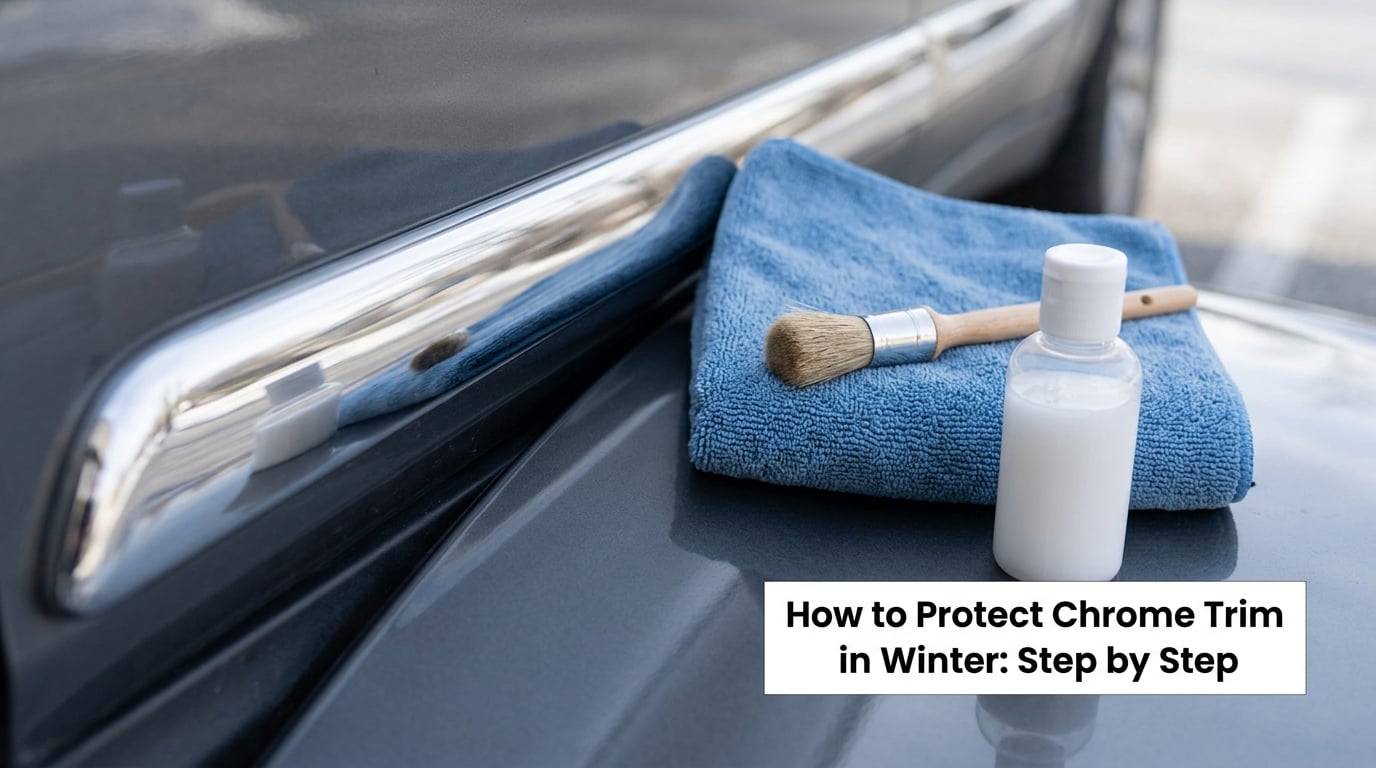
How to protect chrome trim in winter before washing it
- Inspect the trim in good light. Run a fingernail across the chrome. If it catches in a pit, note it now, because protection will slow the damage but will not fill a hole that is already there.
- Rinse the grit off first, gently. Road film contains salt, sand and sharp particles. A dry brush on a dusty bumper grinds that into the plating.
- Wash with a pH-neutral cleaner and cool water. Work in sections and rinse the towel out often. A grit-trapping rag scratches chrome the same way steel wool does.
- Skip the automatic brush wash. The spinning brushes in a tunnel car wash are exactly the abrasive problem you are trying to avoid, and they flick grit across the trim.
If you cannot wash in the cold, a rinseless wash with plenty of lubricated towels does the job. A touchless wash is better than nothing, though plain water jets still leave less of a lubricant film than you would like.
How to protect chrome trim in winter after cleaning
- Dry it completely. Blower first, then towel. Damp chrome under a sealant layer traps moisture and leaves haze or blotches that take a second pass to remove.
- Work one small piece at a time. Grille surround, badge, door handle, sill trim. Small pieces stay wet the shortest time.
- Apply thin. For a spray sealant or ceramic spray, mist onto a folded microfiber pad and spread it over the surface rather than spraying the panel directly. For a paste wax, a thin coat is enough; extra wax does not protect better, it just hazes.
- Never work a hot panel. A warm exhaust tip or sun-warmed bumper will flash the product before it spreads and leave uneven patches. Let the metal cool to the touch of your palm first.
- Buff off fully, then reassess. Wipe one section and look at it in the shade. If it hazes, either the coat was too thick or it needs more cure time before buffing.
- Push product into the seams. A thin drip of oil-based corrosion inhibitor along wheel barrel joins, trim gaps and the underside of pieces is the protection no wax can reach.
Give wax and sealant time to cure before the car goes out. Read the label; curing times vary widely between a quick spray sealant and a traditional hard wax.
How to protect chrome trim in winter throughout the season
Treat protection as a schedule, not a one-off weekend.
- Before the first snow is the single most important application of the year.
- Reapply roughly every month in salted months. On a daily-driven truck in a salt belt, a month or two is realistic before water stops beading on the bumper.
- Rinse promptly after a storm even when you do not have time for a full wash. Salt keeps working while it sits.
- Touch up before a forecast of heavy snow or a road grouting, rather than after the damage appears.
- Check the underside of trim pieces and the wheel joins during every application. That is where corrosion starts and where owners rarely look.
For a car that sits outside all winter, a breathable car cover cut down wind-blown grit and road spray on lower panels. A garage-kept car needs far less, but humidity still matters. Keeping indoor relative humidity near 50 percent slows corrosion far more than any product you can buy.
Common Mistakes
- Sealing dirty trim. The fix is to clean and dry first, every time. Sealant over road film traps the salt against the plating instead of keeping it out.
- Using abrasive polish or household chrome cleaner. Abrasives scratch, and acidic cleaners etch. The fix is a metal polisher rated for chrome, used only before protection, never after.
- Applying product over damp metal. The fix is blower first, towel second, sealant third.
- Skipping the underside and seams. The fix is a light line of oil-based inhibitor in every gap, refreshed monthly.
- Over-applying wax. Heavy coats haze and dull the finish. The fix is one thin coat, removed completely.
- Trusting wax alone in a salt belt. Wax protects the flat surface but cannot reach inside a trim join. The fix is pairing it with an inhibitor, or using a spray sealant for the whole piece.
Frequently Asked Questions
Can you put wax on chrome?
Yes. Wax works well on chrome as long as the metal is clean, dry and cool, and the layer is thin. Thick coats haze and dull the finish, so buff it off completely. Wax will not stop pitting on its own; it only slows new corrosion by keeping salt and water off the plating. Many owners pair a wax with an oil-based inhibitor because wax cannot reach seams.
What should you not clean chrome with?
Avoid abrasive polishes, household chrome cleaners with ammonia, acidic wheel cleaners, alkaline dish soap, and steel wool on show-quality plating. Abrasives scratch the surface and acids etch it, both of which dull chrome permanently. Stick to a pH-neutral, metal-safe cleaner and soft microfiber towels, and never brush grit across a dry surface.
How do you keep chrome from pitting?
Pitting starts when salt and moisture sit against the plating, so the answer is a barrier plus a schedule. Clean, dry, and seal the trim before the first freeze, then reapply about monthly in salted climates and rinse promptly after storms. Treat the underside of pieces and the wheel joins with an oil-based inhibitor, since wax cannot reach inside those gaps.
Is ceramic spray safe for chrome trim?
Silica-based ceramic sprays are safe on chrome plating and are the easiest option for a car that sits in road salt. They add gloss, shed water and salt, and last roughly four to six weeks on exposed metal. Apply to cool, clean, dry metal, spray onto a towel rather than the panel, and keep them away from hot exhaust tips.
How can I restore chrome-plated plastic trim?
Chrome-plated plastic peels and flakes rather than pitting, so start by washing off road grime with a plastic-safe cleaner. Light scuffs take a plastic trim dressing or a thin plastic polish applied by hand. Where the plating has already flaked away, the base plastic can be sprayed in a satin black or chrome-look coating. Never use metal polish on plastic-backed trim; it cuts straight through.
Can pitted chrome be fixed without replating?
Shallow surface pitting can be improved with a fine metal polish, and owners of classic cars report that #0000 steel wool followed by polish helps on stubborn spots, though it leaves a fine haze you live with. Once corrosion has eaten through the plating, no product restores it. That part needs to be stripped and replated, which is why winter protection is cheaper than a replate.
Conclusion
Start with the bumper that sits lowest and catches the most road spray. Wash it with a pH-neutral cleaner, dry it properly with a blower and a clean microfiber towel, then apply a thin coat of sealant before the temperature drops.
From there, protect chrome trim in winter on a rhythm: once before the first snow, then roughly monthly while roads are salted, with a rinse after every storm. Consistency does more than any single product. If your trim is already pitted or flaking, deal with that separately, and follow your vehicle manufacturer care instructions for the surfaces on your specific car.