
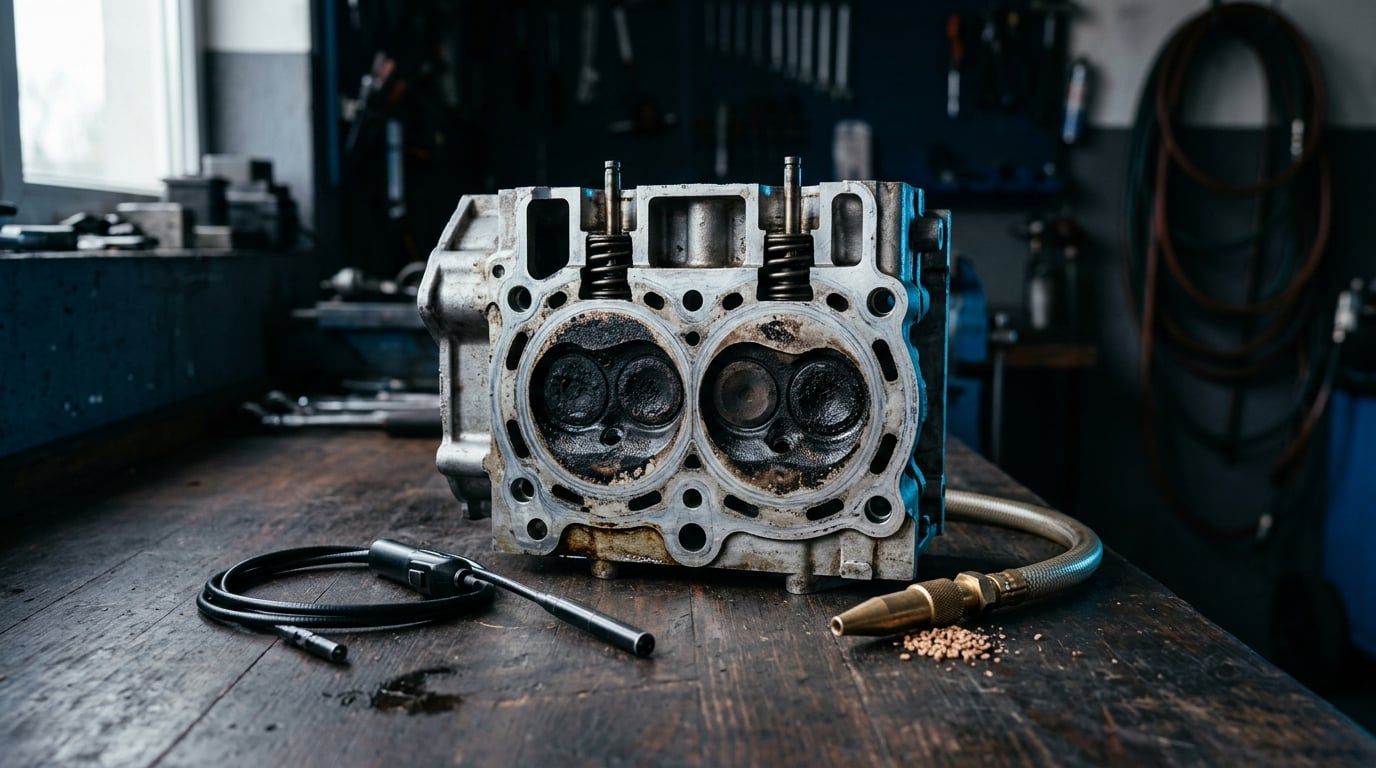
If you want the short version: carbon builds up on intake valves because oil vapor, fuel and exhaust soot land on hot valve metal and bake there instead of being burned or washed away. In a direct-injection engine nothing rinses those deposits off, because the fuel spray never passes over the valves on its way into the cylinder. Add a tired PCV system, exhaust recirculation, and a driving pattern made of short trips, and the black crust on the valve heads is the answer to what causes carbon buildup on intake valves in 2026.
It is worth separating two things right away. Carbon is a symptom of how the engine breathes and burns, and it is also something owners obsess over for the wrong reasons. More on that below.
Table of Contents
- What Is Intake-Valve Carbon Buildup?
- What Causes Carbon Buildup on Intake Valves?
- How Does Fuel Injection Change Carbon Buildup?
- What Symptoms Does Intake-Valve Carbon Cause?
- How Is Intake-Valve Carbon Diagnosed?
- Does Intake-Valve Carbon Really Need to Be Removed?
- What Removes Intake-Valve Carbon?
- How to Prevent Intake-Valve Carbon Buildup
- Frequently Asked Questions
- Is carbon buildup on intake valves caused by bad oil?
- Can carbon buildup on intake valves cause misfires and a rough idle?
- Do modern direct-injection engines get carbon on the intake valves?
- Does a fuel additive or Sea Foam remove carbon from intake valves?
- Will WD-40 remove carbon build up?
- Does an oil catch can actually prevent intake valve carbon?
- Start With the Right Diagnosis
What Is Intake-Valve Carbon Buildup?
Carbon buildup on intake valves is a hard, sooty deposit on the valve face, the margin and often the stem. It builds in layers over tens of thousands of miles rather than overnight.
The deposit is a mix of oil mist, unburned hydrocarbons and exhaust soot that has been carried into the intake and stuck to metal that never gets hot enough to burn it off. In an exhaust valve the source is mostly fuel soot from incomplete combustion. On an intake valve the source is mostly oil, and that difference drives everything else in this guide.
A few acronyms show up constantly in forum threads and shop write-ups, so it pays to know them before reading further.
- Blow-by is exhaust gas forced past the piston rings into the crankcase during compression and power strokes.
- PCV (positive crankcase ventilation) is the system that pumps those blow-by gases back into the intake instead of letting them out the tailpipe.
- EGR (exhaust gas recirculation) routes a measured slice of exhaust back into the intake for temperature control.
- GDI means gasoline direct injection, where injectors spray into the combustion chamber rather than into the intake port.
- Fuel washing is the old habit of gasoline running over a valve and rinsing carbon away. Modern engines rarely get that help.
What Causes Carbon Buildup on Intake Valves?
What causes carbon buildup on intake valves is mostly a question of what gets carried to the valve and whether anything removes it afterward. Five things do the real work.
The five things that actually deposit on intake valves
- Direct injection with no fuel washing. The fuel goes straight into the cylinder, so nothing flows over the intake valve to rinse it. Every bit of oil vapor that lands there stays there. This is the biggest single reason the problem became common in the last two decades.
- PCV recirculating blow-by. A worn ring seal lets exhaust into the crankcase. The PCV valve then feeds that oil-laden gas into the intake, and on a GDI engine there is no fuel spray in the port to disperse it. The gases pool in the intake runner and settle on the valves. That chain, from piston rings to crankcase to PCV to valve, is the cleanest explanation out there.
- EGR routing soot back in. The exhaust gas recirculation system deliberately sends exhaust into the intake. If the EGR valve sticks or the cooler is loaded with soot, that soot comes along with it. EGR is a separate oil path from PCV, and most guides blur the two together.
- Oil seeping past stem seals and guides. Hardened valve stem seals on a high-mileage engine let oil creep down the guide and onto the valve head. That film is sticky, and everything else in the intake sticks to it.
- Short trips and low-speed driving. An engine that never reaches full operating temperature never gets hot enough to burn off light deposits. Owners who replaced idle-heavy driving with one long highway run a week reported the accumulation slowing noticeably, which tells you how much driving style matters.
Two more contributors get less attention than they deserve: fuel quality and octane, and a lean or rich air-fuel mix running through a long warm-up. Neither matters as much as the five above, but on a marginal engine they can tip it over.
How Does Fuel Injection Change Carbon Buildup?
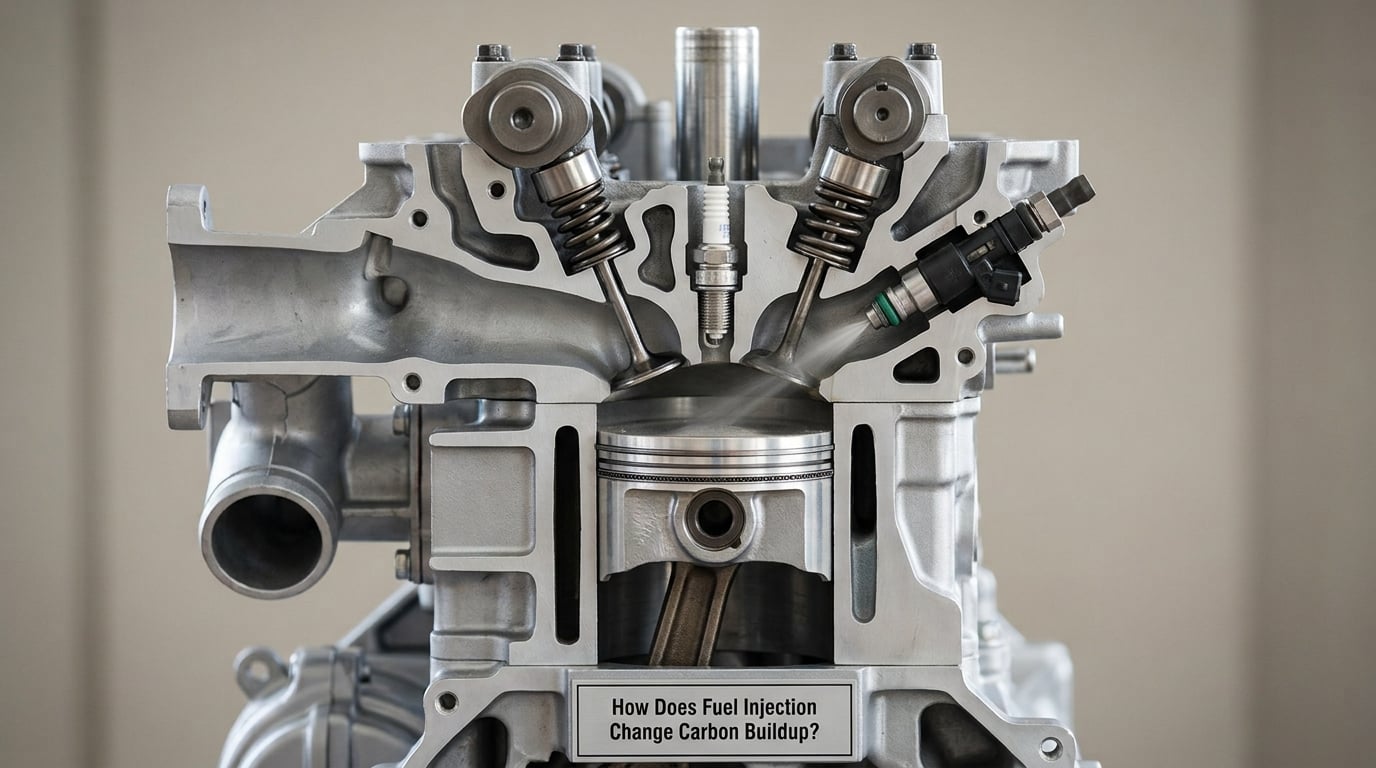
Older multi-point port injection sprayed fuel into the intake port or straight onto the back of the intake valve. Gasoline moving across a hot valve at idle swept carbon off, and the valve stayed relatively clean for the life of the engine. That effect was a happy accident, not a design feature.
GDI removed it. Direct injection is what makes higher compression ratios and better output possible, and one of the side effects is a dry intake port. Deposits that a port-injected engine would have kept rinsed now have to wait for a shop to remove them.
Port injection vs. direct injection
- Where the fuel is sprayed. Port injection sprays into the intake port, sometimes onto the valve itself. Direct injection sprays straight into the combustion chamber.
- Fuel passing over the valve. Port injection gets fuel washing, which keeps deposits down. Direct injection gets none, so the intake port stays dry.
- Deposition risk. Lower on a port-injected engine, usually only at very high mileage. Higher on a direct-injection engine, especially past 50,000 miles.
- Access for cleaning. Rarely urgent on a port-injected engine, since the valves are often clean enough to leave alone. Borescope inspection and media blasting are commonly needed once a direct-injection engine builds up.
Toyota solved the same problem a different way, running injectors at both the port and the cylinder to restore some of the washing. If your car has both sets, that is why.
What Symptoms Does Intake-Valve Carbon Cause?
The honest answer is that many owners get no warning at all. A car can idle and run smoothly for years, then need a valve cleaning with no obvious lead-up. One long-term GTI owner needed cleaning at 91,000 miles while others on the same platform were dealing with it by 50,000, so the range is wide and model dependent.
When carbon does announce itself, look for these.
- Rough idle that appears at low rpm or as the car comes to a stop, then smooths out on the highway. This is the classic complaint on the BMW and VW boards.
- Hesitation on initial throttle, especially from a stop.
- Misfire codes, usually in the P0300 range, sometimes with a shudder you can feel through the seat.
- Lost power at the top end and a small hit to fuel economy.
- Hard starting or a brief stumble right off idle.
One note on spark plugs. A plug that comes out looking sooty or ashy is a related but separate issue: plug deposits point at mixture and combustion problems, not automatically at valve carbon. The most common complaint owners bring to a shop is a car that runs fine except at low speed, which is also what a vacuum leak or failing coil can do.
How Is Intake-Valve Carbon Diagnosed?
You cannot see it without looking, and looking means a borescope through the intake port or a spark plug hole. A small borescope is the single most useful tool an owner can buy for this.
Here is the order I would work in.
- Scan for codes first. Stored and pending misfire codes point at a cylinder, which narrows the field fast.
- Watch the idle. A stumble that only shows up cold or at a stop, then vanishes at highway speed, fits carbon better than a mechanical fault.
- Check for the cheap faults. Vacuum hoses, the MAF sensor, ignition coils and fouled plugs all mimic the same symptoms, and every one of them is far less expensive to rule out.
- Look at the valves with a borescope. This is the only way to confirm it. A clean valve face is light metal; a carbon-covered one is matte black and the valve seat is no longer visible.
If you skip the borescope, you are guessing. Shop forums are full of owners who spent well over a thousand dollars across two shops and a dealership on misfires that turned out to be valve carbon, because nobody put a camera in the port.
Does Intake-Valve Carbon Really Need to Be Removed?
Sometimes it does, and sometimes owners are sold a service they did not need. That is the uncomfortable part of this topic, and it comes up constantly on owner forums.
Light, even carbon on a valve that still looks like metal underneath is usually harmless. There is no factory interval for cleaning intake valves on most engines, because on most engines it was never an issue. When deposits get thick enough to hide the seat margin, they change the airflow and the atomization of fuel at the valve, and that is where a rough idle, hesitation and misfires start.
Is it safe to keep driving? Generally yes, for a while. Carbon on the intake side is not the kind of problem that stops you on the roadside the way a failing exhaust valve can. If the car is misfiring badly, burning oil, or running rough enough to make you nervous, get it diagnosed rather than driving it indefinitely.
What Removes Intake-Valve Carbon?
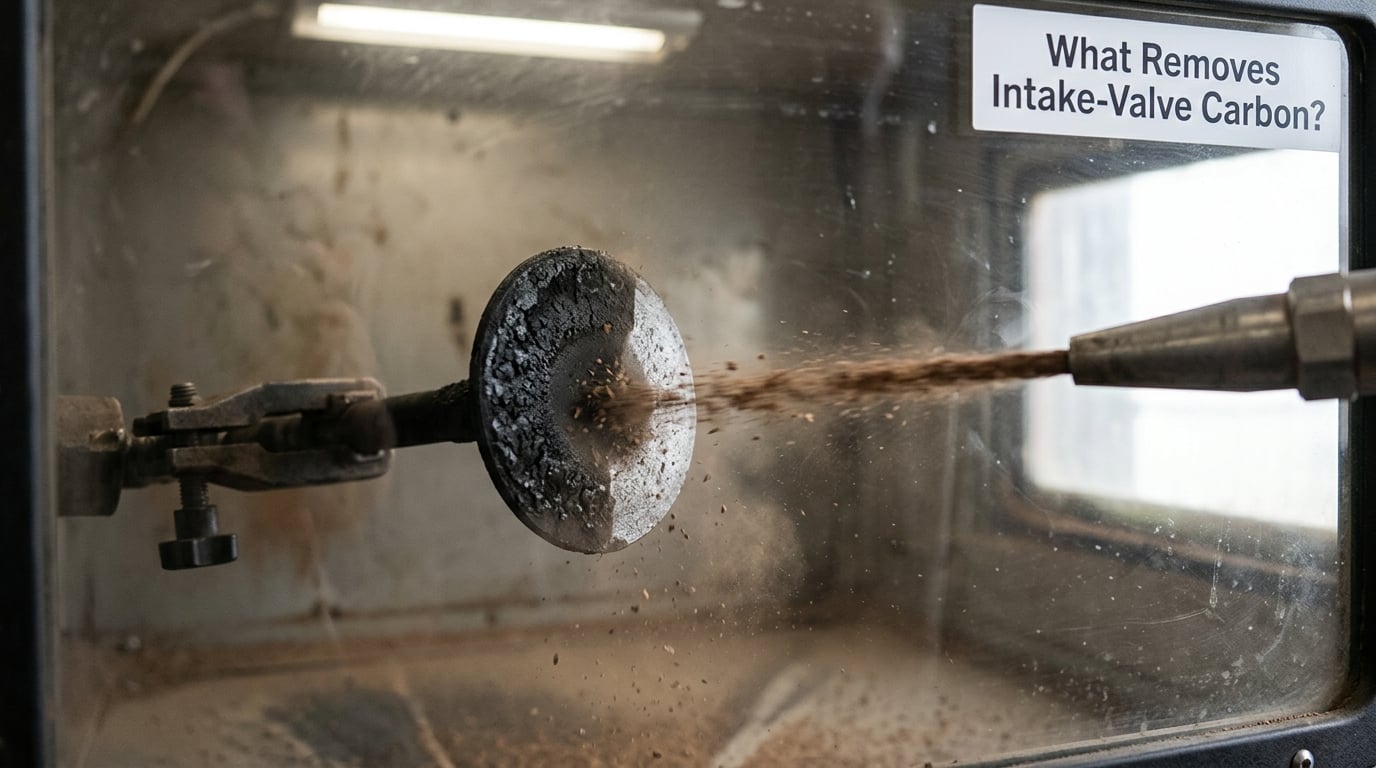
What dissolves carbon on valves? Honestly, nothing you can pour into the tank. Real removal is mechanical, and there are three routes.
- Media blasting. Walnut shell or glass bead media is blown against the valve face. It strips carbon without touching the metal underneath, and it is the most complete option for a GDI engine with real buildup. One owner on the BMW boards reported it smoothed out a rough idle but did not fix the misfires, which is a reminder that symptoms and cause are not always the same thing.
- Professional valve cleaning. A shop removes the intake manifold, cleans or replaces the injectors while it is apart, and cleans the valves directly. This is a labor-heavy job, and on some engines the manifold has to come off before anyone can even see the valves. Get a written quote that separates the valve cleaning from anything else being bundled in.
- Chemical cleaners. Intake and throttle body cleaners break down light deposits and are useful maintenance. Against a thick carbon crust on a GDI valve they are not going to shift it.
On the products people ask about most:
Sea Foam and similar additives. Owners report paying for bottles that produced no measurable improvement, and the honest expectation is that an over-the-counter fuel additive is a prevention play at best, not a cleaning method. Some engines benefit from cleaner combustion and less deposit formation with decent octane fuel, which is a different claim from removing existing carbon.
WD-40. No. It is a lubricant and water displacer. It will not dissolve carbon, and putting more of it in your intake is a bad idea.
Catch cans. A catch can sits in the PCV line to catch the oil mist and blow-by that would otherwise go back into the intake. Widely sold as a fix, disputed in practice. The owner who tested one over the long run reported no measurable impact on carbon buildup. A catch can may slow accumulation on a worn engine; it is not going to reverse deposits you already have.
How to Prevent Intake-Valve Carbon Buildup
Prevention is mostly habit, and the habits are unglamorous.
- Take longer drives. Once the engine is fully warm, an extended highway run burns off light deposits. Audi’s direct-injection documentation recommended running above 3,000 rpm for at least twenty minutes on a regular basis, and one owner who tried it said it helped.
- Stop living on four-minute errands. If almost every trip is short, an occasional longer drive is doing more for your intake than any bottle you can buy.
- Use the fuel the manual calls for. Higher octane resists detonation and incomplete combustion in engines designed for it.
- Change the oil on schedule and use the specified grade. Fresh oil carries less oil mist through the PCV.
- Keep the PCV system and the intake tract clean. A failing PCV valve or a clogged intake is a repair worth doing on its own merits.
None of that reverses existing carbon, and anyone who sells you a bottle promising it does is guessing.
Frequently Asked Questions
Is carbon buildup on intake valves caused by bad oil?
Usually not directly. The oil is the carrier, not the cause: blow-by past worn piston rings puts oil mist into the crankcase, the PCV valve recirculates it into the intake, and it sticks to the valves because direct injection means no fuel washing. Fresh, correct-grade oil reduces how much mist travels, but worn rings and a tired PCV system are the real culprits.
Can carbon buildup on intake valves cause misfires and a rough idle?
Yes, though it is rarely the only suspect. Heavy deposits change airflow and fuel atomization around the valve, which can produce a stumble at idle or hesitation off a stop, and sometimes misfire codes in the P0300 range. Ignition components, vacuum leaks and fouled plugs cause the same symptoms, so confirm with a borescope before paying for a cleaning.
Do modern direct-injection engines get carbon on the intake valves?
Many direct-injection engines still form deposits, even though they are far less prone to it than port-injected engines. The oil still arrives through the PCV system and, in some designs, through EGR, and the intake port no longer gets a fuel spray to rinse the valves. Owners see it anywhere from roughly 50,000 miles to well past 90,000, depending on the engine and how it is driven.
Does a fuel additive or Sea Foam remove carbon from intake valves?
Not reliably. Additives marketed for carbon removal may help reduce future deposit formation in some engines, but they are not dependable mechanical cleaning methods and results vary widely by product and engine design. Owners on forums report paying for bottles that produced no measurable change. Thick carbon on a direct-injection valve needs media blasting or a professional valve cleaning.
Will WD-40 remove carbon build up?
No. WD-40 is a lubricant and water displacer, not a solvent for carbon, and it will not break down deposits on intake valves. Adding more of it to the intake can leave an oily film that makes future buildup worse. Mechanical methods, media blasting or professional valve cleaning, are what actually remove intake valve carbon.
Does an oil catch can actually prevent intake valve carbon?
Evidence on this is thin. A catch can collects oil mist and blow-by in the PCV line so it does not re-enter the intake, which sounds sensible, but long-term owner testing has reported no measurable impact on carbon buildup. On a worn engine it may slow accumulation slightly. It will not remove deposits that are already there, and it is not a substitute for a proper valve cleaning.
Start With the Right Diagnosis
If you take one thing from this, make it the order of operations. Scan for codes, rule out vacuum leaks, coils and plugs, then put a borescope in the intake before you spend money on anything.
If the valves turn out to be genuinely covered, media blasting or a professional valve cleaning is a real fix, and a catch can or a bottle of additive is not. Until then, longer warm-up drives and the fuel your manual specifies cost almost nothing and slow the whole process down.