
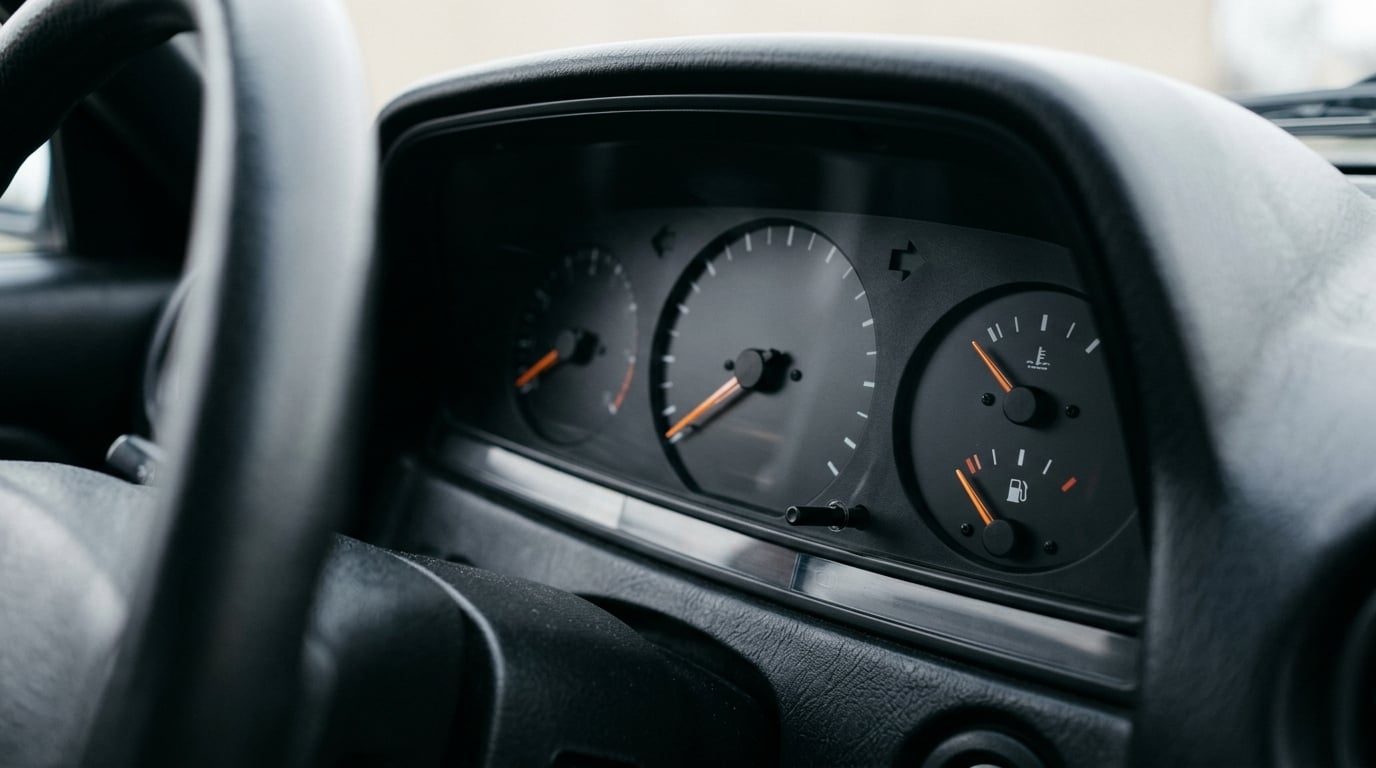
If you are wondering what does a stuck thermostat feel like when driving, the honest answer is that it rarely feels like one clean symptom. It feels like a car whose gauge sits lower than it used to, whose heater never quite gets properly hot, and whose needle behaves oddly in traffic but not on the open road. Sometimes the opposite happens and the temperature climbs fast and stays there. Which one you get tells you which way the valve is stuck.
I have talked this through with more drivers than I care to admit, and the single biggest source of confusion is that almost nobody knows whether they are looking at a stuck-open or a stuck-closed thermostat. The forum threads for this question are full of people who assumed the worst and were driving a car that was merely running cold. Let’s sort the felt symptoms out first, then the mechanism behind them, then what to do about it.
Table of Contents
- What Does a Stuck Thermostat Feel Like When Driving?
- How a Stuck Thermostat Changes Engine Temperature
- The Most Common Symptoms While Driving
- Stuck Open vs. Stuck Closed: How the Symptoms Differ
- Temperature Gauge and Warning-Light Changes to Watch For
- Other Problems That Feel Like a Stuck Thermostat
- What to Do If You Suspect a Stuck Thermostat
- Frequently Asked Questions
- Can I drive with a stuck thermostat?
- Why does my engine overheat but the heater still works?
- Is a high temperature gauge always caused by the thermostat?
- What happens if the thermostat is stuck open?
- How long can coolant overheating damage an engine?
- Should I check the coolant level after the engine overheats?
What Does a Stuck Thermostat Feel Like When Driving?
A stuck thermostat makes the engine’s temperature behave strangely: a stuck-open thermostat lets coolant bypass the radiator so the engine never reaches full temperature, and a stuck-closed thermostat traps coolant in the engine so the gauge climbs fast and the car overheats.
In the first case the car feels like it cannot get warm. In the second it feels like it is cooking itself in slow motion. Most drivers describe a mix, because a valve that has partly failed modulates rather than fully opens or fully shuts.
Here are the sensations drivers actually report, in the words they actually use:
- The needle never passes the quarter mark. A Chevy Cruze owner on r/MechanicAdvice described it as the dash never exceeding a quarter of the way up when it normally sits near the middle. That gap between what the gauge used to do and what it does now is often the first thing noticed.
- The needle drops the moment you get on the highway. An MX-5 owner on the MX-5 Owners Club forum explained the pattern precisely: the car reaches about 6.5 notches up, roughly the four o’clock position, within a few miles at idle, then falls to about 2.5 notches just after five o’clock the whole time he drives between 30 and 70 mph, before climbing back up in slow traffic.
- It climbs at every red light and settles once you are rolling. That is the same behaviour described from the other end, and it is the pattern most people cannot explain to themselves.
- The cabin heater is lukewarm, not hot. Often it does eventually get warm, but far too late and far too weakly. One owner whose fault was confirmed by a new thermostat described the heat afterwards as “great”, which tells you how little heat there had been before.
- Warm-up takes forever in winter. The blower stays cold, the vents stay cool, and the engine seems to take two or three times as long as it used to reach normal.
- A coolant warning light or a low coolant message appears. Often there is no puddle anywhere, which is what sends people looking for a leak that does not exist.
- The temperature climbs quickly and stays high. This is the stuck-closed signature, and it can start within minutes of a cold start. Advice that repeats across the Subaru forums is blunt: when the gauge goes to the top like that, stop driving the car.
- The upper radiator hose stays cool while the engine heats up. If coolant is not moving through the engine, the hose that should be the hottest part of the cooling system is barely warm. A truck driver idling for 15 minutes on TheTruckersReport saw a 140 F reading with the upper radiator pipe already hot, which pointed the opposite way and confirmed a stuck-open valve.
- There is a sweet smell in the cabin and sometimes a faint wisp of steam that smells of coolant rather than exhaust.
- Coolant moves noisily or bubbles in the expansion tank while the engine idles, or the level drops with no visible leak.
One thing that catches people: a stuck-open thermostat does not stop your heater working entirely. A driver on r/Cartalk with a fault code for the coolant thermostat below regulating temperature had no cabin heat at all, but plenty of drivers with the same fault get heat eventually. If your heater is only lukewarm rather than dead, that does not rule the thermostat out.
How a Stuck Thermostat Changes Engine Temperature
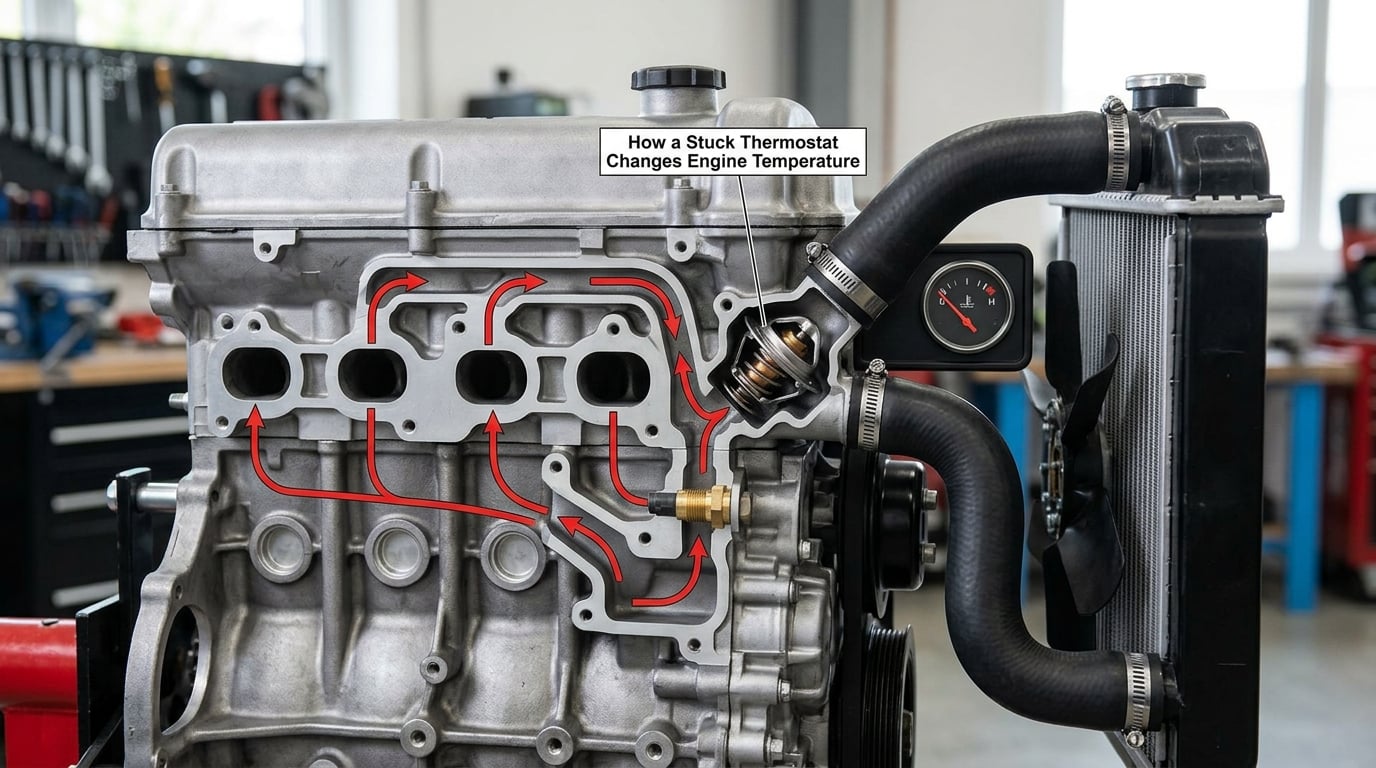
The thermostat is a valve, usually a wax-pellet valve sitting in a coolant housing bolted to the engine. When the engine is cold the valve is shut, so coolant bypasses the radiator and the engine warms quickly. At a set temperature, usually somewhere around 190 F, the wax pellet expands and pushes the valve open, coolant flows to the radiator, and the engine settles into its regulating band of roughly 195 to 220 F.
What a stuck open thermostat feels like
The valve never closes properly, so coolant circulates through the radiator from the moment you start. Heat is dumped out of the engine continuously and the gauge settles well below the regulating band. A truck driver who idled 15 minutes and saw 140 F with the upper pipe hot already is a textbook example of this.
From the driver’s seat, the practical losses are fuel economy, a heater that never performs, faster oil degradation and, on some cars, a check engine light. It is rarely urgent, which is exactly why people drive around with it for months.
Stuck part-way open
This is the annoying one, and it produces the cycling behaviour drivers complain about most. The valve opens and closes lazily, so the engine gets hot enough to force it open, the rush of coolant to the radiator drops the temperature, and the whole thing repeats.
An owner on r/e39 described a gauge that is normally dead centre while driving but dips every now and again. That intermittent dip is a lazy valve far more often than it is a bad sensor.
Stuck closed
The valve never opens, so coolant stays trapped in the engine and cannot reach the radiator. The gauge climbs quickly, the cabin heater works perfectly, and the engine will boil coolant within minutes. This is the version that ends with a warped cylinder head if you ignore it.
Sometimes the valve is stuck open because something physical is jammed in it. A GM Volt owner pulled a small metal shaving, about an inch long, out of a thermostat, and the fault cleared. A wax valve that is not moving is often not just seized; something is holding it.
The Most Common Symptoms While Driving
The most useful thing about the highway behaviour is that it is not a mystery. It is physics plus a working part of the cooling system.
Below roughly 30 mph, the cooling fan does the work. Air moving through the grille at road speed is a trickle, so the fan has to run constantly, and if the thermostat is already allowing coolant past, the engine is fighting a losing battle on a slow road. Once you are above about 30 mph, ram air through the radiator changes the game completely.
That is why the same car can be clawing toward the red at every junction and then settle down the moment you merge. If the gauge climbs at 25 mph in stop-and-go and drops at 55 mph on the same hot afternoon, you are looking at a cooling system that cannot move enough air at low speed, and a thermostat that will not hold back coolant is a prime suspect.
Other driving situations change what you notice. On a long uphill climb or at wide open throttle, heat input goes up sharply, so a marginally cooling system that coped with cruising will show its weakness under load. A Dodge owner who replaced the thermostat, water pump, sensor and coolant and still overheated only at wide-open throttle is a good example of a symptom that points somewhere other than the valve.
Two situations mislead people more than the rest. A cold winter start looks like a slow warm-up problem when it is partly just the weather, and on some cars, particularly older ones and trucks with electric fans, a modest rise in slow traffic is normal behaviour rather than a fault.
Stuck Open vs. Stuck Closed: How the Symptoms Differ
These two failure modes feel nothing alike, and the table is the fastest way to tell which one you are dealing with before you start taking things apart.
| What you notice | Stuck open | Stuck closed |
|---|---|---|
| Temperature gauge | Sits low, often below the quarter mark, and may drop at highway speed | Climbs quickly into or past the top of the dial and stays there |
| Warm-up time | Very long, especially in cold weather | Normal or unusually quick |
| Cabin heater | Lukewarm at best, occasionally cold for the first 20 minutes | Very hot, sometimes uncomfortably hot |
| Upper radiator hose | Warm or hot almost immediately, even on a cold morning | Stays cool while the engine temperature climbs |
| Lower radiator hose | Warm, since coolant is still moving | Cool or cold, since flow through the radiator has stopped |
| Coolant level | May slowly drop with no visible leak | Usually unchanged unless there is a separate leak |
| Warning lights | Often a coolant or temperature warning, sometimes a check engine light | Temperature warning light, frequently with a steam warning |
| Fuel economy | Noticeably worse, because the engine stays in a rich warm-up mode | Normal until the engine is damaged |
| Urgency | Low. Drive it to a shop this week, not tonight | High. Stop and tow it |
One caution about reading this table. Needle behaviour is a clue, not a proof. A faulty coolant temperature sensor produces a suspiciously similar low needle, and a gauge cluster fault produces a needle that has nothing to do with the engine at all. Confirm with the tests later in this guide before you buy a part.
Temperature Gauge and Warning-Light Changes to Watch For
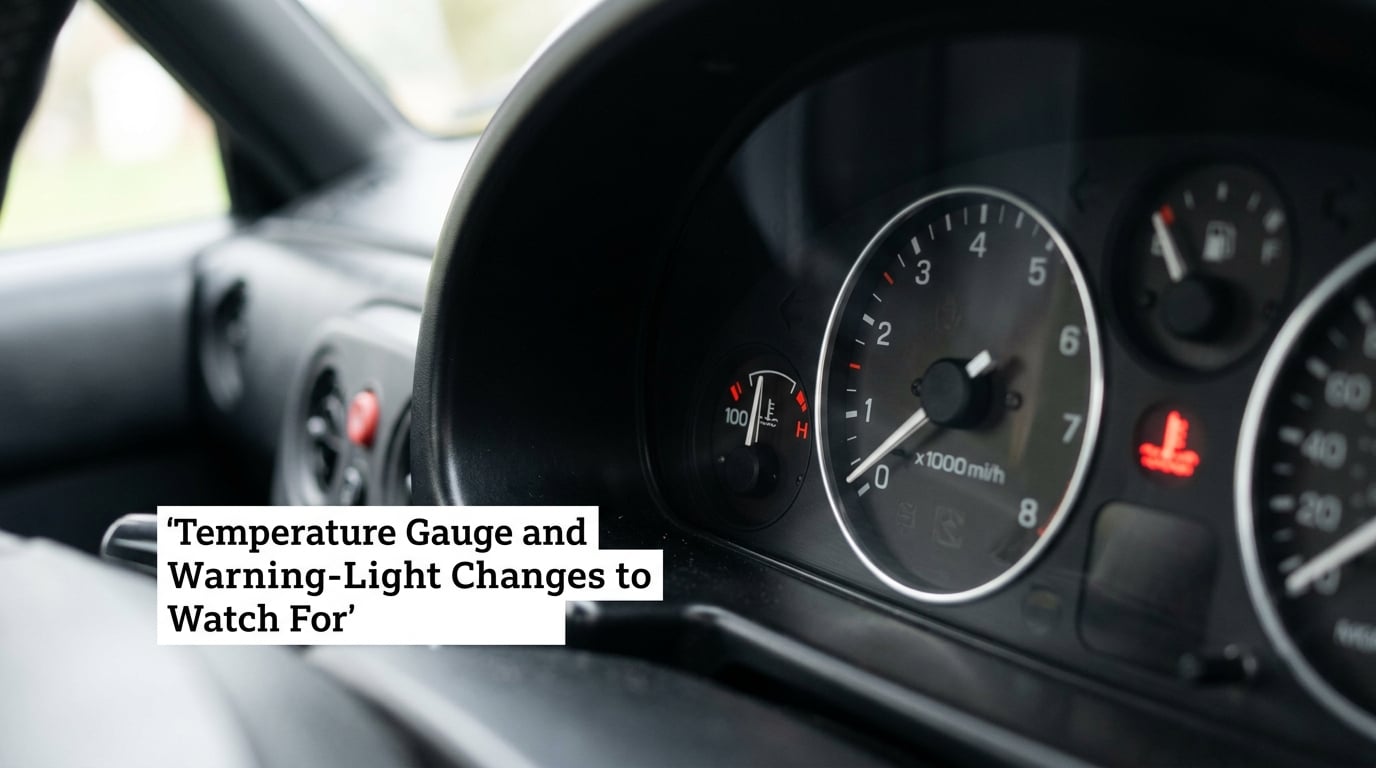
First, know your baseline. A healthy engine runs somewhere in a 195 to 220 F band, and the gauge is deliberately damped by the manufacturer. The needle is not a live thermometer; it is smoothed so the driver does not see every small swing. The practical consequence is that any movement you can actually notice represents a real change of 20 F or more underneath.
That is why drivers describe the fault in clock positions. Sitting just after five o’clock, or a quarter of the way up from cold, means the engine is genuinely running well below its regulating temperature, not that the gauge is twitchy.
What to watch for:
- A needle that never reaches the middle of the dial. If the car used to sit dead centre once warm and now never gets there, the change itself is the signal.
- A needle that falls away as speed builds and recovers when you slow down. This pattern, repeated on every drive, is a stuck-open or lazy thermostat until proven otherwise.
- A needle that jumps to hot and back within seconds. That is the cycling of a valve that is stuck part-way, letting go under pressure and then re-cooling.
- A steady creep upward, one needle width higher than usual. This is the earliest sign of trouble and it deserves attention before anything else happens.
- A temperature warning light with a normal-looking needle. Some cars run the gauge off a different sensor than the warning system, so a light can come on while the dial looks fine.
A warning light and a failed gauge are different things. A gauge that reads nothing at all, or a needle pinned at either end, points at the cluster, the sensor or the wiring rather than at a seized valve. So does a needle that is implausibly steady while the engine visibly works hard.
If the gauge goes to the top while you are driving, pull over somewhere safe, switch the engine off, and let it sit. Do not open the cooling system when it is hot. Coolant at around 250 F is under pressure, and a radiator or thermostat housing cap can come off in your hand and spray scalding fluid across the engine bay.
Other Problems That Feel Like a Stuck Thermostat
This is where most of the wasted money goes, because six different faults can put a needle in an unusual place.
Low coolant or a leak
Not enough coolant in the system means the gauge can swing, and a slow external leak can take weeks to show as a puddle. Check the expansion tank against the cold fill and maximum marks. On many cars a low level also brings on the coolant warning light, which people assume must mean overheating.
Air trapped in the system
A pocket of air circulates instead of coolant and makes the gauge erratic. This one matters doubly because it is the most common reason a gauge still reads low after a thermostat has already been replaced.
A cooling fan that does not run
If the fan never kicks in, the engine relies entirely on road speed and will overheat in traffic while being fine on the highway. That exact pattern is the fan, not the thermostat.
A failing water pump
A pump with a slipping impeller moves coolant but weakly. The gauge runs high under load, the hoses are not obviously cold, and the engine overheats on climbs or at wide-open throttle rather than at idle.
A coolant temperature sensor fault
This is the closest impersonator of a stuck-open thermostat. A sensor reporting lower than reality gives you a low needle and often a code for the coolant thermostat below regulating temperature. The difference is that with a sensor fault the engine may still warm the cabin fine, and a scan tool will show a coolant temperature that disagrees with what the engine is really doing.
A blocked radiator or a failing head gasket
A radiator blocked with scale or debris cannot dump heat at any speed. A head gasket failure shows up differently: white exhaust smoke, a sweet smell, milky residue in the oil cap, or bubbles in the radiator. Coolant pressure in a hot system is also a useful test, and anything outside the normal cooling system pressure range points at a gasket or cap problem rather than a thermostat.
| Look-alike | What separates it from the thermostat |
|---|---|
| Coolant temperature sensor | Scan tool shows a coolant temperature that disagrees with the engine; cabin heat is normal |
| Low coolant or air pocket | Level is below the mark, or the pattern appears after a refill, flush or part change |
| Cooling fan fault | Overheats in traffic and at low speed, cools down at highway speed, fan never runs |
| Water pump | Overheats under load and on climbs rather than at idle, hoses are not cold |
What to Do If You Suspect a Stuck Thermostat
If the temperature is already climbing while you drive, deal with that first. Everything else can wait for a parked car.
- Pull over somewhere safe and let the engine idle only if the temperature is not already in the top of the dial. If it is, shut the engine off.
- Turn the air conditioning off and the heater to full heat with the blower on high. That dumps extra heat out of the engine through the heater core. A hot cabin is a small price for not warping a head.
- Wait at least 30 minutes before touching anything in the cooling system.
- Never remove the radiator cap or a thermostat housing cap while the engine is warm. Let it cool fully, then open it slowly with a rag over the cap.
- Check the coolant level in the expansion tank against the cold and maximum marks.
- Read the owner’s manual for your specific vehicle, because fan behaviour, gauge calibration and coolant types vary a lot between makes.
Tests you can do in the driveway
These are the checks owners on the car forums keep coming back to, and they separate a thermostat from the other look-alikes.
- Touch the upper radiator hose once the engine has warmed up. Hot upper hose with a low gauge points to a stuck-open valve. A cool upper hose while the engine heats up points to stuck closed.
- Watch coolant in the expansion tank at operating temperature, as a user on r/FiestaST described. Coolant moving back into the tank means circulation is happening.
- Use an infrared thermometer across the radiator core while it is hot. A healthy radiator runs warmer at the top and cooler at the bottom by roughly 15 to 30 F. Even temperature top to bottom means coolant is not reaching it.
- Read the codes with a scan tool. A code for the coolant thermostat below regulating temperature is a strong hint, though it cannot tell a stuck valve from a bad sensor on its own. A sensor fault often brings a different code alongside it.
- Boil-water test the removed thermostat. An owner on the Impala SS forum described heating the part in a pot of water on the stove and watching whether it opens. If it does not move as the water boils, it is stuck. A BMW owner on r/Cartalk did exactly this and confirmed a valve that never visibly opened.
If the gauge still reads low after a replacement
This one deserves its own note because it is so common and so confusing. People fit a new thermostat, flush the cooling system, refill it, and the needle still sits low, so they assume they bought a bad part.
Far more often, air is trapped in the system. A trapped pocket circulates instead of coolant and drags the reading down even with a healthy valve and a healthy sensor. Refill slowly with the engine cold and the heater off, bleed the system according to your owner’s manual, and let the engine run until the thermostat opens and the upper hose fills. If the reading is still wrong afterwards, the next suspects are the sensor and the air pocket rather than the part you just fitted.
Tow it or drive it
Stuck open, the car will not hurt itself tomorrow. Drive it to a shop when you can, on a cooler day if you have the choice.
Stuck closed, tow it. One Facebook group poster described an instinct to drive home in two- and three-mile stints with pauses to let it cool, and said they did not want to risk locking the engine. That instinct is right. A tow costs a fraction of what a seized engine costs, and the gauge going to the top with the needle staying there is not a judgement call.
Frequently Asked Questions
Can I drive with a stuck thermostat?
It depends which way it is stuck. A stuck-open thermostat is rarely urgent: the engine runs cool, and you can usually drive to a shop within a day or two without risking damage, though fuel economy and cabin heat suffer. A stuck-closed thermostat is a different matter entirely. Stop the car as soon as the gauge reaches the top of the dial, let it cool for at least 30 minutes, and tow it rather than driving it. If you are unsure which failure you have, treat it as stuck closed and do not drive it.
Why does my engine overheat but the heater still works?
A working heater is not evidence that your thermostat is healthy. The heater core receives hot coolant straight from the engine, so it can be producing genuine heat even when the cooling system is not dumping heat fast enough to the radiator. Engines also tend to run rich and run warm when the gauge is misbehaving, which adds heat of its own. The tell for a stuck-closed thermostat is that the upper radiator hose stays cool while the engine temperature climbs. A hot upper hose with a low gauge points the other way, toward a stuck-open valve.
Is a high temperature gauge always caused by the thermostat?
No, and assuming it is a common reason people replace a perfectly good part. A low coolant level, a cooling fan that never runs, a weak water pump, a radiator blocked with scale, or a failing head gasket can all push the gauge up. The quickest way to narrow it down is to check the coolant level cold, then feel the upper radiator hose once the engine is hot. If the hose is cool while the engine is hot, the thermostat is the leading suspect. If the hose is hot, look at the fan, the level and the water pump instead.
What happens if the thermostat is stuck open?
Coolant bypasses the radiator permanently, so the engine never reaches its normal operating band of roughly 195 to 220 F. The gauge sits low, warm-up takes much longer, and the cabin heater only ever produces lukewarm air. Over weeks or months you burn more fuel, the oil degrades faster than it should, and emissions suffer. On some cars the ECU also throws a code for the coolant thermostat below regulating temperature. It is a slow problem rather than a dangerous one, but it should still be fixed.
How long can coolant overheating damage an engine?
Not long. A single episode where coolant boils and the engine runs well past its normal band can start warping a cylinder head within minutes, and once the gasket goes the repair changes from a simple valve swap to a much larger job. The number that matters is temperature, not distance: a 20-minute drive at a high reading is survivable, but the same 20 minutes with the gauge pinned in the top of the dial is not. Intermittent overheating in traffic is also worth stopping on, because repeated heat cycles do damage that a single event would not.
Should I check the coolant level after the engine overheats?
Yes, but only once the engine is completely cold, and that usually means waiting at least 30 minutes after you shut it down. Never open the radiator cap or a thermostat housing cap on a hot engine. Coolant near 250 F is pressurized, and the cap can release suddenly and spray scalding fluid across the engine bay. When the engine is cold, check the expansion tank level against the cold and maximum marks. If the level is down and there is no puddle under the car, the fluid is going somewhere and that is a separate problem worth chasing.
Start with the hose. Warm the engine up, then feel the upper radiator hose: hot with a low gauge means the valve is stuck open, cool with a rising gauge means stuck closed, and that one touch tells you more than an hour of guessing. Everything after that is confirming which of the other five suspects you can rule out.