
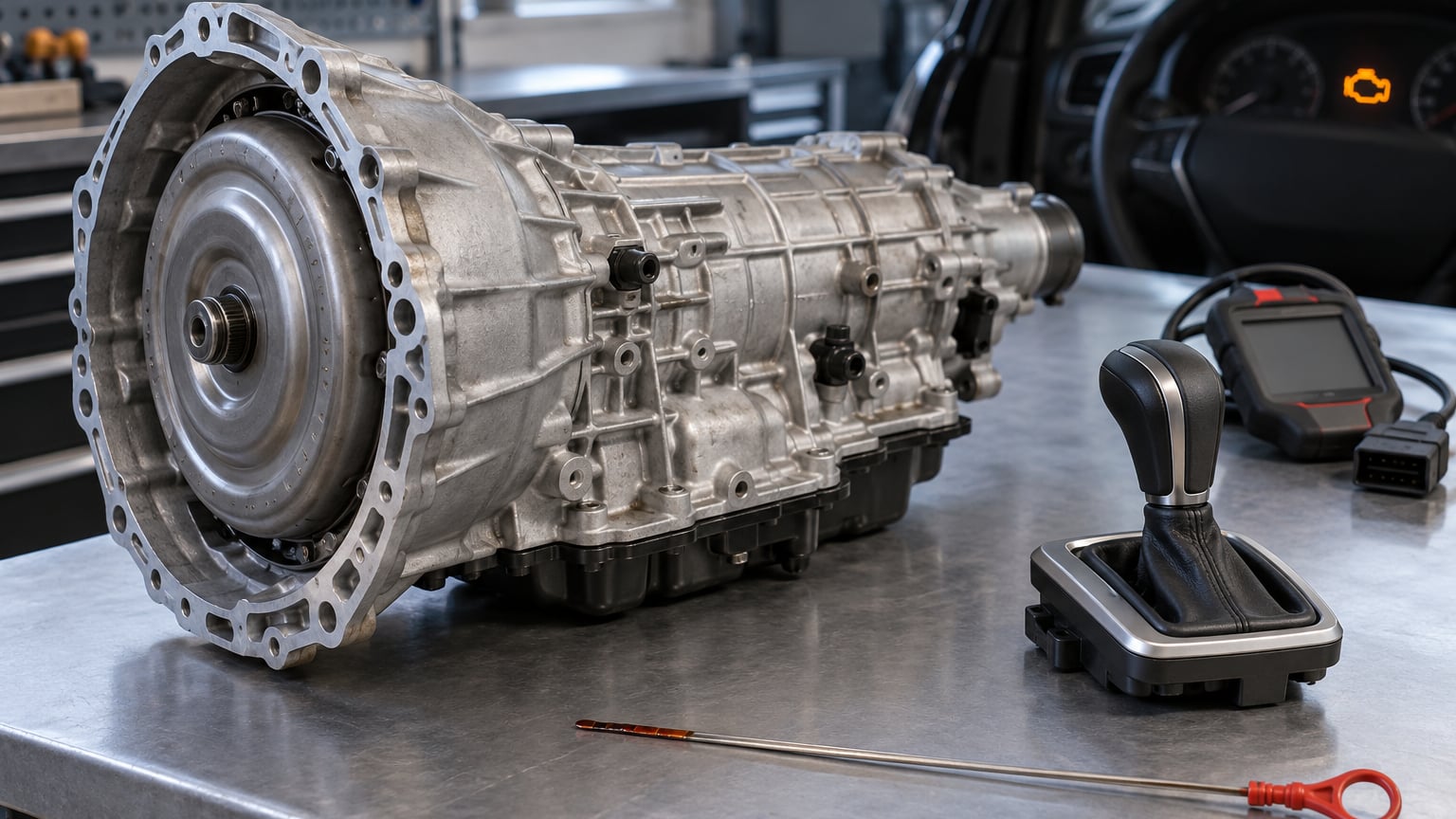
A car jerks when shifting gears in an automatic because the drivetrain is not transferring power smoothly, and the usual culprits are low or burnt transmission fluid, collapsed engine or transmission mounts, sticking shift solenoids, a failing brake light switch or range switch, and worn clutch packs. Most cases start with a check you can do in your own driveway in about an hour.
The important part is telling a normal bump apart from a real fault before anyone quotes you a rebuild. Owners chasing a used car with no service records need to know exactly what to ask for and what to look at, which is why I start every diagnosis the same way: figure out when the jerk happens, then rule out the cheap causes. If you are still shopping, what to look for when buying a high mileage car covers the questions worth asking before you sign anything.
Table of Contents
- What You Need
- Step-by-Step: Diagnosing a Car That Jerks When Shifting Gears in an Automatic
- 1. Confirm When the Jerk Happens: Car Jerks When Shifting Gears in an Automatic
- 2. Check Fluid Level, Condition, and Leaks
- 3. Inspect Engine and Transmission Mounts
- 4. Test Brakes, Driveline, and Tires
- 5. Check Throttle Systems and Shift Controls
- 6. Scan and Test Battery and Transmission Codes
- 7. Perform a Controlled Road Test or Get a Diagnosis
- Common Mistakes
- Frequently Asked Questions
- Is it normal for an automatic transmission to jerk slightly?
- Why does my car jerk when I shift from Park into Drive or Reverse?
- Can low transmission fluid cause a car to jerk when shifting?
- Does resetting the automatic transmission fix a harsh shift?
- Can a bad battery or alternator cause shifting jerking?
- How do I know when an automatic transmission needs professional diagnosis?
- Conclusion
What You Need
You do not need a shop lift to start. You need the car’s manual, the correct fluid, a flat parking spot, basic hand tools, and a way to read trouble codes.
- The owner’s manual for your exact year, make, model, and engine. It holds the fluid specification, the check procedure, the required fluid temperature, and torque figures. Ignore anything on the internet that does not match it.
- The specified automatic transmission fluid in the exact type the manual calls for. Some manuals require a specific brand or spec, and some use fluids that are not interchangeable.
- A level piece of ground, a flashlight, a socket set, and a drip pan for the dipstick check.
- An OBD-II scanner. A basic code reader tells you stored and pending codes; a scanner with live data shows commanded gear, turbine speed, and line pressure on many vehicles.
- A drain pan, clean rags, and nitrile gloves. Transmission fluid stains everything and smells worse than diesel.
Skip the road test if warning lights are on, fluid is on the ground, the transmission is grinding, or the car is barely moving forward when you ask it to. Nobody needs a heroics diagnosis.
Step-by-Step: Diagnosing a Car That Jerks When Shifting Gears in an Automatic
Seven checks, ordered from free and safe to involved. Stop as soon as one of them explains the symptom, and match what you feel to this quick table first.
| When the jerk happens | Likely cause | Severity | Next step |
|---|---|---|---|
| Selecting Drive or Reverse from Park | Worn engine or transmission mounts, brake light switch, range switch | Low to medium | Check mounts and brake lights first |
| Pulling away, 1st to 2nd gear | Low fluid, torque converter unlock, worn clutch pack | Medium | Check fluid level and condition |
| Steady 40 to 60 mph, all through the range | Torque converter shudder, lockup clutch wear | Medium | Note the speed window, test on the road |
| Braking to a stop, downshift | Brake light switch, low pressure, worn packs | Medium | Scan codes, check brake lights |
| Only on cold mornings, then clears | Thick cold fluid, stuck solenoid, adaptation | Low | Note the pattern, check codes warm and cold |
| Revs rise but the car slows, any gear | Slipping clutch, low line pressure, low fluid | High | Stop driving, tow for a pressure test |
| Bang or clunk, felt through the whole car | Driveline play, loose hardware, exhaust contact | High | Inspect driveline and mounts |
1. Confirm When the Jerk Happens: Car Jerks When Shifting Gears in an Automatic
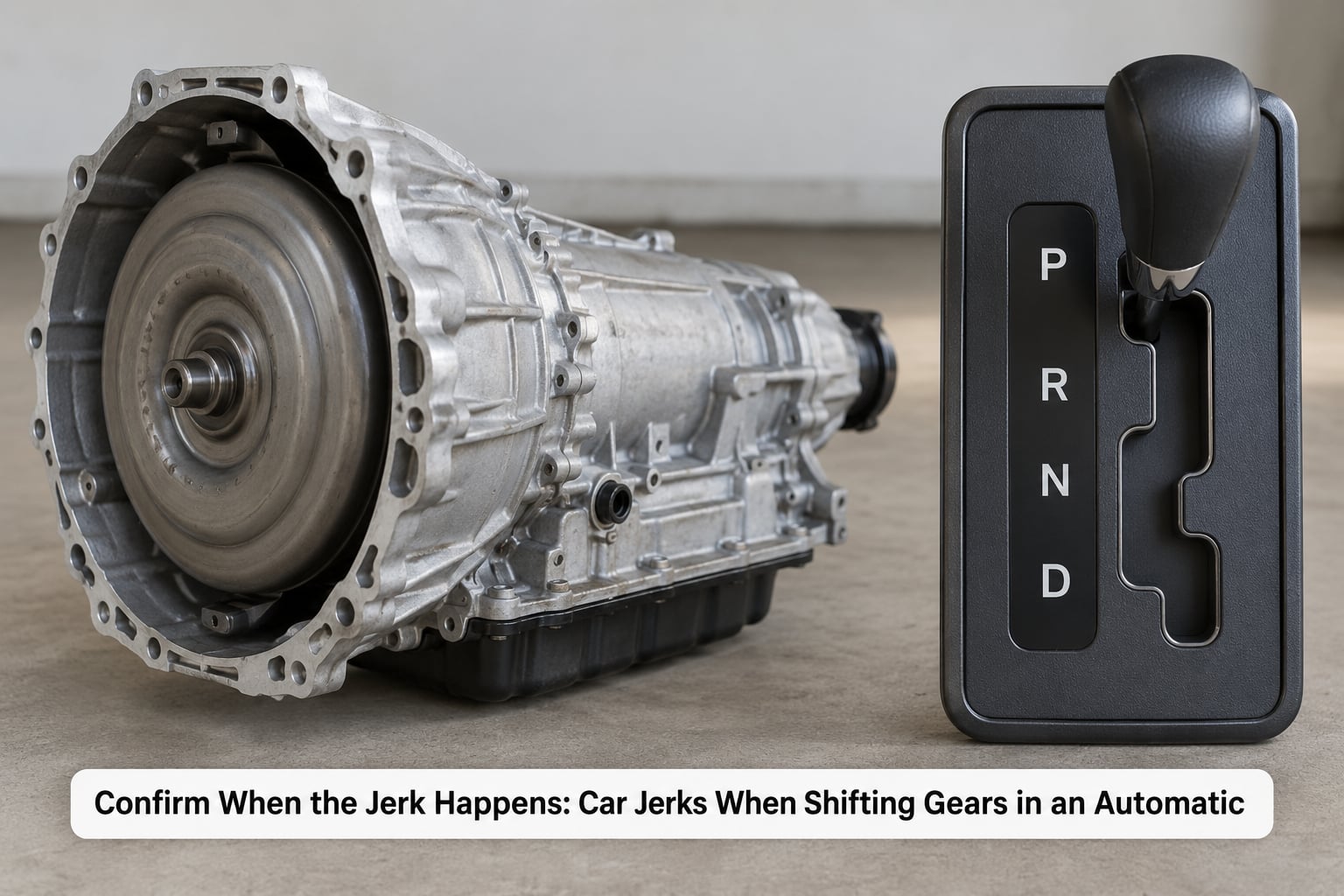
Write down the exact moment. A jolt when you select Drive from Park is a completely different problem from a jolt at 35 mph when the box changes gear, and most misdiagnoses start because people describe both as the same thing.
Four questions narrow it fast. Does it happen selecting a gear, accelerating, braking, or only between two named gears? Is it one brief blip or a sustained shove? Is it repeatable every time, or only sometimes? And can you feel it through the seat and floor, or only through the gas pedal?
A brief blip through the floor at gear engagement is normal on a lot of automatics. It is the torque converter releasing from the starter. A slam that moves the whole vehicle, or a noise that follows the jerk, is not something to learn to live with.
Record the drive on your phone while a helper rides along. Forty seconds of video tells a transmission specialist more than a paragraph of describing it, and it also captures whether the check engine light flashes at the same moment.
2. Check Fluid Level, Condition, and Leaks
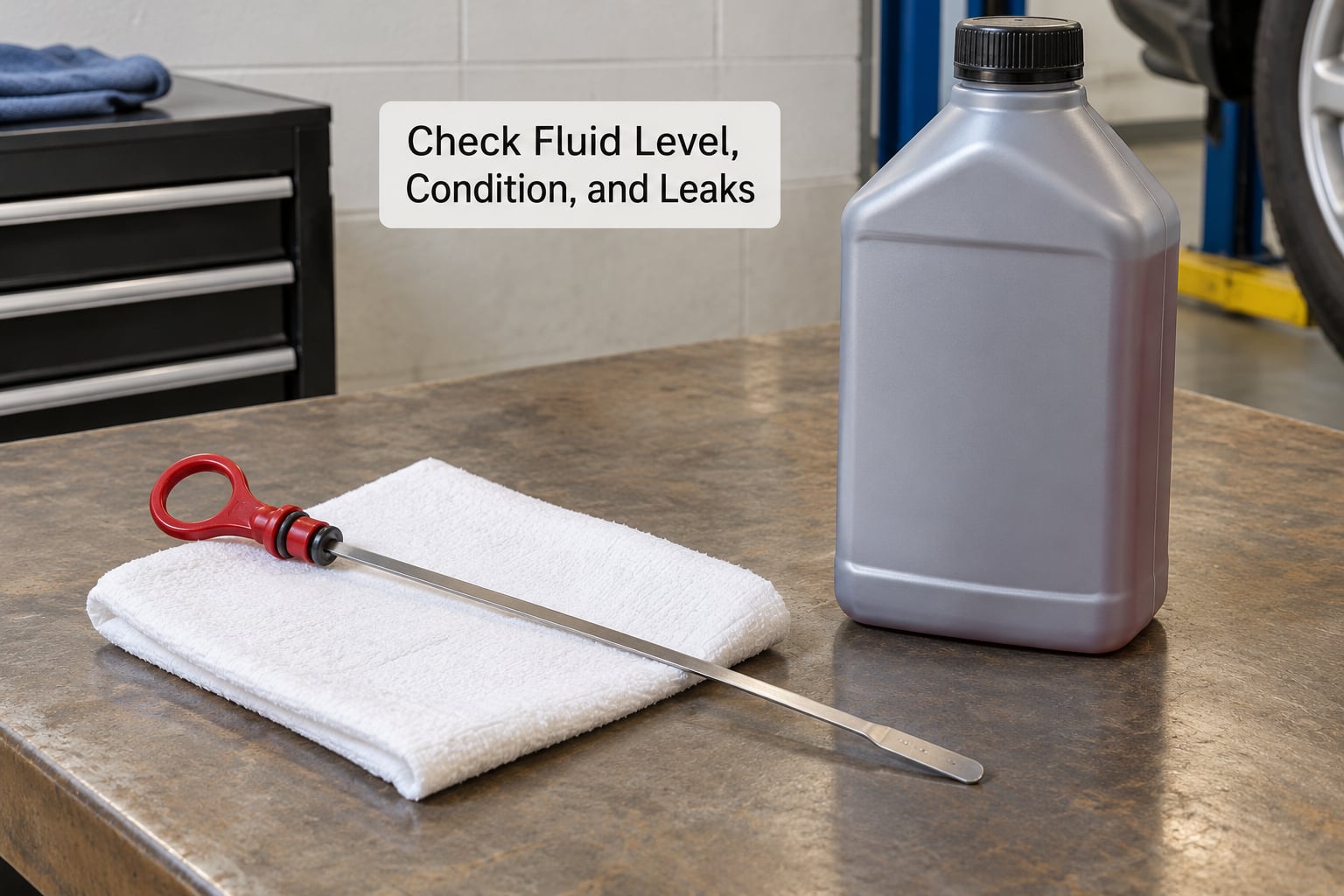
Low, aerated, overheated, or simply wrong fluid is the single most common cause, and it is the cheapest to fix. Many hard shifts disappear after a top-up and a correct service.
Check level on genuinely level ground, with the transmission at the temperature the manual specifies, which on a lot of cars means engine running and fully warm. The dipstick is usually under the hood near the radiator. A hot check on an uneven driveway can read low when nothing is wrong, which is why so many cars get topped up unnecessarily.
Then look at the fluid itself. Fresh fluid is pink or red and smells sweet. Fluid that is dark brown with a burnt toast or scorched smell means friction material is being destroyed, and so does black fluid with metallic grit in the pan. A foam or bubbles in the dipstick tube points to aeration or a suction side problem, often a leak past a pump or a clogged filter.
Do not add fluid you cannot verify. Wrong specification can make a shifting problem permanent. And be careful with a power flush on a high-mileage car that already shifts badly with dark fluid, since a hard flush can strip worn clutch material loose and end the transmission sooner than leaving it alone.
Some transmissions are sealed units with no dipstick and no fill plug, so there is nothing for the owner to check. Those cars depend entirely on service records. Your dealer or a shop with the right equipment can check the level through an overflow or fill port, and many cars show the fluid condition on a scan tool.
3. Inspect Engine and Transmission Mounts
Worn engine or transmission mounts are the most misdiagnosed cause of all, and usually the cheapest repair. The mount is the rubber sandwich that holds the engine or gearbox to the subframe. When it collapses, the whole powertrain moves under load, and that movement arrives in the cabin as a hard shift.
A truck with collapsed mounts will idle and cruise fine, then bang on every start, stop, and gear change, which is exactly why owners blame the transmission.
Check it by standing in front of the car with the engine running and lightly touching the exhaust pipe or valve cover while someone works the throttle in Park. Any more than a few millimetres of movement means a mount is done. Look for cracked or split rubber, rust streaks, a bushing pulled out of its sleeve, metal touching metal, or an exhaust shield resting against the body.
Also watch the radiator fan shroud. A dropped engine can drive the fan shroud down into the radiator or the fan itself, and that turns a cheap mount job into a cooling system repair.
Replacement follows the manufacturer procedure. Some engines need to be supported and jacked to reach the bolts, some need a lift or engine hoist, and a few need alignment or ride height checked afterward. The manual has the torque figures and the order. Do not guess at this one.
4. Test Brakes, Driveline, and Tires
Plenty of brake and driveline faults imitate a bad gearbox. Rule them out before anyone starts pricing a transmission.
A caliper that drags shows up as a car that pulls to one side, a hot wheel, or a pedal that stays low. Warped rotors produce a pulse through the pedal that is strongest just after braking from speed. Both feel like something shifting wrong at a stoplight.
Check for play in the driveshaft. With the transmission in Park, the engine off, and the parking brake set, grab the shaft where it enters the transmission and try to rotate it. Any detectable twist means worn U-joints or a worn centre support bearing, and that needs replacing before anything else is judged.
Cornering clunks usually come from a CV joint rather than the transmission. Our guide to what causes a clicking noise when turning covers how to tell that apart from suspension noise.
Finally, tires. Uneven wear across the tread or a pressure problem puts the same load into the drivrain every time you pull away. If you are not sure whether the tread is still good, when to replace tires by tread depth covers the measurements. While you are under there with a torch, check the wheel fasteners and the exhaust hangers.
5. Check Throttle Systems and Shift Controls
A misadjusted throttle or a bad switch does not have to involve the transmission at all. The transmission control module decides shifts from engine torque, so anything that lies about how much torque you asked for produces an abrupt change you feel as a gear change.
On a cable throttle, look for a frayed or kinked cable and a pedal that does not return fully to idle. On an electronic throttle, the throttle position sensor or the pedal position sensor can drift and throw a throttle-related code. A brake light switch that is misadjusted, or stuck on, confuses the shift interlock and the brake-input logic in the module.
The brake light switch test is free. Check that the brake lights come on, go out, and stay out. If the lights stay on after you release the pedal, or come on as soon as you touch the pedal, that switch is a prime suspect.
On cars with a shift cable or selector linkage, make sure the gate markings line up with the actual positions, and that Reverse engages cleanly with the brake applied. Wear in the linkage shows up as a gear that engages at a different lever position than the label says.
Do not go unplugging throttle body, injector, or brake electrical connectors to watch what happens. Left open, those circuits can cause stalling, limp mode, and trouble codes, and connectors pinned back with paper clips have started more than one airbag fault.
6. Scan and Test Battery and Transmission Codes
Plug the OBD-II scanner in with the ignition on or the engine running, then read stored codes, pending codes, and freeze frame data before you clear anything. A pending code is a fault that has not yet lit the check engine light, which is often exactly what you want on an intermittent jerking complaint.
A few codes come up again and again in this situation. P0715 is an input or turbine speed sensor circuit fault, P0718 is that sensor reporting implausible performance, P0121 is a throttle or pedal position sensor range or performance fault, and P0300 is a random or multiple misfire. Any of them can make a smooth shift impossible, and none of them proves which part has failed.
If your scanner shows live data, watch commanded gear against actual gear, turbine speed against output speed, and line pressure where the vehicle supports it. A commanded gear that does not arrive, or turbine speed running far above output speed, is real slipping rather than a harsh shift.
Check battery voltage with the engine off and again with the lights on, then with the engine running. Low or unstable voltage throws off modules and shift solenoids and generates codes that point nowhere useful. A battery disconnect clears codes and lets the adaptive shift relearn, but it does not fix a mechanical or electrical fault, and it resets radio presets and window settings on many cars.
Bidirectional scanning, live-data graphing, and pressure tests need equipment most people do not own. That is the line between a home diagnosis and a shop test.
7. Perform a Controlled Road Test or Get a Diagnosis
Only road test a car that is otherwise roadworthy. If you get to this step with no warning lights, no leaks, and no grinding, a short drive on a quiet route with a helper or a dash camera recording the cluster tells you what a printout cannot: which gear, what speed, what engine speed, and whether it repeats.
Note whether the jerk happens cold only or hot as well, at what speed, on which gear change, and whether the check engine light or a transmission warning lamp flashes with it. Reproducible, specific information is what separates a ten-minute diagnosis from guessing.
Stop driving and arrange a tow if any of these show up. Warning lights for the transmission, check engine, ABS, or traction control staying on. Revs climbing while the car slows down, or a car that will not pull in one gear. Grinding, squealing, or a metallic bang. Burning fluid or a sweet smell that is not fuel. A visible leak under the car. A driveline knock on every start and stop.
If the basics came back clean, the next step is usually a fluid service at the correct specification, followed by a specialist who can test line pressure under load and read the transmission’s own data. Broad electrical diagnosis comes next when the codes point away from the transmission entirely.
Common Mistakes
Almost every expensive diagnosis I have seen started with one of these.
Treating every harsh engagement as a dead transmission. A mount, a brake light switch, an ignition coil, or a loose ground connection all produce the same complaint and a very different bill. Check the cheap stuff first.
Using the wrong fluid. Some specs are not interchangeable, and a wrong fill can turn a routine fluid service into a full rebuild. Match the manual, not the bottle somebody left in the trunk.
Checking level on a hot car parked on a slope. You will read low and top up a full transmission. That alone causes shifting problems in cars that had none.
Clearing codes before reading them. The code was the evidence. Note it, note the freeze frame, then clear, then drive and see whether it comes back.
Ignoring driveline play or loose fasteners. A U-joint or a wheel nut can imitate a transmission symptom and is cheaper to fix than anything inside the gearbox.
Power flushing a high-mileage transmission that already shifts badly. If fluid is dark and the box already complains, a hard flush can accelerate the failure instead of saving it.
Continuing to drive with warning lights, severe slipping, or a leak under the car. Fluid carries pressure and lubrication, and slipping clutches turn that fluid into heat and metal debris fast.
For prevention, follow the service interval in your manual, which for many cars falls somewhere between 60,000 and 100,000 miles, and keep the receipts. Watch for fresh fluid on the driveway, and keep the cooling system and radiator in good shape on vehicles where the transmission fluid runs through an external cooler in the cooling circuit.
Frequently Asked Questions
Is it normal for an automatic transmission to jerk slightly?
A small bump or blip when selecting Drive from Park is normal on many automatics, especially cold, because the torque converter releasing from the starter. A slam, a noise, or a shove through the whole vehicle is not normal. Judge it by repeatability: the same gentle movement every morning is design, an escalating bump is a fault. If it also happens at 1st to 2nd gear or under braking, have it checked.
Why does my car jerk when I shift from Park into Drive or Reverse?
This is usually a mount, not a transmission. Worn engine or transmission mounts let the powertrain move under torque, and that movement reaches the cabin as a jolt. Other suspects are the brake light switch, the transmission range switch, and a shift cable or selector linkage. Have someone tap the engine in Park with it running, and check that the brake lights go out when you release the pedal.
Can low transmission fluid cause a car to jerk when shifting?
Yes, and it is the first thing to check. Low fluid lets the pump lose line pressure, so clutch packs engage late, release badly, or slip before they clamp. Burnt or aerated fluid does the same thing. Check level on level ground at the temperature your manual specifies, look for a burnt smell and dark colour, and only add the exact fluid specification. Sealed transmissions have no dipstick and need a shop check.
Does resetting the automatic transmission fix a harsh shift?
A reset clears codes and lets the transmission control module relearn its adaptive shift tables, which sometimes smooths out after a fluid change or a battery disconnect. It does not repair low fluid, a sticking solenoid, collapsed mounts, or worn clutches. Do it only after reading and recording the codes, and expect it to erase radio and window settings on many cars.
Can a bad battery or alternator cause shifting jerking?
Yes. Low or unstable voltage confuses the transmission control module, the throttle position sensors, and the shift solenoids, and it generates fault codes that point nowhere useful. Check battery voltage with the engine off, then charging voltage with the engine running. Unstable charging or a weak battery has to be resolved before anyone can trust the transmission data or the driveability complaints that come with it.
How do I know when an automatic transmission needs professional diagnosis?
Stop driving and get it diagnosed when warning lights for the transmission, check engine, ABS, or traction control stay on, when revs rise while the car slows down, when there is grinding or a metallic bang, when fluid smells burnt, or when you see a leak under the car. Those symptoms mean pressure, cooling, or lubrication is already compromised. A specialist can measure line pressure under load and read the transmission data that home tools cannot reach.
Conclusion
Start by pinning down when the jerk happens: selecting a gear, accelerating, braking, or one specific gear change. Then check for the warning conditions that end the conversation, look under the car for leaks, and verify the transmission fluid level against the specification in your manual.
If the car has major warning lights, severe slipping, grinding, burning fluid, or an unstable driveline, stop driving and let a qualified technician diagnose it. If not, the seven checks above will usually tell you whether you are looking at a mount, a fluid service, a switch, or a fault inside the gearbox, and that difference is worth a lot of money.