
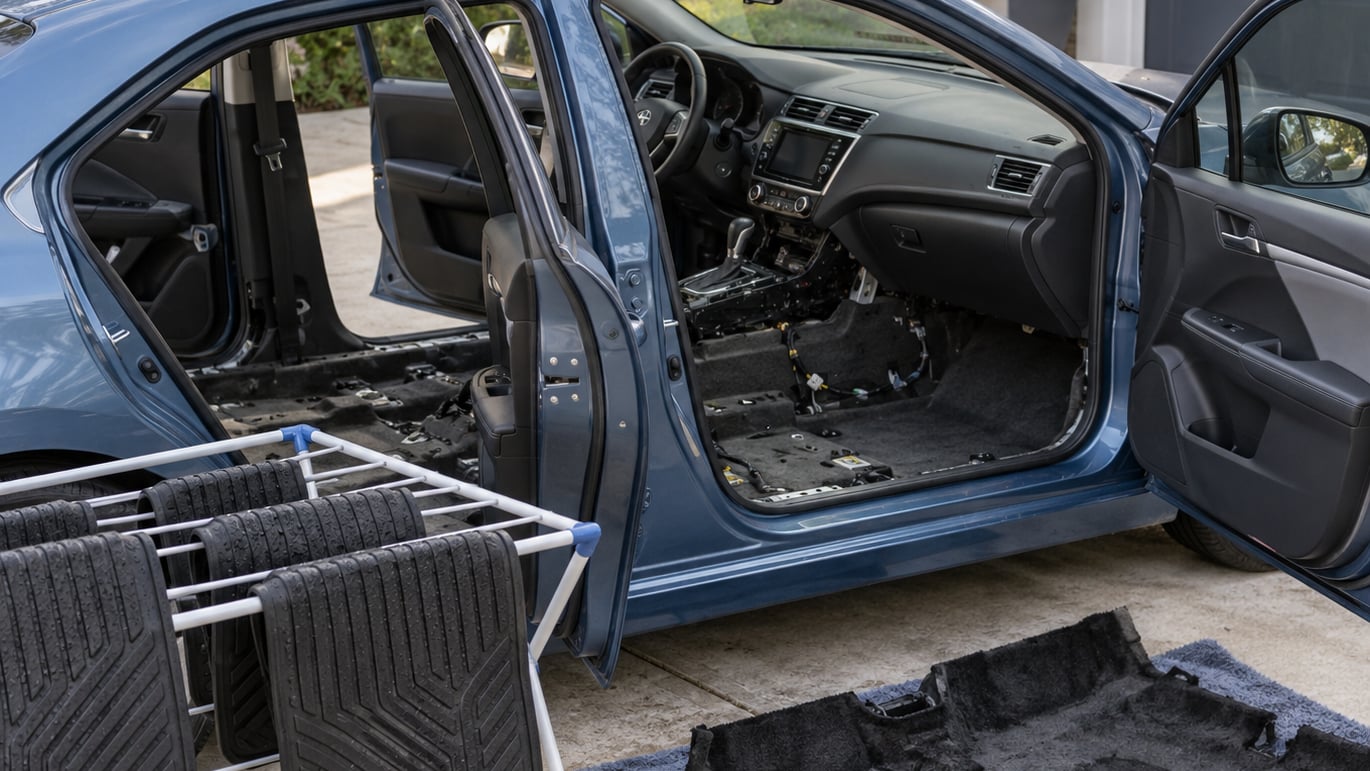
Smells come back in a car because almost nothing gets removed. The short version of how to get rid of car odors permanently: find the source, remove it completely, dry every damp surface, then clean the air system that blows that smell back at you. Air fresheners and cheap hanging scents only cover the problem for a few days.
Most jobs take an afternoon and a weekend of drying time. The hard cases, smoke baked into suede or a mold nest behind a trim panel, can take a week or a professional. Here is the order that works.
Table of Contents
- What You Need
- Step-by-Step: Remove the Odor at Its Source
- Common Mistakes
- Frequently Asked Questions
- How long does it take to get rid of a bad car odor?
- Does baking soda actually remove car odors permanently?
- Is vinegar safe to use for removing smells inside a car?
- How do I get smoke odor out of a car?
- When should I have a professional inspect my car for an odor?
- How can I prevent musty smells after rainy or humid weather?
- Conclusion
What You Need
Gather everything before you pull the mats out, because you will end up running back for supplies mid-job with wet hands.
- Nitrile gloves and a particulate mask. Mold spores and rodent droppings are genuinely unpleasant to breathe.
- Shop vac or strong household vacuum with a brush attachment and an extension handle.
- Stiff detailing brush and soft toothbrush for seams, cupholders and vent slats.
- Microfiber towels and an all-surface interior cleaner safe for your dashboard.
- Upholstery shampoo or automotive fabric cleaner, plus an enzyme cleaner for organic messes like pet accidents, milk or vomit.
- Baking soda or activated charcoal in a shallow open container for absorption.
- Plain water and a spray bottle for rinsing and pre-wetting.
- Long nose pliers and a flashlight for cabin filter access and drain tubes.
Two things to check before you start. Pull out the glove box, center console and sun visor mirror for receipts, manuals and stray wrappers, because a soggy paper coffee cup under a seat can carry a whole car of smell by itself. And read your owner’s manual on two points: how to reach the cabin air filter, and whether the filter is a serviceable element or a sealed unit meant for dealer replacement only.
Check with a detailer or mechanic instead of guessing if the smell is sweet or fishy, follows you down the road, or appears only when the engine is warm. Those read as coolant or exhaust issues, and cleaning will not touch them.
Step-by-Step: Remove the Odor at Its Source
Work in this order, and do not skip straight to spraying product. Diagnose first, remove second, clean third.
Step 1: Find the source by elimination
Park on dry ground with the engine off and windows down for a minute. Then use your nose in a specific order, because smell is strongest near the source:
- Start at the front floor. Smell the driver footwell and passenger footwell separately. Dirt and wet mat edges are the most common cause in my experience.
- Move outward to the seats and door pockets. Food, pet hair and damp foam hold odor deeper than the carpet does.
- Check the trunk and spare tire well. Old water, a soaked mat or a damp tire can push a musty smell through the whole cabin.
- Check under every weather seal and drain. Sunroof channels and door drain holes clog with leaves and dirt, and the water has nowhere to go.
- Finally, run the heater or AC on cold with the fan high. If the smell gets stronger, the source is in the air system. If it fades, ignore the vents and stay with the cabin.
You can tell a step worked by the smell, not by the effort: the area you cleaned no longer makes you flinch when you lean in close. Keep a phone photo of each area before and after; it helps more than you would expect.
Stop and deal with it professionally if you notice fuel odor, exhaust fumes entering the cabin, smoke coming from under a trim panel, or any burning smell. Those are faults, not smells, and no amount of baking soda fixes a leaking fuel line or a rodent nest chewed through a wiring harness.
How to Get Rid of Car Odors Permanently in the Cabin
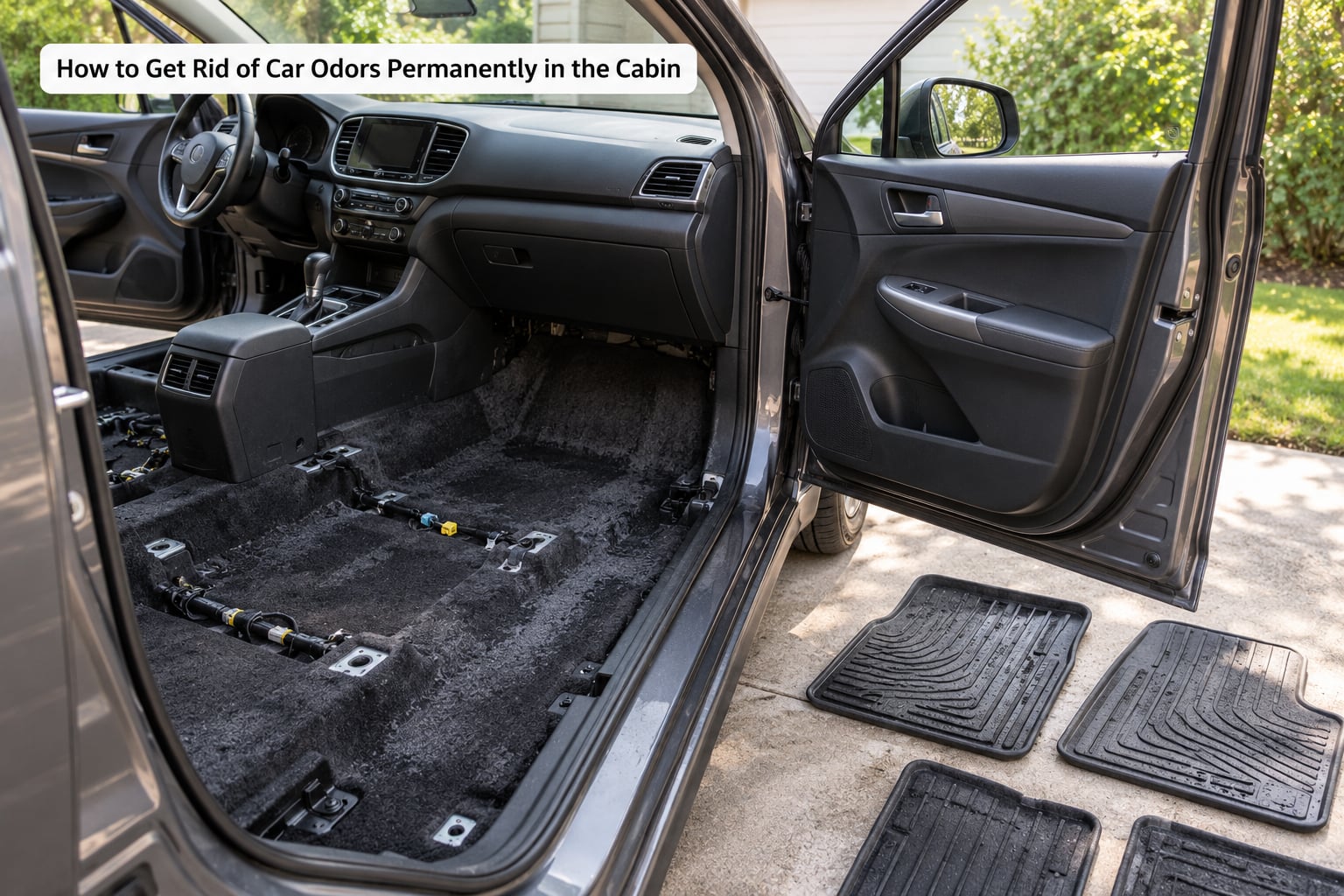
Pull every mat, then pull every removable liner beneath it. Mat cores hold water under the ribs and that water goes nowhere. Scrub each mat with upholstery shampoo, rinse with plain water and set them outside or in the sun on a rack. Rubber-backed mats should be rinsed and dried edge up so the trapped channels drain.
Vacuum the carpet dry and hard first, before any liquid. Vacuum with the nozzle in the corners, seams, under the seat rails and behind the pedals, then vacuum again along the track of every seat rail because grit hides there. Vacuum the seatback pocket and the small gap between the seat base and the trim.
On cloth seats, spray the cleaner onto the fabric, not onto the seat, and let it dwell for the time printed on the label. Scrub with the stiff brush in straight lines, then blot with clean microfiber towels until the cloth is damp rather than dripping. Too much water is the number one mistake; saturated foam takes days to dry and grows new mold.
On leather or vinyl, use a damp cloth rather than soaking, and follow with a conditioner only once the surface is dry. On suede and Alcantara, do not soak, do not steam, and keep ozone generators out of the car. A suede seat owner on r/cars listed every method they tried, steam included, and the cigar smell was still there a year later. Suede fibers trap smoke residue at a depth that cleaning alone will not reach, so plan on a professional detailer who works with suede regularly.
Do not forget the small cavities: door pockets, the seam around the center console lid, the sun visor, the glove box and every cupholder. Each one is a trap for liquid that dried months ago. Pull the cupholder liners out and wash them separately.
How to Get Rid of Car Odors Permanently in the Air System
The blower and vents redistribute cabin odor with real force, so this is the step most people skip and then wonder why the smell is back in three days.
Open the glove box, unclip the filter access panel and note the filter’s arrow direction, which must match airflow. Pull the old cabin air filter out. If it is dark grey, bent, or smells damp, it has been doing more than filtering. A HEPA or activated-carbon element is the upgrade worth making if you park near traffic, in a forest, or anywhere with construction dust.
With a flashlight, look at the housing behind the filter. Mold often shows as dark spotting on the plastic or a grey slime on the fins. Wipe down what you can reach with an all-surface cleaner dampened on a towel, never sprayed, so nothing runs onto the blower motor or the electronics behind the panel.
To dry the ductwork, set the heater to hot with the fan on high, recirculation off so fresh air pulls through, and A/C on if the car has it. Leave a window cracked. Twenty minutes is the minimum. Repeat after cleaning if the weather is humid.
That dries surfaces. It does not clean them, and it does not diagnose a failing evaporator, a blocked condensate drain, a blower motor problem or wiring damage. If the smell is mildew-heavy or only shows on cold days, treat it as an evaporator or drain issue and have a shop look at it.
Deodorize and Protect the Interior
Neutralize means the odor molecule is changed or trapped. Mask means something stronger is layered on top of it. You want neutralization, and most products sold as odor eliminators are actually the second thing.
Enzyme cleaners break down organic material, so they are the right choice for pet accidents, spills, vomit and dairy. Enzyme work needs time and a damp surface, so use it before your final dry pass rather than as the last step. Apply it beneath the seat and into the corners where a lifted seat cushion hides a stain.
Baking soda works by absorption and is genuinely useful for mild odors. Spread it in an open dish, set it under seats and inside the trunk, and replace it every two weeks until the container goes clean. Coffee grounds do the same job but then smell like coffee, which is a trade some people like. Activated charcoal absorbs more than baking soda for the same volume and is the better pick for damp, musty smells.
Spray any neutralizer onto a towel and wipe the surface, rather than into the air. Overspraying the cabin coats windows and hard plastics in a film that streaks, and heavy fragrance makes some people nauseated on a long drive.
Leave the windows down and the doors cracked for an hour after any chemical treatment. Leaving the car sealed with an active product is how people end up with a headache and a smell that is now different but just as bad.
Sunning the interior helps only when the materials and your parking situation allow it. Direct sun can fade leather and discolor cloth and plastic permanently, and a clear windshield can turn a cabin into a greenhouse in a short afternoon. Do it in the shade with the windows cracked instead, and never with leather conditioner or protectant still wet.
Prevent the Smell from Coming Back
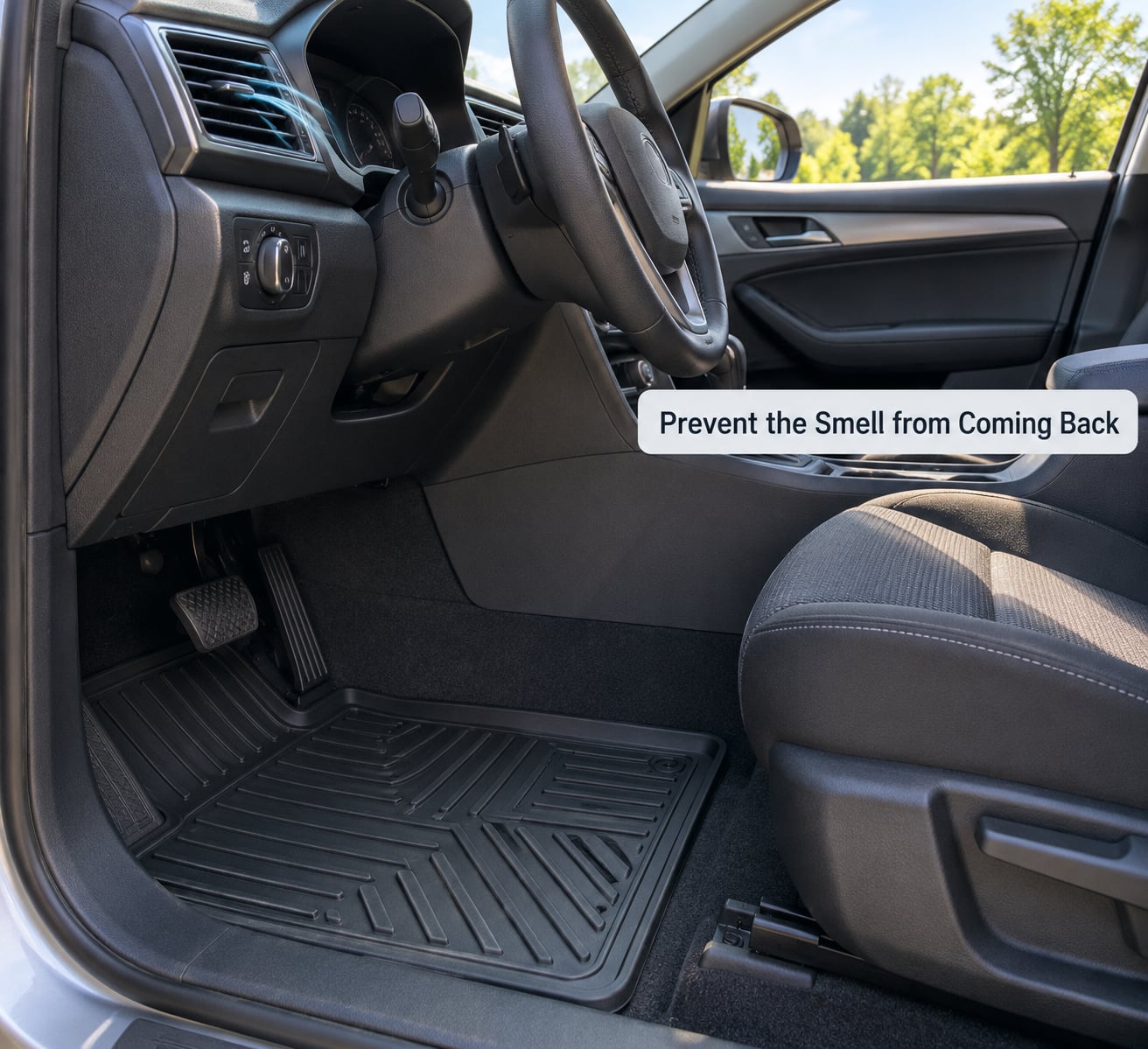
A cabin stays fresh when nothing is allowed to stay wet. That takes about fifteen minutes a month.
- Weekly: shake out the mats, vacuum the footwells and seats, and wipe door pockets and the console lid with a damp towel.
- After rain or a car wash: with the doors open, run the fan on high for fifteen minutes so trapped humidity clears out.
- Monthly: wipe the weather seals and the channels along the sunroof edge with a cloth, then flush the door drain holes with water until it runs out clear instead of dark.
- Monthly: pop the cabin filter out and hold it up to the light. Bent or grey means replace it.
- Immediately: deal with spills with an enzyme cleaner, and take wet shoes out of the car at the door rather than the passenger footwell.
For pet accidents, blot first, then enzyme clean twice a day apart. The second pass catches what the first one left.
Garage parking is worth thinking about too. A car parked in a warm, enclosed garage holds humidity longer than one in the driveway, which feeds the mold you just cleaned out. Cracking a window or running the fan briefly after a drive does more for a musty garage smell than any product.
Common Mistakes
Hanging an air freshener and calling it done. A tree scent covers the top layer while the source keeps producing odor, so the smell comes back stronger than before. Fix: diagnose and clean first, use scent only afterward if you want one.
Spraying cleaner directly onto electronics, screens or the dashboard top. Liquid runs into seams and vents and can short things out. Fix: dampen a microfiber towel and wipe, keeping the cloth nearly dry.
Soaking carpets and seat foam. This is how you trade one odor for mold. Fix: damp not wet, blot with towels, then dry with the heater and fan.
Replacing the little tree without touching the filter or drains. The smell returns in a week because the filter and the plenum are still dirty. Fix: filter plus drain plus plenum, in that order.
Mixing cleaners. Bleach with ammonia makes a gas you must ventilate out of an enclosed garage, and bleach plus vinegar gives off chlorine. Fix: one product at a time, and never indoors.
Running an ozone generator around pets, people, rubber and suede. It oxidizes what it reaches and does not reach everything. Fix: vehicles only, empty and sealed, with follow-up ventilation, and check the manufacturer guidance before using one on any interior with suede or rubber trim.
Frequently Asked Questions
How long does it take to get rid of a bad car odor?
A source you can reach and clean usually improves within a day, but the smell is not confirmed gone until the car has dried for 24 to 48 hours. Musty evaporator smells take longer because a single run of the fan rarely dries the whole duct run. Smoke soaked into suede or cloth can take a week of repeated treatment, or may need a professional. Judge progress by smelling the area cold, not by how it smells while you are cleaning.
Does baking soda actually remove car odors permanently?
Baking soda absorbs, and by itself it is a weak fix for anything stronger than mild mustiness. It works well as a support step, sitting under seats and in the trunk for a week or two while you clean the real source. It does nothing for smoke soaked into fabric, pet urine, or a moldy evaporator. If a dish of baking soda comes back grey and heavy after a week, the car still has a source to deal with.
Is vinegar safe to use for removing smells inside a car?
Diluted white vinegar is safe on most hard interior surfaces when you dampen a towel rather than spraying. Do not use it on leather, aluminum trim or any electrical parts, and never mix it with bleach or ammonia. Vinegar is also a common allergen and asthma trigger, so it is a poor choice in a car that carries passengers or pets. It also does not neutralize odor, it simply overpowers it for a while.
How do I get smoke odor out of a car?
Remove anything you can take out, vacuum every surface, then clean cloth seats and carpet with upholstery shampoo and leave them damp rather than soaked. Clean the cabin air filter and wipe the vents, because smoke residue circulates there. Never use steam or ozone on suede or Alcantara, since heat and oxidation set the smell deeper into those fibers. After thorough drying, an enzyme or neutralizer applied to a towel helps with what remains.
When should I have a professional inspect my car for an odor?
Get a shop or a detailer involved if the smell is sweet or fishy, follows you under load, appears only when the engine is warm, or comes with smoke or burning. These point to coolant, exhaust or electrical faults rather than dirt. Rodent nests, chewed wiring and droppings also belong to a professional, and a shop can document the damage for an insurance claim. Deep smoke damage in suede is usually faster handled by a detailer who works with that material.
How can I prevent musty smells after rainy or humid weather?
Clear the sunroof channels and door drain holes so water leaves the cabin instead of sitting in the carpet, and run the fan on high for fifteen minutes after it rains with the windows cracked. Keep floor mats and liners from holding damp fabric under them. Dry any wet mat or towel out of the car before the next drive. In humid months, running the air conditioner occasionally on its own takes a lot of humidity out of the air.
Conclusion
Do one thing first: find where the smell actually comes from. Vacuum the cabin, pull the mats, clear the drains, replace the cabin air filter, then dry the car properly. That is how to get rid of car odors permanently, because it removes what is making the smell instead of covering it up.
Then keep it out. Fifteen minutes a month on the mats, pockets, seals and filter stops most smells from ever coming back, and you will never wonder why a fresh scent did not last a week.