
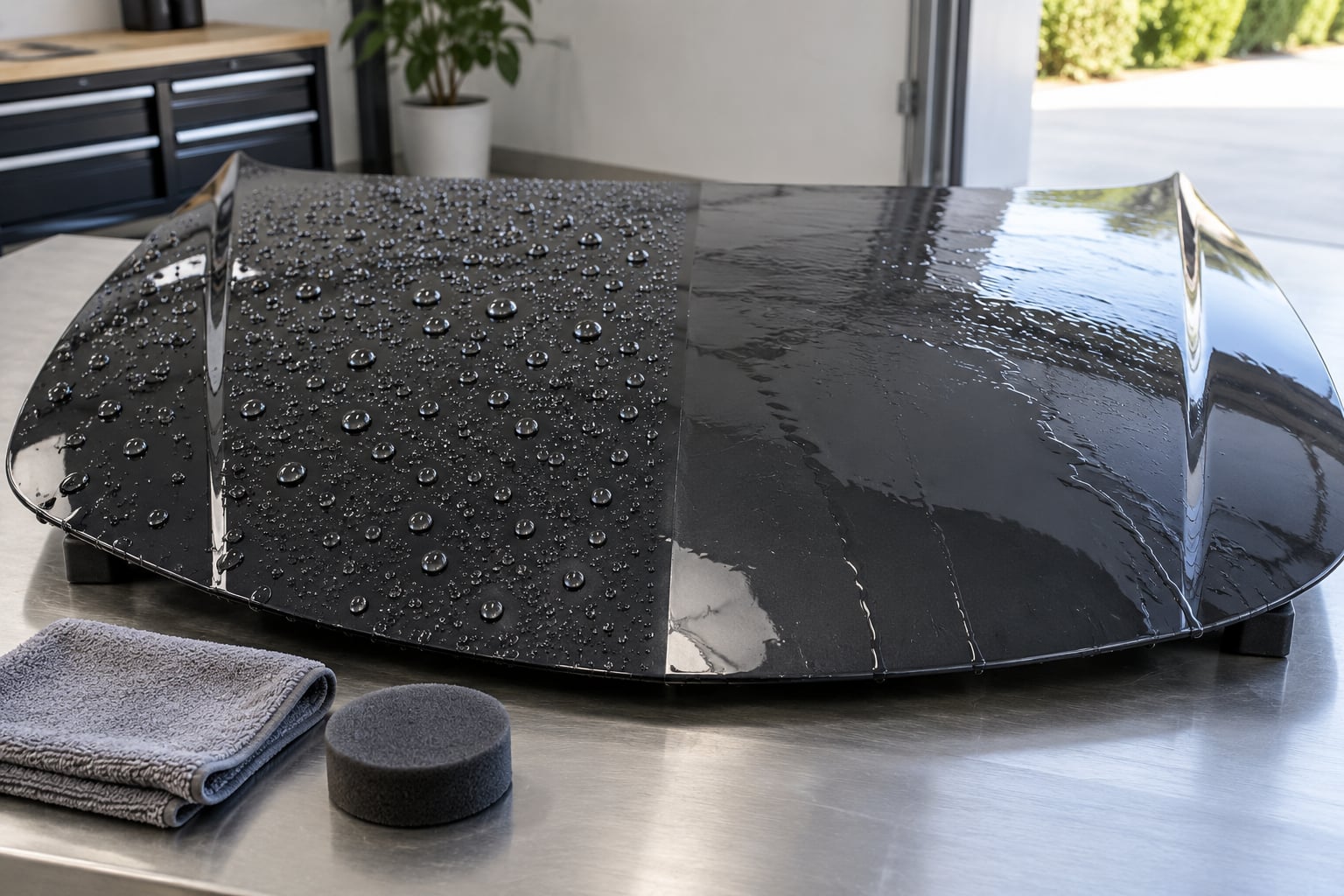
Ceramic coating vs wax comes down to one tradeoff: how much effort and money you want to spend to protect your paint. A coating lasts years and sheds water and grime with almost no upkeep, but it costs far more and demands serious paint preparation. Wax costs little, takes an afternoon, and gives you the warmest shine a car can have, though it needs reapplying every few weeks in summer.
For most daily drivers, the honest answer sits in the middle, and that middle is a ceramic spray sealant rather than a professional coating or a paste wax. Whichever route you take, the preparation matters more than the product in the bucket.
Below is a straight comparison of the two, plus what actually happens to each one after a year of real driving.
Table of Contents
- Ceramic Coating vs Wax at a Glance
- What Is Ceramic Coating?
- What Is Car Wax?
- How Do Ceramic Coating and Wax Differ?
- Ceramic Coating vs Wax: Durability and Protection
- Ceramic Coating vs Wax: Gloss and Appearance
- Ceramic Coating vs Wax: Application and Maintenance
- Ceramic Coating vs Wax: Cost and DIY Feasibility
- Which Should You Choose?
- Frequently Asked Questions
- Conclusion: Start With Your Paint and Driving Conditions
Ceramic Coating vs Wax at a Glance
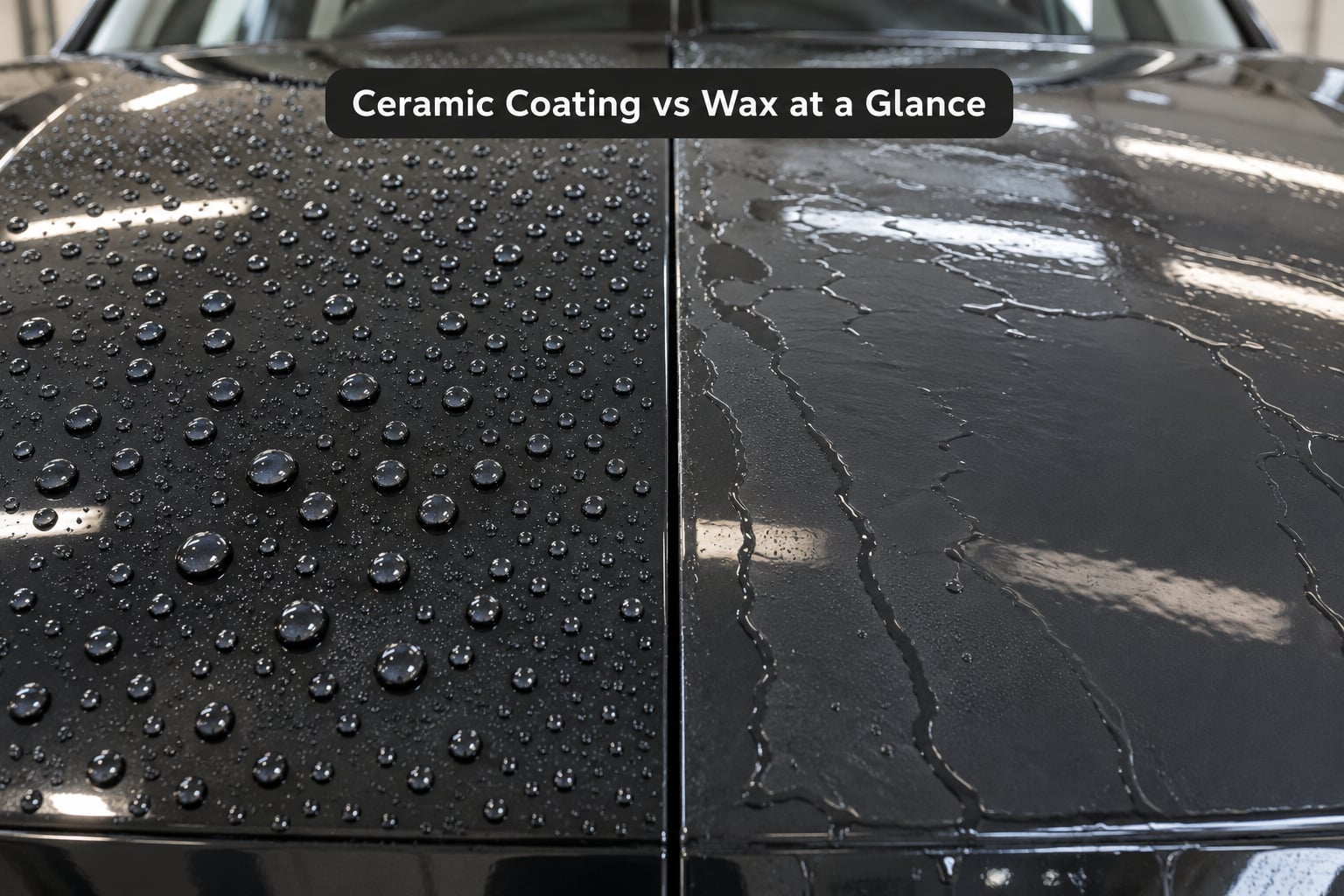
The table below compares ceramic coating and wax across the criteria that actually decide the choice. Wax wins on cost, warmth of gloss and easy reapplication. A ceramic coating wins on lifespan, chemical resistance and how little work it needs between applications.
| Criterion | Ceramic Coating | Car Wax |
|---|---|---|
| Typical lifespan | Roughly 1 to 5 years depending on product and conditions | 4 to 12 weeks in warm weather, longer in cool dry climates |
| Upfront cost | DIY coating is a modest product cost; professional install is a much larger outlay | A few dollars to about the price of a fast-food meal per application |
| Five-year cost | One large expense plus occasional maintenance sealant | Many small repeat purchases plus regular wash time |
| Preparation needed | Clay bar decontamination, polish to correct, panel by panel | Wash, optional decontamination, no polish required |
| Application time | Full day or weekend for a proper install, plus cure time | Two to three hours for a careful hand wax |
| Gloss character | Hard, glass-like depth; more uniform across panels | Warm, soft, deeper glow, especially on dark colors |
| Hydrophobicity | Strong and long-lasting; water beads then sheets off | Noticeable right after application, fades quickly |
| UV and oxidation | Good resistance over the coating’s life | Minimal; wax breaks down under sun and heat |
| Chemical resistance | Resists fuel, road salt, bug wash and bird droppings | Little resistance; contaminants can sit on the wax |
| Scratch handling | Hides nothing. Defects stand out more under gloss | Fills micro-pores and softens the look of light swirls |
| Removability | Hard to strip; polish or a solvent wash is needed | Easy to strip with any polish or decon product |
| Best for | Daily drivers, harsh winters, low-maintenance owners | Show cars, classics, owners who like the hands-on routine |
What Is Ceramic Coating?
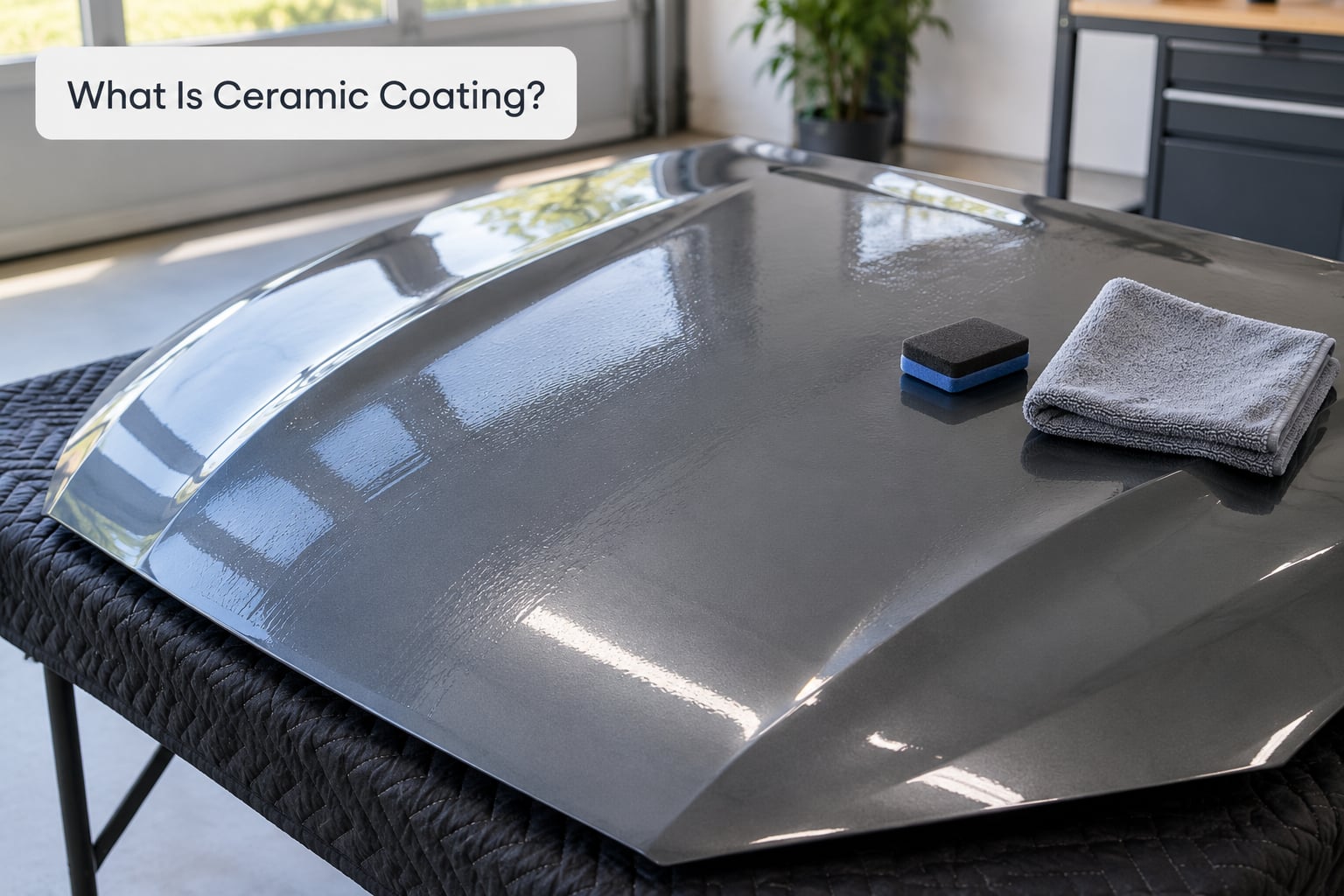
A ceramic coating is a liquid silica-based polymer that bonds to your car’s clear coat and hardens into a thin glass-like barrier. It is not a wax, and it does not behave like one.
The chemistry is the reason it lasts. Wax sits in the microscopic pores of the surface and relies on temperature to stay there. A ceramic coating, often called SiO2 for silica dioxide, forms a covalent molecular bond with the clear coat, so it resists heat, UV and chemicals rather than melting away from them. The polymer cures over hours or days, hardening into a clear film that sheds water and grime.
Professional coatings, DIY coatings and “ceramic wax” are three different products
Professional coatings are the real deal. They are usually solvent-based, need full paint correction before application, and cure for days in a controlled room. If they are applied badly, they leave high spots and hazing that can only be fixed by machine polishing.
DIY coatings from detailing brands are thinner and more forgiving. Many need only a clay bar and a wash, and some cure in a few hours, which makes them realistic in a home garage.
A “ceramic wax” or “ceramic-infused paste wax” is a marketing term. It is a sealant with a small amount of silica in it, applied like a wax and lasting like a weak sealant. Useful, but nowhere near a coating.
What Is Car Wax?
Car wax is a sacrificial layer of wax or synthetic polymer that sits on top of the paint and slowly disappears. That is the whole concept: wax buys you gloss and a little protection, then you apply it again.
There are three main forms. Paste wax is the thickest, gives the warmest and deepest glow, and takes the most effort to spread and buff. Liquid wax gives up a little shine depth for much faster application. Spray wax is a maintenance product, applied after a wash in minutes.
Inside those categories sit two chemistries. Carnauba wax comes from a Brazilian palm and melts at a low temperature, which is exactly why it looks so good and disappears so fast. Synthetic wax uses harder polymers that last longer and survive heat better, but they do not have that warm, soft glow.
Wax vs sealant vs ceramic spray: the tier most comparisons skip
Wax and coating are not the only two options, and the middle ground is where most daily drivers actually land. A traditional sealant is a synthetic polymer that applies like a wax but lasts several months instead of several weeks. A ceramic spray sealant goes further, using silica particles in a spray format that bond lightly to the surface and shed water for months.
This tier matters because it fixes the main complaint about wax, which is frequency, without the cost and prep of a coating. Plenty of detailers who stopped using paste wax for protection will tell you the same thing: a ceramic spray sealant applied after every wash outperforms a paste wax and takes a fraction of the time.
| Tier | Application time | Typical duration | Best use |
|---|---|---|---|
| Paste or liquid wax | Two to three hours | Weeks to a few months | Warmest gloss, show cars, weekend waxing |
| Polymer sealant | One to two hours | Three to six months | Drivers who want more life than wax, less fuss than a coating |
| Ceramic spray sealant | Ten minutes after a wash | Three to twelve months | Daily maintenance on wax, sealant or a coating |
The one thing to be clear about is naming. Products sold as “ceramic wax” are spray or paste sealants with a small amount of silica in them, not coatings. They apply like wax, protect like a decent sealant, and cost about the same. Read the label for how long it claims to last and judge it there.
How Do Ceramic Coating and Wax Differ?
The differences come down to chemistry, contact with the paint, and how each one behaves when water, sun and road grime hit the surface.
Chemical structure and paint contact
Wax fills micro-pores and sits loose on the surface, held there by temperature and a bit of surface tension. Coating attaches itself to the clear coat at a molecular level. When wax wears off, a thin layer is gone. When a coating wears off, it takes longer because the bond resists UV and chemicals first.
Hydrophobicity: ceramic coating vs wax
Fresh wax beads water aggressively, often better than a coating right after application. That beading fades fast as UV and alkaline soap attack the wax. A coating keeps shedding water for months or years, and it tends to shift from tight beading to sheeting, where water lifts off in sheets and takes dust with it.
What each option can and cannot stop
Neither one stops rock chips, road rash, car washes with dirty brushes, or a bird impact that sits on the paint for hours. A coating resists road salt, fuel, bug wash, sap and harsh detergents far better than wax, and it slows oxidation of the clear coat. Wax does almost none of that beyond a mild barrier to plain dust and rain.
Ceramic Coating vs Wax: Durability and Protection
A ceramic coating lasts years and wax lasts weeks. That gap is the whole argument, and it is the one area where the consensus among detailers is solid.
Wax typically needs reapplication every four to eight weeks in warm weather, and three to four months in a cool dry climate. Dark colors and garage-kept cars stretch that. Cars parked outside year-round in sun, rain and road salt sit at the short end, and wax on a hood in summer can melt and streak in a parking lot in a single afternoon.
Coatings are sold with anywhere from one to five years of expected life, and that number depends heavily on the product, the prep work and where the car lives. Long-term testing on daily-driven cars tends to show coatings losing their gloss and water beading well before the headline figure, often somewhere around year two on a car that lives outside. That gap between the number on the bottle and the number you actually get is where most coating complaints come from.
Set your expectations at two to three years of solid protection for a daily-driven car, five for a garage-kept vehicle with careful storage. The honest truth is that wax protects for weeks and a coating protects for years, but neither one protects paint from the things that actually scratch it.
Where the coating is doing real work
The protection difference shows up most in the contaminants that attack chemically rather than physically. Road salt, exhaust soot, fuel spill and bug wash are all mildly acidic or alkaline, and a coating shrugs them off while wax lets them sit on the surface. Bird droppings matter here too, not because of the impact but because the acid sits and etches, and on a coated car you usually wipe it off in time instead of finding a faint etch under the wax.
UV exposure is the other one. Wax softens and oxidizes in direct sun, which is why a car that lives outside loses its wax protection first on the hood, roof and trunk lid. A coating holds its gloss through the same sun, and that is the difference people notice most after a couple of summers.
Washing frequency is worth factoring in too. Someone who washes monthly is reapplying wax five or six times a year and getting a well-protected car the whole time. Someone who washes twice a year has protection on paper and bare paint for most of the spring.
What a failing coating looks like
A coating rarely fails all at once. It usually goes non-hydrophobic first, meaning water stops beading and starts sheeting evenly, then the gloss flattens, then hazy patches appear that no amount of washing removes. On a dark car you may also notice water spots sticking instead of lifting away, which is the first sign most owners catch.
None of that is fixable with wax or a sealant. It means the coating either needs a polish to level it, or a full strip and reapply. Wax failing looks different and much more forgiving: the beading goes flat, the shine dulls, and a fresh coat of wax makes it look new again in an afternoon.
Ceramic Coating vs Wax: Gloss and Appearance
Wax and coating both add gloss, but they add different gloss. Wax gives a warm, soft, deeper glow. Coating gives a harder, clearer, more uniform shine that people often describe as looking wrapped in glass.
On a black car, the difference is dramatic in person. Wax on black looks like depth in the paint, while coating on black can look flatter if the paint underneath has swirl marks and haze, because the gloss lights up every defect. Detailers report black paint as the hardest color to keep flawless, and that is more true after coating than before.
Paint condition matters more than the product. Over neglected clear coat, wax fills micro-pores and softens the look of light swirls, so the car reads glossier than it is. A coating does the opposite, which is why a coated car looks stunning on corrected paint and disappointing on paint that was never polished.
On metallic and pearl finishes, coating gives a more uniform look across panels and over time. Wax gives a richer, slightly warmer reflection that photographs well. Matte and satin finishes are the exception: both leave a shiny film that ruins the finish, so matte cars need a matte-specific product and no coating at all.
Ceramic Coating vs Wax: Application and Maintenance
Waxing takes an afternoon and needs a wash. Coating takes most of a weekend, the right room, and real preparation work. That difference in effort is why plenty of cars stay on wax.
Applying wax
- Wash with a pH neutral car soap and dry completely.
- Clay bar decontaminate if the paint feels gritty after washing, which most cars do.
- Work a thin layer of wax onto one panel at a time with a foam applicator.
- Let it haze for a few minutes, then buff off with clean microfiber towels before it fully cures.
- Keep the car off water for a few hours, ideally overnight, before it gets rained on.
Applying a ceramic coating
- Wash and decontaminate, then polish to correct swirls and oxidation if the coating is a professional grade.
- Use a clay bar after polishing to remove the fine dust the polish leaves behind.
- Mask trim and badges, and work in small sections with panel lighting if possible.
- Apply a very thin coat, wait the stated flash time, then level it with a separate application pad.
- Let the coating cure in a dry, ventilated space for the full stated cure time before wetting the car.
Wax before or after a ceramic coating?
Always before, never after. Wax has to be removed completely before a coating goes on, because the coating will not bond over a wax layer and you will end up with patchy water beading and no real protection. Any wax on the car gets stripped with a decontamination polish or a clay bar during prep.
Once the coating is cured, you can wax over it if you want to. The wax sits on top as a sacrificial layer and adds warmth of gloss, which some owners prefer on dark cars. It does not bond through the coating, it just adds to the hydrophobicity until it wears off, and you can remove it later with a gentle polish. A lot of people skip this step entirely and use a spray sealant instead, which gets you most of the same effect with less work.
Keeping the protection alive
Between wax applications you can use any decent wash, though a pH neutral soap keeps the wax around longer. Between coating applications you have to change habits: a dirty sponge or a gritty wash mitt that was harmless on wax will scratch a coating because the coating is much harder and glossier than the paint underneath.
Use clean tools, the two-bucket method, and a separate bucket for wheels. Wash away from direct sun, dry with clean microfiber, and skip automatic car washes with spinning brushes. On a coating, follow up with a spray sealant or spray wax after washing to refresh the hydrophobicity between details. On wax, the same spray products let you postpone the full wax job for a few weeks.
Ceramic Coating vs Wax: Cost and DIY Feasibility
Wax is one of the cheapest things you can do for a car. A professional ceramic coating is one of the more expensive. The gap is large enough that it decides the answer for a lot of people.
A tin of paste wax costs about what a drive-through meal costs, and you will buy a few tins a year. A ceramic spray sealant is a similar repeat purchase with better staying power, which makes it the value option in this whole comparison.
A DIY ceramic coating product itself is not expensive either. The expensive part is the correction: a polish, pads, a clay bar, microfibers, and a controlled curing environment, plus your weekend. A professional install is priced by the vehicle or by the panel, and it lands in the low thousands for a full car, which is where the sticker shock usually comes from.
Run it over five years and the picture changes. Wax costs a modest product total per year plus roughly four to six wash-and-wax sessions of your time each year. A coating costs one large outlay and then very little time, though you will still add a spray sealant a few times a year. If you enjoy detailing, the wax route costs you nothing but hours. If you do not enjoy detailing, the coating route buys back the hours you would otherwise spend on maintenance.
For DIY feasibility, wax is beginner-friendly and forgiving. Spray sealants are the easiest of all. A DIY coating is intermediate: fine for someone comfortable with a clay bar and careful panel work, not fine for a first-time car owner with a dark-colored car and swirl-prone paint.
Which Should You Choose?
Choose a professional ceramic coating if your car is a daily driver parked outside, you wash it with contact washes, and you would rather spend money once than spend Saturday afternoons twice a month. Choose wax or a sealant if you enjoy working on the car and want the best-looking paint for the least effort per session.
Daily drivers
A coating or a ceramic spray sealant. These cars eat protection through salt, exhaust soot, bug wash and constant UV. Fewer maintenance sessions is worth more here than the deepest possible gloss.
Garage-kept weekend cars
Wax is a great fit. Less exposure means longer life per application, and if you enjoy the ritual, the shine is worth it.
Show cars and classics
Paste wax, almost always. Classics get repainted and resprayed, and a coating complicates future bodywork. Wax hides minor defects better than a coating does, which matters when the goal is a forgiving, deep finish.
New cars
Newer cars do need protection. Factory paint sits under clear coat with no wax, sealant or coating at all, so nothing is being protected until you add something. A coating on a new car is also easier to install because the paint is already flat and clean.
Leased vehicles
A ceramic spray sealant is the smart pick. It protects during the lease, it is easy to strip before you return the car, and you avoid a correction bill on paint that is not yours.
Winter road salt and cold climates
A coating, or at minimum a sealant. Road salt and harsh winter detergents eat wax quickly, and you will not be waxing in a cold parking lot in February anyway.
If you want the lowest maintenance possible
Coating, then a spray sealant once a month after washing to keep the beading strong. It is the least hands-on option available, as long as you are comfortable with the prep and the bill.
Frequently Asked Questions
Does ceramic coating shine better than wax?
It depends on the paint underneath, not the product. Wax gives a warmer, softer, deeper glow, especially on dark and metallic colors, and it fills micro-pores so light swirl marks look softer. A coating gives a harder, clearer, more uniform shine that looks more uniform panel to panel. On corrected paint the coating usually wins on depth; on uncorrected dark paint it can highlight every defect.
Do newer cars need to be waxed?
Newer cars need protection more than older ones, because factory paint has no wax, sealant or coating on it at all. A modern clear coat handles UV reasonably well on its own, but it still oxidizes, collects road salt and bug residue, and needs decontamination before anything bonds to it. New paint is also flatter and cleaner, which makes it the easiest car to coat.
What is the best car paint sealant?
For most people it is a ceramic spray sealant applied after each wash. It is easy to apply, lasts months rather than weeks, resists chemicals better than traditional wax, and refreshes water beading on top of wax or a coating. Traditional paste wax wins on warmth of gloss, and a polymer sealant is the middle ground if you want more life than wax without ceramic ingredients.
What is the downside to ceramic coating?
The downsides are preparation, cost and unforgiving application. Paint correction has to happen first, a professional install is one of the most expensive things you can do for a car, and mistakes leave high spots or hazing that need machine polishing. A coating also hides nothing, so swirls show more, and it resists scratches far less than the marketing suggests.
Can you wax a car that has a ceramic coating?
You can wax over a coating, and many owners do it to add warmth of gloss. Wax never bonds through the coating, so it sits on top as a sacrificial layer that the coating slowly sheds, and you simply remove it with a polish or decontamination product later. Use a gentle, non-solvent wax if you want to be careful with the coating underneath, and avoid aggressive polishes.
Do I need paint correction before a ceramic coating?
For a professional coating, yes. Correcting the clear coat to remove swirls, oxidation and hazing is what gives you the deep, even shine afterward, and coating over uncorrected paint locks those defects in. For a DIY coating or a ceramic spray sealant, a polish is optional. Wash, clay bar decontamination and a clean surface are enough for most people.
Conclusion: Start With Your Paint and Driving Conditions
Wax gives you the best shine for the least money and the least effort per session, and a ceramic coating gives you the longest protection for the most money and the most upfront work. Pick wax if you enjoy detailing, pick a coating if you would rather not, and pick a ceramic spray sealant if you want a middle ground that costs little and lasts months.
Start with the paint itself. Wash it, clay bar it, and see how flat it really is before you spend anything, because no product protects a surface that has not been prepared. Then match the protection level to your budget and how much time you want to spend on it each month.