
How to warm up your car in cold weather without over-idling is simpler than most advice makes it sound. On a car built in the last few decades, 30 to 60 seconds of idling followed by gentle driving is the whole job. The 10- or 20-minute idle in the driveway was sensible advice for a carbureted engine and is closer to counter-productive on a modern fuel-injected one, especially if you drive short distances most of the winter.
There are real exceptions, though. Extreme cold, a vehicle that has been sitting for weeks, an engine that cranks slowly, and a dashboard light that stays on all deserve more attention than a stopwatch. This guide walks through what to look at before you turn the key, what to do once it is running, and which habits to drop.
Table of Contents
- What You Need
- Step-by-Step: How to Warm Up Your Car in Cold Weather
- Common Mistakes
- Frequently Asked Questions
- How long should I warm up my car in cold weather?
- Should I use remote start instead of letting my car idle?
- How do I warm up a car when it is extremely cold?
- Do electric cars need to be warmed up before driving?
- When might running a car for 10 minutes actually be necessary?
- Should you turn the AC on when heating a car?
- Conclusion
What You Need
A warm-up goes wrong when someone skips straight to the key. A few minutes of preparation tells you whether this is a normal cold morning or a car that should stay parked.
- The owner manual. This is the one authority that beats any article, including this one. Look in the index for “starting,” “warm-up,” or “operating temperature.” Some manuals specify a warm-up time or an engine speed limit, and that instruction wins.
- Correct engine oil and a way to check it. Use the viscosity and specification the manual calls for, which on many modern engines is a low number such as 0W-20. A dipstick check on level ground tells you whether the level is where it should be, and how to check for engine oil sludge in your BMW covers the condition to look for on short winter trips.
- Windshield washer fluid rated for freezing. This is the fluid that ends up on the glass while you are scraping, so it should not freeze at the temperature you actually park in.
- An ice scraper and a microfiber cloth. A plastic blade and a soft cloth, kept inside the car rather than the trunk.
- A tire pressure gauge. Cold tires read low. A digital gauge is cheap and tells you more than the dashboard light does.
- A block heater if your climate calls for one. It plugs in hours before you leave, so it is a driveway accessory rather than a morning accessory.
- A battery charger or a battery test. Most cold-start problems turn out to be the battery, not the warm-up routine.
Step-by-Step: How to Warm Up Your Car in Cold Weather
How to Warm Up Your Car in Cold Weather Without Over-Idling
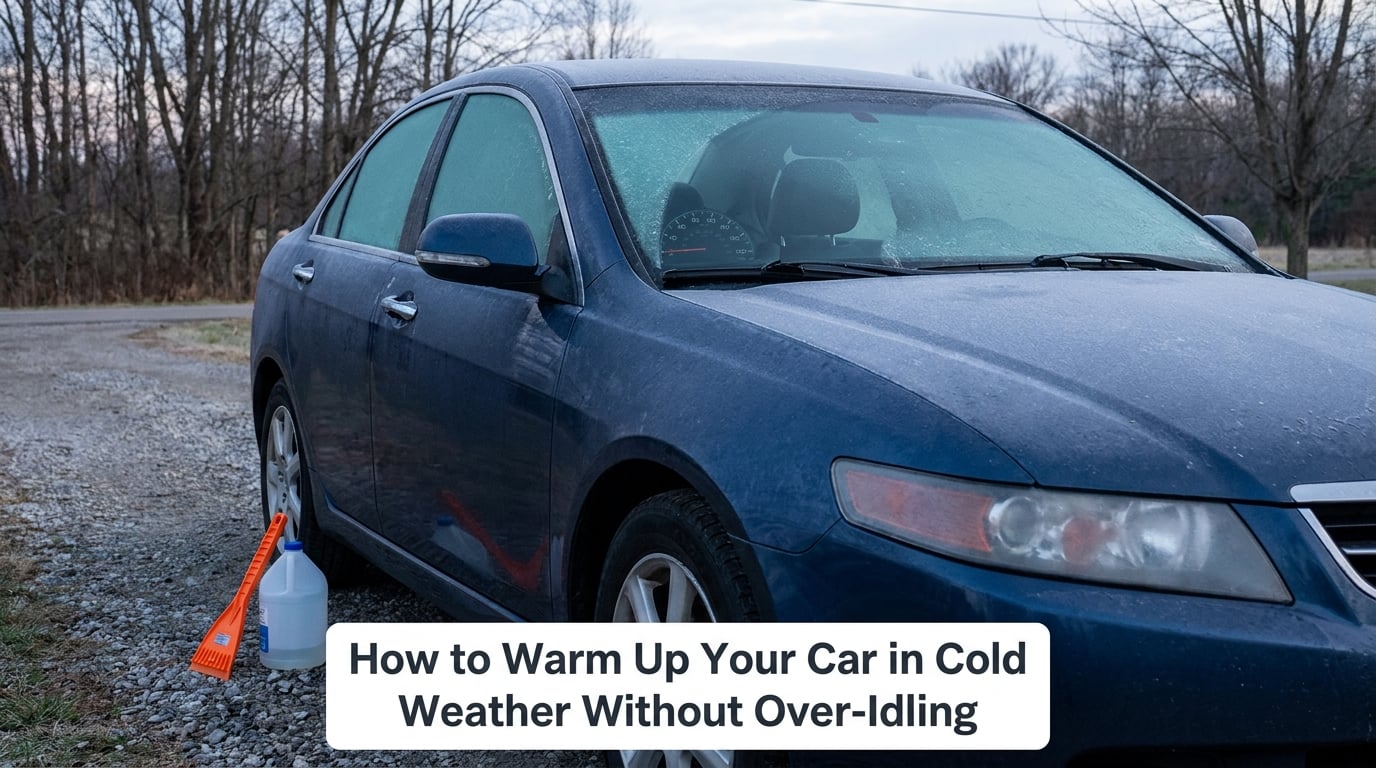
Let a modern engine idle for 30 to 60 seconds, watch the tachometer settle, then drive gently. Cold oil needs roughly 20 to 30 seconds to reach the top of the engine, and gentle driving then makes heat faster than standing still does. Your manual, the outside temperature and the condition of the car all take priority over that number.
Two things are worth separating here. Warming the engine is a short mechanical task. Warming the cabin and clearing frost is a completely different job that takes far longer, and running the engine in the driveway is a poor way to do it. Most of the arguments you will find online mix the two together.
Check Warning Lights and the Engine Before Starting
Walk around the car before you start it. Look under the car for fresh fluid on the pavement, especially overnight rain or snow melt, and check the engine bay for an oil or coolant puddle. A pool of fluid that appears while the car sat still is a reason to not drive it and a reason to call a shop.
Look at all four tires. Check the tread depth and look for cuts or bulges in the sidewalls, then read the pressure cold and compare it with the number on the driver’s door jamb. In deep cold, air contracts and readings commonly fall by several pounds a square inch, which is why a car that steered oddly yesterday feels vague today.
Then sit down and look at the cluster before you press anything. A battery or alternator warning, a red brake or oil pressure light, or a message that stays on after the key is turned deserves attention before a cold drive. A check engine light that blinks is a different level of urgent than one that stays lit, and a manual-transmission gear-position indicator reading neutral is worth a glance if you have an automatic instead.
Start the Engine and Give It a Minute
Put the transmission in park, set the parking brake, and hold the brake pedal while you start a keyless or push-button car so the engine doesn’t crank without the brake applied. With a remote start, the same rule matters, and you should never start a car in a closed garage.
Watch the tachometer. On a cold start most engines idle higher for a few seconds, then settle. That settling is your cue: roughly 30 to 60 seconds from the moment it catches, and a little longer in extreme cold. If the idle hunts, stumbles or stays unusually high, something is wrong and the car should not be driven hard.
Outside temperature changes the target a little:
- Above 32F (0C): let the idle settle for 20 to 30 seconds, clear the glass, then drive gently.
- Between -10F and 32F: give it 30 to 60 seconds, take the first miles easy, and keep an eye on oil pressure and temperature.
- Below -10F: about 60 seconds, and use a block heater when you have one. Plug it in several hours ahead and keep your expectations realistic about defrosting.
- After weeks parked outside: allow longer, and inspect first. Check the oil level, the battery condition and for leaks before that first start.
Owners of Subaru vehicles report a cold-engine mode that limits torque while the engine is below operating temperature, and that the mode clears sooner when the car idles a little before pulling away. Other makes limit engine speed for their own reasons. If your car behaves this way, let it clear rather than fighting it.
Clear Frost and Snow Safely
Scrape first and use the defroster second. A plastic blade on frost, followed by a light pass with the washer fluid, clears a windshield faster than the engine ever will. Drivers on r/drivingUK report the engine warms faster when the heater fan is left on its lowest setting for the first few minutes instead of blasting from the start, which makes sense: airflow is what clears glass, and maximum airflow mostly warms the cabin.
Use lukewarm water if you use water at all. Boiling water on frozen glass will crack or shatter it, because the shock is far larger than the glass can take. The same goes for a metal ice pick or any sharp tool aimed at the ice layer.
Clear more than the windshield. The rear window, both mirrors, the side windows, the roof, the tailgate, every light, the license plate, and the camera lens or sensor cluster above the windshield all have to be visible or functional before you pull away. Leave the area around the tailpipe clear of snow so exhaust has somewhere to go.
Warm the Cabin While Driving Gently
Once the oil pressure is showing and the engine is moving, drive. Low-speed movement generates heat quicker than idling, which is the whole point of skipping the long warm-up. Keep the heater fan low at first, aim airflow at the windshield and the floor, and let the cabin come up while the engine comes up with it.
If your car has heated seats or a heated steering wheel, use them. They warm the driver directly instead of heating several hundred pounds of empty air, and drivers who switch to them first report reaching a comfortable temperature sooner in most conditions. On a car without them, a sunshade on the windshield and a parked-in-the-sun habit cost nothing and cut defrost time noticeably.
Keep the first few minutes undemanding. No full throttle, no hard cornering, no aggressive lane changes on ice, and no standing on the brakes. Automatic transmissions, especially, want gentle, low-ratio inputs while the fluid is cold, and a hard launch is the easiest way to make a warm-up feel like a mistake.
Know When the Car Is Ready to Drive
The gauges tell you. Oil pressure should register within seconds of the start and stay steady. The temperature needle should begin to climb, slowly at first. If a light that appeared at startup is still there once you are moving, the warm-up did not finish normally and you should read the message before driving far.
Also be clear-eyed about what idling does and does not accomplish. It warms the engine, and by extension the cabin heat, but it does very little for the transmission fluid, the brakes or the tires. The rubber on your tires does not care how long the engine idles; it cares about road temperature, which is why severe cold brings the same square-tired feeling drivers complain about every winter.
Owners with very high-mileage vehicles, some Hondas past 300,000 miles, and drivers in Canadian winters down to -35C and beyond, all describe the same pattern: a block heater, a short idle, and easy driving gets the job done. Your manual still has the final word for your specific car, and where the manual and this guide disagree, follow the manual.
Common Mistakes
Most of the bad cold-morning habits come from good intentions applied for too long or in the wrong place.
- Idling 10 to 20 minutes. A leftover from the carburetor era. It burns extra fuel, raises emissions, and on a direct-injection engine running a rich cold mixture can wash fuel into the crankcase and dilute the oil, which is a real problem for anyone doing short winter commutes.
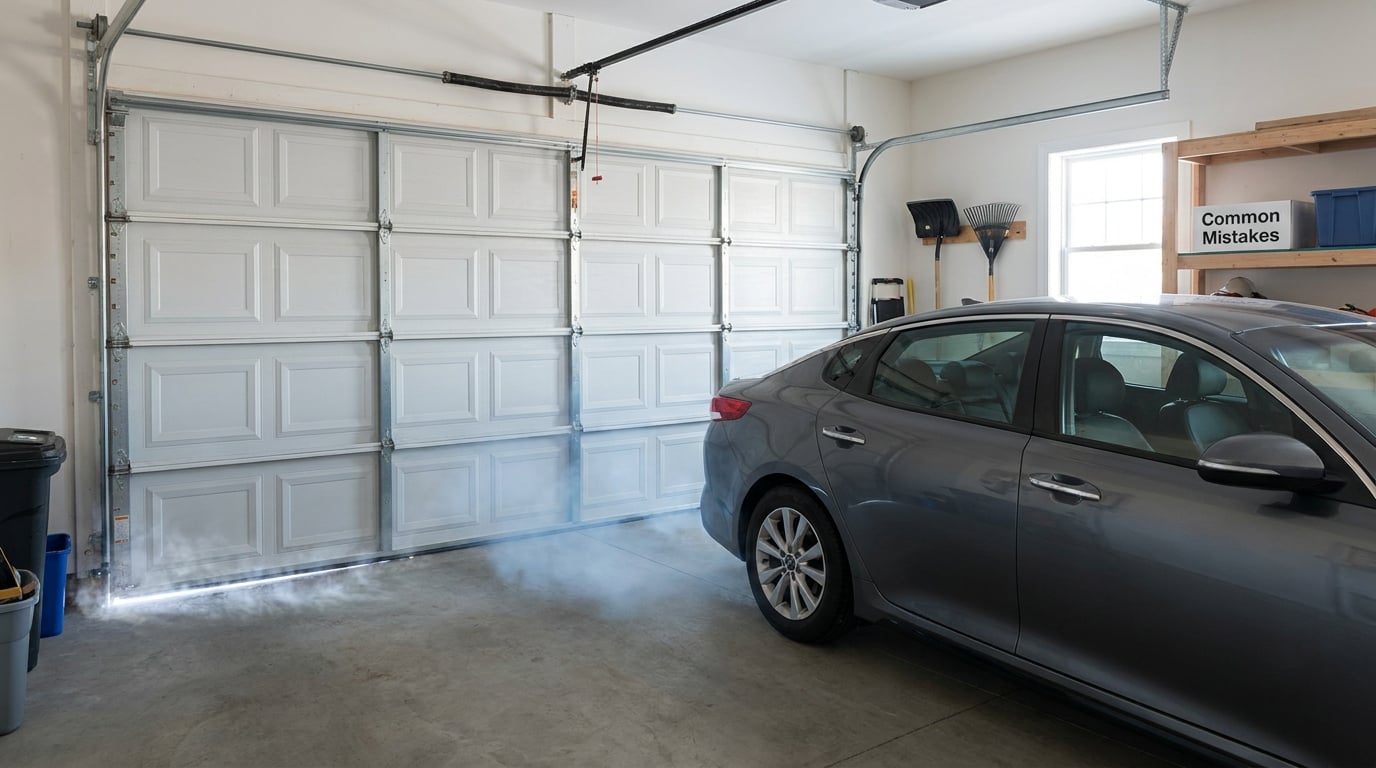
- Warming the car in a closed garage. Carbon monoxide is odorless and lethal, and a garage door does not need to be fully shut for that to matter. Every one of these warm-ups happens outdoors.
- Pouring hot water on a frozen windshield. Tempered glass does not survive the thermal shock. Scraping takes less time anyway.
- Revving the engine to hurry it along. High RPM on a cold engine pushes load through oil that has not fully circulated and increases the load on a battery and starter that are already working hard.
- Leaving the parking brake on an automatic for the whole idle. Holding a cold transmission still while the engine runs is not useful. On a manual, in gear with the clutch in and the brake on is a better neutral.
- Driving hard in the first five minutes. The engine is at its least efficient and the drivetrain is coldest exactly when you are most likely to hit full throttle. Ease off.
- Forgetting the battery entirely. Slow cranking, a heavy starter or a starter that clicks is a battery and charging problem, not a warm-up problem. A hard start that improves within a few minutes is often a failing battery, not a cold engine.
- Trusting the dashboard tire light over a gauge. The light tells you pressure dropped. The gauge tells you by how much and lets you add air while it is still cold, when the reading is accurate.
Frequently Asked Questions
How long should I warm up my car in cold weather?
Thirty to sixty seconds. That is long enough for the engine to catch, for oil pressure to register and for the tachometer to settle, which is what actually matters. Then drive gently for the first few minutes. Above freezing you may need closer to 20 or 30 seconds; in deep cold, give it a minute and consider a block heater. If your owner’s manual specifies otherwise for your model, the manual wins.
Should I use remote start instead of letting my car idle?
Remote start is a fine way to get a 30- to 60-second warm-up out of the way while you are still getting your coat on, provided the car is outside and you can see it. It is a bad reason to leave a car running unattended for 15 minutes. Never start or idle a car in a closed garage, and check local rules, since some areas restrict unattended running vehicles.
How do I warm up a car when it is extremely cold?
In severe cold, plug in a block heater several hours ahead so the block, oil and battery are ready before you turn the key. Then give the idle a minute rather than ten, and expect the cabin and glass to be the slow part. Watch oil pressure closely, keep the first miles very easy, and treat slow cranking as a battery problem to test, not something more idling can fix.
Do electric cars need to be warmed up before driving?
An electric vehicle has no engine to idle and no oil to circulate, so there is no warm-up step in the mechanical sense. What it does need is preconditioning, which conditions the cabin and the battery while the car is plugged in, and that can be started from your phone before you walk out. Heating the cabin with the vehicle not plugged in drains range quickly, so schedule it during charging.
When might running a car for 10 minutes actually be necessary?
There are a few honest cases: clearing heavy frost or snow from every window when scraping is not possible, a long highway trip where you want the cabin warm before passengers get in, or a car whose owner manual explicitly calls for extended idling. Some manuals written for older or specialty vehicles do specify ten minutes or more. Follow the manual for that car and ignore generic advice.
Should you turn the AC on when heating a car?
Only if your climate system is one of those that uses the same compressor for heating and cooling, where the AC button can help the system work in very cold conditions. In an ordinary heating system, the AC does nothing useful for warmth and only adds a small load. If your car behaves noticeably better with the AC on in deep cold, the owner manual will say so.
Conclusion
The short version of how to warm up your car in cold weather: look at the car first, start it outdoors, let the idle settle for 30 to 60 seconds, scrape the glass clear of frost, and drive gently until the temperature needle climbs. That is the whole routine, and it takes less time than most people spend fastening a seatbelt. When the manual for your car says something different, the manual is the one to follow.