
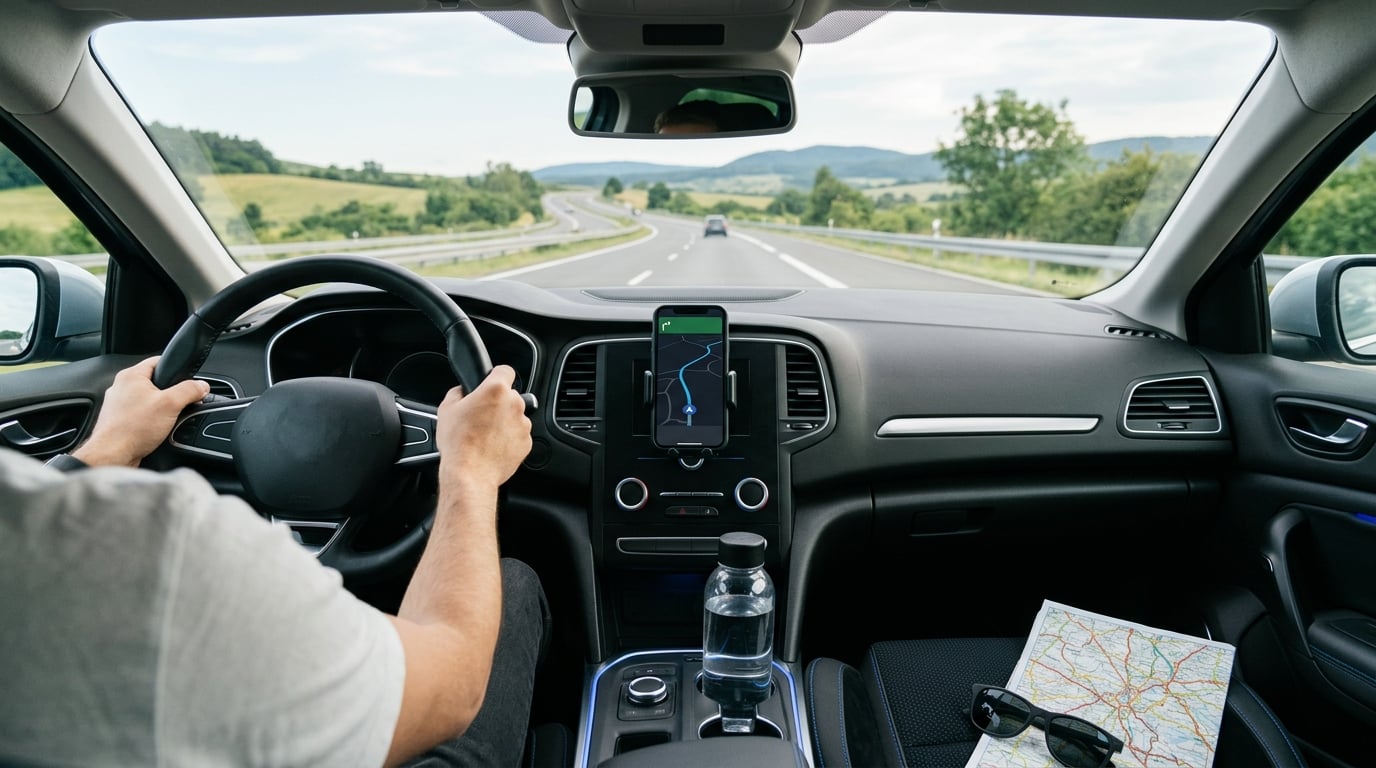
The single best move when you are fighting drowsiness on a long drive is to pull over somewhere safe and take a 15-20 minute nap before you feel you need one. Everything else on this page is prevention, and prevention is what decides whether you make it to the other side of the state. Below is a seven-step routine for the day of the drive, plus the five mistakes that undo it.
Driver fatigue is not a mood, it is a measurable impairment. Your reaction time slows, your attention narrows to the lane in front of you, and at the worst moment you take a microsleep lasting a few seconds without ever knowing it happened. The National Highway Traffic Safety Administration estimates roughly 100,000 crashes a year in the US from drowsy driving alone.
What makes this topic different from most of what you’ll read is that the advice has to survive contact with a boring highway at 2am. Loud music, an open window and a third coffee all feel like they’re helping. They aren’t. The setup work you do before you turn the key is what does the heavy lifting, so let’s start there.
What You Need
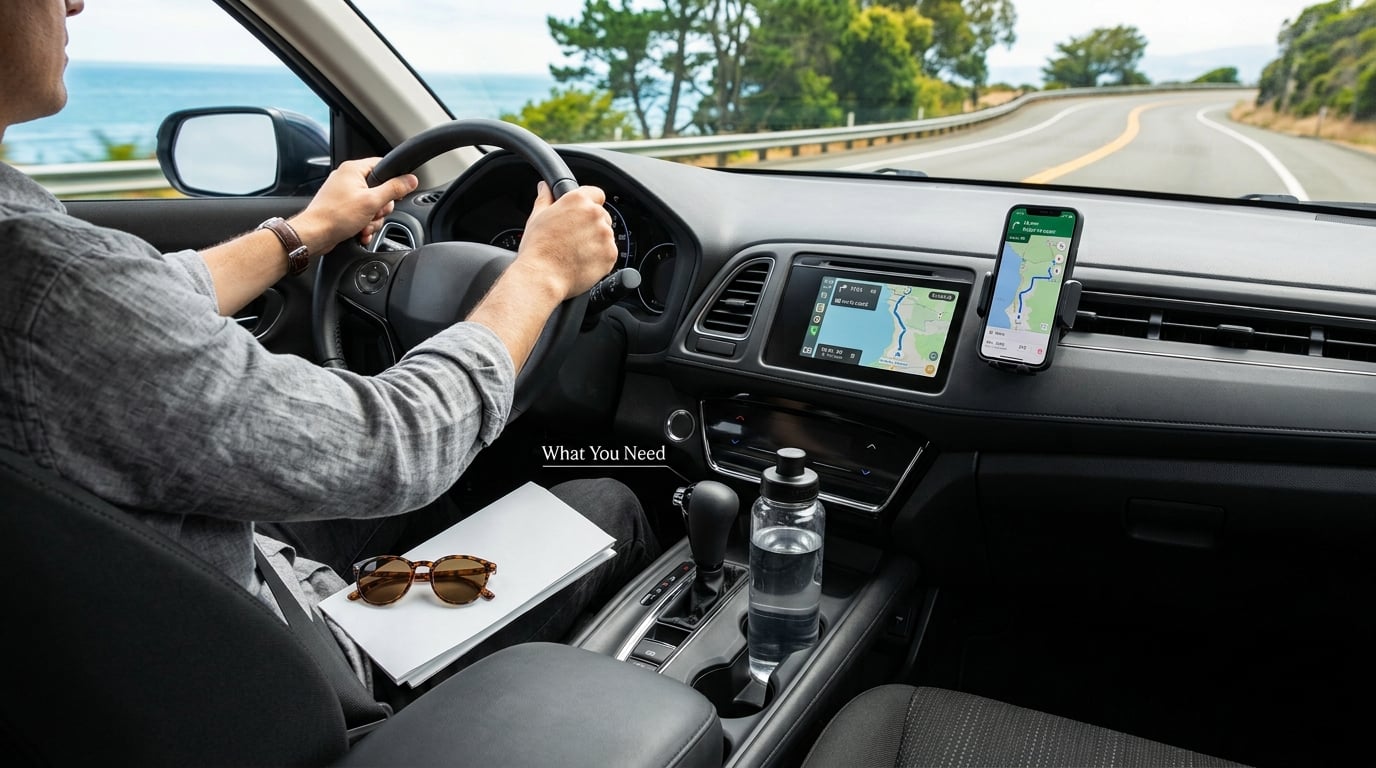
You need very little, and all of it should be within arm’s reach before you leave the driveway. The point is that nothing on this list requires you to fumble, search or stop the car while traffic is moving.
- A water bottle you can actually drink from. Fill a real bottle and put it in the door pocket or cup holder you can reach without leaning. If it’s in the footwell, you won’t drink it.
- A phone mount and a charging cable. Navigation on a mounted screen, audio only through the mount, never in your hand. A dead phone mid-trip means a sudden, distracting scramble.
- A folded paper map or a downloaded offline route. Signals drop in exactly the places where you most need a turn-by-turn prompt.
- Road snacks that need no prep. Nuts, seeds, pretzels, carrot sticks, jerky, granola bars. Small and discrete beats one big meal, which brings its own sleepiness.
- Sunglasses and a light layer. A warm cabin and glare both accelerate fatigue; cool air on your face is one of the few in-car tricks with real evidence behind it.
- A charged power bank if you’re running an audio book or passenger navigation on a phone.
Then spend five minutes on the car itself, because a comfortable driver is a driver who isn’t fighting their body for 500 miles. Check tire pressure while it’s cold, top up washer fluid, and confirm the cabin climate system is actually blowing cool air before the heat of the day settles in. If your tires are due for replacement, our guide to how long tires last in years and miles explains the age and wear thresholds, and an underinflated tire on a hot highway is one more thing your body has to absorb. It’s also worth remembering what your car does when you leave it parked overnight if you’re driving to a stop with a long idle: if you want to review how long brake fluid lasts in the bottle before a long tow or trailer trip, that check belongs on the list too.
Step-by-Step
Step 1: Get Adequate Sleep Before Leaving
Sleep is the whole foundation, and nothing on this list substitutes for it. Aim for 7-8 hours the night before, and if the night before was already bad, treat that as the deciding fact about the trip rather than a detail to push through.
Postpone the departure if you’re running on four hours, if you were up all night on a red-eye, or if you know you’ll be crossing the midnight-to-6am window when you haven’t slept. It is completely reasonable to leave at 7am instead of starting at midnight and arriving wrecked at 6am. You’ll be safer, and you’ll arrive less tired than you left.
Step 2: Plan Breaks Before Fatigue Starts
Schedule a stop every 2 hours or every 100 miles, whichever comes first, and pick the locations before you leave. Fatigue builds quietly; a break you take after you notice it is treating a problem that a planned break would have prevented.
Look at your route and mark exits that have a service area, a fuel stop, or at minimum a wide shoulder and a safe place to get out of the car. Time the stops against your ETA rather than the other way around. If the break schedule makes you arrive two hours late, that’s the correct trade.
Step 3: Set Up the Car for Comfort
Adjust the seat so your back is supported and your knees are slightly bent, then set the lumbar support so your lower back is not arching. Push the seat back far enough that you can fully lock your knees without straining, and bring the steering wheel close enough that your arms stay slightly bent at the shoulders. An hour of physical strain is fatigue you never had to take on.
Set the mirrors before you move, not while merging. Keep the cabin cool, around 65 to 70 degrees F if you can manage it, since a warm, stuffy cabin is a genuine drowsiness factor. Open a window a crack for moving air, and keep the vents aimed so you feel air on your face. If you are used to long motorway runs, your tire condition and cabin setup are worth more attention than you would assume, which is the argument behind checking tire pressure cold every few weeks rather than at a gas station.
Step 4: Hydrate and Eat Sensibly
Dehydration shows up as tiredness before it shows up as thirst. Sip water steadily rather than downing a litre at once, and expect to drink more than you think over several hours, especially in summer or with the cabin heater on. Check your own urine color as a rough guide; pale and clear is the target.
Eat light and high-protein before you leave. A heavy, fatty, high-sugar meal behind the wheel puts digestion to work and diverts blood flow from exactly the systems you need for driving, and that’s most of why people crash hard in the 1pm to 3pm dip. Pack small foods you can eat one-handed without unpacking anything, and avoid a big lunch at a rest area if you still have three hours to go.
Step 5: Keep Your Attention Engaged Safely
Monotony is a fatigue multiplier, so vary your input without adding distraction. A spoken-word audio book, a podcast with a real conversation in it, or a talk-radio format works better than music with long instrumental stretches, because a voice gives your attention something to track.
Check the navigation glanceingly, keep the cabin conversation going if a passenger is awake, and chew sugar-free gum if it helps you. Some long-haul drivers tuck their chin into the headrest as a micro-reset when they feel themselves fading. Avoid anything that takes your eyes or hands off the road: no texting, no scrolling, no holding a phone, and treat voice calling and podcasts you need to interact with as driving tasks.
Step 6: Take a Real Rest Break
A break only counts if you get out of the car. The most consistently recommended tactic on road-trip boards and among long-distance drivers is the same: fresh air, movement, a walk around the parking lot, some shoulder and hip stretches, and water before you go back in.
Fifteen to twenty minutes is the useful window. Longer than about 30 minutes and you can drop into deep sleep, which means waking up in sleep inertia, that heavy groggy 20 to 30 minutes where you feel worse than when you started. Set an alarm, keep the nap short, and don’t let the stop turn into a meal plus a wander plus a phone scroll, which quietly eats an hour and puts you back on the highway at a worse point than before.
Step 7: Know When to Stop Driving
Repeated yawning, heavy eyelids, blinking more than usual, drifting within your lane, rubbing your eyes, irritability with traffic that isn’t really bothering you, missed exits, and a general sense that the road is boring beyond reason are the warning signs. A failure to remember the last few miles is the one that should end the drive immediately, because that gap is the microsleep itself.
When you notice one of these, get to the nearest safe place, turn the vehicle fully off, and either take the 20-minute nap or switch drivers. If there is no co-driver and no safe place to stop, driving is no longer a good option; the correct move is to call someone or book a hotel and finish tomorrow. Long-haul veteran drivers say this without hedging: once you’re tired, stopping is the move.
Common Mistakes
1. Pushing through because you’re nearly there. The last hour is not safer than the first; if anything, arriving fatigue is a common time for lane drift. The fix is to plan the final stop before the final hour, not after it.
2. Treating caffeine as the plan. Coffee helps for roughly the next few hours, and the effect fades sooner than people expect, which is the caffeine crash. A large dose too late in the drive trades a temporary lift for a low patch right where you need to be sharp. One caffeinated drink early in the trip, water as the default, stop there.
3. Skipping food or water because the drive is going well. Feeling fine at hour two is not evidence that you’re fine at hour four. Fix it by keeping water in reach and eating small amounts on schedule rather than waiting for hunger.
4. Making or taking calls while driving. Hands-free is still a divided-attention task, and the conversation itself is a bigger cost than most people expect. If it can’t wait until the next stop, it waits.
5. Leaving the route unplanned. A missed exit at speed is an adrenaline spike, and adrenaline is a fine short-term alertness tool with a very bad bill later. Set the route, choose the breaks, and then stop improvising.
Two more folk tactics worth naming, since they get traded constantly: rolling the window down or blasting cold air helps some people feel more awake for a few minutes, but it does not touch the underlying fatigue, and loud music has the same problem. Long stretches of loud audio actually raise fatigue rather than lowering it. Cruise control is a similar question: it is fine on a straight, clear road, but some drivers find that removing that small steering task makes the monotony worse, so notice your own reaction to it rather than assuming it’s a help.
Frequently Asked Questions
How do I stop microsleeping while driving?
You cannot reliably stop a microsleep by willpower; you can only prevent one. Schedule a stop every 2 hours or 100 miles, keep water within reach, keep the cabin cool, and pull over the moment you notice yawning, heavy eyelids, lane drift or a gap in your memory. If you already missed a sign, treat that as the signal to stop driving now rather than after the next exit.
What is the best way to overcome drowsiness while driving?
Pull over somewhere safe and take a 15-20 minute nap. That is the single most effective move, and it works because it restores attention rather than masking it. Set an alarm, stay out of deep sleep, and expect some grogginess for a few minutes after. If you cannot stop, the next best options are water, a short walk, moving air on your face, and a co-driver taking the wheel.
How often should I stop on a long drive?
Every 2 hours or every 100 miles, whichever comes first, even if you feel fine. Fatigue accumulates well before you notice it, so the useful breaks are the ones you take on schedule rather than the ones you take after your attention starts to slide. Make the stop a real one: get out, walk, stretch, drink water, and allow 15-20 minutes rather than a two-minute bathroom stop.
Is driving while sleepy treated like a DUI?
In many jurisdictions, driving while impaired by drowsiness is treated the same as driving under the influence, and an officer can use lane drift, missed exits and other evidence of impairment to act on it. Penalties vary by state and country, so check what applies where you are driving. Practically, the bigger risk is the crash itself, and the only defense is stopping before you are impaired.
Can you nap in your car at a highway rest stop?
Yes, if you are in a designated rest area, parking lot or safe pull-off, and a short nap there is far better than fighting on through. Choose a lit, visible spot, lock the car, recline the seat rather than curling up, and set an alarm for 20 minutes. Never stop on a shoulder, a ramp or a curve, and keep the nap under about half an hour so you avoid deep-sleep grogginess.
What do truckers use to stay awake?
Professional drivers mostly use regulation and routine rather than tricks: a hard stop every few hours under hours-of-service rules, an in-cab sleeper or bunk, and 15-20 minute power naps in parking lots. Water, light food, a cool cab, and a co-driver conversation are the standard supporting tactics. Loud music and energy drinks get used, but shift workers report the same caffeine crash everyone else does.
Conclusion
Sleep properly the night before, get the route and the break locations picked in advance, keep water where you can reach it, and take the 2-hour stop whether or not you feel you need it. When warning signs do show up, the 15-20 minute nap in a safe place is the move, and if there is no safe place to stop, the honest answer is that you should not be driving. Knowing how to stay alert on long drives is mostly knowing in advance when you will stop, before your attention is too far gone to decide well.
Keep in mind that this is general information rather than medical advice. If you take sedating medication, have a sleep condition, or feel unusually tired while driving regularly, talk to your doctor or pharmacist before a long trip.