
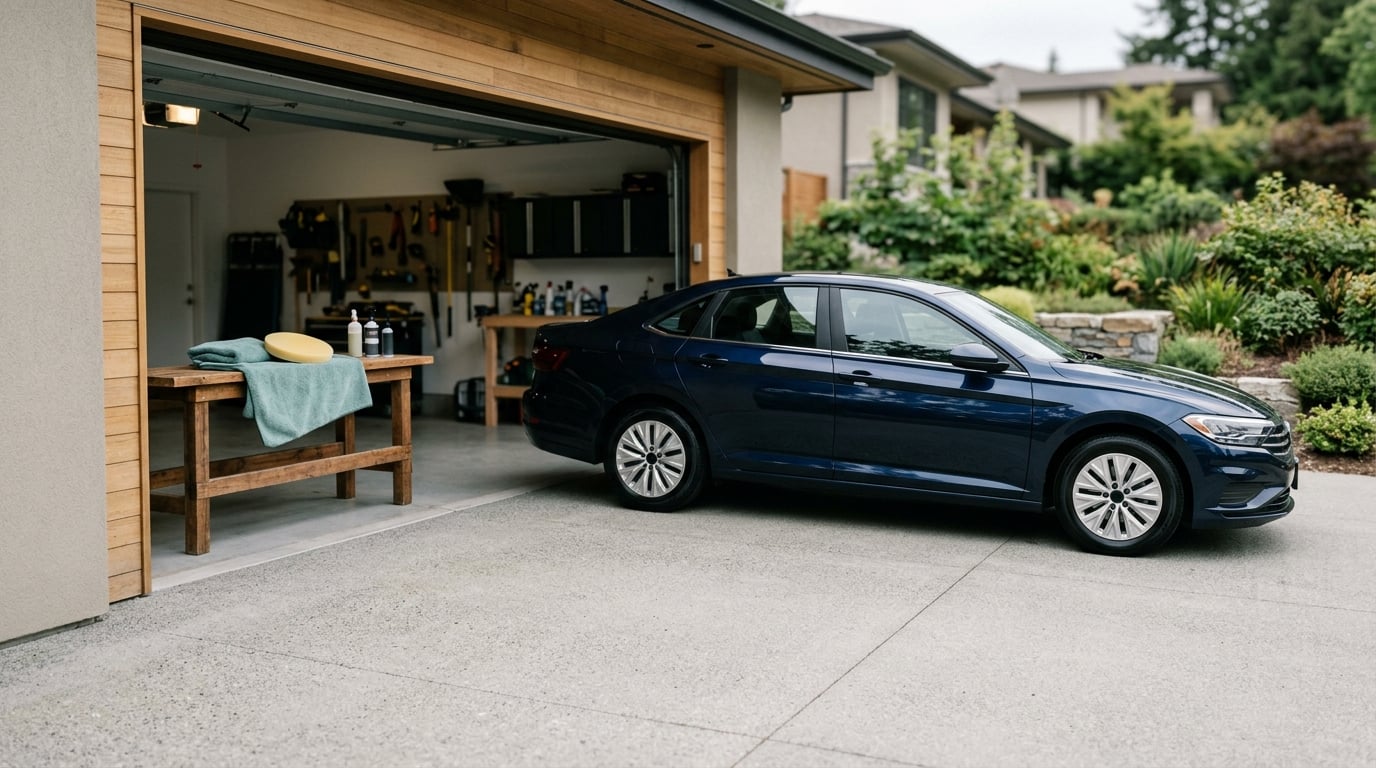
If you’re wondering how often should you wax your car, the honest answer is two to four times a year for a car that lives outside, or roughly every three to six months. A garage-kept daily driver can stretch that to once or twice a year. The calendar is a starting point, not the rule — the paint itself tells you when it is ready again.
Most of the confusion comes from advice that skips the conditions. Somebody waxing a white pickup in a salt-heavy city every six weeks and somebody with a covered sports car are not running the same schedule. Get the variables right and the interval takes care of itself.
Table of Contents
- How Often Should You Wax Your Car? Quick Guide
- What Does Waxing a Car Actually Do?
- How Often Should You Wax Your Car?
- What Changes the Right Waxing Schedule?
- Which Type of Car Wax Should You Use?
- How Can You Tell When Your Car Needs Wax?
- How Do You Wax a Car Without Ruining the Paint?
- Common Waxing Mistakes and How to Avoid Them
- Frequently Asked Questions
- Conclusion: Choose a Schedule You Can Maintain
How Often Should You Wax Your Car? Quick Guide
For a regularly driven car parked outside in sun and rain, wax every three to six months — two to 4 applications a year. Garage-kept cars can go six to twelve months between coats. A car that sits through a northern winter under road salt needs attention before the first freeze and again in spring.
Here is the schedule that matches how your car actually lives:
| Vehicle situation | Recommended interval | Times per year | Best time to apply |
|---|---|---|---|
| Daily driver parked outside | Every 3 months | 4 | Spring before summer sun, and fall before winter salt |
| Daily driver in a garage | Every 6 months | 2 | Spring and fall |
| Car parked on the street overnight | Every 2 to 3 months | 3 to 4 | Before summer and before winter |
| Coastal or road-salt climate | Every 6 to 8 weeks | 4 to 6 | Late fall and early spring, plus mid-winter after a salt wash |
| Older vehicle with faded, oxidized paint | Every 2 to 3 months | 4 | After a polish restores the shine, then on a short cycle |
| Weekend or collector car | Twice a year | 2 | Early spring and early fall, stored indoors between |
| Truck or SUV used for work and highway miles | Every 3 months | 4 | Any mild, shaded day in spring, summer and fall |
| Ceramic-coated car | Every 6 to 12 months | 1 to 2 | Before the coating’s gloss fades, topped with a spray sealant between |
Spray wax and quick detailers count as maintenance toppers, not replacements for a full wax job. Using one after every wash is a reasonable habit, but it does not remove the need for a real coat a few times a year.
What Does Waxing a Car Actually Do?
Modern cars are finished with a clear coat — a transparent layer over the color that takes the hits from sun, weather and road debris. Wax goes on top of that as a sacrificial barrier. It is designed to be used up and removed, not to last forever.
What wax changes is how water behaves on the surface. Wax lowers the surface energy of the clear coat, so water pulls into tight beads and rolls off instead of lying flat and drying into spots. That is the hydrophobic effect you can see with your own eyes, and it is the most honest sign that protection is still there.
When protection fails, water does something else entirely. It sheets — spreading into a wide, flat film across the panel — and then evaporates in place, which is when you get a car covered in round water spots after rain.
Beyond gloss and beading, wax slows oxidation, gives bird droppings, sap and road salt something other than bare clear coat to sit on, and makes the next wash easier because grime has less to grab. What it does not do is stop scratches. Wax fills microscopic defects optically; it does not repair a clear coat that has been sanded by a dirty mitt or an automatic car wash brush.
Paint sealant is a synthetic polymer cousin of wax. It lasts longer, often four to six months, and beads harder, but it gives you less of that warm, deep carnauba glow. A ceramic coating is a different animal again: a liquid polymer that cures into a hard glass-like layer, typically rated for years before it needs recoating, and applied more carefully than wax.
How Often Should You Wax Your Car?
Two to four times a year is the practical default for a car that is driven regularly and parked outside. Every six to twelve months is enough for a garage-kept car that gets a careful hand wash and a run through a covered garage each night. Anything harsher than that — coastal air, road salt, constant highway miles, an automatic car wash every week — pushes you toward the short end.
Waxing more often than that is not automatically better. Each application has to be done properly, and a badly done coat can haze, streak or trap moisture. Layering product after product without stripping the old layer also just builds an uneven film that reflects light badly. There is a reason most enthusiasts settle on a seasonal rhythm: it is easy to remember and the results stay consistent.
The other reason not to over-wax is the calendar trap. Wax does not expire on a schedule, it wears out based on exposure and how the car is washed. A light spray topper after each wash, combined with a real wax job when the beading fades, gets you better protection than a full wax every four weeks out of guilt.
How Often Should You Wax Your Car by Condition?
Here is how the interval breaks down by the condition of the car rather than just the calendar.
- Daily-driven cars parked outside: wax every three months, so four times a year. Sun and rain hit the finish constantly, and the wax is gone sooner than the schedule suggests.
- Seasonal cars driven in fair weather: twice a year is plenty — once when the good weather starts and once before it ends.
- Garage-kept cars: every six to twelve months. Even indoor cars collect dust, pollen and moisture in the paint, and they need the layer when spring comes.
- Lightly driven cars: the finish suffers most from sitting, not from mileage. Six months keeps the paint sealed, and a good hand wash still matters more than the wax.
- Show cars and exotics: twice a year in mild weather, hand washed and clayed, with no automatic washes and no waxing in direct heat.
- Cars stored outdoors in snow country: wax before the first freezing night, wash off salt in early spring, and reapply once the paint is fully dry.
- Cars with a ceramic coating: do not treat it like wax. Wash with a pH-neutral shampoo, avoid automatic car washes, and use a spray sealant every few washes to keep the coating’s gloss and beading alive.
- Cars with oxidized or faded paint: waxing alone will not bring the shine back. Polish or a paint correction has to come first, and then the wax goes on a short cycle until the finish stabilizes.
What Changes the Right Waxing Schedule?
Climate is the biggest variable. Road salt and coastal air eat through wax quickly, and a car that sits in direct sun all day loses its protection faster than one in a shaded driveway. Freeze-thaw cycles matter too, because water that gets into the finish and freezes can cause damage wax would otherwise keep out.
How you wash matters just as much. Automatic car washes with spinning brushes strip protection far faster than a hand wash, and their detergent is often harsh enough to matter. Two-bucket washing with a pH-neutral shampoo, a clean microfiber mitt, and a drying aid keeps the layer intact far longer. This is the cheapest way to extend every interval on this list.
Paint colour changes the optics more than the chemistry. Black and dark blue show swirl marks and dull patches faster, so people re-wax sooner. White and light silver hide haze better but pick up road grime and brake dust that can etch if they sit.
Vehicle age raises the stakes. A car with ten years of sun exposure has a thinner, more oxidized clear coat that holds less protection. On a car that has been outside its whole life, plan on the shorter end of the range and think in terms of preserving rather than restoring. If a car sits unused for long stretches, oil changes and the rest of the underbody routine matter too — see how often to change oil in a car that sits.
Storage and use patterns finish the picture. A car that sits for weeks between drives collects fallout, bird droppings and tree sap, and those are some of the most damaging things that touch paint. The more the car is exposed while parked, the more often the layer needs replacing.
Finally, the product sets the clock. A traditional carnauba wax can be gone in six to eight weeks in full sun. A synthetic sealant often holds four to six months, and a hybrid wax-sealant sits between the two. A spray wax lasts days to a couple of weeks, which makes it a topper, not a base coat.
Which Type of Car Wax Should You Use?
Match the product to how much effort you actually want to put in. The type you will enjoy using on a warm Sunday is a better choice than the one with the longest label.
| Type | Typical durability | Best for | Watch out for |
|---|---|---|---|
| Carnauba wax (traditional) | 4 to 8 weeks outdoors | Owners who want the deepest, warmest gloss and enjoy a weekend routine | Wears off fast in sun and heat; needs frequent reapplication |
| Synthetic sealant | 4 to 6 months | Daily drivers, harsh climates, anyone who wants to set it and forget it | Less depth of gloss than carnauba |
| Hybrid wax-sealant | 2 to 4 months | Most people, honestly — a middle ground between shine and durability | None serious, which is why it is the popular pick |
| Spray wax | Days to 2 weeks | Touch-ups after washes and as a topper over a sealant base | Builds up into a hazy film if layered for months without a full wax |
| Ceramic spray sealant | A few months with regular use | Beading and gloss on a coated or freshly waxed car | Can strip a light wax layer if used as the only protection |
| Professional ceramic coating | Years, with maintenance | Owners who want the longest protection and can accept a higher cost and prep work | Application needs a controlled environment and careful prep |
A spray sealant works well as a maintenance product on top of a real wax or sealant base layer. That combination is what detailers recommend: one solid coat in spring, another in fall, and a quick topper every few washes in between.
How Can You Tell When Your Car Needs Wax?
Run the water test first, because it is the most reliable. Throw water on a clean panel — a hose or a rinsed bottle both work. Tight, round beads that roll off mean protection is intact. If the water spreads into a flat film and sits there, the wax has worn away.
The second test is touch. Slide a clean finger across a washed panel. Fresh wax leaves a smooth, slightly slick feeling; bare clear coat feels rougher and you can often feel the texture of road film and grime that is bonded to it.
Look at the finish in indirect light, ideally in shade or under a garage door with daylight raking across the panel. Dull patches, uneven shine, hazy areas around the handles and mirror housings, and a general loss of that wet look all point to worn protection rather than dirt.
Ask whether the car is simply dirty. A dirty car looks dull no matter what is underneath. If a hand wash restores the shine, the wax is probably fine and it was washing frequency, not product failure.
Know the difference between wax failure and clear coat damage. Failing wax makes paint dull, hard to clean and slow to shed water. Failing clear coat looks chalky, faded and uneven, often with a bluish or hazy cast on a dark car, and no amount of wax will fix it. Swirl marks are fine scratches in the top of the clear coat, not through it, and they show up under a light source as a network of thin lines. If you see that, waxing is not going to solve it — a polish is the next step.
How Do You Wax a Car Without Ruining the Paint?
Wash and dry the car completely first. Wax over dust, salt or a damp panel traps the contamination and you will be buffing scratches into the finish. Two-bucket washing, a clean mitt and a pH-neutral shampoo do most of the work.
Decontaminate if the paint feels rough after washing. A clay bar or clay mitt with lubrication picks off bonded fallout that a wash leaves behind. Skip this on a car that has just been painted or has a coating in bad condition.
Work in shade on a surface that is cool to the touch. Direct sun and hot panels are the number one cause of hazy, streaked, hard-to-remove wax. Open the doors and pop the hood and trunk so you are not waxing over hidden edges that then show up later.
Test the product on a small hidden section first, following the instructions on the label. Different finishes and plastics behave differently, and knowing how long your specific product needs to sit before removal saves you a lot of buffing.
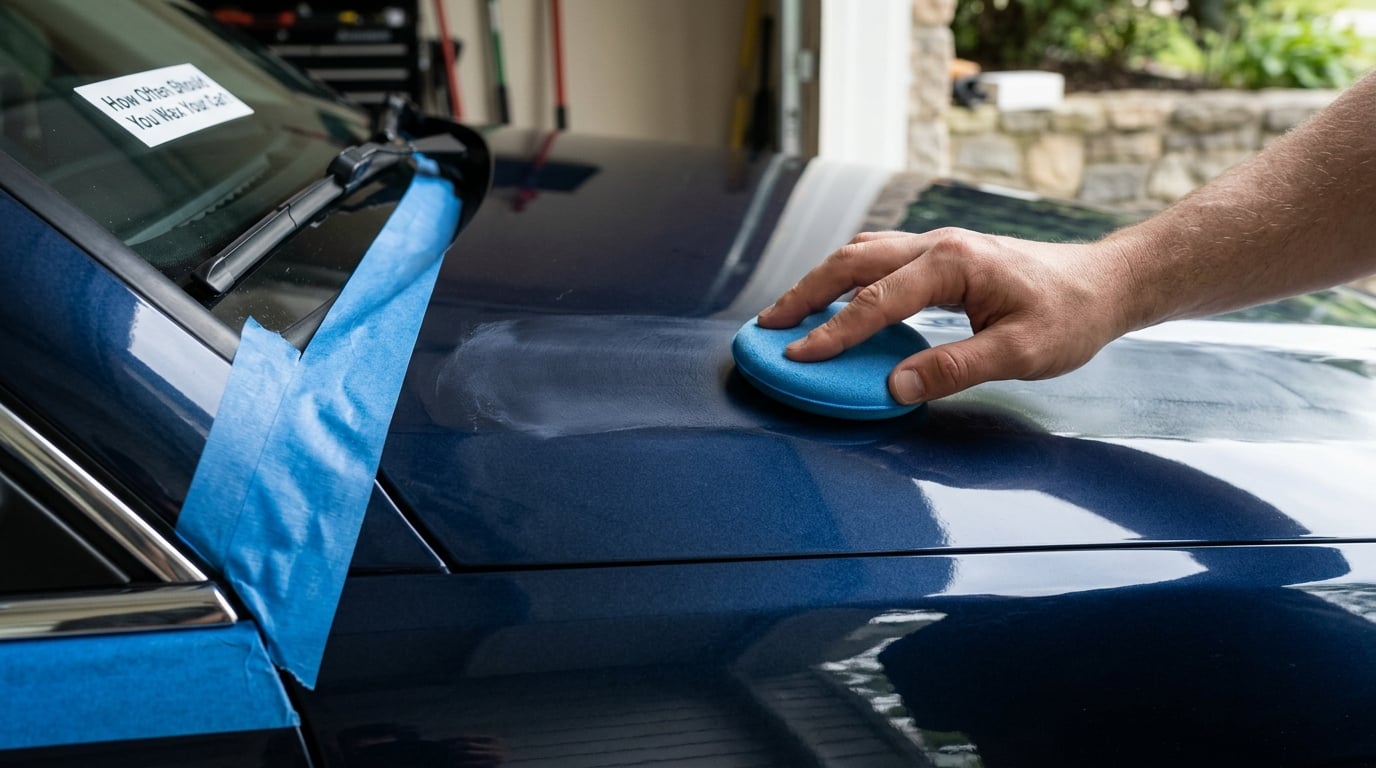
Apply a thin layer one panel at a time. A little goes a long way, and excess product is what creates haze. Use a clean foam applicator for the first pass, a second applicator to spread it evenly, then remove the residue with clean microfiber towels before it cures hard.
Keep wax off the plastic trim, glass, tires and rubber seals, and off any surface the manufacturer excludes. Masking trim takes a minute and saves a permanently stained panel.
Let the car sit out of the sun for a few hours after you finish, ideally overnight, before it gets wet. If you get to the end and see haze, do not panic — a warm damp microfiber towel and a second dry pass will usually pull it out.
Common Waxing Mistakes and How to Avoid Them
Waxing a dirty or wet car. This is the big one. Everything you rub into the paint stays there, and you end up sealing grit against the clear coat. Dry it properly first, every time.
Using too much product. Extra wax does not add protection, it just makes removal harder. A thin, even layer cures more consistently and takes less buffing.
Leaving the haze too long. Wax that hardens past its removal window turns into a film you will chase with aggressive products. Check a small section at the time the label specifies, not the whole car.
Waxing in direct heat. Hot panels flash the solvents off before you can spread the product, and the result is streaking you cannot fix without redoing the panel.
Getting wax on plastic, glass and rubber. Permanent trim staining is a permanent problem. Mask it or wipe it back while it is still wet.
Washing with a dirty or abrasive mitt. A grit-caked mitt is a sanding pad. Rinse and flip the mitt face for every panel, and change to a clean one before you start.
Confusing swirl marks with clear-coat failure. Fine scratches that catch light need a polish. Faded, chalky oxidation needs paint correction. Wax alone fixes neither, though it makes both less obvious for a while.
Running an automatic car wash through a fresh wax job. Brushes and harsh detergent strip the layer long before the schedule says it should be gone. If that is your only realistic wash option, plan on the short end of the interval and a spray sealant between trips.
Frequently Asked Questions
How often should you wax a car that is driven every day?
A daily-driven car parked outside needs waxing about every three months, so four times a year. A garage-kept daily driver can go six to twelve months between coats. Frequent highway driving and automatic car washes strip protection faster, so check the water beading test every few weeks and wax as soon as the water stops forming tight beads on the panel.
Is waxing a car every month too often?
For most cars, yes. Once every two to four weeks is more product than the finish needs, and repeated applications without stripping the old layer can leave a hazy, uneven film that actually dulls the shine. Use a spray wax or quick sealant after washes for maintenance, then do a proper wax or sealant coat two to four times a year. If you love doing it monthly, nothing will break — it just will not last any longer.
Do modern cars still need wax if they have ceramic coating?
No. A ceramic coating is a separate, much longer-lasting layer, and waxing over it can reduce its gloss and beading. What a coated car does need is maintenance: a pH-neutral shampoo, hand washing, no automatic car washes, and a spray sealant every few washes to keep the coating performing. Wash and wax the car properly before it is ever coated, and check with the coating manufacturer before using waxes on the surface.
Can I use a spray wax instead of applying traditional wax?
You can, with one caveat: spray wax works as a maintenance topper, not a base coat. On its own it lasts days to a couple of weeks, and using it as the only protection means very frequent reapplication. The practical approach most detailers recommend is a real carnauba wax or synthetic sealant underneath, two to four times a year, with a spray wax after each wash to keep the finish fresh between full applications.
What happens if car wax is left on too long?
Wax that cures past the removal window hardens into a haze that will not buff off with a dry towel. You need to re-wash the panel and use a warm damp microfiber towel, or a dedicated product made for removing hardened wax residue. That extra work is the main reason to follow the label’s timing rather than letting a car sit overnight in the sun. It does not damage the clear coat, but it is tedious to fix.
Conclusion: Choose a Schedule You Can Maintain
For a car that is driven regularly and parked outside, waxing two to four times a year is the sensible default. Stretch it to every six or twelve months if the car lives in a garage, and shorten it to every six to eight weeks if it sees road salt, coastal air or a weekly automatic wash.
Let the paint adjust that schedule rather than fighting it. Throw water on the panel, run a finger across it, and look at the finish in shade. When the beading flattens out and the surface feels rough, that is your cue.
And keep the order straight: washing, drying and inspecting the finish come first. A careful hand wash with clean tools does more for how often should you wax your car than any product on the shelf, because it decides how long the last coat survives in the first place.