
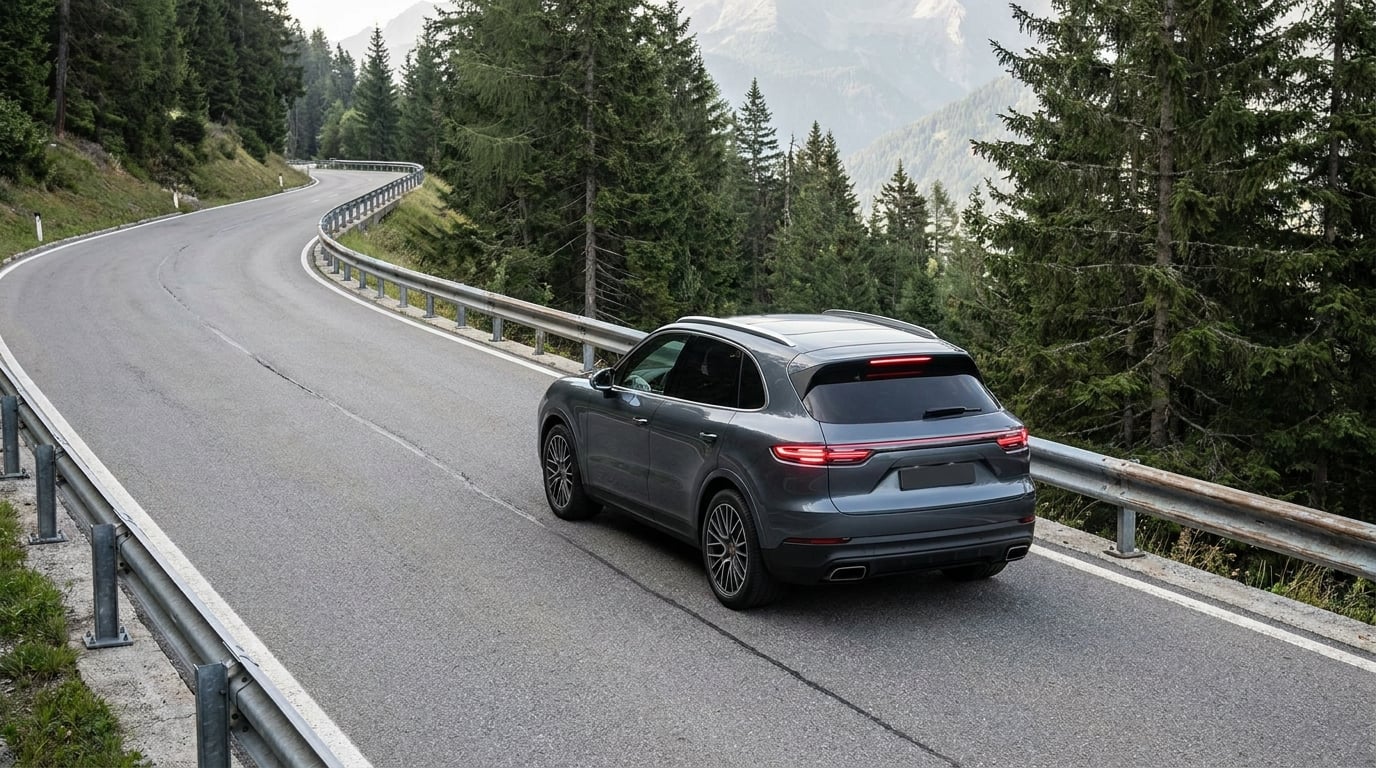
To use engine braking on a steep descent, pick a low gear before the hill starts, lift off the accelerator completely, and let compression slow the car while you add short, light taps of the brake to hold your planned speed. Most drivers get this wrong in the same way: they sit on the brake pedal for the whole descent, cook the pads, and arrive at the bottom with no stopping power left. Learning the technique takes about ten minutes of reading and one practice run on a familiar road.
Table of Contents
- What You Need for Engine Braking
- Step-by-Step: How to Use Engine Braking on a Steep Descent
- Step 1: Inspect the Car and Plan the Descent
- Step 2: Choose a Low Gear Before the Grade
- Step 3: Release the Accelerator and Let the Engine Slow the Car
- Step 4: Hold a Controlled Speed With Light Brake Inputs
- Step 5: Adjust the Gear for Curves and Changing Grades
- Step 6: Use a Controlled Descent on Automatic and CVT Vehicles
- Step 7: Finish the Descent Safely
- Common Mistakes to Avoid
- Frequently Asked Questions
- Is engine braking safe on a steep mountain descent?
- What gear should I use for engine braking downhill in a manual car?
- Can I use engine braking in the rain, snow, or ice?
- How is engine braking different from regenerative braking?
- Should I stay on the brakes for the entire descent?
- What should I do if my brakes fade while descending?
- Conclusion
What You Need for Engine Braking
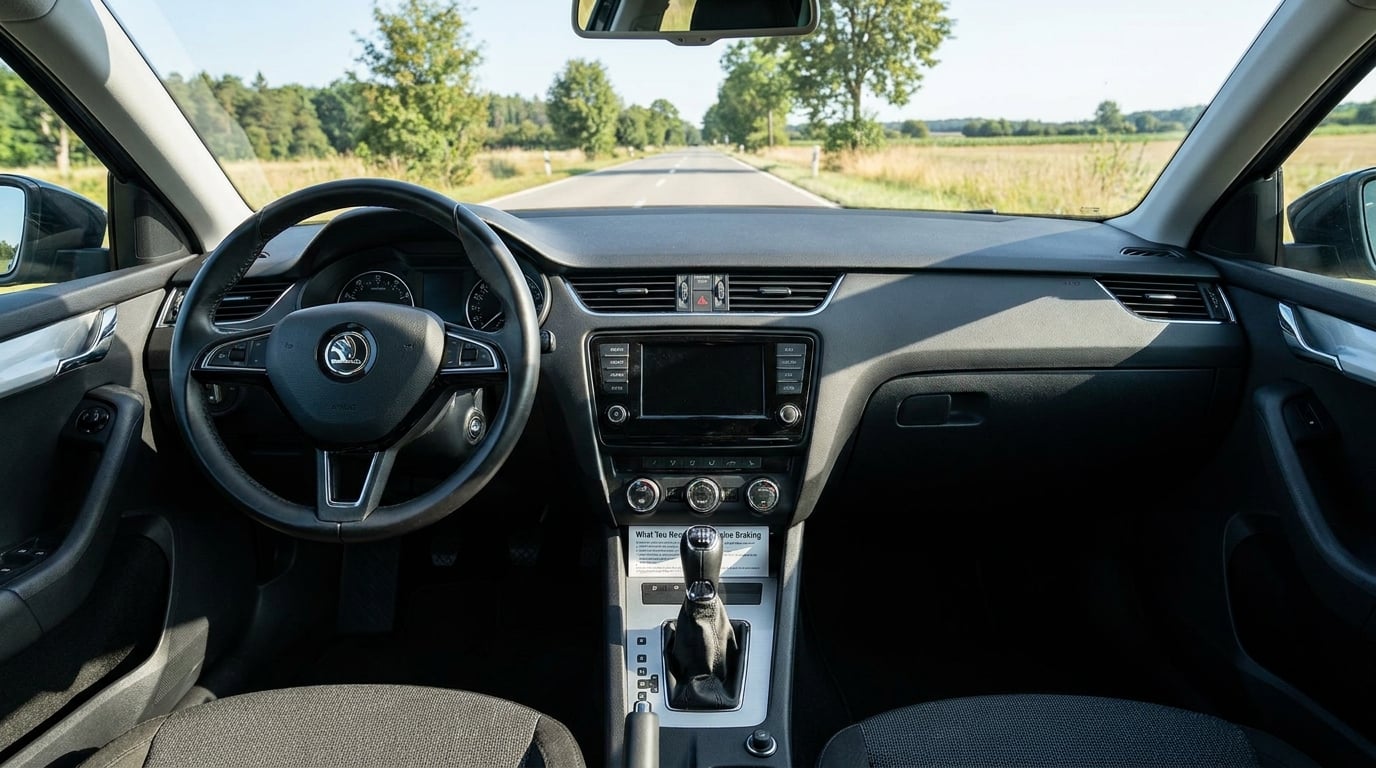
You need a roadworthy car, its owner’s manual, and a downhill route you already know. No special tool is required. Engine braking uses the engine and transmission you already have.
A roadworthy car means the brakes bite when you press the pedal, the tires have usable tread and correct pressure, and no warning light is lit on the dash. If the brake pedal feels spongy, sinks toward the floor, or the car pulls to one side under light braking, do not take that car down a mountain grade. Get it assessed first.
Find the owner’s manual and look up your transmission type and any low-range or hill descent mode. The wording differs a lot between manufacturers: some automatics label the low gear L, others 2, others 3, and some only expose it through paddle shifters or a drive mode selector. Guessing at that label mid-descent is exactly the wrong time.
The third requirement is a clear route. Know where the pull-offs are, where the grades steepen, and where the road levels out. A descent you have never driven lets you learn the technique and the brakes at the same time, which is a bad combination.
One thing to be clear about before we start: engine braking supplements the service brakes, it never replaces them. You still need full braking authority to slow for a curve, a pedestrian, or an animal. The engine is doing the steady, boring work of holding speed so your brakes stay cool for the moments that actually need them.
Step-by-Step: How to Use Engine Braking on a Steep Descent
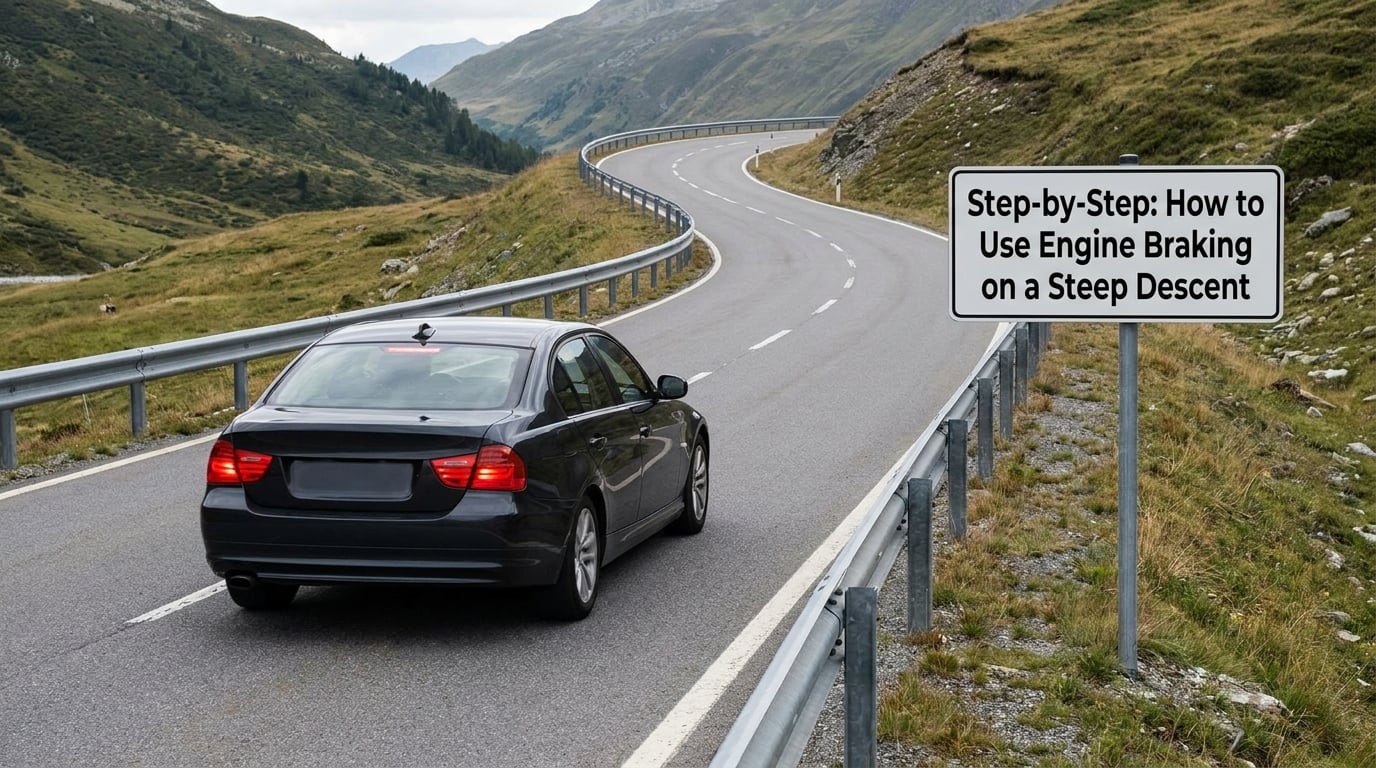
Step 1: Inspect the Car and Plan the Descent
Check the car before you commit to the grade. Test the brakes lightly at low speed, confirm tire pressure is right, and make sure the transmission shifts cleanly through each gear without hesitation or flare.
Look at the oil too, not just the level. Sludge or a milky, foamy appearance on the dipstick or filler cap points to a bigger problem, and it is worth understanding what that means before you rely on high engine rpm to control speed. Our guide to what milky engine oil means walks through the usual causes.
Half a tank or more is a reasonable starting point for a long descent, mostly because you do not want the fuel pump working hard if you end up sitting with the engine running at a roadside pull-off. Note where the pull-offs and brake bays are, and decide on your target speed before you enter the steepest section. A vehicle with a brake, tire, or warning-light problem should be driven to a shop, not down a mountain.
Step 2: Choose a Low Gear Before the Grade
Select the gear before the descent begins, not halfway down it. On a manual, most drivers start in second gear and drop to first only if the grade proves steeper than expected. Second is a reasonable starting point when your speed, engine rpm, and the road conditions make it sensible.
Choose the gear that lets the engine pull at a comfortable rpm without the car surging or bogging. For a typical car cruising at highway speed, dropping two gears roughly doubles engine speed, so if you were sitting at 2000 rpm in fifth, you land near 4000 rpm in third. On a steep grade, third may be plenty.
On an automatic, choose the lower of the two lower-drive modes rather than drive itself. Many modern automatics use grade logic that will downshift on their own, but relying on that means the transmission decides when to slow the car, and you would rather control it. Selecting the lower mode while the car is stopped is safer on many vehicles because the shift happens without road load on the drivetrain.
Step 3: Release the Accelerator and Let the Engine Slow the Car
Lift your foot off the gas completely and keep it off. With the throttle closed, the drive wheels force the pistons to pump against a nearly closed intake, and the compression in the cylinders turns that resistance into a steady pull on the drivetrain.
The car will slow harder the lower you are. Expect the engine to sound louder and rougher than it does under power, and expect the revs to climb as speed drops. That is normal and it is the mechanism working.
Do not pick a gear so low that the vehicle bogs, stalls, or starts to bog and lurch. A rough, chattering engine at very low rpm means you went one gear too far, and an abrupt stall mid-descent, especially on a curve, is its own hazard. If the engine is laboring, upshift one gear.
Step 4: Hold a Controlled Speed With Light Brake Inputs
Use short, gentle brake applications when engine braking alone will not hold your planned speed. Press, feel the car settle to the target, then release completely and let the engine hold it there. That pulse-and-release cycle is the whole technique.
Holding the brake pedal down continuously for a long descent is what produces fade. Friction braking turns kinetic energy into heat, the pads and rotors climb in temperature, brake fluid can start to boil and lose pressure, and pedal travel grows longer as you go. Pads can glaze at the same time, which is a permanent change to the friction material rather than a temporary one.
Watch for the early warnings of overheating. A sharp hot smell, a brake pedal that feels softer or takes more travel, or a rotor that glows dull red at night are all signals to stop, park, and let things cool. If the pedal goes soft, that is vapor lock in the fluid, and continued braking gives you progressively less.
Step 5: Adjust the Gear for Curves and Changing Grades
Downshift before a sharp curve or a steeper section rather than during it. Shifting while the car is loaded up on a grade can unsettle the vehicle, and on a wet or icy road it can disturb traction.
Avoid shifting repeatedly during the descent. Every unnecessary shift is another chance to upset the car’s stability, and hunting between gears while holding a downhill speed makes the job harder than it needs to be. Pick a gear for the grade ahead and stay in it until the road changes.
On rpm, there is no single number that is right for every vehicle. Engine type, gearing, vehicle weight, and road conditions all change what is safe, and most cars are perfectly happy for short periods in the 2000 to 3000 rpm range on a descent. Treat that as a rough comfort zone rather than a limit, and let your owner’s manual and your car’s rev limiter have the final say. If you tow, weight changes the picture entirely and a gear that was fine empty may be too high loaded.
Step 6: Use a Controlled Descent on Automatic and CVT Vehicles
Follow your owner’s manual for the specific selector. Where a low-range position exists, put the transmission there before the grade. Where drive modes exist, choose the one your manufacturer describes for hill or mountain driving rather than assuming the sportier mode is the right one.
Leaving the transmission in drive on a steep descent may not give you the deceleration you expect. A conventional automatic locked into overdrive on a steep grade can actually hold the car faster, because the top gear is geared to pull rather than to retard. Many drivers report that switching from drive to a lower mode changes the character of the descent immediately, with the car slowing under power rather than needing brake input.
CVT drivers often ask whether engine braking works at all in their transmission. It does, and in most modern CVTs the ratio responds to your throttle input, so lifting off in a low-range or L setting gives real retardation. On an older CVT in drive, the effect is milder and the transmission may search between ratios. Select the low range and test the car’s response on a gentle grade before you commit to the steep one.
Brake input is still required in every automatic case. The lower mode holds speed, it does not stop you, and it does not help you slow for the hairpin. Also worth knowing: many automatics with an overdrive off button use that switch on older cars as the low-range selector, and several automatics already downshift under cruise control on descents without any input from you.
Step 7: Finish the Descent Safely
Return to a higher gear only once you are on a flatter section and your speed has come back up. Shifting back at the bottom of the grade, on the flat, is far less demanding on the clutch and transmission than doing it while still pitched downhill.
If the brakes worked hard, let them cool before your next drive. Pull into a safe place out of traffic, park with the brake applied lightly, and leave the transmission in a driving gear on a manual so the engine is not doing the work alone at idle. Drivers regularly notice the smell of hot brakes on the first stop after a descent, and that is normal, but parking on a dry grass verge or over wooden sleepers is not.
Keep monitoring the rest of the way. If brake pedal feel changes, a warning light appears, or the transmission starts to shift harshly, stop at the next safe place and reassess rather than pushing on to make the destination.
Common Mistakes to Avoid
Riding the brakes for the whole descent. This is the single most common error and the one most likely to leave you with nothing left when you need it. The correction is the pulse-and-release cycle from Step 4: press, release, let the engine hold speed.
Staying in too high a gear. If you have to touch the brake every few seconds, the engine is not doing its share. Drop one more gear and let the drivetrain take the load.
Shifting mid-descent while the car is loaded up. A downshift on a steep grade unsettles the vehicle. Select the gear before the curve or the steeper pitch.
Picking a gear so low the engine bogs or stalls. Going far too low is not caution, it is a loss of control. If the engine is laboring, upshift.
Treating engine braking as a substitute for stopping. Engine braking holds speed. It does not slow for a hazard, and it will not help you avoid something in your lane. Keep the brakes ready.
Ignoring fade signs and pressing on. A hot smell, a longer pedal, or a soft pedal means the brakes are past their limit. Stop and cool.
Coasting in neutral. With no gear engaged you have no engine braking at all and no engine braking control, and in several states coasting downhill is against the vehicle code. Stay in gear.
One more worth mentioning because it catches experienced drivers too: engine braking does not switch your brake lights on. Drivers behind you see no indication that you have lifted off the accelerator and slowed, so leave a bigger gap than you would on a level road.
Frequently Asked Questions
Is engine braking safe on a steep mountain descent?
Yes, using engine braking to hold speed on a steep descent is the recommended technique and it protects your brakes from overheating. Choose a low gear before the grade, lift off the accelerator completely, and add only short brake pulses when you need to slow further. The one caution is traction: on ice or a wet leaf-covered road, a low gear can unsettle the rear of the car, so use a slightly higher gear and brake more gently.
What gear should I use for engine braking downhill in a manual car?
Most drivers start in second gear and drop to first only when the grade proves steeper than expected. Pick the gear that holds your target speed without the engine bogging or lugging, and shift before the grade starts rather than during it. If you are towing, a loaded vehicle usually needs one gear higher than you would use empty.
Can I use engine braking in the rain, snow, or ice?
It is usable but it needs more care than on dry pavement. A low gear puts more torque through the driven wheels and can break traction, and the anti-lock brakes cannot help with engine braking because the pedal is not involved. On snow or ice, choose a slightly higher gear, brake more gently, and leave a much larger following distance.
How is engine braking different from regenerative braking?
Engine braking uses engine compression to resist the drivetrain and it works in any combustion-powered car, manual or automatic. Regenerative braking is an electric system on hybrids and EVs that converts the vehicle’s motion back into electricity, which slows the car and recharges the battery. Regeneration is often adjustable to different levels, while engine braking depends on the gear you select. Our primer on regenerative braking explained for beginners covers how that system works.
Should I stay on the brakes for the entire descent?
No. Holding the pedal down continuously converts all that energy into heat, which overheats the rotors, can boil the brake fluid, and can glaze the pads. That is how brake fade happens. Instead, press the brake briefly until you reach your planned speed, release fully, and let the engine hold the car while you coast through the next section without touching the pedal.
What should I do if my brakes fade while descending?
Ease off the brake and rely on the engine in a low gear to slow the car, then move to the nearest pull-off or brake bay as safely as you can. A soft or sinking pedal means the fluid is boiling, and the only cure is time and cooling. Avoid holding the pedal down, avoid stopping where traffic can rear-end you, and never continue a descent with no braking ability. Once cool, drive it in for service.
Conclusion
The safe sequence is short enough to remember in one breath: check the car, pick a low gear before the descent starts, lift off the throttle, hold your speed with light brake pulses, and change gear for the road ahead rather than during it. That keeps the pads cool, keeps your stopping power available, and makes the descent boring, which is the goal.
Read your owner’s manual for how your specific car labels its lower gears, and skip the technique entirely if the brakes, tires, or transmission are not behaving normally. One practice descent on a road you know well is worth more than reading about it again.