
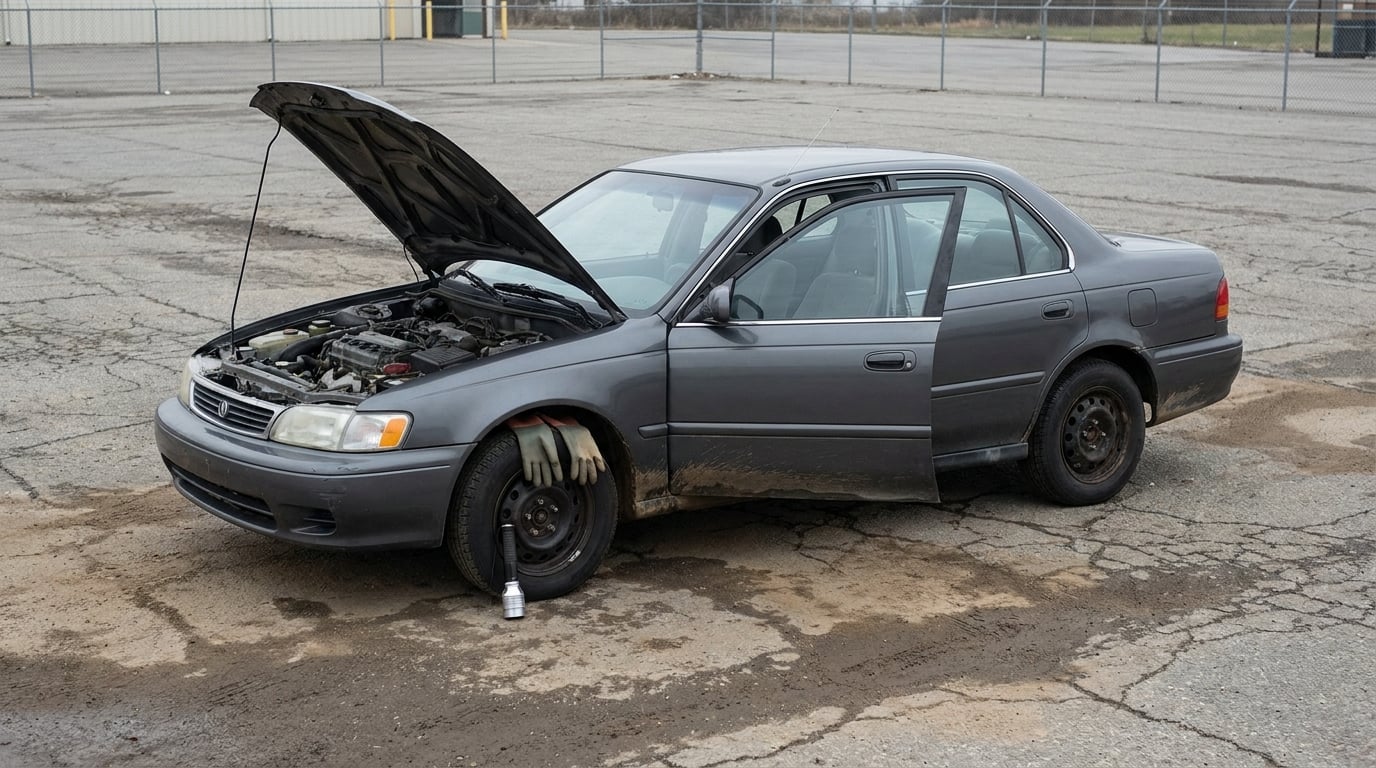
If you want to know how to check a car for flood damage, run the VIN for a vehicle history report first, then walk the car looking for water lines, silt in hidden corners, corrosion on under-dash bolts, and a musty odor. Flood damage hides best where electronics live, so a clean-looking cabin proves very little. A full inspection takes 30 to 60 minutes on your own, plus about an hour for a professional pre-purchase look.
Updated for October 2026.
Why bother with all of it? Because water damage fails late. A submerged control module works fine for six months, then the corroded pins start dropping sensors one at a time. Buyers on owner forums report the same pattern over and over: the car passed the test drive, the paperwork was clean, and the electrical gremlins started months after the sale.
Table of Contents
- What You Need
- Step-by-Step: How to Check a Car for Flood Damage
- 1. Review the Vehicle History and Ask the Right Questions
- 2. Inspect the Exterior for Water Lines and Corrosion
- 3. Check the Interior for Moisture, Odor, and Mold
- 4. Examine the Engine Bay and Mechanical Components
- 5. Check Fluids, Filters, and Underbody Parts for Flood Damage
- 6. Test Electronics, Airbags, and Safety Systems
- 7. Complete a Test Drive and Make the Decision
- Common Mistakes
- Frequently Asked Questions
- Conclusion
What You Need
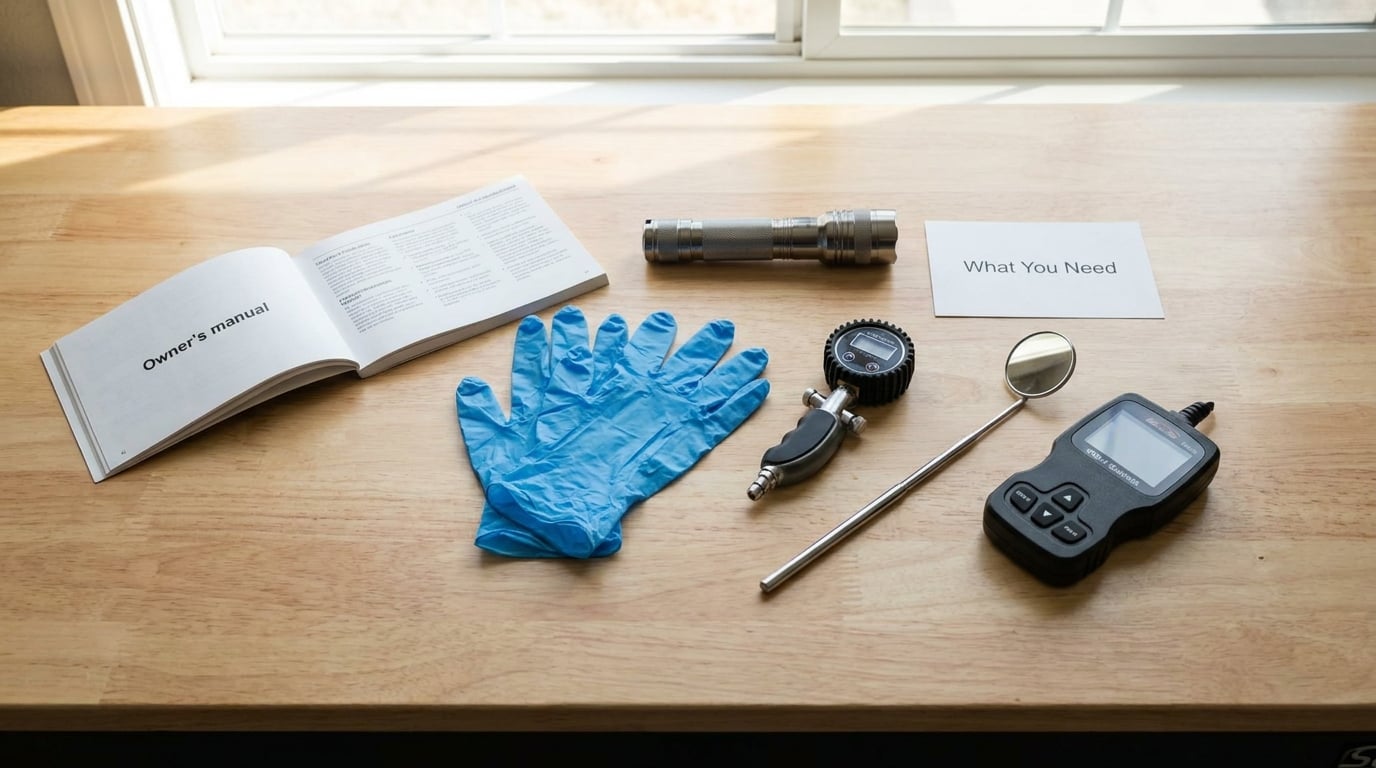
Gather these before you look at the car, because half the inspection goes faster when you are not digging through a glove box mid-appointment.
- VIN and title paperwork. The 17-character VIN from the dash plate, door jamb sticker, and title, plus the registration and any service records the seller has.
- A flashlight or headlamp. A bright beam angled across a panel shows water lines and sanding marks that disappear under flat overhead light.
- Nitrile gloves and a small mirror. Gloves keep your hands off unknown moisture, and a mirror gets light behind the kick panels and under the seats.
- An OBD-II scanner. A basic code reader plugs into the port under the dash and prints stored and pending codes in seconds.
- A tire pressure gauge. Uneven or low readings hint at a submerged chassis that never fully dried.
- Paper towels and a phone. You will want to photograph every red flag while you are standing in front of it.
- A seller who will answer questions. Where the car came from, whether it ever sat in water, and whether flood insurance was ever filed.
Bring a phone charger too. A scan can take a few minutes, and you want the codes captured before the seller has a chance to clear them.
Step-by-Step: How to Check a Car for Flood Damage
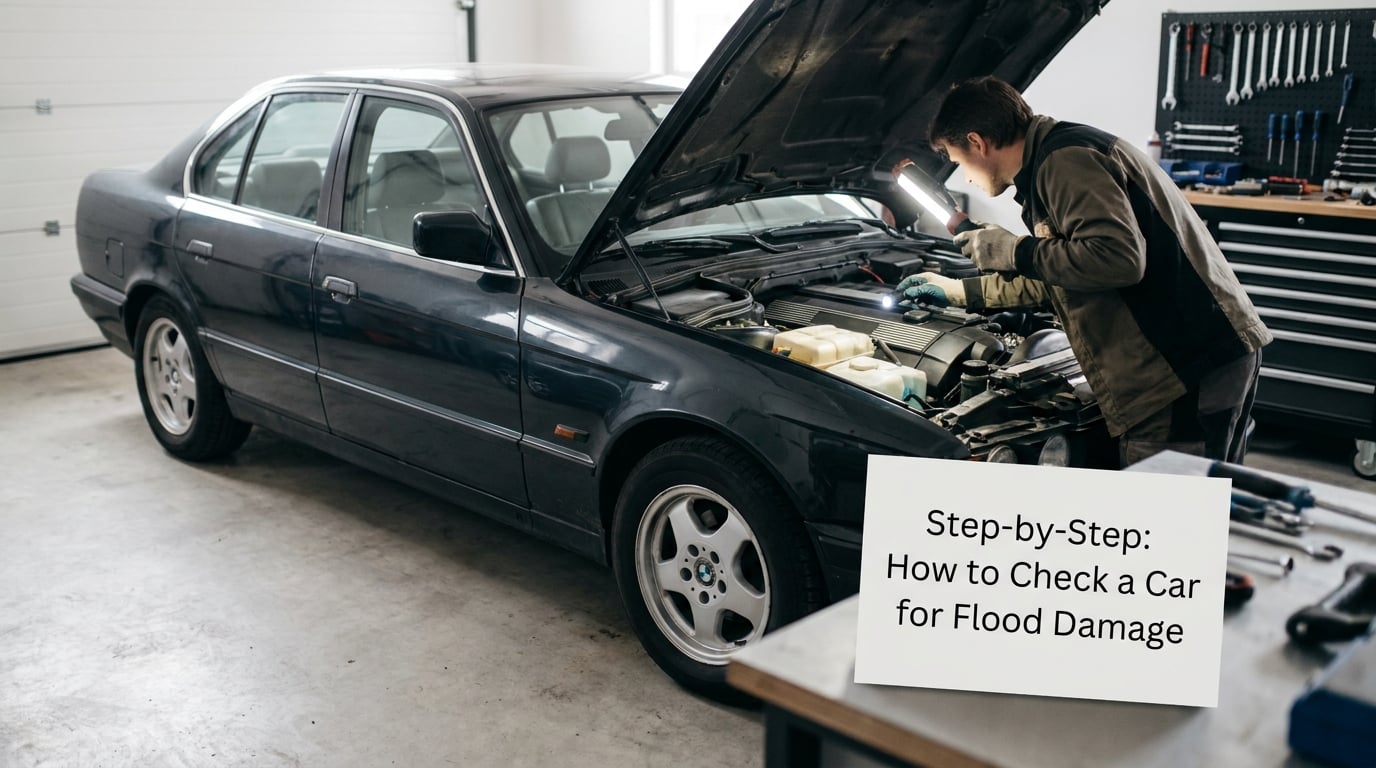
Work in this order. Paperwork first, because a disclosed flood car is a decision, an undisclosed one is a warning, and physical evidence only means something once you know the car’s story.
1. Review the Vehicle History and Ask the Right Questions
Start by running the VIN through a vehicle history report. CARFAX and AutoCheck are the paid options, and NICB VINCheck gives you a free basic lookup that still shows title brands and total-loss records.
What you are looking for: a salvage, rebuilt/reconstructed, or flood brand on the title, an auction record, and a gap or a sudden out-of-state title transfer in the months after a storm. Ask the seller directly whether the car has ever been in water, and compare the answer to the report.
Owners on enthusiast forums like dodgedurango.net and digitalcorvettes.com point out the hardest case: a clean title does not clear the car. A clean title only means nobody recorded a total loss, not that the car stayed dry.
2. Inspect the Exterior for Water Lines and Corrosion
Cold metal, mud, and debris tell the story. Look for a high-water mark, that faint horizontal line of discoloration that runs around the body at a consistent height, and treat it as the level the water reached.
Then check for:
- Silt or dried mud packed into the wheel wells, behind the bumper covers, and inside the engine bay crevices
- Paint that is a slightly different shade, glossier or duller, than the panels around it
- Rust blooms on bolt heads and brackets, especially where the factory used clean fasteners
- Swollen door seals, misaligned gaps, or trim clips that feel loose
- New tires on a car with old rims, or a tire sidewall with a faint wave
Angling a flashlight along the rockers, the door jambs, and the inside of the tailgate usually reveals a water line faster than anything else you own.
3. Check the Interior for Moisture, Odor, and Mold
Sniff first. A musty, damp, or sour smell that shows up the moment the doors open is the single most reliable cabin red flag, and a heavy air freshener is a cover-up, not a fix. Buyers say the same thing on every forum thread: plug-in scents exist to beat that exact smell.
Then look physically:
- Lift the carpet at the front and rear footwells and behind the front kick panels. Forum buyers treat those three spots as the go-to check for mud, silt, and rust.
- Pull the seat belts all the way out. Webbing that is stiff, stained, or smells damp was underwater or never dried.
- Open the spare tire well in the trunk. Silt lines and a wet-smelling foam mat are hard to fake.
- Check the seat rails and the bolt holes for corrosion where the seats bolt to the floor.
- Peek at the airbag cover on the steering wheel. A seam that does not sit flush, or a dashboard whose texture has faded unevenly, hints at a dash that was removed.
Press the seat cushions hard. Foam that feels gritty or gives a strange slow rebound has probably been wet and dried around whatever was inside it.
4. Examine the Engine Bay and Mechanical Components
Pop the hood and look before you touch anything. A flooded engine bay usually carries a fine layer of silt in the low corners, around the starter motor, behind the wiring harnesses, at the back of the alternator, and along the firewall where water pools.
Corrosion is the giveaway. Bright orange rust on brackets, hose clamps, and wire loom ties means those surfaces were wet for long enough to oxidize, and a detailer cannot clean rust off without leaving a trace.
While you are there, look at the air filter housing. Silt trapped in the intake snorkel or a filter that crumbles when you pinch it means the engine breathed flood water. If the engine was submerged at all, assume the engine oil, coolant, and transmission fluid all need replacing before the car is trusted. On cars where the dipstick is hard to find or missing, our guide to checking oil on a car with no dipstick covers where to look.
5. Check Fluids, Filters, and Underbody Parts for Flood Damage
Pull the dipstick and wipe it, then pull it again. A milky or foamy residue on the metal means coolant has mixed with the oil, which is a damaged-head-gasket symptom at best and a submerged engine at worst. Grit or a burnt smell in the oil points the same direction. Sludge is its own warning sign, and our piece on engine oil sludge explains what the stuff is doing to the bearings.
Check the coolant reservoir for a film or floating debris, and the transmission dipstick for water-separated or foamy fluid.
Then get underneath. Water at the sill level still reaches the transmission, which sits low in the pan, and shop sources note that transmission damage often gives almost no warning at all. Look for:
- Fresh rust on the subframe, control arms, and suspension bolts
- A water line or grime ring on the exhaust, driveshaft, or exhaust tips
- Dried mud packed around the battery box, which is a spot forum users flag over and over
- Damp or weeping shocks, struts, and wheel wells
Distinguish real evidence from normal condensation. A few water droplets under the car on a cool morning after rain are normal; a hard salt or grit crust, rust bloom, or a uniform dirt line is not.
6. Test Electronics, Airbags, and Safety Systems
Plug in the OBD-II scanner and read stored codes before anyone clears them. Then walk every switch in the car. A car that has been under water often shows faults with no classic cause: window motors that stall halfway, a dead key fob, sensors reporting nothing, cameras blanking out, or a blower motor that only works on high speed.
You are not looking for one broken feature so much as a pattern. Two or more unrelated electrical oddities, plus a clean history report, is a walk-away combination.
Watch the instrument cluster at key-on for an airbag or seat belt indicator, and confirm the horn, the lights, the wipers, the power locks, and the climate controls all work. If the seller pops the hood right before you scan, that is its own kind of answer.
7. Complete a Test Drive and Make the Decision
Ask for a cold start. An engine that struggles, smokes on start-up, or runs rough for the first minute tells you the fluids and sensors have not settled.
On the drive, cover the full cycle:
- All warning lights stay off, and none come back after the drive
- Engine runs smooth with no knocking or hesitation
- Transmission shifts cleanly in and out of every gear
- Brakes feel normal with no pulling to one side; how you check calipers is covered in our brake caliper leak guide
- A/C blows cold and the defogger clears the glass, which tests the evaporator and blower
- Odd noises, rattles, or smells appear once the cabin warms up
Count your red flags before you shake hands. One physical flag plus a clean report is usually a conversation about price. Two or more physical flags mean you walk, and an undisclosed flood history with a clean title means the seller either does not know what happened to this car or is not telling you.
Before buying, get an independent pre-purchase inspection from a shop that puts the car on a lift. Ask the shop specifically to look for water intrusion, and tell them what you found so they know where to start.
Common Mistakes
Trusting a clean engine bay. Detailers clean and deodorize a flooded car well enough to pass a casual glance, and the cheap versions of that work are the ones on the market. Only a car on a lift, inspected by someone who knows what he is looking for, gets a real answer.
Calling normal condensation flood damage. A light film of condensation under the car on a cold morning is not a red flag, and treating it as one makes you discount a good car. Look instead for a hard salt crust, a uniform dirt line at one height, or rust on fasteners.
Skipping the cold start. A warm engine hides rough idle, smoke, and stumble. Ask the seller not to start the car until you are there, and give it a few minutes before the drive.
Ignoring the paperwork. People get so focused on pulling carpets that they never run the VIN. Do the report first, and it takes five minutes. Auction records on Copart or IAAI also leave dated photos that no amount of cleaning erases.
Relying on one scan. A code reader shows stored and pending faults, not history. A flooded car with a clean scan is common, so the scan supports the physical inspection instead of replacing it.
Buying on the deal alone. Prices right after a hurricane are the reason these cars exist. If a vehicle is priced well below the market, assume the discount is the flood damage until the records say otherwise.
Frequently Asked Questions
Will CARFAX show flood damage?
Usually, yes, when the damage was reported. A CARFAX or AutoCheck report will show salvage, rebuilt, or flood title brands, total-loss notices, and insurance claims tied to the VIN. What it often misses is an unreported or repaired flood, which is why the physical inspection matters. Treat a clean report as one signal among several, not a clearance.
How do I know if my car has been in a flood?
Look for four things together: a visible water line on the body or interior panels, silt or dried mud in the engine bay, wheel wells, footwells, or the spare tire well, corrosion on under-dash and seat rail bolts, and a musty smell that gets stronger in the cabin. Undiagnosed electrical faults and a milky dipstick add to the case. No single sign proves it, but two or more together usually do.
Do car dealers have to disclose flood damage?
In many states, yes, dealers are required to disclose material damage like water intrusion, often through a written form. Rules differ by state, and private sellers may have fewer obligations, so check your local DMV requirements. Disclosure obligations do not guarantee disclosure, though. Verify the VIN yourself rather than relying on the paperwork alone.
Is it illegal to sell a flood-damaged car?
Selling a flood-damaged car is not itself illegal. What is generally illegal is concealing material damage or misrepresenting the title status, which is the practice known as title washing. Penalties vary by state and can include fines and criminal charges. If the seller discloses the flood and brands the title correctly, the sale is legal, just expensive for the buyer.
Can a flood-damaged car be repaired?
Partly, and it depends on how deep the water went. Above the door sills, the engine, transmission, and most electronics often survive. Below the sills, expect transmission replacement, corroded wiring, and a HVAC evaporator and blower that grow mold. Saltwater exposure is worse than freshwater because it keeps corroding. A disclosed rebuild can be a project car, not a daily driver.
Conclusion
Start by documenting what you found, not by negotiating. Photograph every red flag while you stand in front of it, then run the VIN and compare the report against the seller’s answers. If a single physical sign is present, pay for an independent pre-purchase inspection that specifically includes a lift check for water intrusion. If two or more are there, walk away, because the failures arrive months later and the seller will not be around for them.