
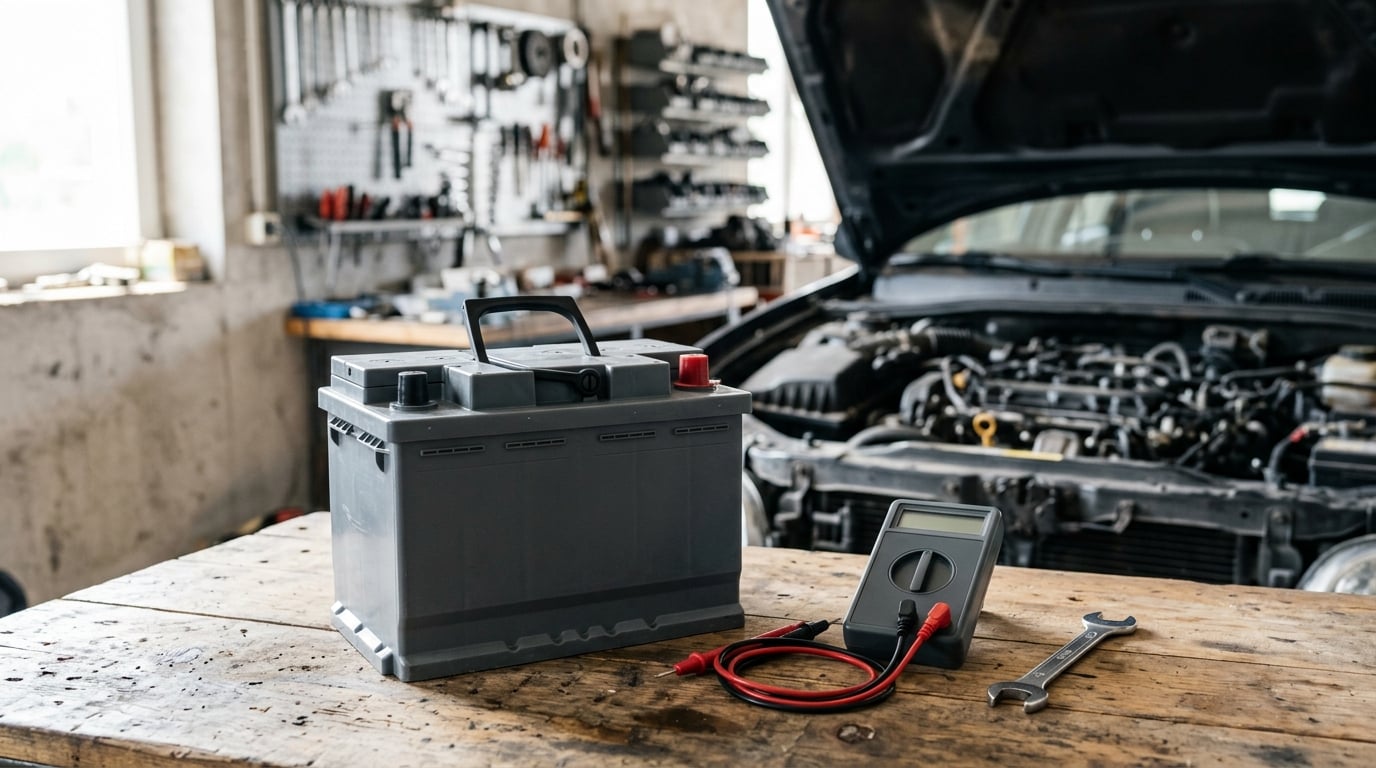
The average car battery lasts 3 to 5 years. Under good conditions with a healthy charging system and moderate climate, you can reasonably expect 4 to 6 years, and plenty of owners get well past that. Design life and the actual failure date are two different things, which is why your neighbor’s battery is nine years old and yours died last Tuesday.
Here’s the honest framing: manufacturers build a 12-volt battery to absorb years of heat, vibration, cold mornings and partial charges. They rate it for total output and warranty length, not for the calendar date it gives up. So treat the numbers below as a planning window, then test the battery you actually have.
I’ve pulled the ranges from the three sources that keep showing up in this conversation: the service-industry baseline of 3 to 5 years, the longer AGM figures, and the real owner numbers that never make it into dealer brochures. Updated for 2026.
Table of Contents
- How Long Does a Car Battery Last? The Honest Range
- What Determines How Long a Car Battery Lasts
- What Are the Signs of a Failing Car Battery?
- How Can You Test Whether a Car Battery Is Bad?
- Should You Replace or Recondition the Battery?
- How Do You Safely Replace a Car Battery?
- How Can You Make a Car Battery Last Longer?
- Frequently Asked Questions
- Bottom Line
How Long Does a Car Battery Last? The Honest Range
Three to five years is the range you’ll hear from almost any shop, and it’s right often enough to be useful. A technician with ten years under the hood on the Car Talk Community put the realistic average closer to four years.
Then there are the outliers. On r/AskAMechanic, one owner reported a 2008 Honda Civic still on its original battery at 17 years. On r/Cartalk, someone is getting nine years out of an Interstate battery that only carried a six-year warranty. On r/askcarguys, a 2013 Dodge Durango reached 170k miles on the factory battery.
Those cases aren’t the rule, but they aren’t myths either, and they share a few traits: a garage-kept car, a battery with a solid hold-down bracket, and an alternator that kept up its end. On the other end of the distribution, Saab owners on SaabCentral and expatforum.com report three-year averages with some at two, and heat gets named as the reason.
So if you want a number for planning, use four years. If you want to know whether your battery deserves another winter, run a test rather than counting stickers.
What Determines How Long a Car Battery Lasts
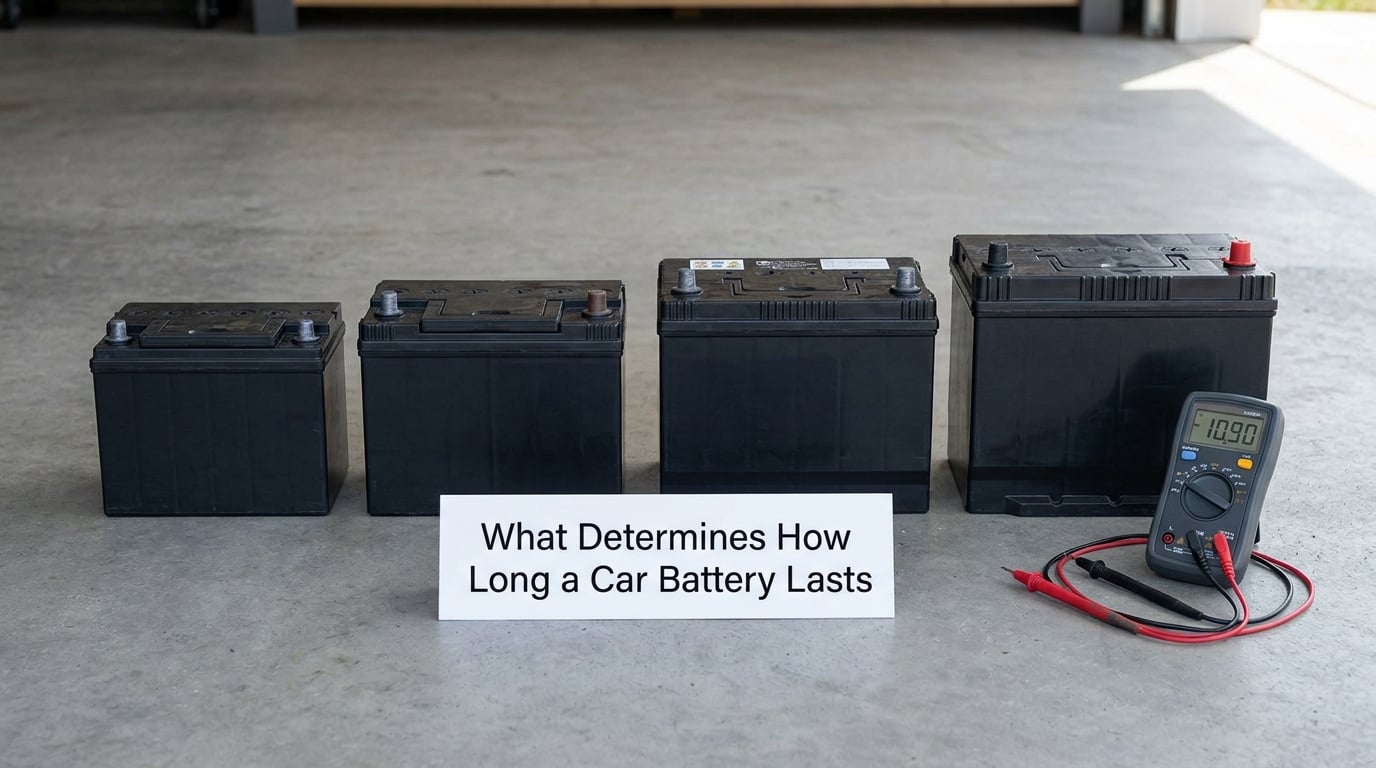
Battery chemistry sets the ceiling. A flooded lead-acid battery is the cheapest thing that will turn an engine over, and it wears out first. AGM and EFB designs tolerate deeper discharge and higher charge rates, so they outlast standard units in most cars.
Lifespan by battery type:
| Battery type | Typical lifespan | Where you’ll find it |
|---|---|---|
| Flooded lead-acid | 3 to 5 years | Most older gas and diesel vehicles |
| EFB (enhanced flooded battery) | 4 to 6 years | Stop-start and mild-hybrid vehicles |
| AGM (absorbent glass mat) | 4 to 7 years | Stop-start systems, vehicles with heavy electronics, some hybrids |
| Lithium-ion (EV traction battery) | 8 to 15 years or more | Electric vehicles, with gradual range loss rather than sudden failure |
A lithium-ion traction battery is a completely different animal. It fades gradually, losing range over time instead of dying on a cold morning, so a “dead” EV battery usually means a battery that still works fine.
Beyond chemistry, these factors move the needle most:
- Heat. The single biggest killer, covered in more detail below.
- Short trips. A battery needs sustained driving to reach full charge. Ten-minute errands add up to a permanently half-charged battery, and sulfation builds the whole time.
- Charging system health. A weak alternator or a bad voltage regulator charges at the wrong rate, and an undercharged battery ages fast.
- Parasitic drain. Alarm systems, aftermarket stereos, trackers and forgotten trunk lights slowly pull charge while the car sits.
- Vibration. A loose hold-down bracket lets the plates shed material. Road salt and potholes make it worse.
- Corrosion. A crusty, leaky terminal starves the battery of current, so the engine cranks slowly even when there’s plenty of charge left.
- Calendar age. Even a stored battery loses capacity month by month, which is why the mileage on the odometer matters less than people think.
How Long Does a Car Battery Last in Hot or Cold Weather?
Heat shortens life; cold exposes it. That’s the part most people get backwards, and cold mornings get blamed for failures that were caused the summer before.
Cold doesn’t kill a battery outright. It reduces the chemical reaction rate and lowers the power a battery can deliver, so an already-weakened unit that turned over fine in July cranks slowly or not at all in January. The failure looks sudden, but the damage was done in July. That’s the pattern people describe when they say their battery “waited for the coldest morning when they were late, holding coffee.”
By climate zone, the ranges look roughly like this:
| Climate zone | Typical lifespan | What to watch |
|---|---|---|
| Cold northern, moderate snow | 4 to 6 years | Hard cold mornings reveal wear; corrosion from road salt |
| Temperate, inland | 3 to 5 years | The baseline most shops quote |
| Hot southern and desert | 2 to 3 years | Heat damage, evaporation in flooded batteries, underhood temps |
If you park outside in Phoenix or Houston, plan on the low end of every number in this article. A garage or covered parking spot is worth more to battery life than most people expect.
What Are the Signs of a Failing Car Battery?
Batteries rarely die politely. Here are the symptoms worth acting on, roughly in order of how often they show up:
- Slow or sluggish cranking. The engine turns over slowly, hesitates, or sounds like it’s labouring. This is the most common early sign.
- A clicking sound. You turn the key and hear a rapid click-click from the starter. Usually a deeply discharged battery, but it can also mean a bad cable connection.
- Dim headlights or a flickering dashboard. Lights that lose brightness while the engine idles point to charging trouble, not just the battery.
- Warning indicators that reset themselves. A battery or check-engine light that comes on, then disappears after a restart, is worth a look.
- Corrosion around the terminals. White, blue or greenish crust on the clamp. It looks harmless and isn’t.
- A swollen or bulging case, or a rotten-egg smell. Stop using the battery immediately and don’t drive the car on it. A bulging case means internal damage and venting acid.
- The clock resetting, radio forgetting presets, or windows not going up. A battery that can’t hold a charge overnight will show it here first.
- It works briefly after a charge, then dies again. A battery that recovers and immediately goes flat is finished.
One warning about all of this: never ignore a battery warning light, and never bridge or jumper around warning indicators to keep driving. The light is telling you something real, and papering over it can cost you the alternator or the vehicle electronics.
How Can You Test Whether a Car Battery Is Bad?
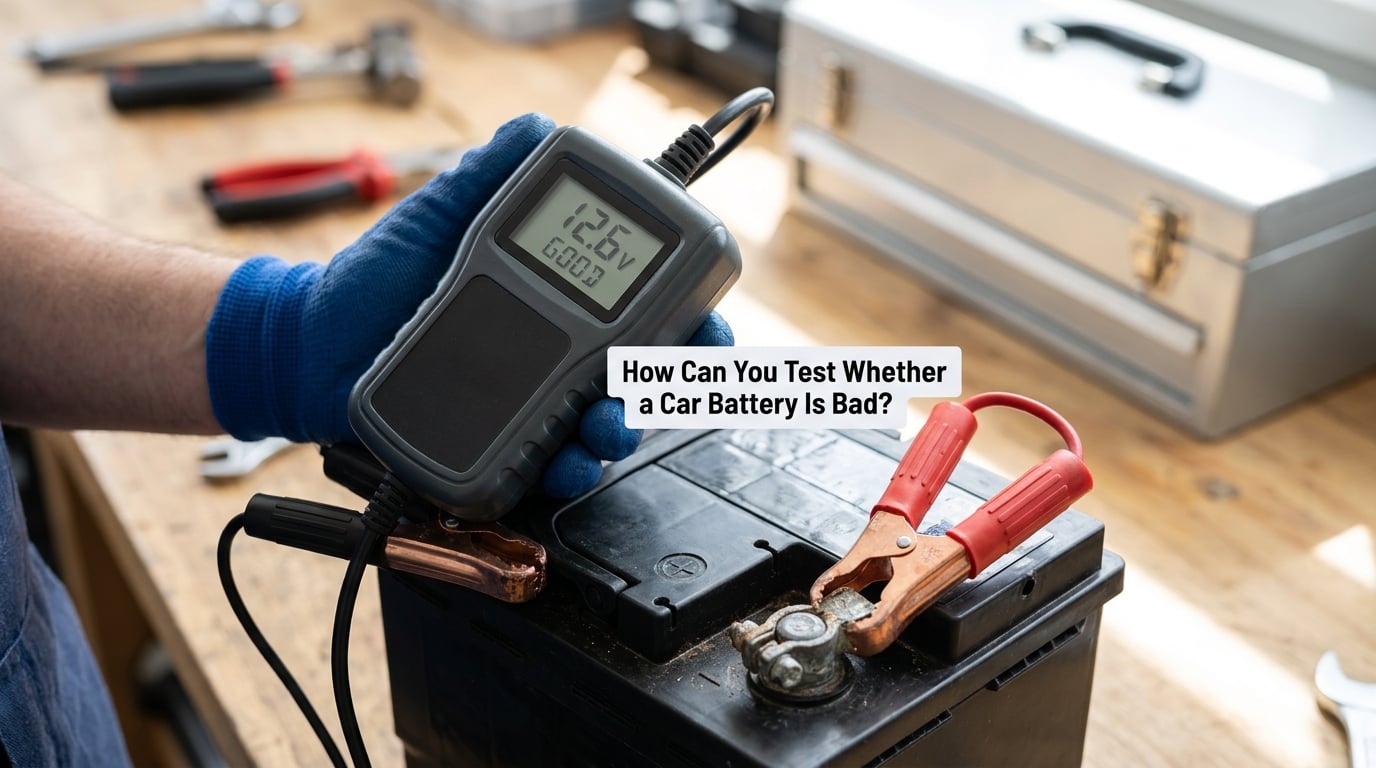
Testing works in layers, cheapest first. Start by cleaning what you can see, because a corroded clamp will make a healthy battery look dead.
- Clean the terminals. Disconnect the negative cable first, scrub the clamp and post with a wire brush or a stiff toothbrush and a paste of baking soda and water, rinse with water, and dry. Petroleum jelly or a dedicated terminal protectant on the clean metal helps keep corrosion off.
- Look at it. Check for a swollen case, cracks, a leaking white or bluish crust, or a loose or missing hold-down bracket. A battery that has been bouncing around under the hood deserves a test regardless of its age.
- Check rested voltage. With the car off and the battery rested for a few hours, a fully charged 12-volt battery reads 12.6 volts or higher. Around 12.2 is a partial charge, and under 12.0 means it’s likely sulfated and on the way out.
- Run a load or conductance test. A handheld tester measures how the battery responds under load, which is what actually matters for cranking. A parts store, auto club or well-equipped mechanic can do this in a few minutes. Most battery retailers do it free, and most auto clubs do too.
- Verify the charging system. Start the engine and check the voltage at the terminals. With the engine running, a healthy charging system puts out roughly 13.8 to 14.4 volts. If the battery reads fine when off but the running voltage is low, the alternator is your problem, not the battery.
Test every six months, and every time you have an oil change, once the battery is past year three. A reading takes minutes and catches a marginal battery while it can still be planned for, rather than discovered in a parking lot.
Should You Replace or Recondition the Battery?
Reconditioning a battery means draining it, treating the plates to reduce sulfation, and recharging it. It can rescue a battery that’s merely sulfated after sitting unused. It cannot restore a battery whose plates are chemically worn out, and a reconditioned battery rarely has a meaningful warranty behind it.
Here’s the gap that confuses a lot of owners. Warranties are commonly written as 36, 48 or 84 months. An 84-month warranty sounds like seven years of life, and it isn’t. Warranties typically cover a manufacturing defect, not gradual capacity loss from heat, sulfation and vibration. One Car Talk owner put it plainly: the warranty reads like seven years, most people get three or four, and the paperwork is written to replace them within that shorter real window.
So use the warranty to judge the manufacturer’s confidence in the product, not to plan your service schedule.
Replacement is the right call when the battery is past four years, fails a load test, has physical damage, or the car has sat unused for months. Be cautious with used or refurbished units. The supply of genuinely reconditioned 12-volt batteries is small enough that the label matters more than the price, and a “rebuilt” battery of unknown provenance can be a worse bet than a plain new one.
A diagnostic visit earns its keep when the no-start isn’t a no-start at all. A dead battery is easy to confirm and cheap to fix. Confusion between battery and alternator is one of the most common questions in the forums, and a ten-minute test settles it.
How Do You Safely Replace a Car Battery?
Replacing a 12-volt battery is a small job, but it involves sulfuric acid and a car that will kill you if you do it sloppily. If you’re not comfortable with the steps below, have a shop do it.
- Read the owner’s manual first. Some vehicles need a battery registration or coding step after installation, and some specify a particular battery group size or technology. Modern cars with radar, screens and memory modules can throw codes or lose settings during a disconnect.
- Match the replacement. Use the group size and terminal layout from the manual or the label on the old battery. A physically similar battery with the wrong cold cranking amps or the wrong terminal positions causes real problems.
- Turn the vehicle off, park on level ground, apply the parking brake. Keep metal tools and the new battery away from each other until you’re ready. A dropped wrench bridging the terminals is a serious burn hazard.
- Disconnect the negative terminal first, then the positive. Note which wire goes where. Some vehicles have a second battery or a capacitor that needs attention too.
- Lift the old battery out straight up. It’s heavier than it looks and the electrolyte sloshes. Keep it upright.
- Clean the tray and clamp the new battery down. The hold-down bracket matters more than most people assume; vibration is a genuine lifespan killer.
- Reconnect positive first, then negative. The reverse of removal order keeps you from arcing across the battery while the circuit is live.
Torque the terminal clamps properly and confirm the bracket is solid. Then take a longer drive of at least 20 minutes so the alternator can bring the new battery fully up to charge.
Dispose of the old battery properly. Take it to a retailer, auto parts store or recycling centre that accepts them. Lead and sulfuric acid are recyclable, and most places take them at no charge.
How Can You Make a Car Battery Last Longer?
Most of what extends a battery is boring, and it works. These are the habits that keep a three-year-old battery alive into its fifth year.
- Keep the terminals clean and protected. Scrub corrosion off with a baking soda and water paste, dry thoroughly, and coat the metal with petroleum jelly or terminal protectant. Do it annually, more often if you live somewhere salty.
- Check the hold-down bracket. A loose battery shakes, and the internal plates shed material with every pothole. Tighten it once a year.
- Avoid living on short trips. If most of your driving is under 10 miles, the battery rarely gets a full charge. Take a longer drive every couple of weeks, or attach a battery maintainer.
- Keep the charging system in shape. Have the alternator and belt checked when the battery goes, and replace the battery only after confirming the charging system is putting out the right voltage. Swapping a battery doesn’t fix a bad alternator, and the new one will die too.
- Protect it from heat where you can. A garage or covered spot beats a driveway in a hot climate. Insulating blankets exist for underhood use in extreme heat.
- Test from year three onward. A load test at a parts store or auto club every six months tells you where you stand before a cold morning does.
- Use a maintainer for parked cars. A smart trickle charger keeps a stored battery at full charge and prevents the sulfation that ruins batteries that sit for months.
- Investigate parasitic drain early. If the car sits for a week and the battery is flat, something is drawing power it shouldn’t. An overnight ammeter test or an ignition-off draw check finds it.
Owners on r/MechanicAdvice make a good point about the shift over time: many people remember getting five or more years from a battery in past cars, and now the same maintenance gets three. More electronics, more start-stop cycles, and hotter underhood temperatures all take a share. Adjusting your expectations downward is part of planning for the next one.
One more question comes up constantly: should replacement be judged by years or by mileage? For a normal daily driver, think in years and test results, not odometer readings. A low-mileage commuter that drives 3,000 miles a year still ages on the calendar, and one Corolla owner on r/MechanicAdvice had theirs fail at around five years having covered barely 15k miles.
Frequently Asked Questions
Do I need to replace a car battery after four years?
Not automatically. Four years is the point where testing matters more than guessing. A battery that passes a load test, holds full voltage and starts cleanly can comfortably run another year or more. A battery that cranks slowly, holds a charge poorly or has a swollen case should go, regardless of what the date sticker says. Check the date code, then have it load tested before spending money.
Are AGM car batteries supposed to last longer?
Yes, usually. AGM batteries typically run 4 to 7 years versus 3 to 5 for a standard flooded lead-acid unit, because the absorbed glass mat handles deeper discharge and higher charge rates without damage. They are a good match for stop-start vehicles and cars with heavy electronics. The tradeoff is cost, and they still lose to heat, vibration and sitting unused.
Can a car battery die while the vehicle is parked?
Absolutely, and it is one of the most common ways they fail. A parked car still draws small amounts of current for the clock, alarm and electronics, and calendar age drains the rest. Weeks or months of standing can leave a battery sulfated and flat. If your car sits for long stretches, a battery maintainer on a smart trickle charger is the cheapest insurance there is.
Does a maintenance-free car battery need any maintenance?
The sealed and maintenance-free labels refer to water and electrolyte service, not to everything. You still need to keep the terminals clean and protected from corrosion, make sure the hold-down bracket is tight, and have the battery load tested periodically from year three onward. Many maintenance-free batteries are still flooded designs, so check the label for venting requirements before doing anything to it.
Why does a new car battery still not start the engine?
Usually because the battery was never the problem. A new battery will not crank a healthy engine if the alternator is failing, the starter is seized, a main ground cable is corroded, or the immobiliser or key fob is not communicating. Confirm the charging system is putting out roughly 13.8 to 14.4 volts with the engine running before assuming the battery is at fault.
Bottom Line
How long does a car battery last? Three to five years for most vehicles, four to six in a temperate climate with a sound charging system, and closer to three or even two in serious heat. Everything beyond that depends less on the label than on heat, short trips, vibration and corrosion.
Do two things this month. Read the date code on top of the battery so you know its actual age, then get a free load test at a parts store or auto club. If you’re past year four, or the car has sat for months, do both this week. The first thing to do is simple: find out how much life you actually have left, instead of finding out on the coldest morning of the year.