
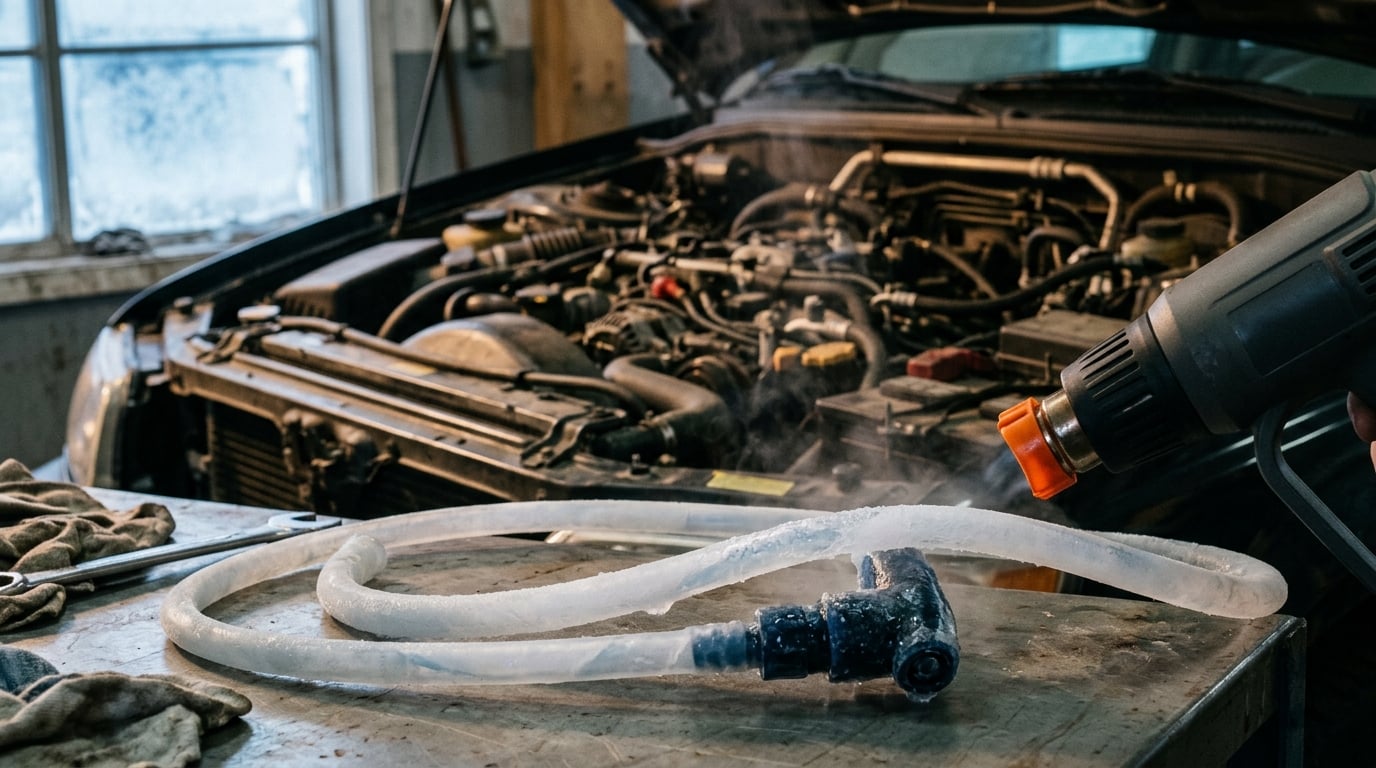
A frozen washer fluid line clears once the whole path warms together: move the car somewhere above freezing, warm the reservoir, pump and hoses with gentle even heat, then flush the system with the correct winter-rated fluid. This guide covers the sequence in the order that melts ice without cracking a reservoir or burning out a pump. No open flame, and nothing driven into the hose.
The honest truth is that most of the work is diagnosis. A pump that whines and sprays nothing looks identical whether the cause is a plug of ice, an empty tank or a dead relay, and thawing a system that was never frozen just wastes an afternoon. So confirm the freeze first, then warm the line, then verify the repair.
What You Need
You do not need much, and you do not need any of it to be expensive.
- Your owner’s manual. It tells you where the reservoir sits, which fluid the manufacturer approves, and where the washer fuse and relay live.
- A flashlight and a flat-head screwdriver or plastic trim tool. For the reservoir cap, hose clamps and the connector at the cowl.
- A bucket and clean water. Lukewarm, never boiling. You are draining and rinsing, not filling the system with it.
- Approved winter washer fluid. Buy it rated well below the coldest temperature you actually expect, not just below the current one.
- A safe heat source. A heat gun on its lowest setting, a hair dryer on cool or low, or simply the airflow from your windshield heater once the engine is running.
- Nitrile gloves and a rag. Winter fluid is often methanol-based, and you will be handling slush that has been sitting in a dirty hose.
Move rags, fuel cans, spray cans and any solvent out of the engine bay before you start. Washer fluid is flammable, concentrated winter fluid is more so, and a heat gun held near a soaked hose puts a flame right next to the vapour.
Step-by-Step
Work from diagnosis outward, and from the gentlest heat to the most targeted. Each step below includes the visible sign that it worked, so you are not thawing blind.
Confirm the Symptoms and Locate the Problem
Park level, pop the hood, and press the washer button. Listen before you touch anything.
- Pump whines, nothing sprays. Most likely a blockage, but check the fluid level first. If the reservoir is under MIN you have an empty tank, not a freeze.
- No pump sound at all. Check the washer fuse and relay in the owner’s manual before assuming ice. Ice does not stop the pump from spinning.
- Weak dribble instead of a spray. Either a partial plug partway along the line, or a nozzle whose orifice is iced shut.
- Low fluid light on with a full tank. Air in the system, a cracked reservoir, or a leak downstream of it.
- One side sprays, the other barely weeps. That asymmetry points at a plug in the hose feeding the quiet side.
Now find the ice. Squeeze each hose along its run from the reservoir to the cowl: a healthy hose is soft and full, a frozen one is hard and rigid. Look for a white band of frost on the cowl panel where the hoses pass through, and for ice inside a translucent reservoir. Owners on r/Cartalk have posted about lines that snapped in extreme cold, so look for wetness around a clamp or a split before you apply any heat.
Start the engine and run the windshield heater on high for a few minutes. That airflow alone puts a surprising amount of warmth into the engine bay, and it costs nothing but idling fuel.
Warm the Entire Fluid Path
Thawing one end of a frozen system is the most common mistake, because you then have a thawed reservoir feeding a solid plug and a pump straining against it. Warm the whole path, and warm it in the direction the meltwater can travel.
If the reservoir itself is solid or slushy, work from the reservoir toward the nozzles. Meltwater needs somewhere to go, and that is the only direction it can go.
If the reservoir is liquid and only the last foot of hose or the nozzles are frozen, work at the nozzle end first. Otherwise the ice you clear just becomes a new blockage sitting against the pump outlet.
Escalate in this order:
- Passive warming. Park in a heated garage, or wait for a spell above freezing and drive 15 to 20 minutes to bring the bay up to temperature. Slowest, zero risk.
- Engine-bay airflow. Engine running, defroster on high, doors closed for ten minutes. Watch the fluid in a translucent reservoir for movement.
- Lukewarm water. Pour water from a bucket over the hoses and reservoir exterior, or soak a rag in it and lay it on the line. The water should feel comfortable to hold. Never pour it into the filler neck.
- Low heat. Heat gun or hair dryer on its lowest setting, 6 to 10 inches away, moving constantly. Thirty seconds of heat, then stop and check.
The signs of progress are small and easy to miss: a hose that flexes instead of feeling hard, a drip at the reservoir neck, a faint mist at the windshield when you press the button. Slush is fine. Solid ice is not.
There is a chemical option, and it is the single most-asked question in the r/Cartalk threads on this topic: can you pour isopropyl alcohol into the tank to thaw it, then refill with winter fluid. Yes, it works, because alcohol lowers the freeze point of what is already in there. Mix it with the slushy fluid, not with a solid plug you cannot reach, and never near a running engine bay where the vapour could be drawn in. Use a small amount, and top up with properly rated fluid rather than leaving an alcohol mix in for the season.
How long it takes depends on how bad it is. A nozzle-only freeze usually gives up in 10 to 20 minutes of warming. A plug in the middle of a hose takes 30 to 60. A reservoir that froze solid overnight in deep cold may need four to eight hours, or a warm day, and no amount of heat gun changes that.
Check the Reservoir and Connections
Take the cap off and look down into the neck. Clear slush and any debris sitting on the inlet screen, since a strainer full of grit will restrict flow even after the ice is gone.
Reseat the cap properly. A loose or cross-threaded cap can vent the reservoir and let the pump run dry, which is its own kind of damage.
Work each fitting with your hands. Push any hose that has crept off its barb back on until it seats against the fitting shoulder, then check the clamp. Look for a bright wet ring, a drip trail, or green corrosion on the fitting. If a fitting is seized or the rubber has gone chalky and hard, that is a replacement part, not something to re-tighten and forget.
Do not top up a line that still holds a solid ice plug, and do not blow into the system with compressed air if any hose shows a split. You will drive water straight through the crack and turn a repairable freeze into a new hose run.
How to Unfreeze a Washer Fluid Line at the Nozzles
Nozzles freeze first because they sit at the most exposed, coldest point of the system, often right at the base of the windshield. Warm the last foot of hose evenly with the heat gun held at a distance, then gently flex the line between your hands. Do not kink it sharply back and forth; frozen rubber cracks along those folds.
Once the hose is soft, disconnect it at the cowl connector and drain the remaining slush into a cup. Clear the nozzle orifice from the hood side with a straight pin, a paperclip or a plastic pick, and keep the spray pattern aimed where it was before you touched it.
You will see screwdriver-in-the-frozen-line advice on a lot of these pages. Skip it. A frozen hose has lost the flexibility that lets it survive a sharp point, and that is exactly how lines split in extreme cold. Reseat the connector firmly instead: it should click or seat with a definite push, and a hose that needs holding on to is a hose that is not connected.
Press the button with the hood up before you close it. A connector that sprays fluid at the fender instead of the windshield is a leak, and you want to find it in daylight rather than at speed.
Flush and Verify the Repair
Pull the supply hose at the reservoir and flush out the old, weakened fluid if you can reach it. Then fill with approved premixed winter fluid rated at least 10 to 20 degrees below the coldest temperature you expect, and cap it properly.
Test the finished job with the engine at operating temperature. Press the button and watch for all of this:
- A full stream from every nozzle within a second or two.
- A steady spray, not a pulsing or gurgling one.
- A pump that runs smoothly and then stops when you release the button.
- No dripping at any fitting, and nothing pooling under the car.
- No icing again after an ordinary cold night.
Then look for freeze damage. A reservoir that seeps or shows a crack, a hose that is swollen or split, a burning smell from the pump area, or a fuse that blows again the moment you press the button all mean the job is not finished. A pump that buzzes continuously without spraying has lost its prime, and a pump that has burned out will not come back on its own. Any of those is a mechanic job rather than a second round of thawing.
Common Mistakes
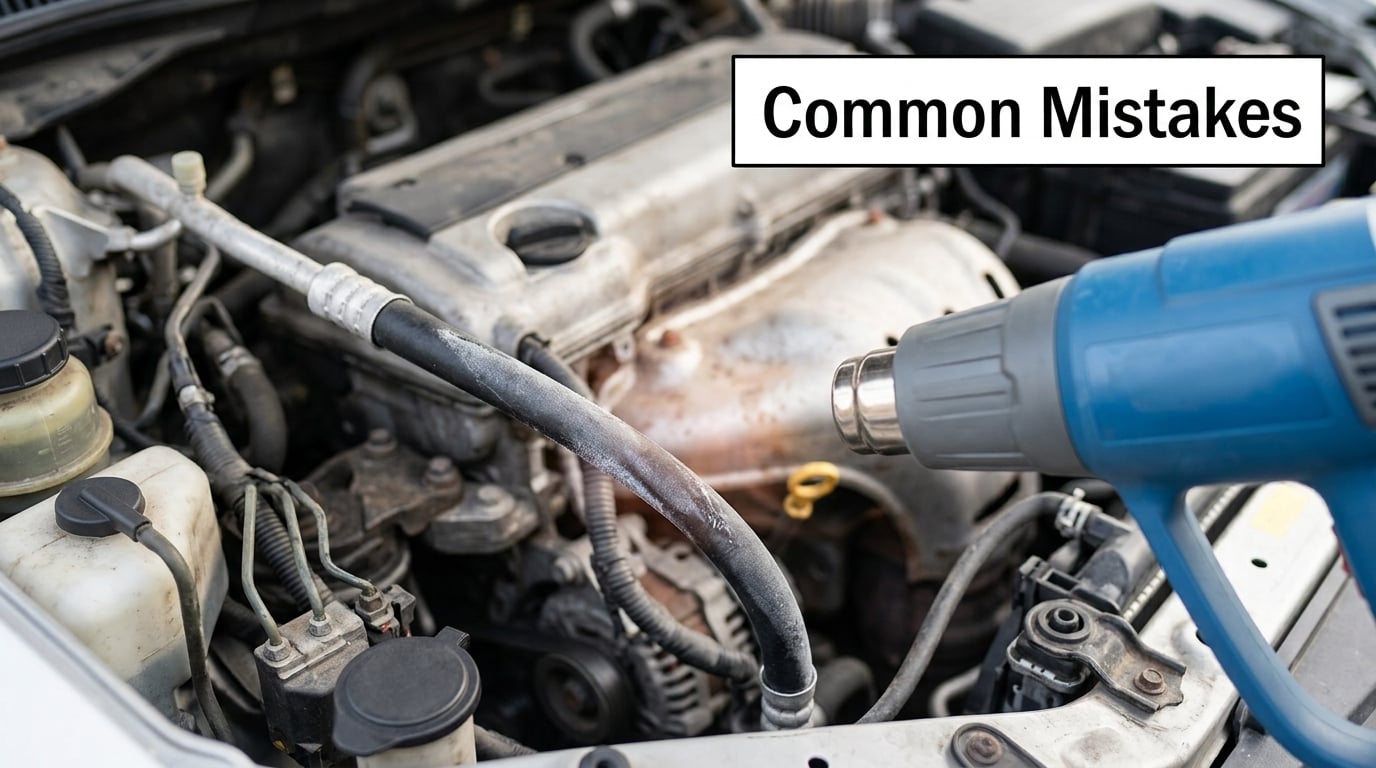
Almost every expensive washer fluid repair I have seen started as a shortcut. These are the ones worth knowing by name.
Boiling water on the reservoir. It is the internet’s favourite answer and the worst one. The reservoir is plastic, often worn and thin at the corners, and the temperature difference between boiling water and a frozen tank will crack it. Lukewarm is the strongest water you should ever use.
A torch, a lighter or a propane heater. Washer fluid is flammable, winter fluid often is not, and your engine bay is full of plastic, wiring and residue.
A hair dryer on high, held close. The heat is uneven, and it softens rubber hose and warps the reservoir before it reaches the fluid. Low setting, moving, at arm’s length.
A screwdriver driven into a frozen line. It splits the hose. This is the top bad tip in the search results and it turns a free fix into a parts job.
Holding the washer button down. A pump pushing against a solid blockage is a pump drawing max current against max load. It will get hot, it may burn the motor out, and on some vehicles it blows the washer fuse.
Leaving the same diluted fluid in. A 50/50 mix of fluid rated to minus 20 only protects to roughly 0 degrees. If your fluid is diluted, summer grade, or topped up with water, you will freeze again this winter, and the thaw you just did was temporary.
Ignoring a split hose after a successful thaw. Ice expands, and rubber that survived a freeze has been permanently weakened. Replace it rather than waiting for the next cold night to find out.
To stop it happening again: park in a garage or under a cover if you can, get the fluid rating right before the first hard freeze rather than after, run the washer for a minute every week or two through the winter so a seal never sits static and frozen, inspect the hose run once a year, and consider insulating exposed lines on a truck or SUV that parks outside.
Frequently Asked Questions
Can I use a heat gun to unfreeze a washer fluid line?
A heat gun works, but only on its lowest setting, held 6 to 10 inches away and moved constantly. High heat held close will soften or warp the plastic reservoir and weaken rubber hose before the ice gives way. Start with engine-bay airflow and lukewarm water first, and use the heat gun only to finish a stubborn plug. Never point it into a fluid filler neck while the engine is running.
Why does windshield washer fluid not drain from the hoses?
A washer system has no drain. Fluid sits in the reservoir and the lines by design, which is why cold weather can freeze it solid. Hoses also hold fluid in low points and behind the pump inlet, so it never empties out even on a warm day. The fluid only leaves the system when the pump pushes it out through the nozzles, which is also why leaving a car parked for weeks in winter is the risk.
How do I clear ice out of the washer fluid pump?
Do not force it. Running the pump against a solid plug is what burns the motor out. Melt the fluid first with passive warming, engine-bay heat and lukewarm water until the reservoir slushes and moves. Once it flows, run the pump until the spray is steady, then check the fuse and relay again. If the pump still buzzes without spraying after the system is fully liquid, the pump itself is done.
Is it safe to add hot water to a frozen washer system?
Lukewarm water poured over the outside of the reservoir and hoses is a safe and effective way to speed a thaw. Boiling or very hot water is not, because of thermal shock: the plastic can crack and a split reservoir is a much bigger job than a frozen line. Never pour water into the filler neck, because that dilutes the fluid and raises its freeze point, which is the same mistake that caused the freeze.
Should I replace the hose after a washer fluid line freezes?
Replace it if the rubber is split, swollen, chalky, flattened at a clamp, or feels brittle when you squeeze it. Ice expands and permanently weakens hose, so a line that survived a freeze is usually a line with less life left in it. A soft, unmarked hose that came through the thaw fine does not need replacing, but inspect it every winter from then on.
Conclusion
Start by proving it is a freeze: pump sound, fluid level, and where the ice actually sits. Then warm the whole path evenly, working from the reservoir toward the nozzles when the fluid is solid, and use nothing more aggressive than lukewarm water or a heat gun on low. Finish by flushing with fluid rated below the coldest nights you expect and confirming a full, steady spray from every nozzle.
That is how to unfreeze a washer fluid line without creating a bigger repair. If you find a cracked reservoir, a split hose, a blown fuse that keeps blowing, or a pump that buzzes once the system is fully liquid, replace the damaged parts rather than thawing a third time.